Dish · Yamagata
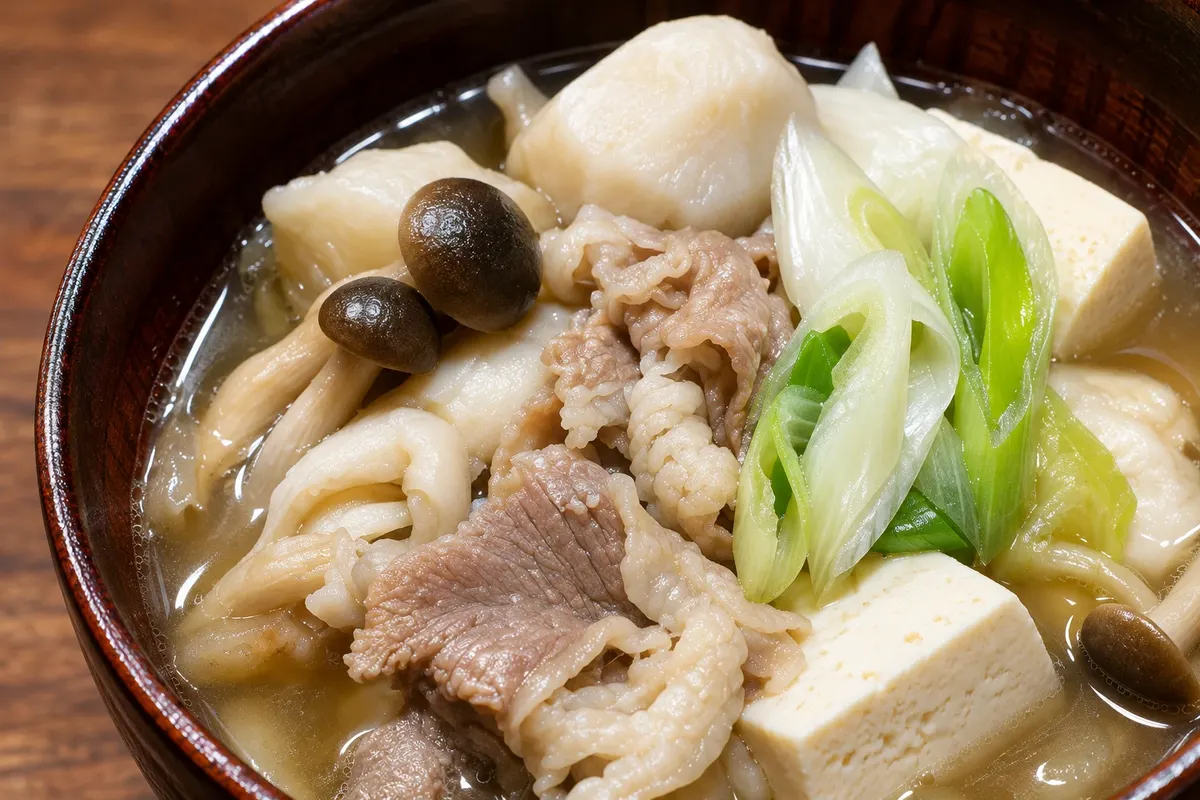
Imoni
Taro stew with meat, konnyaku and scallion, cooked in large pots on riverbanks in autumn at Yamagata’s imonikai. Inland it includes beef and shoyu; on the Shonai coast it uses pork and miso.

 Search
 Brazil
 Antarctica
 Argentina
 Bolivia
 Chile
 Colombia
 Ecuador
 Guyana
 French Guiana
 Falkland Islands (Malvinas)
 Paraguay
 Peru
 Suriname
 Uruguay
 Venezuela
 Germany
 Austria
 Belgium
 Croatia
 Denmark
 Slovakia
 Slovenia
 Spain
 Finland
 France
 Greece
 the Netherlands
 Hungary
 Ireland
 Iceland
 Italy
 Luxembourg
 Norway
 Poland
 Portugal
 the United Kingdom
 the Czech Republic
 Sweden
 Switzerland
 Turkey
 Bermuda
 Canada
 the United States
 Greenland
 Mexico
 Saint Pierre and Miquelon
 the Dominican RepublicJapanTurkey
 South Africa
 Egypt
 Australia
 Fiji
 New Zealand
 Papua New Guinea
Province · Tohoku
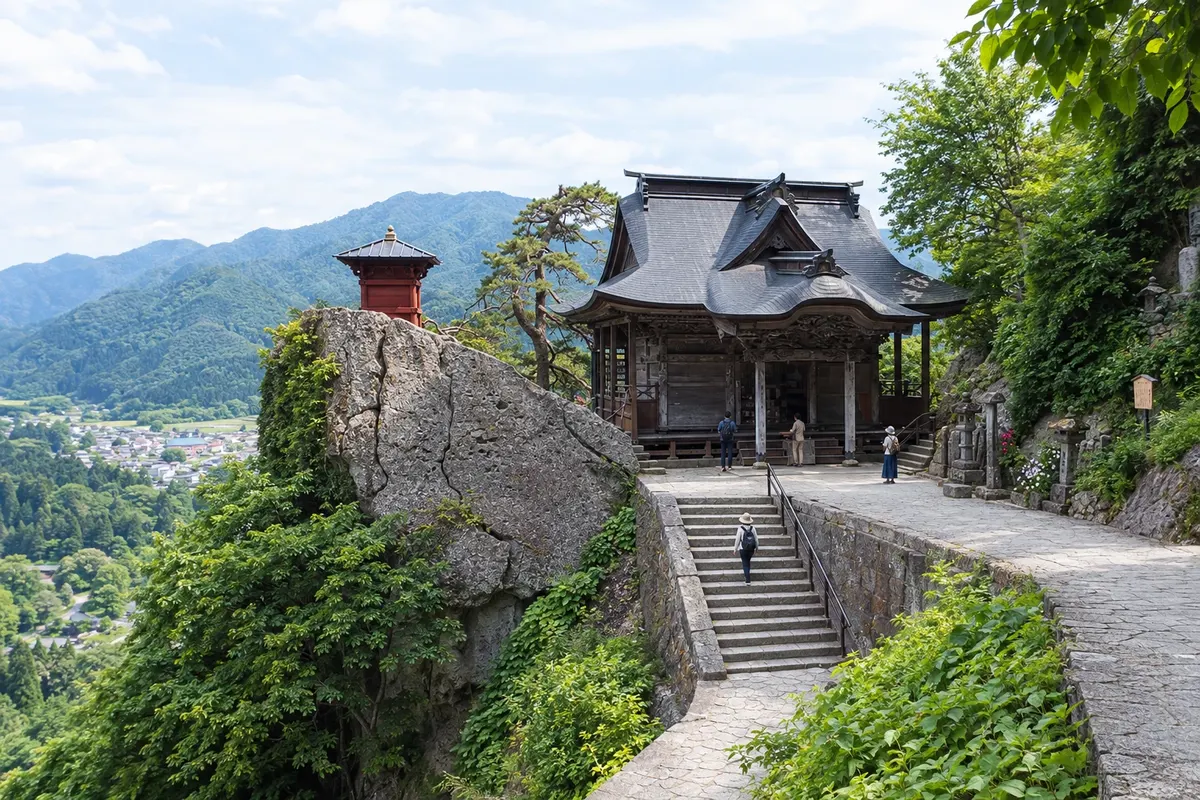
The Yamadera temple on the mountainside, Ginzan’s hot-spring street, Zao’s snow monsters, and the three sacred mountains of Dewa.
In the photo: Yamadera temple, in Yamagata.
Illustrative images. The pictures in this guide are illustrations based on the real place, not photographs, and may differ from it.

The province
Yamagata lies in southwest Tohoku, facing the Sea of Japan and surrounded by mountains. Inland basins have orchards of cherries, pears and grapes, and the prefecture produces most of Japan’s table cherries. Yonezawa beef and the region’s sake are also well known.
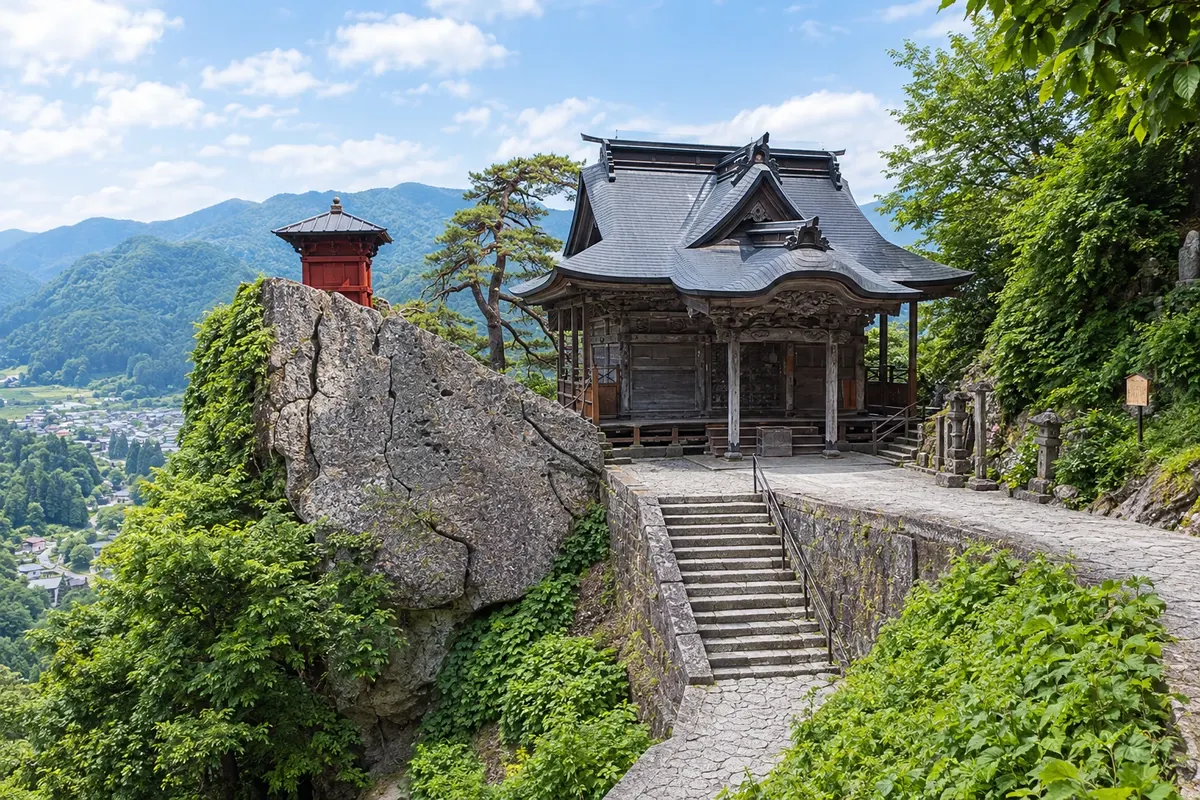
Yamadera, or Risshaku-ji, was founded in the ninth century on a rocky slope. More than a thousand stone steps climb between cedars and small halls up to the Okunoin and the Godaido viewing pavilion, which looks over the valley. The poet Matsuo Basho passed through in the seventeenth century and wrote a haiku about the cicadas’ song.
Ginzan Onsen, in Obanazawa, is a hot-spring village with three- and four-story wooden houses lining both sides of a river, lit by gas lanterns at dusk. In winter, snow covers the roofs. On Mount Zao, trees coated in ice and snow, the juhyo, form the so-called snow monsters, seen from the ropeway.
To the west, the three Dewa mountains, Haguro, Gassan and Yudono, are sacred to the yamabushi, the mountain ascetic monks. At Haguro, a stone stairway of 2,446 steps climbs between cedars, passing a five-story pagoda that is a national treasure. The Mogami River is toured by boats whose boatmen sing.
Flavors of Japan
Destinations
Cities
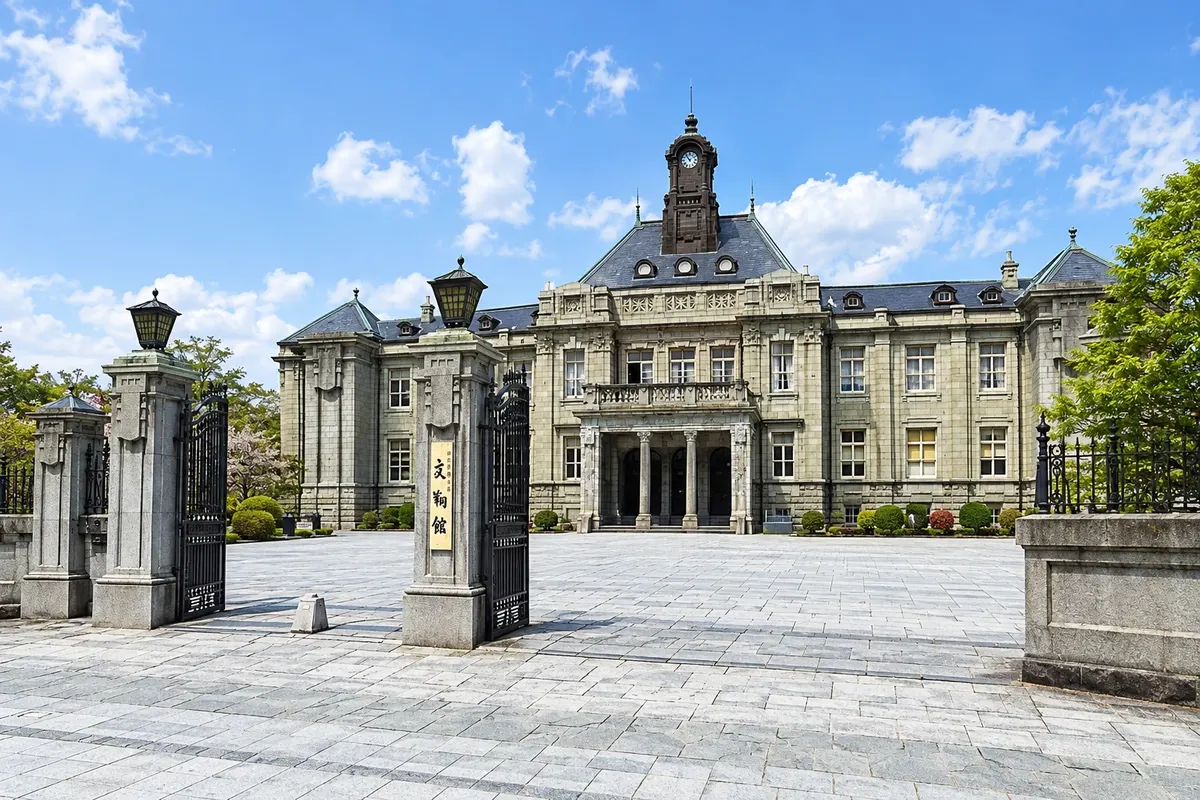
Yamagata is the capital of the province of the same name, in a basin surrounded by mountains in inland Tohoku. It is the base for the Yamadera temple, high on a rock cliff to the northeast, and for Zao Onsen, to the south, known for its sulfurous waters and winter snow monsters. In the center are the Bunshokan, the former provincial government building, and the park with the castle ruins.
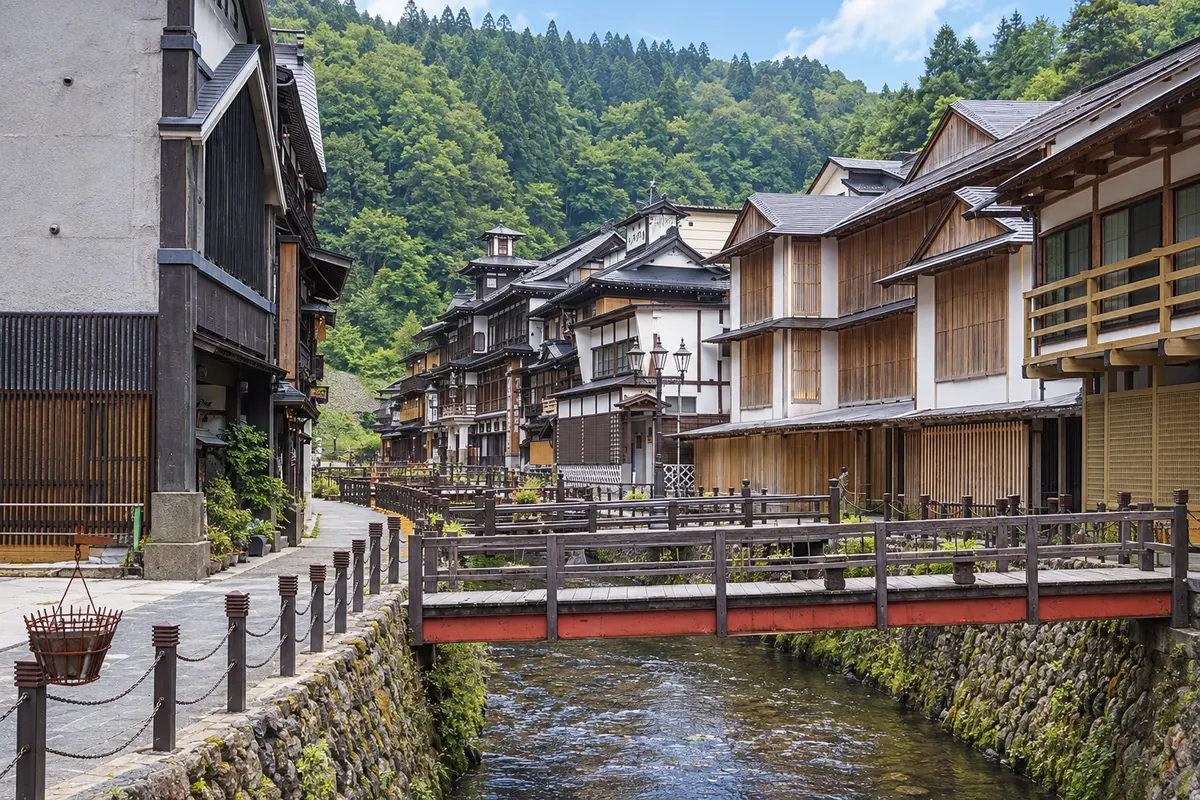
Obanazawa is a town in northern Yamagata known for snow, watermelons and buckwheat, and above all for Ginzan Onsen, the hot-spring village of three- and four-story wooden inns in the Ginzan River valley, about 15 km from the town center. At the far end of the village are the Shirogane waterfall and the old Nobesawa silver mine.
Cherry harvest runs from June to July. Summers are hot in the basins, and the Hanagasa Festival, with dances and flower hats, takes place in August in Yamagata. Yamadera and the Dewa mountains turn autumn colors in October. Snow in Ginzan lasts from December to March, and Zao’s snow monsters usually form from January until the beginning of March.
The Yamagata Shinkansen connects Tokyo to Yamagata in about 2 hours 40 minutes and continues to Shinjo, passing Oishida, from which buses go to Ginzan Onsen. Yamadera is about 20 minutes from Yamagata and 1 hour from Sendai on the JR Senzan Line. Zao Onsen is served by buses from Yamagata. Yamagata Airport (GAJ) and Shonai Airport (SYO) have flights from Tokyo.
Your questions
About 30–40 minutes to climb the more than one thousand steps to the Godaido, including stops at the halls along the way. Sturdy footwear helps, especially in winter, when the steps can be icy.
Take the bullet train to Oishida and a bus to the village, about 40 minutes. Private cars are not allowed on the main street, and in winter day-visitor access may have special rules: confirm before you go.
Generally from January until the beginning of March, when wind and snow coat the trees at the summit. The Zao Onsen ropeway takes you up to them, and on some nights the trees are illuminated.
Haguro, Gassan and Yudono — sacred mountains of the Shugendo tradition, which blends Buddhism and Shinto. Haguro, the most accessible, welcomes visitors year-round; Gassan and Yudono are visited mainly in summer because of the snow.
Beyond the guide