2 cities

 Search
 Brazil
 Antarctica
 Argentina
 Bolivia
 Chile
 Colombia
 Ecuador
 Guyana
 French Guiana
 Falkland Islands (Malvinas)
 Paraguay
 Peru
 Suriname
 Uruguay
 Venezuela
 Germany
 Austria
 Belgium
 Croatia
 Denmark
 Slovakia
 Slovenia
 Spain
 Finland
 France
 Greece
 the Netherlands
 Hungary
 Ireland
 Iceland
 Italy
 Luxembourg
 Norway
 Poland
 Portugal
 the United Kingdom
 the Czech Republic
 Sweden
 Switzerland
 Turkey
 Bermuda
 Canada
 the United States
 Greenland
 Mexico
 Saint Pierre and Miquelon
 the Dominican RepublicJapanTurkey
 South Africa
 Egypt
 Australia
 Fiji
 New Zealand
 Papua New Guinea
Province · Kyushu
The hells of Beppu, the village of Yufuin, the sand and mud baths, the Yabakei Gorge and the stone-carved Buddhas of Usuki.
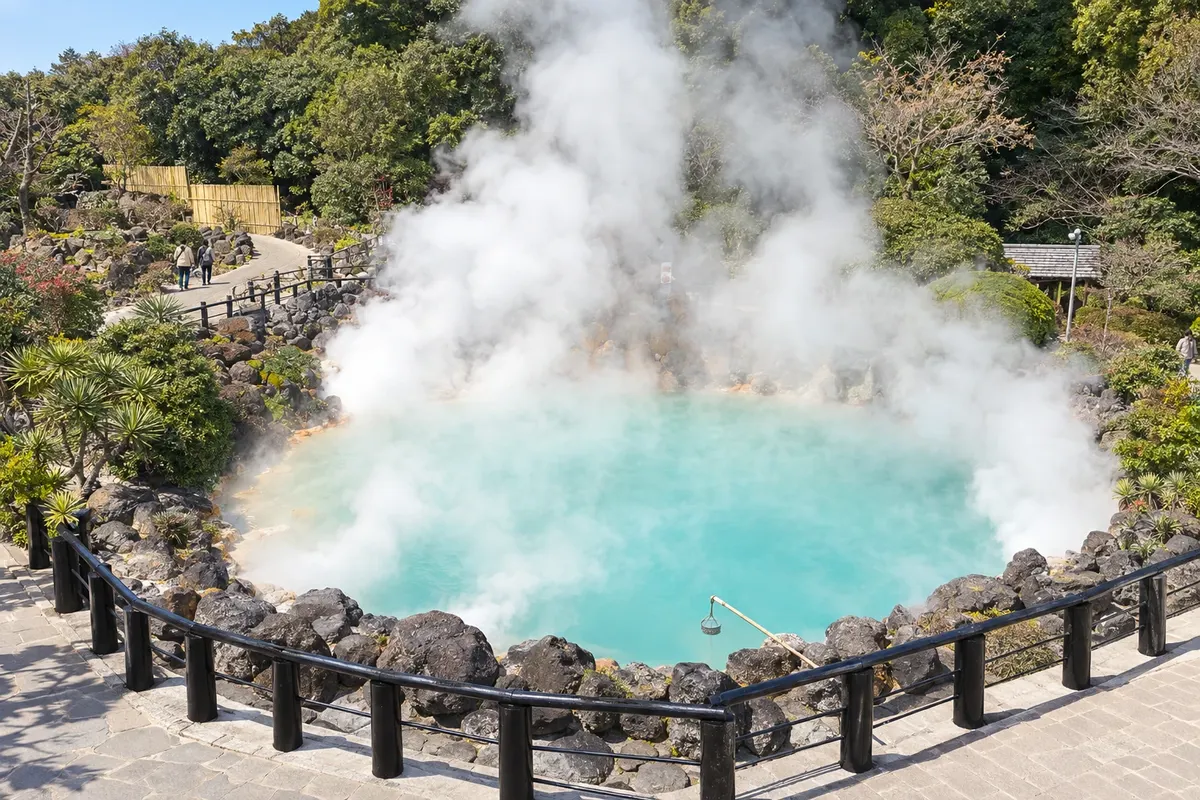
In the photo: Umi Jigoku hot pond, in Oita.
Illustrative images. The pictures in this guide are illustrations based on the real place, not photographs, and may differ from it.

The province
Oita is in northeastern Kyushu, facing the Seto Inland Sea, and has the largest number of hot springs and the greatest thermal water volume in Japan. For that reason it is known as the hot-spring prefecture. Fish from the Saganoseki area, such as mackerel and Seki jack mackerel, is served raw.
In Beppu, steam rises from the streets, from sewers and from hillsides. The city has eight hot-spring districts, with historic public bathhouses, hot sand baths, mud baths and steam baths. The hells—hot-spring ponds with strong colors, like the blue of Umi Jigoku and the red of Chinoike Jigoku—are for viewing, not for bathing. In the Kannawa neighborhood, vegetables and eggs are cooked in the steam of the springs.
Yufuin sits at the foot of Mount Yufu, in a valley with Lake Kinrin, which is covered in mist on cold mornings. The main street has galleries, cafés and shops, and the inns spread across the fields, many with outdoor baths. A panoramic train connects Yufuin to Fukuoka.
In Usuki, Buddhas carved in rock between the 12th and 14th centuries are a national treasure. The Kunisaki Peninsula has mountain temples, such as Fuki-ji, one of Kyushu’s oldest wooden buildings. The Yabakei Gorge features rock formations and hand-carved tunnels, and the Kokonoe suspension bridge spans a valley of waterfalls. At Takasakiyama, hundreds of monkeys come down the mountain into the park.
Destinations
Cities
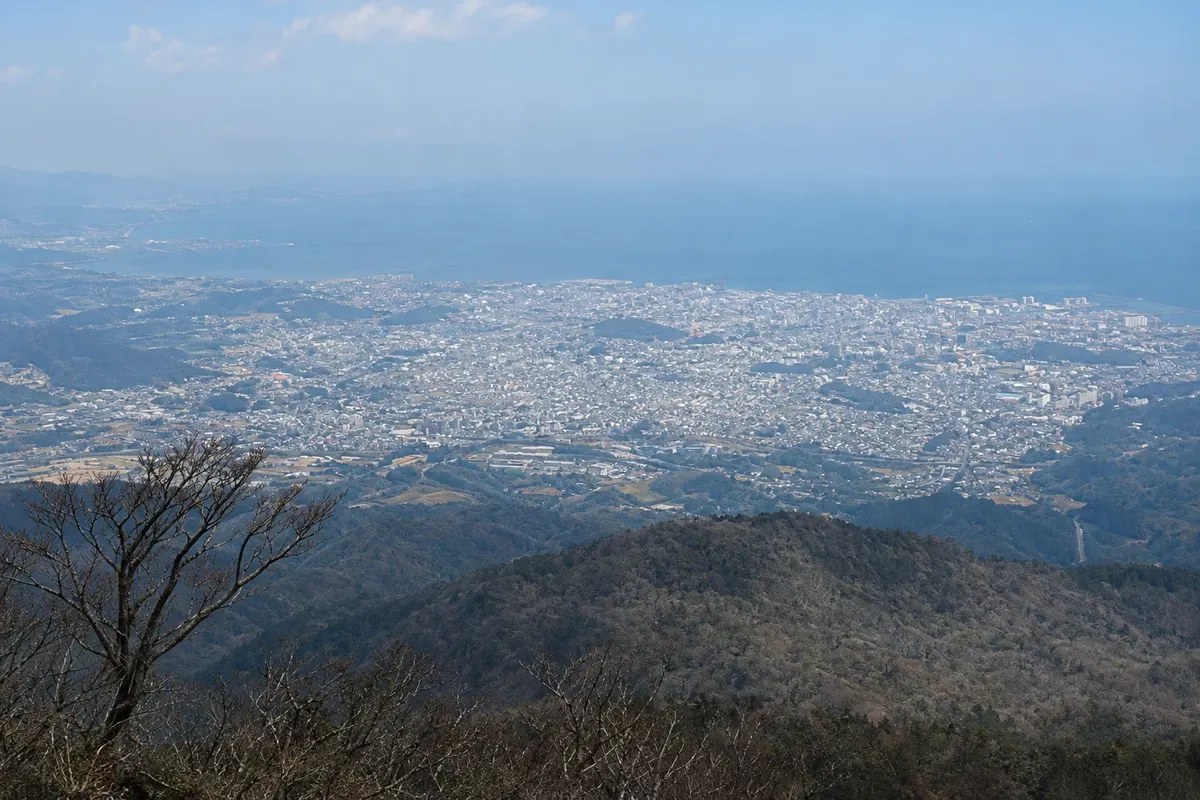
Beppu is the hot-spring city on Beppu Bay in Oita, where steam rises from streets and slopes. It has hundreds of baths, the Kannawa and Shibaseki hells—which are visited as scenery—the hot sand bath at Takegawara and Myoban’s yunohana huts. Mount Tsurumi, with a ropeway, rises behind the town.
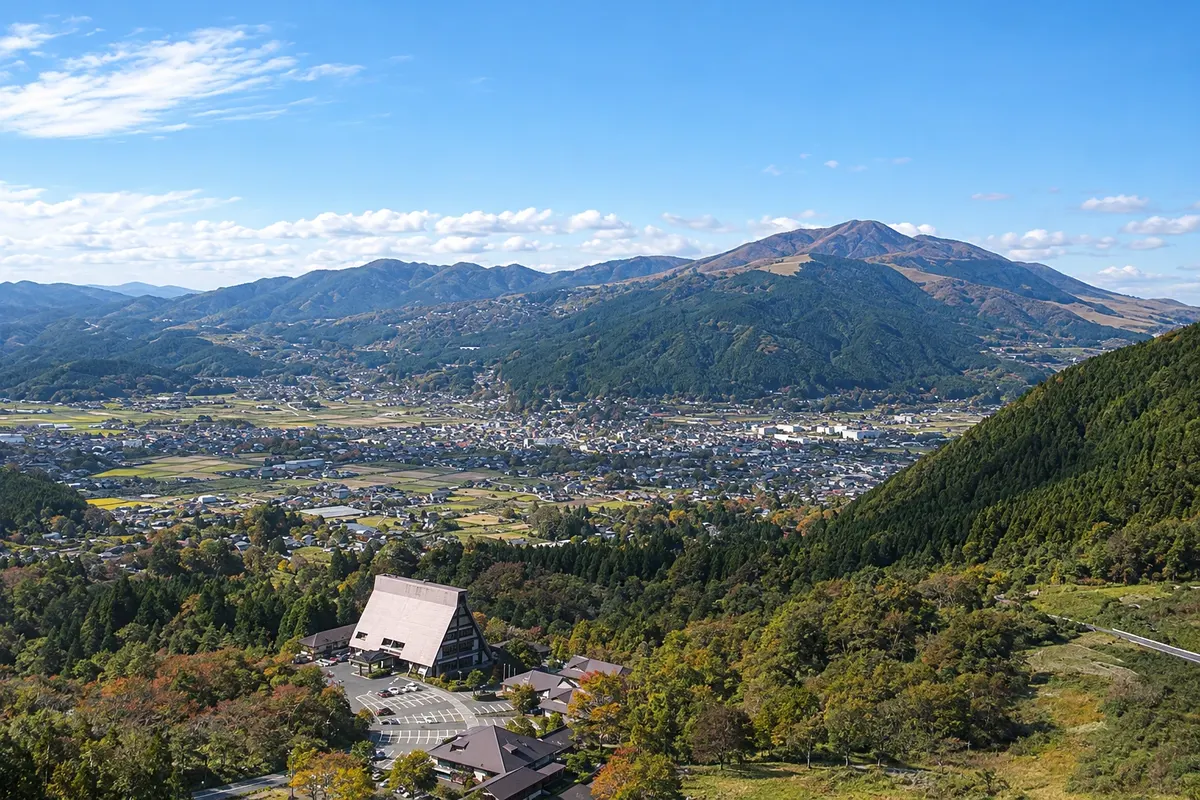
Yufu is the municipality that includes Yufuin, the hot-spring village in a green basin beneath Mount Yufu, about 25 km from Beppu. It has ryokan scattered among rice paddies, Yunotsubo Street with shops and cafés between the station and Lake Kinrin, which often gives off mist on cold mornings, and the trail up Mount Yufu.
The hot springs welcome visitors year-round, and in winter Beppu’s steam is more visible. Mist over Lake Kinrin appears on cold mornings from autumn into winter. The maples of Yabakei and Kokonoe turn red in November. Summers are hot, and the sand baths are more pleasant in the cooler seasons.
Oita Airport (OIT) is about a 40-minute bus ride from Beppu. The Sonic limited express connects Hakata to Beppu in about 2 hours. For Yufuin there are panoramic trains and buses from Fukuoka, taking about 2 hours 20 minutes. Night ferries connect Osaka and Kobe to Beppu. Yufuin and Beppu are about 50 minutes apart by bus.
Your questions
No. The hells are very hot ponds meant for viewing. For bathing, there are dozens of public bathhouses and sand, mud and steam baths in the city.
By panoramic train, with reservation, in about 2 hours 20 minutes, or by express bus from Hakata terminal or the airport in about 2 hours. From Beppu the bus takes about 50 minutes.
Visitors lie down in a yukata on sand heated by thermal water, and staff cover you up to the neck for about 10 to 15 minutes. Afterwards a hot-spring bath removes the sand. There are sand baths on the beach and at the Takegawara bathhouse.
Two days allow you to see the hells, enjoy various baths in Beppu and spend one night in Yufuin. With a third day you can add Usuki, Kunisaki or the Yabakei Gorge.
Beyond the guide


