1 city

 Search
 Brazil
 Antarctica
 Argentina
 Bolivia
 Chile
 Colombia
 Ecuador
 Guyana
 French Guiana
 Falkland Islands (Malvinas)
 Paraguay
 Peru
 Suriname
 Uruguay
 Venezuela
 Germany
 Austria
 Belgium
 Croatia
 Denmark
 Slovakia
 Slovenia
 Spain
 Finland
 France
 Greece
 the Netherlands
 Hungary
 Ireland
 Iceland
 Italy
 Luxembourg
 Norway
 Poland
 Portugal
 the United Kingdom
 the Czech Republic
 Sweden
 Switzerland
 Turkey
 Bermuda
 Canada
 the United States
 Greenland
 Mexico
 Saint Pierre and Miquelon
 the Dominican RepublicJapanTurkey
 South Africa
 Egypt
 Australia
 Fiji
 New Zealand
 Papua New Guinea
Province · Chubu
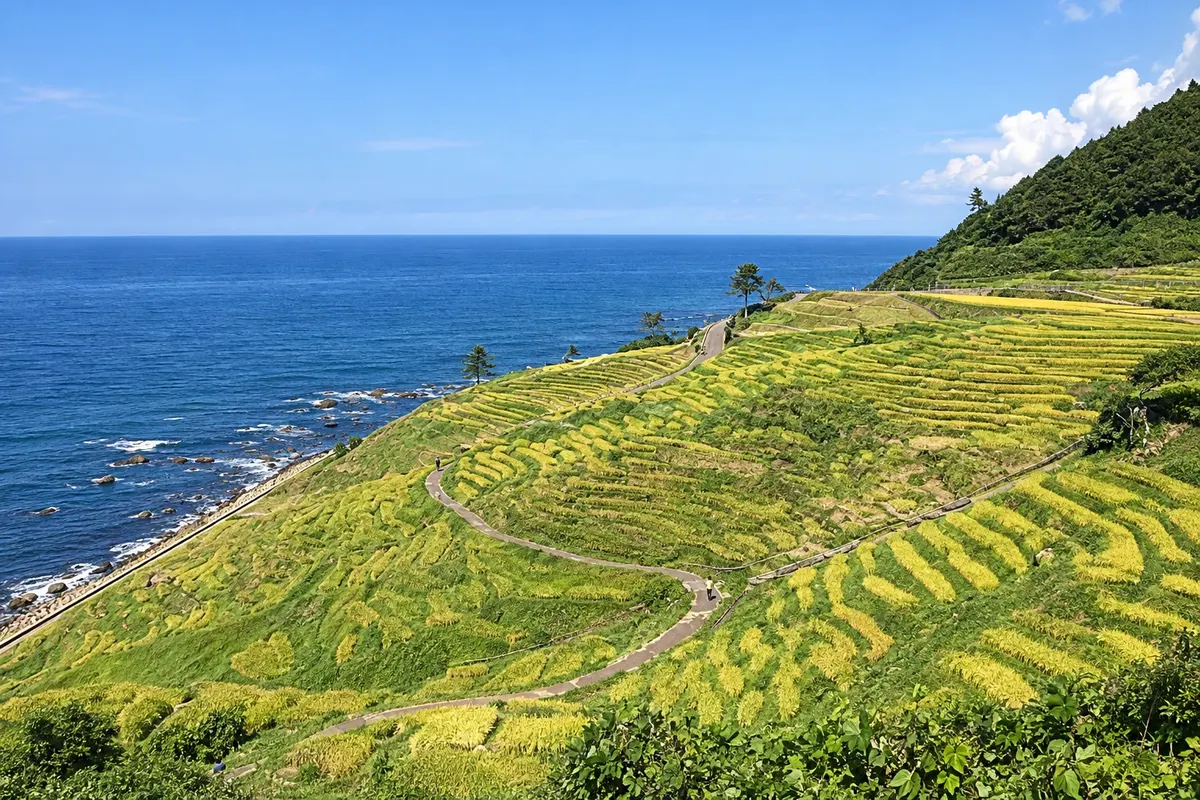
Kanazawa and Kenroku-en Garden, the geisha and samurai districts, Omicho Market, the Kaga hot springs and the Noto Peninsula.
In the photo: Shiroyone Senmaida rice terraces, in Ishikawa.
Illustrative images. The pictures in this guide are illustrations based on the real place, not photographs, and may differ from it.

The province
Ishikawa stretches along the Sea of Japan, from the Noto Peninsula in the north to the Kaga hot springs in the south. It was the domain of the Maeda clan, one of the wealthiest of the Edo period, which promoted handicrafts: Wajima lacquerware, Kutani porcelain and the gold leaf of Kanazawa, which accounts for most of the country’s gold leaf production.
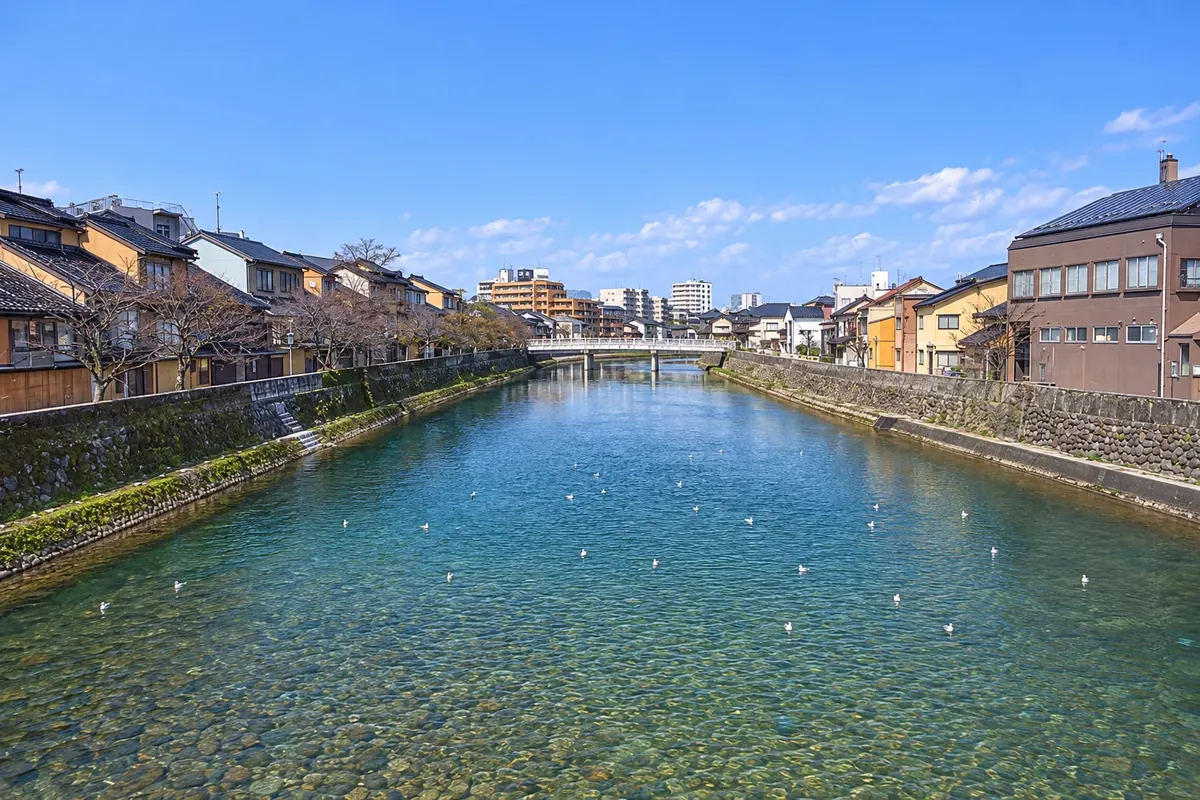
Kanazawa, the capital, escaped World War II bombings and preserves old neighbourhoods. Kenroku-en, one of Japan’s three great gardens, sits next to the castle park. The Higashi Chaya district has wooden teahouses where geisha still perform, and Nagamachi preserves earthen-walled streets of samurai families. The 21st Century Museum of Contemporary Art is a circular glass building.
Omicho Market sells fish and seafood from the Sea of Japan, such as crab in winter and nodoguro, a fatty-fleshed fish. The Noto Peninsula to the north has jagged coasts, the Shiroyone Senmaida rice terraces descending to the sea, and festivals with large lanterns called kiriko. The peninsula was hit by an earthquake in January 2024 and is rebuilding gradually.
To the south, the Kaga hot springs include the villages of Yamanaka, Yamashiro and Katayamazu, near Natadera Temple, among rocks and caves. Sacred Mount Hakusan is sought by hikers in summer. Shirakawa-go, in Gifu, is a little over an hour by bus from Kanazawa.
Destinations
The cherry trees in Kenroku-en generally bloom in early April. July and August are usually humid. November brings maples turning red in the garden and the time when the garden’s pines receive yukitsuri, ropes tied to a pole that protect branches from the weight of snow. Crab appears at Omicho Market from November to March. Winter brings cloudy skies and moderate city snowfall.
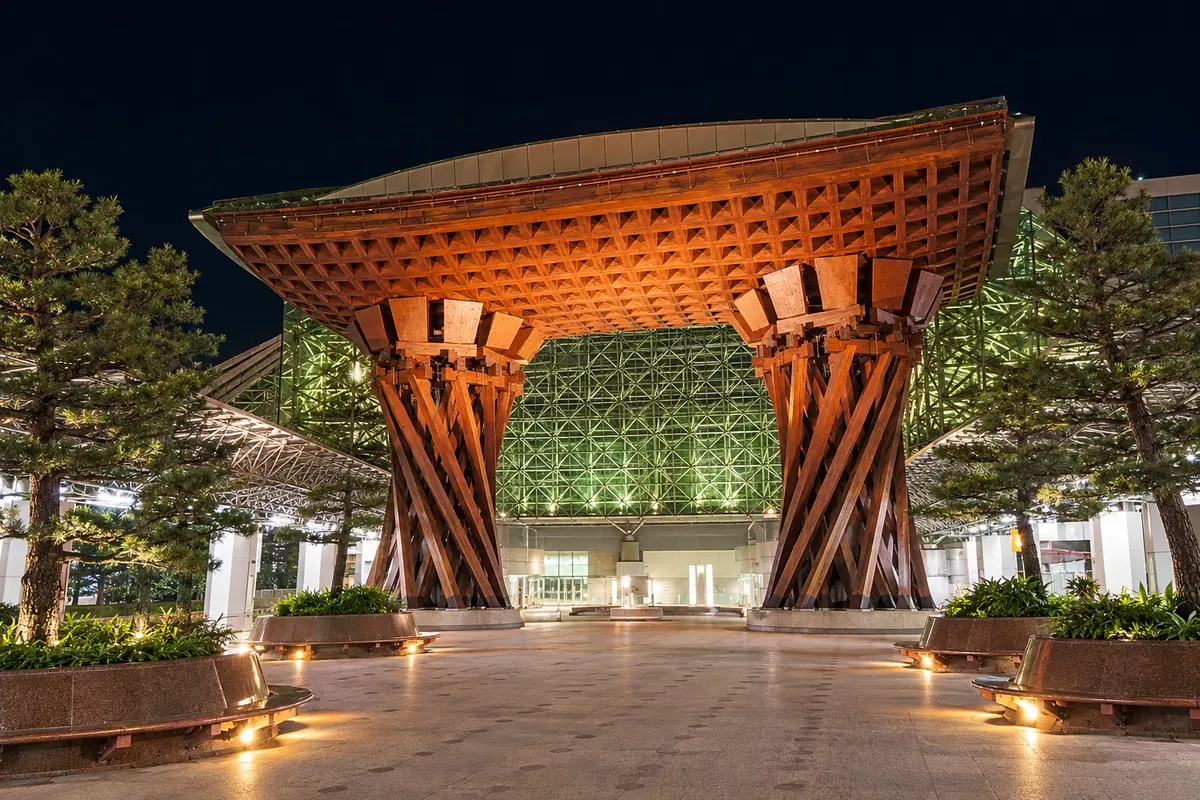
The Hokuriku Shinkansen connects Tokyo to Kanazawa in about 2½ hours. From Osaka or Kyoto, take the Thunderbird limited express and transfer to the bullet train at Tsuruga, a journey of about 2 hours. Komatsu Airport (KMQ) is about 40 minutes by bus from Kanazawa, and Noto Airport receives flights from Tokyo. Buses connect Kanazawa with Shirakawa-go and Takayama.
Your questions
Two days allow you to see Kenroku-en, the castle, Higashi Chaya, Nagamachi, Omicho Market and the 21st Century Museum. With a third day you can include Shirakawa-go or the Kaga hot springs.
The ropes are installed in November and remain until March. They coincide with autumn foliage in November, and with snow between December and February.
Yes, gradually: roads, accommodations and attractions have been reopening after the 2024 earthquake, and tourism is part of the recovery. Before you travel, confirm what is open and the condition of the roads.
By bus, in about 1 hour 15 minutes, with advance reservation in high season. Buses continue to Takayama, allowing you to combine the three towns in one itinerary.
Beyond the guide