Dish · Nara
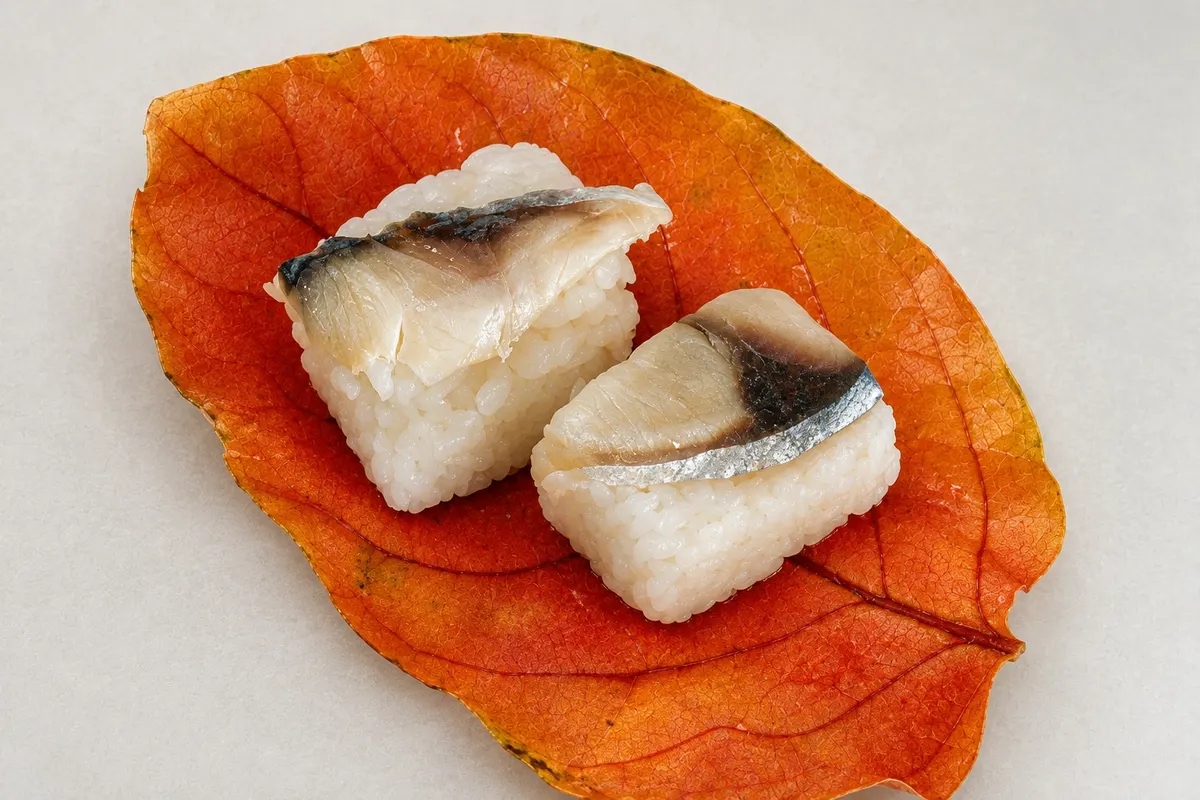
Kakinoha-zushi
Small pressed sushis of salted mackerel on seasoned rice, each wrapped in a persimmon leaf. A dish from Nara, served at the summer festivals of Gojō and Yoshino.

 Search
 Brazil
 Antarctica
 Argentina
 Bolivia
 Chile
 Colombia
 Ecuador
 Guyana
 French Guiana
 Falkland Islands (Malvinas)
 Paraguay
 Peru
 Suriname
 Uruguay
 Venezuela
 Germany
 Austria
 Belgium
 Croatia
 Denmark
 Slovakia
 Slovenia
 Spain
 Finland
 France
 Greece
 the Netherlands
 Hungary
 Ireland
 Iceland
 Italy
 Luxembourg
 Norway
 Poland
 Portugal
 the United Kingdom
 the Czech Republic
 Sweden
 Switzerland
 Turkey
 Bermuda
 Canada
 the United States
 Greenland
 Mexico
 Saint Pierre and Miquelon
 the Dominican RepublicJapanTurkey
 South Africa
 Egypt
 Australia
 Fiji
 New Zealand
 Papua New Guinea
Province · Kansai
The Great Buddha of Tōdai-ji, the deer in Nara Park, Hōryū-ji, the cherry trees of Yoshino and the tombs and stones of Asuka.
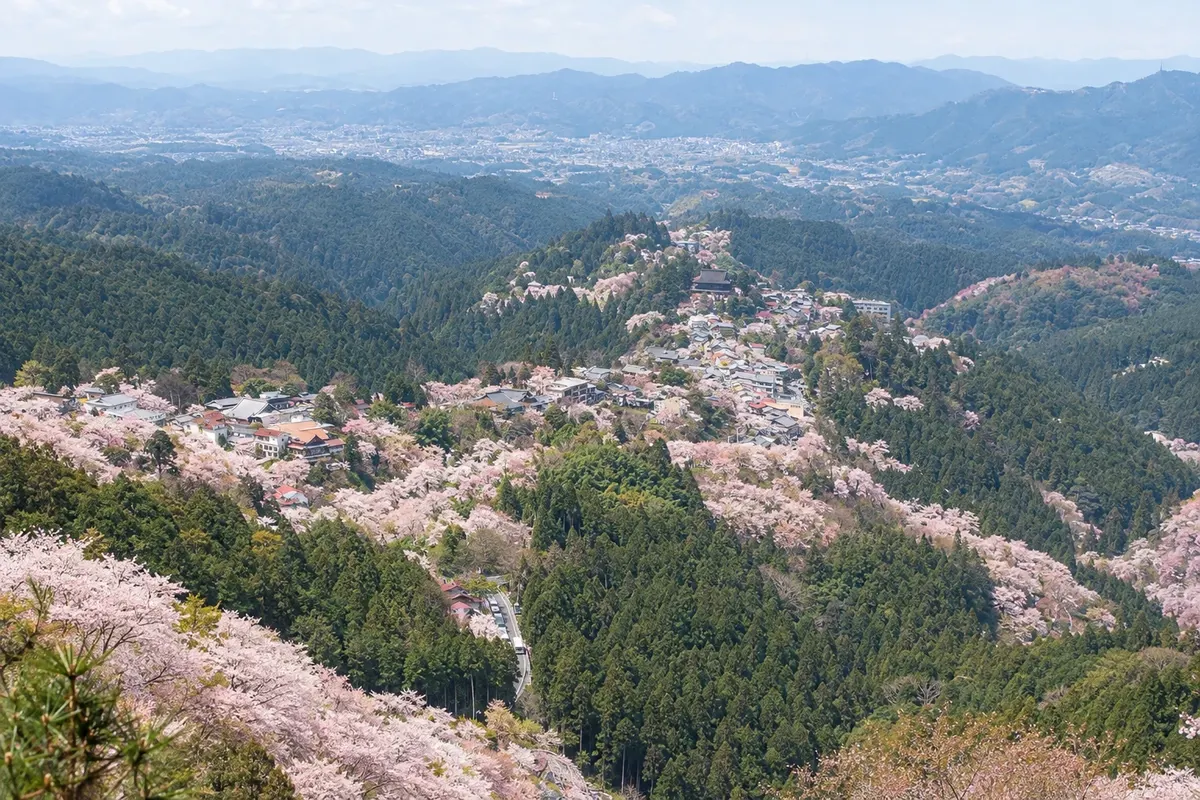
In the photo: Mount Yoshino, in Nara.
Illustrative images. The pictures in this guide are illustrations based on the real place, not photographs, and may differ from it.

The province
Nara was Japan’s first permanent capital, called Heijō-kyō, from 710 to 784, and it was there that Buddhism gained strength in the country. The prefecture is landlocked and occupies the center of the Kii Peninsula, with the Nara basin to the north and mountains to the south.
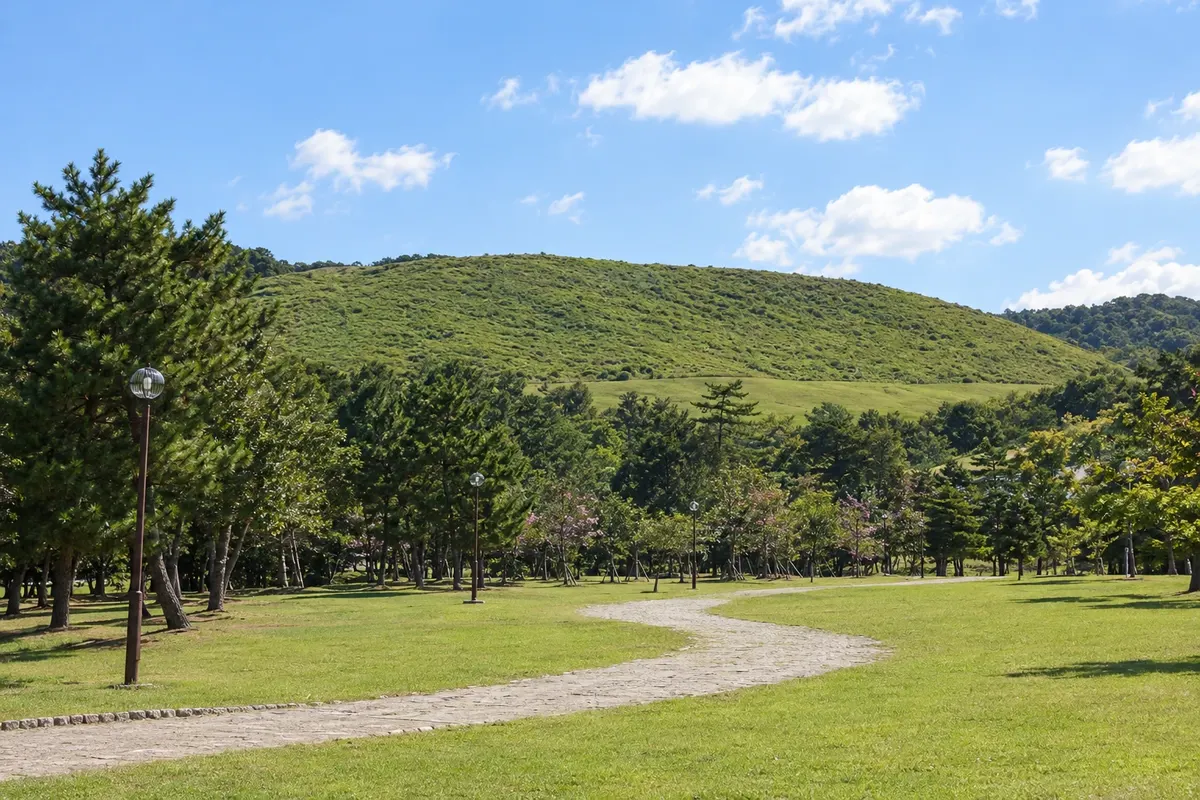
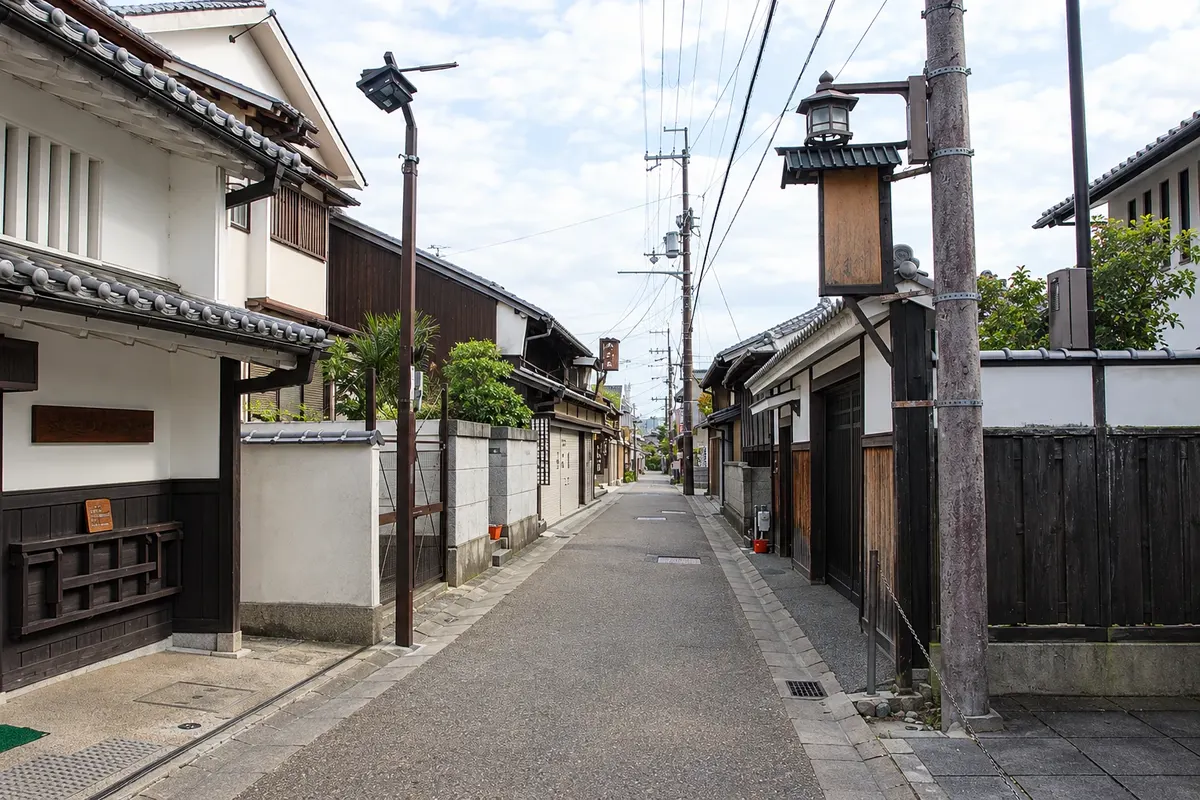
In Nara Park, hundreds of deer roam freely and are considered messengers of the gods. Tōdai-ji houses the Great Bronze Buddha, about 15 meters tall, inside one of the largest wooden buildings in the world. Kasuga Taisha shrine has thousands of stone and bronze lanterns, and Kōfuku-ji features a five-story pagoda. These monuments make up the UNESCO World Heritage of Ancient Nara, inscribed in 1998. Naramachi preserves merchant houses.
In Ikaruga, Hōryū-ji, founded in the early 7th century, contains some of the oldest wooden buildings in the world and has been a UNESCO site since 1993. Further south, Asuka was the seat of the court before Nara and preserves tombs, such as Ishibutai, made of large stones, and mysterious stone figures scattered across the fields, which are often explored by bicycle.
Yoshino, in the mountains, has tens of thousands of cherry trees planted in tiers that bloom from the bottom up over several weeks. Kinpusen-ji temple and the mountain pilgrimage trails are part of the sacred area of the Kii Mountains, a UNESCO site. Further south, the village of Totsukawa has a long suspension bridge over the river.
Flavors of Japan
Destinations
In the city of Nara, the cherry trees bloom in late March; in Yoshino they generally bloom in early to mid-April. In November, the maples turn red in Nara Park and at the temples of Yoshino. In late October and early November, the Nara National Museum exhibits treasures from the Shōsō-in. In March, Tōdai-ji holds the Omizutori ceremony with torches, and in January Mount Wakakusa is burned at night.
The Kintetsu railway connects Osaka-Namba to Kintetsu-Nara in about 40 minutes and Kyoto to Nara in about 45 minutes on the express train. JR also connects Osaka and Kyoto to Nara. To reach Hōryū-ji, take a train to Horyuji Station and then a bus or walk, about 20 minutes. Yoshino is about 1 hour 20 minutes from Osaka-Abenobashi on Kintetsu.
Your questions
Yes. Nara is less than an hour from Osaka and Kyoto, and one day allows you to see Tōdai-ji, the deer park, Kasuga Taisha and Kōfuku-ji. Hōryū-ji requires an additional half day.
With the rice crackers sold in the park, the shika senbei, and only with those. The deer bow when asking for the cracker, but they can push or nip people who are slow to hand it over: show your empty hands when you run out.
By train on the JR Yamatoji line to Horyuji Station, about 12 minutes from Nara, then by bus or on foot to the temple. There are also direct buses from central Nara.
Generally from early to mid-April. Trees at the lower levels bloom first and those higher up one or two weeks later. At that time, trains and roads get crowded: arrive early.
Beyond the guide