Dish · Iwate
Wanko soba
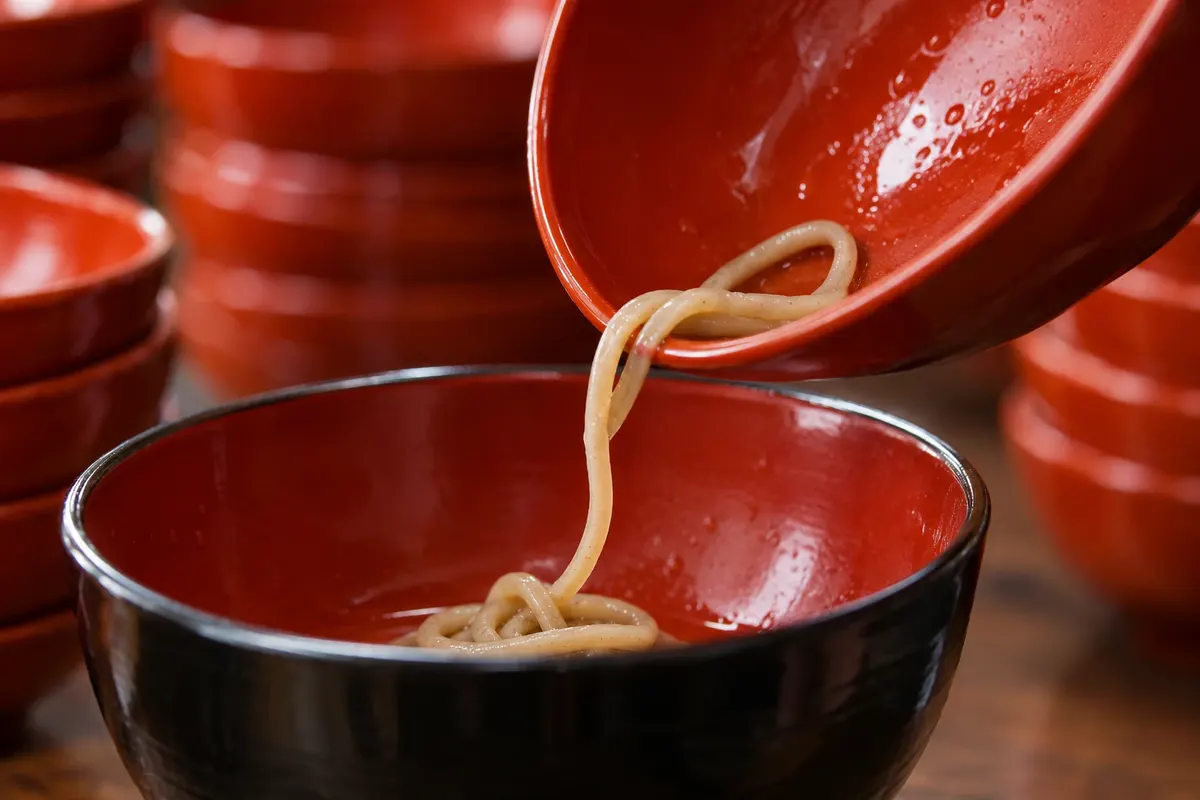
Soba served in one-bite portions in small bowls, refilled by the server until you cover the bowl. A tradition from Iwate that began as a way to welcome guests.

 Search
 Brazil
 Antarctica
 Argentina
 Bolivia
 Chile
 Colombia
 Ecuador
 Guyana
 French Guiana
 Falkland Islands (Malvinas)
 Paraguay
 Peru
 Suriname
 Uruguay
 Venezuela
 Germany
 Austria
 Belgium
 Croatia
 Denmark
 Slovakia
 Slovenia
 Spain
 Finland
 France
 Greece
 the Netherlands
 Hungary
 Ireland
 Iceland
 Italy
 Luxembourg
 Norway
 Poland
 Portugal
 the United Kingdom
 the Czech Republic
 Sweden
 Switzerland
 Turkey
 Bermuda
 Canada
 the United States
 Greenland
 Mexico
 Saint Pierre and Miquelon
 the Dominican RepublicJapanTurkey
 South Africa
 Egypt
 Australia
 Fiji
 New Zealand
 Papua New Guinea
Province · Tohoku
Hiraizumi and the golden hall of Chuson-ji, Morioka and wanko soba, the Geibikei Gorge and the Sanriku coast.
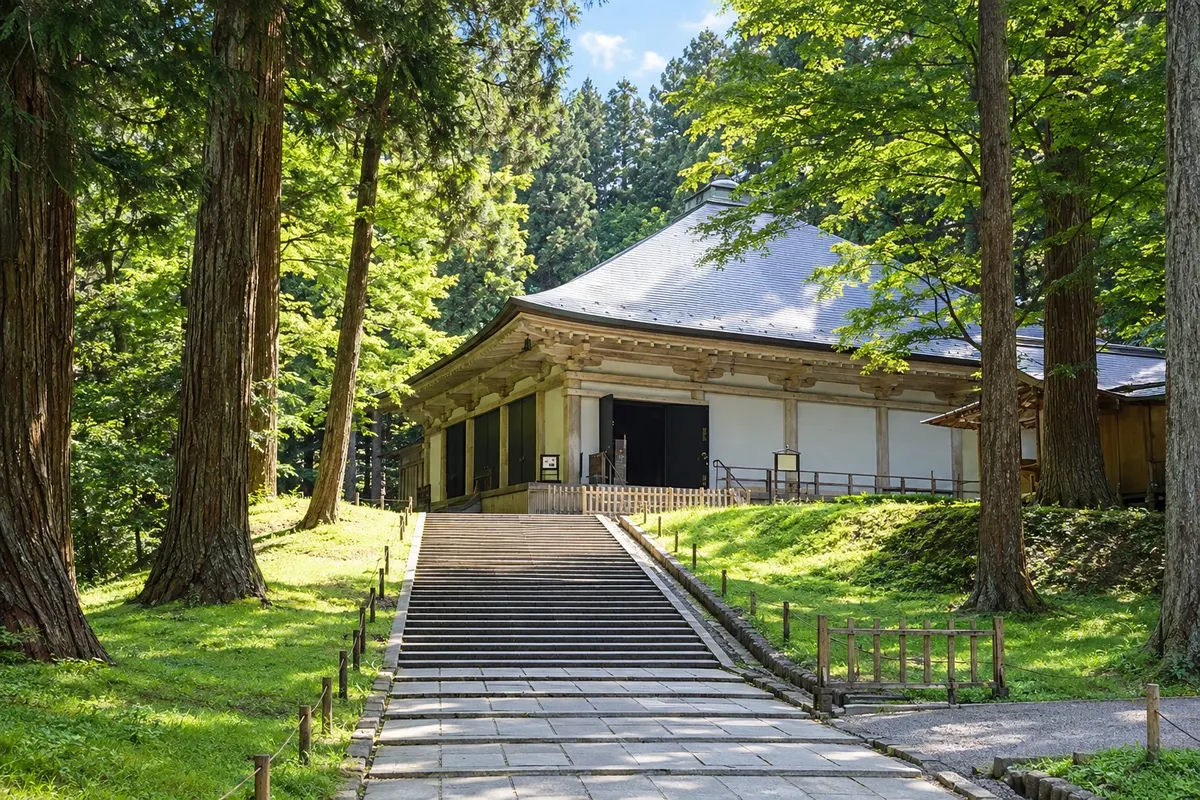
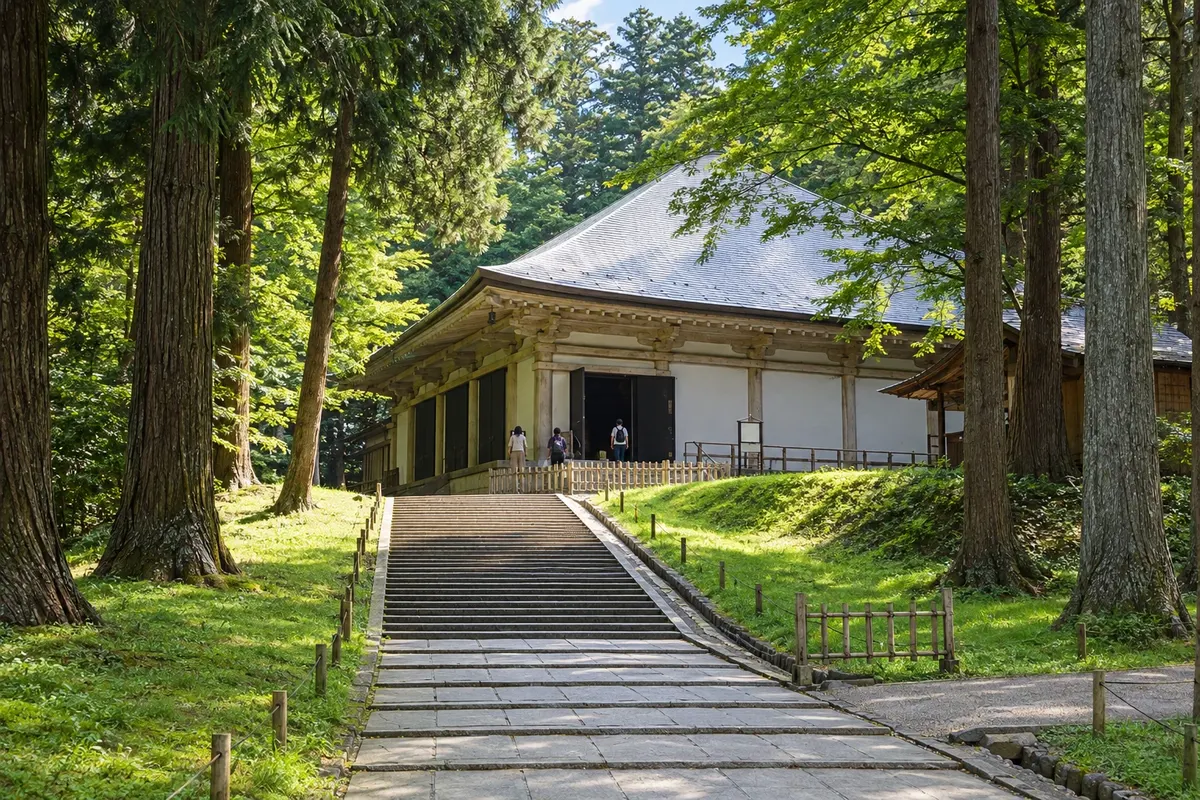
In the photo: Chuson-ji Temple, in Iwate.
Illustrative images. The pictures in this guide are illustrations based on the real place, not photographs, and may differ from it.

The province
Iwate is Japan’s second-largest prefecture after Hokkaido, and the largest on Honshu. Mountains and plateaus cover the interior, and the Sanriku coast to the east features indented bays and cliffs facing the Pacific. The capital, Morioka, sits at the confluence of rivers with Mount Iwate in the background.
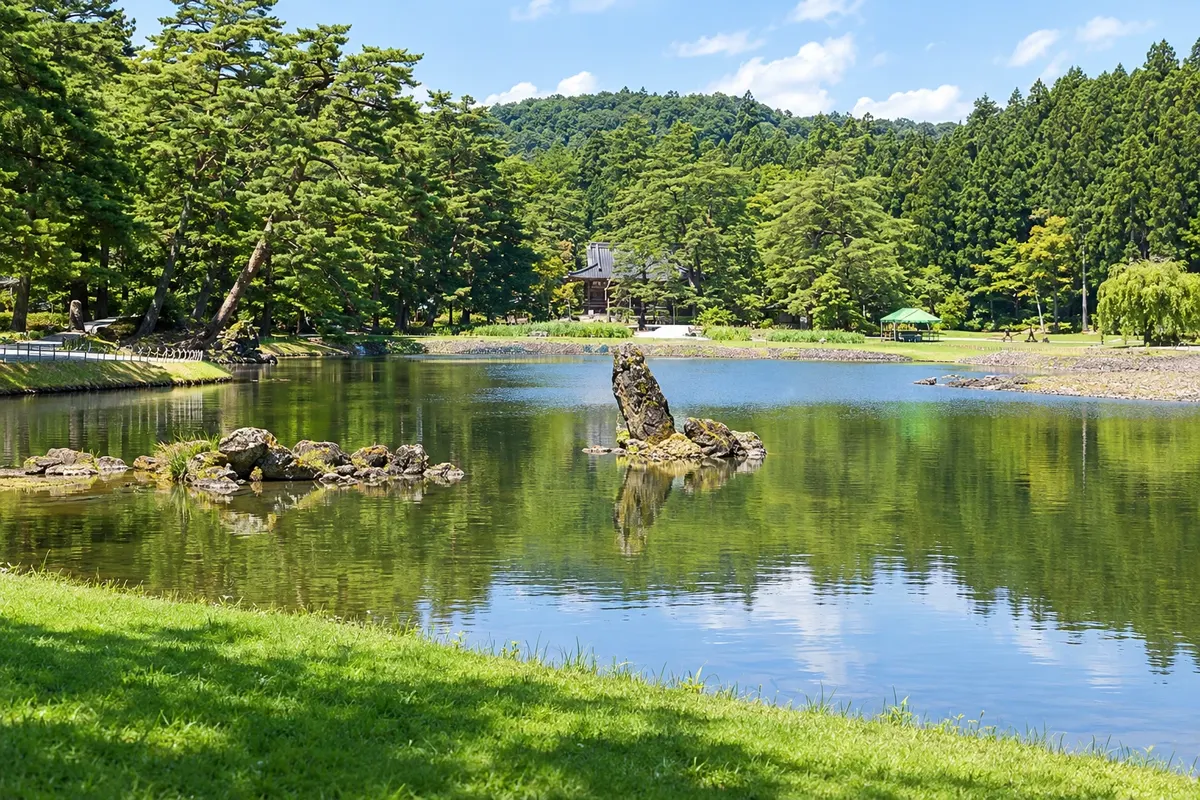
In the 12th century, Hiraizumi was the seat of the Northern Fujiwara, who built temples and gardens inspired by the Pure Land of Buddhism. Chuson-ji houses the Konjikido, a small hall covered in gold leaf, and Motsu-ji preserves a garden with a pond from the same era. The ensemble has been a UNESCO World Heritage Site since 2011.
Morioka has castle ruins in a park, old merchant streets and bridges over the Nakatsu River. The city is known for wanko soba, served in small bowls that are continually refilled, and for reimen, a cold noodle dish. Nanbu tekki cast-iron kettles come from the region. Further east, Tono is known for the legends compiled in a book from the early 20th century.
Near Ichinoseki, the Geibikei Gorge is navigated in flat-bottomed boats propelled with poles while the boatman sings. On the coast, Jodogahama beach in Miyako has white rocks and calm water. In Rikuzentakata, the park and memorial museum tell the story of the 2011 earthquake and tsunami.
Flavors of Japan
Destinations
Spring arrives in April and May. In June the Chagu Chagu Umakko festival parades horses dressed with bells through Morioka, and in August the city dances the Sansa Odori. Summers are mild. Hiraizumi and Geibikei have red maples from October into early November. In winter the inland areas receive snow, and the Appi Kogen resort operates for skiing.
The Tohoku Shinkansen connects Tokyo to Morioka in about 2 hours 10 minutes and to Ichinoseki in about 2 hours. From Ichinoseki, a local train reaches Hiraizumi in about 10 minutes, and buses go to Geibikei. Iwate-Hanamaki Airport (HNA) has flights from Osaka, Sapporo and Fukuoka. The Sanriku coast is served by buses and the Sanriku Railway.
Your questions
Take the bullet train to Ichinoseki and a local train to Hiraizumi, about 10 minutes. From the station a circular bus stops at Motsu-ji and Chuson-ji, and you can also walk or cycle between the sites.
It’s a way of serving Morioka’s buckwheat noodles in very small portions: the server keeps refilling your bowl as soon as it’s emptied. To stop the refills you cover the bowl. Some restaurants tally how many bowls each person ate.
The boat travels up and down a stretch of the gorge between rock walls for about 90 minutes. The boatman pushes the boat with a pole and sings local songs. In winter the boats have heated tables.
One day is enough for Hiraizumi and Geibikei. With one or two more days you can include Morioka and the Sanriku coast, which require more travel time.
Beyond the guide