Dish · Kumamoto
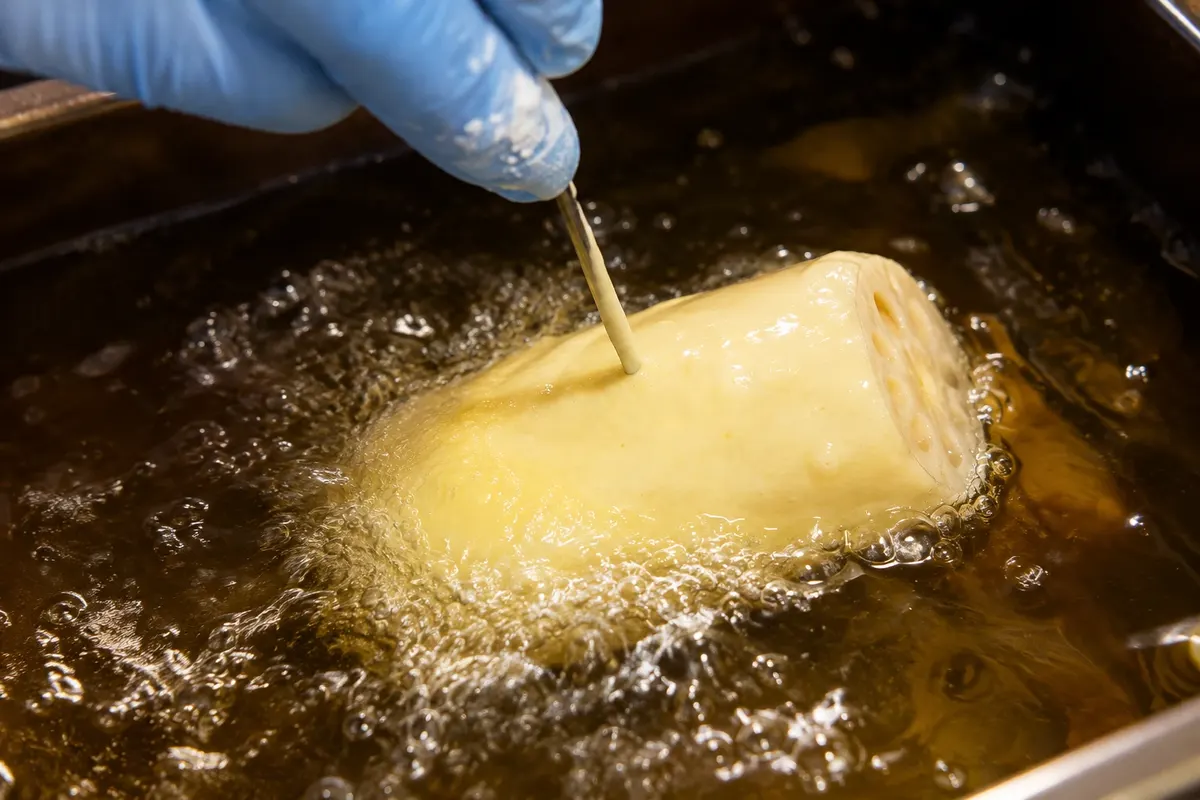
Karashi renkon
Lotus root with the holes filled with miso and Japanese mustard, breaded in a yellow batter and fried, served in slices. A dish from Kumamoto, traditionally linked to the Hosokawa lords.

 Search
 Brazil
 Antarctica
 Argentina
 Bolivia
 Chile
 Colombia
 Ecuador
 Guyana
 French Guiana
 Falkland Islands (Malvinas)
 Paraguay
 Peru
 Suriname
 Uruguay
 Venezuela
 Germany
 Austria
 Belgium
 Croatia
 Denmark
 Slovakia
 Slovenia
 Spain
 Finland
 France
 Greece
 the Netherlands
 Hungary
 Ireland
 Iceland
 Italy
 Luxembourg
 Norway
 Poland
 Portugal
 the United Kingdom
 the Czech Republic
 Sweden
 Switzerland
 Turkey
 Bermuda
 Canada
 the United States
 Greenland
 Mexico
 Saint Pierre and Miquelon
 the Dominican RepublicJapanTurkey
 South Africa
 Egypt
 Australia
 Fiji
 New Zealand
 Papua New Guinea
Province · Kyushu
Kumamoto Castle, the Suizenji Garden, Mount Aso’s caldera, the hot springs of Kurokawa and the islands and churches of Amakusa.
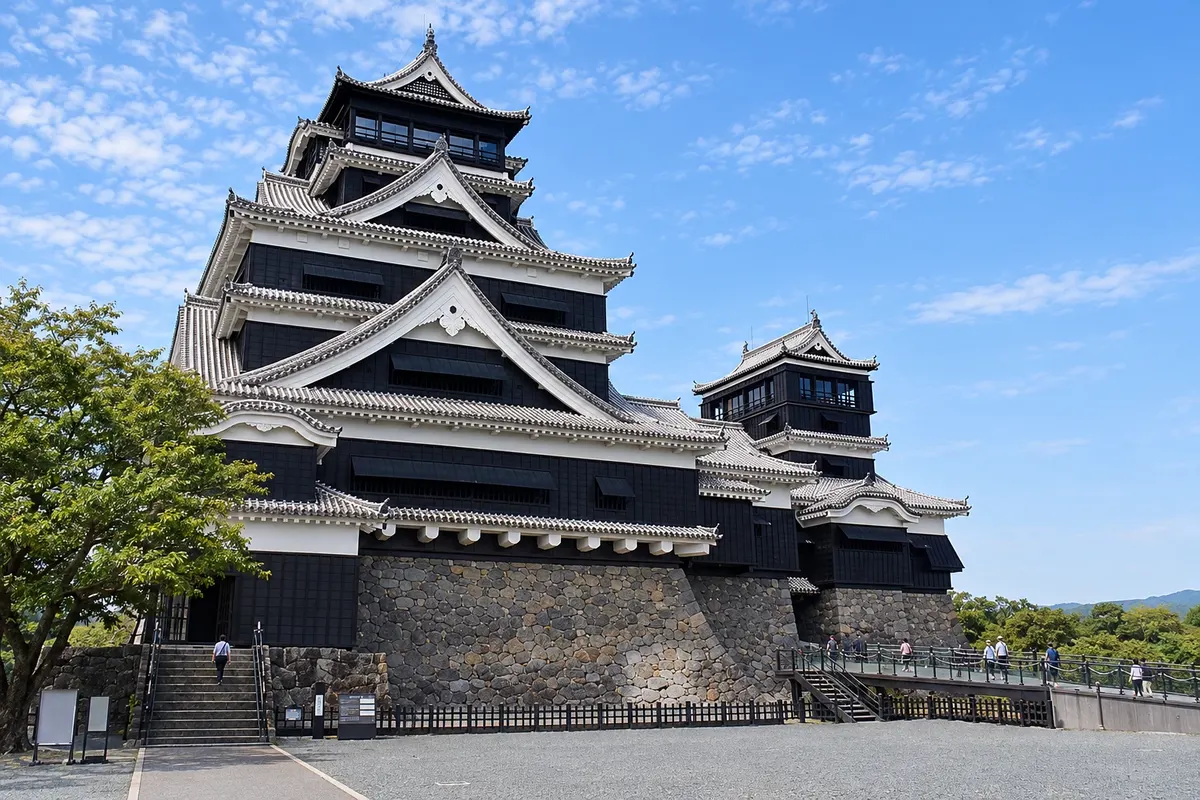
In the photo: Kumamoto Castle.
Illustrative images. The pictures in this guide are illustrations based on the real place, not photographs, and may differ from it.

The province
Kumamoto sits in the central-west of Kyushu, between the Ariake Sea and the mountains. Groundwater is so abundant it supplies the capital. The prefecture is known for basashi, raw horse meat, and ramen with roasted garlic.
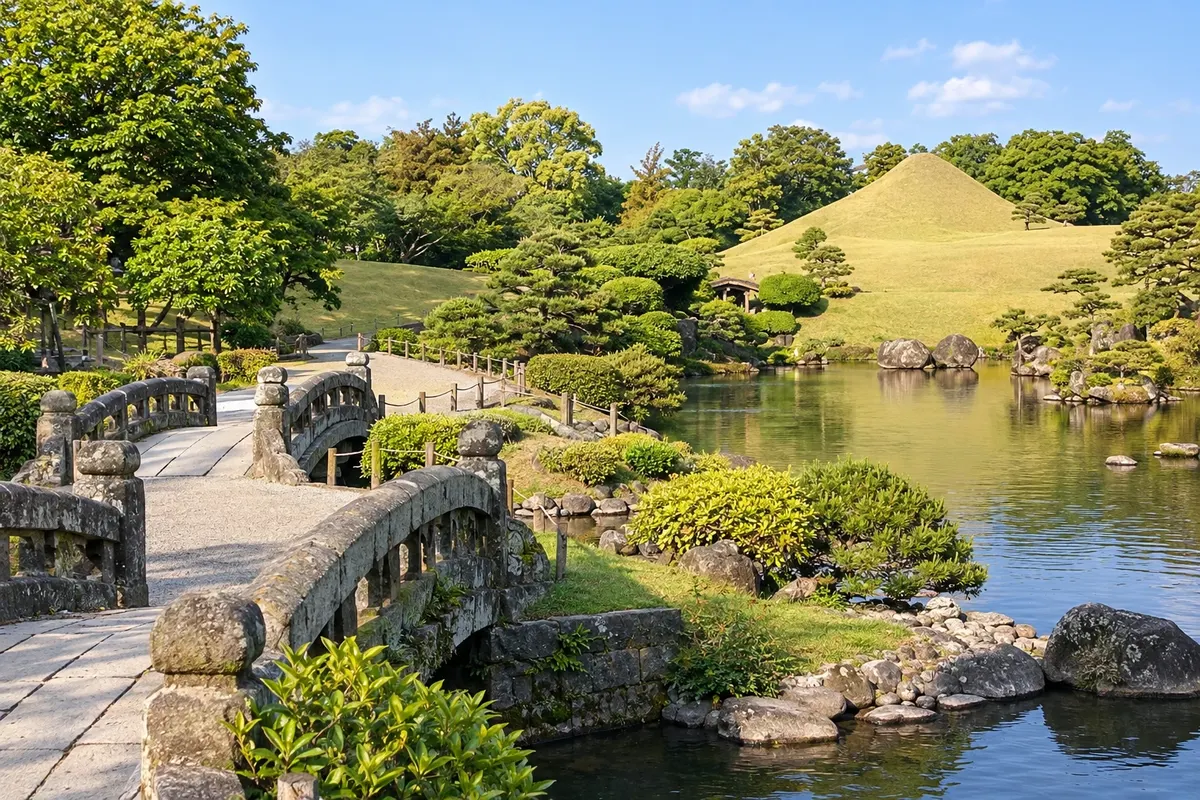
Kumamoto Castle, one of the largest in Japan, was built in the early 17th century by Kato Kiyomasa, with curved stone walls. Damaged by the 2016 earthquake, its main keep has been restored, and parts of the walls are still under repair, visible from an elevated walkway. Suizenji Garden recreates landscapes from the old Tokaido road, including a small hill shaped like Mount Fuji.
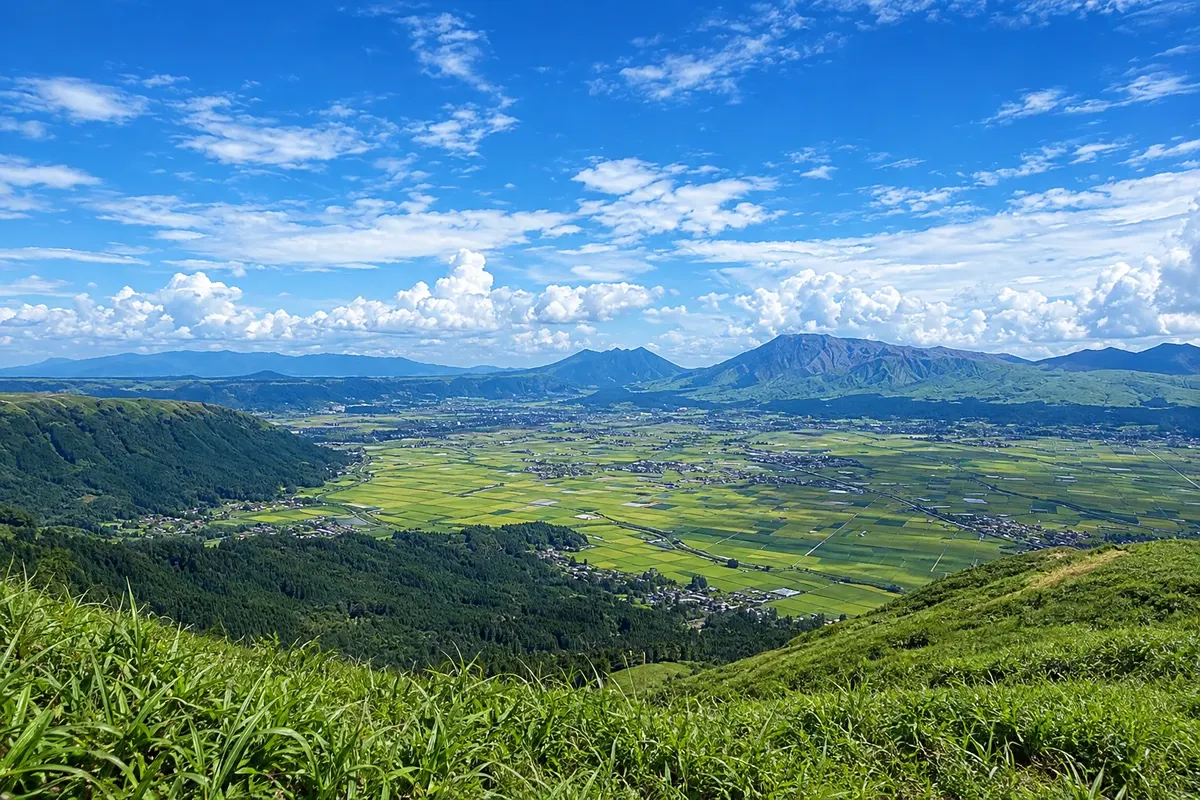
Mount Aso has one of the largest volcanic calderas in the world, with towns, fields and pastures inside it. At the center, the Nakadake crater, still active, emits steam over a green-gray lake; access depends on volcanic gases and the alert level. The Kusasenri grassland has grazing horses, and the Daikanbo viewpoint overlooks the whole caldera.
Kurokawa Onsen, north of Aso, is a hot-spring village in a valley, with outdoor baths among trees. The Amakusa islands, to the west, have Sakitsu Church in a fishing village; it is part of the Hidden Christian Sites listed by UNESCO. Hitoyoshi, in the south, has castle ruins and hot springs by the Kuma River.
Flavors of Japan
Destinations
Cities
Kumamoto is the capital of the eponymous prefecture, in central Kyushu, on the shinkansen line. It has Kato Kiyomasa’s castle, under reconstruction after the 2016 earthquakes and visited via elevated walkways, the Suizenji Garden fed by spring water, and the Shimotori and Kamitori shopping arcades. It is the gateway to the Aso caldera.
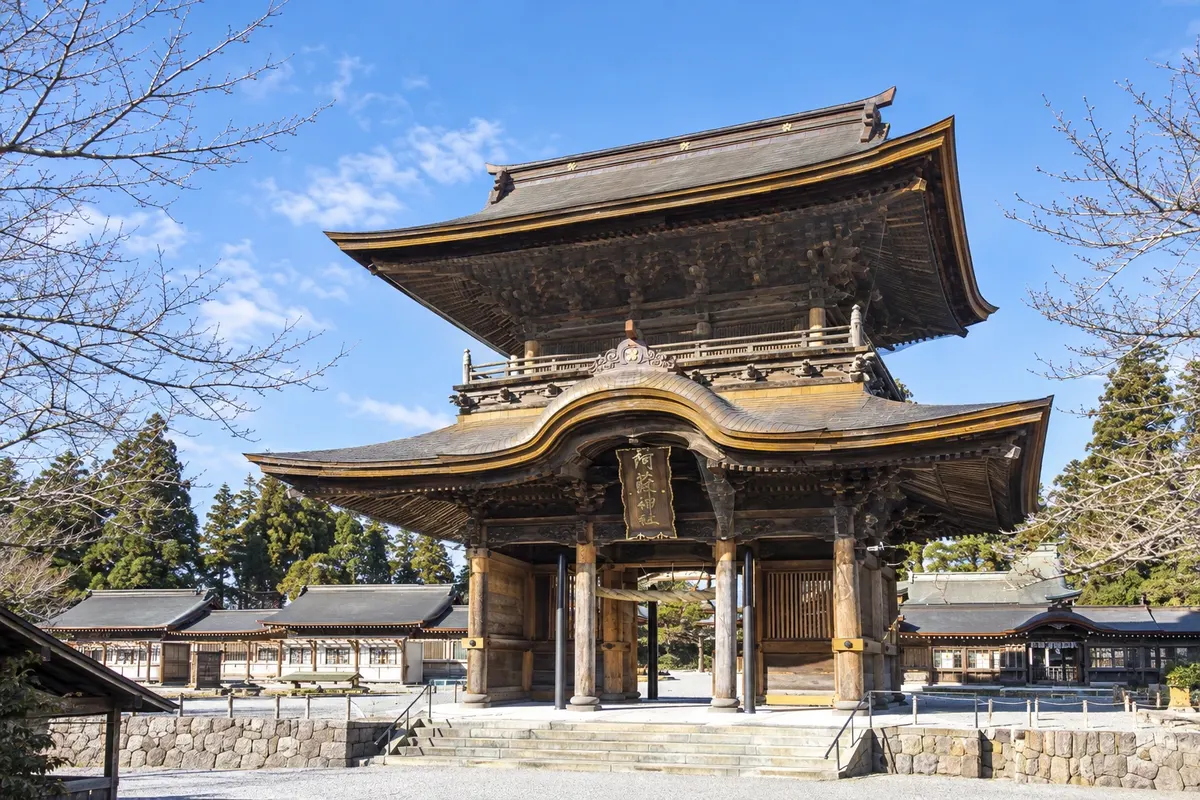
Aso is the town on the northern inner floor of Mount Aso’s caldera, surrounded by rice paddies, pastures and mountain walls. It has the train station, Aso Shrine, one of Kyushu’s oldest, and the hot springs of Uchinomaki. From there you can go up to the Kusasenri grasslands toward the five peaks, and to the Daikanbo viewpoint on the caldera’s northern rim.
Cherry trees around the castle walls bloom around late March. Aso’s grasslands turn green in summer after the March burn-offs. Kurokawa and the Kikuchi Gorge turn red in November. Winter is cold on Aso, with snow at higher elevations, and Kurokawa’s hot springs receive more visitors.
The Kyushu Shinkansen connects Hakata to Kumamoto in about 35 minutes and Kumamoto to Kagoshima-Chuo in about 45 minutes. From Kumamoto Airport (KMJ), buses reach the city center in about 50 minutes. For Aso, the JR Hohi Line reaches Aso Station in about 1 hour 15 minutes, and buses continue to Kurokawa and Beppu. Amakusa is reached by bus and by ferry from Kumamoto.
Your questions
It depends on the volcano. When gases and the alert level allow, buses and cars drive up to the rim of the Nakadake crater. At other times, access is restricted to a greater distance: check before you go.
By train on the JR Hohi Line in about 1 hour 15 minutes, or by bus. From Aso Station, buses climb to Kusasenri and the crater area. Having a car makes it easier to visit the caldera rim viewpoints.
A wooden pass, sold at the village information center, entitles you to outdoor baths at three different ryokan chosen by the visitor. It is valid for a few months.
About two hours for the keep and museum, the construction walkway and the gardens. Beside the castle, a complex with shops and restaurants tells the site’s history.
Beyond the guide