1 city

 Search
 Brazil
 Antarctica
 Argentina
 Bolivia
 Chile
 Colombia
 Ecuador
 Guyana
 French Guiana
 Falkland Islands (Malvinas)
 Paraguay
 Peru
 Suriname
 Uruguay
 Venezuela
 Germany
 Austria
 Belgium
 Croatia
 Denmark
 Slovakia
 Slovenia
 Spain
 Finland
 France
 Greece
 the Netherlands
 Hungary
 Ireland
 Iceland
 Italy
 Luxembourg
 Norway
 Poland
 Portugal
 the United Kingdom
 the Czech Republic
 Sweden
 Switzerland
 Turkey
 Bermuda
 Canada
 the United States
 Greenland
 Mexico
 Saint Pierre and Miquelon
 the Dominican RepublicJapanTurkey
 South Africa
 Egypt
 Australia
 Fiji
 New Zealand
 Papua New Guinea
Province · Chubu
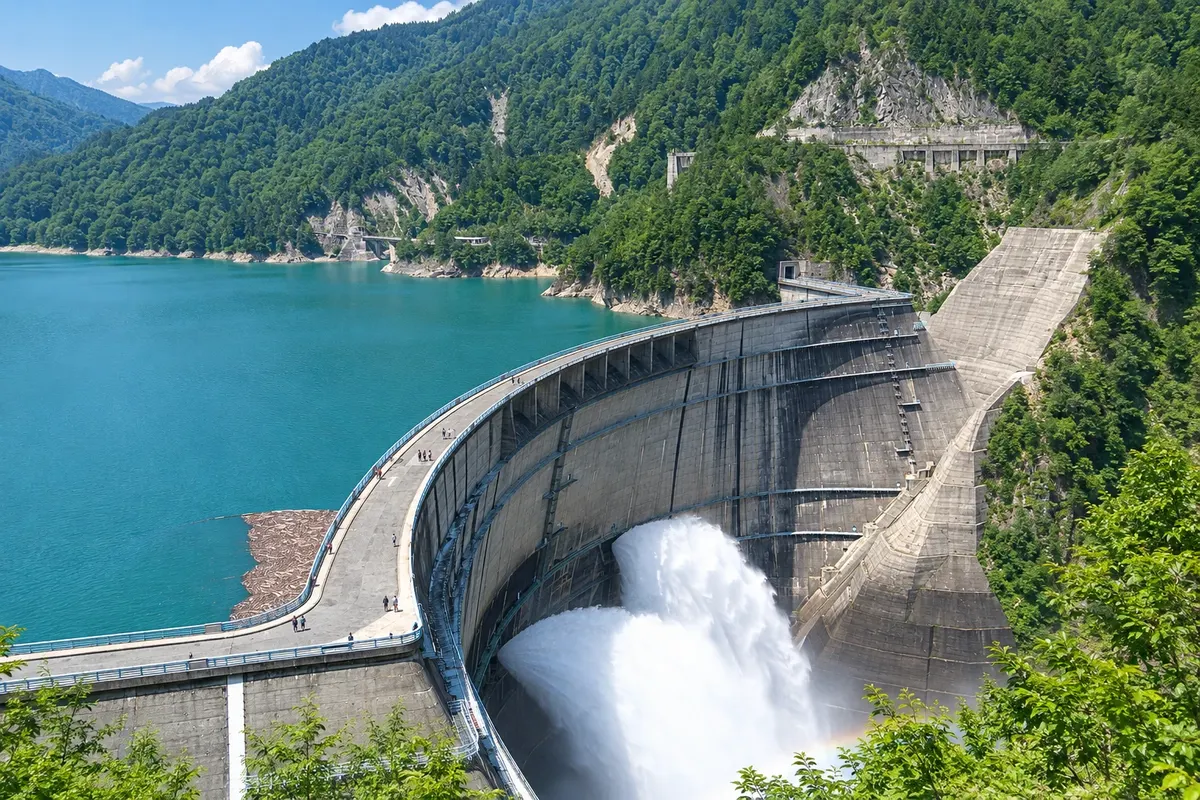
The Tateyama Kurobe Alpine Route and its snow corridors, the Kurobe Dam, the villages of Gokayama, the Kurobe Gorge railway and Toyama Bay.
In the photo: Kurobe Dam, in Toyama.
Illustrative images. The pictures in this guide are illustrations based on the real place, not photographs, and may differ from it.

The province
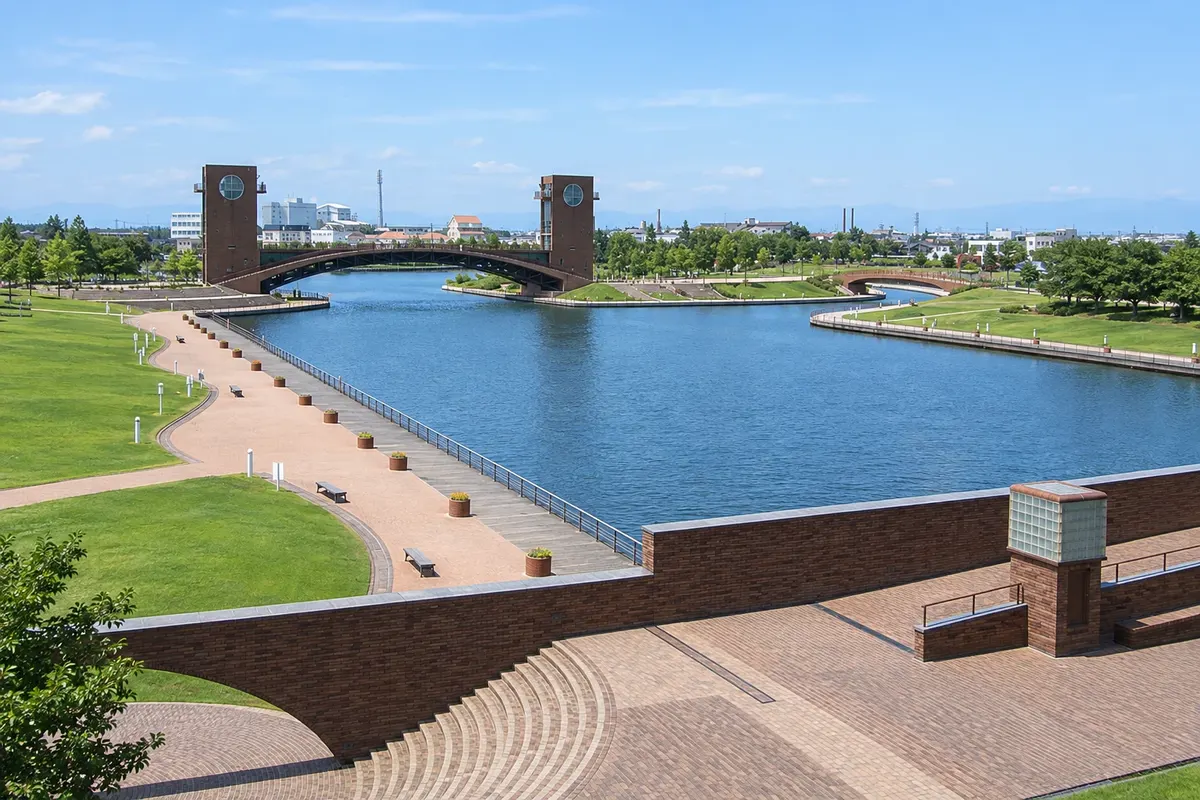
Toyama lies between the Northern Alps and Toyama Bay, on the Sea of Japan. Mountains around 3,000 meters high, such as those of the Tateyama massif, descend to the sea over just a few dozen kilometers, and on clear days they can be seen from the coast. The capital, Toyama, has a modern tram and a glass museum housed in a wooden building.
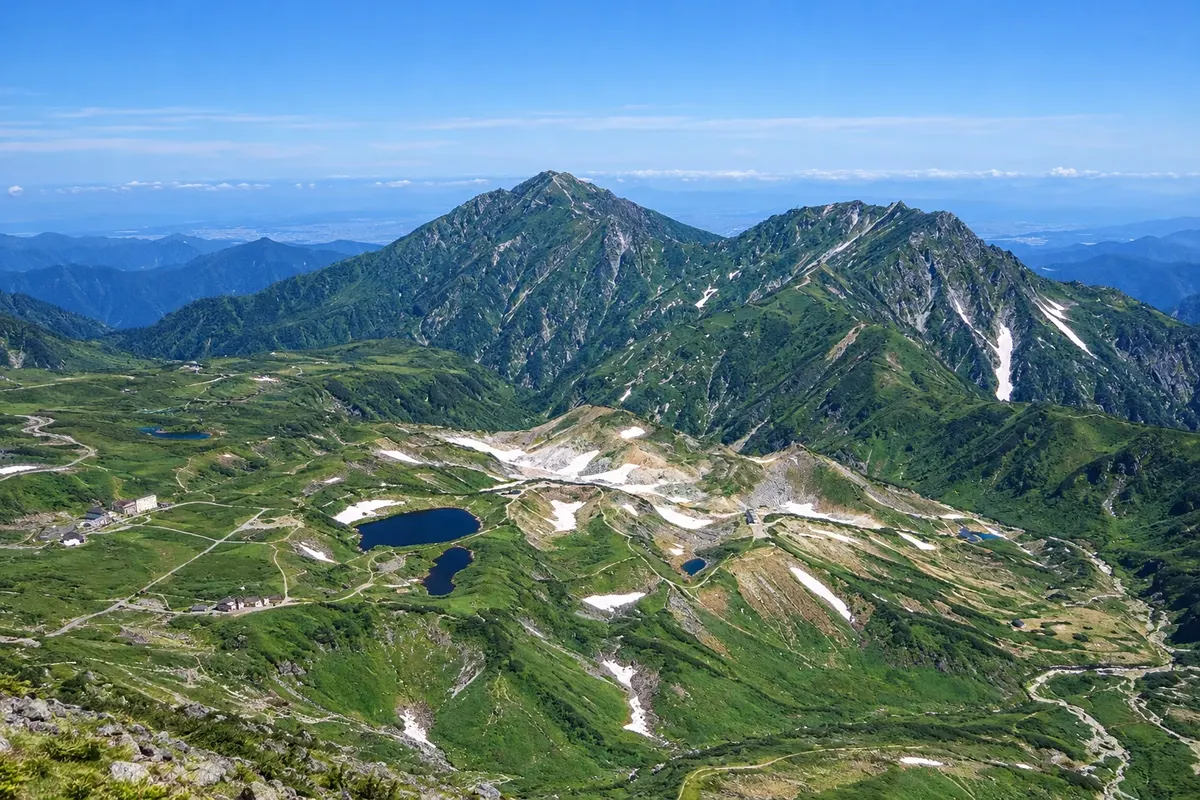
The Tateyama Kurobe Alpine Route crosses the Tateyama mountains in Toyama to Omachi in Nagano, using a funicular, buses, an electric tunnel bus and cable cars. On the Murodo plateau, at about 2,450 meters, the Yuki-no-Otani snow corridors form walls that can exceed 15 meters in spring. On the other side is the Kurobe Dam, the tallest dam in Japan. The route generally operates from mid‑April to the end of November.
To the southwest, the villages of Ainokura and Suganuma in Gokayama preserve gassho-zukuri thatched houses with steeply pitched roofs, and together with Shirakawa-go they have been a UNESCO World Heritage Site since 1995. In Takaoka, a large bronze Buddha and the Zen temple Zuiryu‑ji, a national treasure, recall the city’s history of bronze casting.
The Kurobe Gorge Railway runs open-sided carriages from Unazuki Onsen along a deep valley, across bridges and through tunnels. In the bay, firefly squid, which glow blue, are caught in spring, and white shrimp are served raw or fried. The mountains and the sea are less than an hour apart.
Destinations
The Alpine Route normally opens in mid‑April, and the snow corridors remain open to walk through until June. Summer is the main season for hiking on the Murodo plateau. Leaves change color in September and October at higher elevations and from October to November in the Kurobe Gorge, whose train runs from April to November. Firefly squid are a spring phenomenon. In winter snowfall is heavy and the Alpine Route closes.
The Hokuriku Shinkansen connects Tokyo to Toyama in about 2 hours 10 minutes, and Toyama to Kanazawa in about 20 minutes. Toyama Airport (TOY) has flights from Tokyo. For the Alpine Route, the Toyama Chiho Railway runs from Toyama to Tateyama Station in about 1 hour; on the Nagano side the access is via Omachi. Buses to Gokayama run from Shin‑Takaoka and from Shirakawa‑go. Unazuki Onsen is about 1½ hours by train from Toyama.
Your questions
Generally from mid‑April to the end of November. The Yuki‑no‑Otani snow corridors can be walked from April to June. Opening dates vary each year: check before you go.
Yes. Crossing from Tateyama to Omachi takes about 6 to 8 hours with stops. Luggage delivery services transport suitcases from end to end because the route’s vehicles have limited space.
By bus from Shin‑Takaoka Shinkansen Station in about 1½ hours, or from Shirakawa‑go in about 30 minutes. The villages of Ainokura and Suganuma are only a few kilometers apart.
It is a small squid that emits blue light. In spring it rises to the surface of the bay at night, and boats take visitors to see the fishing at dawn. In restaurants it is served boiled, raw or marinated.
Beyond the guide