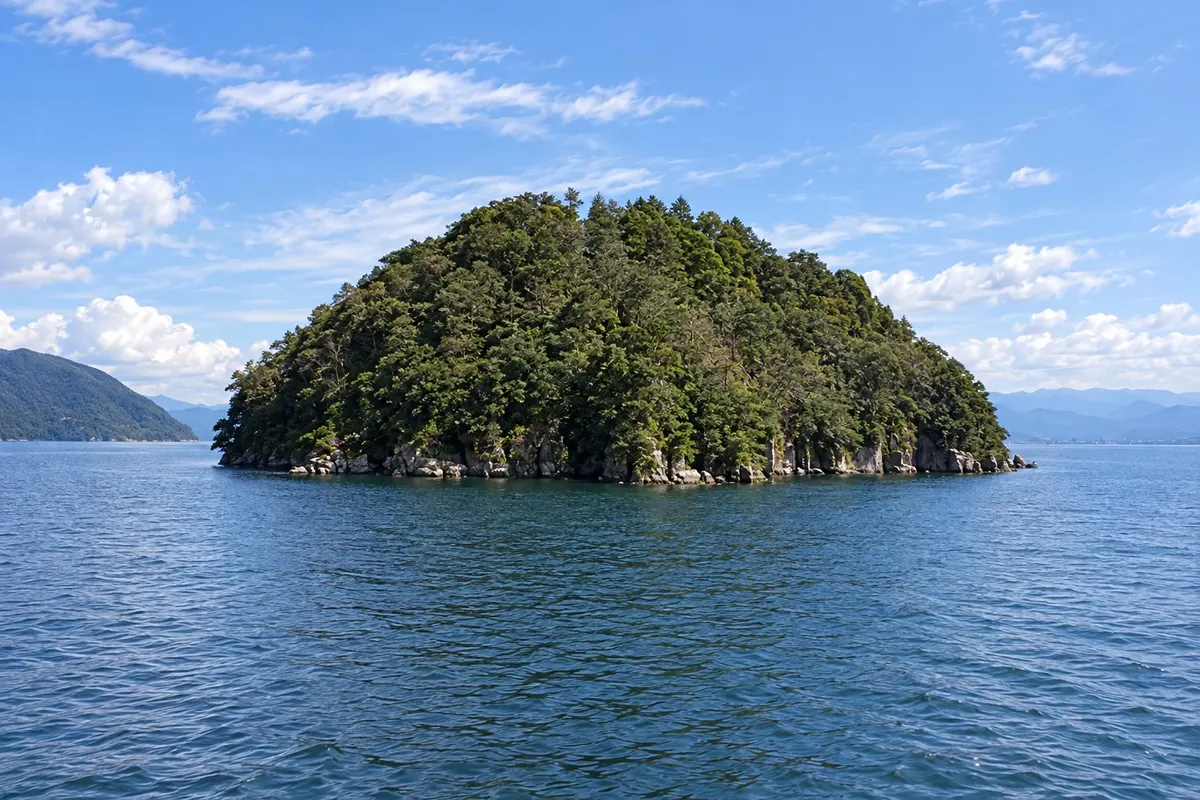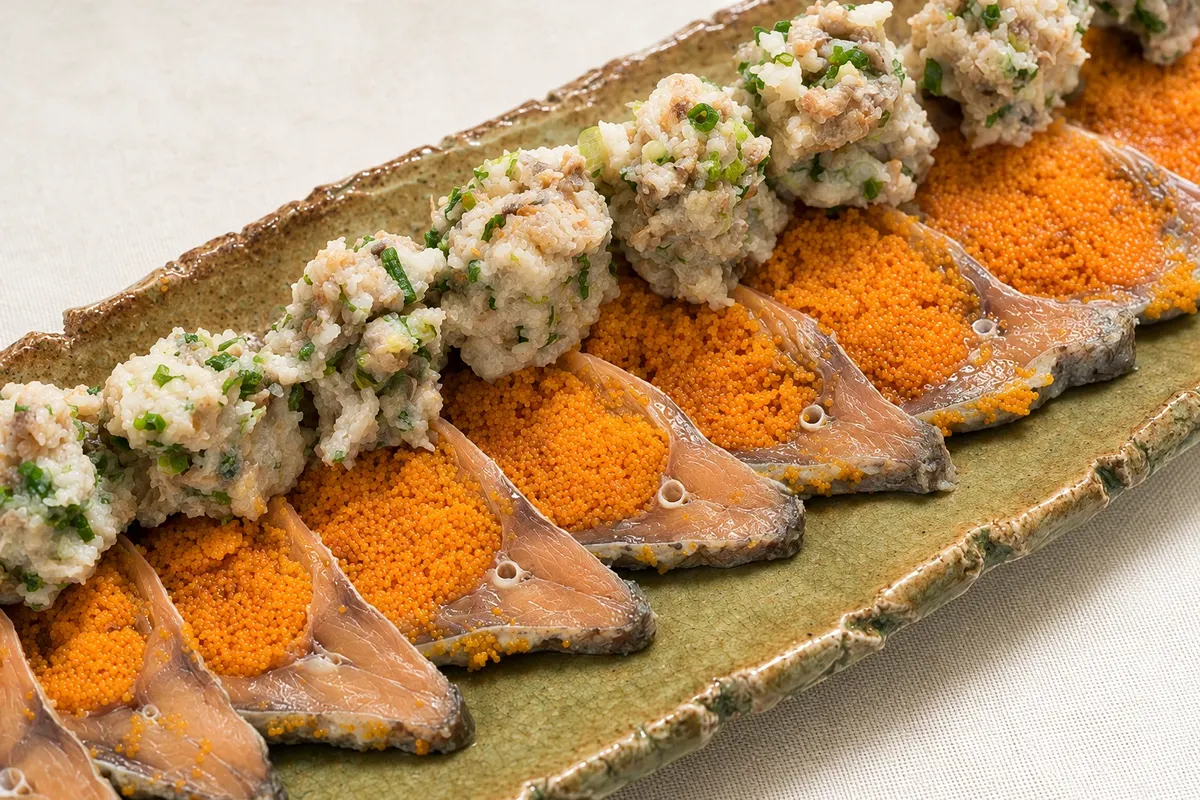
Dish · Shiga
Funazushi
Nigorobuna carp from Lake Biwa, salted and fermented for months with rice: an ancient form of sushi with a strong taste and aroma. A dish from Shiga, deeply rooted in the prefecture’s culture.

 Search
 Brazil
 Antarctica
 Argentina
 Bolivia
 Chile
 Colombia
 Ecuador
 Guyana
 French Guiana
 Falkland Islands (Malvinas)
 Paraguay
 Peru
 Suriname
 Uruguay
 Venezuela
 Germany
 Austria
 Belgium
 Croatia
 Denmark
 Slovakia
 Slovenia
 Spain
 Finland
 France
 Greece
 the Netherlands
 Hungary
 Ireland
 Iceland
 Italy
 Luxembourg
 Norway
 Poland
 Portugal
 the United Kingdom
 the Czech Republic
 Sweden
 Switzerland
 Turkey
 Bermuda
 Canada
 the United States
 Greenland
 Mexico
 Saint Pierre and Miquelon
 the Dominican RepublicJapanTurkey
 South Africa
 Egypt
 Australia
 Fiji
 New Zealand
 Papua New Guinea
Province · Kansai
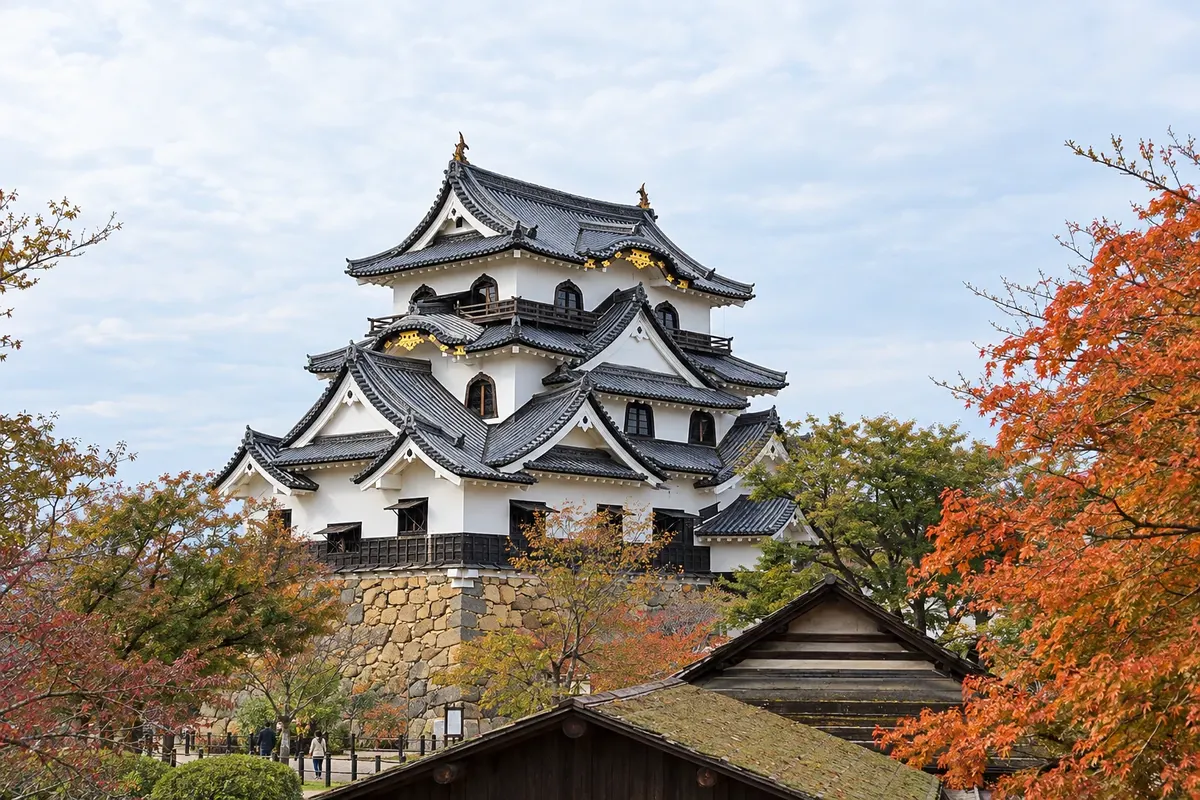
Lake Biwa, the original Hikone Castle, the canals of Omihachiman, Mount Hiei and the torii of Shirahige Shrine standing in the lake.
In the photo: Hikone Castle, in Shiga.
Illustrative images. The pictures in this guide are illustrations based on the real place, not photographs, and may differ from it.

The province
Shiga surrounds Lake Biwa, Japan’s largest lake, which covers about one sixth of the prefecture and supplies water to Kyoto and Osaka. The capital, Otsu, is about a 10-minute train ride from Kyoto. The prefecture is known for Omi beef, Shigaraki pottery and the Omi merchants, who made fortunes trading across Japan.
Hikone has one of the five national treasure castles, whose original keep crowns a hill by the lake. At the foot of the castle, the Genkyu-en garden has a pond and bridges with the castle keep in the background. In Omihachiman, boats travel along the Hachiman-bori canal, lined with warehouses and merchant houses, and nearby are the ruins of Azuchi Castle, built by Oda Nobunaga.
Mount Hiei, between Shiga and Kyoto, is home to Enryaku-ji, founded in the 8th century and the headquarters of the Tendai school, with halls among cedars and views over the lake. It is part of the Historic Monuments of Ancient Kyoto, a UNESCO site. In Otsu, Ishiyama-dera has halls built on a rock, and Mii-dera has an old bell. On the west shore, the red torii of Shirahige Shrine stands in the water.
Nagahama, in the north, has glassware shops housed in black-walled buildings. On the west shore, in Takashima, an avenue of metasequoias crosses fields. Shigaraki produces pottery and the well-known clay tanuki, and Koka has ninja houses. In the Koka mountains, the Miho Museum, designed by I. M. Pei, is reached through a tunnel.
Flavors of Japan
Destinations
Cities
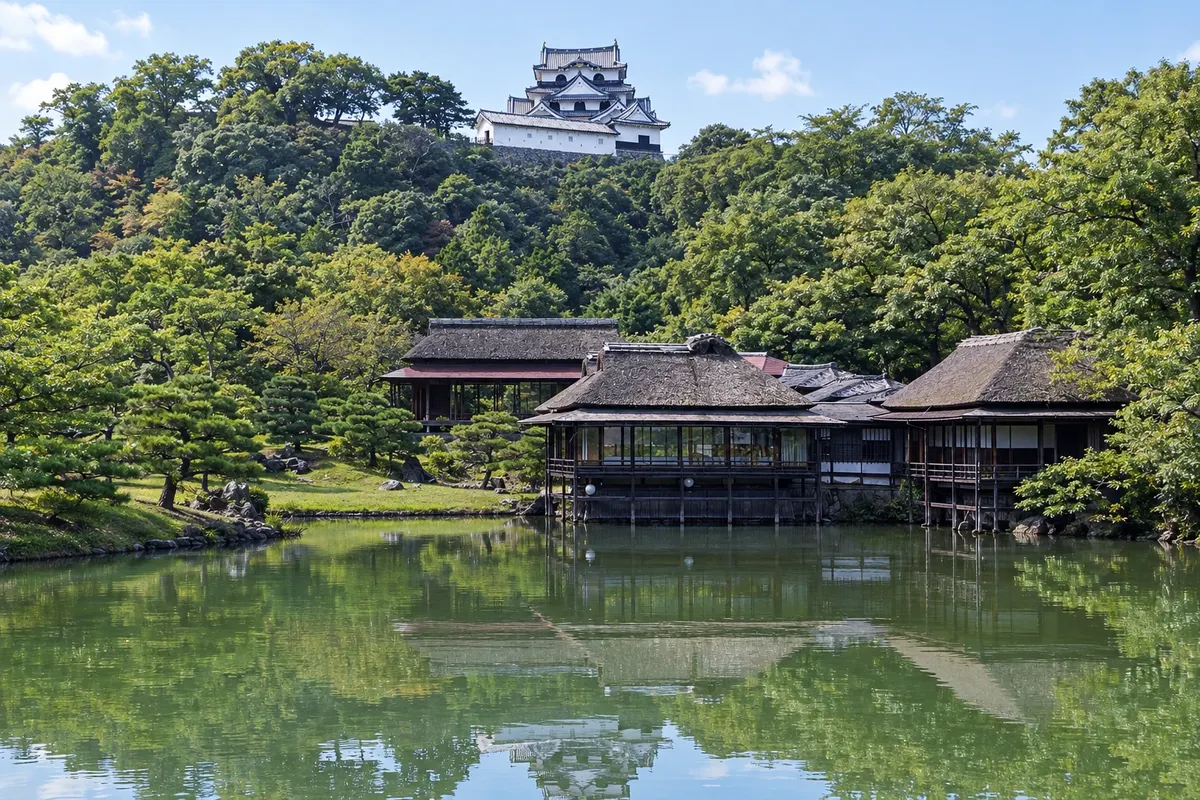
Castle town on the eastern shore of Lake Biwa, Hikone preserves the castle keep completed in 1622, a national treasure, and the Genkyu-en garden at its base. Yume Kyobashi Street, with old-style houses, leads to the castle, and boats depart from the port for Chikubu Island.
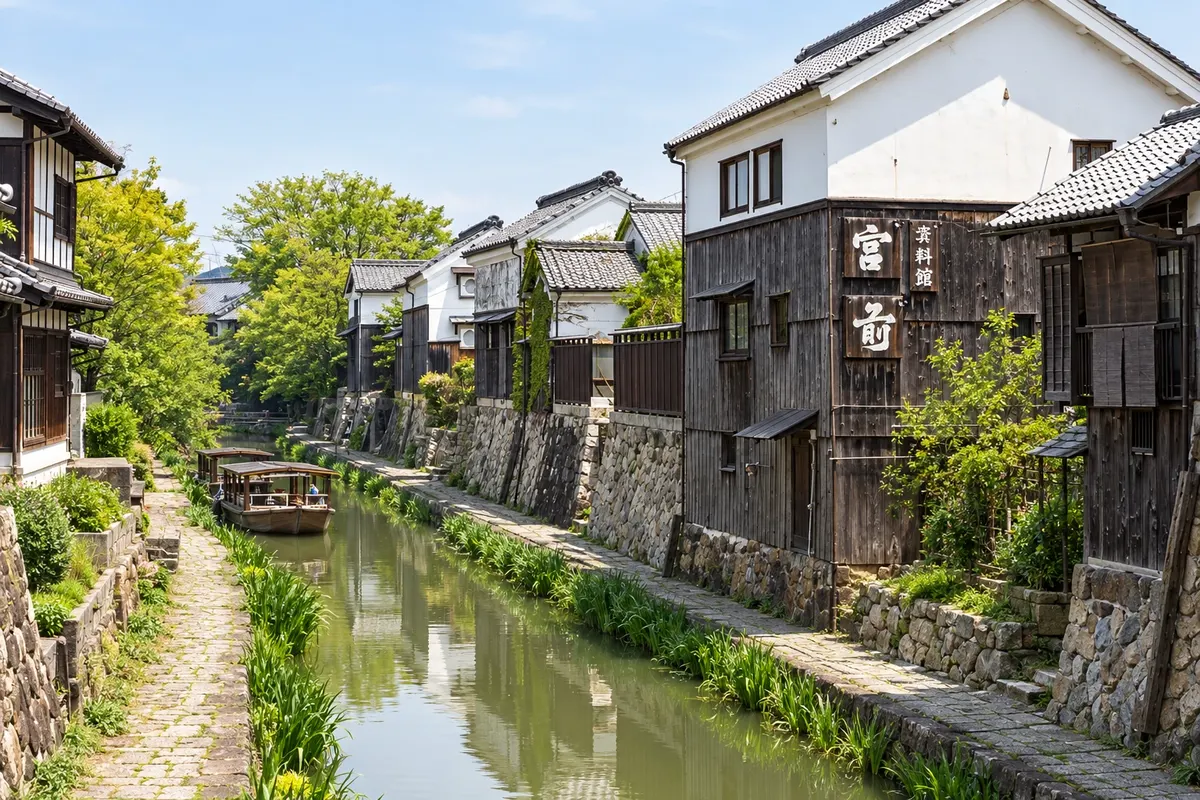
Old merchant town on the eastern shore of Lake Biwa, Omihachiman has the Hachiman-bori canal with white-walled storehouses, the merchant houses of Omi, the Himure Hachimangu shrine and Mount Hachiman, accessible by ropeway. Azuchi, now part of the city, preserves the ruins of Nobunaga’s castle.
Cherry trees bloom in early April at Hikone Castle and at Kaizu Osaki on the north shore. In July and August the lake shores fill with swimmers and boats. In November Mount Hiei and temples such as Eigen-ji are covered in red maples. In winter the north of the lake receives snow and the avenue of metasequoias turns white.
The JR Biwako Line connects Kyoto to Otsu in about 10 minutes, to Omihachiman in about 35 minutes and to Hikone in about 50 minutes. The Tokaido Shinkansen stops at Maibara, a few minutes from Hikone. For Mount Hiei, the Sakamoto cable car climbs from the Shiga side, and there are buses and cable cars from the Kyoto side. The west shore is served by the JR Kosei Line.
Your questions
By train to Hikone Station, about 50 minutes from Kyoto, then about a 15-minute walk. By bullet train, get off at Maibara and take a local train for one stop.
From the Shiga side, take a train to Sakamoto and the cable car up to Enryaku-ji. From the Kyoto side, take a bus from the city center or a train and cable car from Yase. The temple area is divided into three parts connected by bus.
Yes. Otsu, Mount Hiei, Omihachiman and Hikone are all less than an hour by train from Kyoto. One day allows combining Hikone and Omihachiman, or Mount Hiei and Otsu.
It is a red gate erected in Lake Biwa in front of Shirahige Shrine on the west shore. It is about one hour from Kyoto, near Omi-Takashima Station, and is a popular subject for sunrise photographs.
Beyond the guide