Dish · Ehime
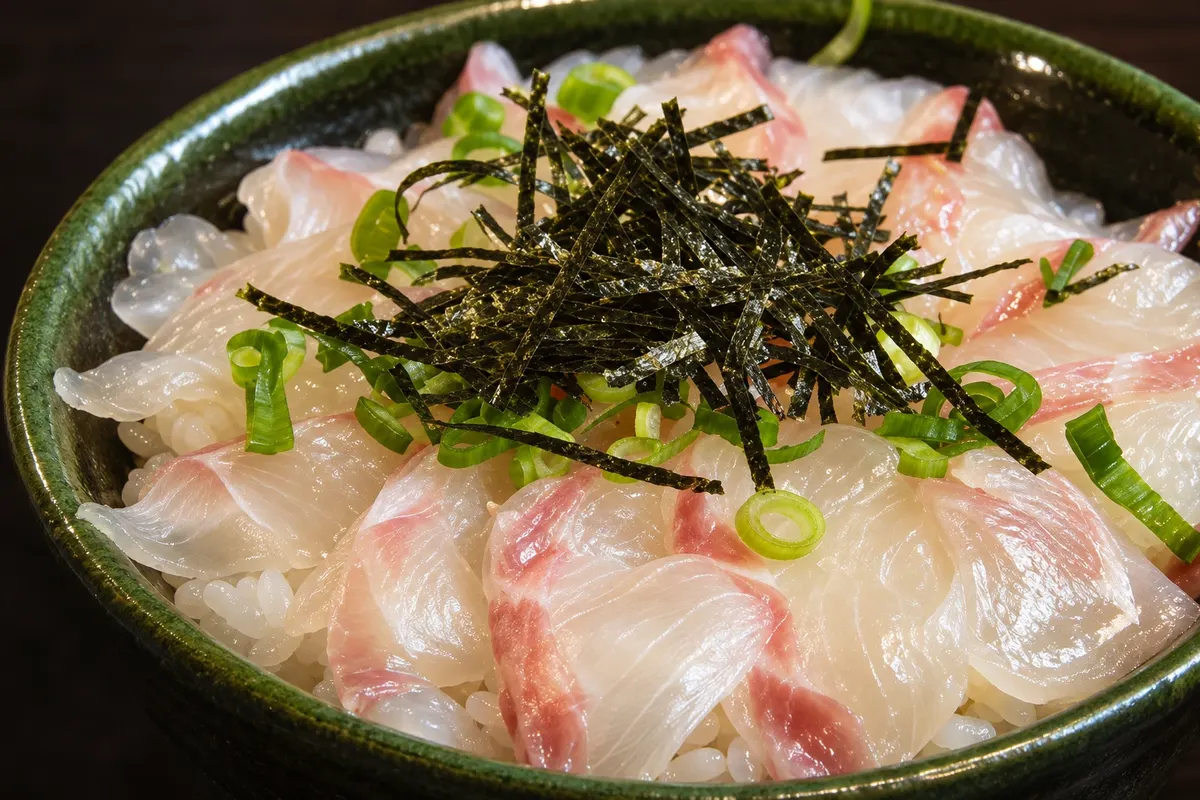
Tai-meshi
Red snapper and rice in two Ehime versions: in the north, the whole fish is cooked with the rice and shredded in the pot; in the south, raw slices marinated in soy sauce and egg are placed over the hot rice.

 Search
 Brazil
 Antarctica
 Argentina
 Bolivia
 Chile
 Colombia
 Ecuador
 Guyana
 French Guiana
 Falkland Islands (Malvinas)
 Paraguay
 Peru
 Suriname
 Uruguay
 Venezuela
 Germany
 Austria
 Belgium
 Croatia
 Denmark
 Slovakia
 Slovenia
 Spain
 Finland
 France
 Greece
 the Netherlands
 Hungary
 Ireland
 Iceland
 Italy
 Luxembourg
 Norway
 Poland
 Portugal
 the United Kingdom
 the Czech Republic
 Sweden
 Switzerland
 Turkey
 Bermuda
 Canada
 the United States
 Greenland
 Mexico
 Saint Pierre and Miquelon
 the Dominican RepublicJapanTurkey
 South Africa
 Egypt
 Australia
 Fiji
 New Zealand
 Papua New Guinea
Province · Shikoku
Dogo Onsen and Matsuyama Castle, the Shimanami Kaido by bicycle, mikan (satsuma mandarins), Uchiko’s old street and Uwajima Castle.
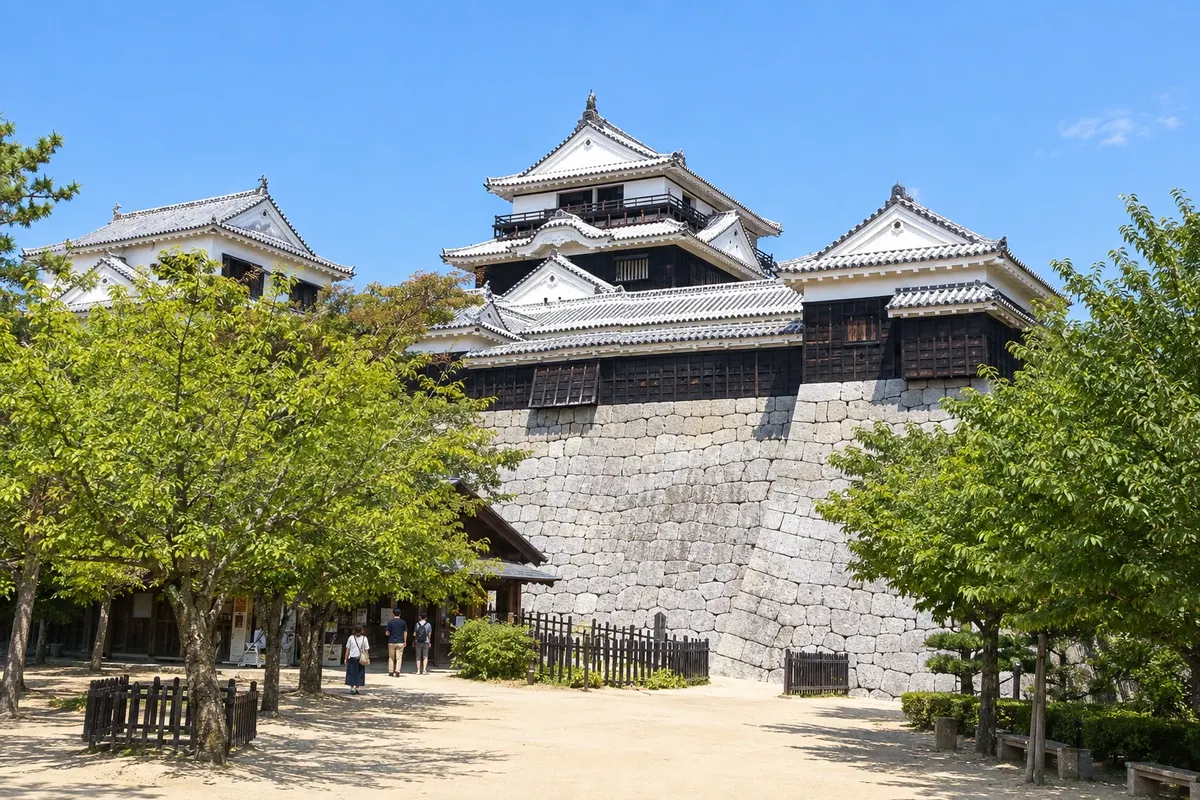
In the photo: Matsuyama Castle, in Ehime.
Illustrative images. The pictures in this guide are illustrations based on the real place, not photographs, and may differ from it.

The province
Ehime occupies the northwest of Shikoku, facing the Seto Inland Sea. Matsuyama, the capital, is the island’s largest city. The prefecture is a major producer of mikan and other citrus fruits, and Imabari is known for its towels. Matsuyama was the home of the poet Masaoka Shiki and the setting of Natsume Soseki’s novel Botchan.
Dogo Onsen is one of Japan’s oldest hot-spring resorts. The Dogo Onsen Honkan, a wooden public bathhouse from 1894 with several floors and a small hall reserved for the imperial family, stands in the center of the onsen district, reachable by tram. A small steam-train replica, inspired by the novel, runs on some city lines.
Matsuyama Castle, atop a hill in the city center, retains its original keep and is reached by ropeway or chair lift. Ishite-ji Temple, on the Shikoku pilgrimage, is near Dogo. To the southwest, Uchiko preserves a merchant street of wax-traders’ houses and the Uchiko-za theatre, and Ozu has a reconstructed wooden castle. Uwajima has a small original castle.
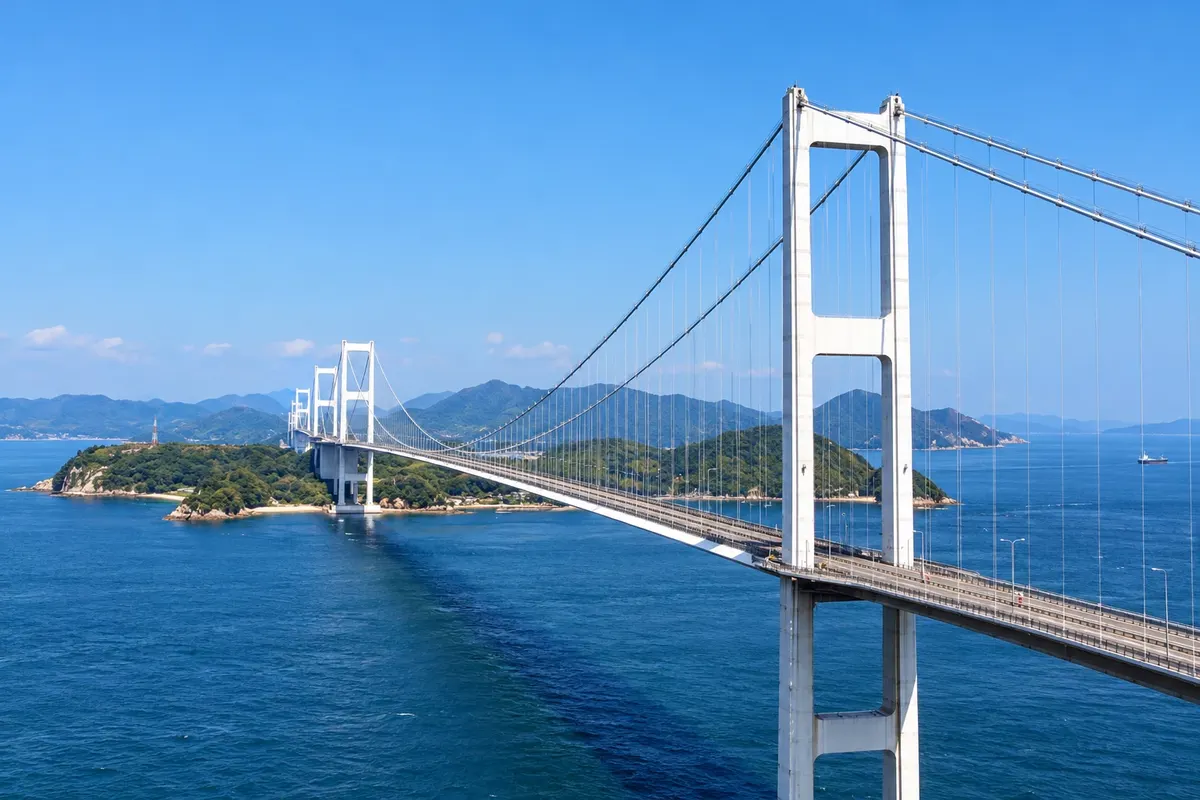
The Shimanami Kaido is a road of about 70 km that links Imabari to Onomichi in Hiroshima by bridges across six islands of the Inland Sea, with a dedicated cycle path along the whole route. On Omishima Island, Oyamazumi Shrine preserves samurai armor and swords. From the Kirosan observatory you can see the Kurushima-Kaikyo Bridge over the islands.
Flavors of Japan
Destinations
Cities
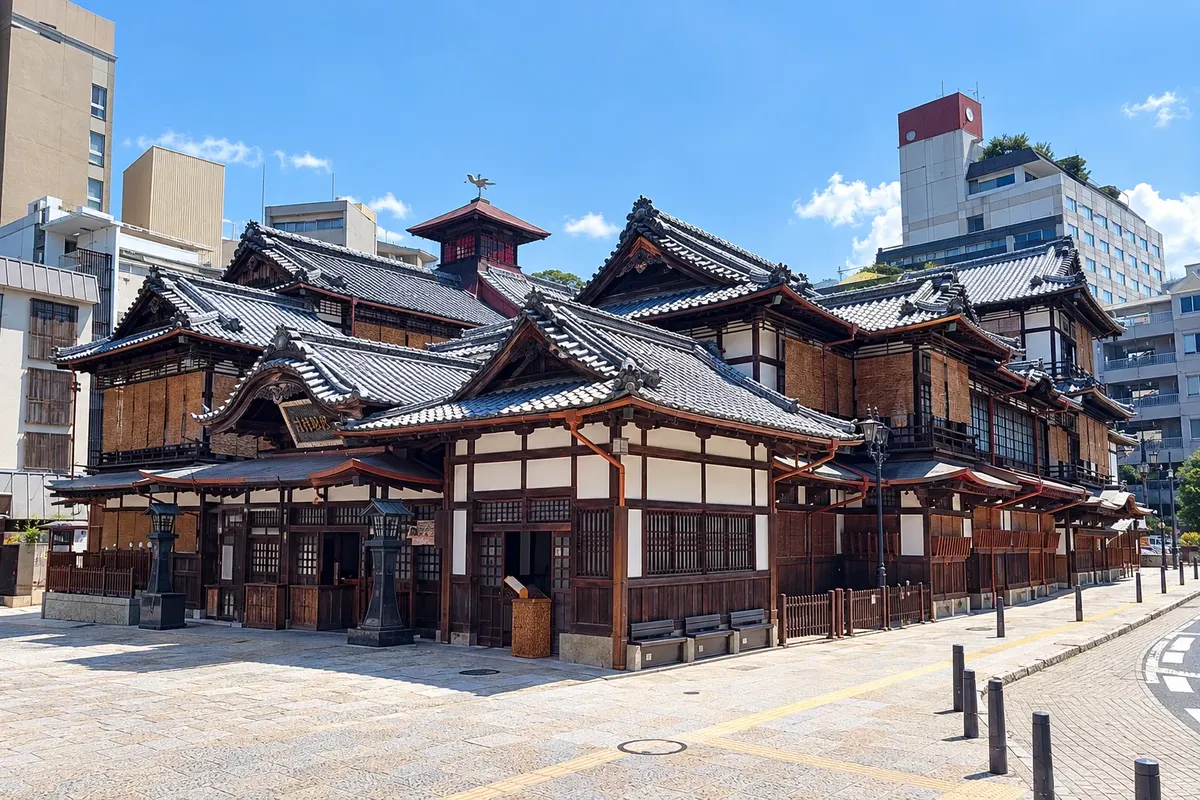
Largest city on Shikoku and the capital of Ehime, Matsuyama has the original castle atop Mount Katsuyama, the Dogo Onsen bathhouse from 1894, the Ishite-ji temple on the Shikoku pilgrimage, and trams that connect the station, downtown and Dogo. It is the city of the novel Botchan and of the poet Masaoka Shiki.
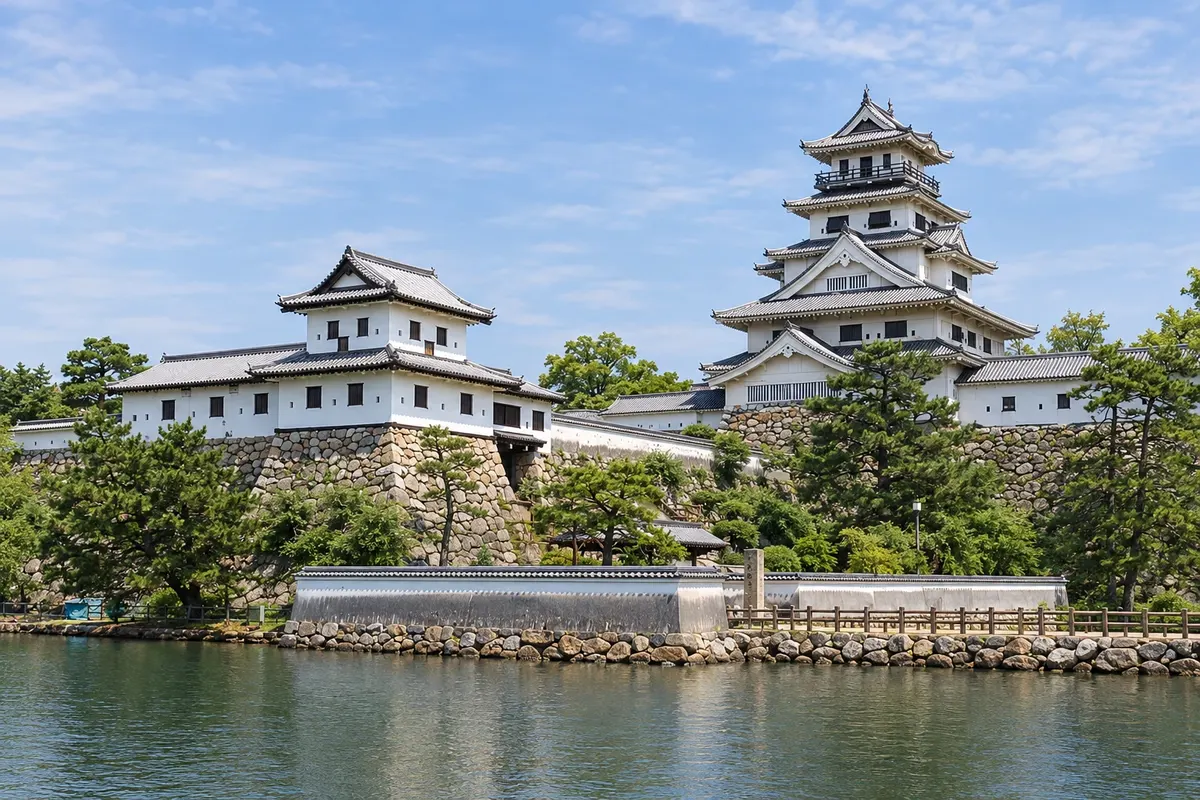
Imabari is the northern port city of Ehime, at Shikoku’s end of the Shimanami Kaido. The municipality includes the islands of Oshima, Hakatajima and Omishima, home to the Oyamazumi shrine and the Murakami pirates museum. In the center are the castle with its saltwater moats and the Imabari towel shops; at the bridge exit is the Itoyama cyclist terminal.
For cycling the Shimanami Kaido, prefer March to May and October to November; in summer the heat makes the bridge climbs harder. Mikan are harvested from October to February. Winters are mild, and Dogo’s hot springs welcome visitors year-round.
Matsuyama Airport (MYJ) receives flights from Tokyo, Osaka and Fukuoka, about 20 minutes by bus from the city center. The Shiokaze limited express connects Okayama to Matsuyama in about 2 hours 40 minutes. Fast ferries link Hiroshima to Matsuyama in about 1 hour 15 minutes. Imabari is about 40 minutes by train from Matsuyama, and buses cross the Shimanami Kaido to Onomichi and Fukuyama.
Your questions
The whole route, about 70 km, takes one day for accustomed cyclists and two days with stops on the islands. Bikes are rented in Onomichi, in Imabari and at points on the islands, and can be returned at a different location.
Yes. The bathhouse welcomes visitors, with options that include rest rooms served with tea. At the busiest times there may be a wait.
By ropeway or chair lift, which depart from Ropeway Street, or on foot via trails of about 20 minutes. From the top of the keep you can see the city and the Inland Sea.
By limited express train from Matsuyama in about 25 minutes. The old street is about a 20-minute walk from the station, and the Uchiko-za theatre is along the way.
Beyond the guide