3 cities

 Search
 Brazil
 Antarctica
 Argentina
 Bolivia
 Chile
 Colombia
 Ecuador
 Guyana
 French Guiana
 Falkland Islands (Malvinas)
 Paraguay
 Peru
 Suriname
 Uruguay
 Venezuela
 Germany
 Austria
 Belgium
 Croatia
 Denmark
 Slovakia
 Slovenia
 Spain
 Finland
 France
 Greece
 the Netherlands
 Hungary
 Ireland
 Iceland
 Italy
 Luxembourg
 Norway
 Poland
 Portugal
 the United Kingdom
 the Czech Republic
 Sweden
 Switzerland
 Turkey
 Bermuda
 Canada
 the United States
 Greenland
 Mexico
 Saint Pierre and Miquelon
 the Dominican RepublicJapanTurkey
 South Africa
 Egypt
 Australia
 Fiji
 New Zealand
 Papua New Guinea
Province · Chubu
Mount Fuji seen from the south, the tea plantations, the Izu Peninsula, the Atami hot springs, Kunozan Shrine and Miho no Matsubara beach.
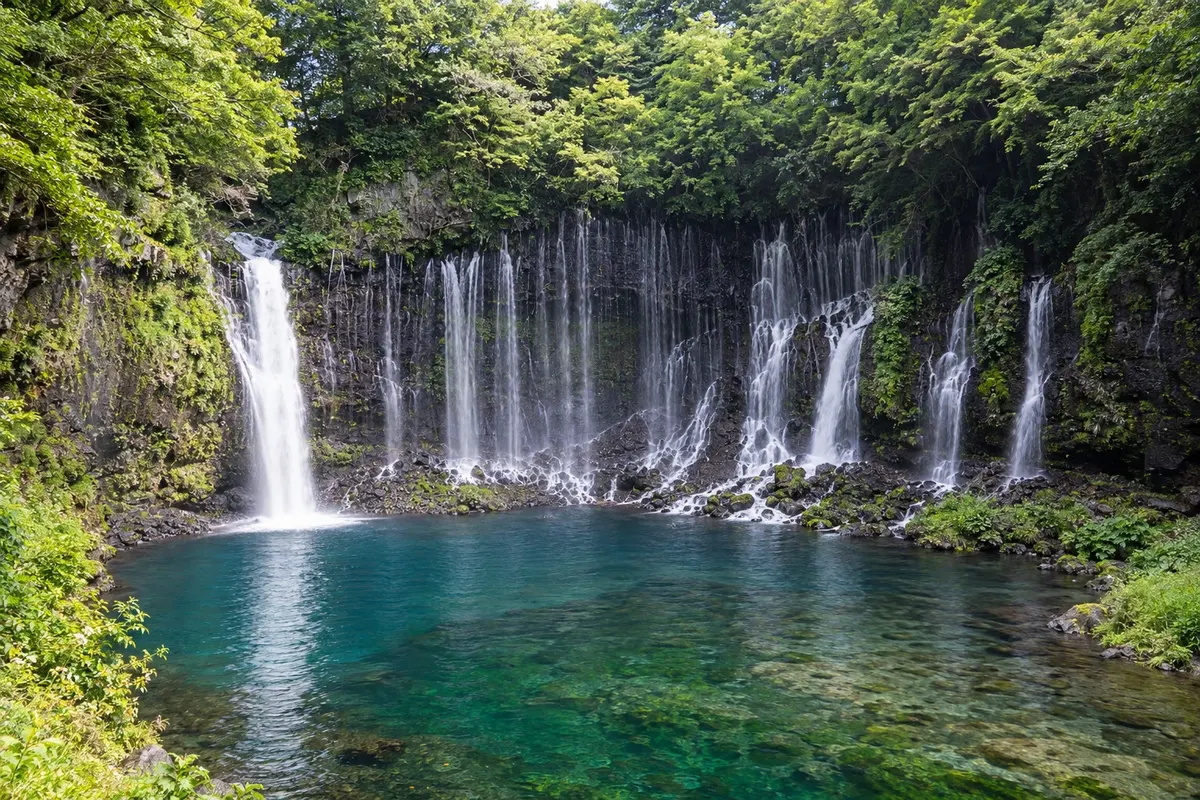
In the photo: Shiraito Falls, in Shizuoka.
Illustrative images. The pictures in this guide are illustrations based on the real place, not photographs, and may differ from it.

The province
Shizuoka stretches along the Pacific coast between Tokyo and Nagoya and occupies the southern side of Mount Fuji. It is Japan’s largest producer of green tea, with plantations on the Makinohara hills, and also produces wasabi and mandarins. Hamamatsu, the largest city, is known for musical instruments and eel from Lake Hamana.
On the southern side of Fuji, Miho no Matsubara beach, with its seaside pine trees, is part of the mountain’s UNESCO heritage. In Fujinomiya, Fujisan Hongu Sengen Taisha is the main shrine dedicated to Fuji, and Shiraito Falls drops in veils along a stone cliff. Three of the four climbing trails start in Shizuoka: Fujinomiya, Subashiri and Gotemba.
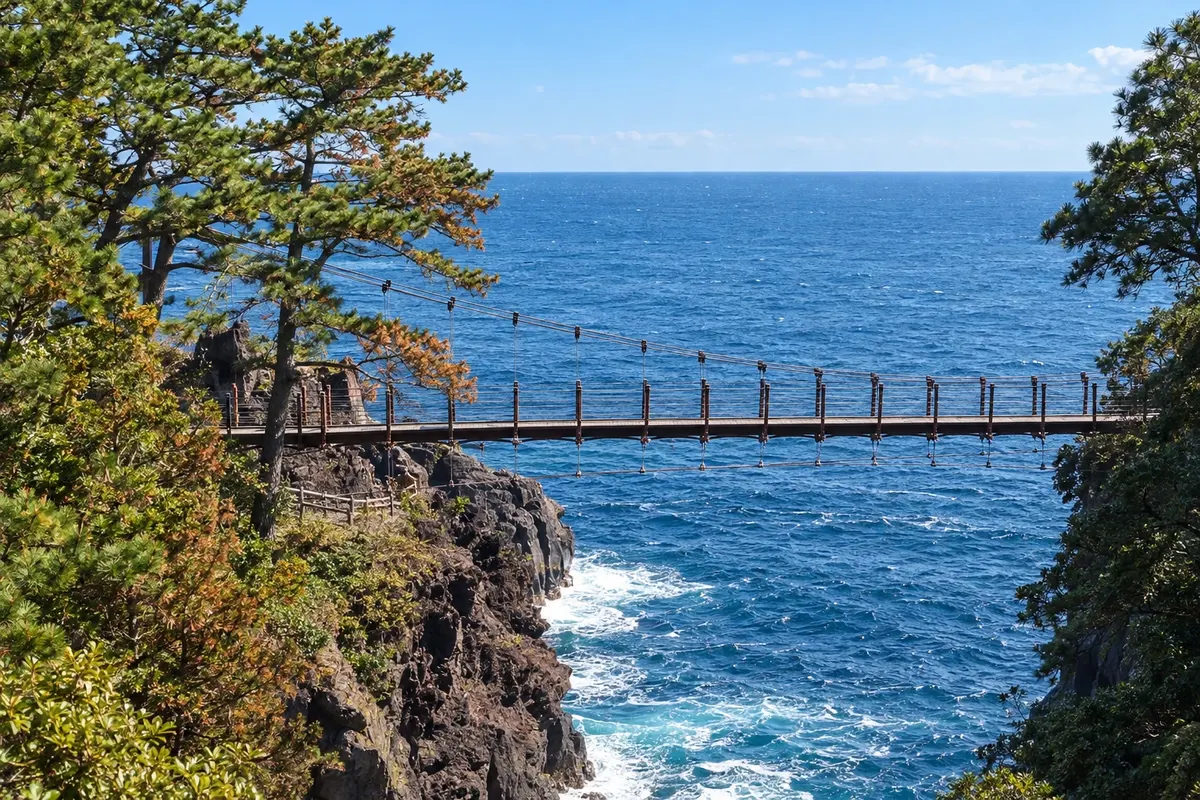
The Izu Peninsula has hot springs and volcanic coasts. Atami, the closest to Tokyo, has a beach and fireworks on several nights a year. The Jogasaki coast in Ito has lava cliffs and a suspension bridge. In Shimoda, Commodore Perry’s ships anchored in the 19th century, and the first U.S. consulate was located there. In Kawazu, early-blooming cherry trees line the riverbank, and the west coast at Dogashima offers views of Fuji across Suruga Bay.
In the capital, Shizuoka, the Nihondaira plateau has views of Fuji and a ropeway up to Kunozan Toshogu, the first mausoleum of Tokugawa Ieyasu. In the Oi River valley, a steam train runs through tea plantations up into the mountains, where a suspension bridge spans a green-blue lake.
Destinations
Cities
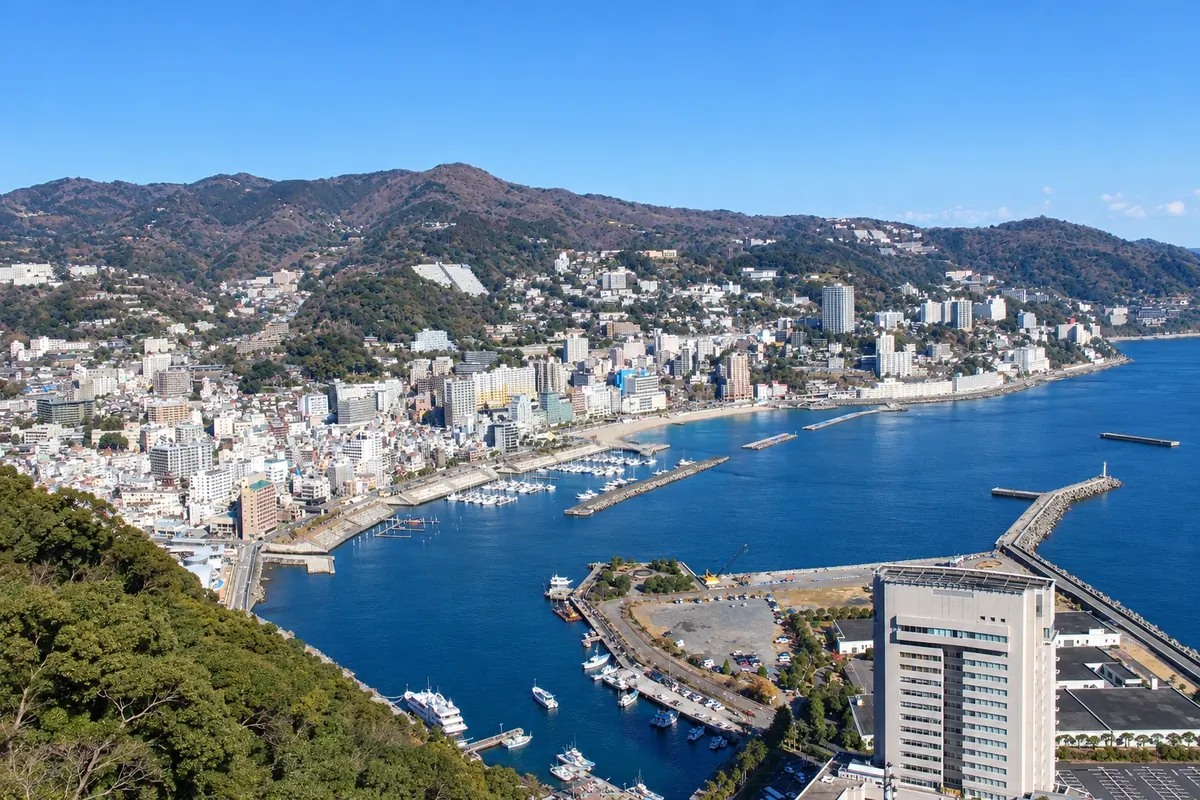
Gateway to the Izu Peninsula, Atami is a hot-spring resort on the hillside above Sagami Bay, less than an hour from Tokyo by shinkansen. It has the MOA Museum of Art on the hilltop, Kinomiya Shrine with its giant camphor tree, an urban beach and shopping streets near the station.
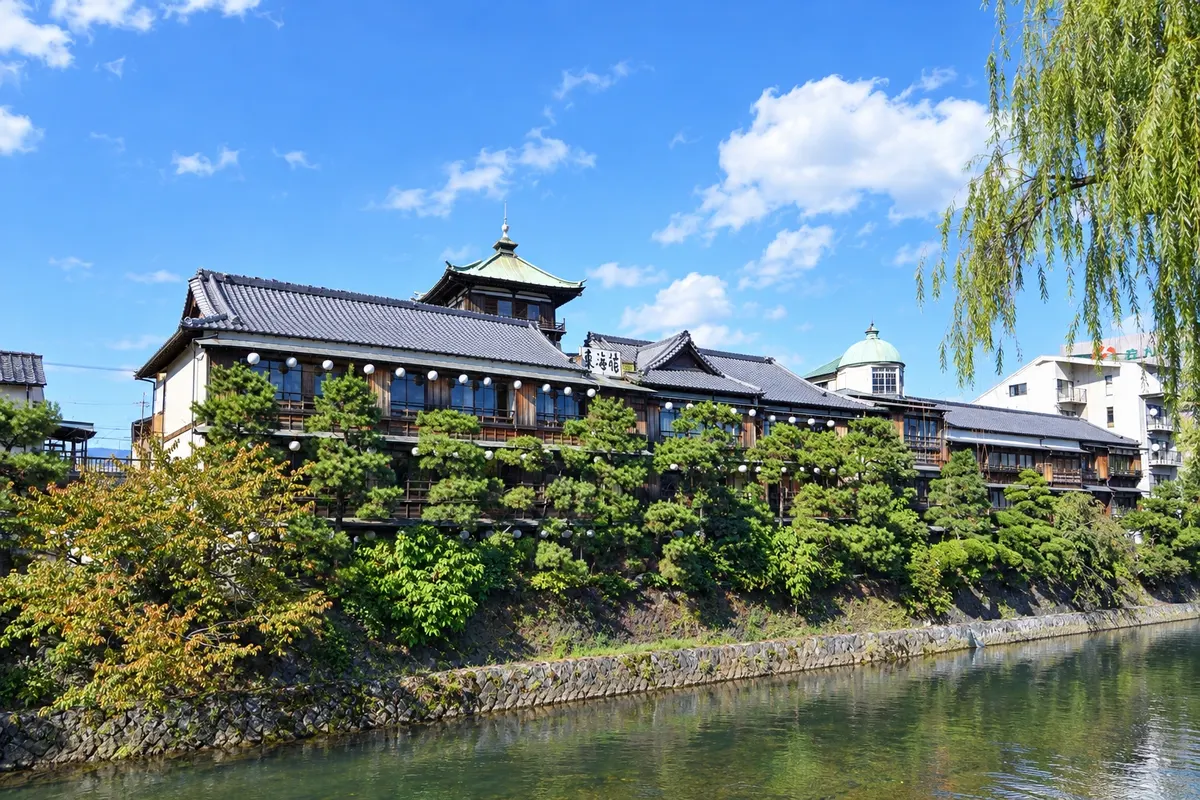
A hot-spring resort on the east coast of the Izu Peninsula, Ito has hundreds of springs, bathing houses and the former wooden ryokan Tokaikan, by the Okawa River. To the south, in the Izu Kogen area, are the cone of Mount Omuro, reached by a chairlift, and the Jogasaki coast, with lava cliffs and a suspension bridge over the sea.
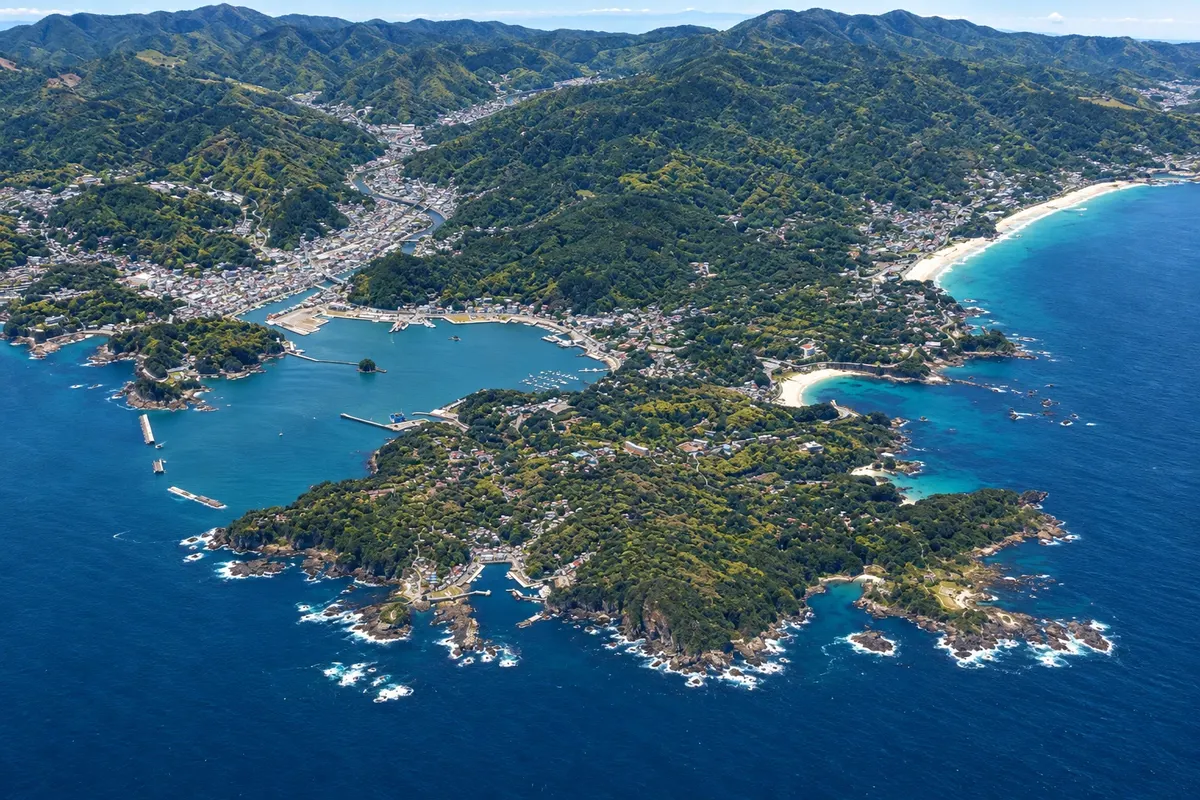
A port city on the southern Izu Peninsula, Shimoda was one of the first Japanese ports opened to foreign ships in 1854. It has Perry Street along a canal, the Ryosen-ji temple, clear-sand beaches like Shirahama and, farther south, Cape Irozaki at the tip of the peninsula.
Fuji is most often visible from October to February. Kawazu’s cherry trees generally bloom in February. The first tea harvest, shincha, takes place between April and May. Izu’s beaches attract swimmers in July and August. The coastal winter in Shizuoka is mild and sunny.
The Tokaido Shinkansen connects Tokyo to Atami in about 40 minutes, to Mishima in about 45 minutes, to Shizuoka in about 1 hour and to Hamamatsu in about 1 hour 30 minutes. Odoriko limited expresses run from Tokyo to Ito and, via the Izukyu Railway, to Shimoda. Mount Fuji Shizuoka Airport (FSZ) handles domestic flights and services to some Asian cities. The Oi River steam train departs from Kanaya.
Your questions
From Miho no Matsubara beach, the Nihondaira plateau, the tea plantations near Fuji and Fujinomiya, and Izu’s west coast at Dogashima. The right-side window on the bullet train heading toward Osaka also shows the mountain on clear days.
By train to Atami, Ito and Shimoda along the east coast, and by bus for the interior and the west coast. A car makes it easier to combine both coasts in two or three days.
Generally in February, about a month earlier than Tokyo’s cherry trees. The trees line the Kawazu River, a few minutes from the station.
On the Makinohara plateau near the airport, and in the hills around Fuji with the mountain as a backdrop. Regional tea houses and museums offer tastings and explain production.
Beyond the guide


