2 cities

 Search
 Brazil
 Antarctica
 Argentina
 Bolivia
 Chile
 Colombia
 Ecuador
 Guyana
 French Guiana
 Falkland Islands (Malvinas)
 Paraguay
 Peru
 Suriname
 Uruguay
 Venezuela
 Germany
 Austria
 Belgium
 Croatia
 Denmark
 Slovakia
 Slovenia
 Spain
 Finland
 France
 Greece
 the Netherlands
 Hungary
 Ireland
 Iceland
 Italy
 Luxembourg
 Norway
 Poland
 Portugal
 the United Kingdom
 the Czech Republic
 Sweden
 Switzerland
 Turkey
 Bermuda
 Canada
 the United States
 Greenland
 Mexico
 Saint Pierre and Miquelon
 the Dominican RepublicJapanTurkey
 South Africa
 Egypt
 Australia
 Fiji
 New Zealand
 Papua New Guinea
Province · Tohoku
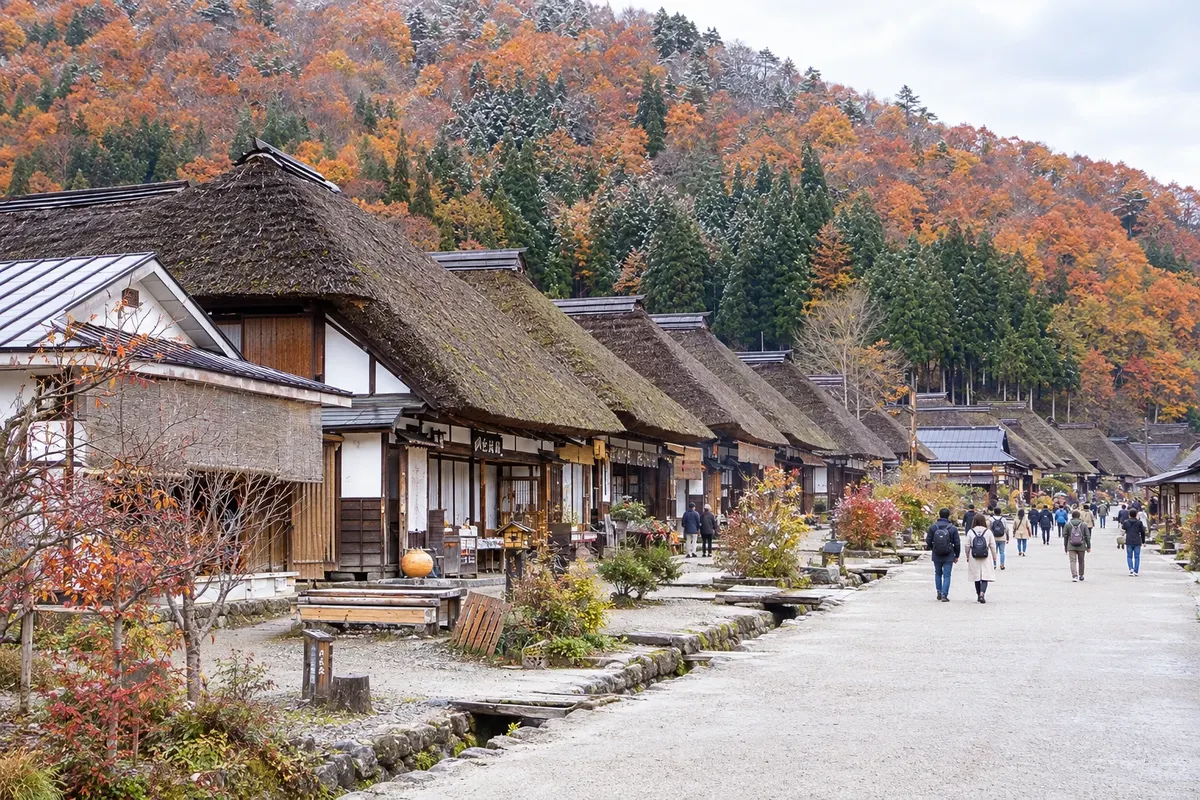
Tsuruga Castle and the samurai town of Aizu-Wakamatsu, the village of Ouchi-juku, Lake Inawashiro and the colorful Goshikinuma ponds.
In the photo: Ouchi-juku village, in Fukushima.
Illustrative images. The pictures in this guide are illustrations based on the real place, not photographs, and may differ from it.

The province
Fukushima is Japan’s third-largest prefecture and is divided into three areas: Aizu, in the west, among the mountains; Nakadori, in the center, with the cities of Fukushima and Koriyama; and Hamadori, on the Pacific coast. Most trips focus on Aizu and the Bandai mountains.
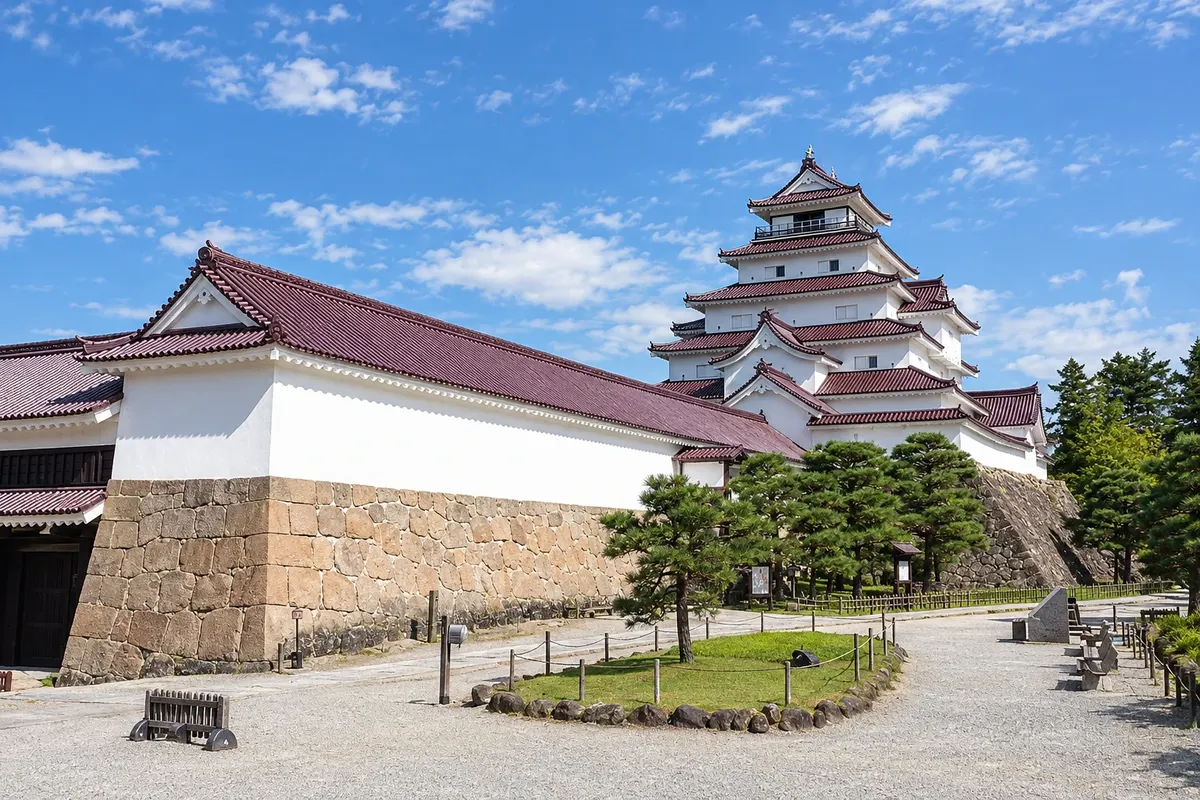
In Aizu-Wakamatsu, Tsuruga Castle, with its red roof tiles, houses a museum about the history of the Aizu domain. On Mount Iimori are the graves of the young Byakkotai samurai and the Sazaedo, a wooden pagoda with a double-spiral ramp where you can go up and down without crossing people coming the other way. The city is known for its sake and for the akabeko, a small red papier-mâché cow.
Ouchi-juku, in Shimogo, was a post-town on the old road that connected Aizu to Edo. Thatched-roof houses line both sides of an earthen street, and many operate as shops and restaurants. The local dish is negi soba, eaten using a whole green onion instead of chopsticks.
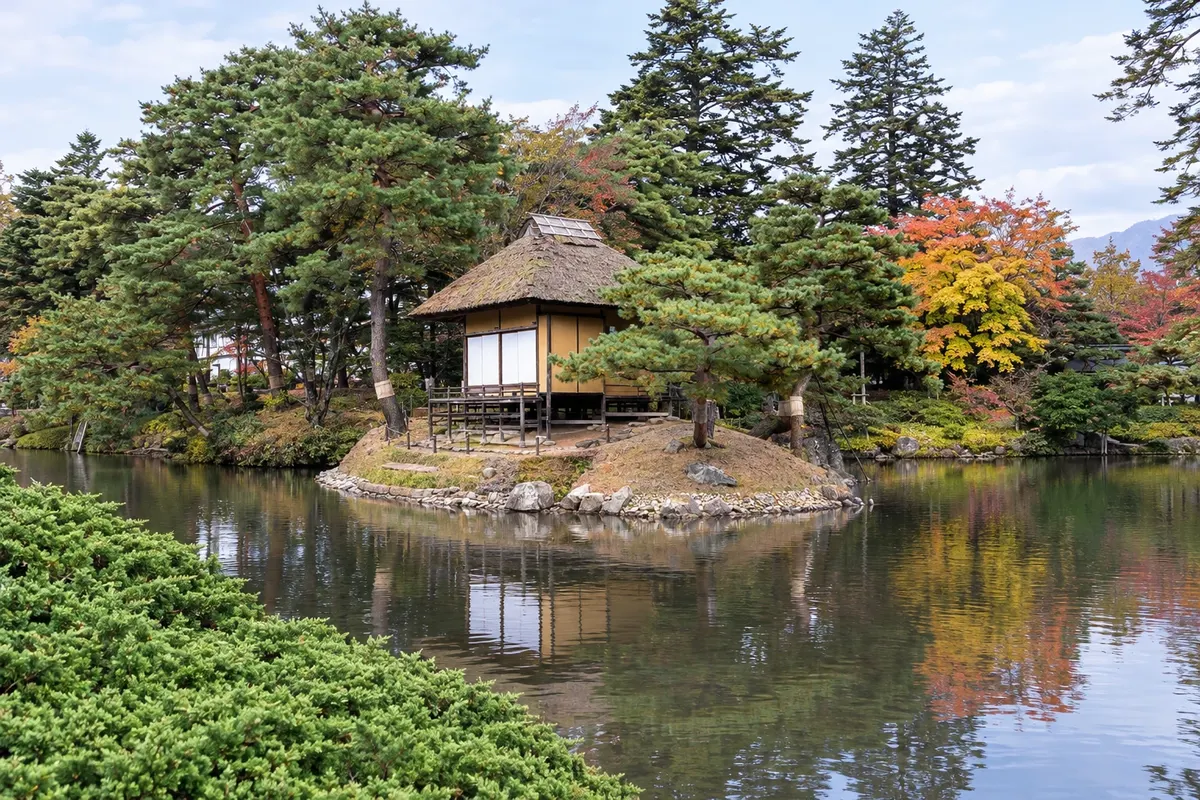
To the north, Mount Bandai overlooks Lake Inawashiro, one of the country’s largest. Near the mountain, the Goshikinuma trail passes by ponds whose colors range from green to blue. In the city of Fukushima, Hanamiyama Park covers a hill of flowering trees in spring.
Destinations
Cities
Aizuwakamatsu is the former castle-town of the Matsudaira clan in western Fukushima. It has Tsuruga Castle, rebuilt with red tiles, Mount Iimori with the graves of the young Byakkotai samurai and the wooden pagoda Sazaedo, the samurai residence Aizu Bukeyashiki and the herbal garden Oyakuen. The town is known for sake, lacquerware and the red cow doll akabeko.
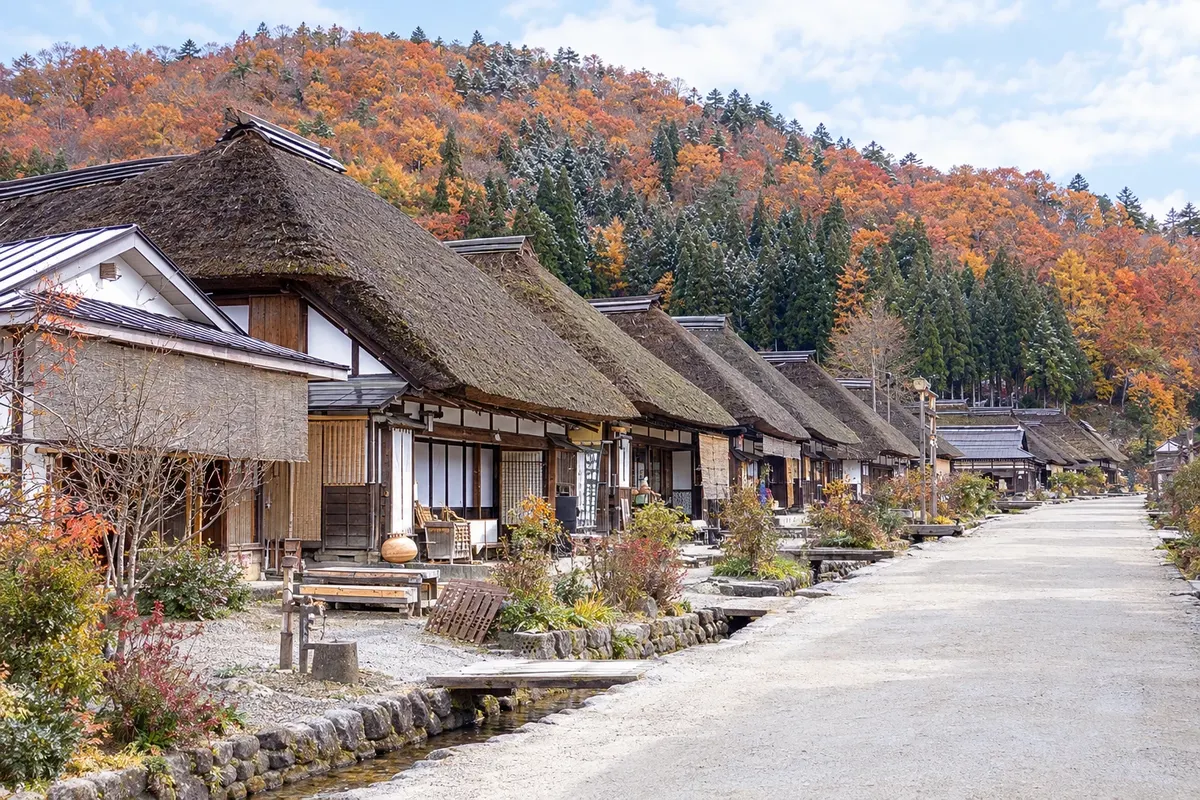
Shimogo is a mountain town in southern Aizu, in the Okawa River valley, about 30 km from Aizuwakamatsu. It is home to Ouchi-juku, the old post town on the road to Nikko, with dozens of thatched-roof houses along a dirt street, the Tonohetsuri rock cliffs carved by the river, and the Yunokami Onsen hot springs, which have a thatched-roof station.
In April, cherry trees bloom at Tsuruga Castle and in Hanamiyama Park. The Bandai and Goshikinuma trails are open from May through October. In October, Bandai’s forests turn red and yellow, and the Bandai-Azuma scenic road usually closes in winter. From December to March there is snow in Aizu and Ouchi-juku, which holds a snow festival in February.
The Tohoku Shinkansen connects Tokyo to Koriyama in about 1 hour 20 minutes and to Fukushima in about 1 hour 30 minutes. From Koriyama, the JR Ban’etsu West Line reaches Aizu-Wakamatsu in about 1 hour 10 minutes. To get to Ouchi-juku, take a train to Yunokami-Onsen Station and then a bus or taxi to the village. From Asakusa, Tobu Railway trains run toward Aizu with connections on the Aizu Railway. Fukushima Airport (FKS) has flights from Osaka and Sapporo.
Your questions
By train to Yunokami-Onsen Station on the Aizu Railway, then about 15 minutes by bus or taxi to the village. By car, Ouchi-juku is about 40 minutes from Aizu-Wakamatsu.
Tsuruga Castle and its museum, Mount Iimori with the Sazaedo pagoda, the samurai residence Aizu Bukeyashiki and the downtown sake breweries. A loop bus stops at the main sights.
The trail is about 4 km, mostly flat, and passes several ponds of different colors through forest. It takes around an hour and can be done from spring through autumn.
Two days allow you to see Aizu-Wakamatsu and Ouchi-juku. With a third day you can visit Goshikinuma, Lake Inawashiro or spend a night at a local onsen town.
Beyond the guide


