

 Brazil
 Antarctica
 Argentina
 Bolivia
 Chile
 Colombia
 Ecuador
 Guyana
 French Guiana
 Falkland Islands (Malvinas)
 Paraguay
 Peru
 Suriname
 Uruguay
 Venezuela
 Germany
 Austria
 Belgium
 Croatia
 Denmark
 Slovakia
 Slovenia
 Spain
 Finland
 France
 Greece
 the Netherlands
 Hungary
 Ireland
 Iceland
 Italy
 Luxembourg
 Norway
 Poland
 Portugal
 the United Kingdom
 the Czech Republic
 Sweden
 Switzerland
 Turkey
 Bermuda
 Canada
 the United States
 Greenland
 Mexico
 Saint Pierre and Miquelon
 the Dominican Republic
 South Africa
 Egypt
 Australia
 Fiji
 New Zealand
 Papua New Guinea
Province · Chubu
Gifu
Shirakawa-go and the gassho houses, Takayama’s old town, Hida Furukawa, Magome on the Nakasendo, Gujo Hachiman and cormorant fishing on the Nagara River.
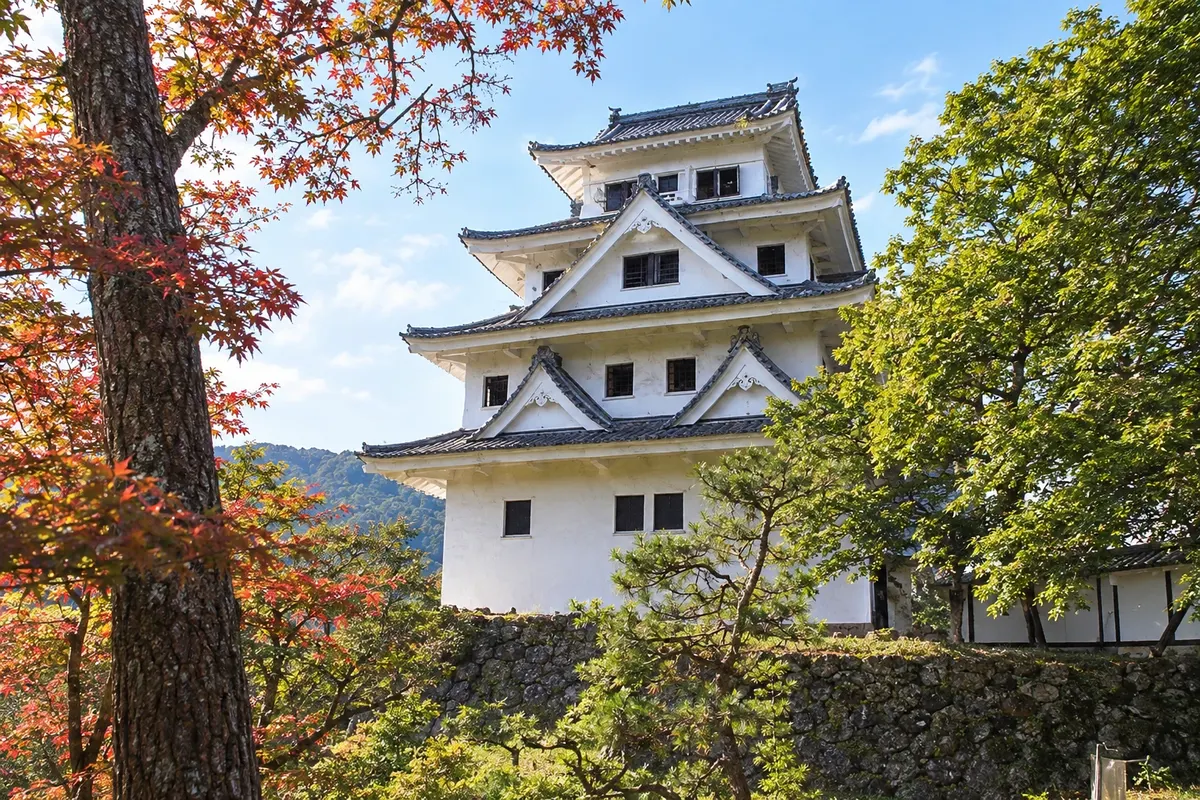
In the photo: Gujo Hachiman Castle, in Gifu.
Illustrative images. The pictures in this guide are illustrations based on the real place, not photographs, and may differ from it.

The province
Get to know Gifu
Gifu is in central Japan, landlocked. The north, Hida, is mountainous and snowy; the south, Mino, is a plain cut by rivers. Seki has been making knives and swords for centuries, and Mino paper is part of UNESCO’s intangible heritage, alongside other washi papers.
Takayama preserves merchant streets from the Edo period, with dark wooden houses, sake breweries and two morning markets. The Takayama Jinya was the local shogunate government office. Twice a year, in April and October, the Takayama Festival parades decorated floats. Hida beef is served grilled or on skewers. Nearby, Hida Furukawa has canals with carp.
Shirakawa-go, in the Shō River valley, gathers very steep thatched-roof houses, the gassho-zukuri, which resemble hands in prayer and withstand the weight of snow. The village of Ogimachi has been a UNESCO World Heritage site since 1995, together with the villages of Gokayama in Toyama. A hill viewpoint shows the whole village. Some houses operate as museums and others host guests.
Gujo Hachiman is a town of canals and springs where, in summer, locals and visitors dance the Gujo Odori in the streets. In the city of Gifu, the castle stands atop Mount Kinka, and at night torchlit boats showcase cormorant fishing on the Nagara River. To the southeast, Magome is a post town on the Nakasendo, linked to Tsumago by a trail.
When to go
The Takayama Festival takes place in April and October. From summer to early autumn there is cormorant fishing, from May to October, and the Gujo Odori dances from July to September. The Hida mountains show fall colors in October, and the southern part of the prefecture in November. From December to February, snow covers Shirakawa-go, and on some winter nights the village is illuminated, with access controlled by reservation.
Getting there
The Hida limited express trains connect Nagoya to Takayama in about 2 hours 20 minutes, passing through Gifu. Buses link Takayama to Shirakawa-go in about 50 minutes and Shirakawa-go to Kanazawa in about 1 hour 15 minutes; there are also buses from Shinjuku to Takayama. Gifu city is about 20 minutes by train from Nagoya. For Magome, buses depart from Nakatsugawa Station on the JR Chuo Line.
Your questions
Frequently asked questions about Gifu
How do I get from Takayama to Shirakawa-go?
By bus, in about 50 minutes, with advance reservation recommended for the busiest times. The same buses continue to Kanazawa, and you can bring luggage, storing it in lockers near the village terminal.
Can you sleep in a gassho house in Shirakawa-go?
Yes. Some houses operate as small family-run guesthouses, offering dinner and breakfast. Availability is limited and fills up early, especially in winter.
When is the Takayama Festival held?
Twice a year: the spring festival in mid-April, and the autumn festival in early October. The decorated floats can be seen year-round in a museum beside Hachiman Shrine.
When can you see cormorant fishing in Gifu?
From May to mid-October, at night, on the Nagara River. Sightseeing boats accompany the fishermen, who guide the birds by torchlight. Fishing does not take place on full-moon nights nor when the river is in flood.
Beyond the guide


