Dish · Kagawa
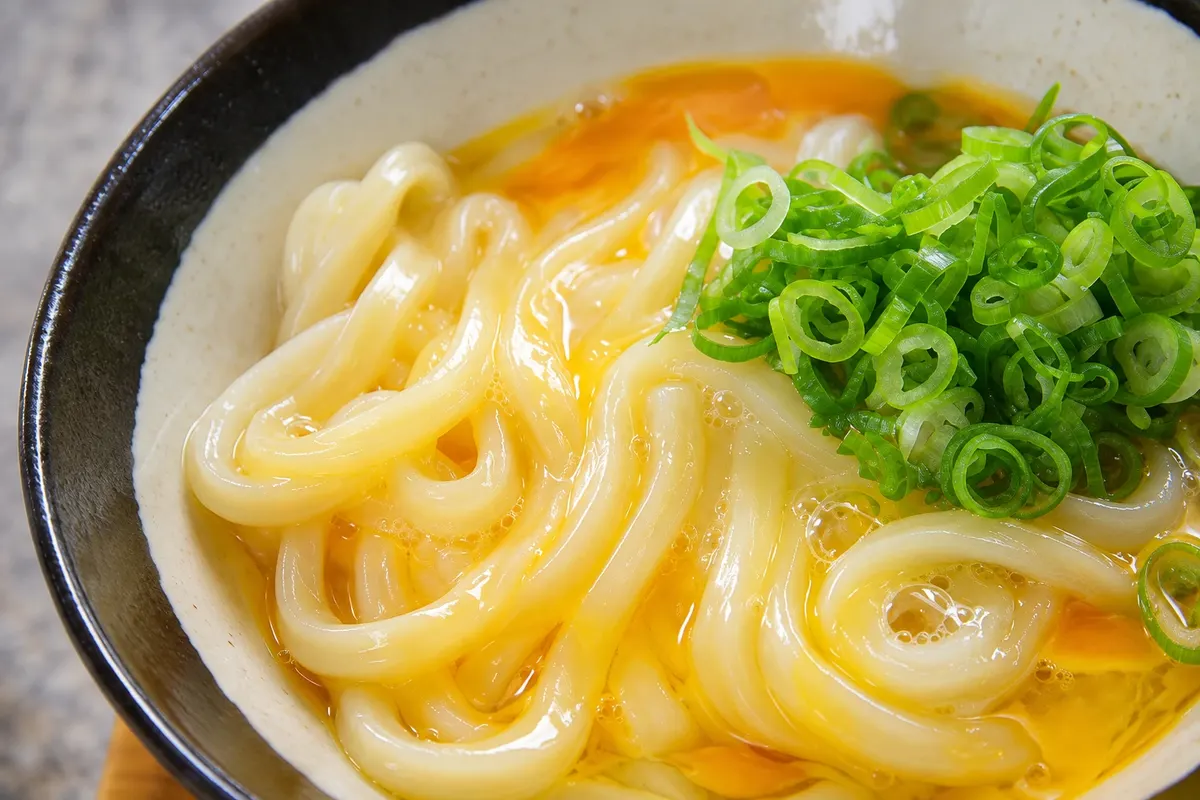
Sanuki udon
Kagawa udon: firm and elastic, with a smooth surface, served hot or cold, in iriko broth or simply with soy sauce. Kagawa is called the udon kingdom, with udon shops throughout the prefecture.

 Search
 Brazil
 Antarctica
 Argentina
 Bolivia
 Chile
 Colombia
 Ecuador
 Guyana
 French Guiana
 Falkland Islands (Malvinas)
 Paraguay
 Peru
 Suriname
 Uruguay
 Venezuela
 Germany
 Austria
 Belgium
 Croatia
 Denmark
 Slovakia
 Slovenia
 Spain
 Finland
 France
 Greece
 the Netherlands
 Hungary
 Ireland
 Iceland
 Italy
 Luxembourg
 Norway
 Poland
 Portugal
 the United Kingdom
 the Czech Republic
 Sweden
 Switzerland
 Turkey
 Bermuda
 Canada
 the United States
 Greenland
 Mexico
 Saint Pierre and Miquelon
 the Dominican RepublicJapanTurkey
 South Africa
 Egypt
 Australia
 Fiji
 New Zealand
 Papua New Guinea
Province · Shikoku
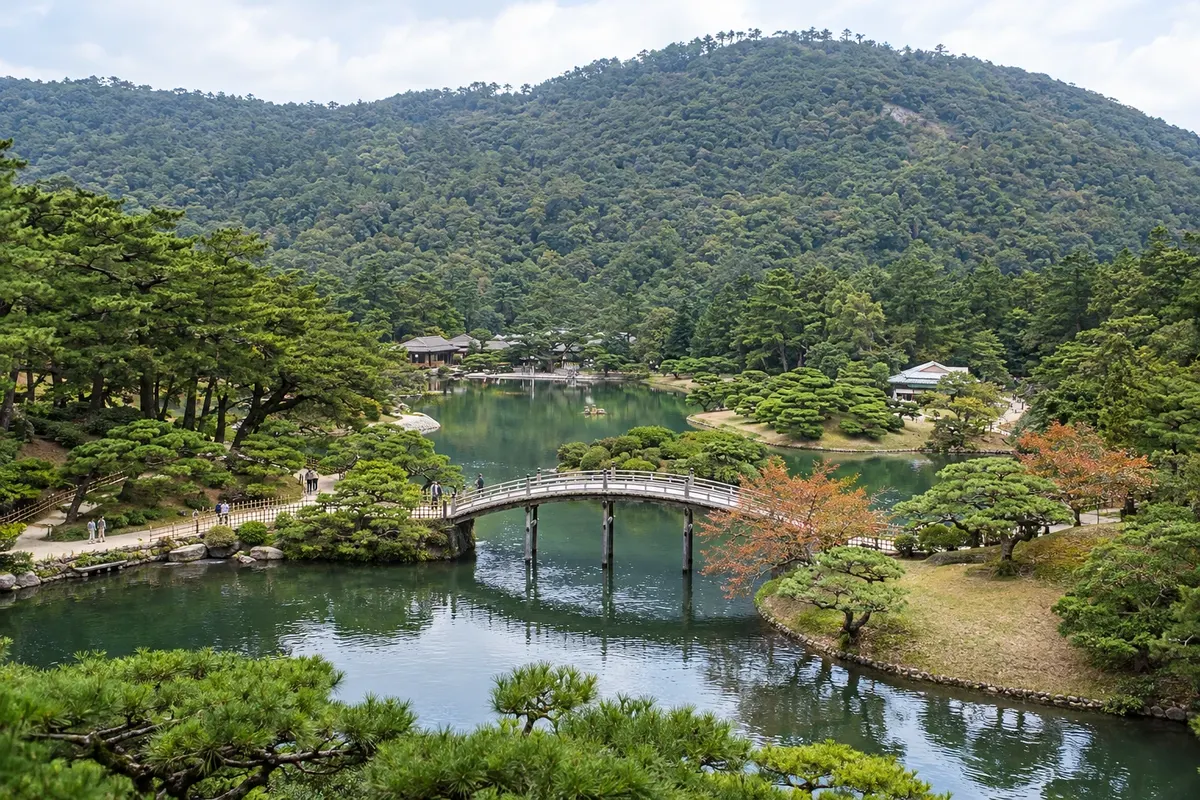
Ritsurin Garden, sanuki udon, Konpira Shrine, the art islands of Naoshima and Teshima, and the olive trees of Shodoshima.
In the photo: Ritsurin Garden, in Kagawa.
Illustrative images. The pictures in this guide are illustrations based on the real place, not photographs, and may differ from it.

The province
Kagawa, in northeast Shikoku, is the smallest prefecture in Japan by area. It faces the Seto Inland Sea, with dozens of islands, and has low rainfall; irrigation reservoirs dot the countryside. The prefecture presents itself as the land of udon, the thick wheat noodle, served in hundreds of simple restaurants.
In Takamatsu, the capital, Ritsurin Garden, created by the local feudal lords in the Edo period, has six ponds and thirteen hills in front of a pine-covered mountain, with boats and a tea house. The ruins of Tamamo Castle have moats filled with seawater, and the Yashima plateau offers views of the islands.
Naoshima and Teshima are less than an hour away by boat and welcome visitors for contemporary art: the Chichu Art Museum by Tadao Ando, built under the ground; outdoor works such as Yayoi Kusama’s pumpkin on the pier; and the Teshima Art Museum, a concrete shell on the fields. The Setouchi Triennale, every three years, occupies several islands. Shodoshima has olive trees, the Kankakei Gorge with a ropeway, and a sandbar that connects islets at low tide.
In Kotohira, Konpira-gu Shrine, dedicated to sailors, sits atop a staircase of several hundred steps, and the town has Kanamaru-za, the oldest surviving kabuki theatre in Japan. Marugame Castle has an original keep atop high stone walls, and Zentsu-ji marks the place where the monk Kukai was born.
Flavors of Japan
The climate is dry and mild, with pleasant spring and autumn. The art islands receive more visitors in summer and during the Triennale. In November, Kankakei Gorge can be seen with red maples from the ropeway. Winters are mild, but some museums close one day a week, and ferry frequencies change with the season.
The Marine Liner train links Okayama to Takamatsu in about 55 minutes via the Seto-Ohashi Bridge. Takamatsu Airport (TAK) receives flights from Tokyo and some cities in Asia. From Takamatsu port, ferries reach Naoshima in about 50 minutes and high-speed boats in about 30; there are also boats to Teshima and Shodoshima. Kotohira is about 1 hour by train from Takamatsu.
Your questions
There are 785 steps to the main hall and 1,368 to the inner shrine. The climb to the main hall takes about 40 minutes, with shops and smaller shrines along the way.
By ferry, in about 50 minutes, or by high-speed boat, in about 30, to Miyanoura Port. On the island, buses and rental bicycles connect the port to the museums.
In Takamatsu and the countryside there are hundreds of udon shops, many self-service: you choose the portion size, the temperature of the broth, and the toppings at the counter. Many open early and close when the day’s noodles run out.
The Chichu Art Museum requires a timed reservation, and other museums on the island limit entry on busy days. Almost all close one day of the week: confirm before you go.
Beyond the guide


