2 cities

 Search
 Brazil
 Antarctica
 Argentina
 Bolivia
 Chile
 Colombia
 Ecuador
 Guyana
 French Guiana
 Falkland Islands (Malvinas)
 Paraguay
 Peru
 Suriname
 Uruguay
 Venezuela
 Germany
 Austria
 Belgium
 Croatia
 Denmark
 Slovakia
 Slovenia
 Spain
 Finland
 France
 Greece
 the Netherlands
 Hungary
 Ireland
 Iceland
 Italy
 Luxembourg
 Norway
 Poland
 Portugal
 the United Kingdom
 the Czech Republic
 Sweden
 Switzerland
 Turkey
 Bermuda
 Canada
 the United States
 Greenland
 Mexico
 Saint Pierre and Miquelon
 the Dominican RepublicJapanTurkey
 South Africa
 Egypt
 Australia
 Fiji
 New Zealand
 Papua New Guinea
Province · Kyushu
The yatai stalls and Hakata ramen, the Dazaifu Tenmangu Shrine, the Itoshima coast, the canals of Yanagawa and the old port of Moji.
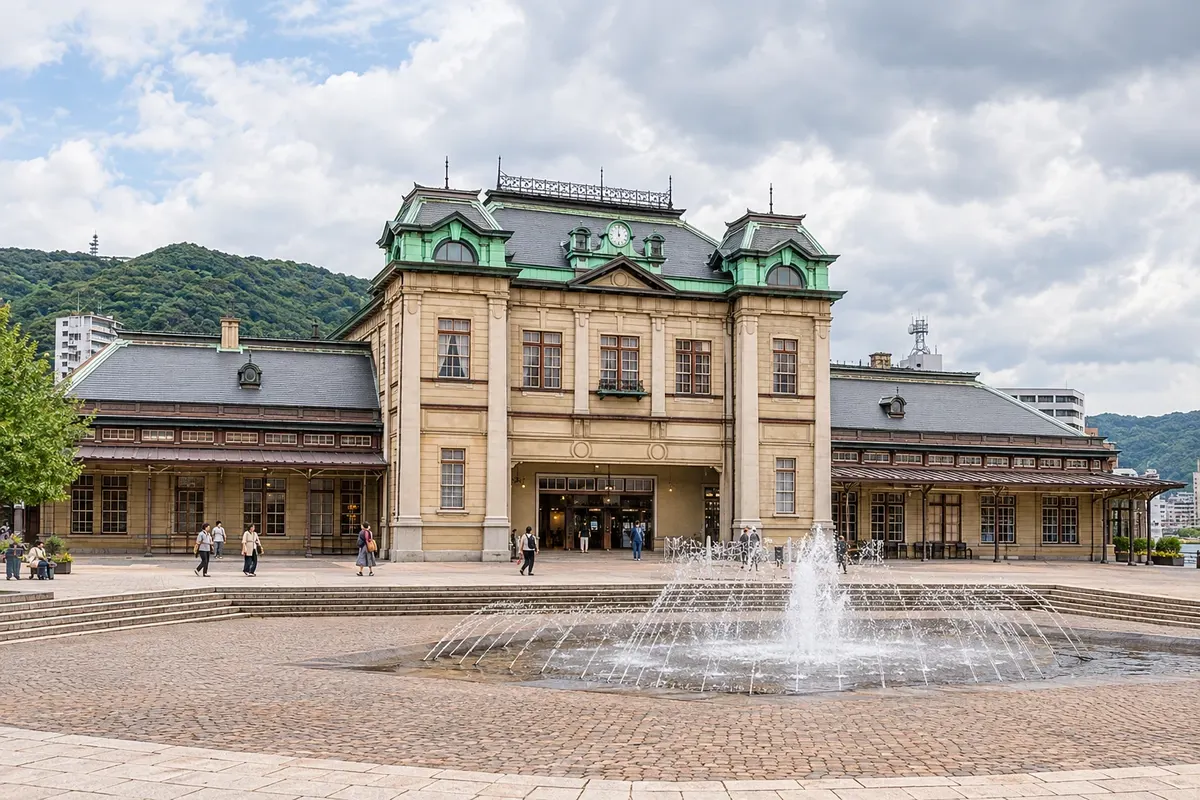
In the photo: Mojiko Station, in Fukuoka.
Illustrative images. The pictures in this guide are illustrations based on the real place, not photographs, and may differ from it.

The province
Fukuoka lies in northern Kyushu, facing the Genkai Sea, closer to South Korea than to Tokyo. For centuries it was the gateway from the continent into Japan. The city of Fukuoka, which brings together the former Hakata and Fukuoka, is the largest in Kyushu, and the airport is just minutes from the center.
At night, yatai stalls set up on the sidewalks of Nakasu and Tenjin, with counters for a few people, serving ramen, skewers and oden. Hakata ramen has a white pork-bone broth and thin noodles, and mentaiko, seasoned cod roe, is the most common souvenir. The Kushida Shrine holds the Hakata Gion Yamakasa in July, a race with floats carried by teams. Ohori Park has a large central lake.
In Dazaifu, about 40 minutes away, Dazaifu Tenmangu Shrine is dedicated to Sugawara no Michizane, revered as the deity of studies, and has thousands of plum trees. The street leading to the shrine sells umegae mochi, a grilled rice cake. Nearby is the Kyushu National Museum. In Yanagawa, boatmen ply the canals, and eel is served steamed.
To the west, Itoshima has beaches and the white torii of Sakurai Futamigaura in the sea. In Kitakyushu, Mojiko preserves brick buildings from the old port, and the Kawachi wisteria tunnel blooms in spring. Off the Munakata coast, the island of Okinoshima, where landing is not allowed, is part of a UNESCO World Heritage site along with the Munakata shrines.
Destinations
Cities
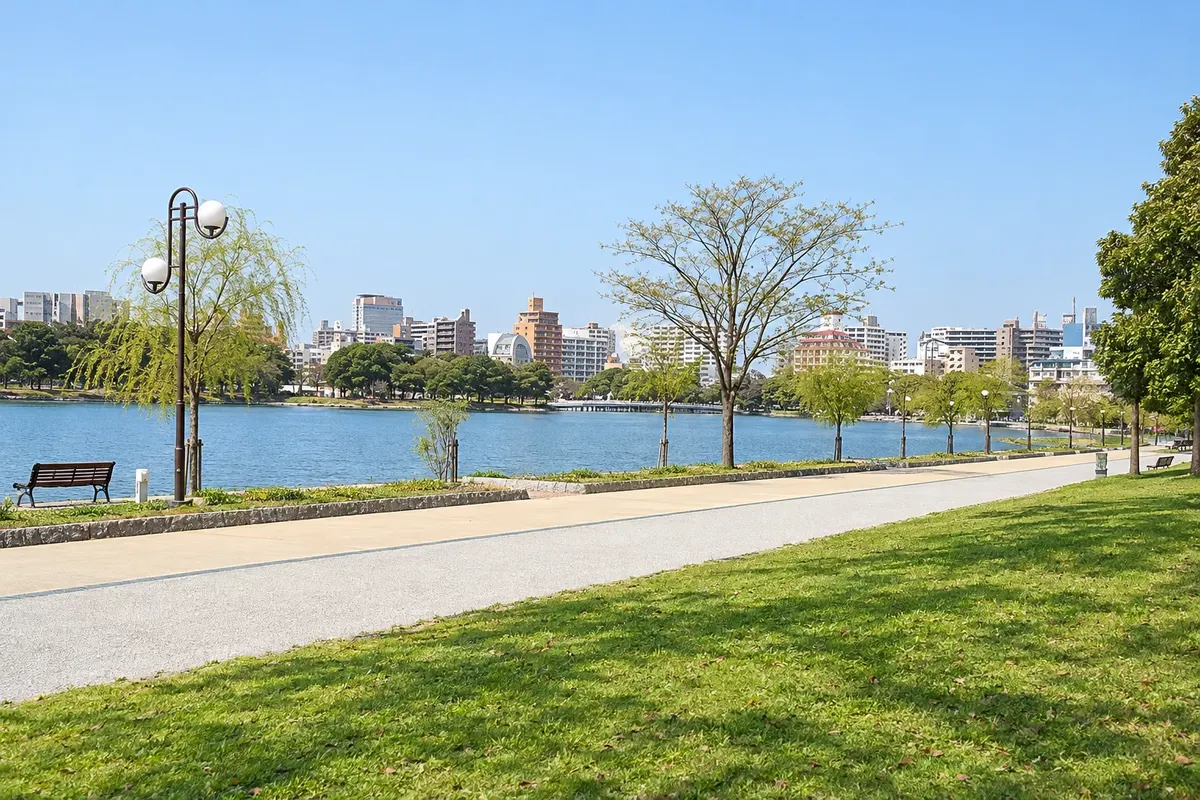
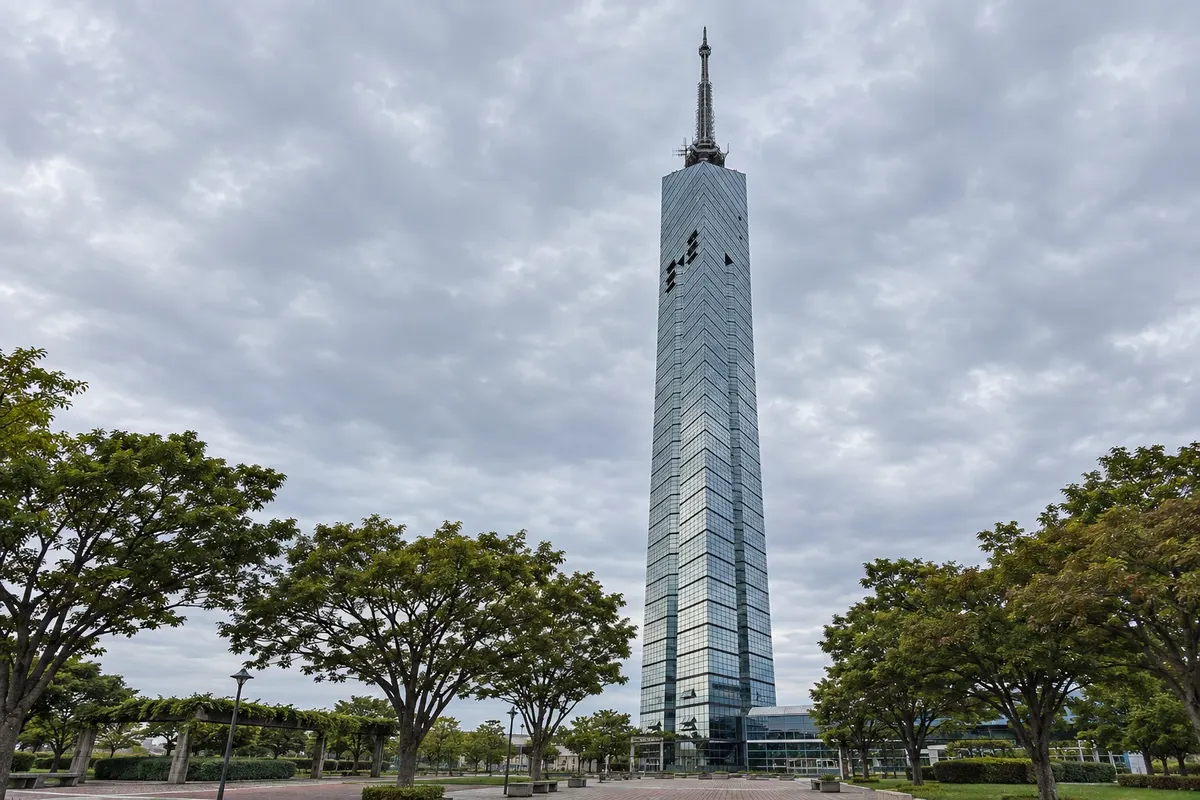
Fukuoka is the capital of Fukuoka Prefecture and the largest city on Kyushu, formed by the old port of Hakata and the castle town. Kushida Shrine, in the heart of Hakata, Ohori Park next to the castle ruins, and Fukuoka Tower on the Momochi waterfront are the main stops, with yatai stalls at night. The Itoshima peninsula to the west has beaches and the sea gate at Futamigaura.
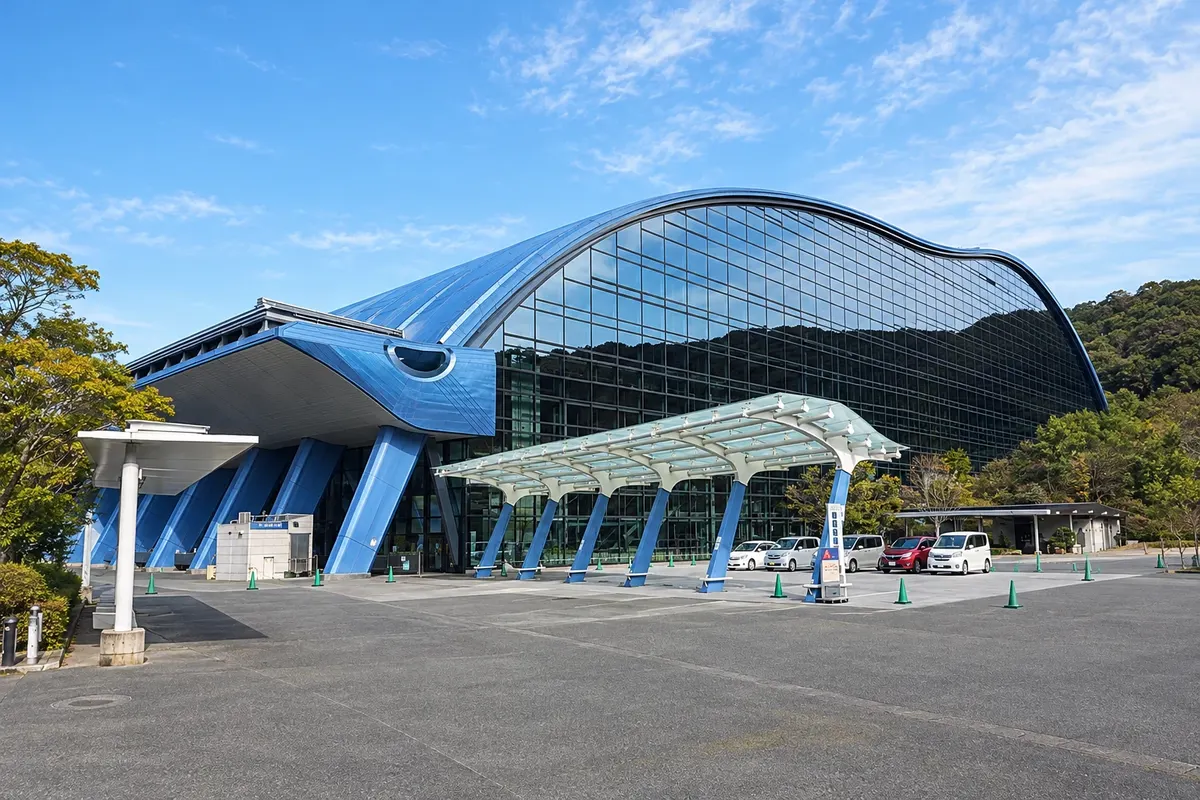
Dazaifu is a city about 16 km from Fukuoka that for centuries was the administrative and military center of Kyushu. Today it is known for Dazaifu Tenmangu Shrine, dedicated to the deity of learning, with more than six thousand plum trees, and the Kyushu National Museum, about Japan’s cultural exchanges with Asia. The approach street to the shrine sells umegae-mochi, a traditional sweet.
The plum trees of Dazaifu bloom between February and March. The Kawachi wisterias bloom from late April to mid-May, and advance booking is necessary. The Hakata Gion Yamakasa runs from July 1 to 15, with the main race in the early hours on the last day. July and August are humid. Winters are not very cold, and the yatai stalls operate year-round except in heavy rain.
Fukuoka Airport (FUK) is about a 5-minute subway ride from Hakata Station and receives flights from various Asian cities. The Sanyo Shinkansen connects Shin-Osaka to Hakata in about 2½ hours and to Tokyo in about 5 hours; the Kyushu Shinkansen continues to Kumamoto and Kagoshima. Fast ferries connect Hakata to Busan, South Korea. Dazaifu is about 40 minutes by the Nishitetsu railway.
Your questions
The stalls open in the early evening and close after midnight, with counter seating for around ten people. Each has its own handwritten menu. You are expected to order at least one dish and one drink per person, and you shouldn’t stay long if there’s a line.
By the Nishitetsu railway from Tenjin Station, with a transfer at Futsukaichi, in about 40 minutes. There are also direct buses from Hakata Station.
No. Okinoshima is sacred and closed to visitors. In Munakata, Hetsu-gu Shrine and, on Oshima Island, Nakatsu-gu accept visitors, and from Oshima you can view Okinoshima on clear days.
Two days let you see the center, the yatai stalls, Ohori Park and Dazaifu. With a third day you can visit Itoshima, Yanagawa or Kitakyushu.
Beyond the guide


