2 cities

 Search
 Brazil
 Antarctica
 Argentina
 Bolivia
 Chile
 Colombia
 Ecuador
 Guyana
 French Guiana
 Falkland Islands (Malvinas)
 Paraguay
 Peru
 Suriname
 Uruguay
 Venezuela
 Germany
 Austria
 Belgium
 Croatia
 Denmark
 Slovakia
 Slovenia
 Spain
 Finland
 France
 Greece
 the Netherlands
 Hungary
 Ireland
 Iceland
 Italy
 Luxembourg
 Norway
 Poland
 Portugal
 the United Kingdom
 the Czech Republic
 Sweden
 Switzerland
 Turkey
 Bermuda
 Canada
 the United States
 Greenland
 Mexico
 Saint Pierre and Miquelon
 the Dominican RepublicJapanTurkey
 South Africa
 Egypt
 Australia
 Fiji
 New Zealand
 Papua New Guinea
Province · Chugoku
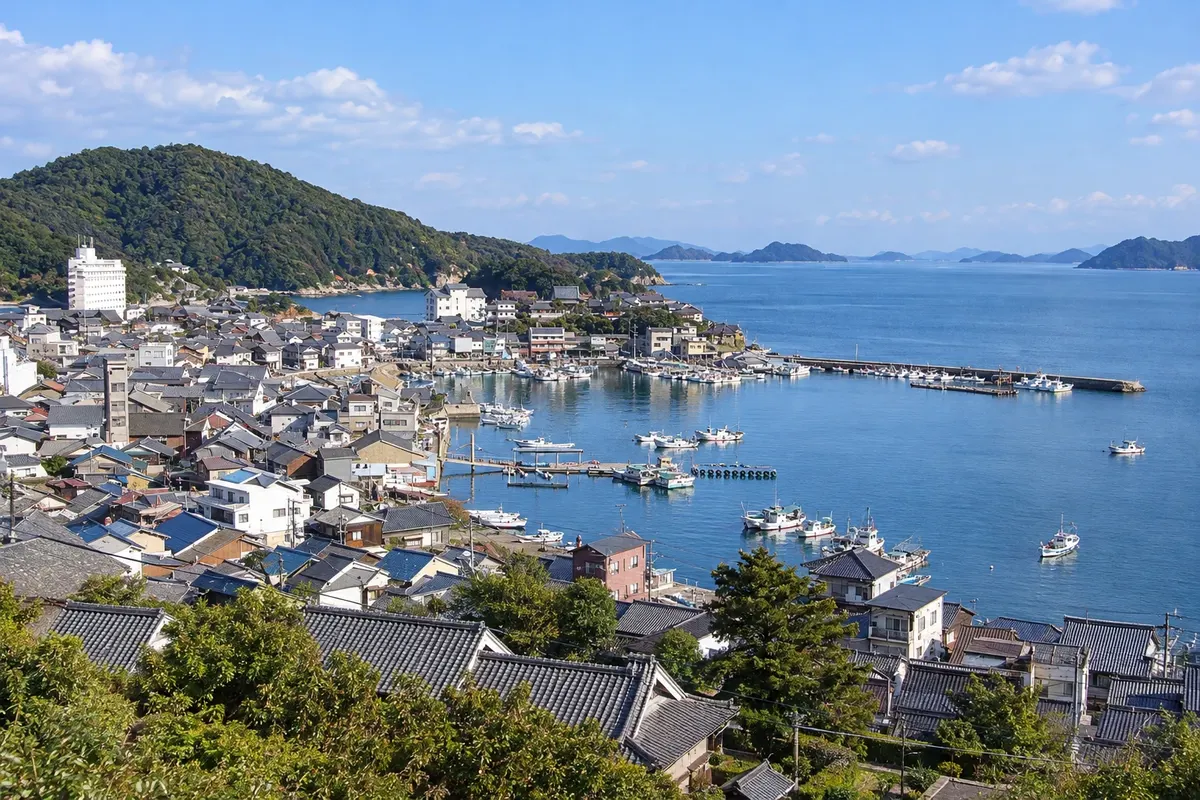
The Peace Memorial Park and the Atomic Bomb Dome, the Itsukushima Shrine on Miyajima, the hills of Onomichi, the Shimanami Kaido and the port of Tomonoura.
In the photo: Tomonoura Port, Hiroshima.
Illustrative images. The pictures in this guide are illustrations based on the real place, not photographs, and may differ from it.

The province
Hiroshima sits on the Seto Inland Sea and is the largest city in the Chugoku region. The city was destroyed by the atomic bomb on August 6, 1945, and rebuilt in the following decades. The prefecture is known for oysters, farmed in the bay, and layered okonomiyaki with noodles.
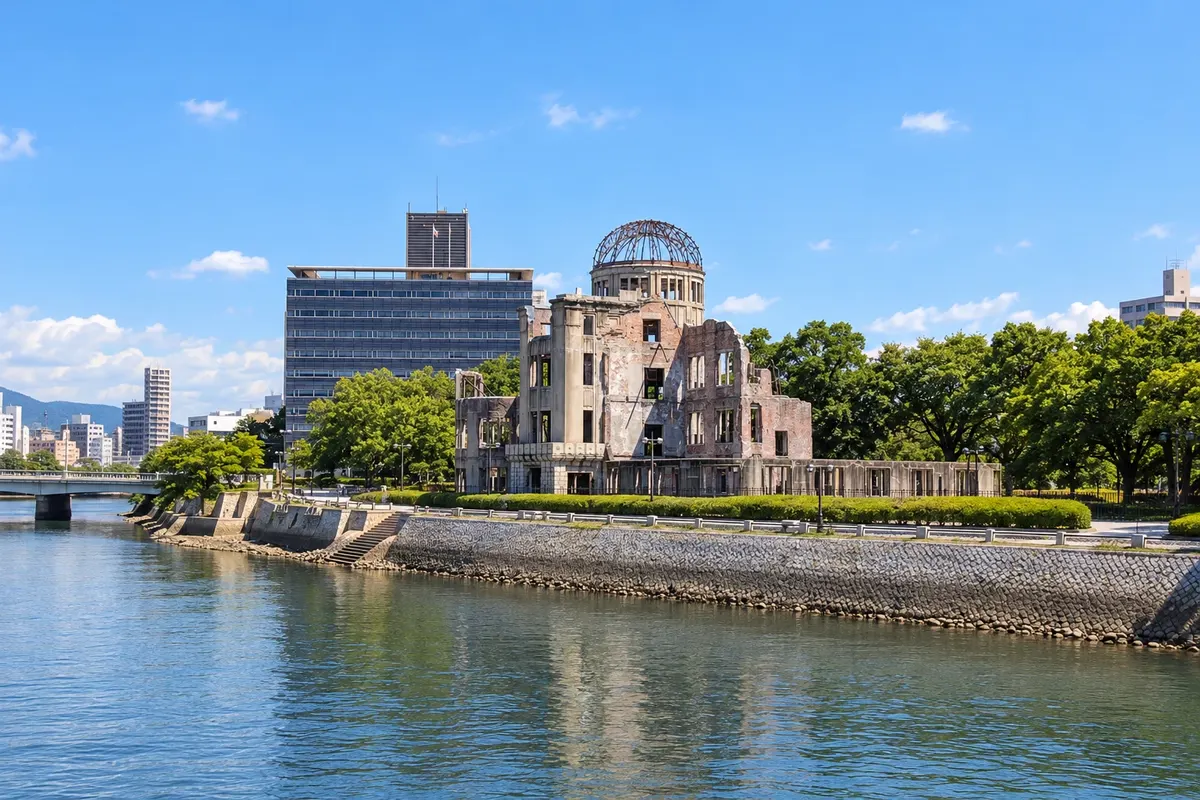
In the Peace Memorial Park, the Atomic Bomb Dome, the ruin of a building that remained standing near the blast’s hypocenter, has been a UNESCO World Heritage site since 1996. The Peace Memorial Museum tells the story of the bombing and its victims, and the park contains the cenotaph, the flame of peace and the Children’s Monument, covered in paper cranes. In the city, Shukkei-en Garden has a pond with islands and bridges.
Miyajima, the island of Itsukushima in Hatsukaichi, is home to the Itsukushima Shrine built over the water and the large red torii that appears to float at high tide. The complex has been a UNESCO World Heritage site since 1996. Deer wander the village, and a ropeway and trails climb Mount Misen. A visitor fee is charged to enter the island.
To the east, Onomichi has hillside streets with temples and views over the channel, and is the starting point for the Shimanami Kaido, a road of bridges over islands to Imabari in Shikoku, with a cycling route. Tomonoura is an old port with wooden houses, and Takehara preserves merchant streets tied to salt and sake. In Kure, a museum recounts the city’s naval history.
Destinations
Cities
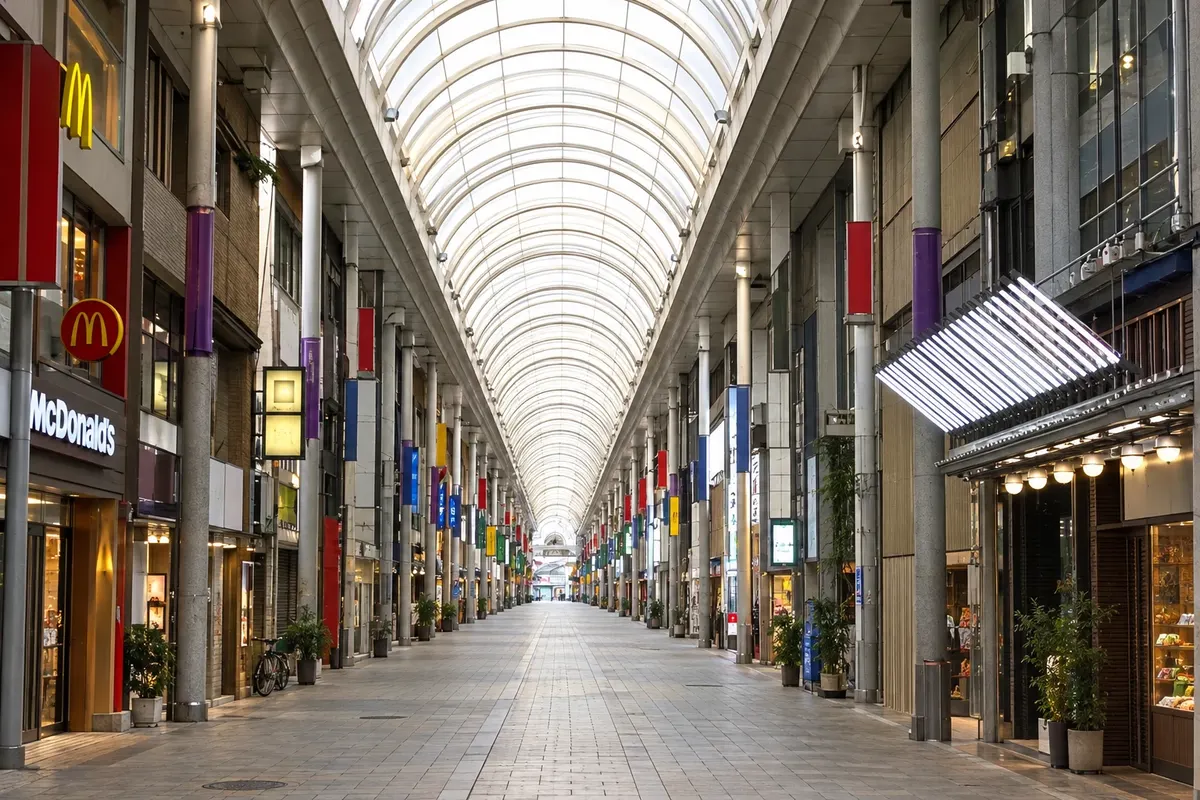
Hiroshima, on the Ota River delta, was the first city hit by an atomic bomb in 1945. The former city center became the Peace Memorial Park, with the museum, cenotaph and the Atomic Bomb Dome, a World Heritage site. The rebuilt city has streetcars, rivers, the Shukkei-en garden and okonomiyaki restaurants, and it is the base for visiting Miyajima.
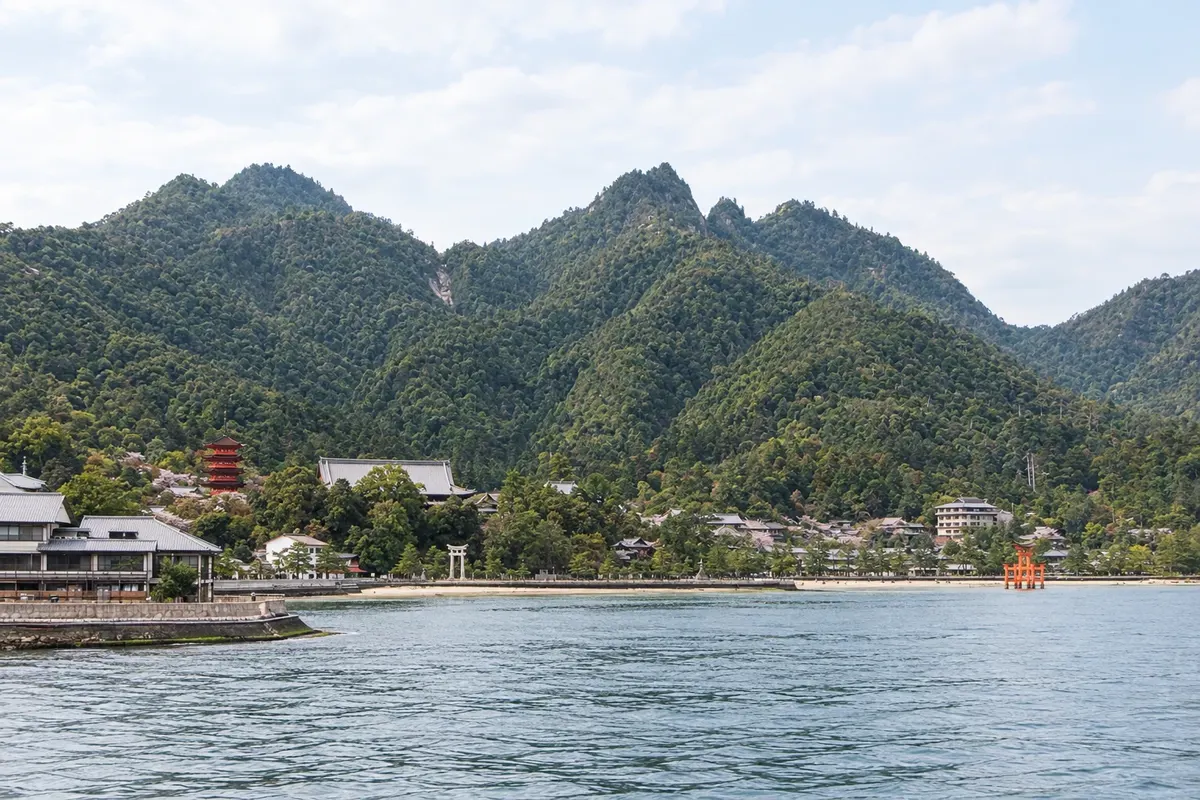
Miyajima is the island of Itsukushima, in Hatsukaichi district, in Hiroshima Bay. It is considered sacred and is home to the Itsukushima Shrine, with the large torii gate in the sea, a World Heritage site. The town by the pier has Omotesando Street, known for maple-leaf sweets and oysters, free-roaming deer, and temples such as Daisho-in. Mount Misen, covered in forest, has a ropeway and hiking trails.
March to May and October to November have the mildest weather; in November the maples in the Momijidani valley on Miyajima turn red. Summers are humid. On August 6 the city holds a peace ceremony and releases lanterns on the river at night. Oysters are in season from October to March. To see the torii in the water or walk out to it, check the tide tables.
The Sanyo Shinkansen links Tokyo to Hiroshima in about 4 hours, Shin-Osaka in about 1 hour 30 minutes and Hakata in about 1 hour 10 minutes. Hiroshima Airport (HIJ) is about a 50-minute bus ride from the city center. For Miyajima, take a train to Miyajimaguchi, about 25 minutes, and then a ferry of 10 minutes; boats also depart from the Peace Park. Onomichi is served by the bullet train at Shin-Onomichi and by the JR Sanyo line.
Your questions
About three hours: an hour and a half to two for the museum and the rest for the park, the Dome and the monuments. The museum often has a queue around midday.
By train to Miyajimaguchi Station and then by ferry to the island, about 45 minutes total from central Hiroshima. Boats from the Peace Park make the direct crossing in about 45 minutes.
At high tide. At low tide you can walk out to its base across the sand. Times change daily: check tide tables before you go.
Yes. The island has traditional lodgings; staying overnight lets you see the shrine lit at night and the village without day-trippers, who leave in the late afternoon.
Beyond the guide


