1 city

 Search
 Brazil
 Antarctica
 Argentina
 Bolivia
 Chile
 Colombia
 Ecuador
 Guyana
 French Guiana
 Falkland Islands (Malvinas)
 Paraguay
 Peru
 Suriname
 Uruguay
 Venezuela
 Germany
 Austria
 Belgium
 Croatia
 Denmark
 Slovakia
 Slovenia
 Spain
 Finland
 France
 Greece
 the Netherlands
 Hungary
 Ireland
 Iceland
 Italy
 Luxembourg
 Norway
 Poland
 Portugal
 the United Kingdom
 the Czech Republic
 Sweden
 Switzerland
 Turkey
 Bermuda
 Canada
 the United States
 Greenland
 Mexico
 Saint Pierre and Miquelon
 the Dominican RepublicJapanTurkey
 South Africa
 Egypt
 Australia
 Fiji
 New Zealand
 Papua New Guinea
Province · Kyushu
Peace Park, Dejima, Glover Garden, Gunkanjima island, the churches of the Goto Islands, the Unzen hot springs and the Kujukushima Bay.
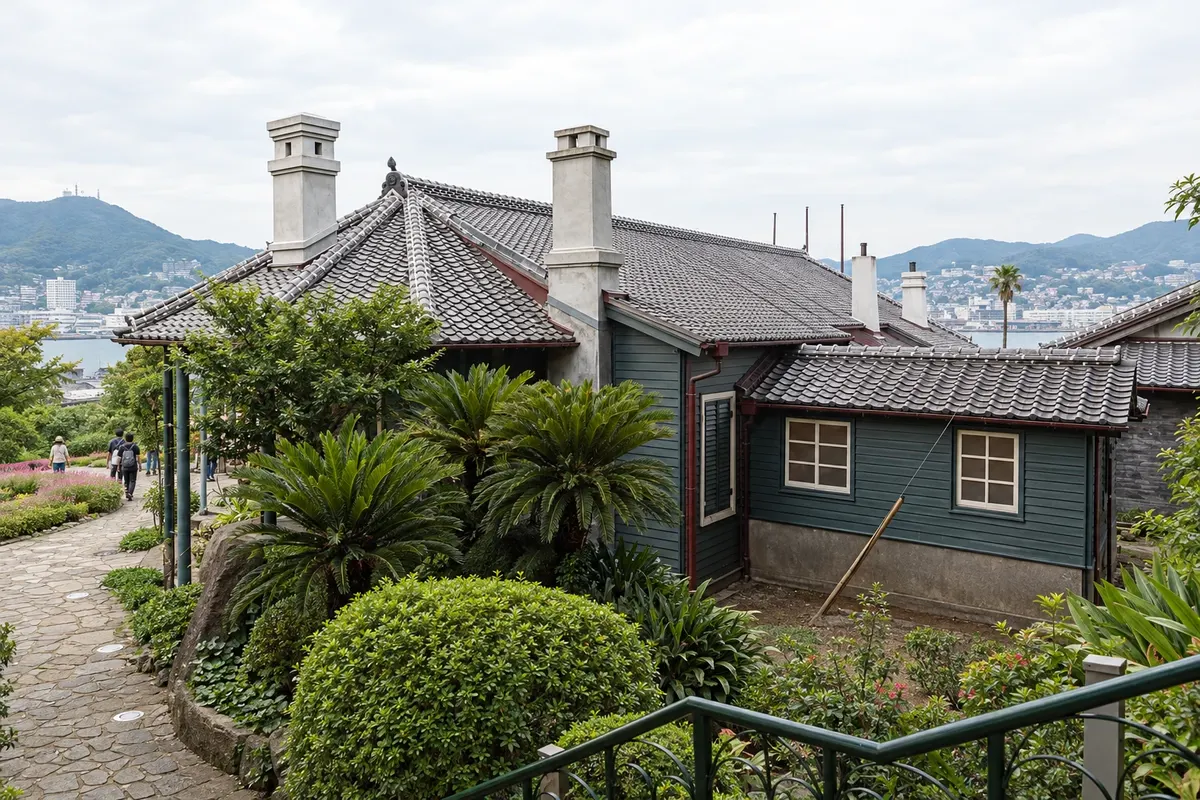
In the photo: Glover House, in Nagasaki.
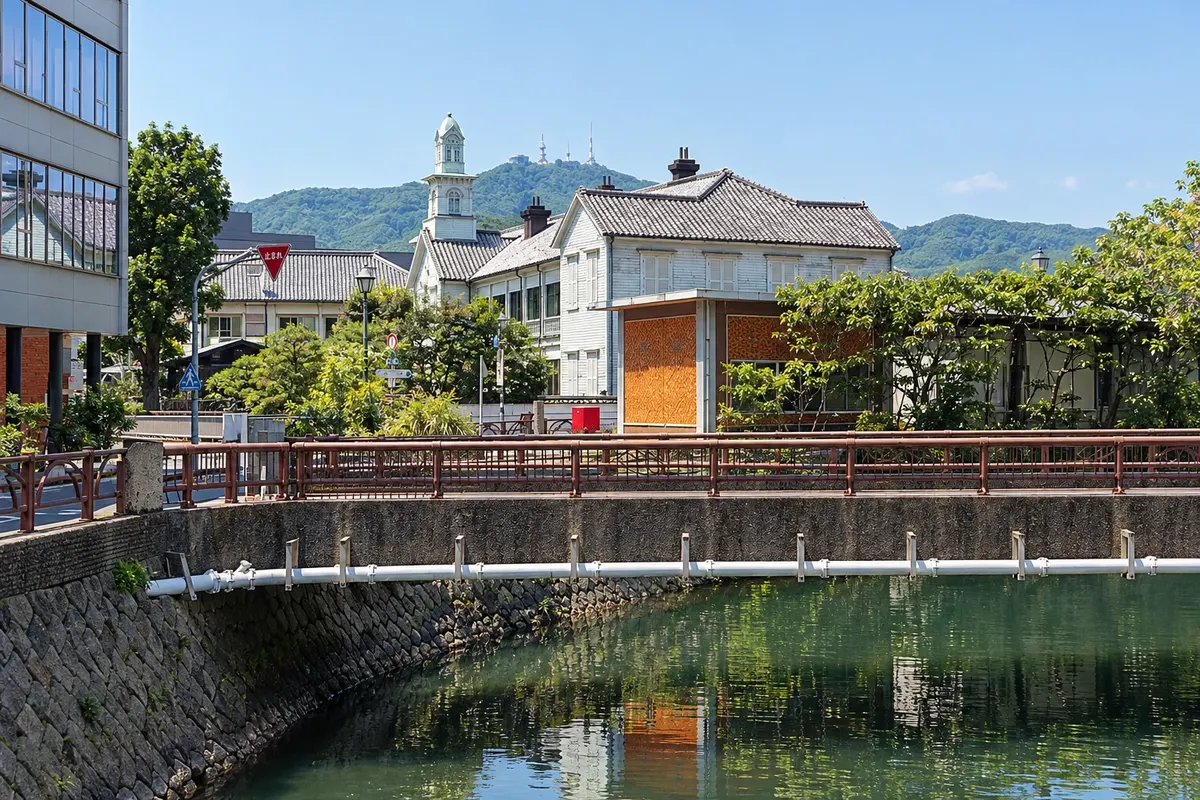
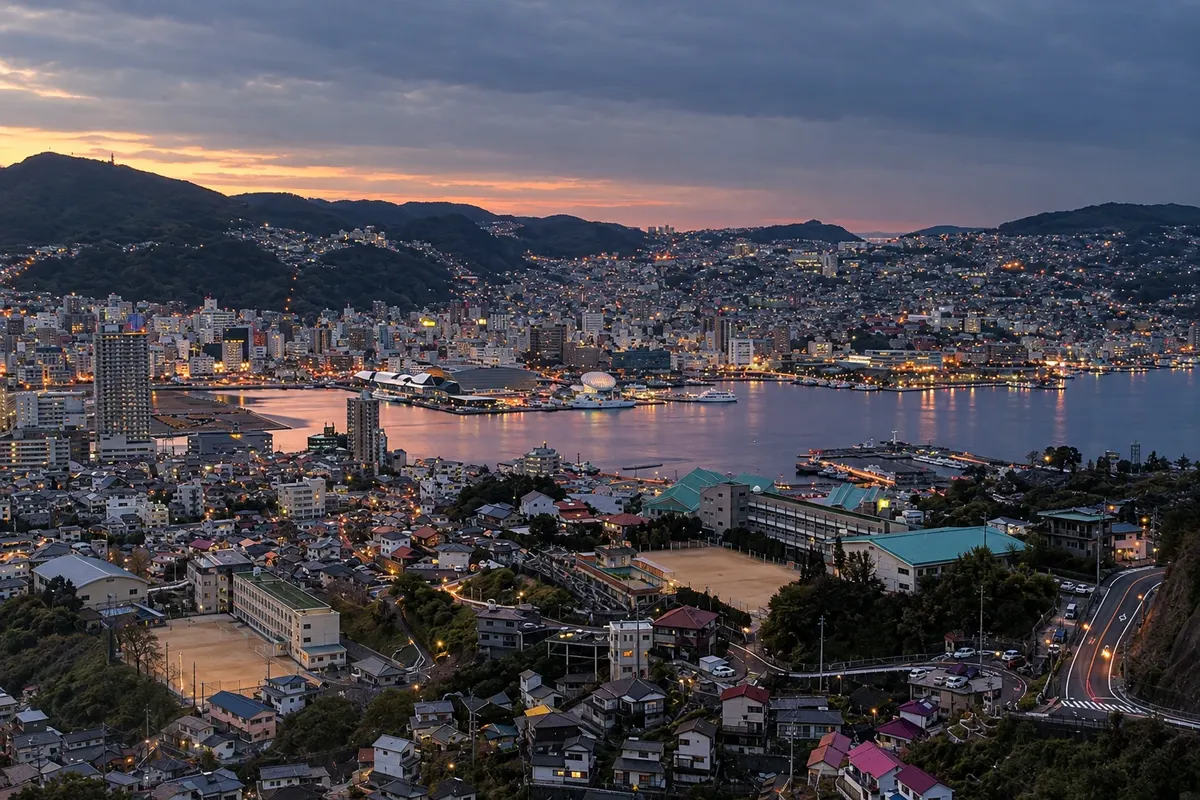
Illustrative images. The pictures in this guide are illustrations based on the real place, not photographs, and may differ from it.

The province
Nagasaki sits on the western tip of Kyushu, with a jagged coast and hundreds of islands. The port received the Portuguese in the 16th century and, during Japan’s period of isolation from the 17th to 19th centuries, was the only point of trade with the West, via the artificial island of Dejima, where the Dutch lived.
The city of Nagasaki was hit by the atomic bomb on August 9, 1945. Peace Park, with the Peace Statue, and the Atomic Bomb Museum are in the Urakami district. Dejima has been reconstructed with period houses and warehouses. On the hill, Glover Garden brings together 19th-century houses of Western merchants, and the nearby Oura Church is a national treasure. Mount Inasa offers a nighttime view of the bay. Castella, a sponge cake brought by the Portuguese, and champon, noodles with seafood, are local specialties.
Gunkanjima, Hashima Island, was an undersea coal mine covered with concrete buildings, abandoned in the 1970s. It is part of the UNESCO Sites of the Meiji Industrial Revolution and is visited on boat tours when the sea conditions allow a landing.
The Sites of Hidden Christians of Nagasaki and Amakusa, inscribed by UNESCO in 2018, include churches and villages where Christians kept their faith in secret during the prohibition, such as on the Goto Islands and in Sotome. In Shimabara, Mount Unzen has hot springs with steam vents, called “hells.” In Sasebo, Kujukushima Bay has dozens of tree-covered islands.
Destinations
At Chinese New Year, usually in February, the Lantern Festival fills the center with colorful lanterns. On August 9, Nagasaki commemorates the victims of the bomb with a ceremony in Peace Park. The Nagasaki Kunchi festival in October mixes Japanese, Chinese and Dutch dance. Spring and autumn usually have calmer seas for Gunkanjima. Winters are mild.
The Nishi-Kyushu Shinkansen links Takeo-Onsen to Nagasaki in about 30 minutes; from Hakata, with an express train to Takeo-Onsen and the shinkansen, it’s about 1 hour 20 minutes. Nagasaki Airport (NGS), on an island in Omura Bay, is about 45 minutes by bus from the city center. For Gunkanjima, sightseeing boats depart from Nagasaki port. The Goto Islands are reached by ferries, high-speed boats and flights.
Your questions
On boat tours organized by companies at Nagasaki port, lasting about three hours, with advance reservation. Landings are allowed only on part of the island and depend on sea conditions; on days with high waves, the boat only circles the island.
Two days allow you to see Peace Park, the museum, Dejima, Glover Garden and Mount Inasa at night. With a third day you can include Gunkanjima, Unzen or Sotome.
Yes, but some require prior notice to the churches’ information center before a visit, because they are still used by local communities. Inside them, keep silence and do not photograph during services.
Champon, noodles in a broth with seafood and vegetables; sara udon, crispy noodles with sauce; and castella, a sponge cake of Portuguese origin. Shinchi Chinatown concentrates many restaurants.
Beyond the guide