1 city

 Search
 Brazil
 Antarctica
 Argentina
 Bolivia
 Chile
 Colombia
 Ecuador
 Guyana
 French Guiana
 Falkland Islands (Malvinas)
 Paraguay
 Peru
 Suriname
 Uruguay
 Venezuela
 Germany
 Austria
 Belgium
 Croatia
 Denmark
 Slovakia
 Slovenia
 Spain
 Finland
 France
 Greece
 the Netherlands
 Hungary
 Ireland
 Iceland
 Italy
 Luxembourg
 Norway
 Poland
 Portugal
 the United Kingdom
 the Czech Republic
 Sweden
 Switzerland
 Turkey
 Bermuda
 Canada
 the United States
 Greenland
 Mexico
 Saint Pierre and Miquelon
 the Dominican RepublicJapanTurkey
 South Africa
 Egypt
 Australia
 Fiji
 New Zealand
 Papua New Guinea
Province · Kanto
The shrines and temples of Nikko, Lake Chuzenji and Kegon Falls, the hot springs of Kinugawa, Ashikaga’s wisterias and Utsunomiya’s gyoza.
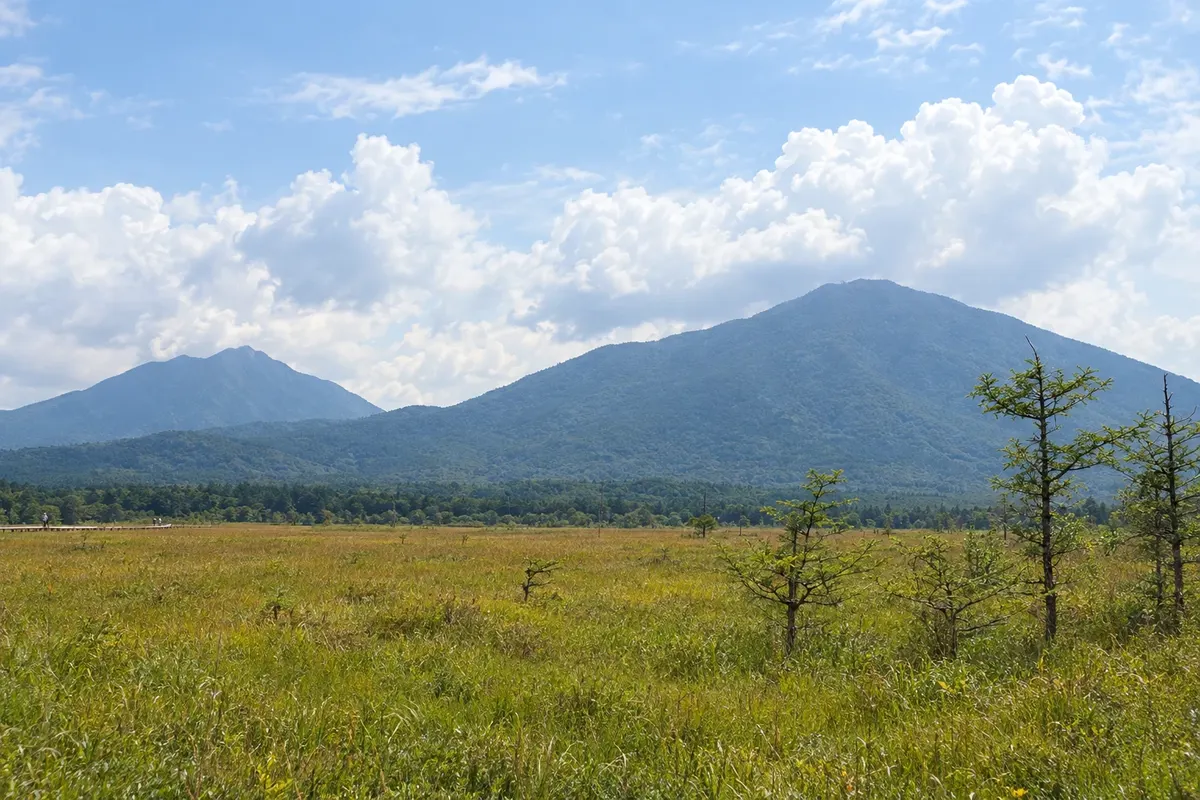
In the photo: Senjogahara plain, in Tochigi.
Illustrative images. The pictures in this guide are illustrations based on the real place, not photographs, and may differ from it.

The province
Tochigi lies north of Tokyo, landlocked, with plains in the south and volcanic mountains in the north. The capital, Utsunomiya, is known for gyoza — thin-skinned filled dumplings that are grilled — served in dozens of restaurants.
Nikko is home to the Toshogu Shrine, where Tokugawa Ieyasu, the first shogun of the Tokugawa dynasty, is entombed, the Rinno-ji Temple and the Futarasan Shrine, a UNESCO World Heritage Site since 1999. Toshogu is covered in colorful and gilded carvings, including the three wise monkeys who see no evil, hear no evil and speak no evil, and the sleeping cat. At the city entrance, the red-lacquered Shinkyo Bridge crosses the Daiya River.
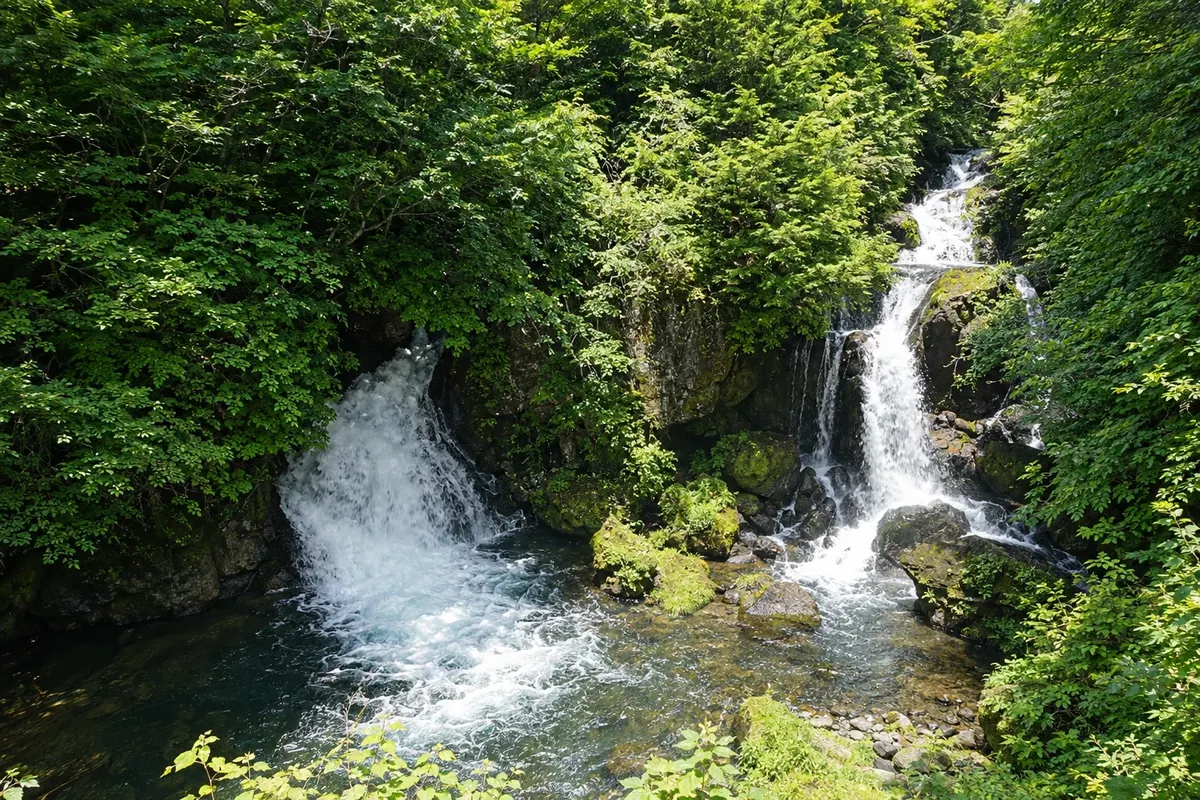
Above the town, the winding Irohazaka road climbs to Lake Chuzenji at the foot of Mount Nantai. Nearby, Kegon Falls plunges nearly 100 meters and can be viewed from an observation platform with an elevator. Further along, the Senjogahara marsh plateau is crossed by boardwalk trails leading toward the Yumoto hot springs.
Kinugawa is a riverside hot-spring resort with boats that descend the current. In Ashikaga, a flower park has wisterias over a hundred years old that usually bloom between late April and May, and Ashikaga Gakko is considered the oldest school in Japan. Mashiko is a potters’ village, with fairs in spring and autumn.
Destinations
Cities
Ashikaga’s wisterias usually bloom between late April and May. Summers are cool at Lake Chuzenji, which is above 1,200 meters. Leaves begin to change color in early October at higher elevations and between late October and early November in central Nikko, when the Irohazaka road becomes congested. Winters are cold, it snows near the lake, and Kegon Falls can partially freeze.
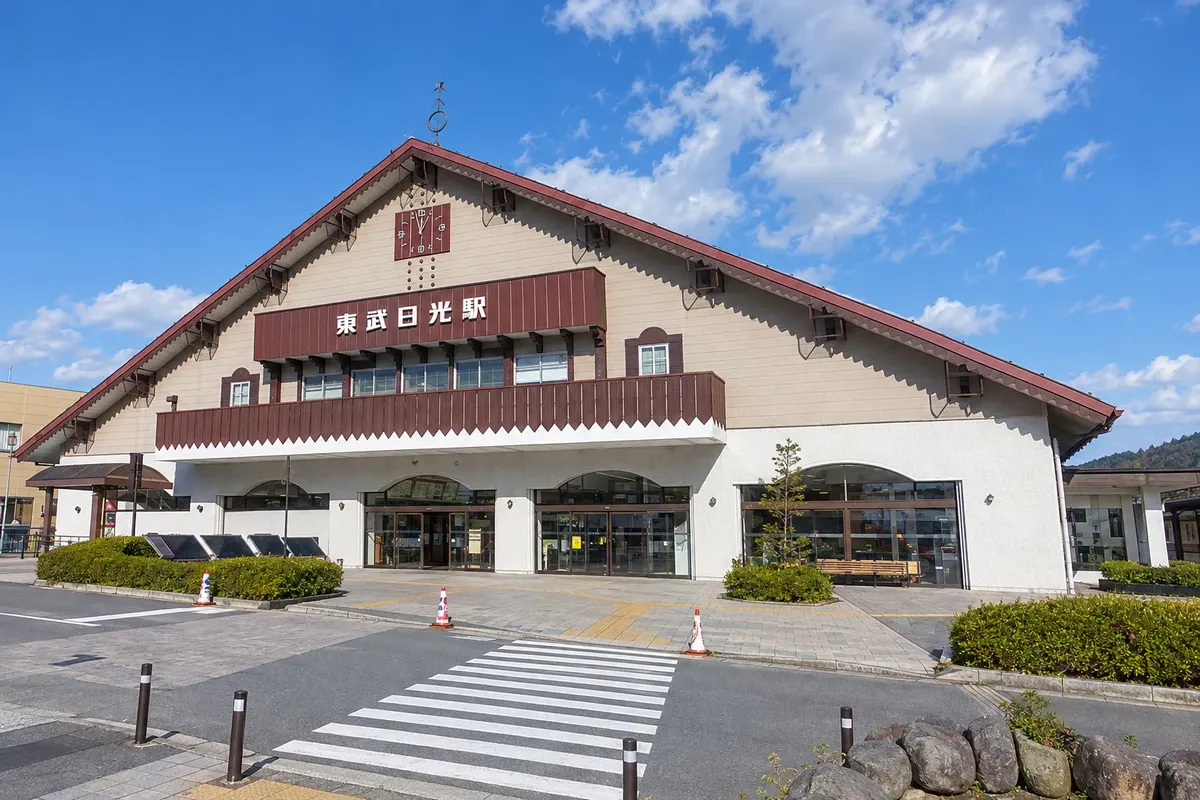
Tobu Railway’s express trains connect Asakusa to Tobu-Nikko in about 2 hours and continue to Kinugawa. You can also take the shinkansen to Utsunomiya in about 50 minutes and transfer to a local train to Nikko in about 45 minutes. From central Nikko, buses climb to Lake Chuzenji in about 45 minutes. Ashikaga is in the province’s southwest, served by the JR Ryomo Line.
Your questions
One day lets you see the shrines and temples; with a second day you can include Lake Chuzenji, Kegon Falls and the Senjogahara trails. Staying overnight in Nikko or Kinugawa avoids two long round trips from Tokyo.
By Tobu Railway from Asakusa, about 2 hours on the express train, or by shinkansen to Utsunomiya and a local train to Nikko. From the station to the shrines is about 2 km, reachable by bus or on foot.
In early October at higher areas such as Senjogahara and Yumoto, in mid-October at Lake Chuzenji, and between late October and early November in the town. On weekends during this period the Irohazaka road becomes congested.
They are thin-skinned dumplings filled with meat and vegetables, grilled or boiled. Utsunomiya has dozens of specialist restaurants, and the dish has become a city symbol, with a gyoza statue in front of the station.
Beyond the guide