1 city

 Search
 Brazil
 Antarctica
 Argentina
 Bolivia
 Chile
 Colombia
 Ecuador
 Guyana
 French Guiana
 Falkland Islands (Malvinas)
 Paraguay
 Peru
 Suriname
 Uruguay
 Venezuela
 Germany
 Austria
 Belgium
 Croatia
 Denmark
 Slovakia
 Slovenia
 Spain
 Finland
 France
 Greece
 the Netherlands
 Hungary
 Ireland
 Iceland
 Italy
 Luxembourg
 Norway
 Poland
 Portugal
 the United Kingdom
 the Czech Republic
 Sweden
 Switzerland
 Turkey
 Bermuda
 Canada
 the United States
 Greenland
 Mexico
 Saint Pierre and Miquelon
 the Dominican RepublicJapanTurkey
 South Africa
 Egypt
 Australia
 Fiji
 New Zealand
 Papua New Guinea
Province · Kansai
Osaka Castle, Dotonbori and its street food, Shinsekai, the Umeda Sky Building observatory and the large kofun burial mounds of Sakai.
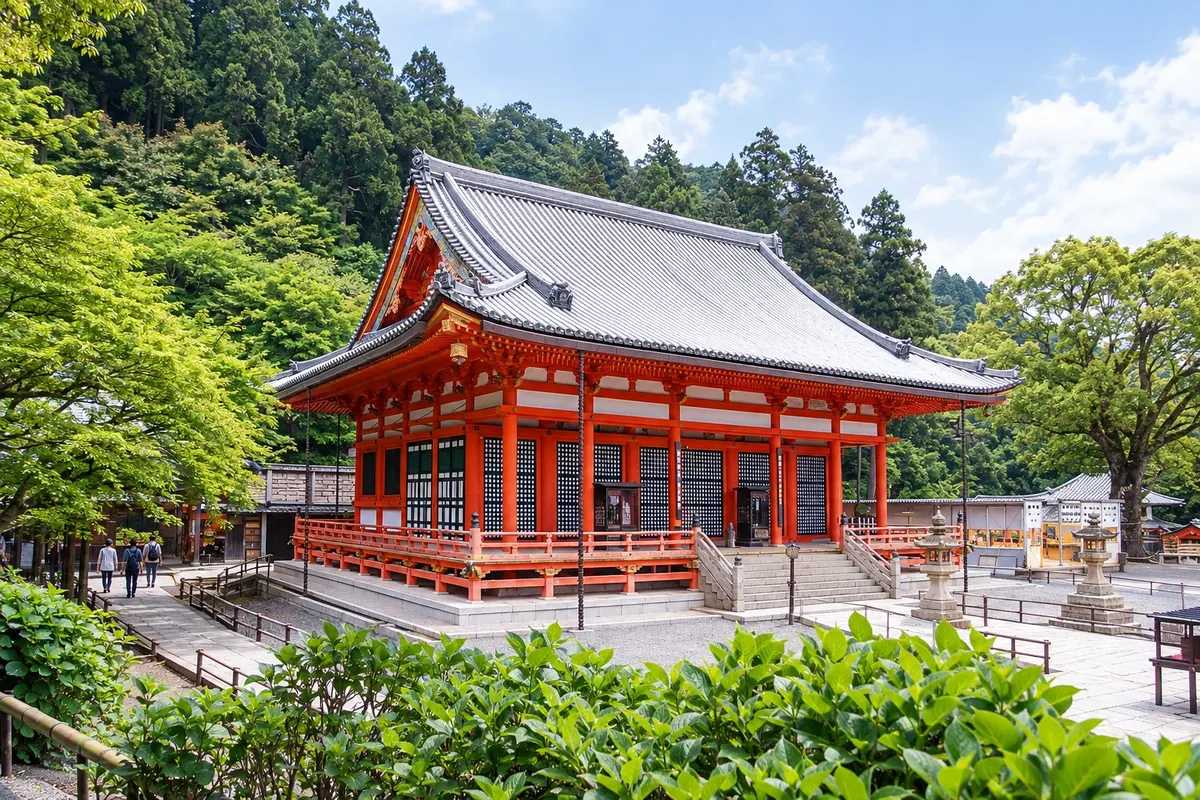
In the photo: Katsuo-ji Temple, in Osaka.
Illustrative images. The pictures in this guide are illustrations based on the real place, not photographs, and may differ from it.

The province
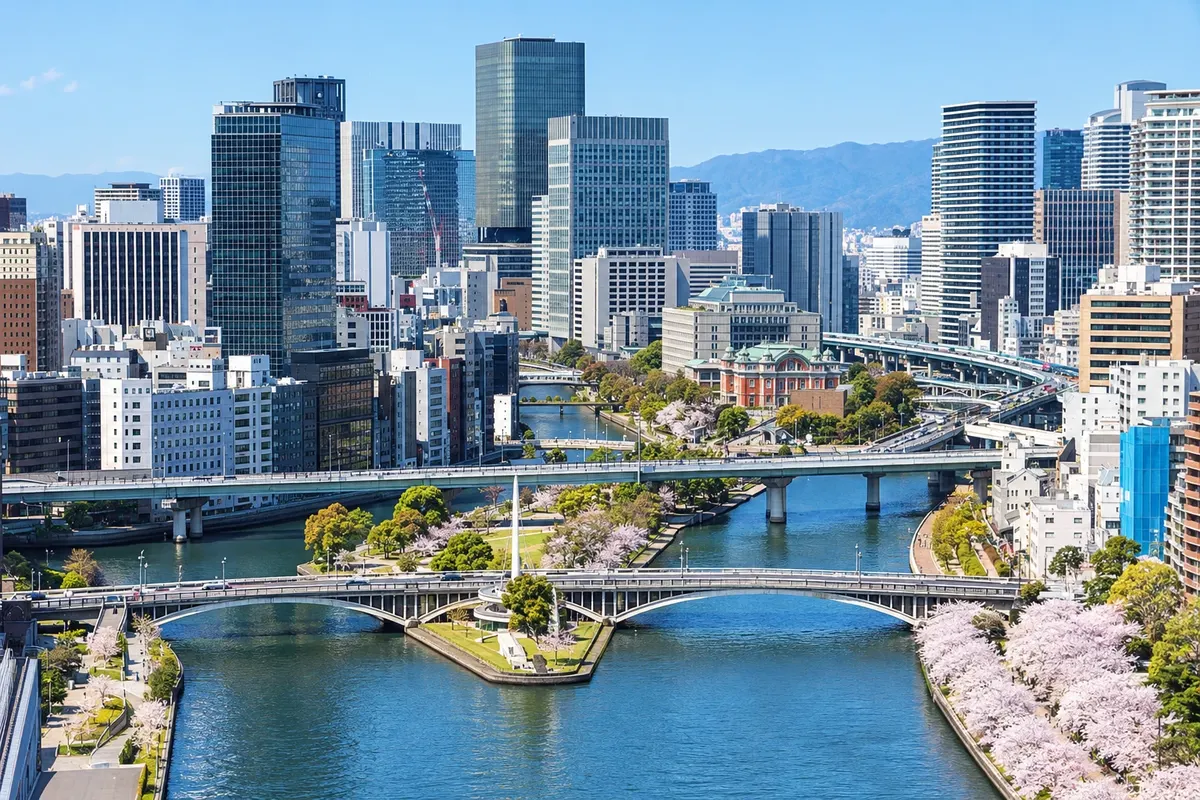
Osaka is the second-largest urban area in Japan and the center of Kansai. For centuries it was the city of merchants, called the nation’s kitchen, and is known for its food and the relaxed manner of its residents. The prefecture is the second smallest in the country by area, and most of it is occupied by the city and its suburbs. Kansai Airport is on an artificial island in the bay.
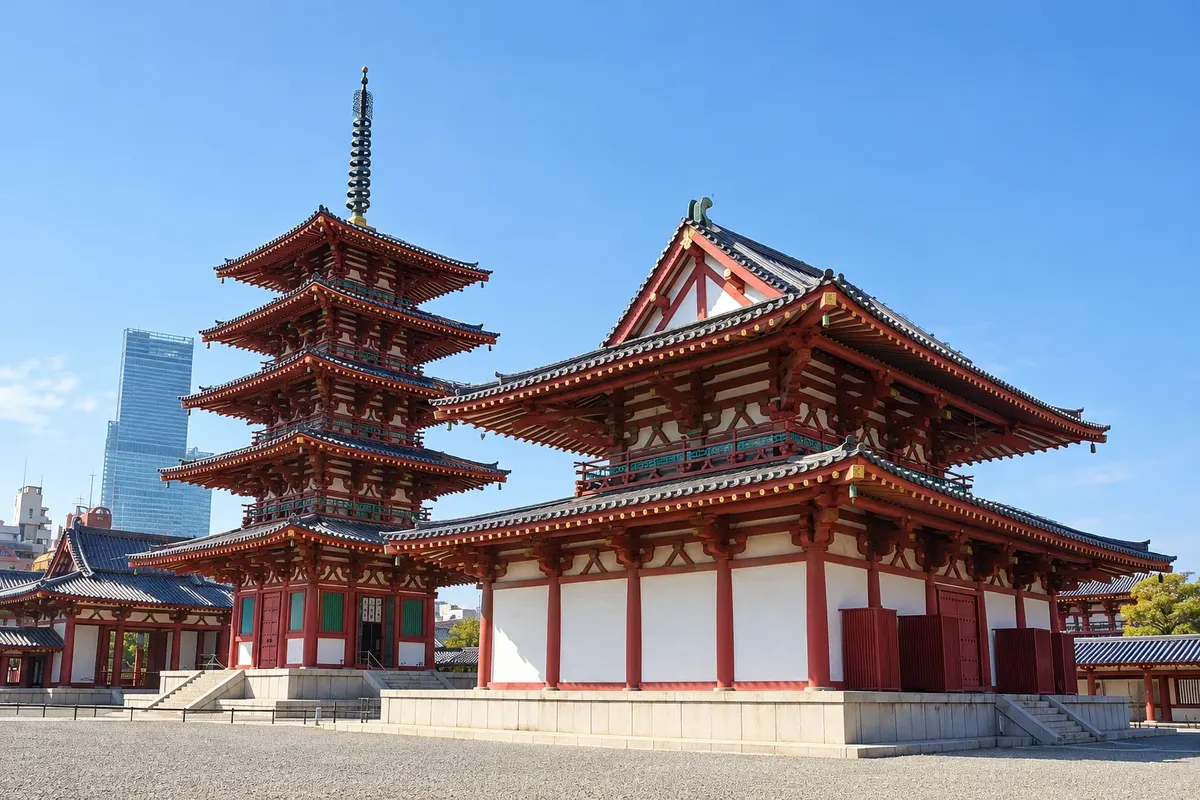
Osaka Castle was built by Toyotomi Hideyoshi at the end of the 16th century; the current tower, reconstructed, houses a museum, and the park around it has plum and cherry trees. In Dotonbori, illuminated signs reflect on the canal, among restaurants and food stalls. Shinsekai, with the Tsutenkaku Tower, retains the feel of an early 20th-century working-class neighborhood. The Umeda Sky Building has an open-air circular observatory between two towers. Shitenno-ji, founded at the end of the 6th century, is one of the country’s oldest temples.
Osaka’s street foods include takoyaki, a ball with a piece of octopus, okonomiyaki, a cabbage pancake grilled on a hotplate, and kushikatsu, breaded skewers. Kuromon Market sells fish and fruit. In the bay, the Universal Studios Japan theme park and the Kaiyukan aquarium attract families.
In Sakai, to the south, the Mozu-Furuichi kofun burial mounds, built between the 4th and 6th centuries, have been a UNESCO World Heritage Site since 2019. The largest, attributed to Emperor Nintoku, has a keyhole shape and can be seen from the Sakai City Hall observatory. The city has made kitchen knives for centuries. To the north, Minoo Park has a trail leading to a waterfall, among maples.
Destinations
The mildest months are March to May and October to November; in the castle park the cherry trees bloom from late March into April. In the hot, humid summer, the Tenjin Matsuri festival in July features boat processions on the river and fireworks. In September, Kishiwada pulls its wooden floats through the streets. Winters are mild, with light displays in the city center.
From Kansai Airport (KIX), Nankai’s Rapi:t train reaches Namba in about 40 minutes, and JR’s Haruka express serves Tennoji and Shin-Osaka. Itami Airport (ITM), domestic, is about 30 minutes by bus from downtown. The Tokaido Shinkansen reaches Shin-Osaka in about 2½ hours from Tokyo, and the Sanyo Shinkansen continues to Hiroshima and Fukuoka. To get around, the Osaka subway and the JR Osaka Loop Line cover the central neighborhoods.
Your questions
Two days let you see the castle, Dotonbori, Shinsekai, the Umeda observatory and the markets. The city also serves as a base for Kyoto, Nara, Kobe and Himeji, all less than an hour by train.
By train: Nankai’s Rapi:t to Namba in about 40 minutes, or JR’s Haruka to Tennoji and Shin-Osaka. Buses go to Umeda, Namba and other districts in about an hour.
Takoyaki, okonomiyaki and kushikatsu, found in Dotonbori, Shinsekai and the shopping arcades. In Shinsekai, skewers are dipped only once into the shared sauce; you must not re-dip after taking a bite.
Yes. Kyoto is about 30 minutes by train, Nara about 40 and Kobe about 25. Many visitors stay in Osaka and do day trips, or split their stay between Osaka and Kyoto.
Beyond the guide