Drink · Okinawa
Awamori
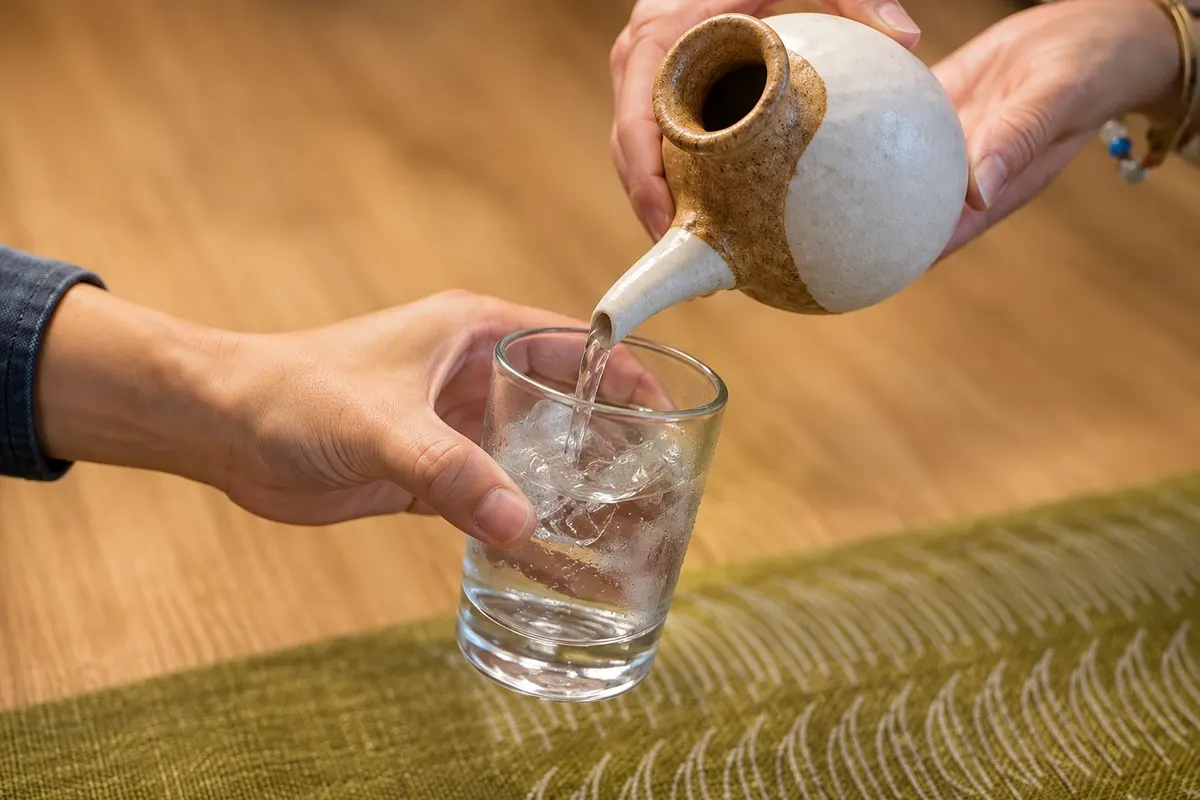
Rice spirit from Okinawa, made with black koji and sometimes aged for years (kusu). Ryukyu is Japan’s official geographical indication for awamori from the prefecture.

 Search
 Brazil
 Antarctica
 Argentina
 Bolivia
 Chile
 Colombia
 Ecuador
 Guyana
 French Guiana
 Falkland Islands (Malvinas)
 Paraguay
 Peru
 Suriname
 Uruguay
 Venezuela
 Germany
 Austria
 Belgium
 Croatia
 Denmark
 Slovakia
 Slovenia
 Spain
 Finland
 France
 Greece
 the Netherlands
 Hungary
 Ireland
 Iceland
 Italy
 Luxembourg
 Norway
 Poland
 Portugal
 the United Kingdom
 the Czech Republic
 Sweden
 Switzerland
 Turkey
 Bermuda
 Canada
 the United States
 Greenland
 Mexico
 Saint Pierre and Miquelon
 the Dominican RepublicJapanTurkey
 South Africa
 Egypt
 Australia
 Fiji
 New Zealand
 Papua New Guinea
Province · Okinawa
Naha and Shuri Castle, the beaches of Onna and Motobu, the Churaumi Aquarium, the Kerama Islands and the Yaeyama Islands.
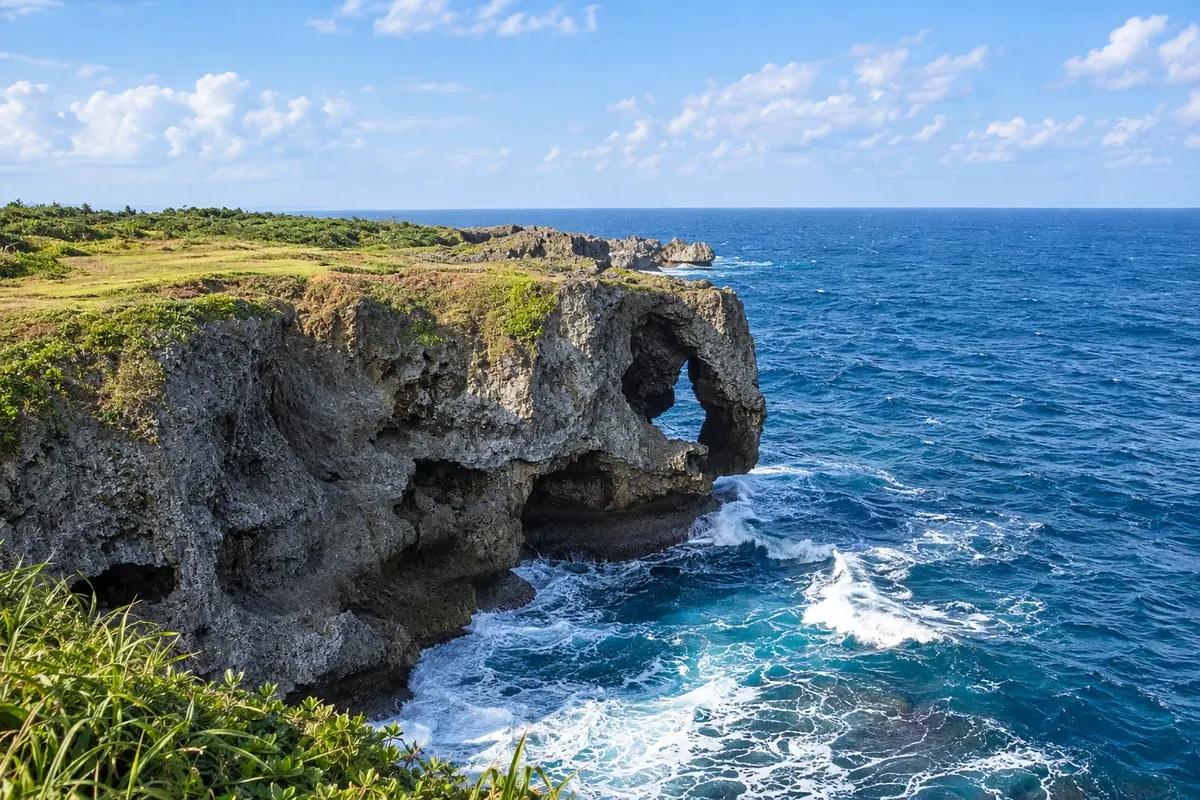
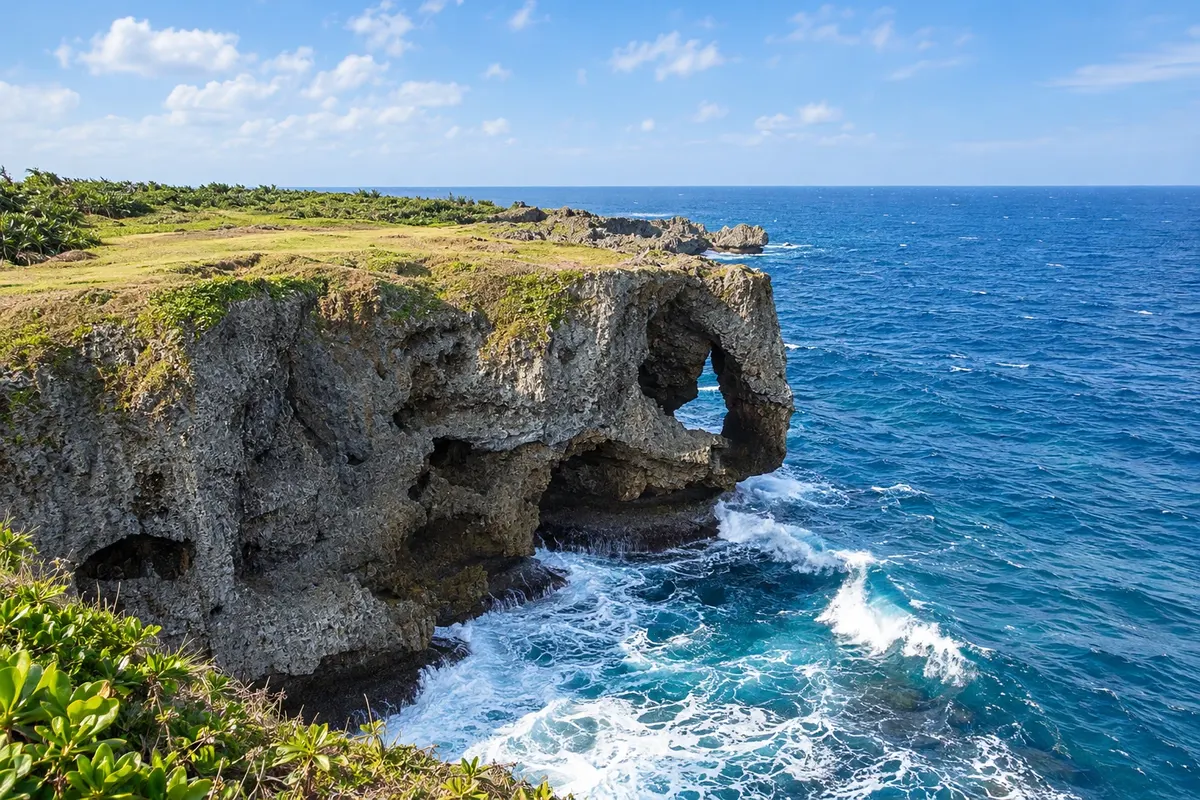
In the photo: Manzamo Cape, Okinawa.
Illustrative images. The pictures in this guide are illustrations based on the real place, not photographs, and may differ from it.

The province
Okinawa is Japan’s southernmost prefecture, with about 160 islands between Kyushu and Taiwan, and a subtropical climate. It was the Ryukyu Kingdom, independent until the 19th century, with its own language, music, architecture and cuisine. The sanshin, a lute covered with snakeskin, accompanies the local music.
On the main island, Naha, the capital, has Kokusai Avenue with shops and restaurants, and the Makishi public market. In Shuri, on a hill, was the seat of the Ryukyu kings. Shuri Castle and other stone castles, the gusuku, such as Nakijin and Katsuren, and the sacred site of Sefa-utaki make up the UNESCO Ryukyu sites heritage, inscribed in 2000. In the south, the Peace Memorial Park in Itoman commemorates the Battle of Okinawa of 1945.
The west coast of the main island has beaches and Manzamo Cape, in Onna. On the Motobu Peninsula, the Churaumi Aquarium has a huge tank with whale sharks and manta rays, and a bridge leads to Kouri Island. The Kerama Islands, less than an hour by boat from Naha, have very clear water for diving. Local food includes goya champuru, a stir-fry with bitter melon, Okinawa soba and awamori, a rice spirit.
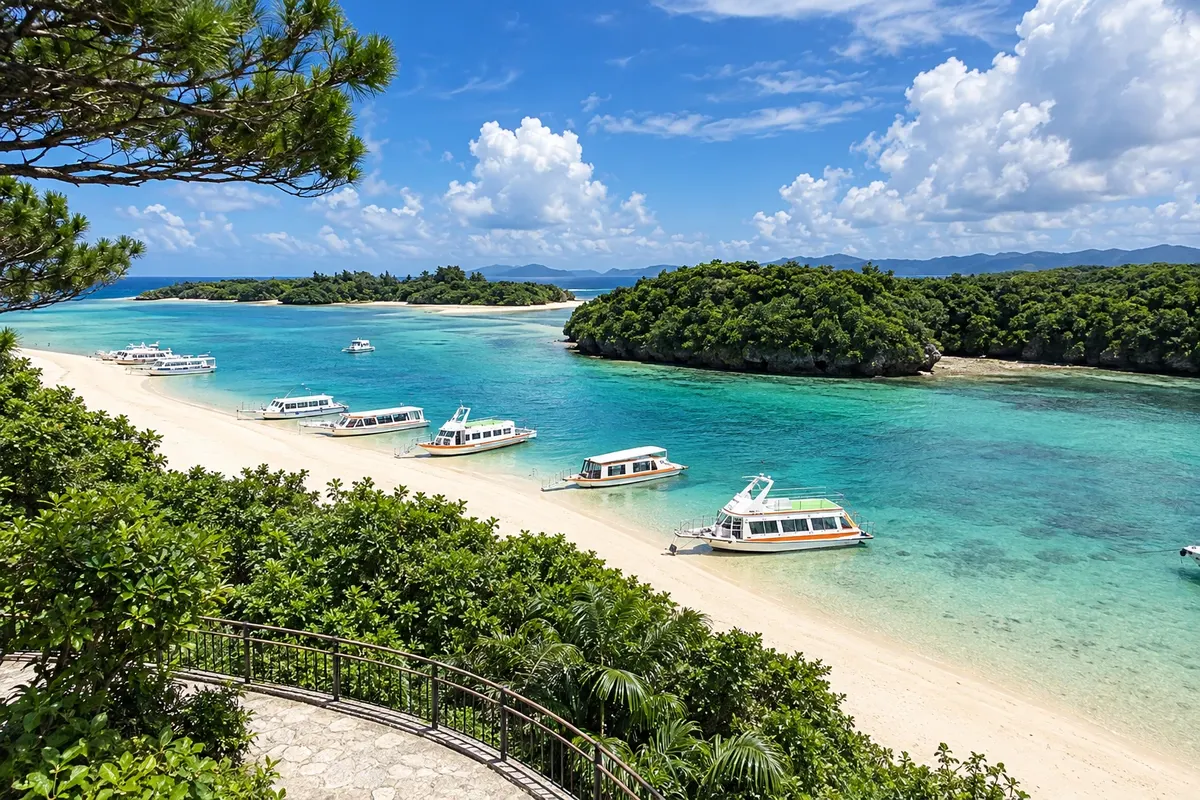
Further south, the Yaeyama Islands include Ishigaki, with Kabira Bay, Taketomi, a village of red-roofed houses and coral walls, and Iriomote, covered in forest and mangroves, a UNESCO site since 2021, where the Iriomote cat lives. The Miyako Islands, between Okinawa and Yaeyama, have white-sand beaches connected by long bridges.
Flavors of Japan
Rice spirit from Okinawa, made with black koji and sometimes aged for years (kusu). Ryukyu is Japan’s official geographical indication for awamori from the prefecture.
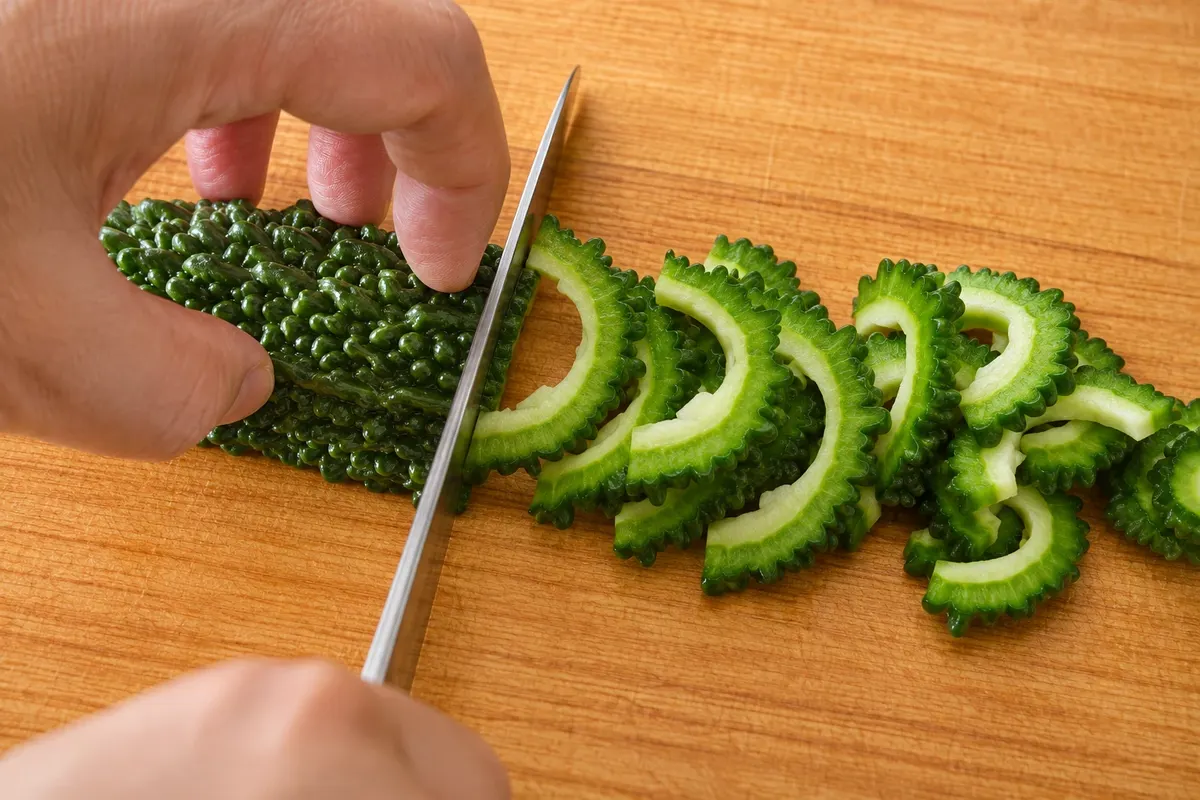
Stir-fry of goya, the bitter melão-de-são-caetano, with firm Okinawan tofu, egg and pork. It’s the best-known champuru from Okinawa, made at home and served in restaurants across the prefecture.
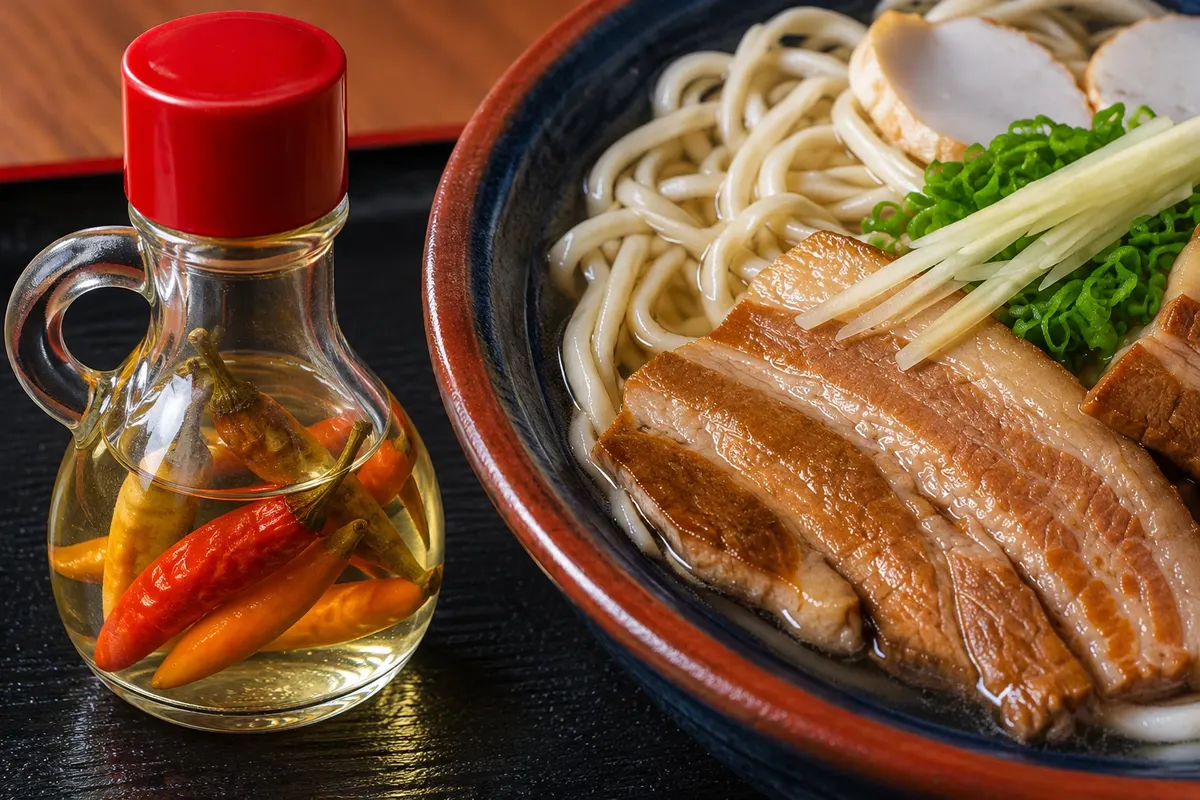
Thick wheat noodles, not buckwheat, in a pork-and-dried-bonito broth, topped with simmered pork belly, kamaboko, scallions and pickled red ginger. It’s an everyday dish in Okinawa.
Destinations
Cities
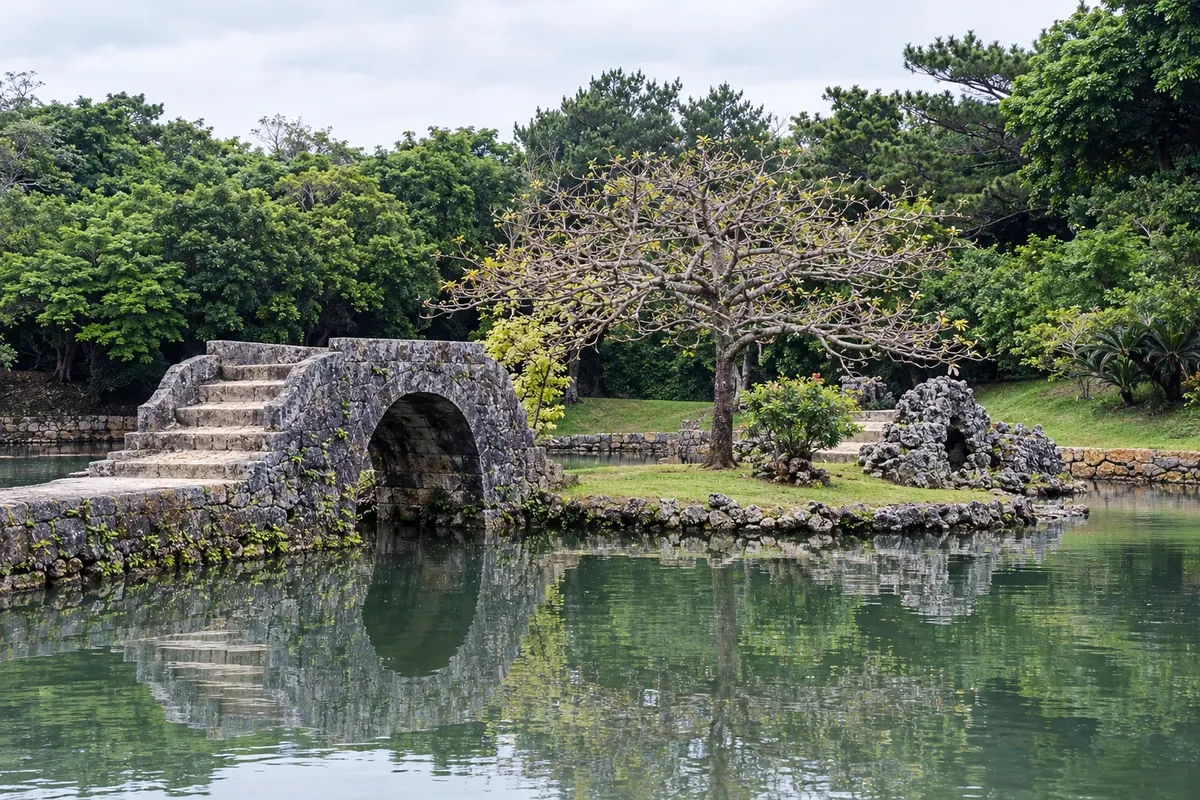
Naha is the capital of Okinawa Prefecture and the island’s gateway. At the top of the Shuri neighborhood stand Shuri Castle and the Tamaudun mausoleum, and to the south of the city is Shikinaen Garden—sites of the former Ryukyu Kingdom inscribed by UNESCO. Kokusai Street concentrates shops, restaurants and the public market, and the Sefa-utaki shrine, on the island’s south, completes the kingdom circuit.
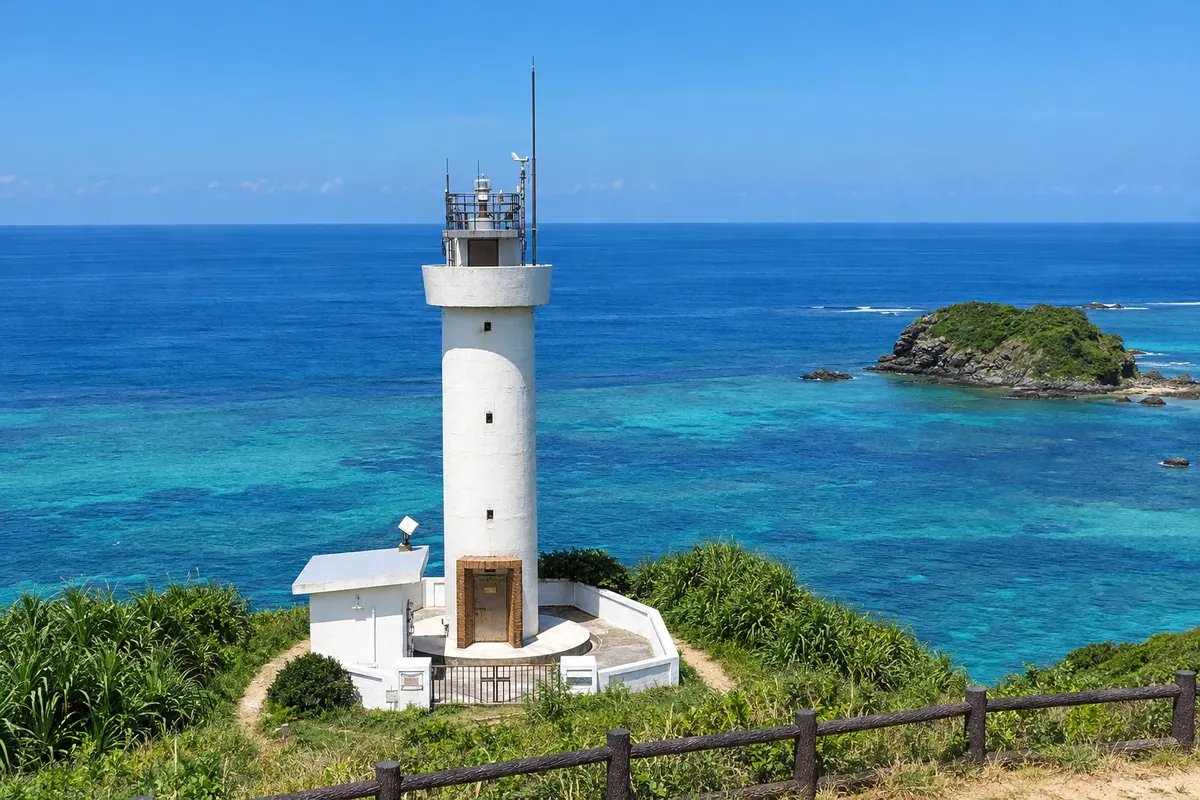
Ishigaki is the main town of the Yaeyama Islands, with the airport and the port where boats depart for Taketomi, Iriomote and the smaller islands. The island has coral reefs, Kabira Bay with light-green water over white sand, and Cape Hirakubo with the lighthouse at the northern tip. Ishigaki beef and Yaeyama music are part of town life.
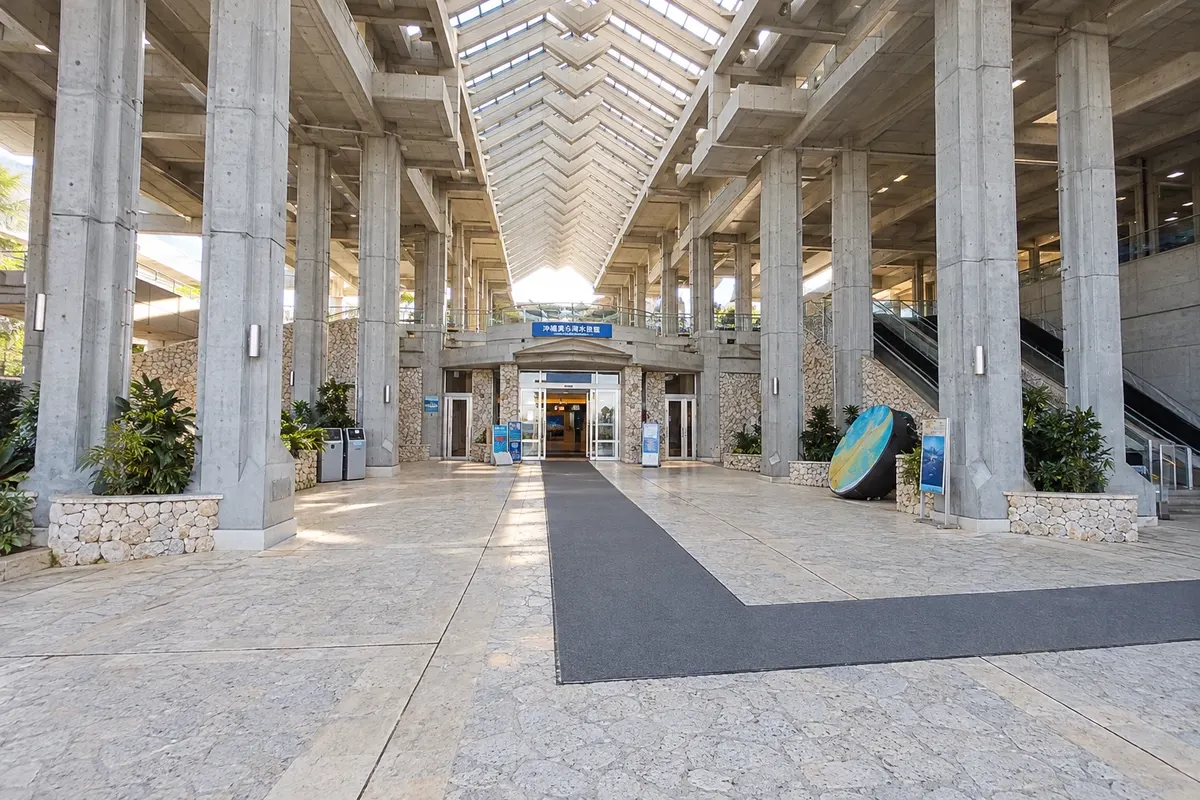
Motobu is the town on the peninsula of the same name, in Okinawa’s northwest. It is home to the Churaumi Aquarium, in the Ocean Expo Park, with the whale shark tank. Nearby are the ruins of Nakijin Castle, a World Heritage site, the village of Bise with its fukugi tree-lined avenue and Kouri Island, connected by a bridge over shallow water.
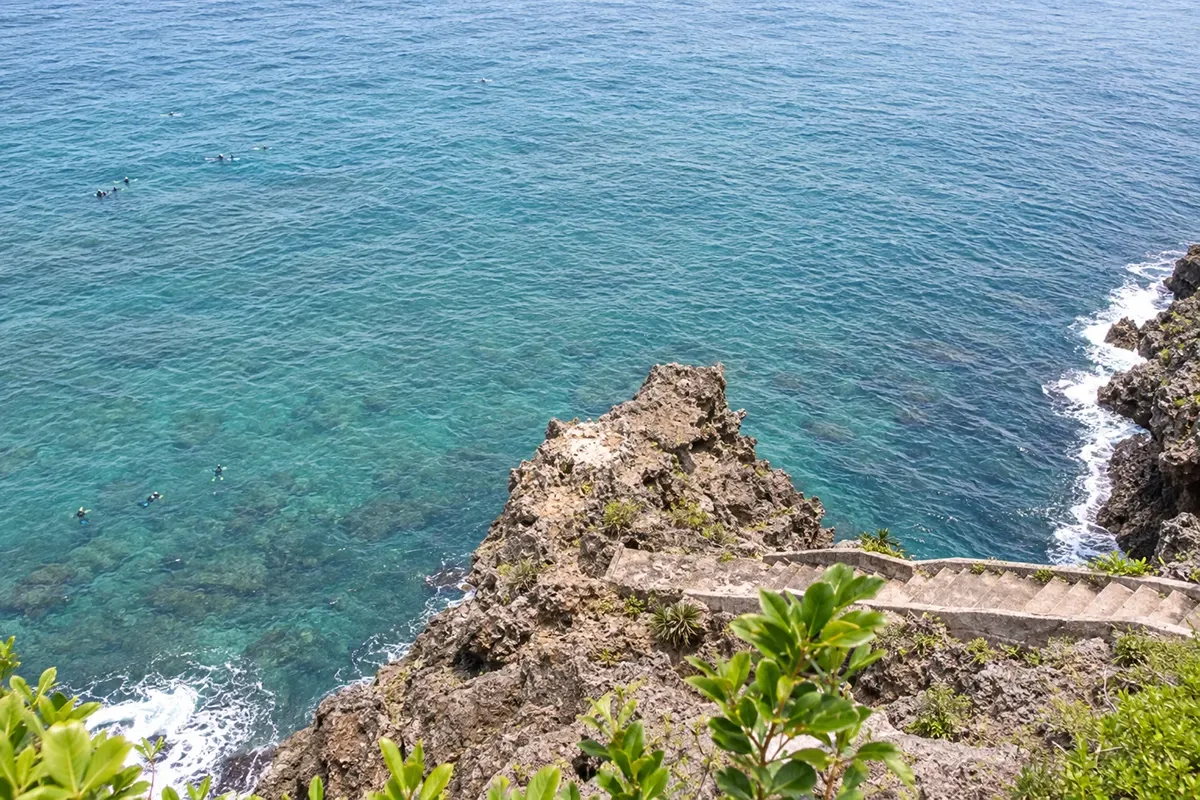
Onna is a village on Okinawa’s west coast, about halfway along the island, known for its light-sand beaches, coral reefs and seaside resorts. Cape Manzamo, with a rock shaped like an elephant’s trunk, and Cape Maeda, a popular diving and snorkeling spot with the Blue Cave, are the most visited stops.
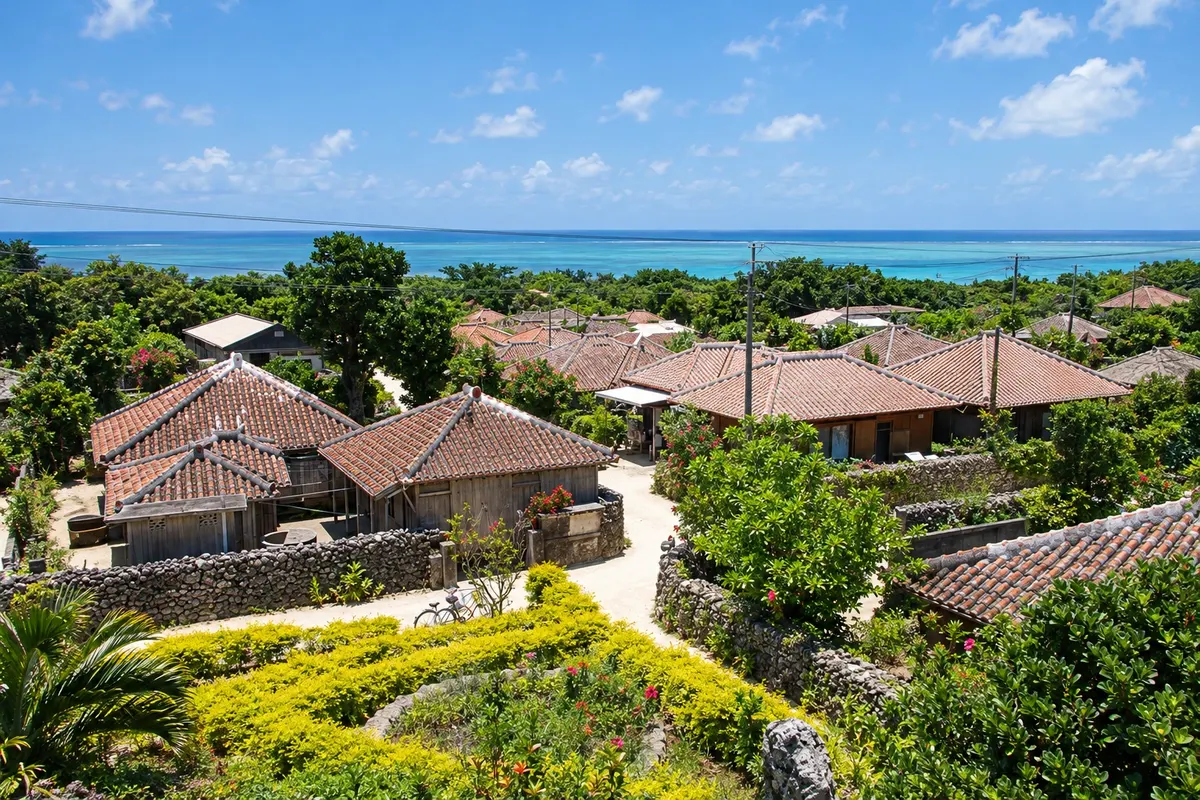
Taketomi is the small, flat island a 15-minute boat ride from Ishigaki, the municipal seat that also includes Iriomote and other Yaeyama islands. The central village preserves red-tiled houses, coral-stone walls and white-sand streets, explored on foot, by bicycle or in water-buffalo-drawn carts. From Ishigaki, Iriomote—with its mangroves, rivers and forest—is the most popular day trip in the area.
Spring, from March to May, and autumn, from October to November, are the most pleasant seasons. The rainy season generally runs from May to mid-June. Summer is long and hot, and typhoons are more common from July to September. In winter temperatures usually range from 15 to 20 °C, and the sea becomes cooler. Okinawa’s cherry trees bloom between January and February.
Naha Airport (OKA) receives flights from Tokyo in about 2½ hours, from Osaka, from Fukuoka and from cities in Asia; the Yui Rail monorail reaches the city center in a few minutes. Ishigaki Airport (ISG) and Miyako Airport (MMY) receive flights from Naha and from cities on Honshu. Ferries and high-speed boats link Tomari Port in Naha to the Kerama Islands. On the main island, car or buses take you north; Motobu is about 2 hours from Naha.
Your questions
Four days allow you to see Naha, Shuri, the west coast and Motobu with the Churaumi Aquarium. With more days you can add the Kerama Islands or a flight to the Yaeyama or Miyako islands.
In Naha, no: the monorail and buses serve the city. For the center and north of the main island, a car gives more freedom because buses are slow. You drive on the left, as in the rest of Japan.
By high-speed boat or ferry from Tomari Port in Naha to Zamami or Tokashiki, in about 35 minutes to 2 hours. In high season, book in advance.
Generally from April to October, when many beaches have lifeguards and jellyfish-protection nets. In July and August the sea is warmer, but it is also the period when typhoons are most common.
Beyond the guide