Izu Peninsula

Shizuoka · Japan

Izu Peninsula

The volcanic peninsula south of Tokyo, with seaside hot-spring towns, lava cliffs, clear sand beaches and the history of Japan’s opening in Shimoda.

Chubu

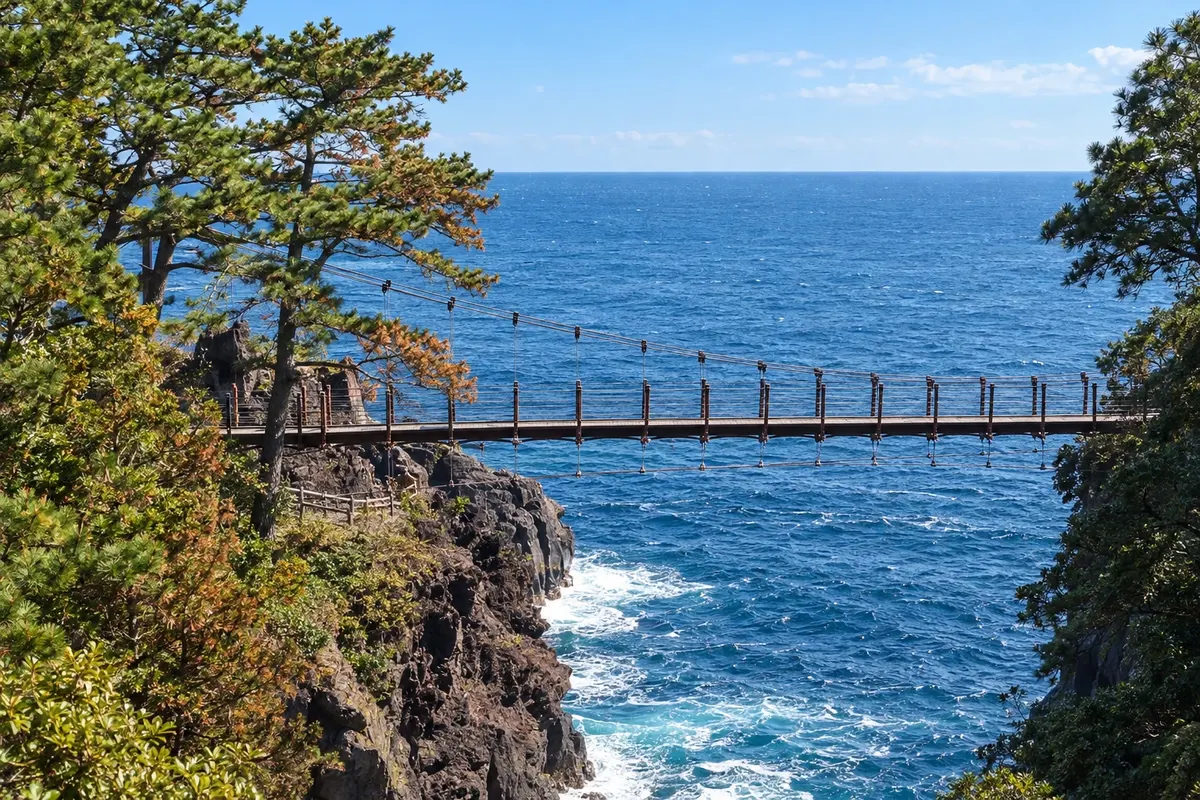
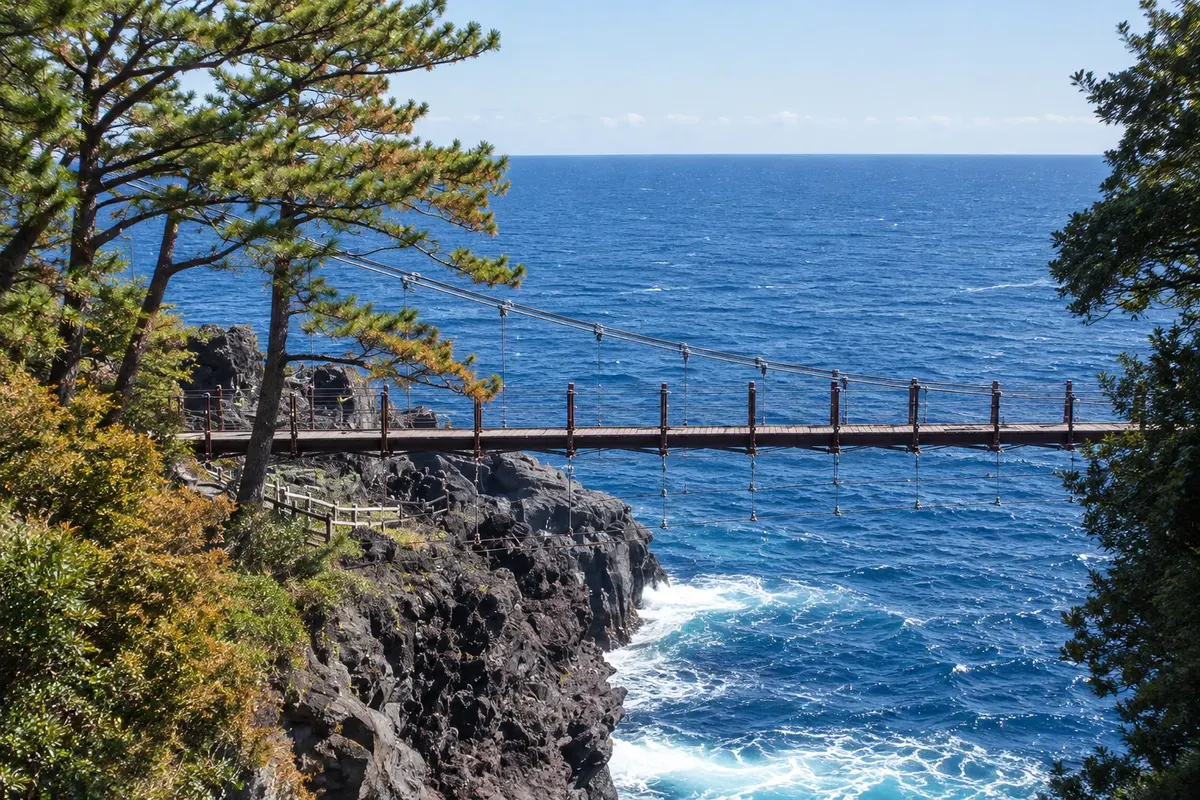
In the photo: Kadowaki Bridge on the Jogasaki coast of the Izu Peninsula.

Illustrative images. The pictures in this guide are illustrations based on the real place, not photographs, and may differ from it.

Get to know the place

A region to enjoy
at your own pace.

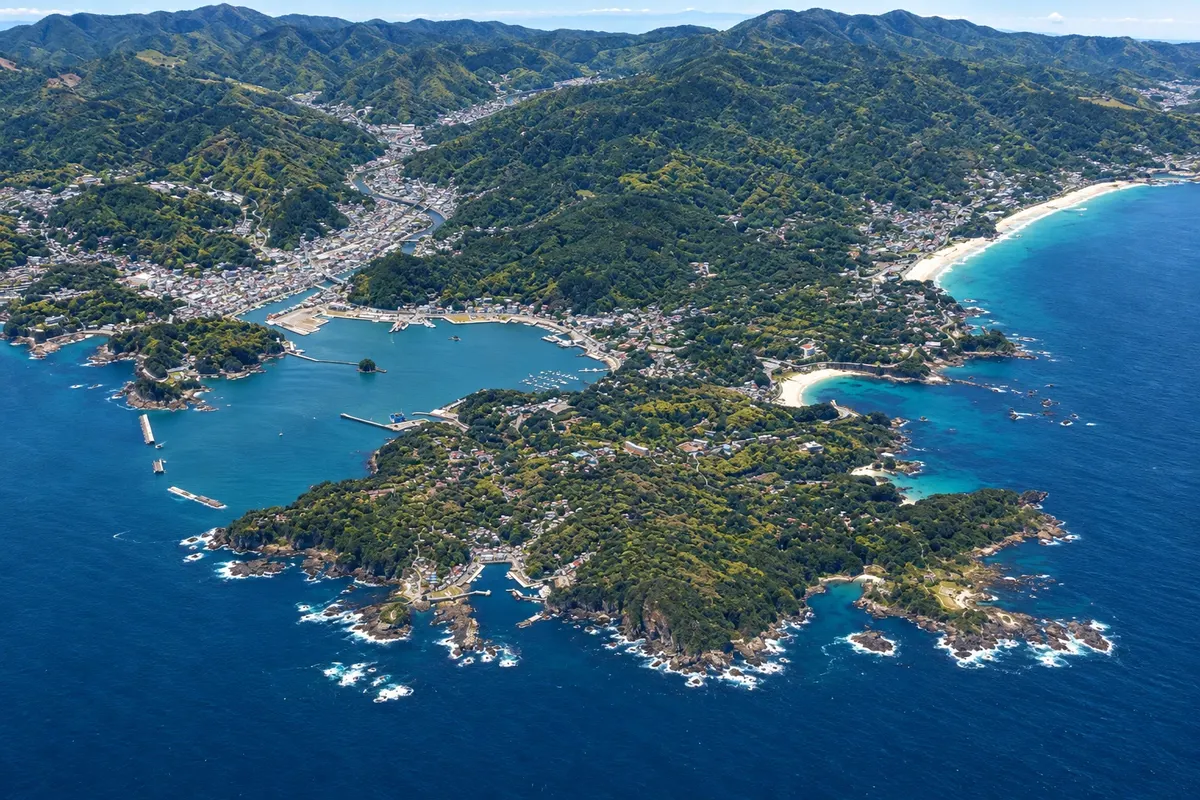
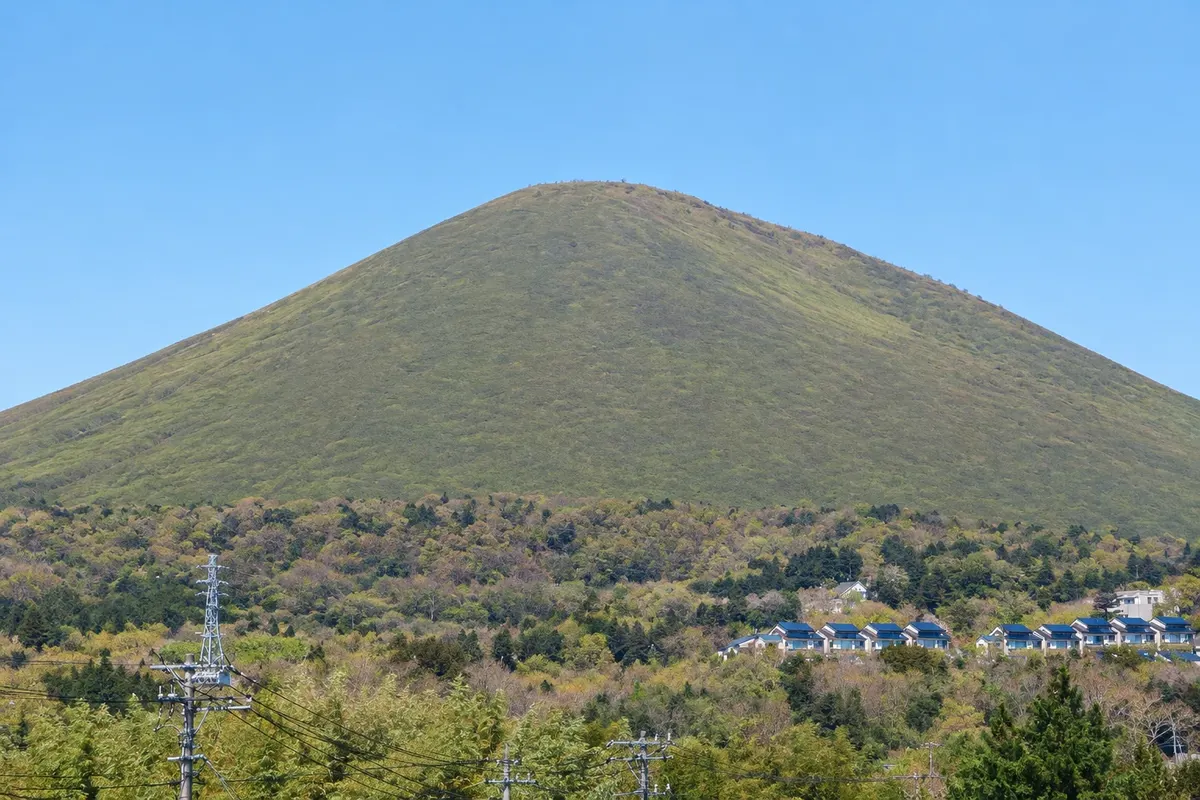
The Izu Peninsula stretches about 60 km out to sea southwest of Tokyo, in Shizuoka Prefecture, between Sagami Bay and Suruga Bay. It is land of both ancient and young volcanoes, and that origin shows everywhere: in the hot springs that emerge along the coast, in the dark lava cliffs and in the rounded cone of Mount Omuro. The whole peninsula is a UNESCO Global Geopark.

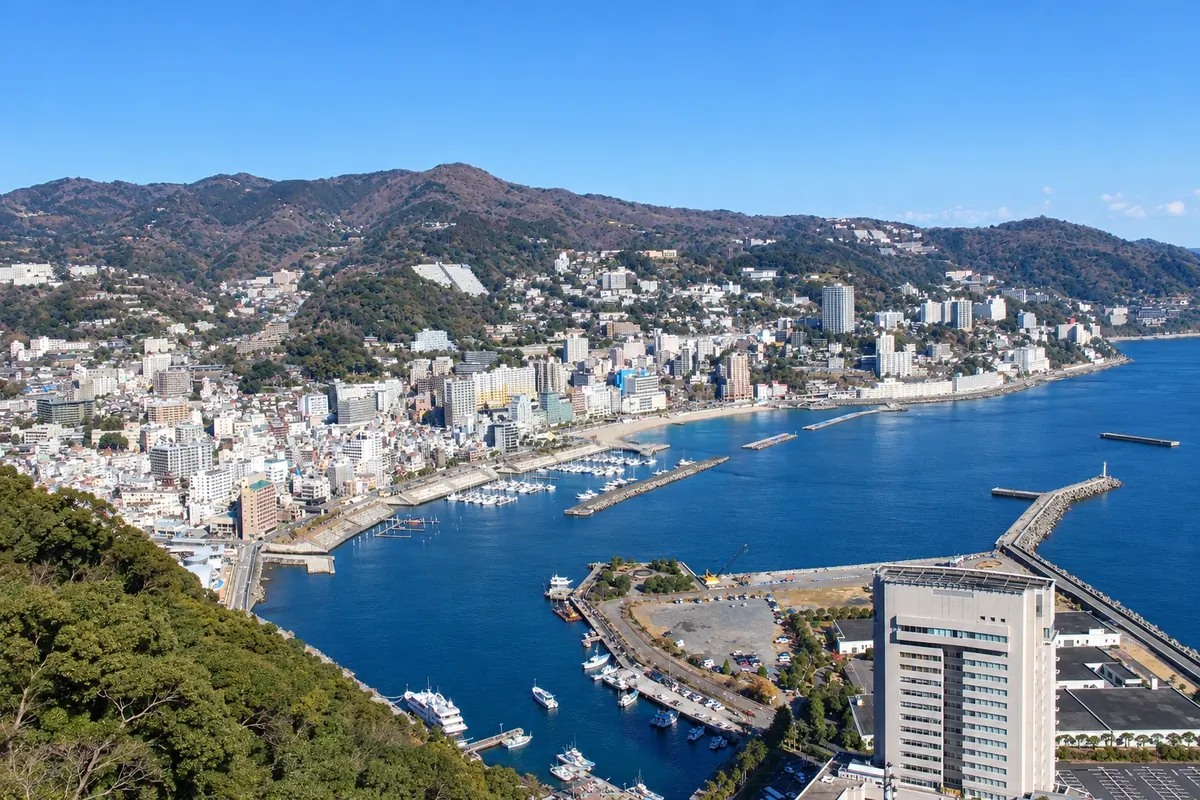
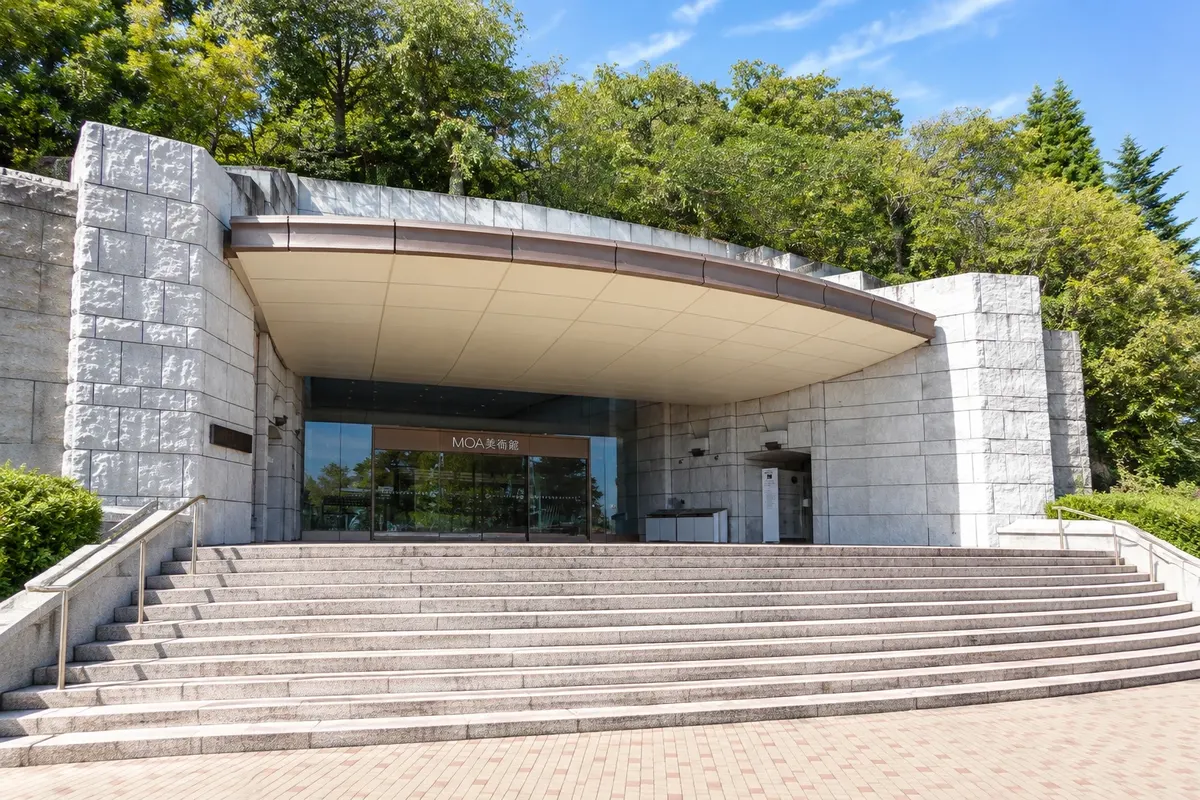
The east coast concentrates the most visited towns. Atami, right at the gateway, is a traditional hot-spring resort with hillside hotels and the MOA Museum of Art on the hilltop. Ito, farther south, mixes old bathing houses, Mount Omuro and the Jogasaki coast, with a suspension bridge over the sea. At the southern tip, Shimoda preserves the memory of Commodore Perry’s ships and Japan’s first treaties with the West in the 19th century, and has the clearest sand beaches on the peninsula.

In winter, Kawazu’s early cherry trees, between Ito and Shimoda, often bloom before other trees in the country, and in summer the southern beaches fill with swimmers from Tokyo. Fish and seafood dominate the table, with kinmedai, the reddish fish served simmered in a sweet sauce, and wasabi grown in the inland valleys.

You can travel the peninsula by train along the east coast and by car or bus through the interior and the more isolated west coast. It’s close enough to Tokyo for a weekend escape, but plan at least three days to go from Atami to Shimoda without rushing.

This destination brings together 3 cities: Itō, Atami, Shimoda.

Share: WhatsApp
Traveler, share your experiences through photos Up to 5 photos of each place you visited.

One destination, many paths

The cities on this trip

Start with one city or combine several in your itinerary.

Where Izu Peninsula is
AtamiItoShimoda

Dados cartográficos: © OpenStreetMap contributors, via Wambacher / geoBoundaries (ODbL 1.0). Adapted by Cidade Turismo.

How to get there: Izu Peninsula

✈ Aeroporto de Haneda (HND), in Tóquio · 136 km to Itō

From Tokyo, the shinkansen reaches Atami in about 40 to 50 minutes. The Odoriko and Saphir Odoriko limited expresses run down the east coast to Ito in about 1 hour 45 minutes, and to Izukyu-Shimoda in just over 2 hours. The most commonly used airport is Haneda in Tokyo.

Suggested arrival point: Itō

The local experience

Things to do in Izu Peninsula

Mount Omuro
Itō · Shizuoka · Volcano

Mount Omuro

A 580-meter grassy volcanic cone on the Izu Kogen plateau in Ito. You reach it by chairlift, and the crater rim is walked on foot, with views of the sea, the Izu islands and Mount Fuji.

MOA Museum of Art
Atami · Shizuoka · Museum

MOA Museum of Art

Museum of Japanese and Asian art on a hill above Atami, with national treasures in temporary exhibitions, a reconstructed golden tea room, and wide views over Sagami Bay.

Perry Road and Ryosen-ji Temple
Shimoda · Shizuoka · Historic center

Perry Road and Ryosen-ji Temple

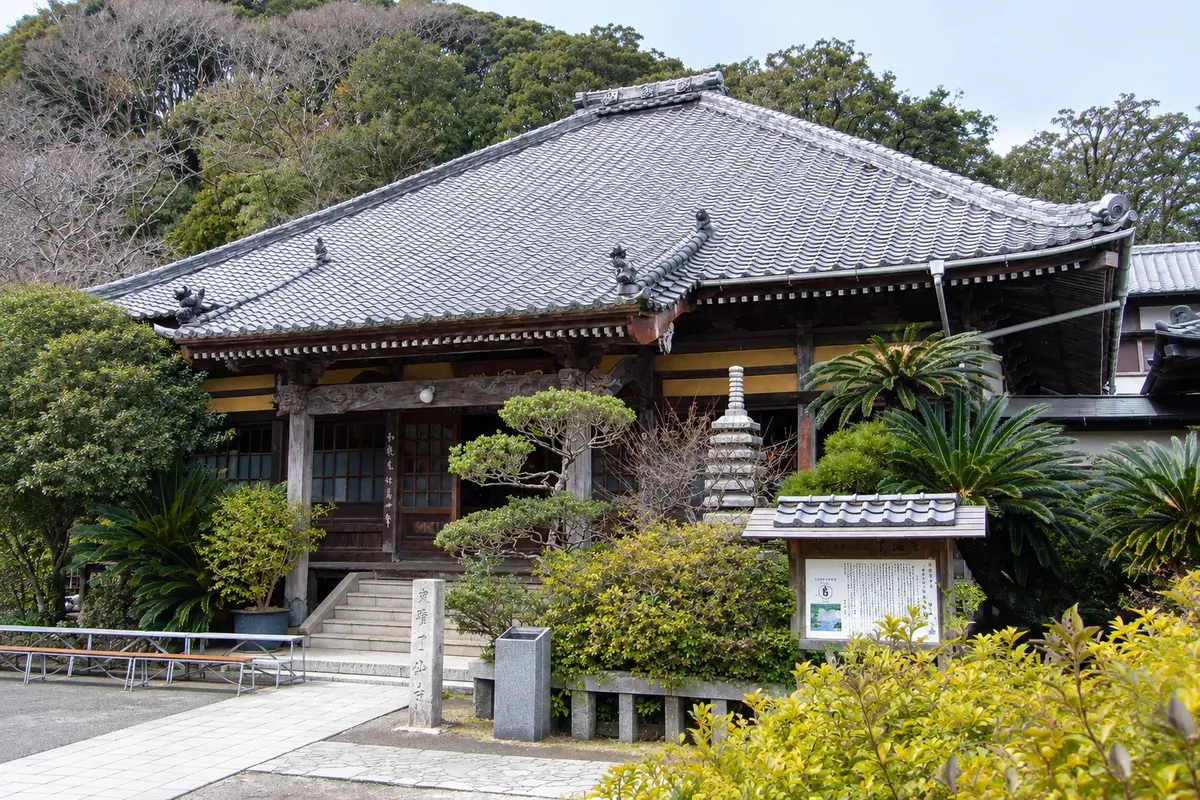
A stone-paved street along a canal with willows and old namako-walled houses that leads to Ryosen-ji temple, where in 1854 the supplementary agreement to the first treaty between Japan and the United States was signed.

Jogasaki Coast
Itō · Shizuoka · Coast

Jogasaki Coast

A coastline of black lava cliffs formed by an eruption from Mount Omuro, featuring the Kadowaki suspension bridge 23 meters above the sea, a lighthouse and cliff-edge trails.

See 4 more places in Izu Peninsula
Shirahama Beach
Shimoda · Shizuoka · Beach

Shirahama Beach

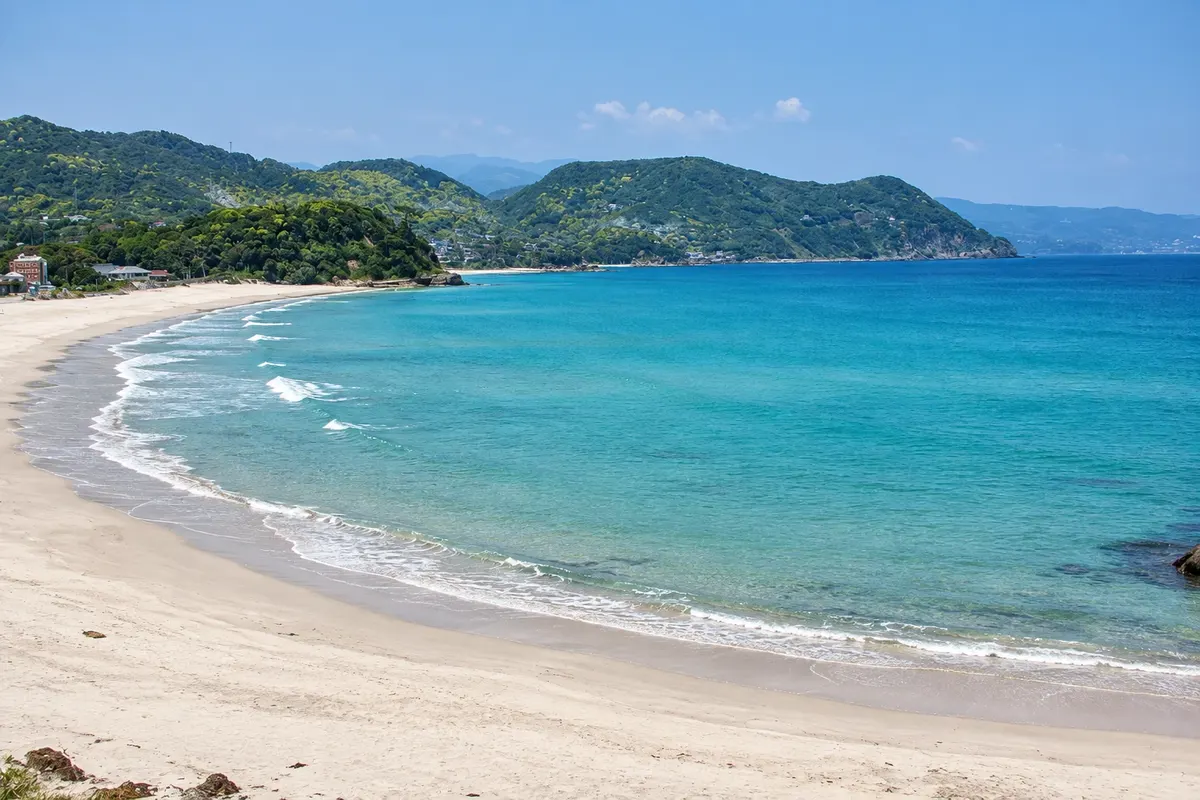
Shimoda’s largest beach, about 800 meters of clear sand and transparent water, with the red torii of the Shirahama shrine on the rocks by the sea.

Kinomiya Shrine
Atami · Shizuoka · Shrine

Kinomiya Shrine

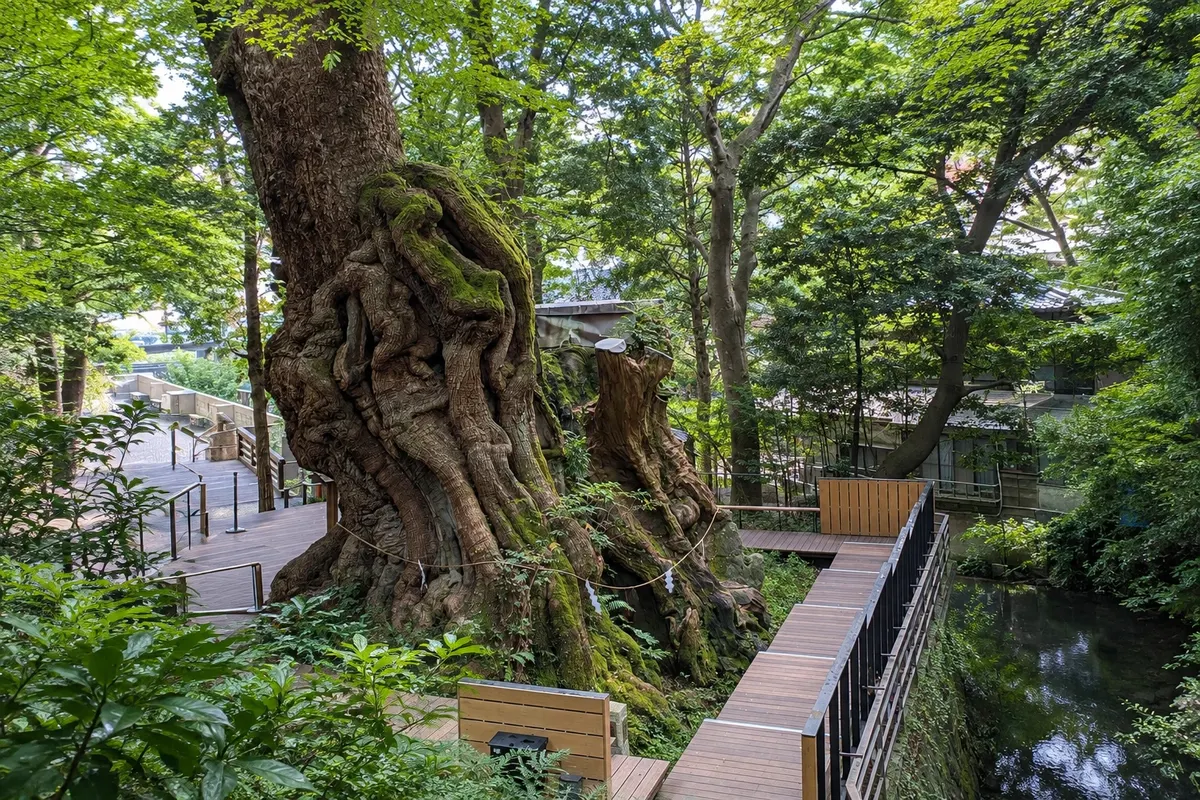
Atami Shintō shrine with a camphor tree over 2,000 years old, a national natural monument, surrounded by a path that visitors walk around the trunk.

Cape Irozaki
Shimoda · Shizuoka · Cape

Cape Irozaki

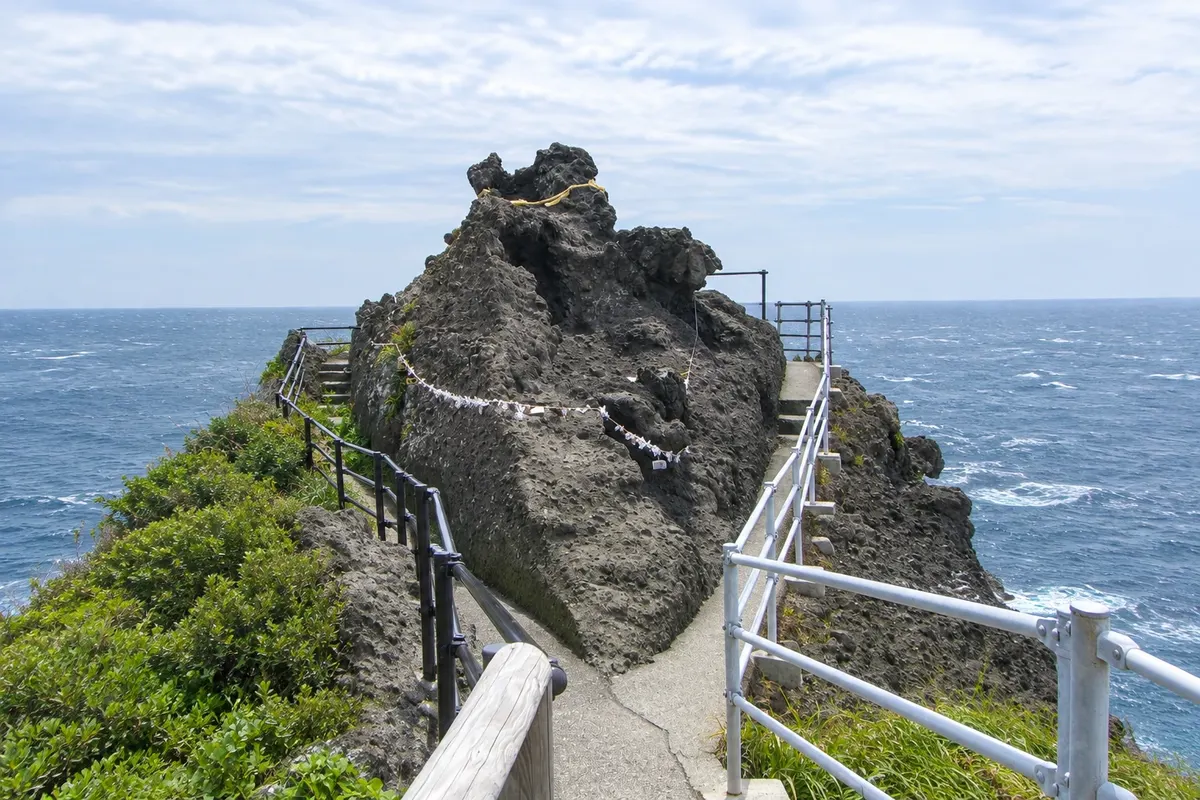
Southern tip of the Izu Peninsula, in Minamiizu, with cliffs above the ocean, a white lighthouse, a small shrine set into the rock and viewpoints over the Izu islands.

Tokaikan
Itō · Shizuoka · Historic building

Tokaikan

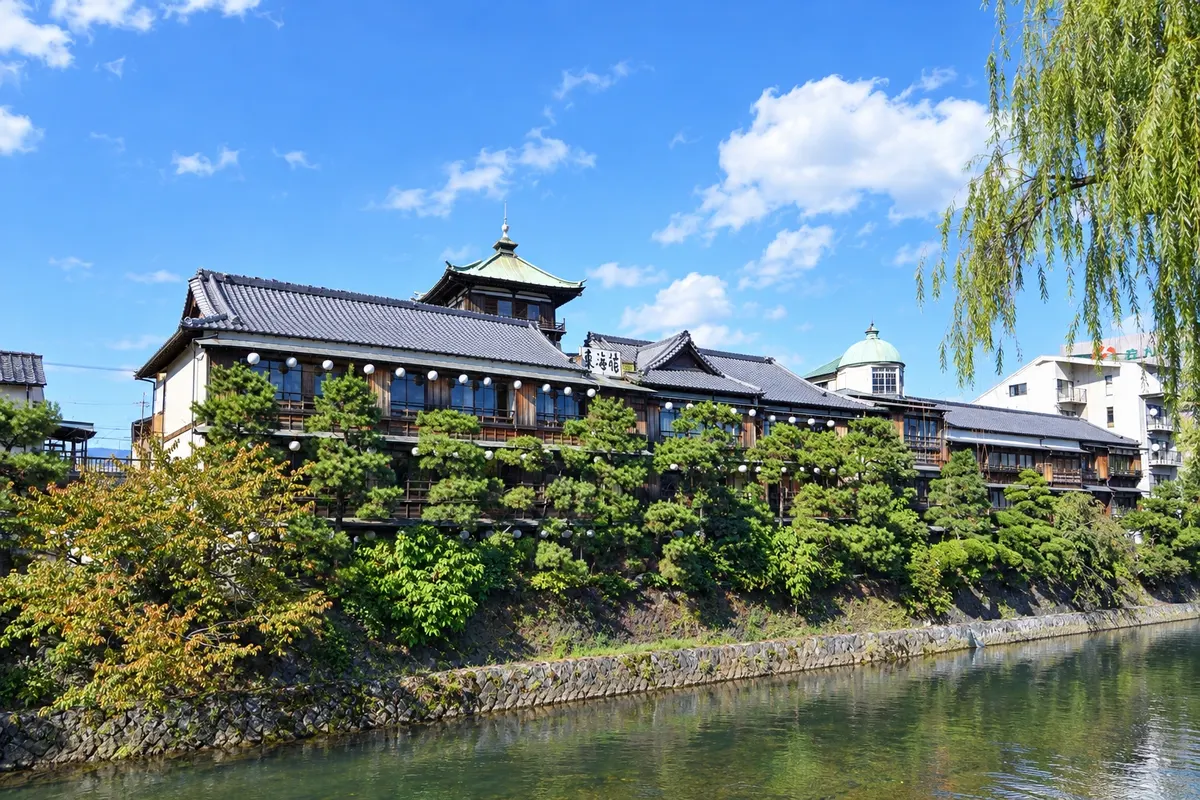
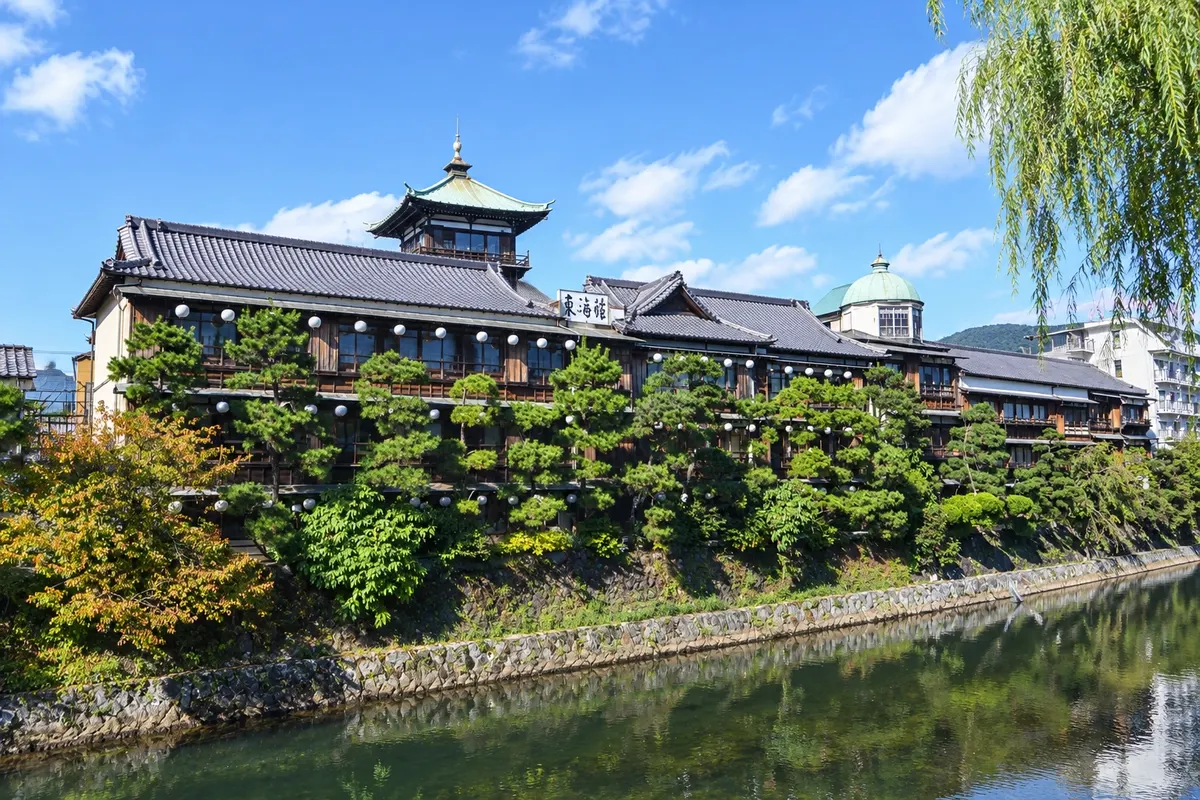
Former three-story wooden ryokan from 1928, on the banks of the Okawa River in central Ito, now open as a cultural center, with tatami rooms, an observation tower and a hot-spring bath on some days.

Before you go

Practical information

A little planning leaves more time to enjoy the journey.

When to go

From March to May and from October to November the days are usually mild. Kawazu’s cherry trees typically bloom between February and early March. July and August are beach season, hot and humid. Between August and October, typhoons can bring heavy rain and rough seas. Winter is dry and milder than in Tokyo.

The seasons shown are the most usual ones; nature doesn't always follow the calendar.

How many days to stay

Three days allow one night in Atami or Ito and another in Shimoda, visiting Mount Omuro, Jogasaki and Cape Irozaki. With two days, choose the east coast between Atami and Ito. If you want the west coast or the interior, including Shuzenji, you’ll need an extra day and preferably a car.

Which city to stay in

Atami has hotels and ryokan on the hillside and near the station, convenient for shinkansen travelers. Ito has hot-spring lodging along the Okawa River and in the Izu Kogen area, near Mount Omuro and Jogasaki. In Shimoda, stay near the station and Perry Street, or on Shirahama Beach a few kilometers away during beach season.

Respect the place

Take your trash with you, follow the signs and support local businesses. In natural areas, follow the visiting guidelines.

Get your questions answered

Frequently asked questions about Izu Peninsula

How many days should I book for the Izu Peninsula?

Three days cover the east coast, from Atami to Shimoda, with one night in a hot-spring inn. With two days, stay between Atami and Ito. The west coast and the interior require one more day.

Is it possible to visit the Izu Peninsula as a day trip from Tokyo?

Atami and Ito, yes: the shinkansen reaches Atami in under an hour, and Ito is a little over 20 minutes by train from Atami. Shimoda is too far for a same-day round trip.

Do I need a car on the Izu Peninsula?

Not for the east coast, which is served by the train line to Shimoda and by buses for attractions. A car helps on the west coast and in the interior, where buses are infrequent.

When do the Kawazu cherry trees bloom?

They usually bloom between February and early March, earlier than Tokyo’s cherry trees. The trees line the Kawazu River, near Kawazu Station, between Ito and Shimoda. Dates vary each year.

What is the best time to visit the Izu Peninsula?

Spring and autumn have the most pleasant weather. Summer is beach season and more crowded. In winter there are Kawazu’s early cherry blossoms and the climate tends to be mild.

Explore other destinations Search by state and city

Beyond the guide