Tateyama Kurobe Alpine Route

Toyama · Nagano · Japan

Tateyama Kurobe Alpine Route

The Northern Alps crossing between Toyama and Omachi, by train, funicular, bus and ropeway, featuring the Murodo plateau, the spring snow corridors and the Kurobe Dam, open seasonally.

Chubu

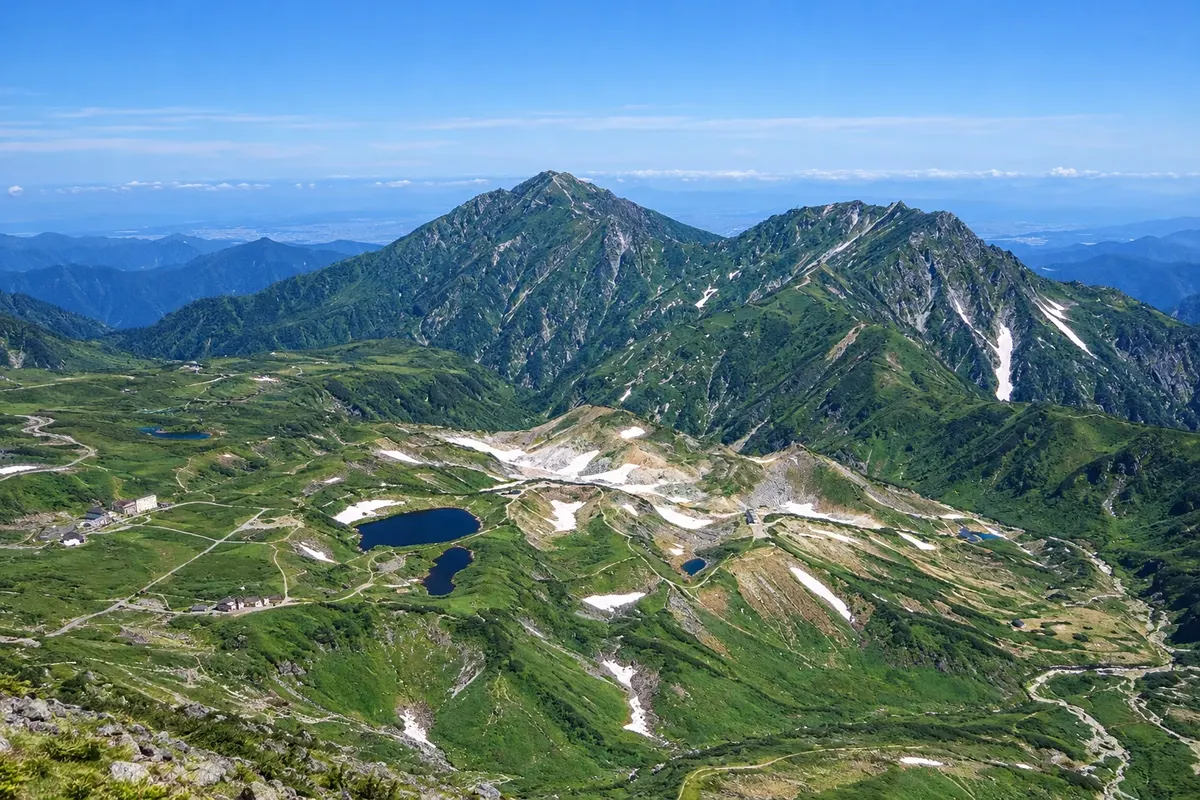
In the photo: Murodo plateau among the mountains of the Alpine Route.

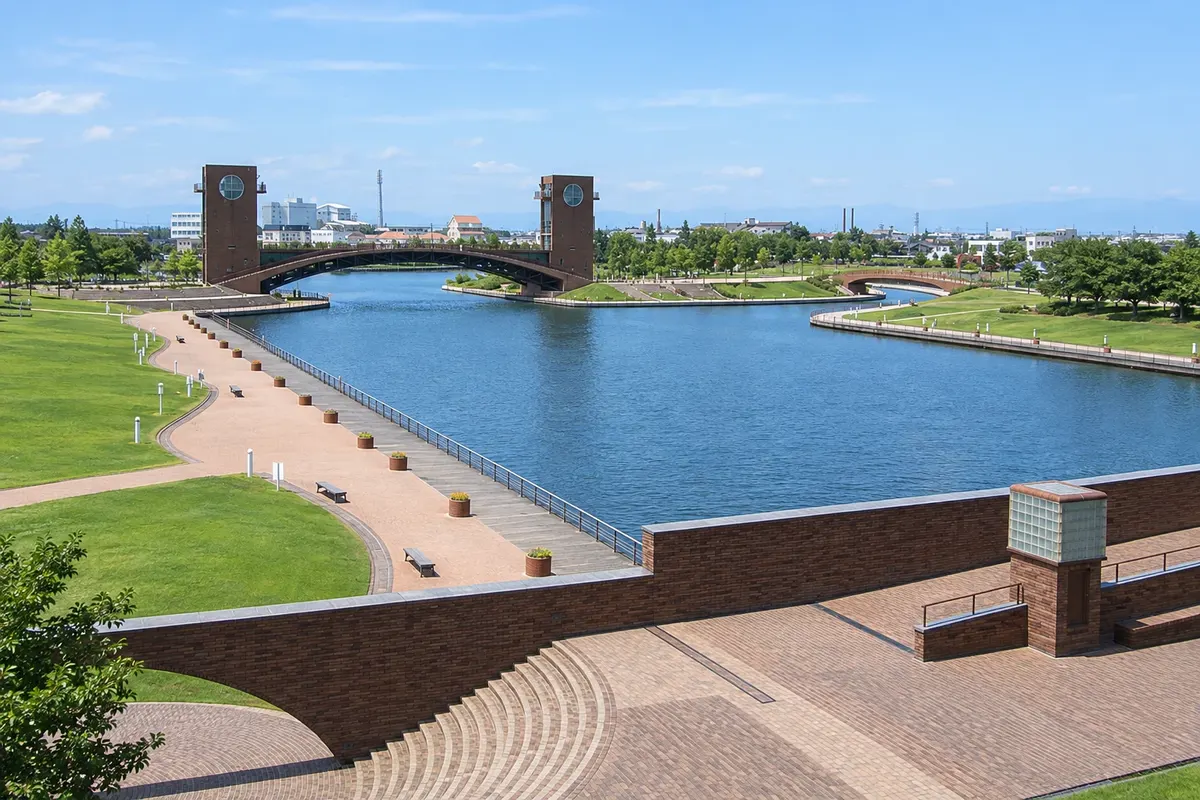
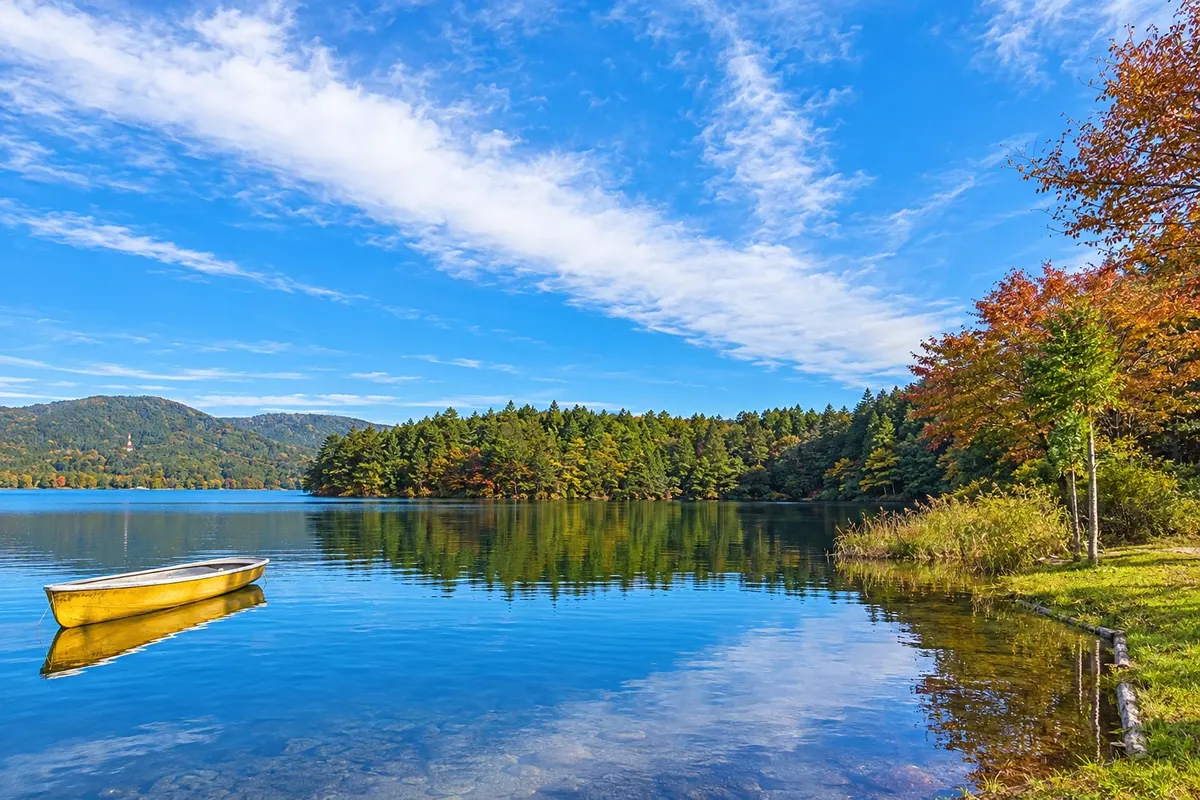
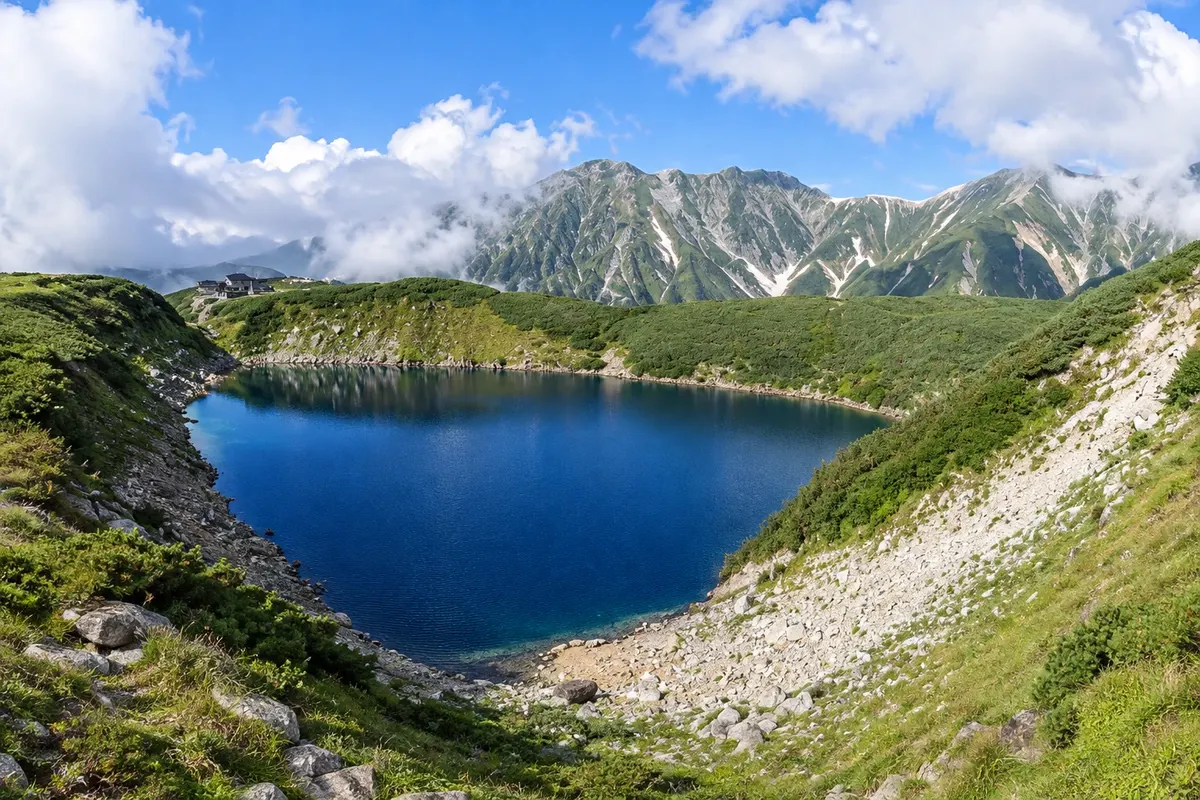
Illustrative images. The pictures in this guide are illustrations based on the real place, not photographs, and may differ from it.

Get to know the place

A region to enjoy
at your own pace.

The Tateyama Kurobe Alpine Route is a roughly 90 km route that crosses the Hida mountain range, the Northern Alps, between the city of Toyama on the Sea of Japan and Omachi in the Nagano valley. It is not a road open to private cars: the crossing is done via a sequence of trains, funiculars, buses, an electric bus through a tunnel and a ropeway, with transfers at stations in the mountains.

The highest point is Murodo, around 2,450 meters, a volcanic plateau at the foot of Mount Tateyama, one of Japan’s three sacred mountains. In spring, the road that climbs there passes between walls of snow that can exceed 15 meters, in the section called Yuki no Otani; in summer the plateau has crater lakes, alpine flowers and hiking trails; in autumn the foliage descends the slopes. On the Nagano side, the route goes by the Kurobe Dam, the tallest dam in Japan, where you can walk across the top of the dam.

The route operates only seasonally, generally from mid-April to the end of November, and closes in winter due to snow. Exact dates are set each year by the operator. Many visitors make the crossing in one day, from end to end, and send luggage by delivery service between hotels; others stay overnight in Murodo to watch the sunrise.

The two end towns serve as bases. Toyama is the prefectural capital on a bay, with the bullet train to Tokyo and Kanazawa and the Shomyo Falls, the tallest waterfall in Japan, along the route. Omachi lies at the foot of the Alps, with lakes and the train connection to Matsumoto and Nagano.

This destination brings together 2 cities: Toyama, Omachi.

Share: WhatsApp
Traveler, share your experiences through photos Up to 5 photos of each place you visited.

One destination, many paths

The cities on this trip

Start with one city or combine several in your itinerary.

Where Tateyama Kurobe Alpine Route is
OmachiToyama

Dados cartográficos: © OpenStreetMap contributors, via Wambacher / geoBoundaries (ODbL 1.0). Adapted by Cidade Turismo.

How to get there: Tateyama Kurobe Alpine Route

✈ Aeroporto de Toyama (TOY) · 10 km to Toyama

The Hokuriku shinkansen connects Tokyo to Toyama in about 2 hours 10 minutes. On the Nagano side, Shinano-Omachi Station receives trains from Matsumoto in about one hour and buses from Nagano. The route begins at Tateyama Station, about an hour by train from Toyama, and at Ogizawa Station, about 40 minutes by bus from Omachi.

Suggested arrival point: Toyama

The local experience

Things to do in Tateyama Kurobe Alpine Route

Murodo
Toyama · Toyama · Plateau

Murodo

The highest point of the Alpine Route, at about 2,450 meters at the foot of Mount Tateyama, with the Mikurigaike crater lake, alpine trails and, in spring, the Yuki no Otani snow walls.

Kurobe Dam
Omachi · Nagano · Dam

Kurobe Dam

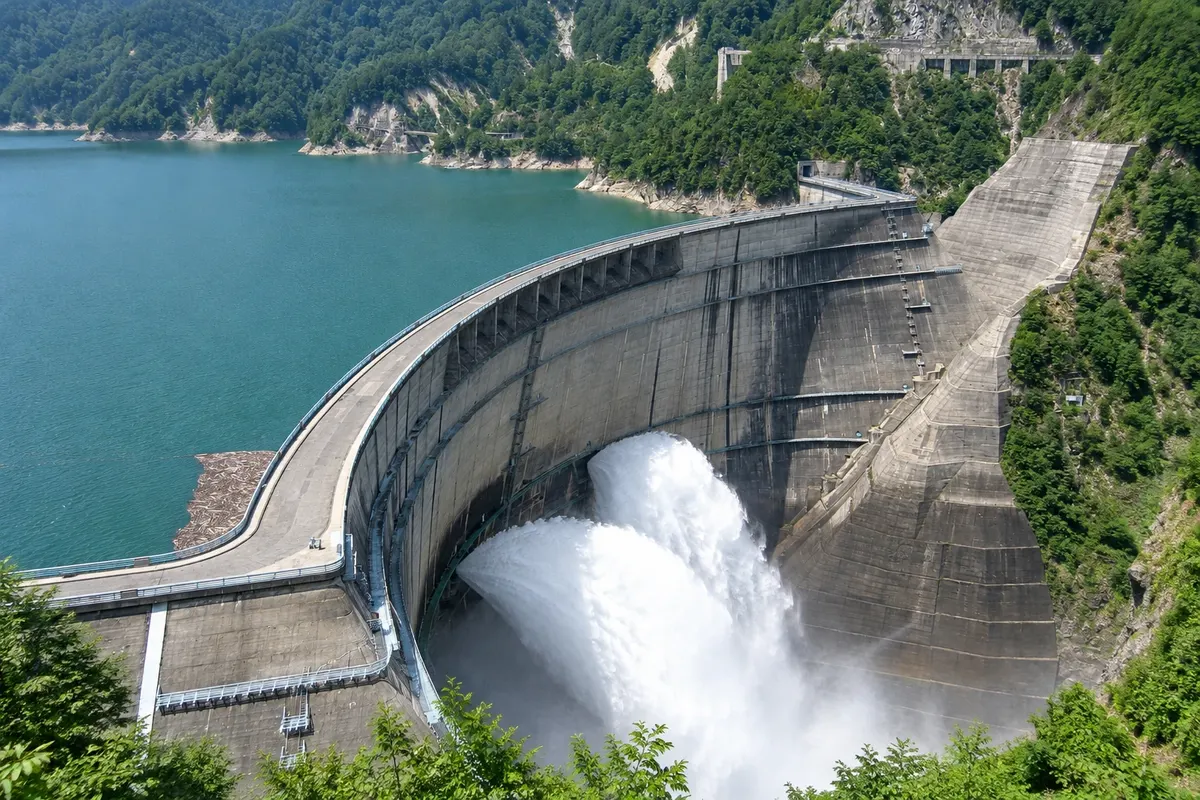
The tallest dam in Japan, at 186 meters, built among the mountains of the Alpine Route, with a walkway along the top of the dam, a viewpoint and a spillway that usually releases water from late June to mid‑October.

Shomyo Falls
Toyama · Toyama · Waterfall

Shomyo Falls

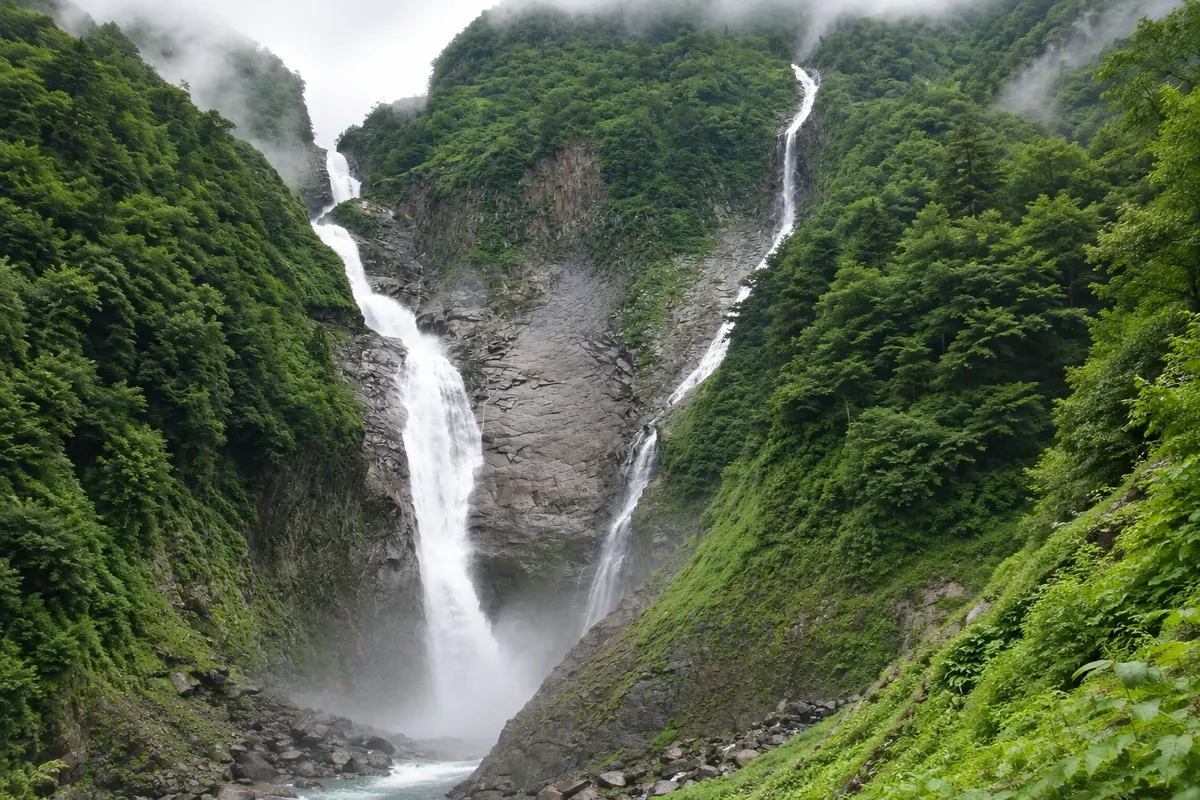
The tallest waterfall in Japan, about 350 meters over four drops, in the valley below the Midagahara plateau near Tateyama Station; the access road closes in winter.

Lake Aoki
Omachi · Nagano · Lake

Lake Aoki

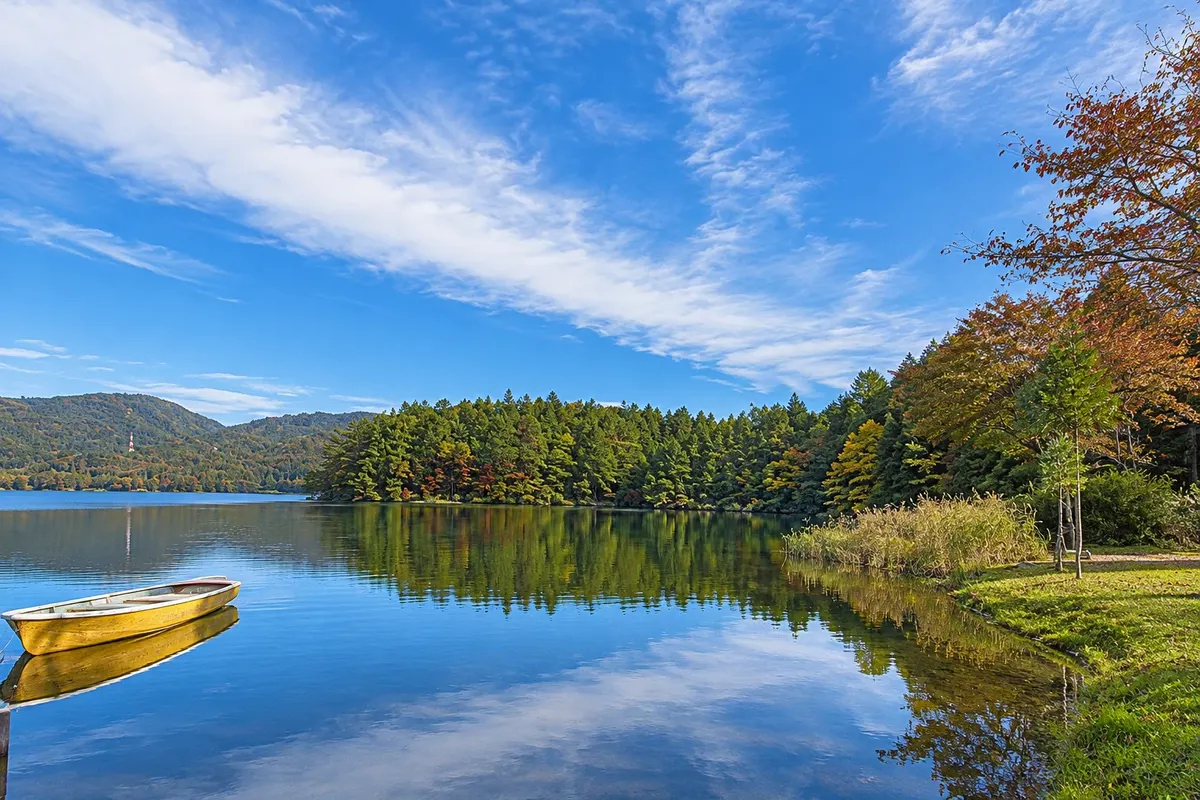
The deepest of the three Nishina lakes, north of Omachi, with clear water surrounded by mountains, beaches for swimming, kayaking and boat rides in summer, and views of the Northern Alps.

See 1 more place in Tateyama Kurobe Alpine Route
Toyama Glass Art Museum
Toyama · Toyama · Museum

Toyama Glass Art Museum

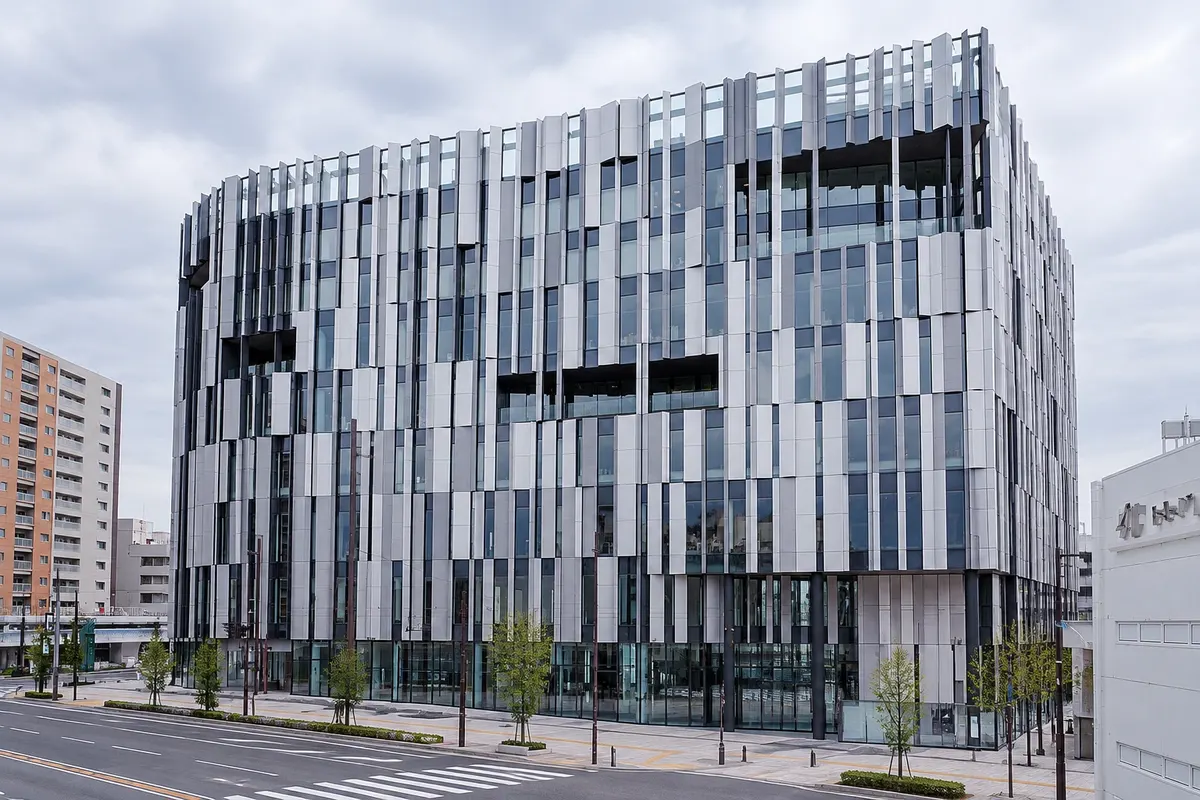
Museum dedicated to contemporary glass, in a Kengo Kuma building clad in wood and glass in central Toyama, with temporary exhibitions and permanent glass galleries.

Before you go

Practical information

A little planning leaves more time to enjoy the journey.

When to go

The route usually runs from mid-April to the end of November. From mid-April to the end of June, the snow corridors at Murodo are in place. From July to September, alpine flowers and hiking trails are at their best. October brings the autumn foliage. In November it can snow and the high-altitude buses may stop. Confirm the seasonal dates.

The seasons shown are the most usual ones; nature doesn't always follow the calendar.

How many days to stay

The crossing takes a full day, 6 to 8 hours with stops. With two days, sleep in Murodo or Toyama and visit Shomyo Falls. Three days allow time for Toyama, the route and one night in Omachi or at the lakes.

Which city to stay in

In Toyama, hotels cluster around the shinkansen station and the city center. In Murodo and Midagahara there are mountain hotels and huts, with limited space. In Omachi, the Shinano-Omachi station area and the Omachi Onsen hot springs at the route entrance have hotels and inns; the Nishina lakes have waterside inns.

Respect the place

Take your trash with you, follow the signs and support local businesses. In natural areas, follow the visiting guidelines.

Get your questions answered

Frequently asked questions about Tateyama Kurobe Alpine Route

When does the Tateyama Kurobe Alpine Route operate?

Generally from mid-April to the end of November; exact dates are set each year. In winter the route closes because of snow. Confirm the seasonal dates before planning.

When can you see the Yuki no Otani snow corridor?

Generally from the route’s opening in mid-April until June, with the snow walls shrinking over the weeks. The walk between the walls is usually allowed during that period. Snow height varies by year.

Can you do the Alpine Route in one day?

Yes. The crossing takes 6 to 8 hours with stops at Murodo and the Kurobe Dam. Start early, especially in high season, when there are queues at transfers.

What to do with luggage on the Alpine Route?

Vehicles on the route have little space for large suitcases. There are luggage delivery services between the route ends, arranged at stations or hotels. Bring only a backpack for the crossing.

Do I need a car for the Alpine Route?

No, and private cars cannot cross the route. Those who arrive by car on one side can use services that transport the vehicle to the other side, or do a round trip from one end.

Explore other destinations Search by state and city

Beyond the guide