

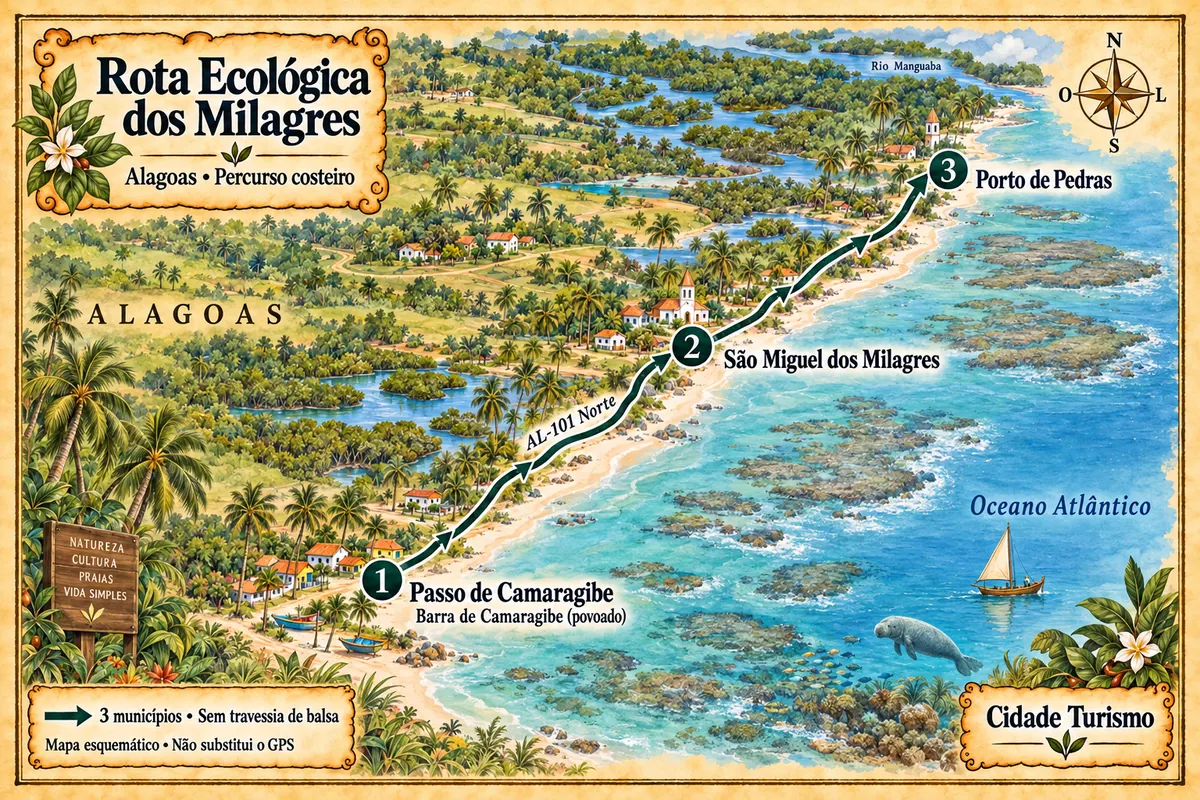
3 cities
Ecological Route of Milagres
Barra de Camaragibe, Milagres beaches and mangroves of Porto de Pedras on a coastal route through three municipalities of Alagoas.

 Search
Brazil
 Antarctica
 Argentina
 Bolivia
 Chile
 Colombia
 Ecuador
 Guyana
 French Guiana
 Falkland Islands (Malvinas)
 Paraguay
 Peru
 Suriname
 Uruguay
 Venezuela
 Germany
 Austria
 Belgium
 Croatia
 Denmark
 Slovakia
 Slovenia
 Spain
 Finland
 France
 Greece
 the Netherlands
 Hungary
 Ireland
 Iceland
 Italy
 Luxembourg
 Norway
 Poland
 Portugal
 the United Kingdom
 the Czech Republic
 Sweden
 Switzerland
 Turkey
 Bermuda
 Canada
 the United States
 Greenland
 Mexico
 Saint Pierre and Miquelon
 the Dominican Republic
 JapanTurkey
 South Africa
 Egypt
 Australia
 Fiji
 New Zealand
 Papua New Guinea
State · Northeast
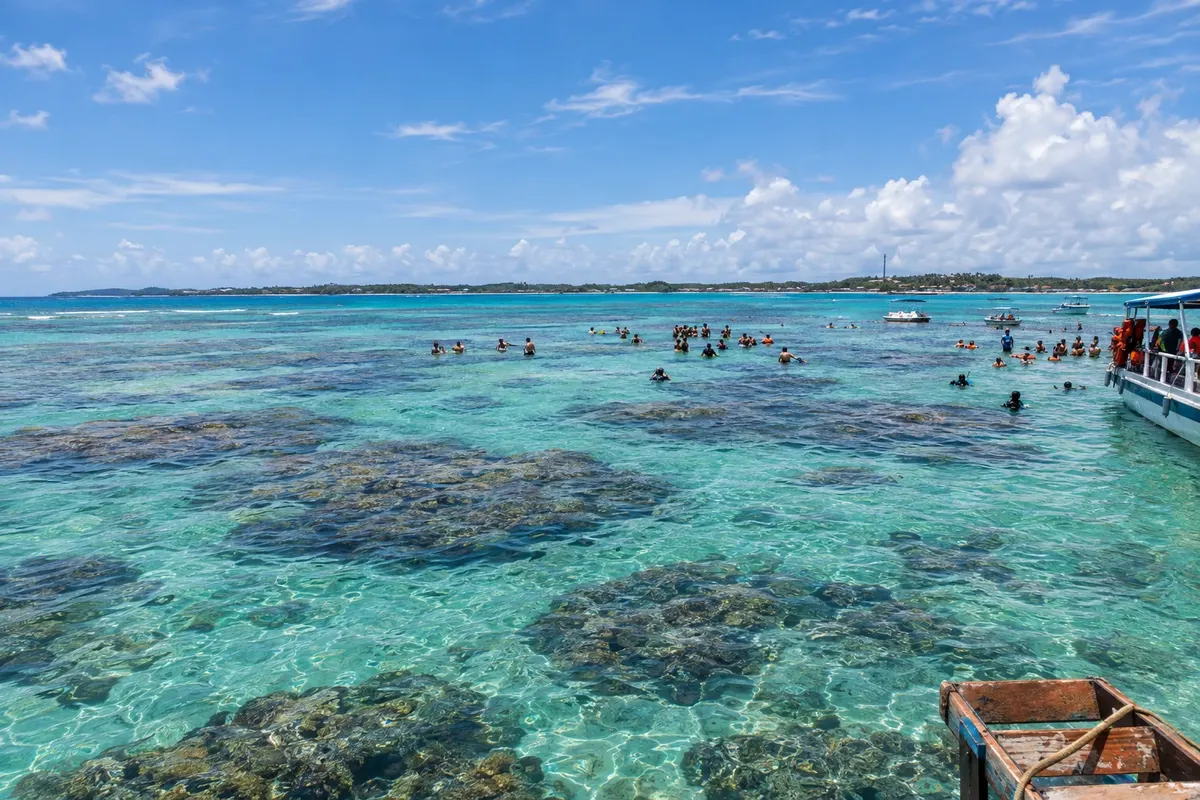
Alagoas is a small state with a long coastline: lagoons and urban beaches in Maceió, reefs and coconut groves to the north, on the way to Pernambuco.
In the photo: Galés of Maragogi, Maragogi (AL)
Illustrative images. The pictures in this guide are illustrations based on the real place, not photographs, and may differ from it.
The state
Maceió sits between the sea and Lagoa Mundaú. On the Pajuçara waterfront, jangadas take visitors to the natural pools formed by the reefs at low tide; Ponta Verde and Jatiúca come next, with a waterfront promenade and beach stalls. Jaraguá, the port neighborhood, keeps mansions from the sugar era and concentrates part of the nightlife.
From the lagoon comes sururu, a shellfish that became a symbol of Alagoas cuisine and reaches the table in a broth or as sururu de capote. At Pontal da Barra, on the banks of the Mundaú, lacemakers make filé, an embroidery on net that appears on towels and clothing sold at house doors. Tapioca, fried fish and carne de sol with macaxeira complete the cuisine for those spending a few days in the capital.
To the north, the Costa dos Corais occupies the stretch up to the border with Pernambuco, within a federal environmental protection area. Maragogi is the most sought-after hub, with galés, reef pools a few kilometers from the beach. Japaratinga has calm sea and a coconut grove right on the sand. São Miguel dos Milagres, Porto de Pedras and Passo de Camaragibe form the Rota Ecológica, with spread-out pousadas, fishing villages and beaches with almost no development.
In Porto de Pedras, on the Tatuamunha River, there is a sanctuary that monitors the return of the marine manatee to its natural environment. The visit is done in a jangada propelled by pole, without a motor and in silence. It's the excursion that best explains why this stretch of coast is protected.
Routes
Barra de Camaragibe, Milagres beaches and mangroves of Porto de Pedras on a coastal route through three municipalities of Alagoas.
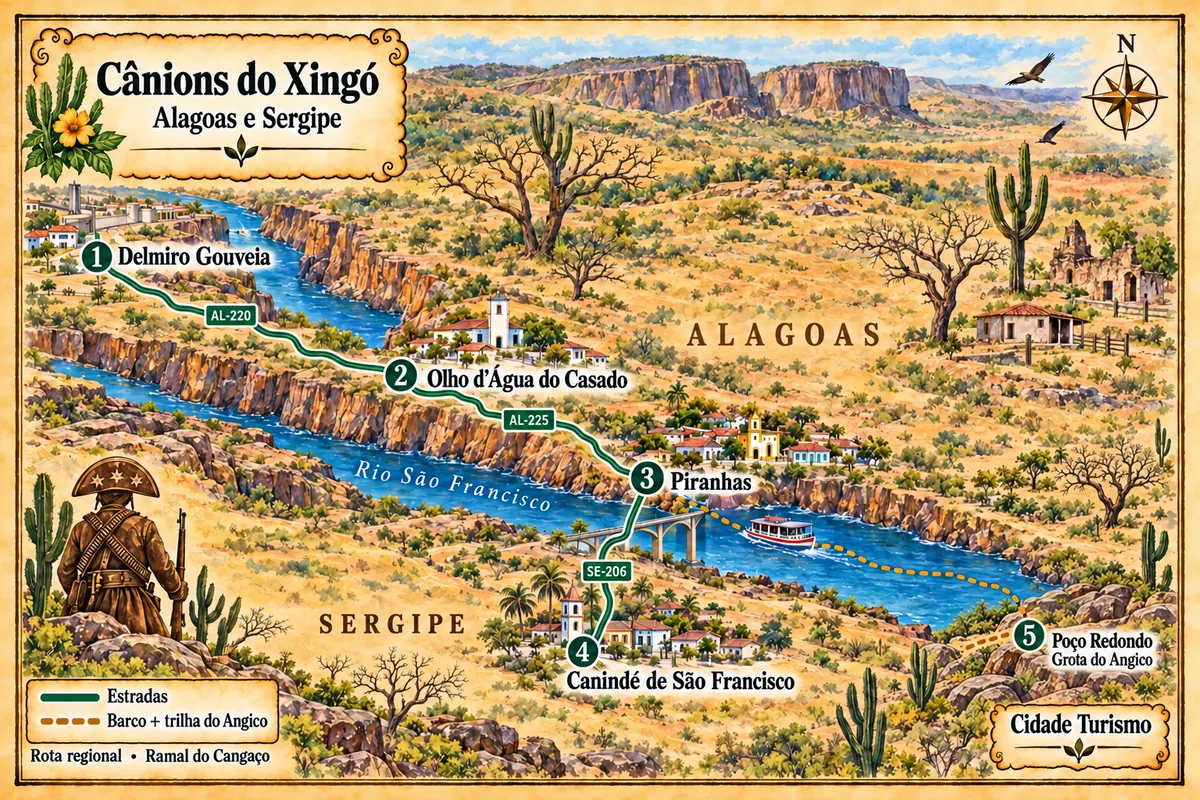
Between the banks of Alagoas and Sergipe, the São Francisco links the landscape of the Xingó reservoir, the history of Piranhas, and the boat-and-hike route to the Grota do Angico.
Alagoas' coast has sunshine almost year-round. Rain picks up between April and July, with cloudy days and a murkier sea. Reliable sun returns in September and continues through March, and high season runs from late December to Carnival, recurring during the July holidays. For the natural pools, more than the month you should check the tide table: the tours depend on low tide. In June, the June festivals enliven Maceió and the interior.
Zumbi dos Palmares International Airport is in Rio Largo, in the Maceió metro area, and receives flights from major capitals. From the capital to the Costa dos Corais, the route is the AL-101 North, which follows the coast through the municipalities of the Rota Ecológica to Japaratinga and Maragogi. BR-101 is the inland alternative, with exits that descend to the coast. Those arriving via Recife can also reach Maragogi along Pernambuco's southern coast without passing through Maceió.
Your questions
A week makes it possible to split the trip into two bases: three or four nights in Maceió for the waterfront, Pajuçara and Lagoa Mundaú, and the remainder in Maragogi or on the Rota Ecológica. Changing accommodation avoids repeating the drive every day.
They are located on reef banks a few kilometers from the coast and only emerge at low tide. Tours depart by catamaran or speedboat, with the number of visitors controlled in each area. Check the tide table before setting the date, because on high-tide days the tour may be canceled. Do not step on the corals.
On the Tatuamunha River, in Porto de Pedras. The tour is done in a motorless jangada by community guides, and the animals are observed in the water, with no contact. The visit depends on the tide, so it's advisable to book in advance.
The village is small and the pousadas are spread along the seafront. There are transfers from the airport and from Maceió, but to visit Patacho, Porto de Pedras and the other beaches of the Rota Ecológica a car makes it easier. Without one, the solution is to arrange tours with your pousada or with local buggy drivers.
Sururu de capote, sururu broth, fried fish on the beach, tapioca and carne de sol. For shopping, Pontal da Barra gathers filé lacemakers, and the Mercado do Artesanato, in the Levada neighborhood, sells lace, sweets and straw items.
Mapa: @svg-maps/brazil, CC BY 4.0
Beyond the guide


