

 Antarctica
 Argentina
 Bolivia
 Chile
 Colombia
 Ecuador
 Guyana
 French Guiana
 Falkland Islands (Malvinas)
 Paraguay
 Peru
 Suriname
 Uruguay
 Venezuela
 Germany
 Austria
 Belgium
 Croatia
 Denmark
 Slovakia
 Slovenia
 Spain
 Finland
 France
 Greece
 the Netherlands
 Hungary
 Ireland
 Iceland
 Italy
 Luxembourg
 Norway
 Poland
 Portugal
 the United Kingdom
 the Czech Republic
 Sweden
 Switzerland
 Turkey
 Bermuda
 Canada
 the United States
 Greenland
 Mexico
 Saint Pierre and Miquelon
 the Dominican Republic
 Japan
 South Africa
 Egypt
 Australia
 Fiji
 New Zealand
 Papua New Guinea
Illustrative images. The pictures in this guide are illustrations based on the real place, not photographs, and may differ from it.



Travel with pets
Traveling with your pet
Accommodation, restaurants, activities and transport for those who don’t want to leave their pet at home, with documents and health care up to date.
For many people, the dog or cat is part of the family, and traveling without them is no longer the only option. Pet travel covers trips where the pet goes along: accommodation, restaurants, activities and transport are chosen among those that accept the animal.
What to do

Where to stay with a pet
Pet friendly or “accepts pet”: conditions vary, and the pet-stay agreement should be requested before booking.
Learn more
Where to eat with a pet
Restaurants and cafés usually allow the animal in the outdoor area, on a leash and next to the table.
Learn more
Pet-friendly activities
Parks, easy trails, historic centers and some beaches — each place with its own rule.
Learn more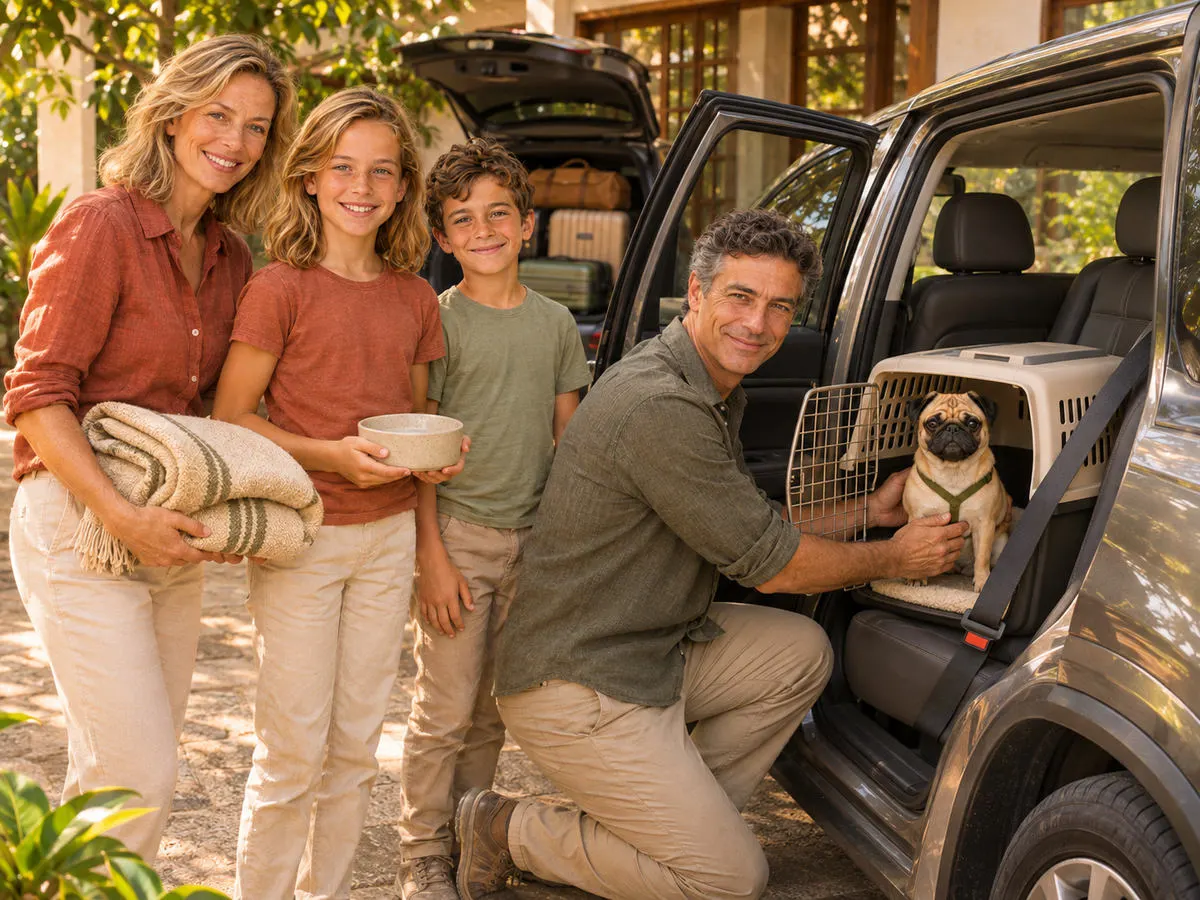
How to travel with a pet
By car, plane or bus: carrier, seatbelt, stops and each company’s rules.
Learn more
Pet documents and health
Vaccines up to date, a health certificate and a conversation with the veterinarian before traveling.
Learn more
Pet services at the destination
Veterinarian, pet shop, daycare, pet sitter and dog walker for the travel days.
Learn moreIt’s a trip that requires more planning than others. Rules change from one lodging to another, from one airline to another and from one beach to another, and documents and vaccines need to be up to date. With the right questions asked beforehand, the trip usually goes well for the family, for the pet and for those around them.
What pet travel is
It’s a leisure trip made in the company of a pet, most often a dog or a cat. The itinerary is planned around what the animal can do: where it sleeps, where it’s allowed, how long it tolerates being on the road and what temperatures it can handle.
In tourism, the term pet friendly, “amigo dos animais” in Portuguese, identifies a place that has policies and facilities designed to receive animals: allowed areas, items for the pet, more spots and specific coexistence rules. That is not the same as “accepts pets.” Accommodation that accepts pets is not pet friendly: it takes the animal by exception and under conditions, such as a pre-booking check, few spots, size and temperament limits, and restricted areas.
So, before making any reservation, ask the accommodation for the pet accommodation agreement, the document that sets these conditions in writing. Only book after reading the agreement and confirming the pet’s spot.
Who it suits and at what stage of life
It suits those who don’t want to leave their animal behind: a couple who has their dog as a travel companion, a family with children who grow up with the pet, and people who live alone with their pet. For these travelers, leaving the animal in someone else’s care is an extra worry during vacation.
It also suits those planning the first trip with their pet. The simplest start is a weekend by car, a few hours from home, in an inn or chalet with outdoor space. It serves as a test: it shows how the pet reacts to the drive, the new room and other guests.
Not every animal likes to travel. Puppies without full vaccinations, elderly or sick animals and those that get very frightened by changes may be calmer at home with a trusted person. Cats, in general, are more bothered by a change of environment than dogs. The veterinarian helps decide.
Where to go in Brazil with a dog or cat
Mountain and countryside destinations concentrate many of the accommodations that accept animals: chalets, inns with lawns and farm hotels. Campos do Jordão, in the Mantiqueira Range, has restaurants with outdoor seating in Capivari and outdoor activities. Gramado, in the Serra Gaúcha, offers parks, cafés, restaurants and accommodations prepared for visitors with pets.
In the interior of São Paulo, Socorro has organized to serve this audience: adventure parks welcome dogs, and there are rafting descents where the dog goes in the boat with the family. Brotas, another adventure destination, also has infrastructure for travelers with pets.
In big cities, the program often includes parks. In São Paulo, Ibirapuera Park has an area where dogs can run off-leash. Fortaleza created a label that identifies establishments that receive animals, including restaurants, shops and accommodations.
Beaches require attention: on most of the Brazilian coast, dogs are not allowed on the sand. Santos, on the São Paulo coast, is an exception established by municipal law: a stretch of José Menino Beach admits dogs in the early morning and late afternoon, with a leash and vaccination record. In national parks, entry of domestic animals is generally not allowed. Confirm the rules of each place before going.
When to go: heat, vacations and holidays
Heat is the first consideration. In the hot months, from December to March in much of the country, outings are planned for early morning and late afternoon, because hot pavement and sand burn paws. Short-nosed dogs, like pugs and bulldogs, suffer more from high temperatures.
Autumn and winter, from April to September, tend to be more comfortable in the southern and southeastern mountains, with dry, cool days. July, the school holiday month, fills these destinations, and the few spots for animals run out early.
On long holidays and during the December–January vacation season, it’s worth booking months in advance and reconfirming the pet’s spot. On New Year’s Eve and during June festivals, loud fireworks frighten many dogs and cats; some cities ban those types of fireworks, which can influence the choice.
How to plan the trip with your pet
Start with the accommodation, because it defines the rest. Ask whether the place is pet friendly or accepts pets by exception, and request the pet-stay agreement from the accommodation before booking. Read what it says about size, number of animals, rooms, prohibited areas, fee and behavior, and only then confirm the reservation and the pet’s spot.
Next comes transportation. By car, plan stops for water and for the animal to stretch its legs. By plane or bus, check with the company before buying the ticket: each has its own rule, and the number of animals per trip is limited.
Schedule a veterinary appointment a few weeks before. It’s time to check vaccines, request a health certificate and talk about the destination, the climate and the mode of transport. For another country, the deadline is much longer.
In the animal’s bag pack their usual food, bowls, the bed or blanket with the smell of home, the leash, the collar with an ID tag, the pee pad or litter box and documents. Keeping the feeding and walking routine helps with adaptation. Fees and service prices vary: check the current table.
Pet travel around the world
In the European Union, dogs, cats and ferrets move between countries with a pet passport issued by an authorized veterinarian for residents of the bloc. Those arriving from outside to Portugal, Spain, France, Italy or Germany present an animal health certificate, which must include a microchip and a current rabies vaccine.
For those leaving Brazil, the exit document is the International Veterinary Certificate, issued by the Ministry of Agriculture and Livestock. Argentina, Chile and the United States are among the destinations with their own certificate, and each country adds its requirements, which may include a microchip, tests and long deadlines. Requirements can change: confirm before traveling.
Frequently asked questions
What is pet travel?
It is a leisure trip in which the pet, usually a dog or a cat, accompanies the family. Accommodation, restaurants, activities and transportation are chosen among those that accept the animal.
What is the difference between pet friendly and “accepts pet”?
Pet friendly is a place with policies and facilities designed to welcome animals. A lodging that only accepts pets receives an animal by exception and under conditions, such as prior approval, few spots, defined size limits and prohibited areas.
What is the pet-stay agreement?
It is the document in which the accommodation puts in writing the conditions for receiving the animal: size, spots, rooms, prohibited areas, fee and liability for damages. Request the agreement before booking and read it carefully.
What documents are necessary to travel with a dog or cat within Brazil?
The vaccination card, with the rabies vaccine up to date, and a health certificate issued by a veterinarian. Transport companies and accommodations may request other proofs: ask in advance.
Can you take a dog to the beach?
It depends on the municipality. In most of the coast, dogs are not allowed on the sand; some cities allow sections and times of day, such as Santos, at Praia do José Menino. Check the city hall before going.
How to travel by plane with a dog or cat?
Each airline decides whether to transport animals and under what conditions, in the cabin or in the hold. Check the company’s rule before buying the ticket and reserve the animal’s spot in advance.
Where to travel with a dog in Brazil?
Mountain and countryside destinations, like Campos do Jordão, Gramado, Socorro and Brotas, have activities and accommodations that accept animals. In cities such as São Paulo, the program goes through parks.
Can a cat travel?
Yes, but many cats are bothered by changes of environment. A sturdy carrier, a closed room, a litter box and items with the smell of home help. Talk to the veterinarian about the animal’s temperament before deciding.
Beyond the guide


