

 Antarctica
 Argentina
 Bolivia
 Chile
 Colombia
 Ecuador
 Guyana
 French Guiana
 Falkland Islands (Malvinas)
 Paraguay
 Peru
 Suriname
 Uruguay
 Venezuela
 Germany
 Austria
 Belgium
 Croatia
 Denmark
 Slovakia
 Slovenia
 Spain
 Finland
 France
 Greece
 the Netherlands
 Hungary
 Ireland
 Iceland
 Italy
 Luxembourg
 Norway
 Poland
 Portugal
 the United Kingdom
 the Czech Republic
 Sweden
 Switzerland
 Turkey
 Bermuda
 Canada
 the United States
 Greenland
 Mexico
 Saint Pierre and Miquelon
 the Dominican Republic
 Japan
 South Africa
 Egypt
 Australia
 Fiji
 New Zealand
 Papua New Guinea
Illustrative images. The pictures in this guide are illustrations based on the real place, not photographs, and may differ from it.


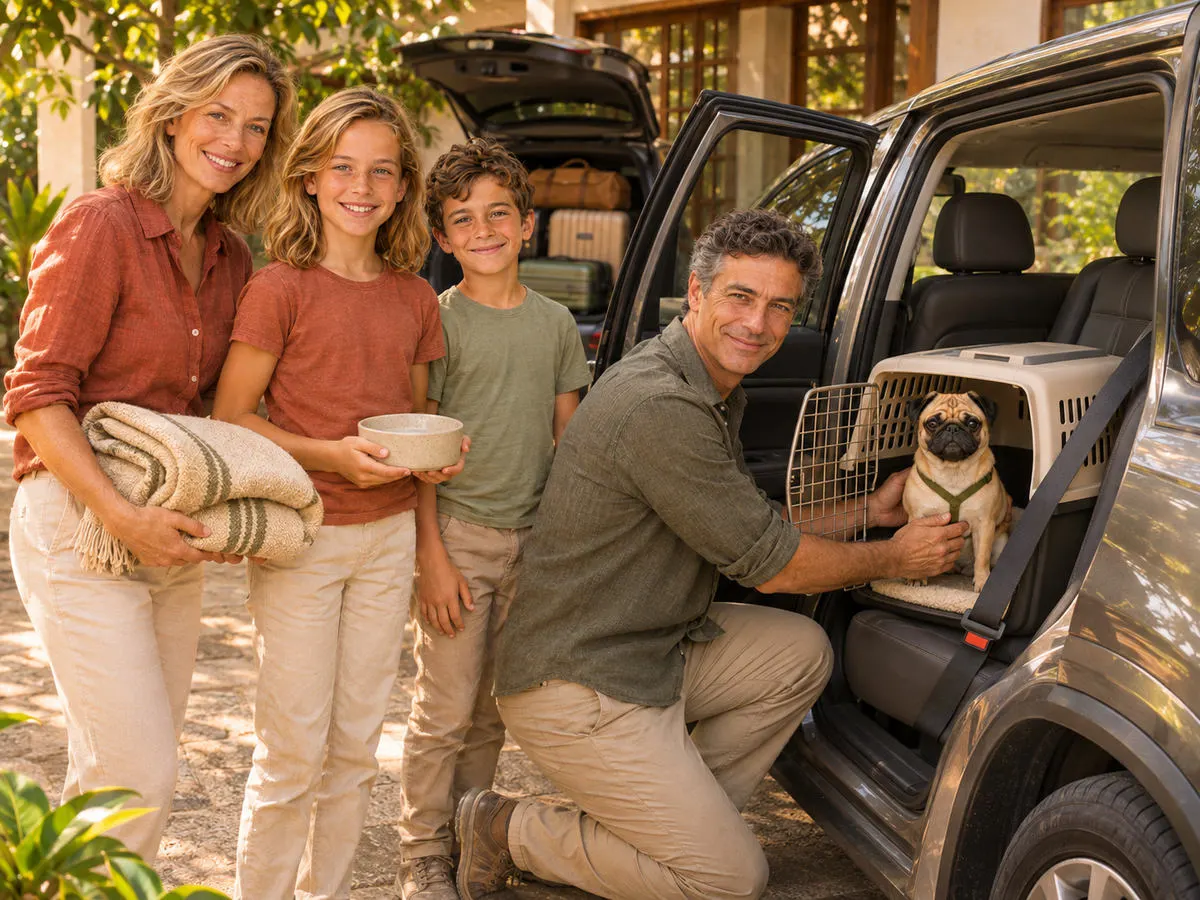
Travel with pets
How to travel with a pet
By car, plane or bus: carrier, seatbelt, stops and each company’s rules.
The journey is the part of the trip that worries pet owners most. By car, the family controls the pace; by plane and bus, the company sets the conditions.
In any transport mode, three things repeat: the animal travels contained, in a crate or with a proper seat belt; documents are at hand; and the rules are confirmed before buying the ticket.

Before you leave: planning
Choose the mode of transport together with the destination. A large dog will hardly fit in an airplane cabin; a cat that has never left home may not handle a full day on the road. Thinking about this early avoids last-minute changes to the itinerary.
Before buying tickets, decide where you will stay. Find out whether the lodging is pet friendly, with a policy and facilities for animals, or if it only accepts pets as an exception and under conditions. Ask the accommodation for its pet-stay agreement before booking and only confirm after reading the conditions and verifying the pet’s spot.
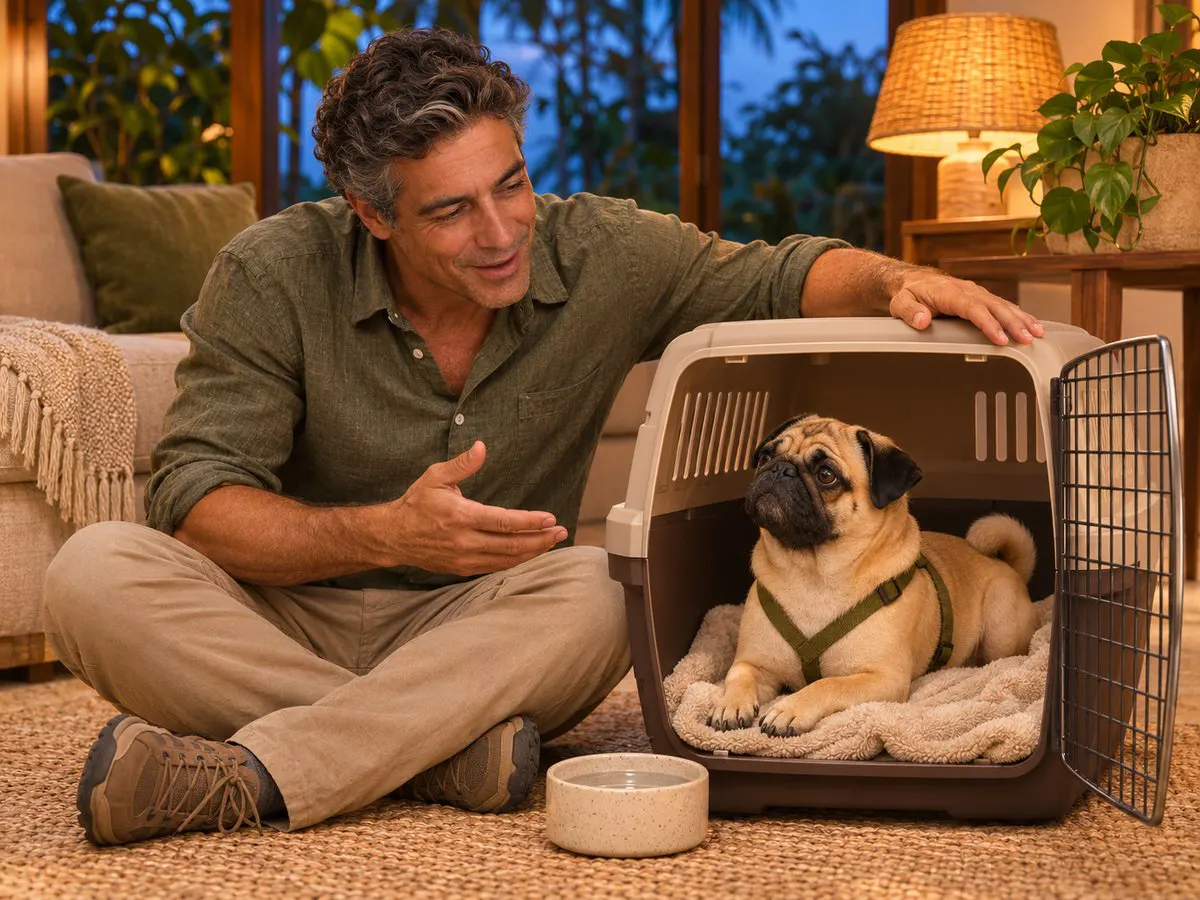
Get your pet used to the transport crate in the weeks beforehand: leave the crate open at home with their blanket inside, and take short car rides. The crate should allow them to stand up, turn around and lie down.
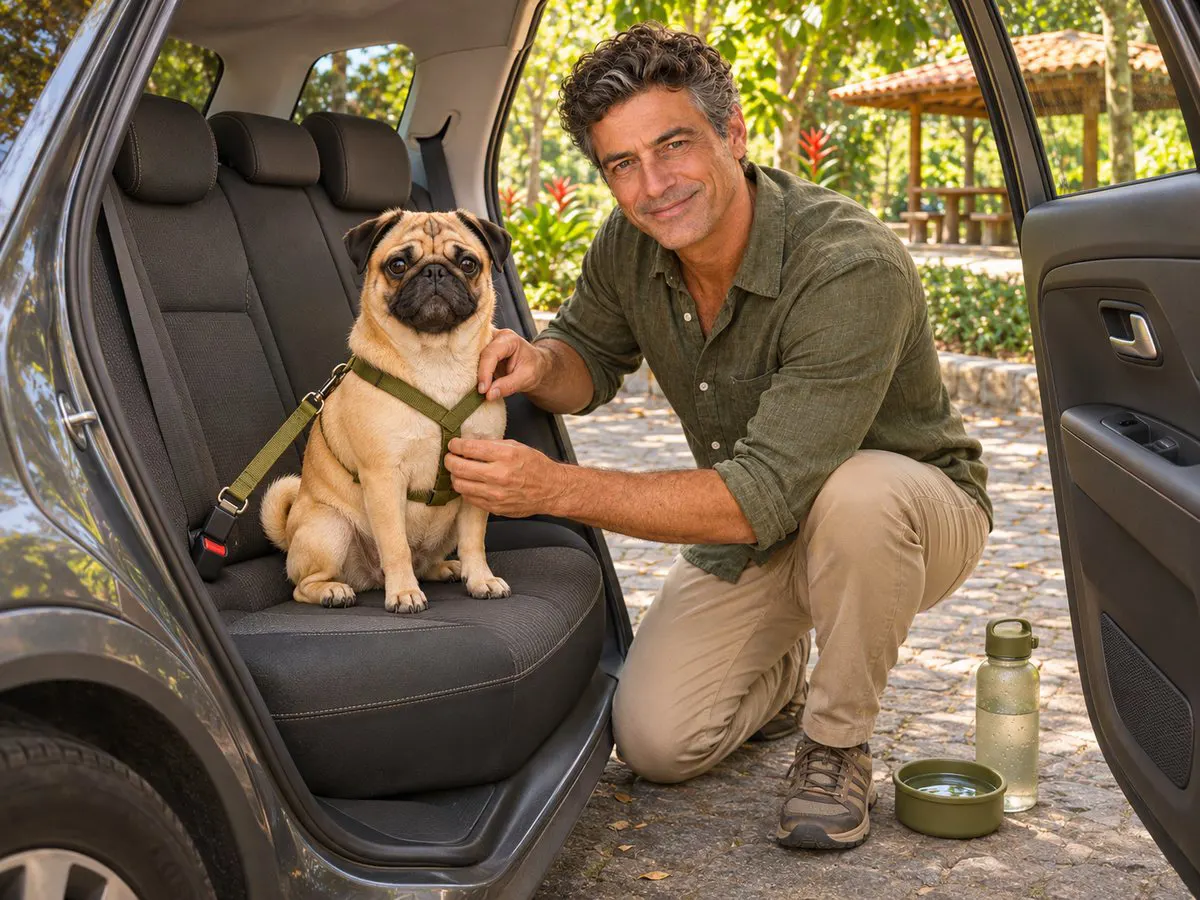
By car
This is the simplest option for a first trip. The animal travels in the back seat, inside a transport crate secured by the seat belt, or wearing a harness attached to a pet-specific seat belt. Loose in the car, the animal distracts the driver and can be injured in a sudden stop.
The Brazilian Traffic Code considers it an offense to drive with an animal on your lap, between your arms or to the driver’s left, and to carry it on the vehicle’s exterior parts, which includes having its head out the window.
Make stops every two to three hours for water, a little walk and bathroom breaks. Put the leash on before opening the door. The main meal should be given a few hours before departure, not on the road.
Never leave the animal alone in a closed car, not even for a few minutes or with a crack in the window. The temperature inside rises quickly, even on a mild day.
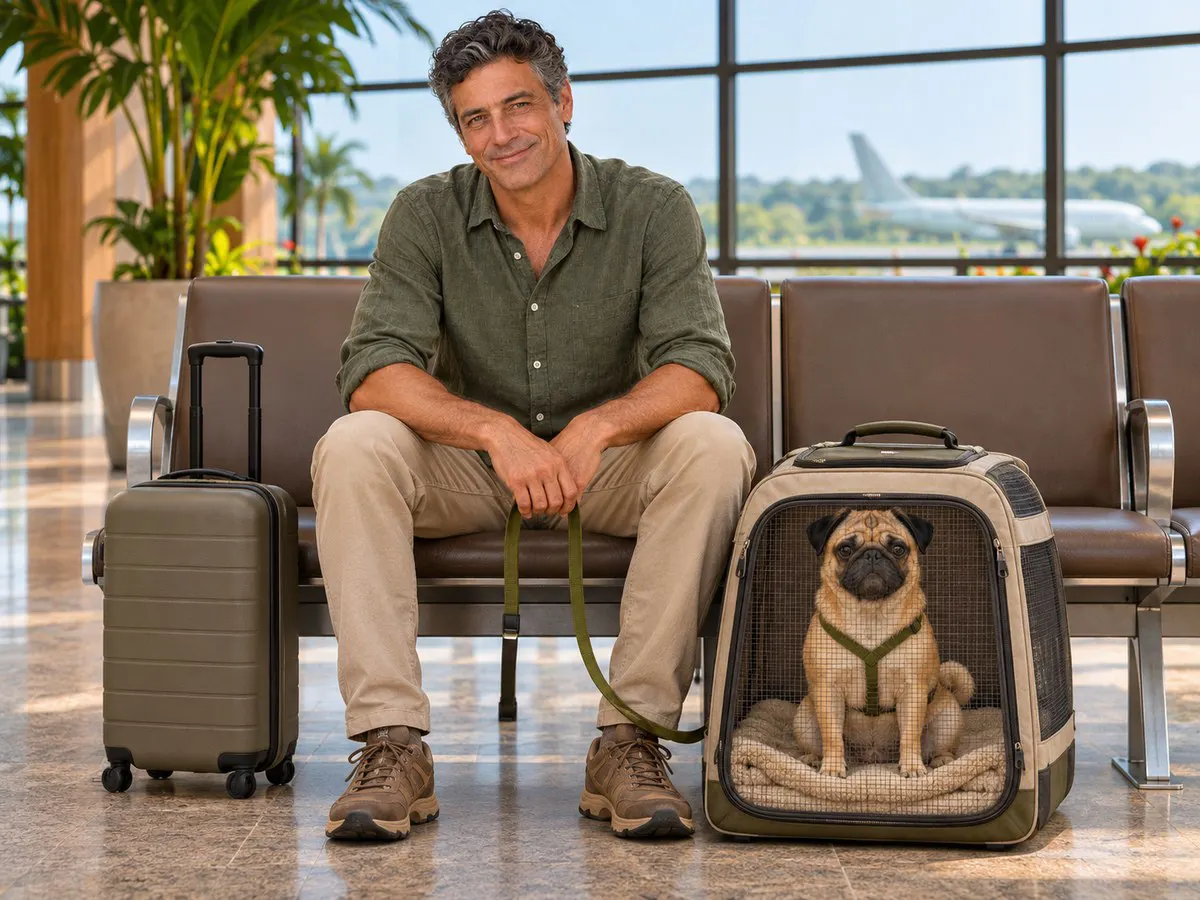
By plane
In Brazil, each airline decides whether it offers animal transport and under what conditions. Each carrier has its own rules for species, size, breeds, transport crate, documents and number of animals per flight.
There are generally two modes. In the cabin, a small animal travels inside a crate or carrier bag, with the owner. In the hold, it is checked in a rigid crate in a designated compartment. Some companies do not accept animals in the hold, and many restrict brachycephalic (short-nosed) breeds.
Check with the airline before buying the ticket and reserve the pet’s spot in advance, because the number of spaces per flight is limited. Verify the accepted crate dimensions, required documents and how early to arrive at the airport. Prefer direct flights and, in hot weather, the coolest times of day.
The service is charged separately and fees vary: check the airline’s current rate table.
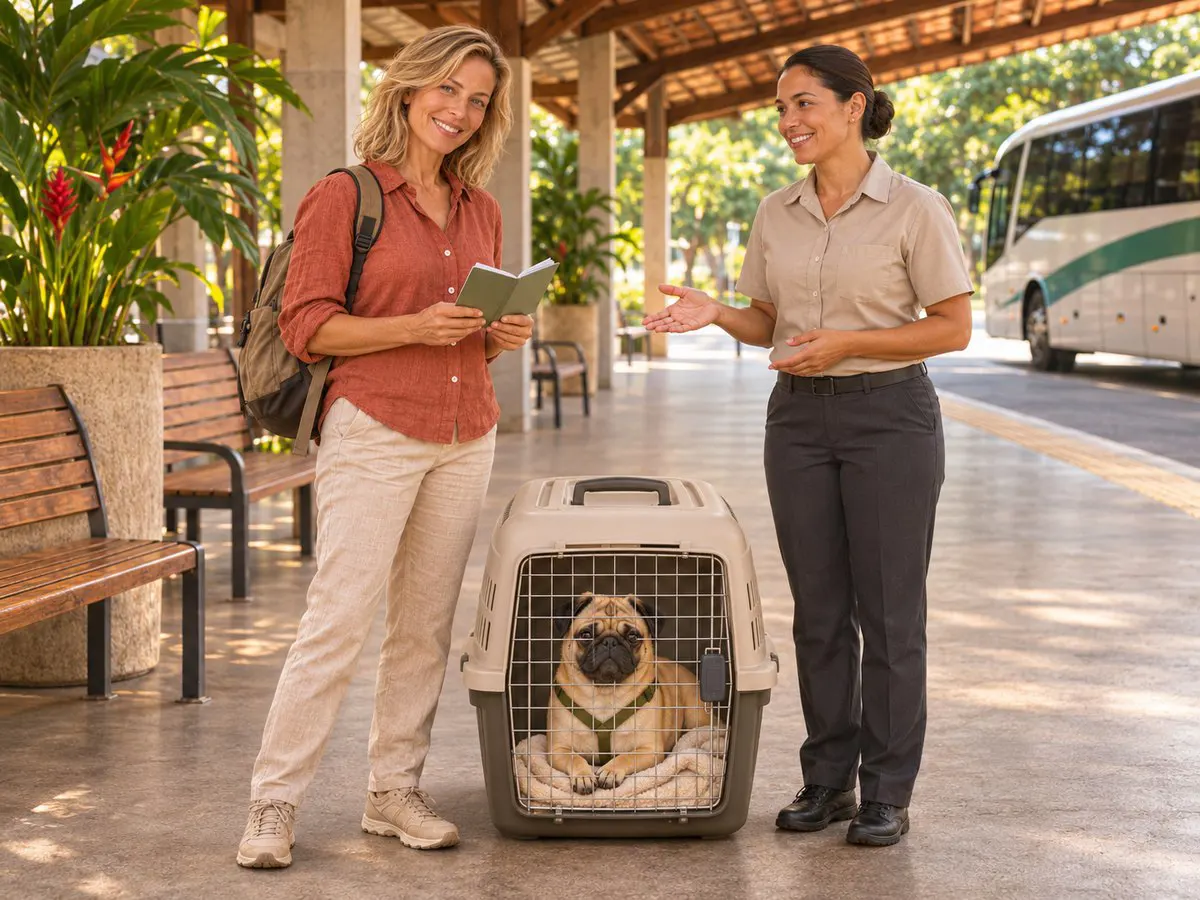
By bus
It depends on the company and the type of route. Some bus companies transport small dogs and cats in a crate, with a health certificate and vaccination card; others do not allow animals. For routes within the same state, there may be specific state rules.
Ask the bus company before buying the ticket whether it transports animals on that route, where the crate will travel, how many animals are allowed per trip and which documents are required. On long trips, remember that stops follow the line’s schedule, not the animal’s needs.
Guide dogs have the legal right to accompany a visually impaired person on public transport.
Motion sickness and calmness
Many animals get motion sick or anxious while traveling, especially at first. A light stomach before departure, a stable crate without rocking, fresh air, the blanket with the smell of home and the calm voice of a familiar person help.
Short training trips that end with something enjoyable, like a walk, teach the pet that the car doesn’t only go to the vet. Cats usually feel calmer with the crate partially covered by a cloth.
If motion sickness or anxiety are severe, talk to your veterinarian before the trip. Only they can recommend what to do in each case; do not give anything to the animal on your own.
Frequently asked questions
How to take a dog in the car on a trip?
In the back seat, inside a transport crate secured by the seat belt or wearing a harness attached to a pet-specific seat belt. Make stops for water and walks and never leave the animal alone in a closed car.
Can a dog travel in the airplane cabin?
It depends on the airline. Those that offer the service usually accept small animals in a crate or carrier bag, with a limited number per flight. Check the rules before buying the ticket.
Can you travel by bus with a dog?
It depends on the company and the route. Some bus companies transport small animals in a crate with documents; others do not. Ask before buying the ticket.
Is it a fine to carry a dog loose in the car?
The Brazilian Traffic Code penalizes those who drive with an animal on their lap, between their arms or to the driver’s left, and those who carry it on the vehicle’s exterior parts, such as with its head out the window.
What to do if a dog gets motion sick in the car?
Feed the main meal a few hours before, keep the car ventilated, secure the crate well and make stops. If motion sickness is frequent, talk to the veterinarian before the trip.
Can a cat travel by car?
Yes, always inside a secured transport crate with the seat belt. A blanket from home and a cloth over part of the crate usually make them calmer.
More activities in Travel with pets





Beyond the guide


