

 Antarctica
 Argentina
 Bolivia
 Chile
 Colombia
 Ecuador
 Guyana
 French Guiana
 Falkland Islands (Malvinas)
 Paraguay
 Peru
 Suriname
 Uruguay
 Venezuela
 Germany
 Austria
 Belgium
 Croatia
 Denmark
 Slovakia
 Slovenia
 Spain
 Finland
 France
 Greece
 the Netherlands
 Hungary
 Ireland
 Iceland
 Italy
 Luxembourg
 Norway
 Poland
 Portugal
 the United Kingdom
 the Czech Republic
 Sweden
 Switzerland
 Turkey
 Bermuda
 Canada
 the United States
 Greenland
 Mexico
 Saint Pierre and Miquelon
 the Dominican Republic
 Japan
 South Africa
 Egypt
 Australia
 Fiji
 New Zealand
 Papua New Guinea
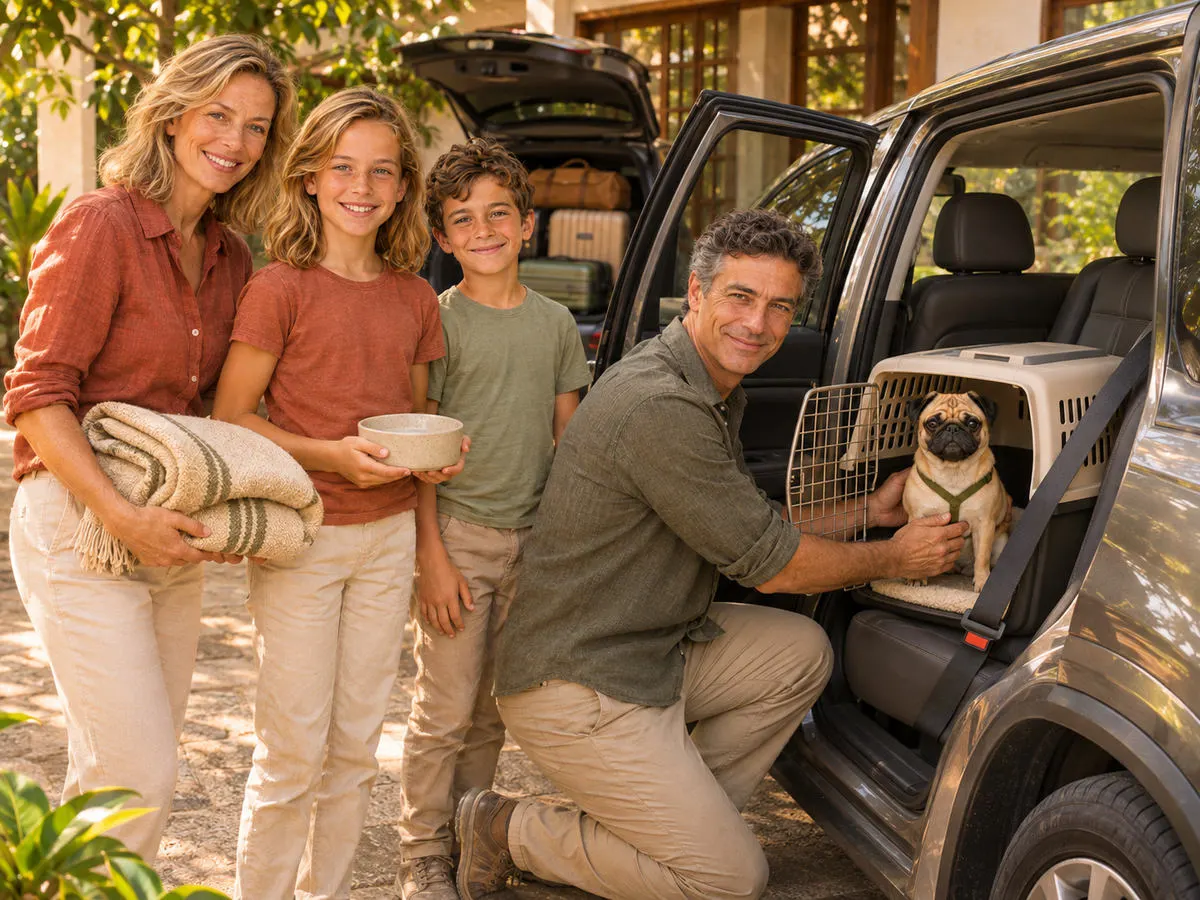
Illustrative images. The pictures in this guide are illustrations based on the real place, not photographs, and may differ from it.



Travel with pets
Where to stay with a pet
Pet friendly or “accepts pet”: conditions vary, and the pet-stay agreement should be requested before booking.
Finding a place to sleep is the first decision when traveling with a pet, and the one that most affects the rest of the itinerary. There are lodgings prepared to receive dogs and cats, lodgings that accept them in some cases, and lodgings that do not accept them.
Conditions vary a lot from one place to another. For that reason, ask the lodging for the pet policy agreement before booking, read the terms and confirm your pet’s spot. Only after that is it worth finalizing the reservation.

Pet friendly and “accepts pets”: what’s the difference
The two expressions appear side by side in listings, but they do not mean the same thing.
Pet friendly. The accommodation has policies and facilities designed to receive animals. There are areas open to the pet, items like a bed, bowls and waste bags, more slots for pets and specific rules for coexistence between guests traveling with animals and those without.
Accepts pets. The accommodation is not pet friendly, but accepts the animal as an exception and under conditions. The guest checks before booking, the slots for animals are limited, size and temperament are specified, only some rooms allow pets, there are prohibited areas such as the pool, and there may be a fee. The stay can be terminated if the animal disturbs other guests.
One is not better than the other. A small, calm dog can do very well in an inn that accepts pets as an exception, and a large, energetic dog needs the space of a pet-friendly house. What matters is knowing in advance which of the two situations your reservation falls under.
When the listing is not clear, a direct question solves it: is the place pet friendly or does it accept pets only as an exception? The answer already shows what to expect regarding areas, availability and coexistence with other guests.

The pet-stay agreement
It is the document in which the accommodation puts in writing the conditions for receiving the animal. Some places call it a pet policy or pet regulations. Generally, the guest reads, agrees and signs it at booking or on arrival.
The agreement usually states the species and sizes accepted; the number of animals per room and the capacity of the property; which rooms accept pets; prohibited areas such as the pool, restaurant and breakfast room; the fee and how it is charged; the guest’s responsibility for damage to furniture, bedding and garden; rules of behavior such as barking, use of a leash and waste removal; and what the accommodation is not responsible for, such as escape, fights between animals and the pet’s health problems.
Asking for and reading it before booking avoids the two most common problems: arriving and discovering the animal doesn’t fit the conditions, or being charged for something that wasn’t agreed. If the agreement foresees termination of the stay when the animal disturbs others, honestly consider how your pet behaves away from home.
If the accommodation does not have a prepared agreement, ask that the conditions be sent in writing, by message or e-mail, and keep the reply together with the booking confirmation. Agreements made only verbally tend to become misunderstandings on arrival.

What to ask before booking
Species and size. Not every place that receives dogs accepts cats, and size limits vary. Provide the breed, size and age of the animal.
Number and availability. Ask how many animals are allowed per room and whether there is availability for your pet on the travel dates. The pet’s slot is confirmed separately from the room reservation.
Fee. Find out whether there is a charge for the animal, whether it is per night or per stay and what it includes. Rates vary: ask for the current table.
Areas. Ask where the animal may circulate, where it should relieve itself and whether it is allowed in the breakfast room.
Alone in the room. Many accommodations do not allow leaving the animal alone because of barking and possible damage. If this is the rule, the itinerary must include walks where the pet goes along or a service to care for it for a few hours.
It’s also worth asking about the room’s flooring, whether there is a fenced area and the nearest veterinary clinic.

What to bring and good manners at the accommodation
Even in places that provide items for the pet, bring your usual bed or blanket, water and food bowls, the regular food, training pads or the litter box, waste bags, a towel to dry paws and the vaccination card. Items that smell like home help the animal calm down in the new room.
On arrival, take a walk with the animal through the allowed areas before entering the room so it can get to know the smells and relieve itself. In the room, choose a fixed corner for the bed, water and training pad.
For coexistence, simple rules apply: leash in common areas, immediate removal of feces, keeping the animal off beds and sofas when the house requests it, and attention to barking, especially early morning and at night. Not every guest likes animals; some are afraid or allergic.
On departure, a quick check of the room and informing staff of any damage before they discover it help maintain a good relationship. Each guest’s behavior determines whether a place continues to accept animals.

Inn, hotel, chalet or house
City or beach inns and hotels usually accept small animals in some rooms, with circulation limited to outdoor areas.
Mountain and countryside chalets and inns with independent entrances and lawns give the animal more freedom and less contact with other guests. This format is the simplest for a first trip.
Farm hotels and rural inns have plenty of space, but also horses, chickens and other animals, and not every dog copes well with them.
Vacation homes and apartments depend on the owner and, in buildings, on the condominium rules. In these cases too, ask for the conditions in writing before finalizing the booking.
Frequently asked questions
What is the difference between a pet-friendly hotel and a hotel that accepts pets?
A pet-friendly accommodation has policies and facilities designed for animals, with open areas and pet items. One that accepts pets receives the animal as an exception, with prior consultation, few slots, defined size limits and prohibited areas.
What is the pet-stay agreement?
It is the document with the conditions for receiving the animal: size, availability, rooms, prohibited areas, fee, liability for damages and rules of behavior. Ask the accommodation for the pet-stay agreement before booking and confirm only after reading it.
Can an inn charge a fee for the pet?
They may, and many do charge, per night or per stay. The fee and what it includes must be specified in the lodging agreement; ask in advance and request the current rate table.
Can I leave my dog alone in the room?
Only if the lodging permits it. Many prohibit this because of barking and damage, and some require the animal to be kept in a carrier when the guest leaves.
Do lodgings accept cats?
Some accept them, others only accept dogs. State the species when inquiring and bring the litter box and the carrier.
Can the lodging require a guest to leave because of the animal?
Yes, when the agreement provides for termination of the stay if the animal disturbs other guests or violates the rules. That’s why it’s important to read the terms before booking.
More activities in Travel with pets




Beyond the guide


