Conde
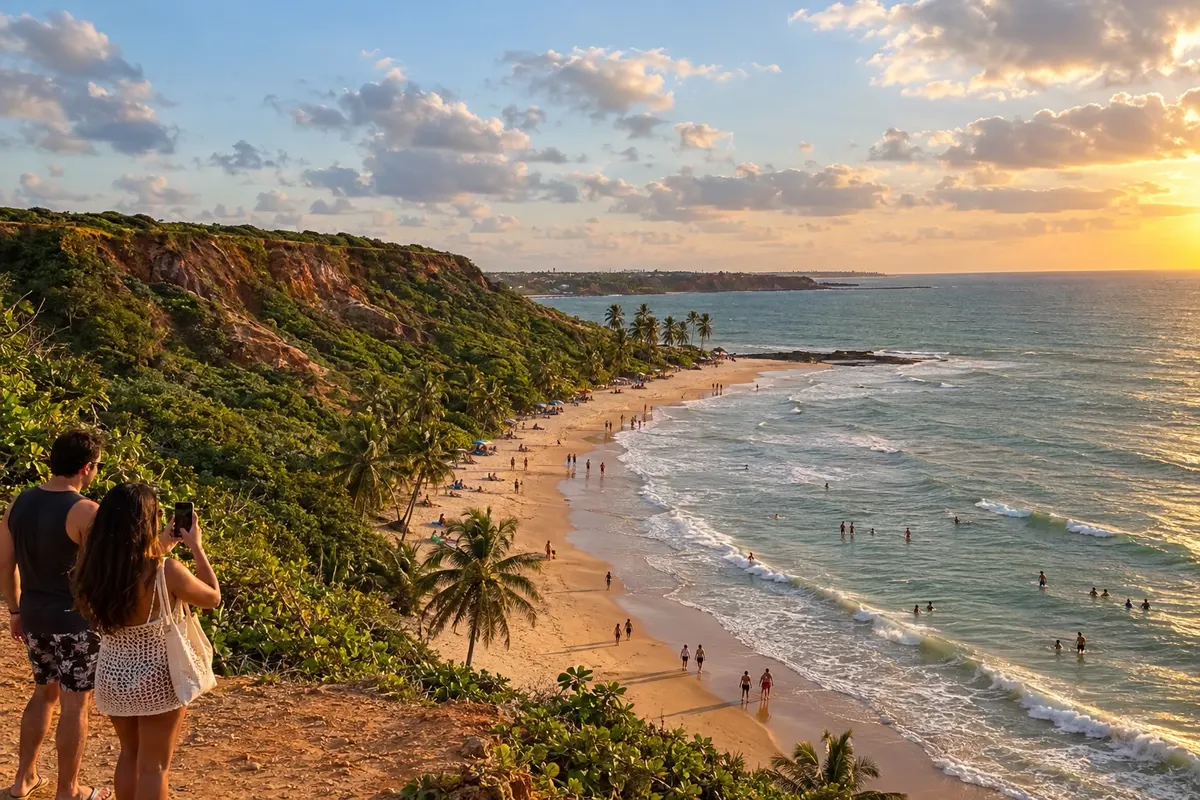
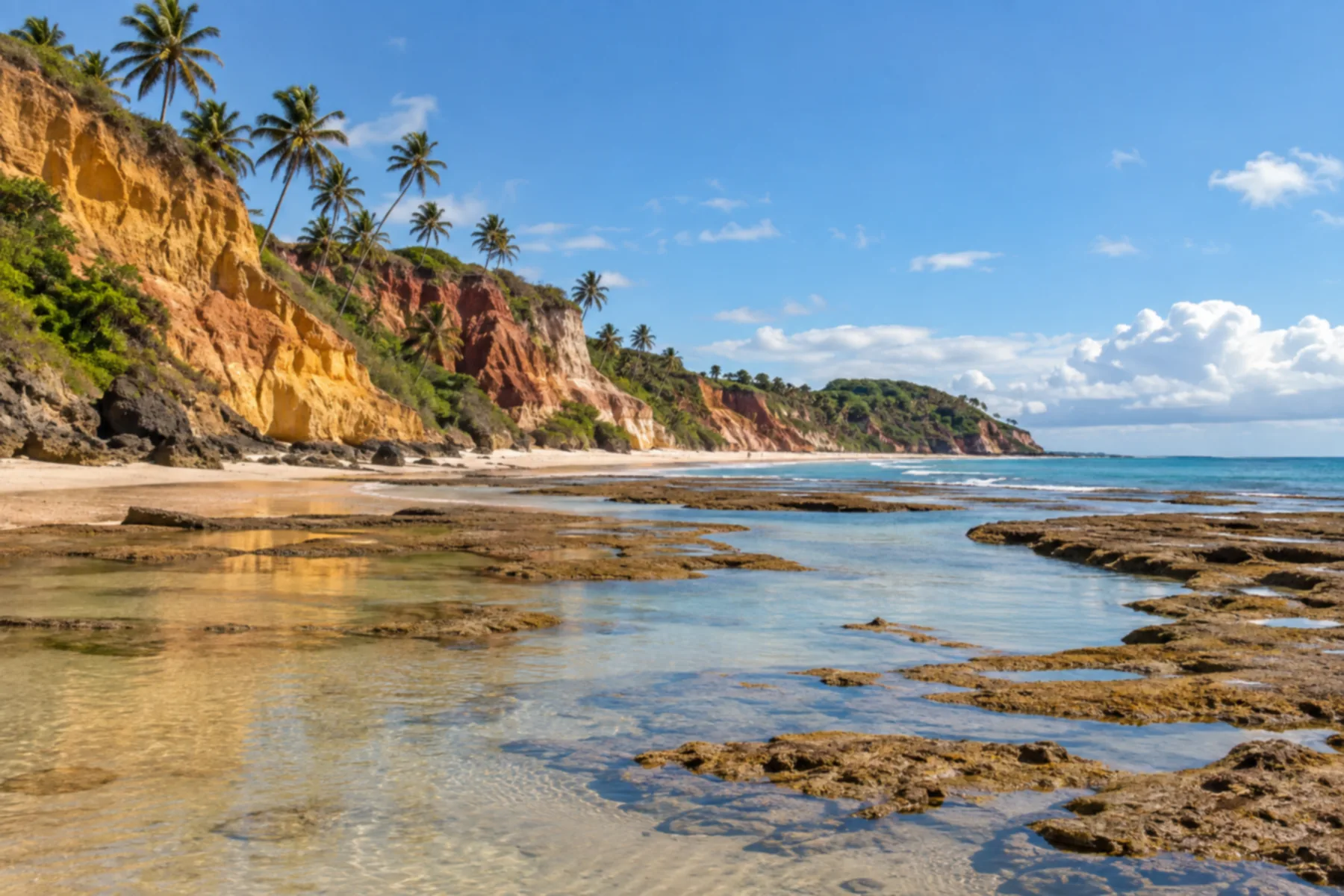
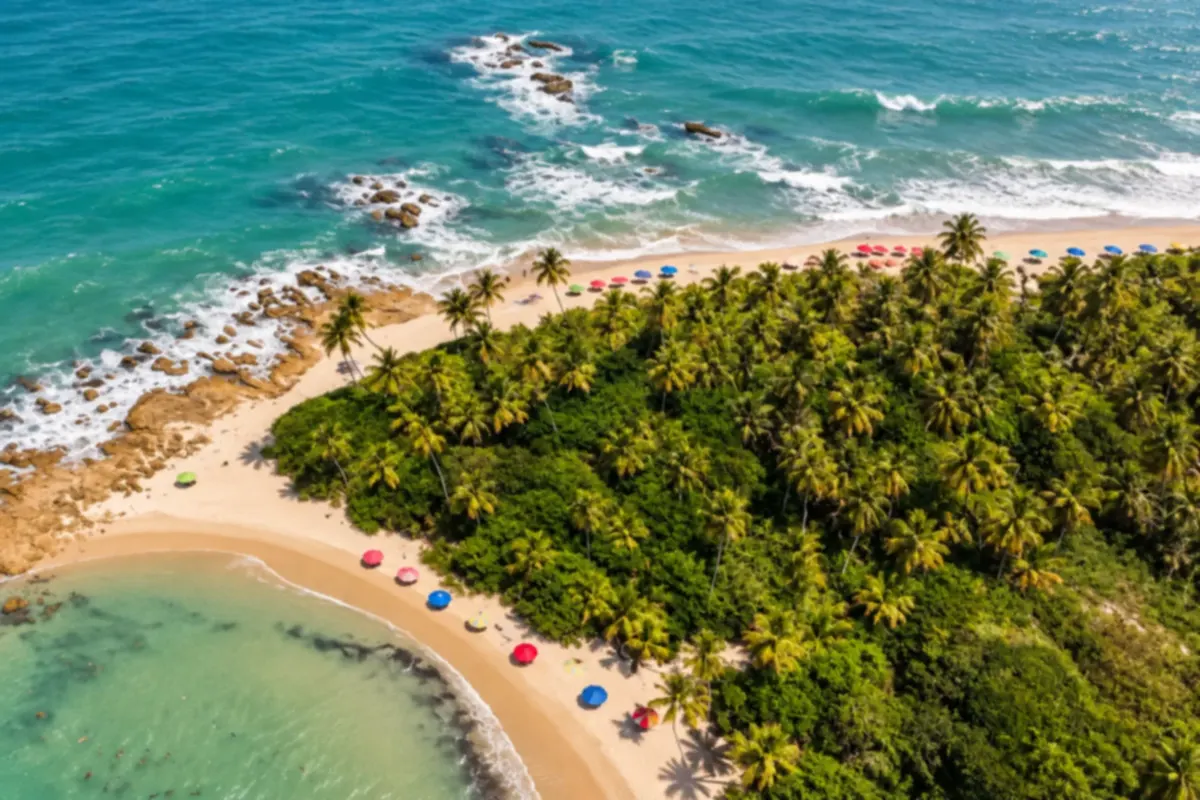
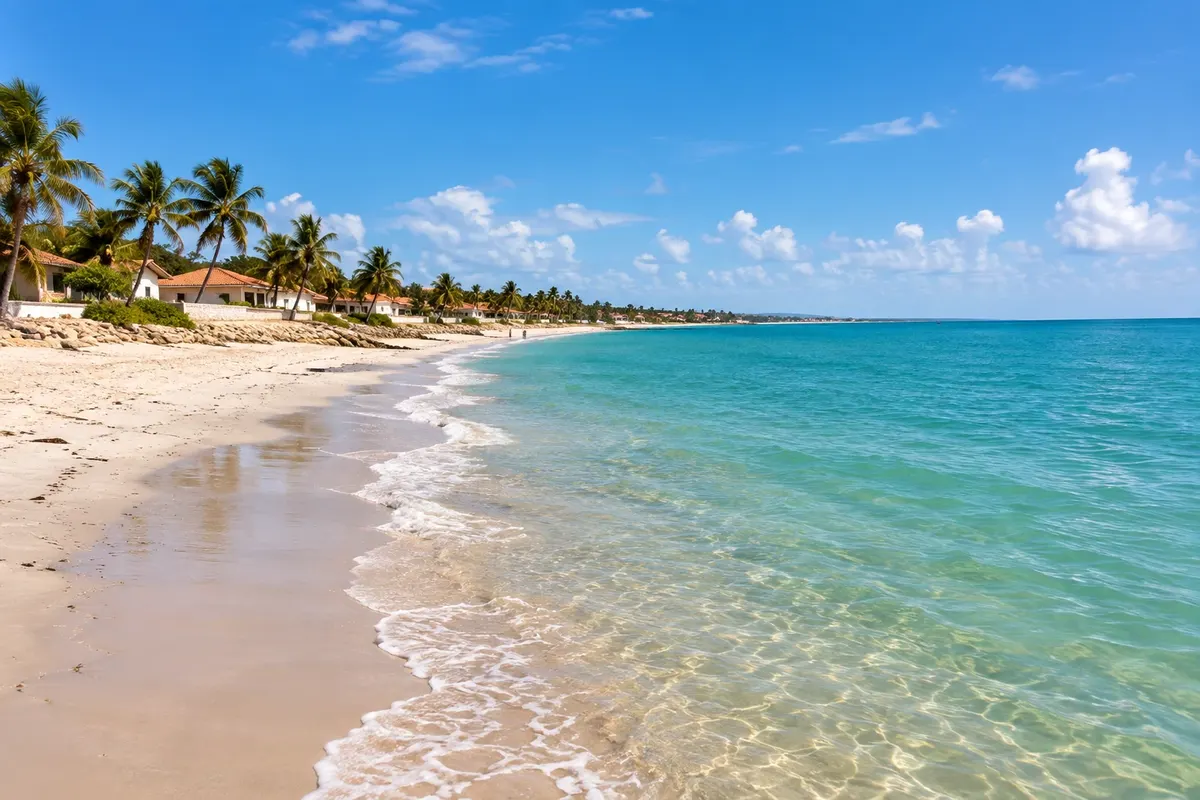
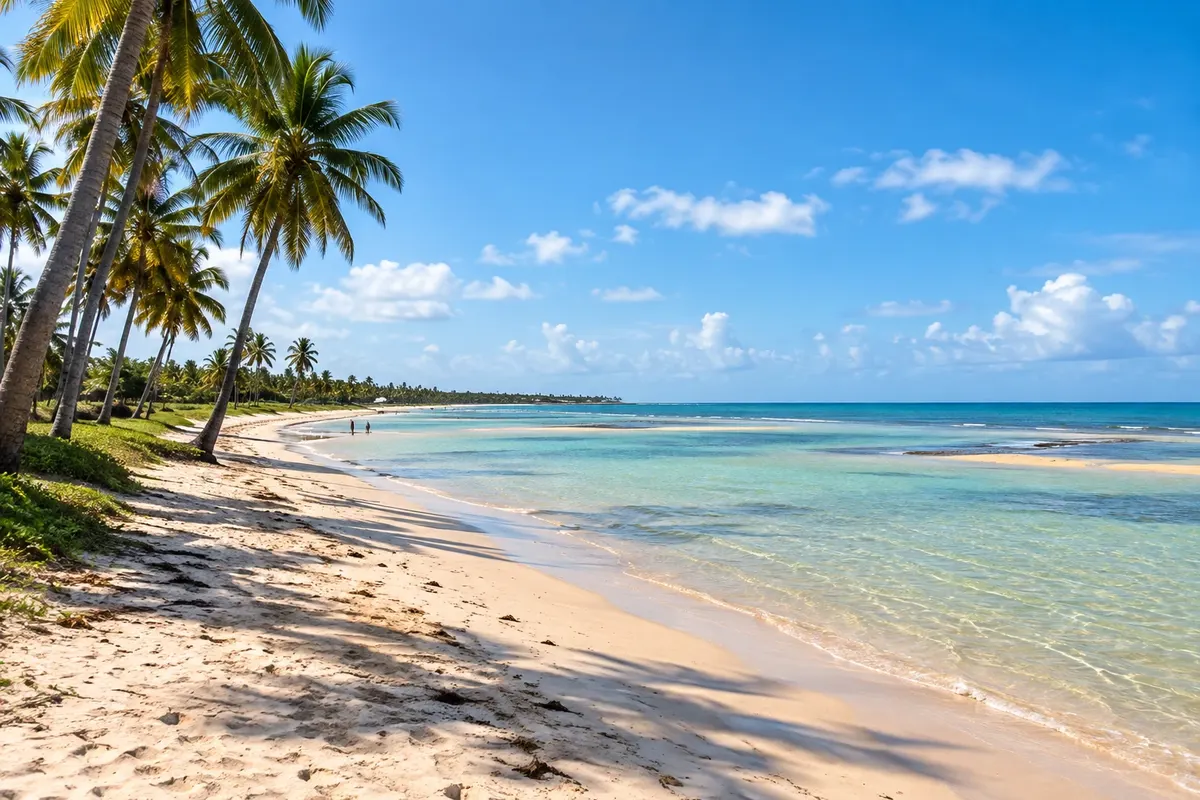
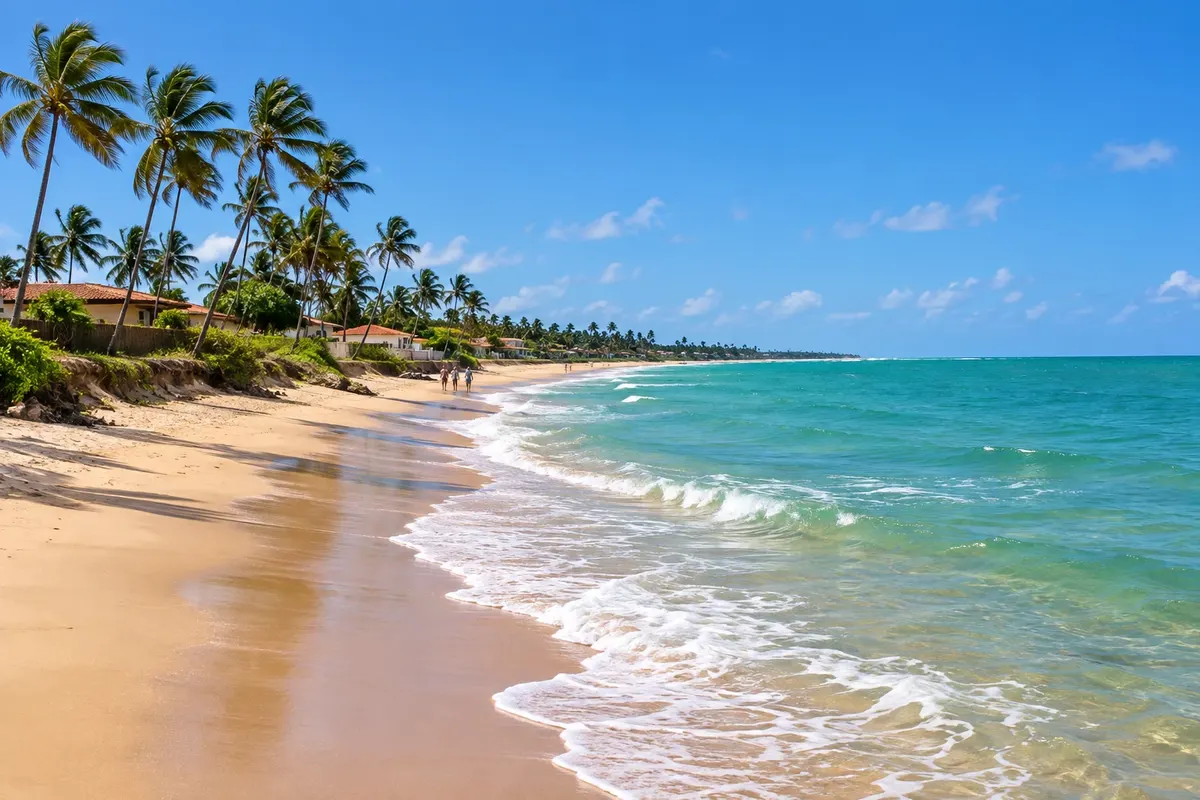
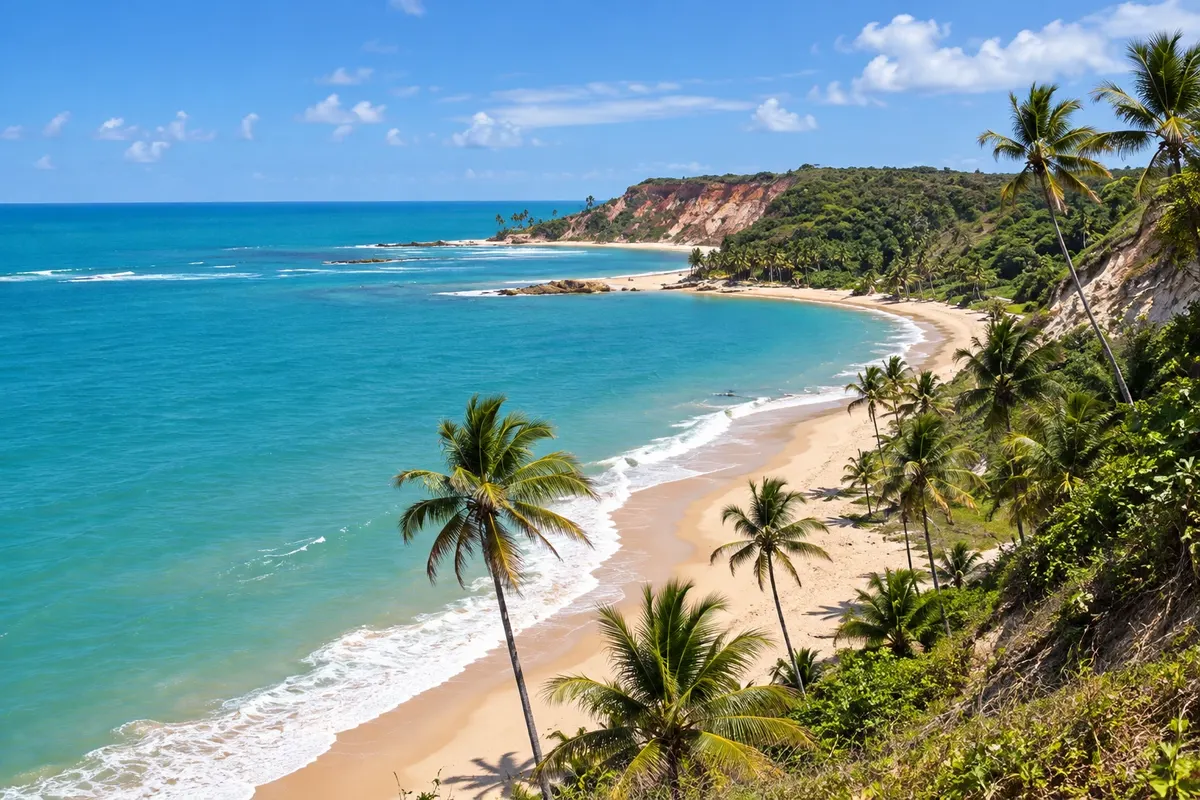
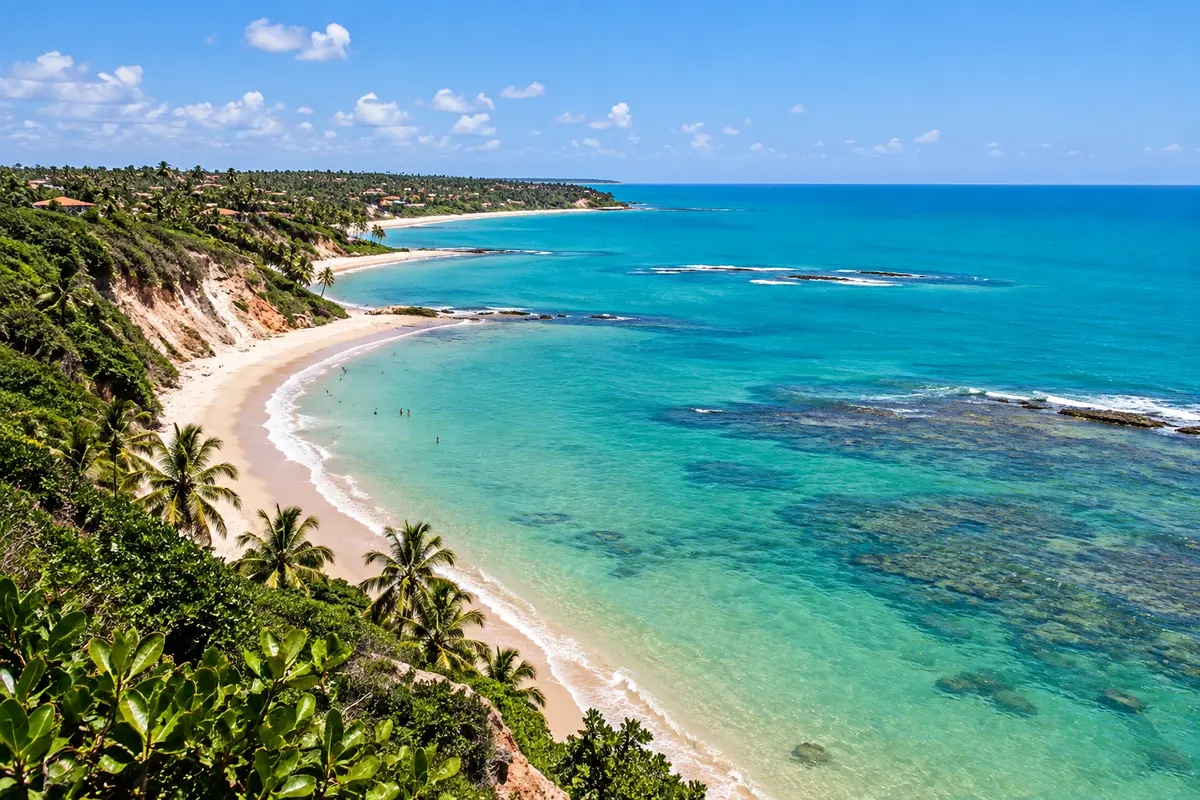
Conde brings together beaches with colorful cliffs, coconut groves and coves on the south coast of Paraíba. Coqueirinho, Tambaba and Tabatinga show different sides of the coast, between stretches of sand and rock formations.
Antarctica
PB · Brazil
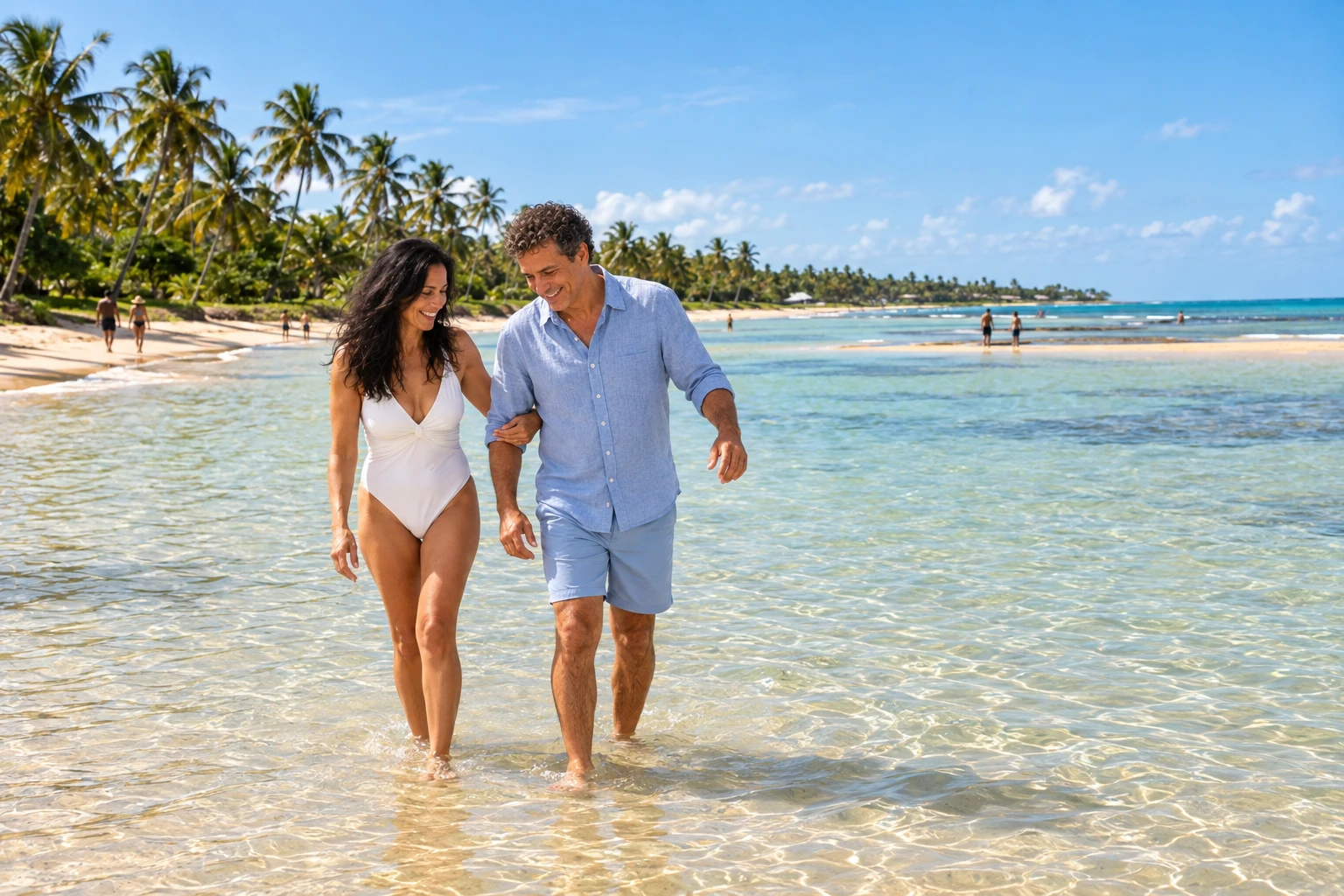
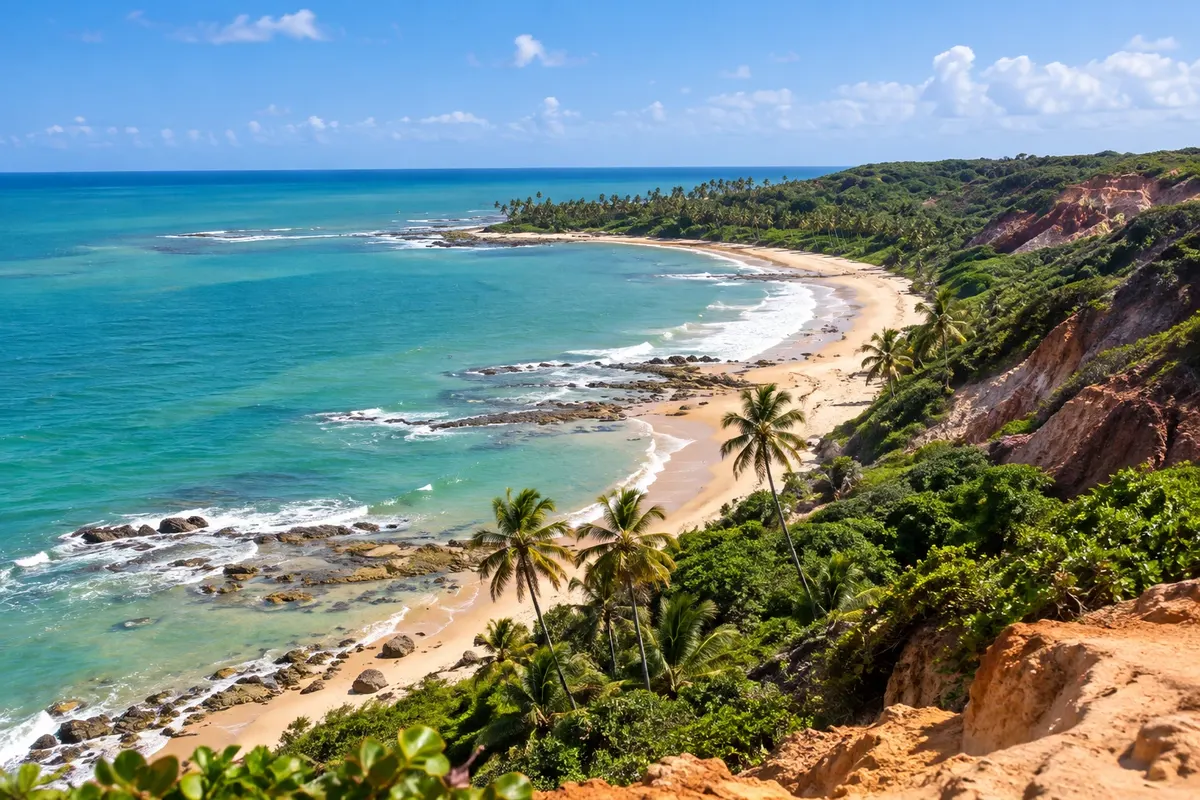
In the photo: Praia de Coqueirinho: turquoise waters and palm trees
Illustrative images. The pictures in this guide are illustrations based on the real place, not photographs, and may differ from it.
Get to know the place
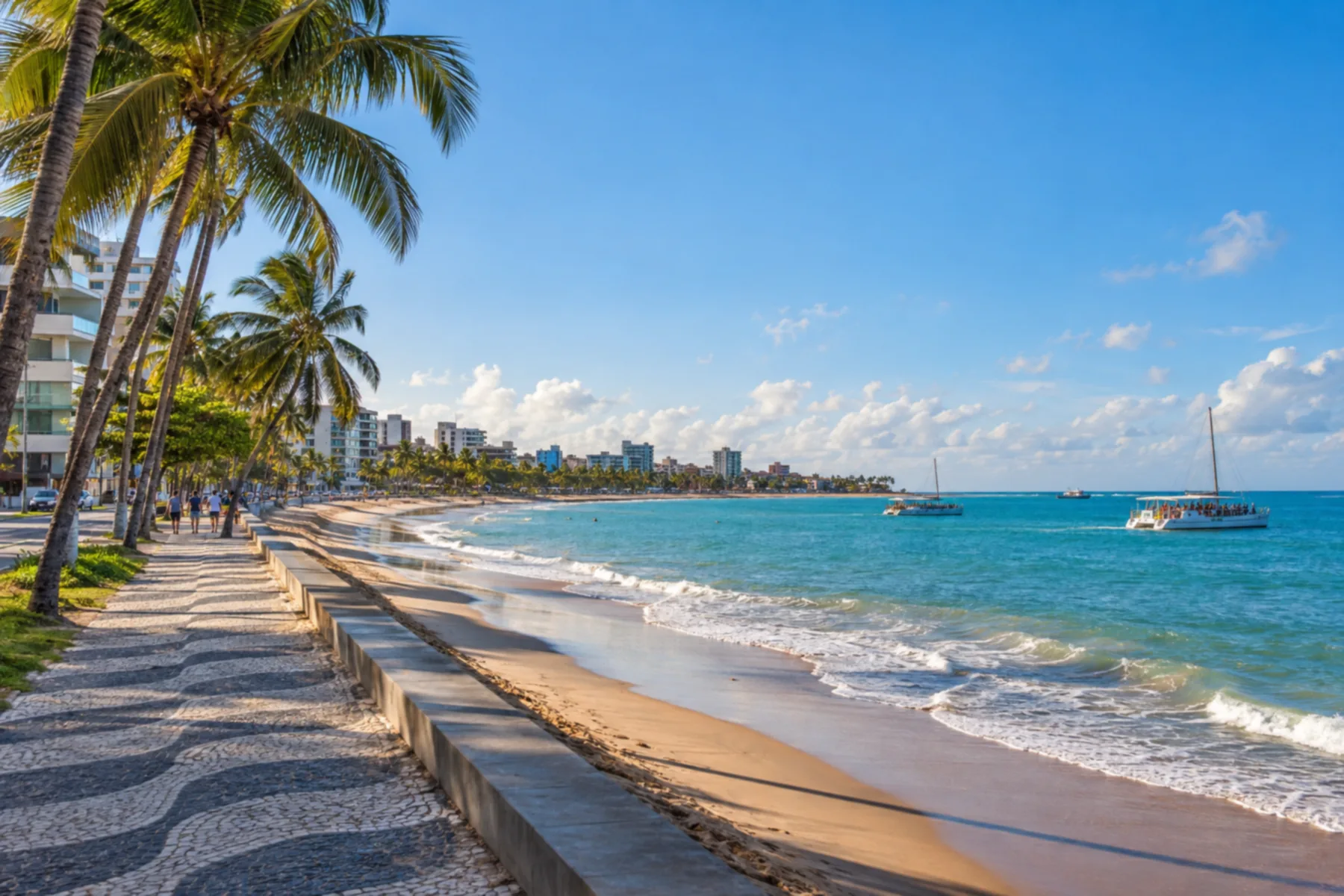
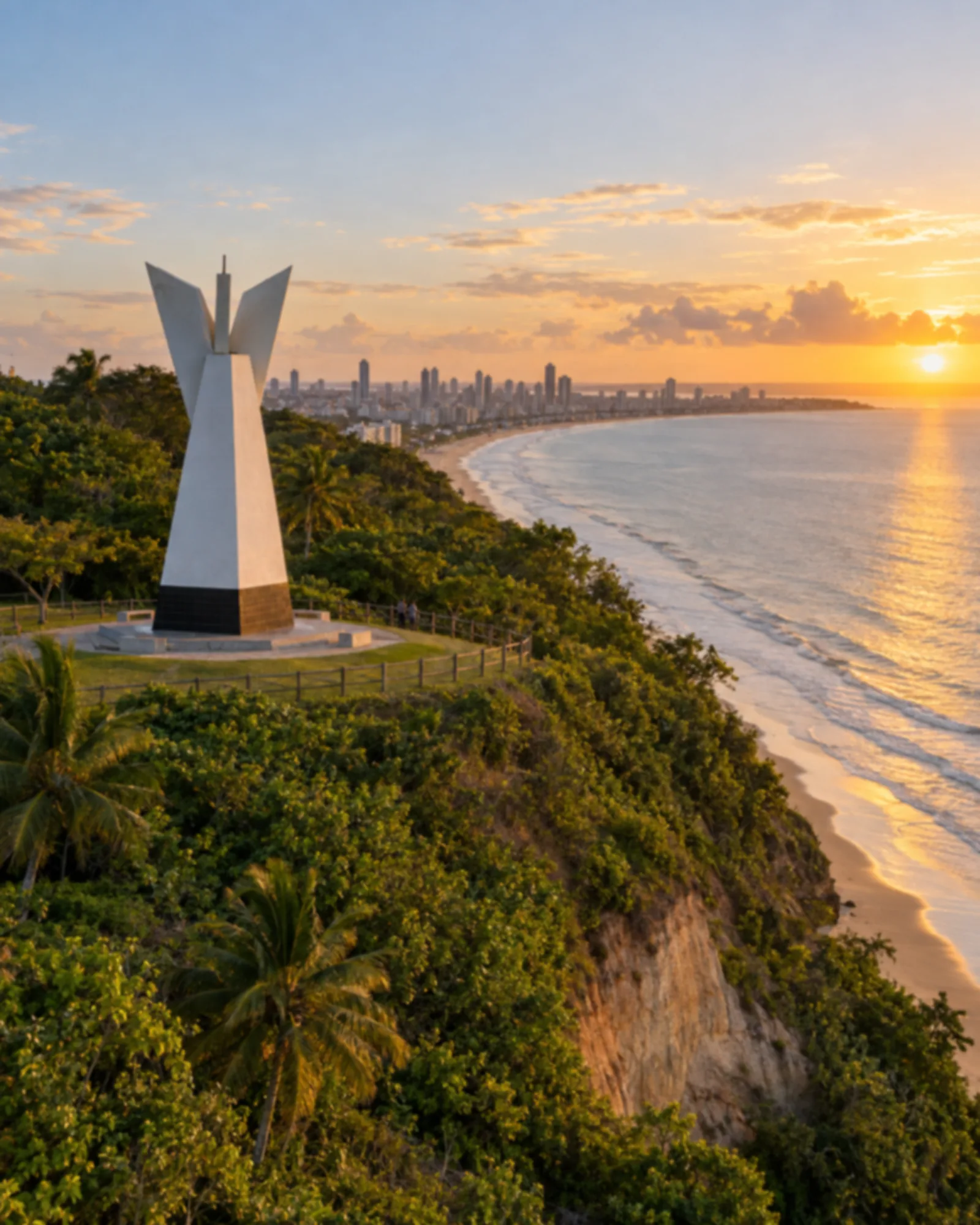
In less than an hour from João Pessoa, you swap the city waterfront for a string of beaches tucked between colorful cliffs and coconut groves. The Costa do Conde buggy tour links viewpoints, natural pools and the famous Tambaba, the best-known nudist beach in Brazil. And there is a geographic bonus: this is where you find Ponta do Seixas, the easternmost point of the Americas, where the sun rises first on the continent.
This destination brings together 3 cities: Conde, Pitimbu, Alhandra.
A look at the place
These pictures are illustrations based on the real place, not photographs. They may differ from the place.
Click the picture to enlarge it.
Travelers' photos
One destination, many paths
Start with one city or combine several in your itinerary.
Map: @svg-maps/brazil, CC BY 4.0
Presidente Castro Pinto Airport (JPA), in Bayeux/João Pessoa, with access to the south coast via the PB-008 and BR-101 highways.
Conde brings together beaches with colorful cliffs, coconut groves and coves on the south coast of Paraíba. Coqueirinho, Tambaba and Tabatinga show different sides of the coast, between stretches of sand and rock formations.
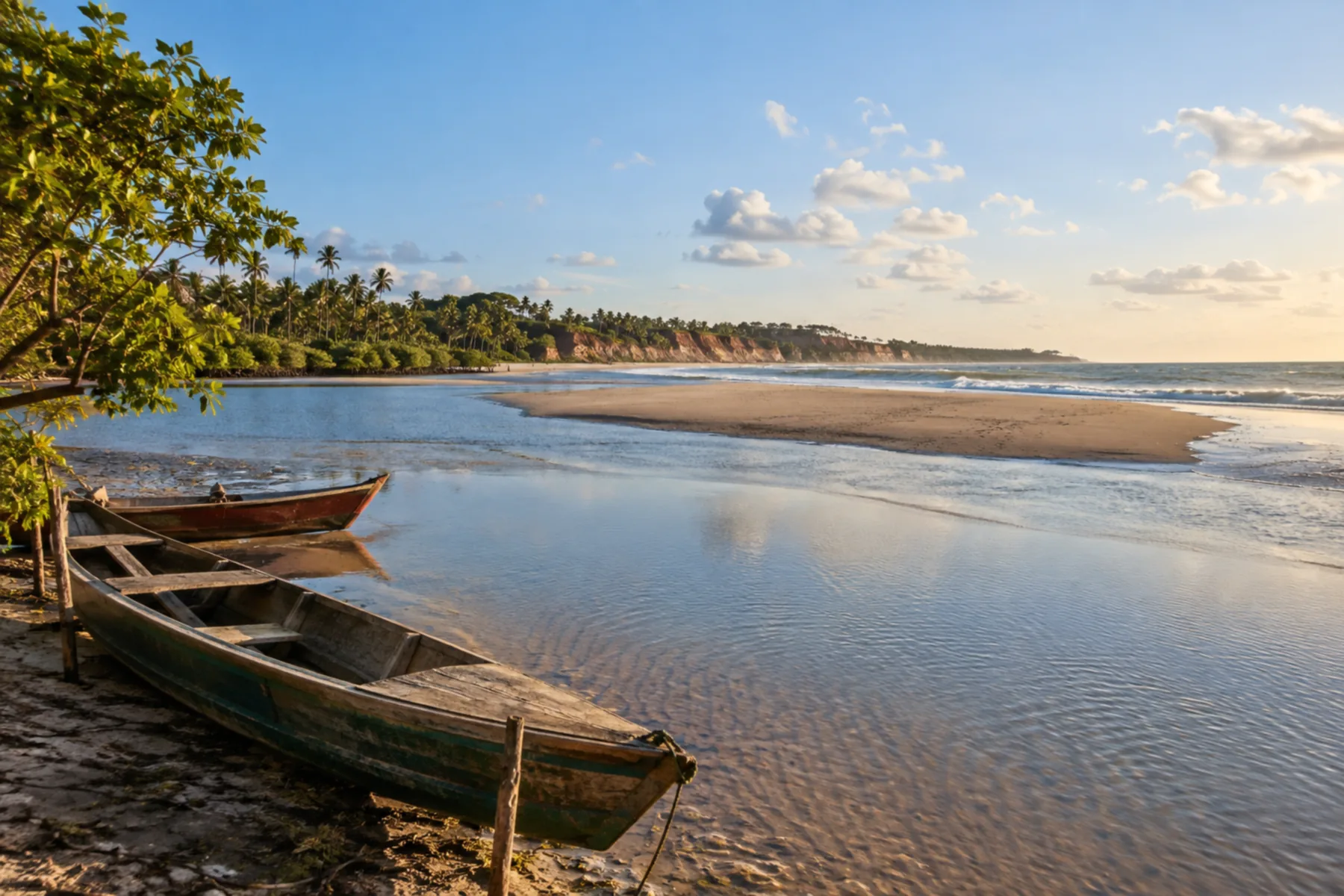
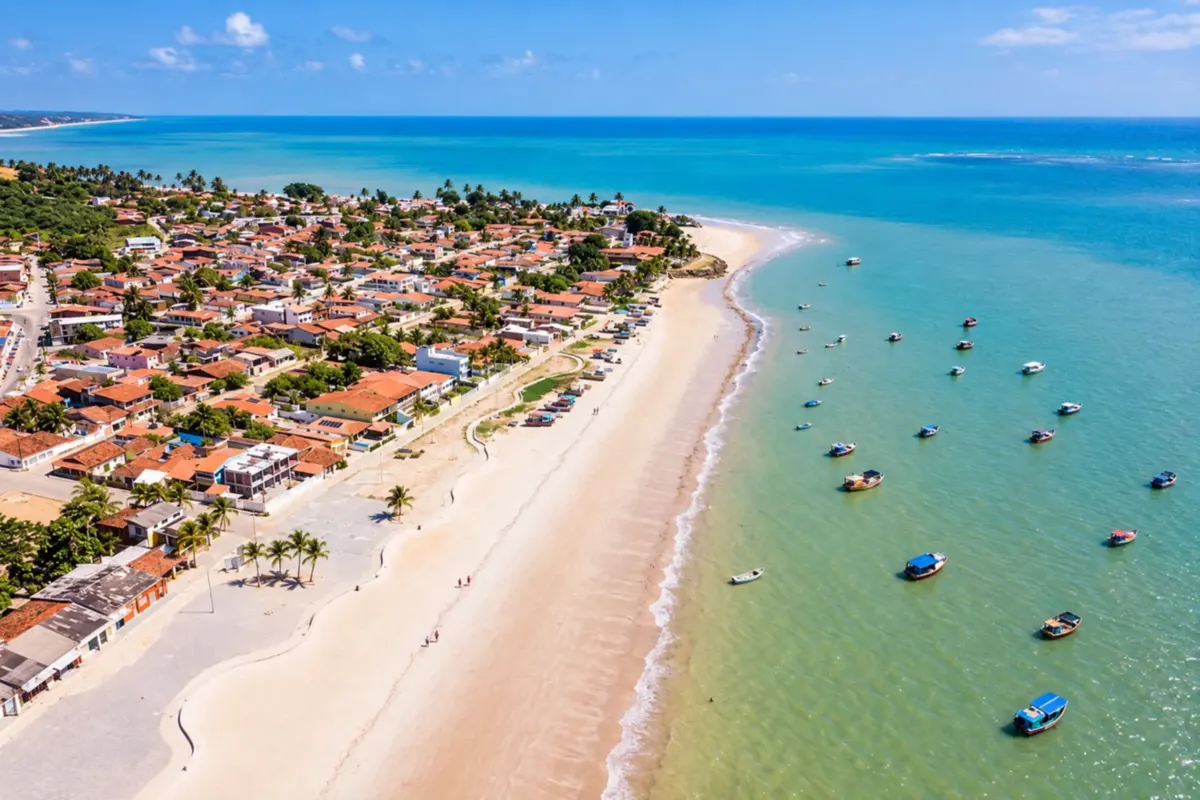
Pitimbu is known for its fishing and beaches on the south coast of Paraíba. Boats along the shore, coconut groves and rivers meeting the sea make up the town's coastal scenery.
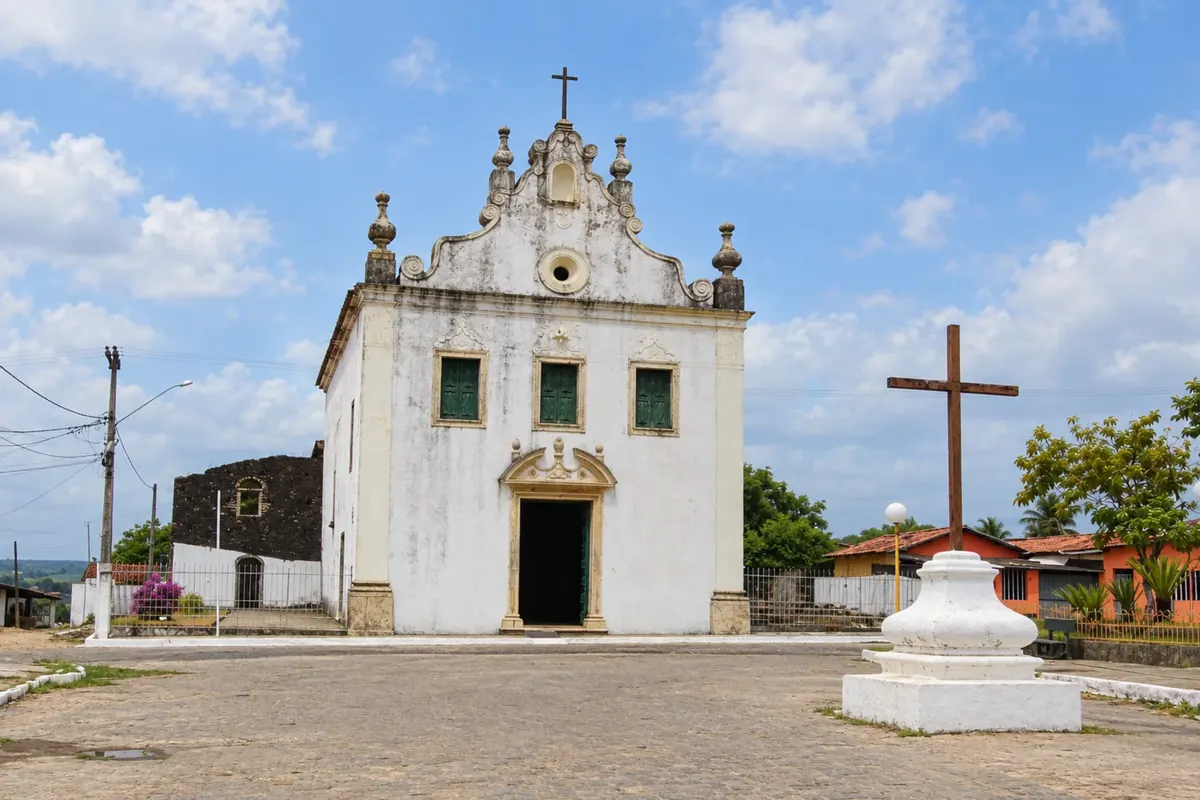
Alhandra preserves links to its Indigenous origins and to the tradition of Jurema Sagrada (an Afro-Indigenous spiritual practice). The Igreja de Nossa Senhora da Assunção (church) is part of the downtown landscape and of the town's religious memory in Paraíba.
The local experience
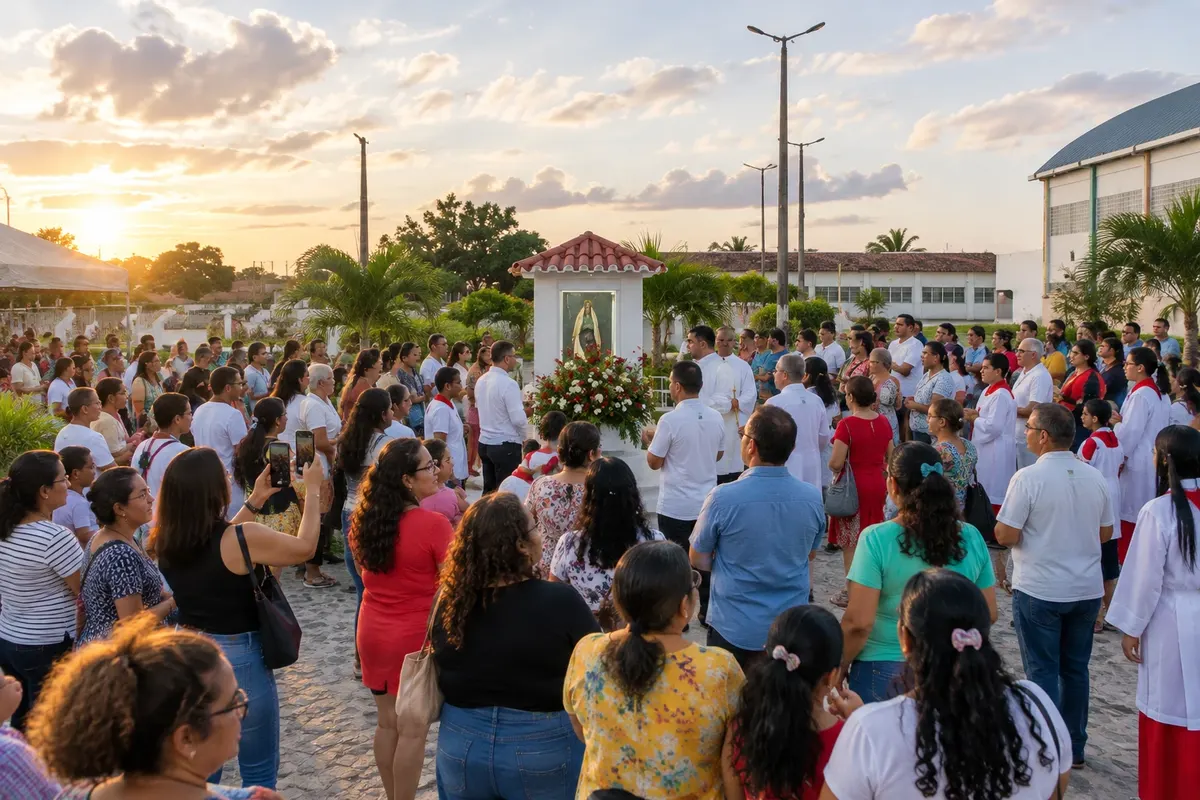
Devotional space at Praça Inácio Gabriel, in Mata Redonda, district of Alhandra. The small monument with the image of the Immaculate Heart of Maria was given to the community as a religious tourism site.
Discover Gruta do Imaculado Coração de Maria
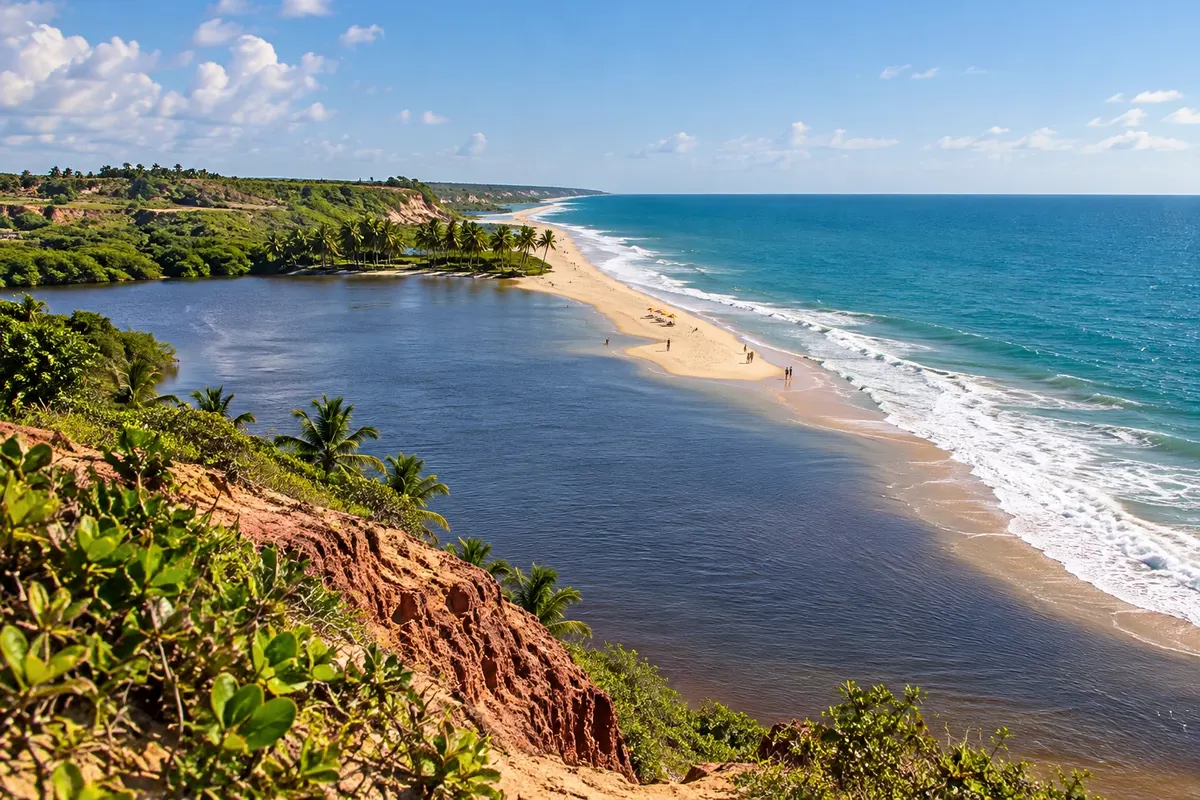
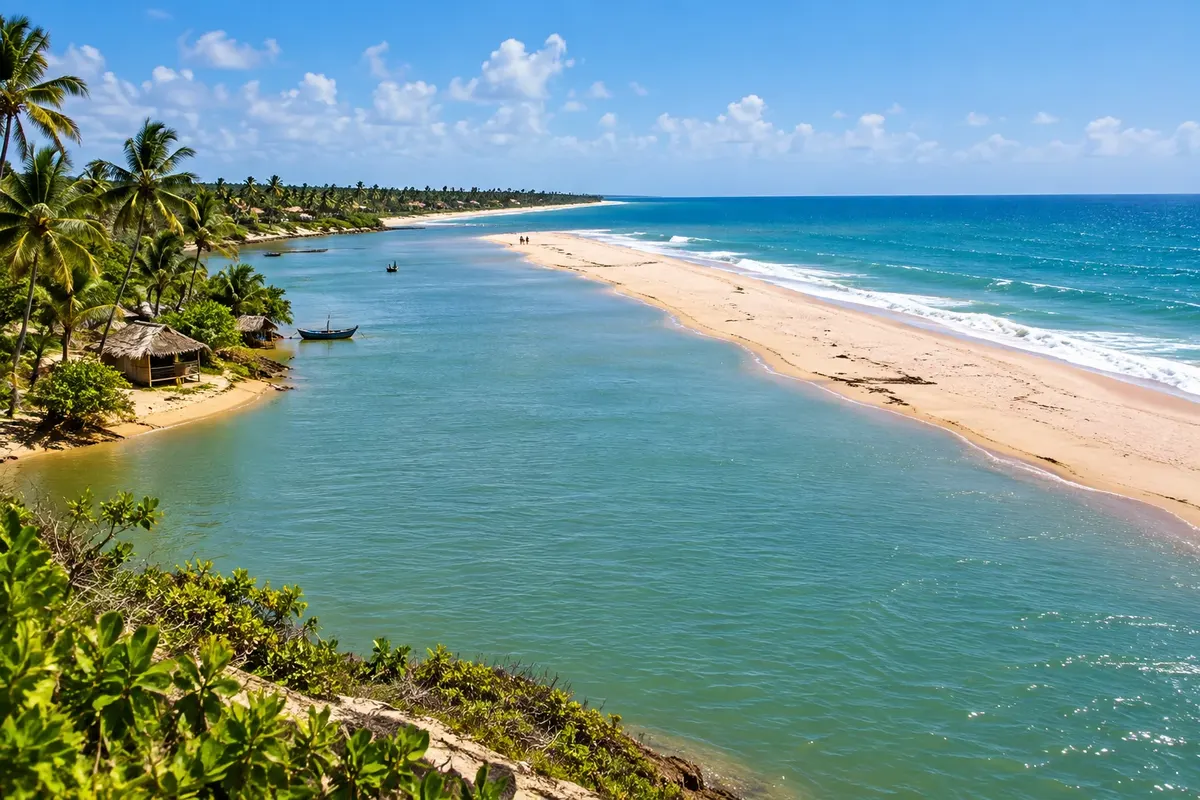
A narrow strip of sand where the dark mangrove waters of a river meet the sea, considered one of the most beautiful beaches on the Paraíba coast. It has natural pools and calm stretches for swimming.
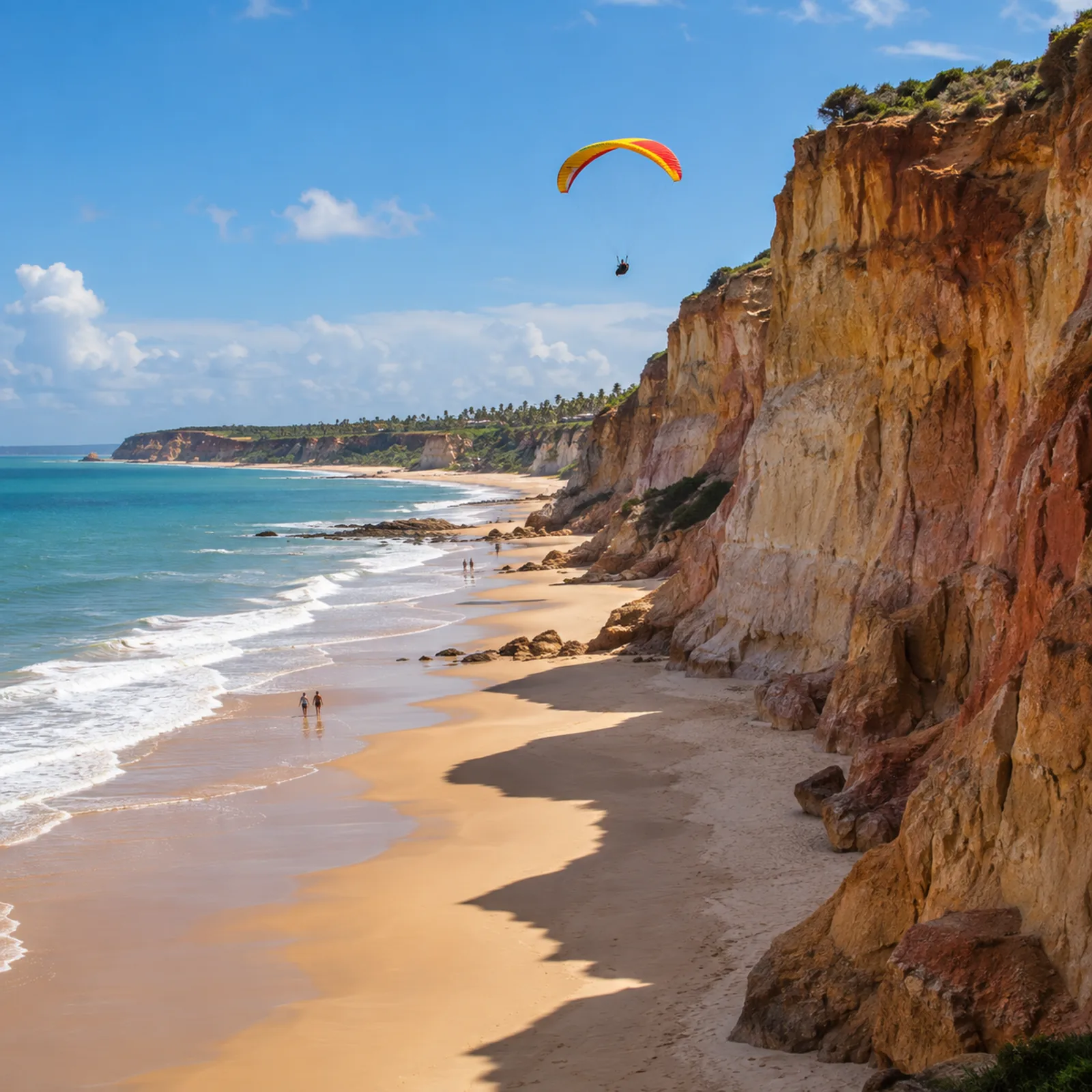
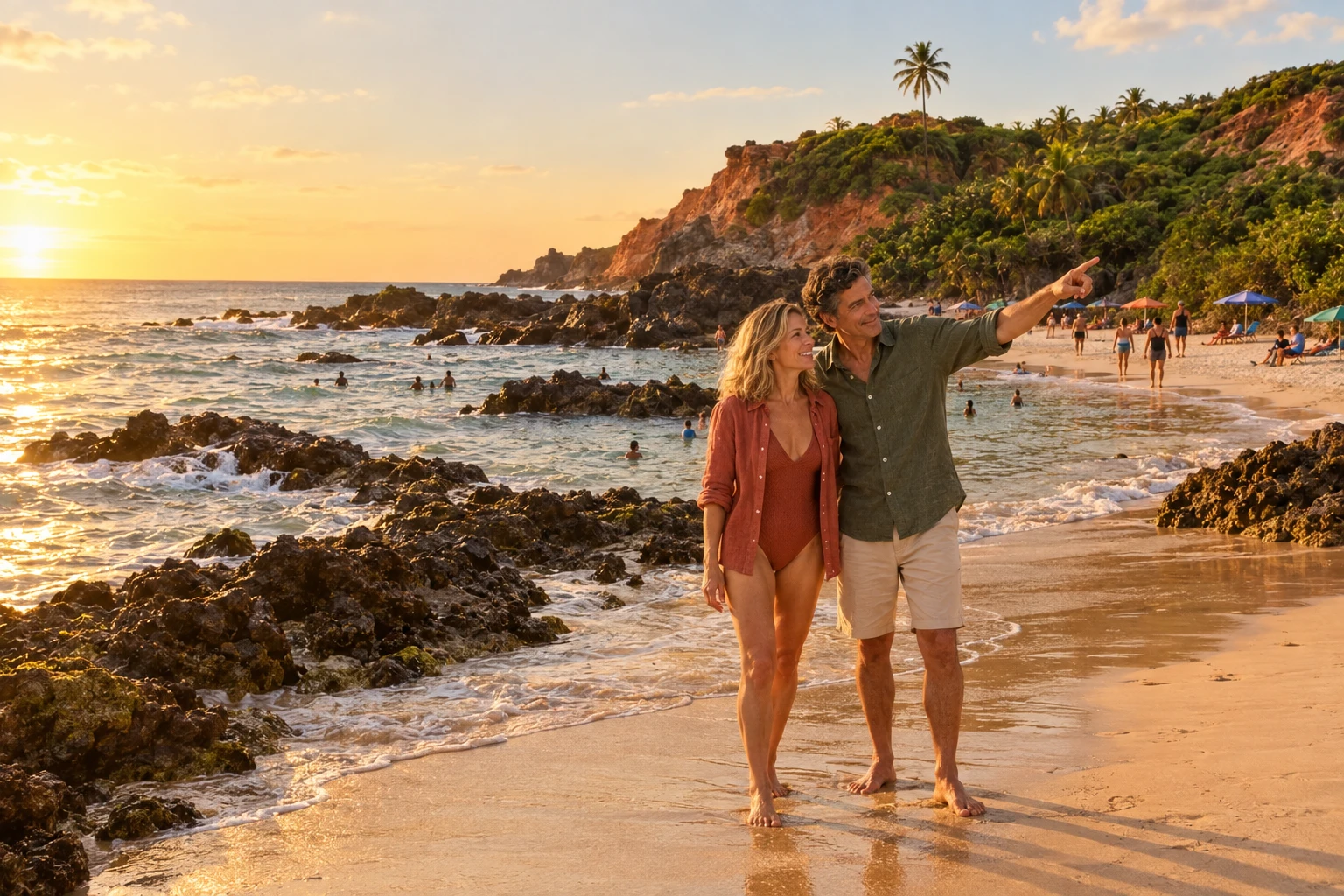
Colorful cliffs, coconut palms and warm tide pools at low tide make it one of the most beautiful beaches on the Paraíba coast. There are viewpoints on the road just above.
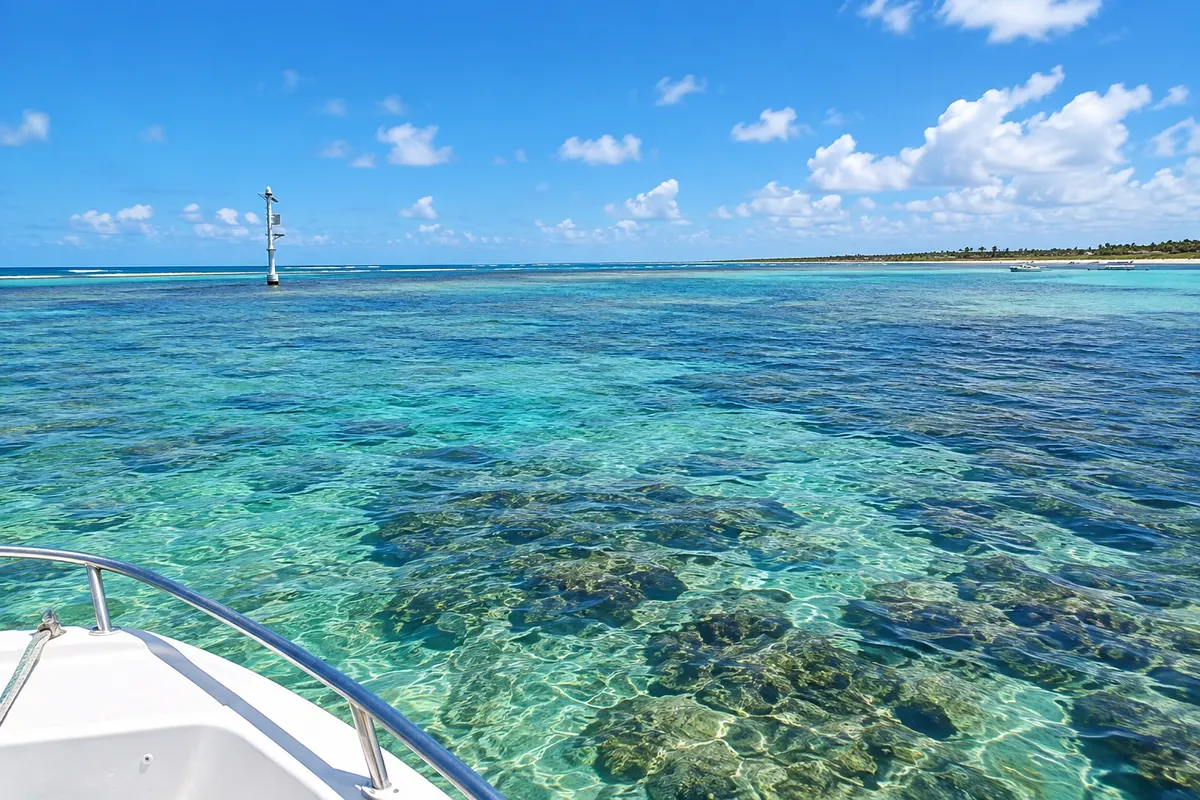
Formed by the reefs off the town beach, they lie between 500 m and 1 km from the shore. You visit them in small boats at low tide, when the water is shallow and clear.
Discover Piscinas Naturais de Pitimbu
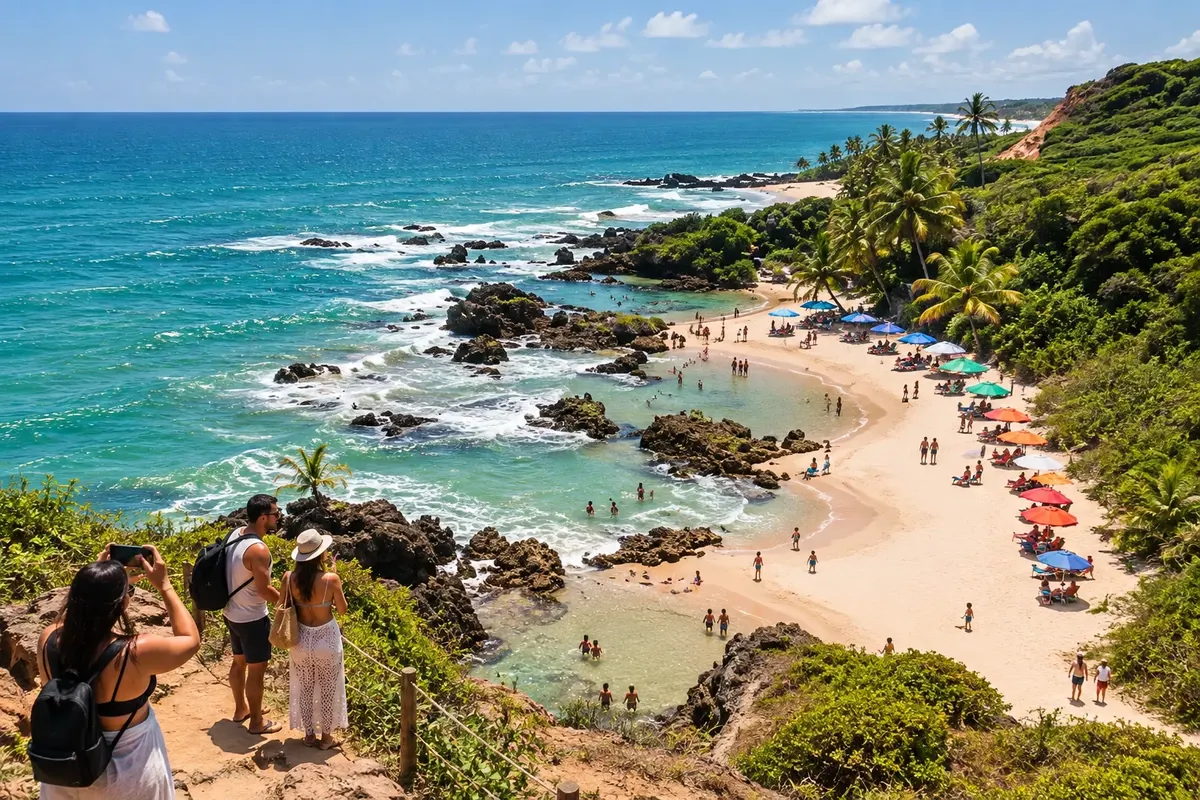
Divided into a regular section and a nudist section, it is one of the best-known nudist beaches in the country. The scenery is a cove enclosed by cliffs and forest.
A beach in a quiet neighborhood, with turquoise-blue, usually calm water and a wide strip of fine, light sand. The middle forms a point, and the southern part is lined with coconut groves.
A beach with a quiet, village atmosphere, basic facilities and generally calm water. At low tide, sandbanks form shallow areas for swimming.
The busiest beach on the Costa do Conde, with beach shacks, pousadas (guesthouses) and calm water near the river mouth. It is usually the base for exploring the neighboring beaches.
Known for its tall cliffs and the viewpoint where paragliding and hang-gliding flights take off. At low tide the strip of sand gets very wide.
A small, quiet beach between Jacumã and Tabatinga, surrounded by coconut groves and popular with surfers. Access is by a sandy path down the slope.
Where the Rio Gramame (river) meets the sea, on the border between João Pessoa and Conde, forming shallow pools that are great for children. You can take a canoe ride on the river.
To choose before you go
Where each tour starts, how long it takes, how it is done, what is included and the price range.
The buggy picks up the group at the hotel in João Pessoa and follows PB-008 to the southern coast. The first stop is usually Barra de Gramame, where the Rio Gramame meets the sea and you can bathe in both fresh and salt water. Then comes Praia do Amor, with the Pedra Furada, a photo spot. The route goes through Jacumã, Carapibus and Tabatinga and reaches Coqueirinho, where there are trails and viewpoints, such as Dedo de Deus. Tambaba is also on the circuit: it has a common beach stretch and another reserved for naturism. The buggies follow the roads, not the sand. The vehicle carries up to 4 people and the stop time at each beach is adjusted to the tide. The order of the beaches and stops varies between agencies, so confirm the itinerary when booking.
Stops: Barra de Gramame, Praia do Amor (Pedra Furada), Praia de Jacumã, Praia de Carapibus, Praia de Tabatinga, Praia de Coqueirinho, Mirante Dedo de Deus, Mirante das Tartarugas, Castelo da Princesa, Shopping Rural Tambaba, Praia de Tambaba.
Includes: Usually includes transfers from hotels in Tambaú, Cabo Branco and Manaíra, a buggy with sound system and cooler, and a driver accredited as a guide. Paid separately: meals, drinks, ice and optionals such as quad biking and zipline. Accommodation in other neighborhoods may have a transfer fee. The price is charged per buggy and varies with the number of passengers and the date; check the agency's current rates.
Tip: Book in advance, especially in high season; some agencies require at least one day. Bring swimwear, a towel, sunscreen and cash for the beach stalls. The route may change with the tide. In Tambaba, the naturist section has its own rules.
Best time: From September to March, with less rain; low tides favor the natural pools.
Agencies that run it: PNP Passeios e Serviços Ltda. (PNP Agência de Turismo), Passeios no Paraíso, Quality Receptivo.
This is the group version of the southern coastline tour. The van leaves João Pessoa in the morning and heads to the Costa do Conde with an accompanying guide. The longer stops for swimming are at Coqueirinho and Tambaba; Tabatinga completes the beach itinerary. Some routes include the viewpoints Dedo de Deus, Mirante da Tartaruga and Castelo da Princesa and a visit to Shopping Rural Tambaba, where there are shops selling sweets, cachaças, nuts and handicrafts, with tastings. If you want to see stretches the van doesn’t reach, you can hire an optional buggy or quad bike during the day. It’s a more economical alternative to a private buggy, with the schedule and order of stops set by the agency.
Stops: Praia de Coqueirinho, Praia de Tambaba, Praia de Tabatinga, Mirante Dedo de Deus, Mirante das Tartarugas, Castelo da Princesa, Shopping Rural Tambaba.
Includes: Generally: air‑conditioned transport and accompanying guide. Paid separately: food, drinks and optional extras such as buggy, quad bike and other tours offered during the day. The price is per person and agencies usually offer reduced rates for children; check the current price list.
Tip: In high season, book in advance. Bring swimwear, sunscreen and some cash for beach kiosks and optional extras. Those who don’t want to stay in Tambaba’s naturist area can use the regular stretch of beach.
Best time: From September to March, with less rain and low tides that are good for the natural pools.
The route is the same as the buggy tour, in a closed vehicle, recommended for those who want more comfort while traveling. The 4x4 leaves the hotel in João Pessoa in the morning and returns late afternoon. It stops at Barra de Gramame, Praia do Amor, Jacumã and the Mirante de Tabatinga, also called Mirante das Tartarugas. In Coqueirinho it goes into off-road trails up to the Dedo de Deus, and the tour includes Shopping Rural Tambaba, Castelo da Princesa and Tambaba. There are private options for up to 4 people and for larger groups, up to 6. Bathing time depends on the tide and the agency may change the order of stops.
Stops: Barra de Gramame, Praia do Amor, Praia de Jacumã, Mirante de Tabatinga (Mirante das Tartarugas), Praia de Coqueirinho, Mirante Dedo de Deus, Castelo da Princesa, Shopping Rural Tambaba, Praia de Tambaba.
Includes: Usually includes hotel transfer on the João Pessoa coast, a 4x4 vehicle and a guide. Food and drinks are paid separately. The price is per vehicle, according to the number of people; check the agency's current rate table.
Tip: Check the vehicle capacity before booking (4 or 6 people) and confirm whether transfer from your neighborhood is included. Bring a towel, swimwear and sunscreen. In the naturist area of Tambaba, follow the local rules.
Best time: From September to March, with less rain.
Agencies that run it: PNP Passeios e Serviços Ltda. (PNP Agência de Turismo).
Tambaba is located in the municipality of Conde, about 30 km from João Pessoa, and is one of the beaches officially recognized for naturism in Brazil. The beach is divided into two sectors. The first has open access and allows swimwear; it is where the coqueiro on the rock is, much photographed, and where natural pools appear at low tide. Separated by a rock formation and a staircase, the second is exclusive for naturism: those who enter must remove their clothes and follow the rules. The main ones: men unaccompanied by women are not allowed in, except for specified exceptions; you must not photograph or film other people without their consent; and sexual behavior is not permitted. There is no age restriction. Most visitors arrive on south-coast tours, but you can also reach it by car via the PB-008.
Stops: Praia de Tambaba, Coconut tree on the rock, Natural pools of Tambaba, Naturist area of Tambaba.
Includes: The visit itself does not depend on a tour operator. Beach kiosks, drinks and food are paid separately. If you go on a tour, transport and the guide are provided by the agency; check what is included.
Tip: Those who do not intend to use the naturist area can use the regular stretch of beach, with the same cliff scenery. Read the site rules before entering the naturist section and respect the privacy of its visitors. Go at low tide to see the pools.
Best time: From September to March; at low tide the stretch of sand is larger and natural pools form.
The tour starts at the operators' base in Coqueirinho, with theoretical and practical riding training and helmets provided for everyone. Then the group follows in single file, with the guide ahead in another vehicle, along the dirt trails atop the cliffs. Stops include the viewpoints Dedo de Deus, das Tartarugas (Tabatinga) and do Castelo da Princesa, a cliff formation that gives the spot its name. Some routes go by Shopping Rural Tambaba, with tastings of sweets and cachaças. Each machine carries up to two people, and the tour is done in a small group, usually with only a few quad bikes. There are daily departures, with prior booking.
Stops: Mirante Dedo de Deus, Mirante das Tartarugas, Mirante do Castelo da Princesa, Shopping Rural Tambaba, Praia de Coqueirinho.
Includes: Usually includes training, helmet and guide. Transfer to Coqueirinho, food and drinks are paid separately, unless you buy a combo with the van tour. The price is per quad/ATV, for up to 2 people; check the current price list.
Tip: Age and licensing rules for driving vary from one operator to another; confirm when booking. Wear lightweight, closed clothing for the dust, goggles and sunscreen. Book in advance on holidays and in high season.
Best time: From September to March, with less rain and firmer trails.
Agencies that run it: PNP Passeios e Serviços Ltda. (PNP Agência de Turismo).
This is the buggy version of the Mirantes route and is for those who prefer not to drive or travel with small children. The vehicle leaves from Coqueirinho and carries 1 to 4 people along the trails on top of the cliff, with a licensed guide. Stops are at Mirante Dedo de Deus, in Coqueirinho, Mirante das Tartarugas, in Tabatinga, and Mirante do Castelo da Princesa, in Sítio Tambaba. The tour ends at Shopping Rural Tambaba, with tastings of sweets, cachaças and nuts and craft shops. Some operators offer the buggy as an alternative to the quadricycle, and there is no age restriction for children.
Stops: Mirante Dedo de Deus, Mirante das Tartarugas, Mirante do Castelo da Princesa, Shopping Rural Tambaba.
Includes: Usually includes a buggy with a licensed guide and a tasting of sweets. Transfer to Coqueirinho, food and drinks are paid separately. The price is per vehicle; check the current table.
Tip: Good option for families with small children and for groups of four. Coordinate the time with the operator and arrive at Coqueirinho in advance. Bring sunscreen and a hat.
Best time: From September to March; late afternoon is usually good for photos from the viewpoints.
Agencies that run it: PNP Passeios e Serviços Ltda. (PNP Agência de Turismo).
Barra de Gramame is the first beach on the south coast route and is located at the mouth of the Rio Gramame, on the border between João Pessoa and Conde. The river is calm, with fishing boats, mangroves and bars with tables at the water’s edge. It’s possible to rent a kayak or stand up paddle and take jangada trips to the sandbanks and the mangrove. To reach the open sea stretch you cross a shallow section of about 50 meters with water coming from the river. At low tide a shallow area of warm water forms, good for children. Buggy and 4x4 tours usually stop here early in the day.
Stops: Barra de Gramame, Rio Gramame, Sandbank at the mouth, Mangrove of the Rio Gramame.
Includes: Equipment rental and jangada rides are charged on site, separately, at a price agreed at the time. Food and drinks at the beach stalls are also paid separately.
Tip: Go at low tide for the shallow area and to cross the estuary calmly. Agree on price and time before boarding and use a life jacket. Bring sunscreen and flip-flops for the muddy stretch of the river.
Best time: From September to March, with less rain; mornings have lighter winds.
This is the route for the southern stretch of the Costa do Conde, which reaches Pitimbu. The vehicle departs from João Pessoa and first stops at the Mirante de Carapibus for photos. In Tabatinga there is a long stop for swimming. The final destination is Praia Bela, where the Rio Mucatu meets the sea, and the group has lunch and free time. There you can bathe in the river or the sea and do additional activities such as quad biking, kayaking and ziplining. Some agencies sell this route in a combo with quad biking across the viewpoints and through the Reserva do Abiaí. It’s a good choice for a second day in the region, with fewer stops and more beach time.
Stops: Mirante de Carapibus, Praia de Carapibus, Praia de Tabatinga, Praia Bela, Rio Mucatu.
Includes: Usually includes transfer, air‑conditioned vehicle and guide. Paid separately: lunch, drinks and activities such as quad biking, kayak and zipline. The price depends on the type of vehicle and the number of people; check the current rates.
Tip: Agree with the agency on the stop time at each beach. At Praia Bela, bring cash for parking if you go by car, and check the restaurants’ consumption rules before choosing a table.
Best time: From September to February, the drier season.
Agencies that run it: PNP Passeios e Serviços Ltda. (PNP Agência de Turismo), Extremo Tour.
Praia Bela is in Pitimbu, at the point where the Rio Mucatu meets the sea. The estuary is the most developed area of the region, with restaurants, restrooms and small tables set in the water. The river has calm, warm water; the sea, on the other side of the sand strip, is rougher. To reach the sea beach you cross the river on foot, where it's shallow, or in small boats. Activities include kayak trips, stand-up paddle, pedal boats and a zipline over the river. There are also quad bike tours that depart from there. Most visitors spend the day: swimming, lunch and one or two activities.
Stops: Praia Bela, Estuário do Rio Mucatu.
Includes: Access to the beach does not require a tour operator. Activities, boat crossings, parking, lunch and drinks are charged separately, directly at the establishments; check each one's current price list.
Tip: Bring flip-flops to cross the river. At high tide, the seawater can cover the sand strip and move tables and chairs. Ask about the restaurant's consumption rules before sitting down.
Best time: From September to February, with drier weather.
After a brief training session in Praia Bela, the group follows the guide along trails and the stretch of sand. The first stops are at the Mirante das Árvores Tortas and Mirante Som das Falésias viewpoints, with views of the reddish cliffs above the sea. There's a crossing section along the beach, a stop at Barra do Abiaí, where the Rio Abiaí meets the sea, and on routes like the Reserva do Abiaí there's a stop for swimming. The tour also includes a stop for photos at the colorful cliffs. Each ATV carries up to two people, and the group rides in single file behind the guide.
Stops: Praia Bela, Mirante das Árvores Tortas, Mirante Som das Falésias, Barra do Abiaí, Reserva do Abiaí, Colorful cliffs.
Includes: Usually includes training, helmet and guide. Food, drinks and transfer to Praia Bela are paid separately. The price is per quad/ATV; check the current price list.
Tip: Ask the operator about the minimum age to drive and to ride as a passenger, which varies from place to place. Bring swimwear for the stop at the river, sunscreen and sunglasses. Depart at low tide, when the sand is firmer.
Best time: From September to February; avoid days of heavy rain.
The natural pools of Farol are on reefs in the sea, about 1.5 km from the beach, and can only be visited by boat. The boat departs from Praia de Pitimbu and takes 10 to 30 minutes, depending on the destination. At low tide sandbanks and shallow pools form, with warm water where you can stand and snorkel among fish and corals. Some tours continue to Pedra da Galé or to Branca do Curral, which is farther out. Some boatmen serve a fish lunch prepared by the fisherman himself, served out on the water, and dolphins may appear along the way. The trip depends on the tide table.
Stops: Natural pools of Farol de Pitimbu, Pedra da Galé, Branca do Curral.
Includes: In general: boat crossing and, on some tours, a fish lunch. Mask and snorkel, drinks and photos may be charged separately. The price is per boat or per person, depending on the boatman; check the current rate table.
Tip: Check the tide table and arrange the time with the boatman the day before. Bring a mask and snorkel, water shoes for walking on the reefs, sunscreen and clothes you don't mind getting wet. Do not touch the corals.
Best time: From September to March, on low-tide days.
The Barra do Rio Graú marks the boundary between Conde and Pitimbu and is located between the beaches of Tambaba and Praia Bela. It has calm waters and shallow pockets where the river meets the sea. The area's facilities are concentrated at Tambazulik, which has a restaurant, pools and activities such as kayaking and stand up paddle on the river. There is also quad biking, with an ecological trail and viewpoints, and hiking. Access is via an unpaved road through vegetation, following the signs for Tambazulik. On tours, it is usually an itinerary separate from the main circuit, with more time stationary and less driving.
Stops: Barra do Graú, Rio Graú, Tambazulik.
Includes: Day use and activities (kayak, SUP, quad bike, buggy) are paid separately. Food and drinks are also extra. Transport from João Pessoa, when hired, is priced separately; check the current table.
Tip: Reserve the day use and transport in advance. Confirm the activities available on the day and bring swimwear and sunscreen. Facilities are only on the Pitimbu side of the river.
Best time: From September to February, with drier weather.
Jacumã is the village with the most shops, bars and restaurants on Conde's coast, and from there you can walk south along the sandy strip. The first beach is Carapibus, with cliffs and a reef that forms a natural pool at low tide. In the right-hand corner there is a maceió, a small warm-water lagoon, with a bar almost in the water. The Mirante de Carapibus, above the cliffs, offers views of the coast and is popular at sunset. Continuing on you reach Tabatinga, where there are few bars on the sand. Difficulty varies with the tide: at low tide there is more firm sand. It is also possible to reach the beaches by buggy and then walk a stretch.
Stops: Praia de Jacumã, Praia de Carapibus, Mirante de Carapibus, Maceió de Carapibus, Praia de Tabatinga.
Includes: Self-guided walk, without an operator. Beach stalls and bars along the way are paid separately. Other beaches on the coast, such as Coqueirinho and Tambaba, are farther away and require transportation.
Tip: Check the tide table before leaving. Bring water, sunscreen, a hat and closed shoes for the rocks. Arrange the return in advance: those who don't want to return on foot can request a car or buggy in Carapibus or Tabatinga.
Best time: From September to March; mornings and late afternoons are cooler.
Day by day
Suggestions to plan the trip. Change the order of the days according to the weather and tour availability.
Leave early for the buggy circuit along the Litoral Sul (Costa do Conde), which takes up most of the day. The order varies by operator, but the route usually goes through Barra de Gramame, Praia do Amor, Jacumã, the Tabatinga viewpoint, Coqueirinho (with the Dedo de Deus viewpoint), and Tambaba. There are stops for photos and swimming. The tour is paid separately, as are parking and beach stalls. Book the buggy before you arrive.
Check the tide table and do the morning walk along the Jacumã shoreline to Carapibus and Tabatinga. At low tide, Carapibus forms natural pools on the reefs. In Tabatinga, a staircase carved in the rock descends to the beach, where a river creates a pool by the sea. Have lunch in Carapibus or Tabatinga and decide how far to go depending on the heat, arranging your return beforehand. Bring sturdy footwear, sunscreen and water. At the end of the day, the Maceió de Carapibus, a lagoon with a bar at the water, is a good rest stop.
The van tour to the beaches of Costa do Conde (Coqueirinho, Tambaba and Tabatinga) gives an overview of the region without needing to drive. In Coqueirinho there are viewpoints and short trails. At Tambaba, the entrance viewpoint overlooks the Arapuca cove and the clothed area. Tabatinga finishes the day, where the river meets the sea. The tour is paid separately; beach stalls and parking are also charged. Check the current list of providers and fees.
In the morning, depart from Coqueirinho on the Coqueirinho Viewpoints Route, by buggy or quad bike. The route passes the Dedo de Deus and das Tartarugas viewpoints, the Castelinho da Princesa and the Shopping Rural. There is a longer version that continues to the Rio Graú with a stop for a swim. Choose the duration when booking. In the afternoon, stay in Coqueirinho or walk to Arapuca, which lies between Coqueirinho and Tambaba. Bring water and sunscreen.
Visit Tambaba Beach in the morning, at low tide if possible, when natural pools appear. The beach has two areas separated by a rock formation: the common area, with a bar, tables and natural pools, and the naturist area, where nudity is mandatory. At the entrance to the naturist area there are guidelines on the rules: men unaccompanied by women may only enter with a naturist membership card, and no one may be photographed without permission. Those who prefer to keep clothing use the common area. In the afternoon, enjoy a peaceful swim in Carapibus.
Start at the north of the Costa do Conde. In the morning, take the jangada and kayak trip at the mouth of the Rio Gramame, in Barra de Gramame. Then head to Praia do Amor and Jacumã, which has a small center with shops, bars and restaurants and retains the atmosphere of a fishing village. It's a light day to arrive, without hurry. Tours are paid separately; check the current price list with the operator.
Spend the day on the buggy circuit along the South Coast, departing in the morning. If you prefer to go only with a group, you can choose the private 4x4 tour along the South Coast, which also visits beaches, trails and viewpoints. Stops include Tabatinga, Coqueirinho and Tambaba, with time for swimming. Agree on the route and duration before booking. The tour is paid separately; parking and beach kiosks are also charged.
In the morning, do the Coqueirinho Viewpoints Route by quad bike or buggy, stopping at the Dedo de Deus and das Tartarugas viewpoints and the Castelinho da Princesa. After lunch, visit Tambaba Beach. Stay in the common area with a bar and natural pools, or enter the naturist area where nudity is mandatory and rules of conduct and photography apply. Check the tide table for the pools.
In the morning, walk the shoreline from Jacumã to Carapibus and Tabatinga, at low tide to see the pools at Carapibus. After lunch, transfer by road to Pitimbu, where Praia Bela is located, with seaside kiosks. Book the transfer before you arrive. If you prefer a guided tour, the Litoral Sul 2 (Carapibus, Tabatinga and Praia Bela) covers this stretch.
Check the tide table and go in the morning to the natural pools at the Farol de Pitimbu, which only appear at low tide. In the afternoon, choose an option in Praia Bela: a day with kayaking on the Rio Mucatu and a zipline, or the quad bike tour from Praia Bela to the Barra do Abiaí to the south. The activities are paid separately; check each operator's current price list. If you have an extra day you can include Barra do Graú, with day use at Tambazulik.
Best time to go
From September to March, with less rain and good low tides for the natural pools.
The seasons shown are the most usual ones; nature doesn't always follow the calendar.
Summer · High season
Summer. In João Pessoa, the INMET normal for January is about 86 mm, with an average maximum near 31 °C and a minimum of 25 °C. Rain comes in showers, with clear days in between. Buggies, quad bikes and walks generally run as usual; the natural pools depend on the tide. It is busy because of school holidays: book tours and transfers before you arrive.
Steady heat · Carnival
The INMET normal in João Pessoa is about 106 mm, with an average low of 25 °C. Some years see significantly more rain, so bring a light raincoat. Tours usually operate, with longer swimming stops on clear days. Visitor numbers increase on weekends and at Carnival: book tours and transfers in advance.
Rain returns · Warm sea
The INMET normal in João Pessoa is about 172 mm, with an average high near 31 °C. It's the start of the rainy season on the Paraíba coast. In wetter years it rains on many days of the month, with heavy downpours. It's wise to leave flexibility in your itinerary to reschedule tours. Visitor numbers are lower than in summer, except on holidays.
Rainy period · Less activity
The INMET normal in João Pessoa is about 236 mm, with an average high of 31 °C and low of 24 °C. It rains frequently and skies are more easily overcast. Dirt sections on buggy and quad-bike tours may require extra care. Ask the operator about rescheduling due to rain. Visitor numbers are lower and trips to the natural pools depend on low tide and clear weather.
Constant rain · Quieter beaches
The INMET normal in João Pessoa is about 288 mm, with an average low of 23 °C. Rain is frequent and can be heavy, even with high daily totals. Try to concentrate tours in clear-weather windows and bring a light raincoat. Lookouts and beaches have fewer visitors. Confirm with the operator whether the itinerary is running that day.
Wettest month · Festas juninas
It's the month with the most rain on the Paraíba coast: the INMET normal in João Pessoa is about 369 mm. In some years it rains on almost every day. Boat, jangada and kayak trips depend on good weather and sea conditions, so confirm in advance. The region sees activity from festas juninas. Plan your itinerary with leeway and covered options.
Rain · School holidays
Rain remains frequent: the INMET normal for winter in João Pessoa is about 645 mm for the season. There are sunny days between showers, and school holidays bring more people on weekends. Book tours and transfers before you arrive. On clear days, low tides allow visits to the natural pools at Carapibus, Tambaba and Pitimbu; check the tide tables.
Rain decreases · Cooler nights
The INMET normal in João Pessoa is about 134 mm, well below previous months. The average low falls to around 22 °C, with milder nights. The chance of clear days for buggy rides, quad biking and hikes increases, but there are still showers. Bring a light jacket for the end of the day and check the forecast before booking boat trips.
Weather settling · Start of the best season
The INMET normal in João Pessoa is about 74 mm, and the weather holds for most of the month. The recommended season for the region begins, from September to March. Buggy and quad-bike tours and the natural pools become more predictable. It can still rain on some days, so bring a light raincoat. Visitor numbers are moderate, outside holidays.
Dry season · Calm sea
The INMET normal in João Pessoa is about 31 mm, with few rainy days and an average minimum of 24 °C. It's a good time for buggy and quad bike circuits, shoreline walks and jangada raft trips and kayaking. Low tides allow natural pools in Carapibus, Tambaba and at the Farol de Pitimbu; check the tide table. The sun is strong: bring sunscreen, a hat and water.
Driest month · Holidays
It's one of the driest months: the INMET normal in João Pessoa is about 21 mm. Days are clear and conditions for outings are stable. The month's holidays increase the crowds at Coqueirinho, Tambaba and Praia Bela, especially on weekends; book in advance. On days with strong sun, opt for lookouts and trails early in the morning or late afternoon.
Start of summer · High season
The INMET normal in João Pessoa is about 37 mm, with an average high near 31 °C and an average low of 25 °C. Some years see higher rainfall, in short downpours. Tours operate normally. With end-of-year celebrations and school holidays, visitor numbers rise: book transfers, tours and reservations before you arrive. Bring sunscreen and water for hikes.
Plan the journey
The airport serving the Litoral Sul is the Aeroporto Internacional de João Pessoa/Presidente Castro Pinto (JPA), in the Greater João Pessoa area and operated by Aena. It is about 11 km from the city center. Azul, Gol and LATAM operate at the airport. The flight board shows connections to São Paulo, Rio de Janeiro, Brasília, Belo Horizonte, Salvador and Recife. There is also a connection to Buenos Aires, which is relevant for travelers from Argentina. Check the current route network with the airline.
From the airport, head to the capital and then to the coast. The seat (sede) of Conde is about 20 km from João Pessoa by road, roughly 20 to 40 minutes by car. Tambaba is about 40 km from the Tambaú waterfront. Alhandra is around 37 km from the capital. Pitimbu is about 56 km away, a trip of just over 50 minutes.
Another entry point is Recife, about 110 km from Conde via BR-101 and PB-018. This makes sense for those who already have a flight to Pernambuco's capital or plan to combine with the northern coast of Pernambuco.
Tip: book your transfer or rental car before you arrive. That way you leave the airport with your transport already arranged.
Metropolitan buses operated by Transnacional run from João Pessoa to Conde and Jacumã. Line 5105 links Jacumã, via Conde and BR-101, to Cruz das Armas, the city center and Terminal Varadouro in João Pessoa. Line 5106 connects Conde, via BR-101, to Cruz das Armas, Lagoa and the Bus Station (Rodoviária). Line 5107 links Jacumã to Shopping Mangabeira via PB-008. There is also the circular J001 within Conde.
Timetables consulted show departures from early morning until early evening, with intervals that vary throughout the day and fewer trips on Sundays. The trip to the sede of Conde takes about 40 minutes. To Jacumã, about 1 hour. The fare is an urban bus rate; check the operator’s current fare table. The discount card can be obtained at the Jacumã kiosk or at the Sintur office in downtown João Pessoa.
There are metropolitan lines to Alhandra and Pitimbu, such as 5303 (Alhandra) and 5304 (Pitimbu via Caaporã). Departures to Pitimbu are less frequent and the journey is longer. Check schedules before you go.
Coming from Recife, take a bus to João Pessoa and ask to get off at the Conde entrance. From there, local buses and vans continue to Jacumã and Tambaba.
To reach the more distant beaches, options are an agency van or buggy, or a ride-hailing car arranged for the itinerary. In all cases, arrange the return before you leave.
From João Pessoa, take BR-101 south and follow it to the entrance of Conde via PB-018. The sede is about 20 km from the capital, roughly 20 to 40 minutes' drive. From Conde, PB-008, the coastal highway, leads to Jacumã, Tambaba and Pitimbu. According to consulted sources, PB-008 is paved from João Pessoa to Tambaba. Final access to the beaches is via local roads. It is also possible to start from João Pessoa's waterfront at Farol do Cabo Branco and follow PB-008 along the coast.
Reference distances: Tambaba is about 40 km from the Tambaú waterfront. Alhandra is about 37 km from the capital. Pitimbu is roughly 56 km away, a trip of just over 50 minutes.
Coming from Recife, the distance to Conde is about 110 km, in under two hours, via BR-101 and PB-018. Those heading to Pitimbu from the south can use PB-044 via Caaporã and then PB-008. From Natal, the route is also along BR-101, passing through João Pessoa.
No ferry crossings were found on these routes. Sandy sections and trails appear on buggy and quad tours, not on the road access. Use updated GPS and confirm road conditions before you set out.
Renting a car is not mandatory. The beaches of the Costa do Conde are spread along the PB-008, and there are ways to get around without driving.
• Metropolitan bus: lines 5105, 5106, 5107 and the circular J001 serve Conde and Jacumã. From Jacumã, local buses and vans continue to Tambaba. • Buggy or van tour: agencies in João Pessoa run the day's itinerary with hotel pickup. The stop at Tambaba is usually included. • App car or private driver: you can arrange an itinerary along the Costa do Conde and set the time for each stop. • Quad bike: in Pitimbu, the Estuário do Mucatu, at Praia Bela, offers quad bike, kayak and zip-line tours.
A private or rental car gives more freedom of schedule for those who want to visit Conde, Pitimbu and Alhandra in the same day. It also helps those staying outside Jacumã. For those doing only the classic beach route, an organized tour handles the transportation.
In high season, arrange tours and transport in advance. Tourist vehicles are more in demand and slots fill up.
There are two ways to explore the Litoral Sul.
Organized tour or package with transfer: agencies and operators in João Pessoa sell a one-day itinerary by buggy, 4x4 or van, with pickup and return at hotels in Cabo Branco, Tambaú and Manaíra. The route usually includes Barra de Gramame, Praia do Amor, Jacumã, Tambaba and Coqueirinho, as well as viewpoints such as Castelo da Princesa and Dedo de Deus. Duration ranges from 6 to 8 hours, departing in the morning. The driver or guide leads the route and handles transportation. Reservations typically require 24 to 48 hours' notice. Food and paid admissions may not be included, so read what each offer covers. Check whether the operator is registered with Cadastur. The buggy price changes according to the number of people and the date, and vans are priced per person. Ask the operator for the current price list.
On your own: you go by car, bus or ride-hailing app, set the schedule and choose the stops. This requires more planning, especially to reach Tambaba and the beaches farther south. Visitors from out of town can book only the airport transfer and put together the rest of the itinerary locally.
Conde has an Environmental Conservation Fee aimed at protecting the environment on the municipality's beaches. It was established by a municipal complementary law and regulated by decrees. Alongside it there is a public parking fee for beach areas.
Who pays: the charge disclosed by the prefeitura applies to vehicles that carry visitors to the beaches, such as vans, minibuses, buses and trucks. The amount varies by vehicle type. No current published table or list of exemptions was found in the sources consulted, so the amount is not provided here. If you book through an operator, ask whether the fee is already included in the tour.
How to pay: collection is made via a Documento de Arrecadação Municipal (DAM), issued by the Secretaria da Fazenda de Conde. The prefeitura maintains a customer service center by phone and email to clarify the charge.
Check the current table, who is exempt and the payment method directly with the Prefeitura de Conde before traveling. It is the prefeitura's responsibility to publish the current amount.

Who takes you
Only agencies with an active registration in Cadastur, the official registry of Brazil's Ministry of Tourism, are listed. The order is not a ranking: compare the tours and book directly with the agency.
Cidade Turismo reviews its information regularly, but something may have changed. Check with the place before planning your trip.
João Pessoa agency that presents itself as Cadastur-certified. Sells Litoral Sul tours by buggy and 4x4, covering Gramame, Praia do Amor, Jacumã, Tambaba and Coqueirinho. Also offers the Carapibus, Tabatinga and Praia Bela itinerary and the buggy tour along the Trilha dos Mirantes, departing from Coqueirinho. Pickup is in the neighborhoods of Manaíra, Tambaú, Cabo Branco and Altiplano.
Tours: Buggy circuit along the Litoral Sul (Costa do Conde), Private 4x4 tour along the Litoral Sul, ATV on the Rota dos Mirantes de Coqueirinho, Buggy on the Mirantes Route of Coqueirinho, Litoral Sul 2: Carapibus, Tabatinga and Praia Bela.
Cadastur checked in 10/2026
João Pessoa agency. Sells Litoral Sul 1, including Barra de Gramame, Tambaba and Coqueirinho, and the Carapibus, Tabatinga and Praia Bela itinerary. Pickup at hotels on the capital's waterfront.
Tours: Litoral Sul 2: Carapibus, Tabatinga and Praia Bela.
Cadastur checked in 10/2026
Agency that sells the Litoral Sul I buggy tour (Gramame, Praia do Amor, Jacumã, Coqueirinho and Tambaba, including viewpoints Castelo da Princesa and Dedo de Deus). Pickup at hotels and residences in Cabo Branco, Manaíra, Tambaú and Bessa in João Pessoa.
Tours: Buggy circuit along the Litoral Sul (Costa do Conde).
Cadastur checked in 10/2026
Receptive/tour operator in João Pessoa. Sells a private buggy tour of the Litoral Sul, including Barra de Gramame, Jacumã, Tabatinga, Coqueirinho and Tambaba, with an accredited buggy driver.
Tours: Buggy circuit along the Litoral Sul (Costa do Conde).
Cadastur checked in 10/2026
Your base to explore
Before you go
A little planning leaves more time to enjoy the journey.
From September to March, with less rain and good low tides for the natural pools.
The seasons shown are the most usual ones; nature doesn't always follow the calendar.
Take your trash with you, follow the signs and support local businesses. In natural areas, follow the visiting guidelines.
Get your questions answered
According to travelers' reports, access to both sectors of the beach (regular and naturist) is free of charge. There is a voluntary contribution box for area maintenance. Beach stalls/tents, chairs and food are paid separately. Conditions may change, so check on site or with your tour operator.
Yes. The beach has two sectors, separated by a rocky rise with stairs and a gateway. In the regular sector, naturism is prohibited and you remain clothed as usual. In the naturist sector, being unclothed is mandatory. Staff and guides stand at the border to explain the rules. If you only want to see the scenery, the regular sector has cliffs, rocks and natural pools at low tide.
Under the municipal law of Conde, no: it is prohibited for men unaccompanied by women to enter the naturist area, except when on duty. The same rule forbids photographing, filming, or recording naked people without consent. Men alone may remain in the regular sector. If you have questions about registration or specific rules, consult the Sociedade Naturista de Tambaba before going.
Coqueirinho is about 35 km from the Tambaú waterfront, around 50 minutes by car. Tambaba is about 40 km away. The usual route follows PB-008 from Farol do Cabo Branco to Conde. Pitimbu, at the southern end, is about 65 km from the capital. Tambaba and Coqueirinho are roughly 7 km apart.
By bus, the route is to take a line from João Pessoa to Conde or Jacumã. From there, local vans, taxis or mototaxis cover the stretch to beaches like Tambaba. Ride‑hailing drivers usually do not accept trips from João Pessoa to these beaches. One alternative is to arrange a closed itinerary with a driver. For those who don't drive, van, buggy or 4x4 tours handle transfers between beaches. Arrange transport before you arrive.
No. Ponta do Seixas is in João Pessoa, at the end of Praia do Cabo Branco, about 14 km from downtown. It is the easternmost point of the Americas. Farol do Cabo Branco is next to it and overlooks the point. The falésia do Cabo Branco and Ponta do Seixas are different formations, and the easternmost spot is the narrow strip of beach at the point. Since the route to the southern coast departs from there, you can visit in the morning and continue to Conde. Check access conditions to the viewpoint before going.
Yes. Natural pools only appear at low tide, when water is trapped between the reefs. At Tambaba, visitors report that the sand strip becomes short at high tide and that the pools between the rocks form at low tide. At full and new moons the tidal range is greater. Times change daily, shifting about 30 to 50 minutes later than the previous day. Check the tide tables and schedule your tour with the operator.
The pools are about 1.5 km from the shore of Pitimbu beach and can only be seen at low tide. The boat trip takes between 10 and 30 minutes, depending on the source and the departure point. Tours usually depart from Pitimbu beach on fishermen's boats or local agency boats. With cloudy weather or rain, water clarity decreases. Book after checking the tide and sea conditions. The provider determines what is included, so check the current pricing.
Several southern coast operators offer buggy tours with a guide accredited by the Ministério do Turismo. A local cooperative recommends asking for the Cadastur credential. The tour is private, and some agencies require a reservation at least 48 hours in advance. Generally, the driver picks up at hotels in João Pessoa. On the Rota dos Mirantes, the price is per buggy, with 1 to 4 people. The viewpoints are Dedo de Deus (Coqueirinho), das Tartarugas (Tabatinga) and Castelo da Princesa. Stop times at each beach vary with the tide.
One full day covers a buggy or van circuit including Barra de Gramame, Tabatinga, Coqueirinho and Tambaba. Praia Bela and Carapibus are on a different route, Litoral Sul 2, and Pitimbu lies further south, about 65 km from João Pessoa. Those who want to include both routes, the Farol pools and Ponta do Seixas will need more days. Since the pools depend on low tide, leave some flexibility in your schedule to adjust the day.
Generally, yes. the common sector of Tambaba is frequented by families. At the natural pools of Pitimbu, reports indicate that children take part when the tide is low and the water is shallow. For buggy rides, capacity is up to 4 people per vehicle, and each operator sets the minimum age, so confirm when booking. In Tambaba's naturist sector local rules apply, and it's best to check them on the portal before entering.
Beyond the guide