beach
Praia de Coqueirinho
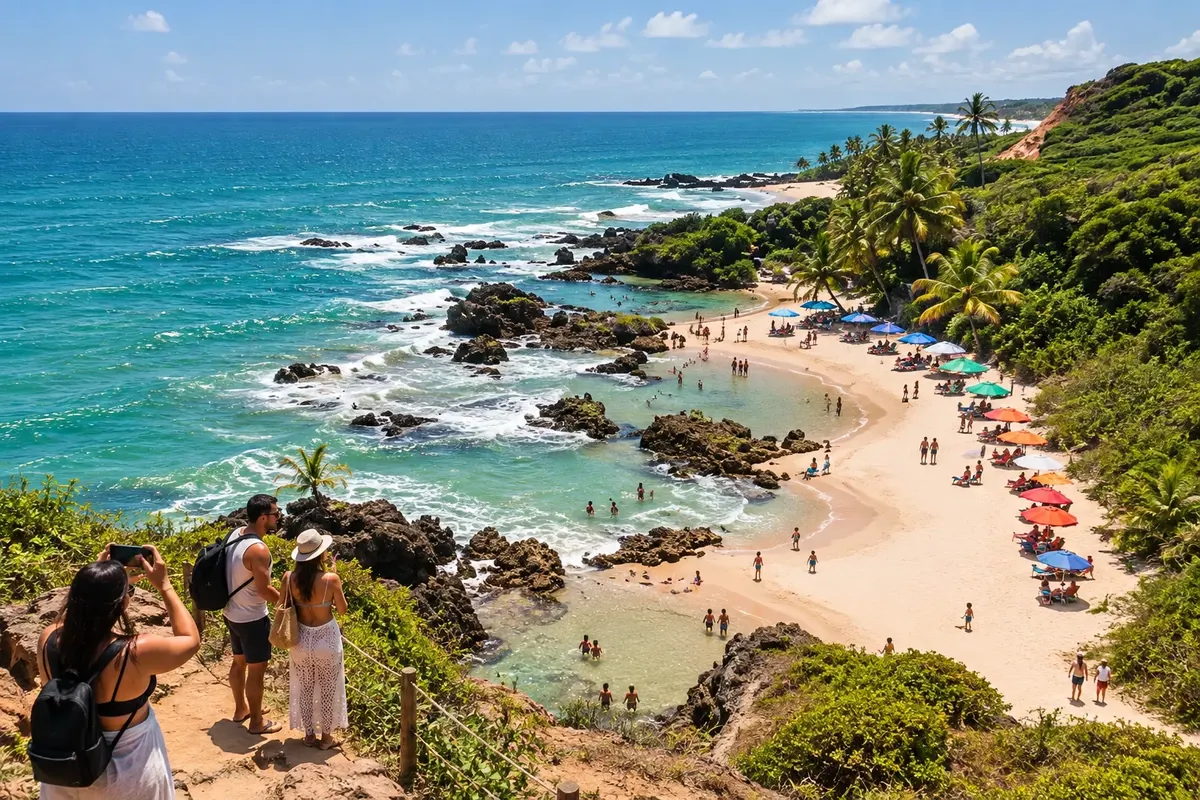
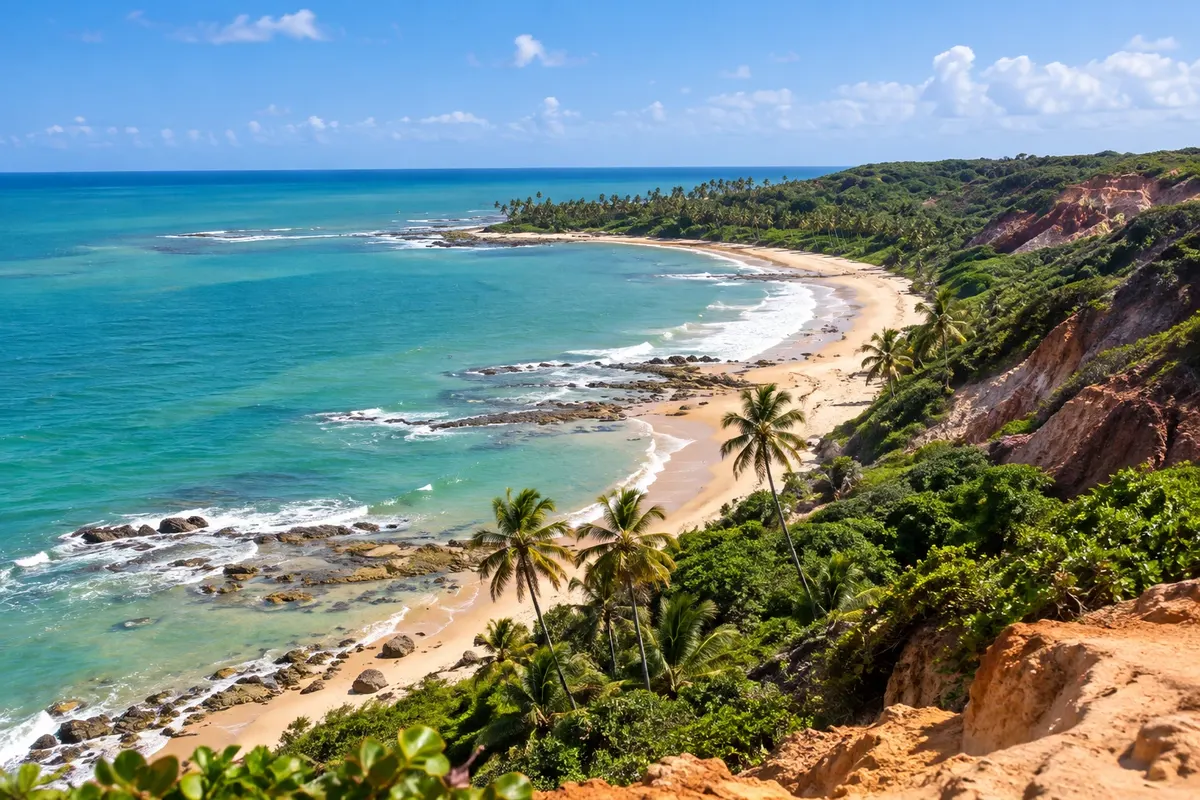
Colorful cliffs, coconut palms and warm tide pools at low tide make it one of the most beautiful beaches on the Paraíba coast. There are viewpoints on the road just above.

 Search
Brazil
 Antarctica
 Argentina
 Bolivia
 Chile
 Colombia
 Ecuador
 Guyana
 French Guiana
 Falkland Islands (Malvinas)
 Paraguay
 Peru
 Suriname
 Uruguay
 Venezuela
 Germany
 Austria
 Belgium
 Croatia
 Denmark
 Slovakia
 Slovenia
 Spain
 Finland
 France
 Greece
 the Netherlands
 Hungary
 Ireland
 Iceland
 Italy
 Luxembourg
 Norway
 Poland
 Portugal
 the United Kingdom
 the Czech Republic
 Sweden
 Switzerland
 Turkey
 Bermuda
 Canada
 the United States
 Greenland
 Mexico
 Saint Pierre and Miquelon
 the Dominican Republic
 JapanTurkey
 South Africa
 Egypt
 Australia
 Fiji
 New Zealand
 Papua New Guinea
Paraíba · Brazil
In the destination Paraíba South Coast (Costa do Conde).
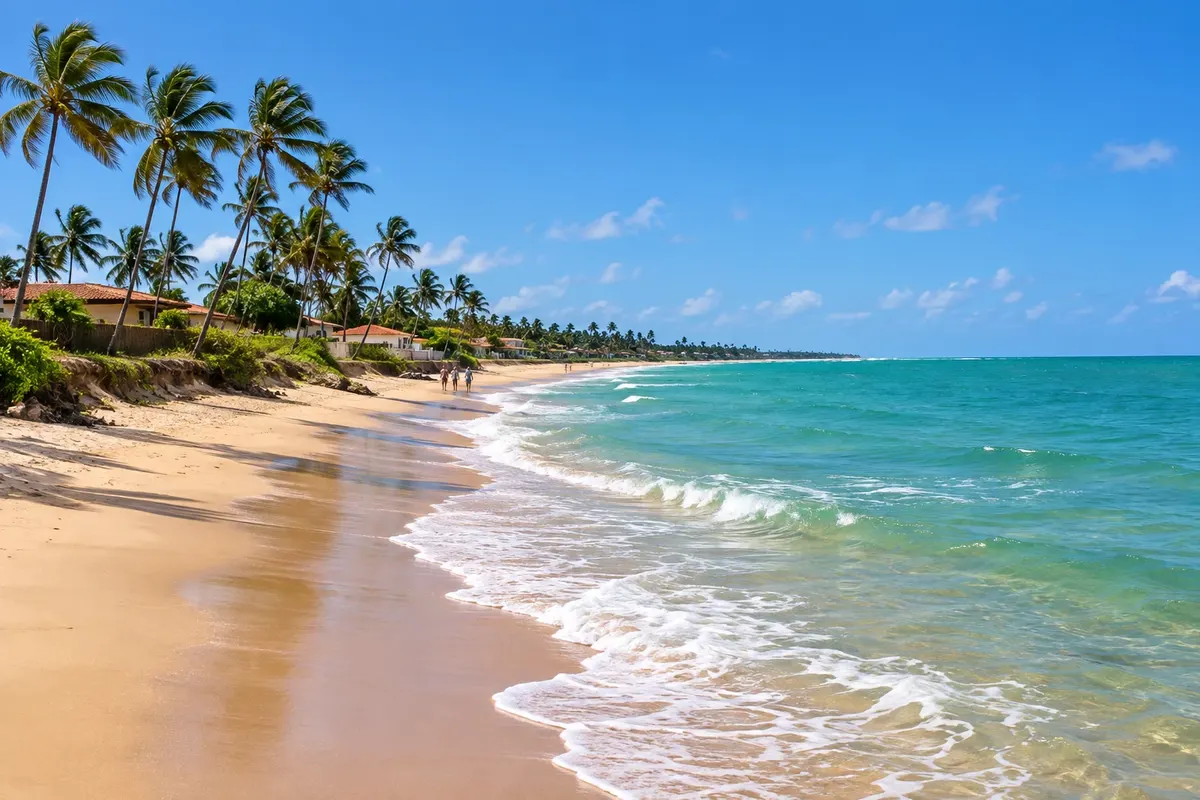
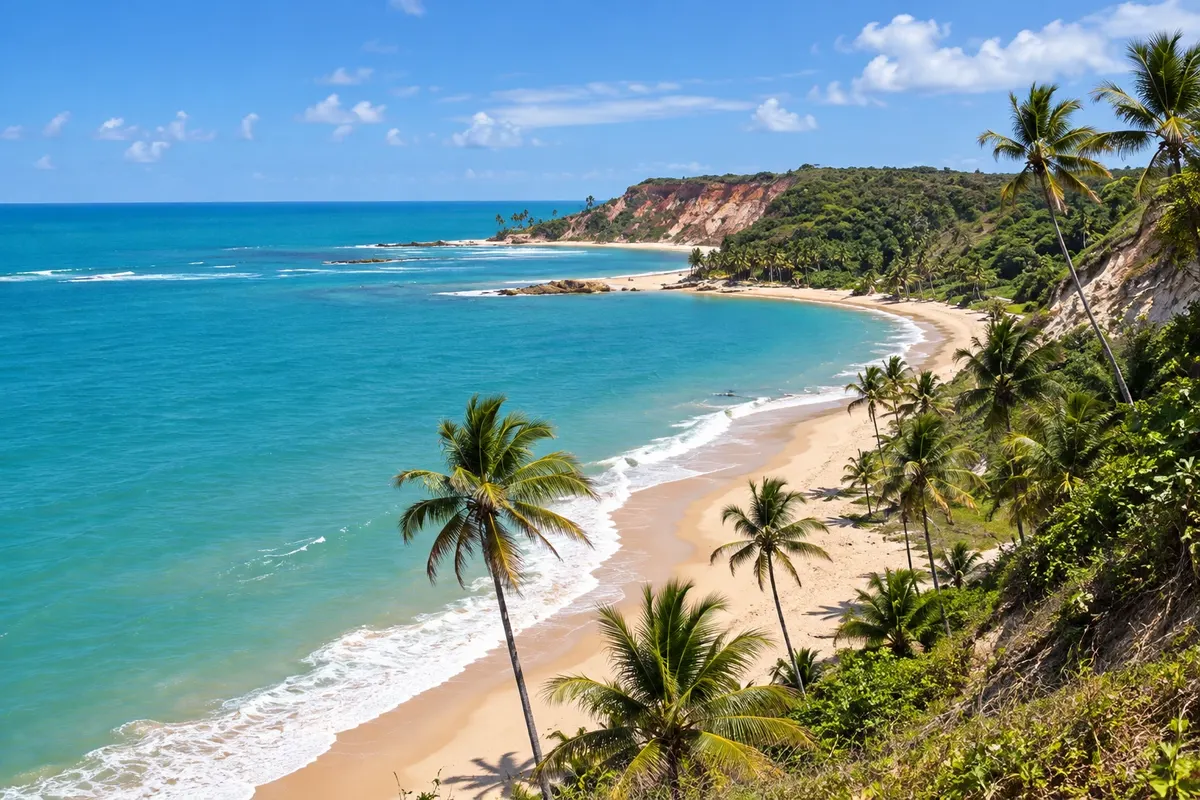
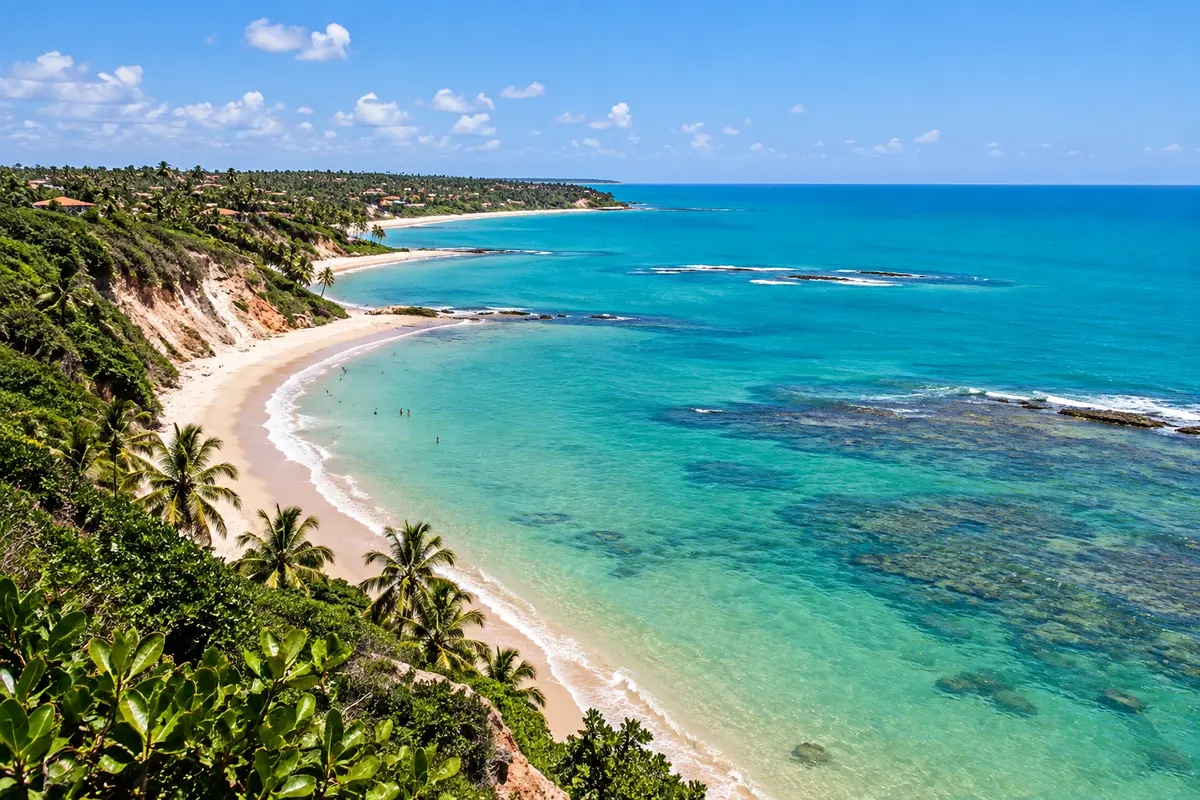
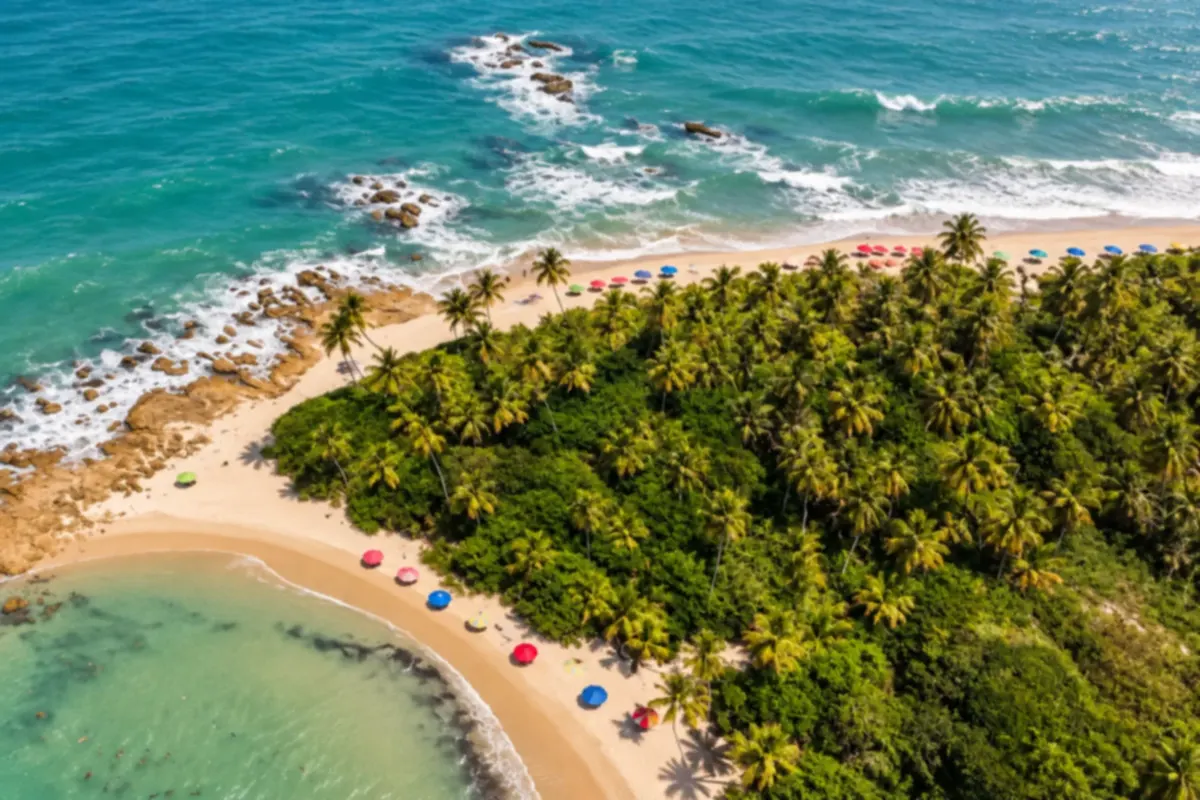
Illustrative images. The pictures in this guide are illustrations based on the real place, not photographs, and may differ from it.
The city
Conde brings together beaches with colorful cliffs, coconut groves and coves on the south coast of Paraíba. Coqueirinho, Tambaba and Tabatinga show different sides of the coast, between stretches of sand and rock formations.
Conde is the municipality immediately south of João Pessoa, in Paraíba, and gives its name to the Costa do Conde: about 17 km of coastline, from the mouth of the Gramame River, on the border with the capital, to the mouth of the Graú River, on the border with Pitimbu. The landscape is made up of coves lined with coconut palms and closed by colorful cliffs up to 30 meters high, with viewpoints at the top and natural tide pools that appear at low tide.
It’s worth understanding the geography before booking. The municipal seat, the town of Conde, is about 20 km from João Pessoa and 13 km from the sea, and has no attractions for visitors. People who come here stay on the beaches, connected by the coastal highway PB-008.
From north to south, the first is Barra de Gramame, where the river meets the sea. Then comes Praia do Amor, with the Pedra Furada, and, attached to it, Jacumã, the village with the most shops, inns, bars and restaurants, calm sea and Praça do Mar, a meeting point at the end of the afternoon. Carapibus has cliffs, natural pools and a maceió, the local name for the lagoon the river forms when it reaches the beach. Tabatinga, in an environmental protection area, is more residential and quiet, with two maceiós and the highest cliffs on the right-hand side.
Coqueirinho is the most visited beach: a cove of coconut palms reached down a slope with a view, with restaurants on the sand, a canyon of colorful sandstone and the best-known viewpoints, such as Dedo de Deus. Next is Arapuca, long and deserted, at the foot of the cliffs, and finally Tambaba, about 40 km from the João Pessoa waterfront. Tambaba has two sectors separated by a rock formation: a common-use sector where swimwear is required, and a sector reserved for naturism, recognized by municipal law and with its own entry and conduct rules.
Most visitors see all this in a single day on a buggy or van tour from João Pessoa, and arrive at Coqueirinho at the same time. Those who sleep in Jacumã, Carapibus or Tabatinga see the beaches early and late in the afternoon, before and after the groups, and can choose the tide.
It’s hot year-round, with highs near 31 °C in summer. From September to February it rains little, and October and November are the driest months. From March to August there is a lot of rain, peaking in June; the dirt trails to the viewpoints become more difficult and the beaches are emptier.
Two days are enough for the main beaches and viewpoints. With three, you’ll have time for Tambaba at a relaxed pace and for Barra de Gramame. João Pessoa is close enough to go and return the same day.
61 places to stay in Conde.
3 places to eat in Conde.
The local experience
Colorful cliffs, coconut palms and warm tide pools at low tide make it one of the most beautiful beaches on the Paraíba coast. There are viewpoints on the road just above.
Divided into a regular section and a nudist section, it is one of the best-known nudist beaches in the country. The scenery is a cove enclosed by cliffs and forest.
The busiest beach on the Costa do Conde, with beach shacks, pousadas (guesthouses) and calm water near the river mouth. It is usually the base for exploring the neighboring beaches.
Known for its tall cliffs and the viewpoint where paragliding and hang-gliding flights take off. At low tide the strip of sand gets very wide.
A small, quiet beach between Jacumã and Tabatinga, surrounded by coconut groves and popular with surfers. Access is by a sandy path down the slope.
Where the Rio Gramame (river) meets the sea, on the border between João Pessoa and Conde, forming shallow pools that are great for children. You can take a canoe ride on the river.
To choose before you go
Where each tour starts, how long it takes, how it is done, what is included and the price range.
Jacumã is the most developed beach in Conde and the most practical base for those staying overnight in the area: it has pousadas, shops, bars and restaurants, and buses from João Pessoa arrive here. The sea is calm, and the Praça do Mar on the waterfront concentrates activity at sunset and hosts the town’s events, such as Carnival and New Year’s Eve. Walking north along the sand you reach the Pedra Furada, the holed rock that marks the start of Jacumã and separates it from Praia do Amor. Local tradition says that a couple who pass through the rock’s opening will have lasting love, and the stop is almost mandatory on buggy tours. Praia do Amor has coconut palms, warm greenish water and many rocks; it is better for walking and photos than for swimming. It’s a short excursion, suitable for the arrival day or for a late afternoon after the southern beaches.
Stops: Jacumã Beach, Praça do Mar, Praia do Amor, Pedra Furada.
Includes: Self-guided visit; there is no entrance fee. Food and drinks at bars and stalls are paid separately.
Tip: Go to Pedra Furada at low tide, when it’s easier to reach on foot along the sand. Wear footwear that can get wet because of the rocks.
Best time: All year; from September to February it rains less.
The two beaches are next to each other, and walking from one to the other takes about 30 minutes along the sand. They share the maceió: spots where a stream reaches the beach and forms a warm, still freshwater lagoon a few steps from the sea. Many people spend the day alternating between river and sea swims. At Carapibus, the maceió divides the beach. There are cliffs, a viewpoint on the top, and, further south, reefs that form natural pools at low tide. Tabatinga is more residential and quieter, especially on weekdays. On the left corner is the maceió with dark water, and nearby an old staircase that descends from the cliff to the sand, widely photographed. On the right corner, next to the higher cliffs and the border with Coqueirinho, the sea is calmer and there are simple stalls with tables. From there, at low tide, you can walk to the most deserted stretch of Coqueirinho.
Stops: Carapibus Beach, Carapibus Maceió, Carapibus Viewpoint, Tabatinga Beach, Tabatinga Maceió, Tabatinga Staircase.
Includes: Self-guided visit, no entrance fee. Tables, chairs and consumption at the beach stalls are paid separately.
Tip: Check the tide table: Carapibus’ tide pools and the walking passage to Coqueirinho only exist at low tide. Return before the tide comes in.
Best time: September to February, with less rain; weekdays outside school holidays are the quietest.
Coqueirinho is about 35 km from João Pessoa’s waterfront and is the main long stop on almost all south-coast tours. You reach it via a slope that descends the cliff, offering a view of the whole cove; slow down and stop where permitted. On the sand, the central section concentrates restaurants and stalls with tables under the shade of coconut trees, and it fills up around midday when vans and buggies arrive. Toward the sides the beach becomes emptier: to the north are the cliffs and the deserted stretch that connects to Tabatinga. The canyon is the other reason to visit. Its walls of sandstone and clay show shades of red, yellow and white, carved by erosion at the top of the cliff. From the access road, walk about 1 km to the right along the seafront road, park and continue on foot. The Dedo de Deus Viewpoint, near the road, gives a view of the northern part of the beach. Other viewpoints are on dirt roads with many forks and are easier to reach with a guide.
Stops: Coqueirinho Beach, Coqueirinho Canyon, Dedo de Deus Viewpoint, Coqueirinho Slope.
Includes: There is no entrance fee for the beach. Parking, tables and food or drinks at restaurants are charged separately; ask about minimum consumption rules before sitting down.
Tip: Arrive early, before group tours, or stay until late afternoon. Wear closed shoes in the canyon and keep a safe distance from cliff edges.
Best time: September to February; after heavy rain the canyon becomes slippery.
The viewpoints sit atop the cliffs, on dirt trails that branch off the road, and a local operator’s tour is the easiest way to see several at once. Departures leave from Coqueirinho, and those already staying in Conde go straight to the base without the trip from João Pessoa. The route usually has three stops. Dedo de Deus overlooks Coqueirinho’s cove. Mirante das Tartarugas sits above Tabatinga and is hard to find on your own. The Castelo da Princesa viewpoint shows a pointed cliff that resembles a tower at Praia de Arapuca. Many tours end at Shopping Rural Tambaba, an open-air cluster of shops selling sweets, cachaças, nuts and handicrafts. On the ATV each machine carries up to two people, and there is a short training session before departure, with a helmet; the group follows in single file behind the guide. In the buggy the driver is the operator, which suits families with children and those who do not want to drive.
Stops: Mirante Dedo de Deus, Mirante das Tartarugas, Mirante do Castelo da Princesa, Shopping Rural Tambaba.
Includes: Vehicle, guide and, for the ATV, training and helmet. Transport to Coqueirinho, food and drinks are paid separately. Price is per vehicle; check the operator’s current rate table.
Tip: Minimum age and license requirements to drive vary by operator: confirm when booking. Wear lightweight clothes that can get dusty, sunglasses and sunscreen.
Best time: September to February, with firmer trails; late afternoon usually gives good light at the viewpoints.
Tambaba is the last beach in Conde before the mouth of the Graú River, in a more isolated area with no inns on the sand. On arrival there is a traditional viewpoint, from which you can see the colorful Arapuca cliffs and the deserted beach between Tambaba and Coqueirinho. The beach has two sections. The first is for common use, where swimwear is worn: this is where the umbrellas are, the coconut tree that grows on a rock, and the natural pools that form among the rocks at low tide. Visitors who just want to see the landscape stay here. The second section, separated by a rock formation and a staircase with a gateway, is reserved for naturism, a practice recognized locally by municipal law. Nudity is mandatory there. According to rules published by the naturist society that operates on the beach, men unaccompanied by women are not allowed entry, except those who hold a naturist ID card recognized by the federation. Do not photograph or film other people without consent, and sexual behavior is not permitted. Guides stand at the border to explain the rules to arrivals.
Stops: Tambaba Beach, Tambaba Viewpoint, Arapuca Beach, Tambaba naturist area.
Includes: The visit does not depend on a tour operator. Umbrellas, chairs and purchases in the common area are paid separately. Check on site the entry conditions for the naturist area.
Tip: Read the rules on the portal before entering the naturist section and respect people’s privacy. Go at low tide to see the pools; at high tide the sand strip becomes narrow.
Best time: September to February, at low tide.
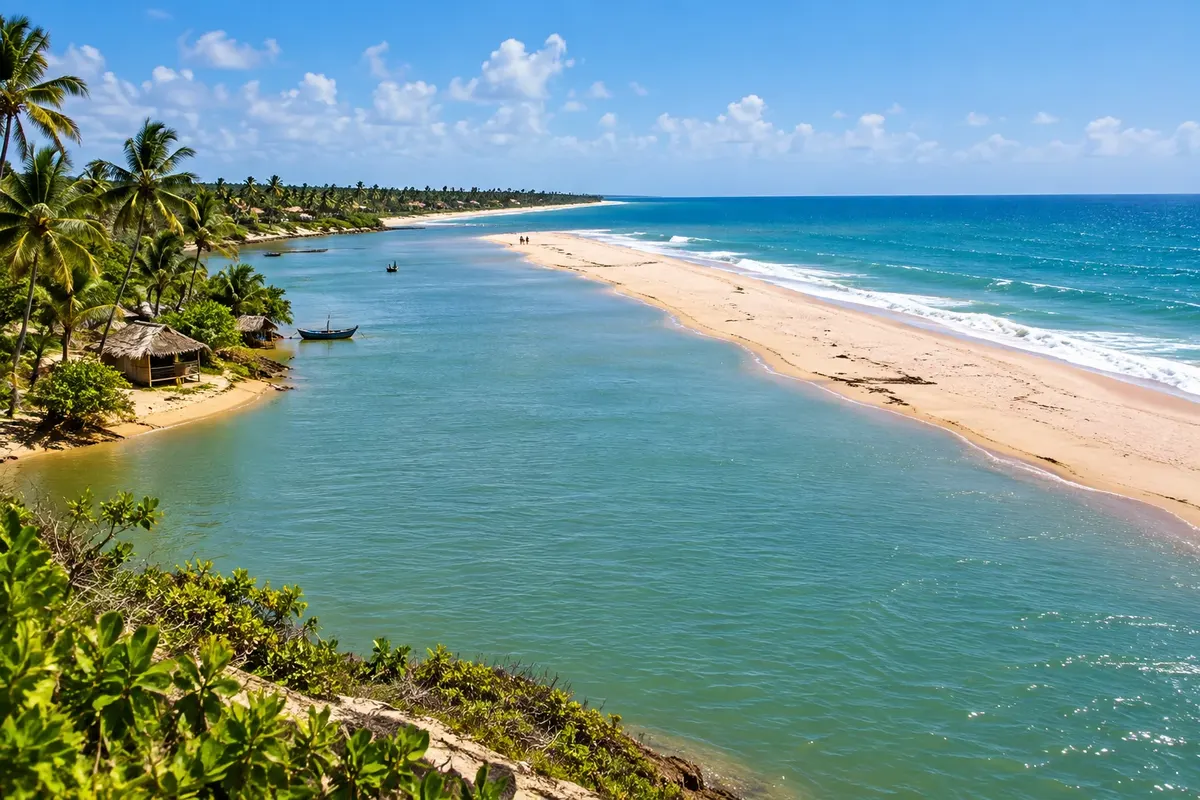
Barra de Gramame is the gateway to the Costa do Conde for those coming from João Pessoa along the coastal road: it sits at the mouth of the Gramame River, which marks the border between the two municipalities. The river reaches the sea behind a sandbar, with fishermen’s houses, boats and coconut palms providing shade. You can bathe in both kinds of water. On the river side the water is calm, and at low tide shallow, warm areas form that are good for children. Crossing the sandbar leads to the open sea. Bars on the riverbank have tables by the water, and you can rent kayaks and stand-up paddleboards and arrange small raft trips to the sandbanks and the mangrove. Buggy and 4x4 tours usually stop here very early, at the start of the circuit. Those staying in Jacumã can come outside those hours and find the river mouth quieter.
Stops: Barra de Gramame, Mouth of the Gramame River.
Includes: There is no entrance fee. Kayak rental, raft trips and consumption at the bars are paid separately, with prices agreed locally.
Tip: Go at low tide for the shallow area and to cross the mouth safely. Agree on price and time before boarding and use a life jacket. Bring sandals for the muddy stretch at the riverbank.
Best time: September to February; mornings tend to be less windy.
Day by day
Suggestions to plan the trip. Change the order of the days according to the weather and tour availability.
Leave João Pessoa early on the PB-008. The first stop is Barra de Gramame, for a quick swim at the river mouth while the tide is low. Continue to Jacumã and see the Pedra Furada at Praia do Amor. Arrive at Coqueirinho before noon, descend the hill slowly and stay for a swim and lunch. Then do the viewpoints by buggy or ATV, departing from there, or walk the canyon on your own. Finish at Tambaba: the viewpoint on arrival, the common area with the pools among the rocks and, for those who wish, the naturist area with its rules. The return to João Pessoa takes around an hour.
Arrive via Barra de Gramame and Praia do Amor and base yourself in Jacumã, Carapibus or Tabatinga. Use low tide for the natural pools at Carapibus and to walk along the sand to Tabatinga, about 30 minutes. At Tabatinga, swim in the maceió, take a photo on the stairway and have lunch at a beach stall on the right-hand side, next to the cliffs. At the end of the afternoon, return to Jacumã and stay at Praça do Mar.
Go early to Coqueirinho, before the João Pessoa tours arrive, and walk through the canyon while the sun is low. Do the buggy or ATV viewpoints in midmorning. After lunch, head to Tambaba. Stay in the common sector, with the natural pools, or enter the naturist sector, observing the entry rules. On the way back, stop at the viewpoint overlooking Arapuca.
Start in the north. Swim in the river and the sea at Barra de Gramame, with kayaking or a raft for those who want, then visit Pedra Furada at Praia do Amor. Spend the afternoon in Jacumã and finish at Praça do Mar.
Sand day. At low tide, see the natural pools of Carapibus, walk to Tabatinga and, from the right corner, continue to the deserted stretch of Coqueirinho. Return before the tide comes in and spend the rest of the afternoon at Tabatinga’s maceió.
In the morning, buggy or ATV to the Dedo de Deus, Tartarugas and Castelo da Princesa viewpoints, and a hike through the Coqueirinho canyon. In the afternoon, Tambaba, with time for the common-sector pools or for the naturist sector. Those continuing south follow PB-008 to Pitimbu; those returning to João Pessoa take about an hour.
Best time to go
The seasons shown are the most usual ones; nature doesn't always follow the calendar.
Summer · High season
Hot, with an average high near 31 °C and a low of 25 °C, and rain in heavy showers: João Pessoa’s reference is about 86 mm for the month. It’s high season. Coqueirinho fills up around midday and the pousadas in Jacumã and Tabatinga require reservations. Go early to the beaches.
Carnival in Jacumã
About 106 mm of rain, with clear days between showers. The city hall organizes Carnival at Praça do Mar in Jacumã, with shows and street bands; the village fills on those days. Outside the holiday, the movement is end-of-summer pace.
Rain returns
The rainy season begins, with about 172 mm at the João Pessoa reference. It remains warm, around 31 °C. Visitor numbers drop, except on holidays. Leave some flexibility in your itinerary to reschedule lookouts and beaches on days of heavy rain.
Rainy season · Fewer crowds
About 236 mm of rain and frequently overcast skies. Dirt trails to the lookouts demand more care, and operators may reschedule. The beaches are empty; the tide still controls the natural pools of Carapibus and Tambaba.
Steady rain · Empty beaches
Around 288 mm, with an average low of 23 °C. It rains many days, sometimes heavily. Use sunny windows for Coqueirinho and Tambaba and save the Maceiós for cloudy days. Confirm with the operator whether the lookout tours are running.
Most rainy month · June festivities
This is the rainiest month on the Paraíba coast, with about 369 mm at the João Pessoa reference. The city’s cultural calendar includes June festivities. For beach time, it’s the least recommended month; plan with plenty of margin.
Rain · School holidays
Rain remains frequent, with sunny intervals between showers. School holidays bring families on weekends. On clear days, low tide allows access to the natural pools of Carapibus and Tambaba; check the tide table.
Rain decreasing · Mild nights
About 134 mm, much less than previous months, and an average low near 22 °C. Good days for lookouts and walks increase, still with occasional showers. Bring a light jacket for the evening.
Weather stabilizing
About 74 mm and stable weather for most of the month. Tours become more predictable and the beaches still have few people outside holidays. It’s the start of the recommended season for the Costa do Conde.
Dry season · Calm sea
About 31 mm of rain and an average low of 24 °C. Clear days, good for the canyon, the viewpoints and walks along the sand between Carapibus, Tabatinga and Coqueirinho. The sun is strong: bring a hat, sunscreen and water.
Driest month · Holidays
One of the driest months, with about 21 mm. Conditions are stable. The month’s holidays fill Coqueirinho and Tambaba, especially on weekends. Prefer the viewpoints early or late in the afternoon.
Start of summer · Patron saint and New Year’s Eve
About 37 mm, with an average high near 31 °C. The city calendar includes the festival of Our Lady of the Conception, the patron saint, and New Year’s Eve at Praça do Mar in Jacumã. In the last week of the year the pousadas fill up: book in advance.
Plan the journey
The airport serving Conde is João Pessoa/Presidente Castro Pinto International Airport (JPA), located in the municipality of Bayeux, about 11 km from the capital’s center and about 35 km from Conde’s main beaches. From the airport you travel by rental car, shuttle or taxi; arrange transport before arrival.
The other gateway is Recife/Guararapes International Airport (REC), about 110 km from Conde via BR-101. It serves those who find better flights to the Pernambuco capital or who plan to combine Paraíba with the Pernambuco coast.
There are two routes. The most used for the beaches is PB-008, the coastal highway: leave João Pessoa’s waterfront at Farol do Cabo Branco and follow the coast, passing Barra de Gramame, Jacumã, Carapibus, Tabatinga, Coqueirinho and Tambaba. The road is paved up to Tambaba, and final access to each beach is via local roads. Coqueirinho is about 35 km from the Tambaú waterfront, roughly 45–50 minutes; Tambaba about 40 km.
The other route is BR-101 southbound to Conde’s entrance, via PB-018. the municipal seat is about 20 km from the capital. From there you descend to Jacumã and join PB-008.
There are no tolls or ferries. Dirt stretches appear on access roads to some lookouts, not on the main roads.
From Recife it’s about 110 km, in under two hours, via BR-101 northbound to Conde’s entrance, via PB-018. From the municipal seat continue to Jacumã and the beaches.
From Natal, the route is also BR-101, heading south and passing through João Pessoa.
If coming from the south and you want to visit Pitimbu before reaching Conde, you can leave BR-101 by PB-044 via Caaporã and then head up the coast on PB-008.
Metropolitan buses connect João Pessoa with Conde and Jacumã. Line 5105 goes from Jacumã to the city center and the Varadouro Terminal, passing through Conde’s seat and the BR-101. Line 5106 links Conde’s seat to the Lagoon and João Pessoa Bus Station. Line 5107 runs from Jacumã to Shopping Mangabeira via PB-008. There is also a circular line within the municipality.
To the seat the trip takes about 40 minutes; to Jacumã, about 1 hour or more, with many stops. Departures run from morning until early evening, with fewer trips on Sundays. The fare is an urban-bus rate; check schedules and the current fare table before you go.
Buses reach Jacumã, not the southern beaches. For Coqueirinho and Tambaba you need to complete the journey by local van, taxi, motorcycle taxi, or tour.
The beaches are spread along PB-008, and you can walk along the sand only between some of them: from Praia do Amor to Jacumã, from Carapibus to Tabatinga and, at low tide, from Tabatinga to Coqueirinho. Coqueirinho and Tambaba are about 7 km from each other.
By car, everything is a few minutes apart, and there is parking next to the beaches, often paid. Without a car, the most practical base is Jacumã, where local vans, taxis and motorcycle taxis depart. Ride-hailing drivers often refuse trips from João Pessoa to the southern beaches; arrange a driver for the day or hire a buggy or agency van that picks up in João Pessoa.
Conde has an Environmental Conservation Fee and a public parking fee in the beach areas. The fee announced by the city applies to vehicles carrying visitors, such as vans and buses. On a tour, ask if it’s already included; on your own, confirm with the city hall.
Get your questions answered
Jacumã has more pousadas, restaurants and shops, calm sea and buses to João Pessoa; it’s the most practical base, especially without a car. Carapibus and Tabatinga are quieter, with cliffs and maceiós. Coqueirinho is in a more rustic setting, with fewer options. Tambaba has no lodging on the beach. The municipal seat is 13 km from the sea and is not recommended for those who come for the beaches.
No. The municipal seat is inland, about 20 km from João Pessoa and 13 km from the coast, near the BR-101. The beaches that made the place famous, like Jacumã, Coqueirinho and Tambaba, are in villages and coves along the PB-008. When booking accommodation, check whether the address is in one of the beach areas and not in the center of Conde.
One day covers the classic circuit, with Coqueirinho, the lookouts and Tambaba, and that’s how most people see the region from João Pessoa. With two days you can include Carapibus and Tabatinga at low tide and visit Coqueirinho early, without the groups. Three days allow you to do everything at a relaxed pace and include Barra de Gramame.
It’s the name given on the Paraíba coast to the spot where a river or stream reaches the beach and forms a freshwater lagoon next to the sea, sometimes separated from it by a strip of sand. The water is still, warm and darker than the sea. In Conde there are maceiós in Carapibus and Tabatinga, and many people alternate bathing in the lagoon with bathing in the sea.
Jacumã has calm water and is next to the village. In Tabatinga, the right-hand cove, by the cliffs, usually has fewer waves. The maceiós of Carapibus and Tabatinga and the mouth of the Gramame River offer still, shallow water. In Tambaba and Carapibus, the tide pools between the rocks only appear at low tide. The sea changes with the wind and the tide: check conditions on the day.
Local vans, taxis and motorcycle taxis leave Jacumã for the southern beaches; arrange the return as well before getting off at the beach. Another option is to hire the buggy or ATV tour from Coqueirinho operators, or a driver for the day. Metropolitan buses from João Pessoa stop in Jacumã and do not continue to Coqueirinho.
Yes, and it’s the most common option. Coqueirinho is about 35 km from João Pessoa’s waterfront and Tambaba about 40 km, via the PB-008. Capital agencies sell a day of buggy, 4x4 or van with hotel pickup. If driving, leave early to reach Coqueirinho before noon, when the beach fills up.
In the common sector there are stalls with tables, chairs, food and drinks, plus parking at the entrance. There are no pousadas on the beach; the nearest ones are in Coqueirinho, Tabatinga and Jacumã. At high tide the sand strip becomes narrow, so check the tide table before going.
No. They are two municipalities with the same name. Conde, in Paraíba, is south of João Pessoa and has the beaches of Jacumã, Coqueirinho and Tambaba. Conde, in Bahia, is on that state’s northern coast, on the Costa dos Coqueiros. When buying tickets, booking accommodation or using GPS, check the state.
On the Carnival dates, which change each year and usually fall in February or early March. The celebration is promoted by the city hall in Praça do Mar, in Jacumã, with shows and street bands, and is part of Conde’s cultural calendar, alongside New Year’s Eve in the same square. On those days the village fills up and accommodation should be booked in advance.
Beyond the guide