Praça Tiradentes: Museu da Inconfidência, Carmo and Casa da Ópera
From Praça Tiradentes, historic center on foot 3 to 4 hours morning or afternoon easy, with short hills
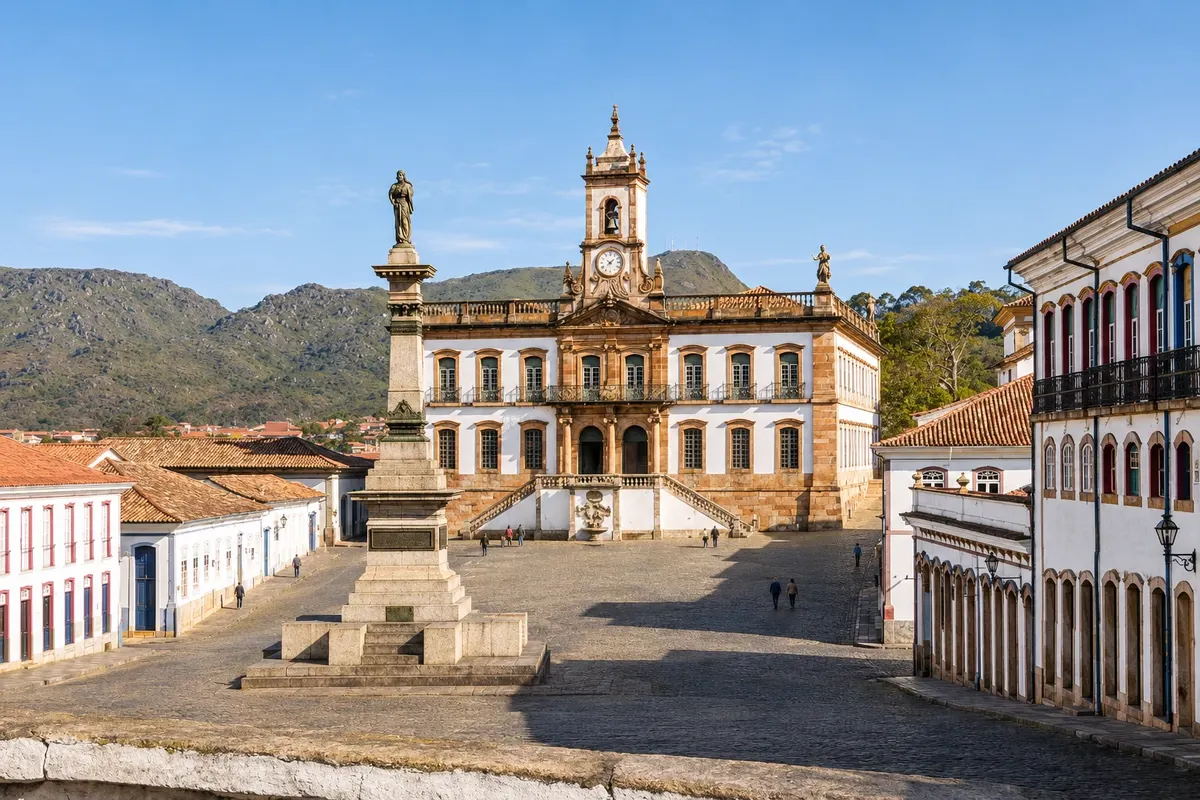
Praça Tiradentes occupies the former Morro de Santa Quitéria, which separated the settlements of Ouro Preto and Antônio Dias. It is the simplest starting point: from there the steep streets descend to both sides of the town.
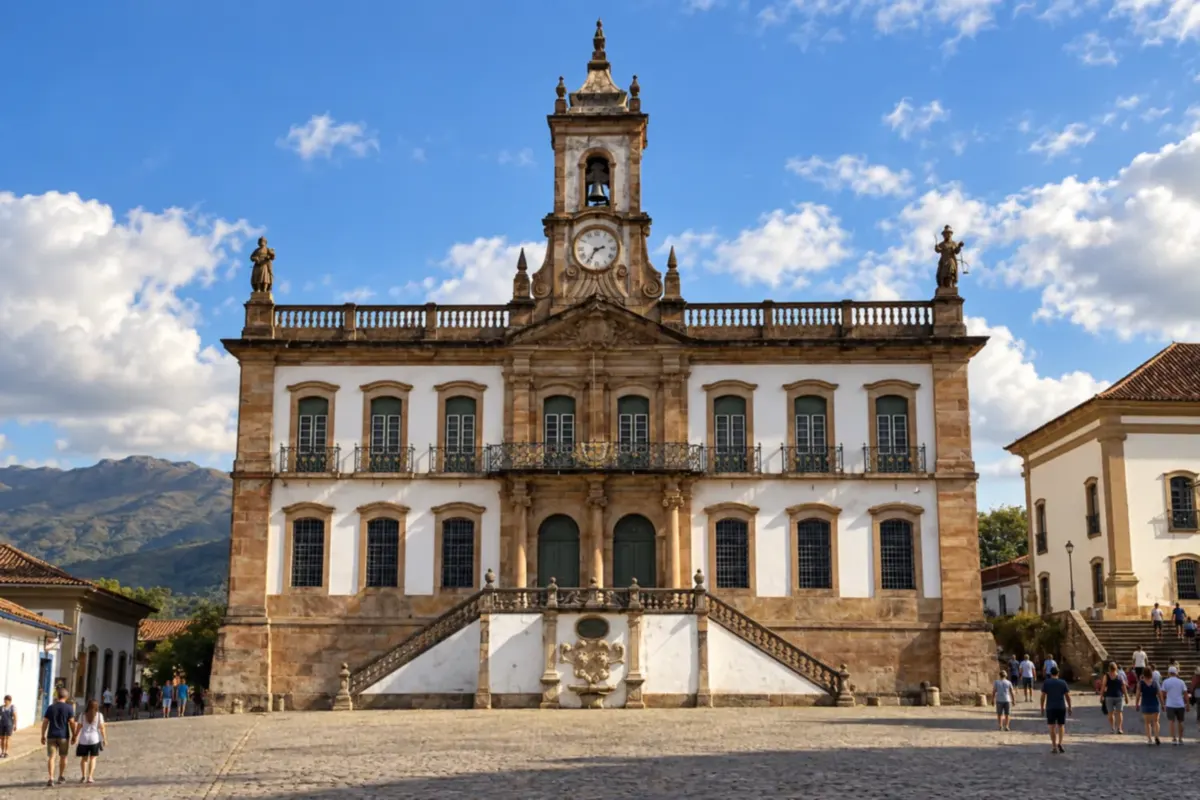
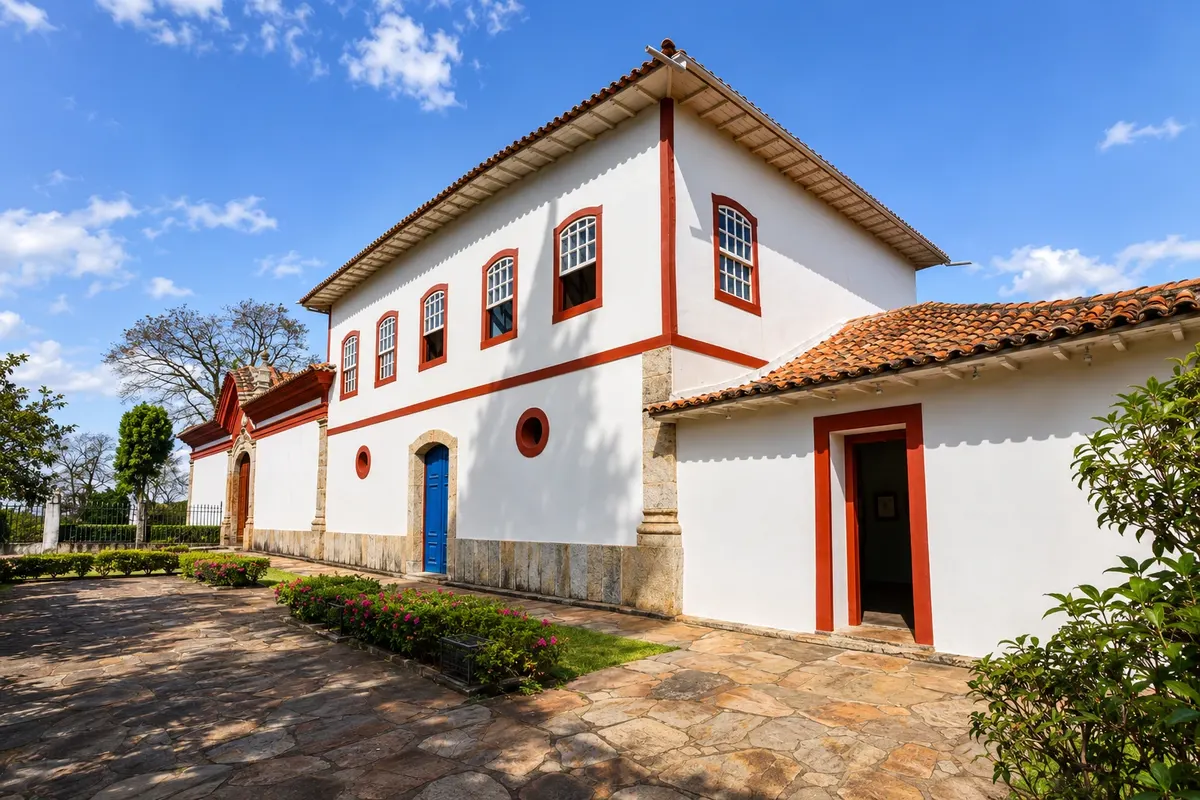
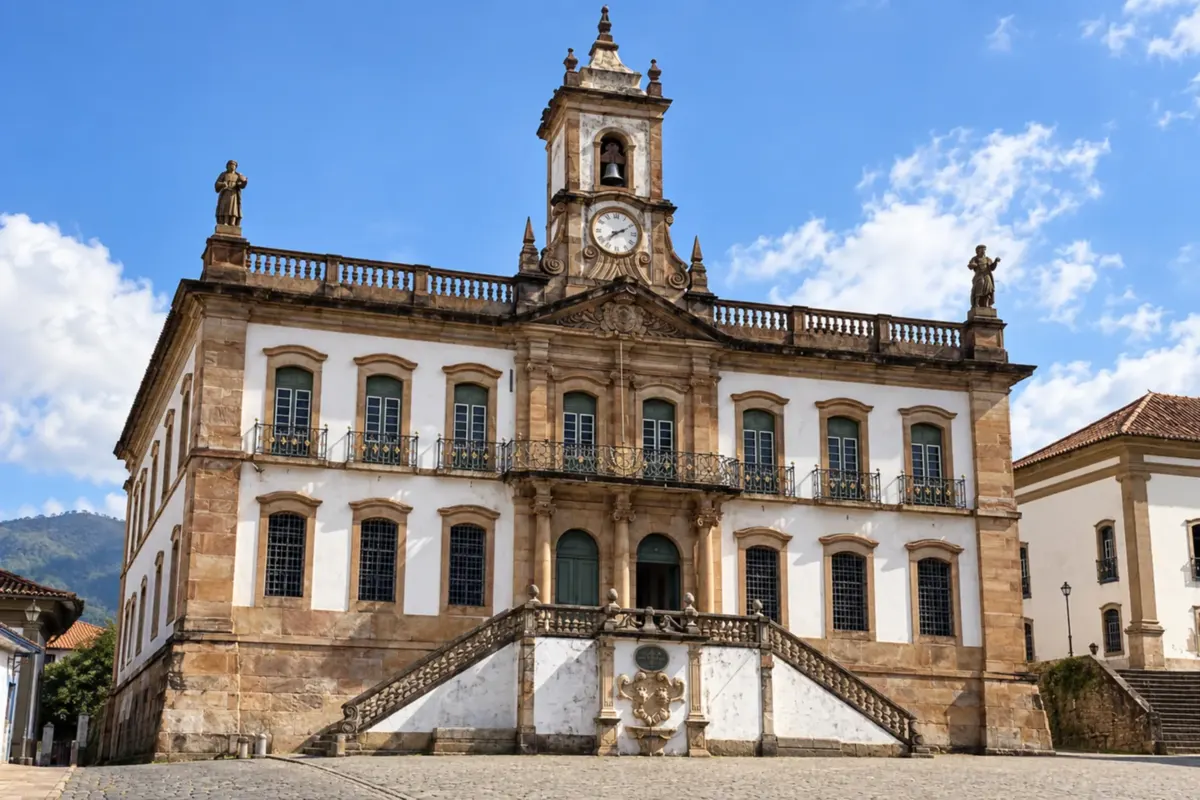
The building that closes the square is the Museu da Inconfidência. It was built between 1785 and 1855 to serve as the Town Hall and Jail and has functioned as a museum since 1944. In the Pantheon of the Inconfidentes are the remains of participants in the Inconfidência Mineira who died in exile in Africa and were brought back in the 1930s. The rooms on the two floors show life in Vila Rica in the 18th and 19th centuries: mining, transport, construction, painting, sculpture and religious art.
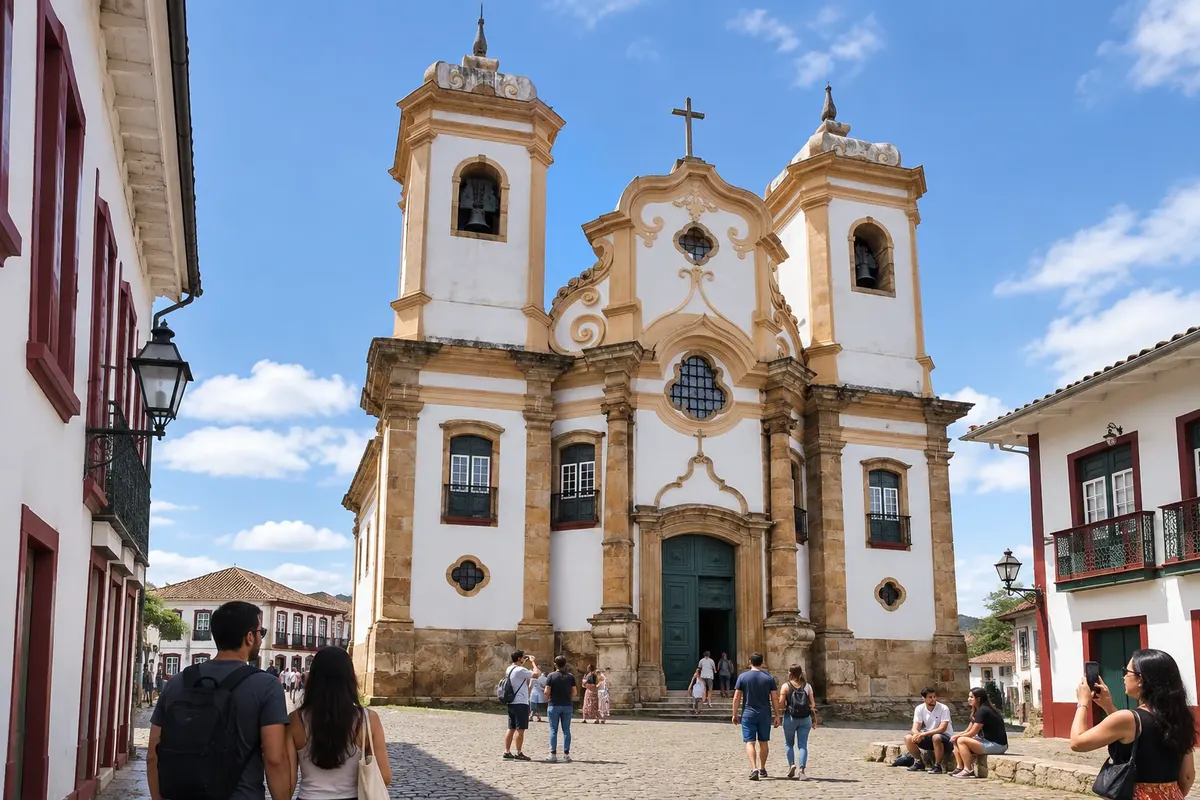
Next to the square is the Church of Our Lady of Carmel, which replaced the old chapel of Santa Quitéria. The original design is by Manuel Francisco Lisboa, father of Aleijadinho, and both the son and the painter Manoel da Costa Ataíde worked on it. The chancel has Portuguese tile panels with Carmelite themes, a unique case among the churches of Minas Gerais. Beside it, the order’s cemetery contains 19th-century tombs.
On the Carmo forecourt, an 18th-century mansion houses the Museu do Oratório, with 162 oratories and 300 images from the 17th to the 20th centuries, of varied types, sizes and materials. It is a short visit that shows how devotion entered homes, journeys and streets.
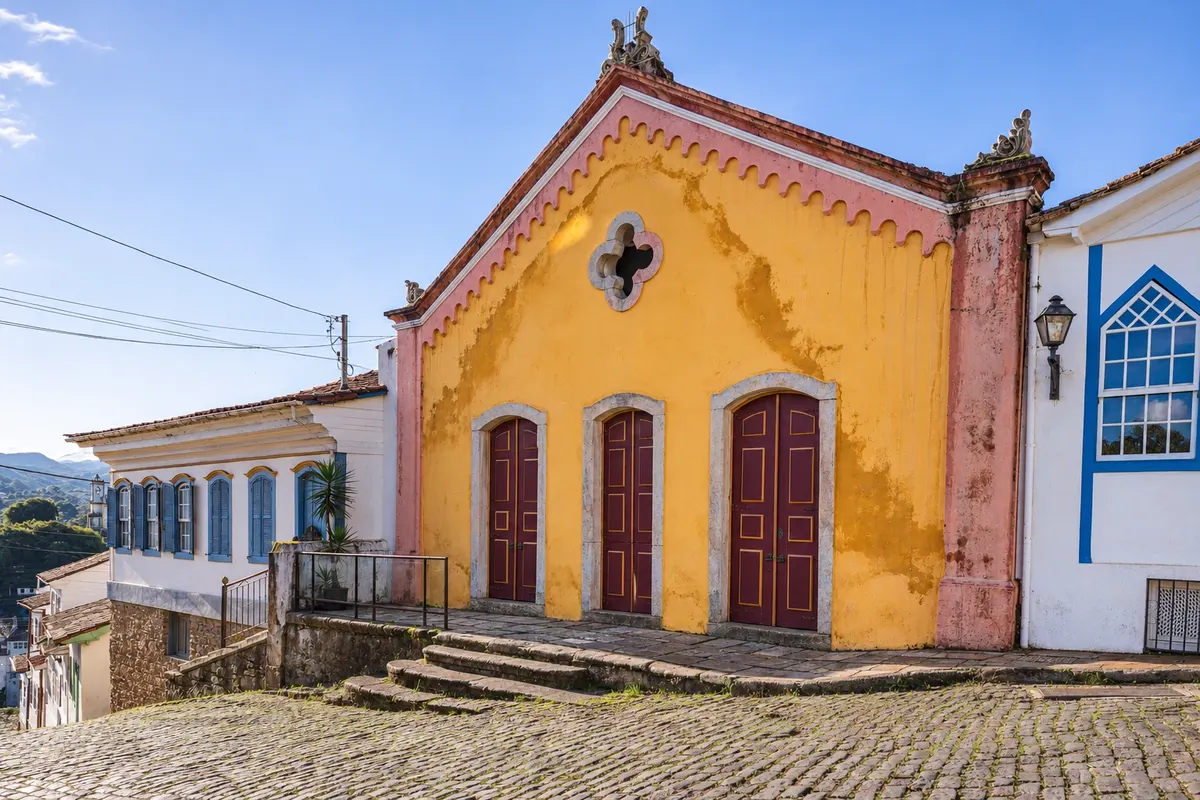
The Casa da Ópera, opened in 1770, is claimed to be the oldest functioning theater in the Americas. The hall seats 300 across three levels, with stalls, friezes, boxes and gallery, and wooden spiral staircases. It receives visitors during the day and maintains a schedule of performances.
Stops: Tiradentes Square, Museum of Inconfidência, Church of Our Lady of Mount Carmel, Museum of the Oratory, Municipal Theater Casa da Ópera.
Includes: Self-guided walk. The Museu da Inconfidência does not charge admission. The Igreja do Carmo, Museu do Oratório and Casa da Ópera have separate entrance fees: check each venue’s current rates.
Tip: The Museu da Inconfidência is closed on Mondays and the Museu do Oratório on Tuesdays. Confirm the Museu da Inconfidência’s opening hours before you go, because it may restrict visits during certain periods. Check the Casa da Ópera schedule: attending a concert there is another way to experience the hall.
Best time: All year. It’s a good option for rainy afternoons, from November to March.
Largo de Coimbra to Antônio Dias: Saint Francis of Assisi and Aleijadinho Museum
From Largo de Coimbra, below Praça Tiradentes on foot, downhill going and uphill returning 2 to 3 hours morning or afternoon moderate, due to the hills
This is the stretch that concentrates the work of Antônio Francisco Lisboa, Aleijadinho, in the town where he was born.
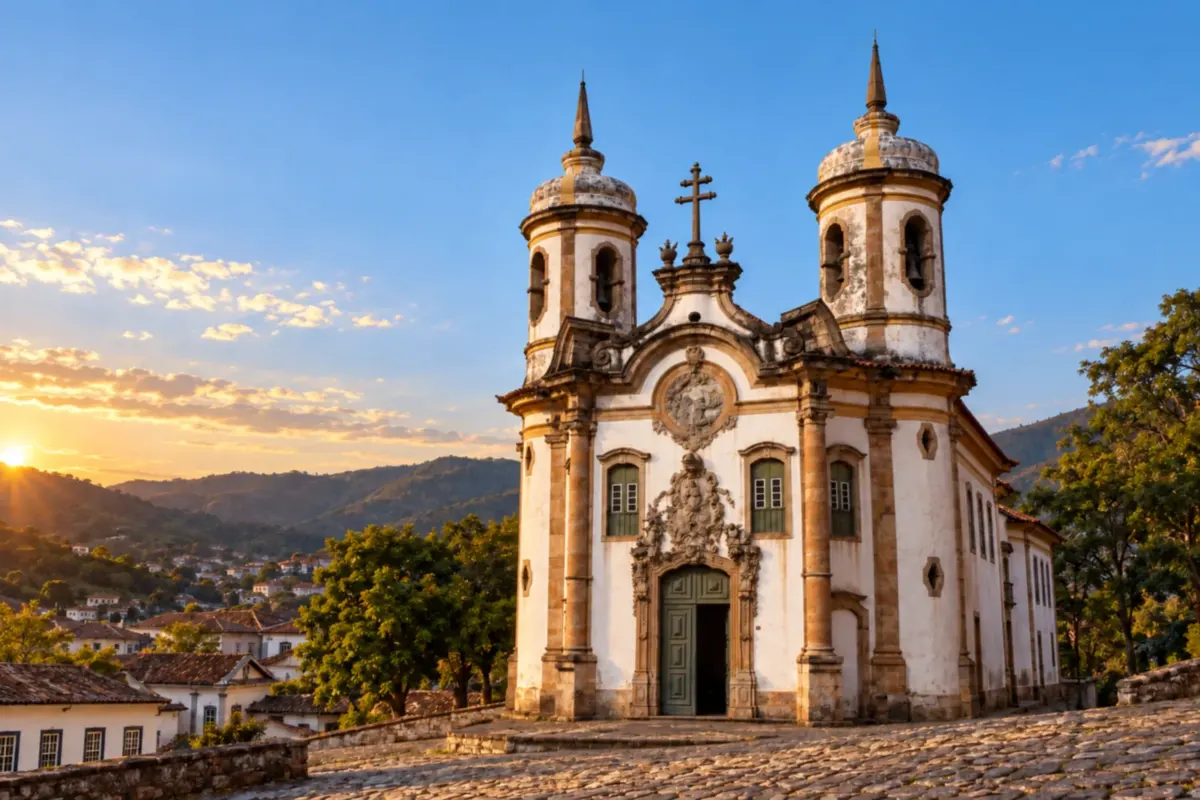
The Church of Saint Francis of Assisi was built by the Third Order of Penitence, founded in Vila Rica in 1746. The design is by Aleijadinho and construction began in 1765. The curved and counter-curved walls in the nave and on the façade were new in colonial architecture. The portal is carved in soapstone and the nave ceiling was painted by Mestre Ataíde.
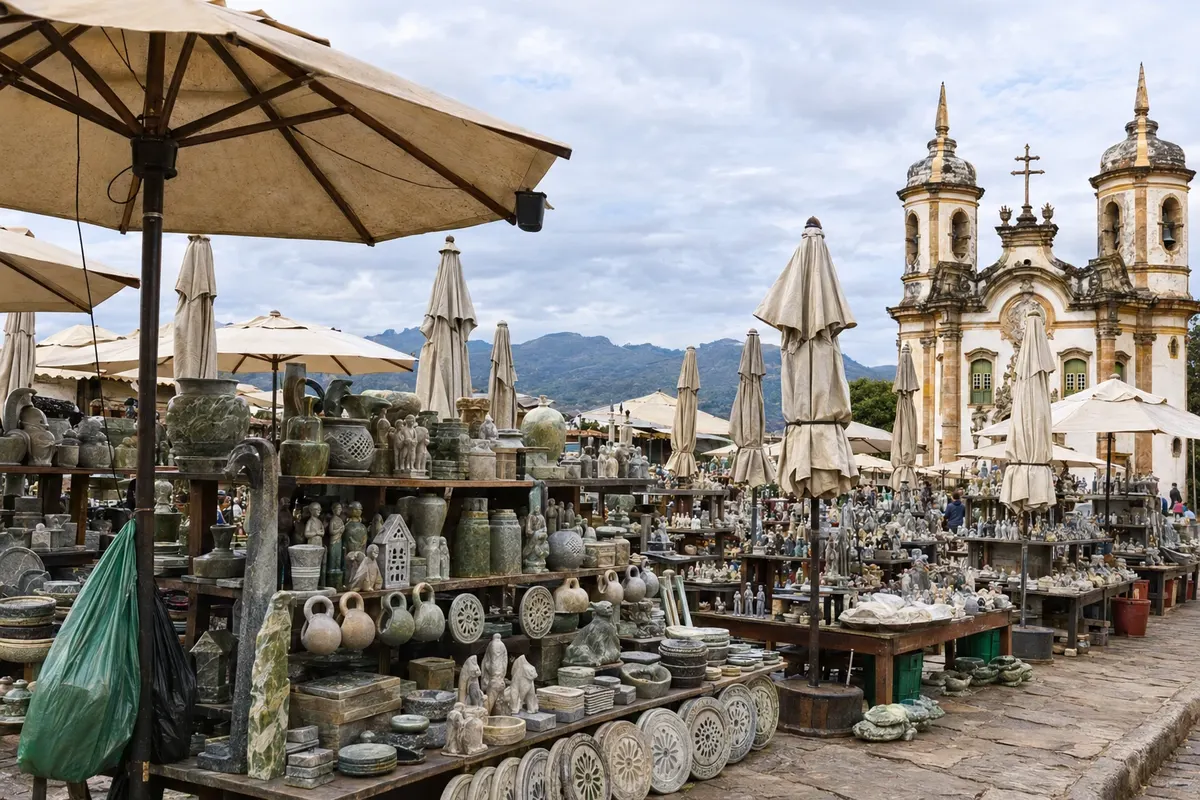
In front, at Largo de Coimbra, the market that locals call the soapstone craft fair runs every day. There are more than 50 stalls selling soapstone pieces, jewelry, stones, and embroidery.
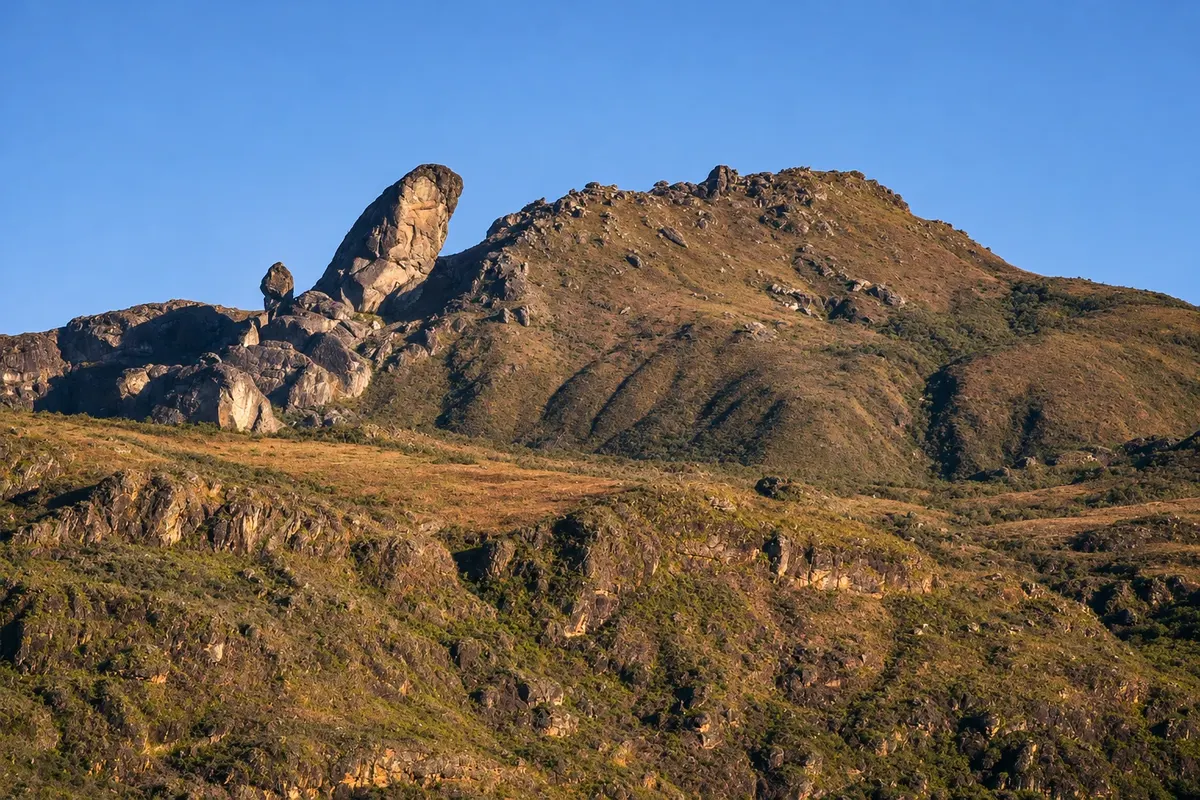
Going down, you reach the Church of Our Lady of Mercês and Perdões, the Lower Mercês. The chancel, built from 1775, was designed by Aleijadinho, who is also the author of the images of Saint Peter Nolasco and Saint Raymond Nonnatus. From the nearby lookout you can see the Antônio Dias neighborhood, the Church of Saint Iphigenia on the hill, and the Itacolomi Peak.
Further down is the Sanctuary of Our Lady of the Conception, the main church of Antônio Dias, begun in 1727 with a design attributed to Manuel Francisco Lisboa. Aleijadinho was buried there in 1814.
The Aleijadinho Museum, created in 1968 by the parish, does not occupy a single building. The about 250 pieces of sacred art are distributed in four places: the sacristy and the crypt of the Conception, the Church of Saint Francis of Assisi, and Mercês e Perdões. Among the sculptor’s works are the ceremonial lion supports—wooden stands used in solemn ceremonies—and an image of Saint Francis of Paola.
Stops: Largo de Coimbra, Largo de Coimbra Craft Fair, Church of Saint Francis of Assisi, Church of Our Lady of Mercês and Perdões, Lower Mercês Lookout, Sanctuary of Our Lady of the Conception, Aleijadinho Museum.
Includes: A single ticket gives access to the Church of Saint Francis of Assisi and to Mercês e Perdões. Check the ticket office for the current price list and which spaces of the Aleijadinho Museum are open that day.
Tip: The churches on this stretch are closed on Mondays, and some close for a lunch break. Go in the morning, before tour groups arrive. In most churches it is not allowed to photograph the interior. The return to Praça Tiradentes is uphill: if you prefer, you can call a taxi on Antônio Dias.
Best time: All year. From May to August, the dry weather makes the slopes firmer.
Pilar and Rosário: Casa dos Contos, Horto dos Contos and Basilica of Pilar
From Rua São José, below Tiradentes Square on foot 3 to 4 hours morning and early afternoon moderate, due to the hills
The other side of town, that of the former parish of Pilar, starts at Rua São José. There is Casa dos Contos, built between 1782 and 1784 as the house and office of tax collector João Rodrigues de Macedo. In 1789 it served as a barracks and prison for the inconfidentes, including the poet Cláudio Manuel da Costa. Later it housed the captaincy’s accounting office, hence the name, and the foundry. The visit shows the manor, the furniture and an exhibition of coins and documents.
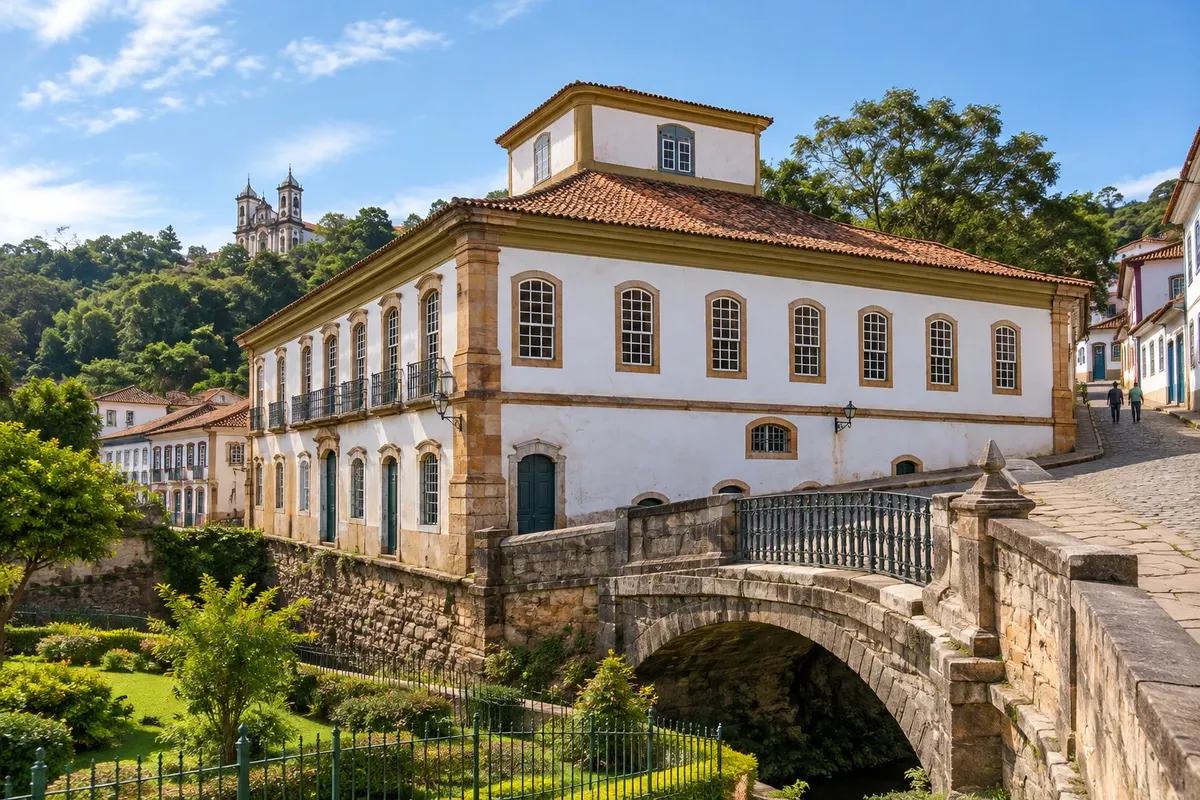
Behind it opens the Horto dos Contos Park, created in 1799 as Vila Rica’s Botanical Garden, the second botanical garden in Brazil. It has 32 hectares of forest in the middle of the historic centre, with 2.5 km of trail and three entrances: via Casa dos Contos, via Pilar and via the bus station. It serves to descend to Pilar through the woods.
The Basilica of Our Lady of Pilar has an interior entirely covered in gilt woodwork. The current work began around 1728, and the return of the Blessed Sacrament to the temple in 1733 was celebrated with the Eucaristic Triumph procession. The decoration took more than twenty years: woodwork, painting and panels covered with gold leaf. The same ticket grants access to the Museum of Sacred Art, in the crypt, with about 400 pieces from the 17th to the 19th centuries: images, resplendences, documents and vestments.
From Pilar, follow Rua Getúlio Vargas, opened in the 18th century for that procession’s route. Along the way there is a viewpoint facing the basilica and the hills that rise to Itacolomi. Ahead, in the Rosário neighbourhood, is the Church of Our Lady of Rosário, with a plan formed by two ellipses, a curved façade and cylindrical towers—a rare shape in Brazil.
Stops: Rua São José, Casa dos Contos Museum, Horto dos Contos Park, Basilica of Our Lady of Pilar, Ouro Preto Museum of Sacred Art, Rua Getúlio Vargas Viewpoint, Church of Our Lady of Rosário.
Includes: Self-guided walking. Casa dos Contos and Horto dos Contos have no entrance fee. The Basilica of Pilar charges admission, which also covers the Museum of Sacred Art: check the current rates.
Tip: The Casa dos Contos and the Basilica of Pilar are closed on Mondays. The Church of Rosário usually opens for visits only in the afternoon: leave it for last. The basilica interrupts visits around lunchtime; check before descending.
Best time: All year. After heavy rain the Horto trail becomes slippery: descend by the street.
Alto da Cruz and Padre Faria: Santa Efigênia and the hill’s mines
From Antônio Dias Bridge on foot, with a steep climb, or by taxi to the upper area about 3 hours afternoon moderate to strenuous, due to the hill
Above Antônio Dias, Alto da Cruz preserves the memory of Vila Rica’s Black population. The Church of Santa Efigênia was built by the Brotherhood of Our Lady of the Rosary of the Blacks in a work that seems to have started in 1733 and continued until 1785; that is why the temple bears both names. Oral tradition says it was built with gold taken from the Encardideira mine by Chico Rei and his people. In the façade, a niche houses an image of Our Lady of the Rosary. Inside there are four side altars, two of them in the Dom João V style, rich in detail.
Few people notice the viewpoint next to the church. From there you can see, from above, Conceição, Mercês and Perdões, São Francisco de Assis, São Francisco de Paula and the Museum of Inconfidência.
On the same hill are three mines open to visitors. The Jeje Mine is 160 meters long, and archaeological evidence indicates it was opened between 1711 and 1713. The visit presents enslaved Africans as skilled in mining and other trades. The May 13 Mine, about 180 meters long, shows the folds of the Serra de Ouro Preto rocks and iron tools of the era; the entrance, made of canga, the region’s iron ore rock, overlooks Santa Efigênia and Itacolomi Peak. The Santa Rita Mine, next to the Padre Faria archaeological site, is among the oldest and has about 115 meters prepared for the guided tour, in a labyrinth of bifurcations.
The climb from Antônio Dias Bridge is long and steep. Those who want to spare their legs take a taxi up and walk down, stopping at the mines.
Stops: Mother Church of Santa Efigênia, Santa Efigênia Viewpoint, Jeje Mine, May 13 Mine, Santa Rita Mine.
Includes: Guided paid tours at each mine; prices are arranged directly with each one. Check at the church whether there is an admission fee on the day.
Tip: The Church of Santa Efigênia is closed on Mondays. Mina Santa Rita receives visitors only by prior arrangement. Inside the mines temperatures are lower and the floor is uneven: wear closed shoes and bring a light jacket.
Best time: All year round. For the viewpoint, choose clear-sky days, which are more common from May to August.
Gold mines of Antônio Dias and São Cristóvão
From Dom Silvério Street, Antônio Dias on foot between the Antônio Dias mines; taxi to São Cristóvão 30 to 40 minutes in each mine morning or afternoon easy; there are sections with low ceilings
Ouro Preto has eight colonial-period mines prepared for visits, all guided. Five are located outside Alto da Cruz, and the choice depends on what you want to see.
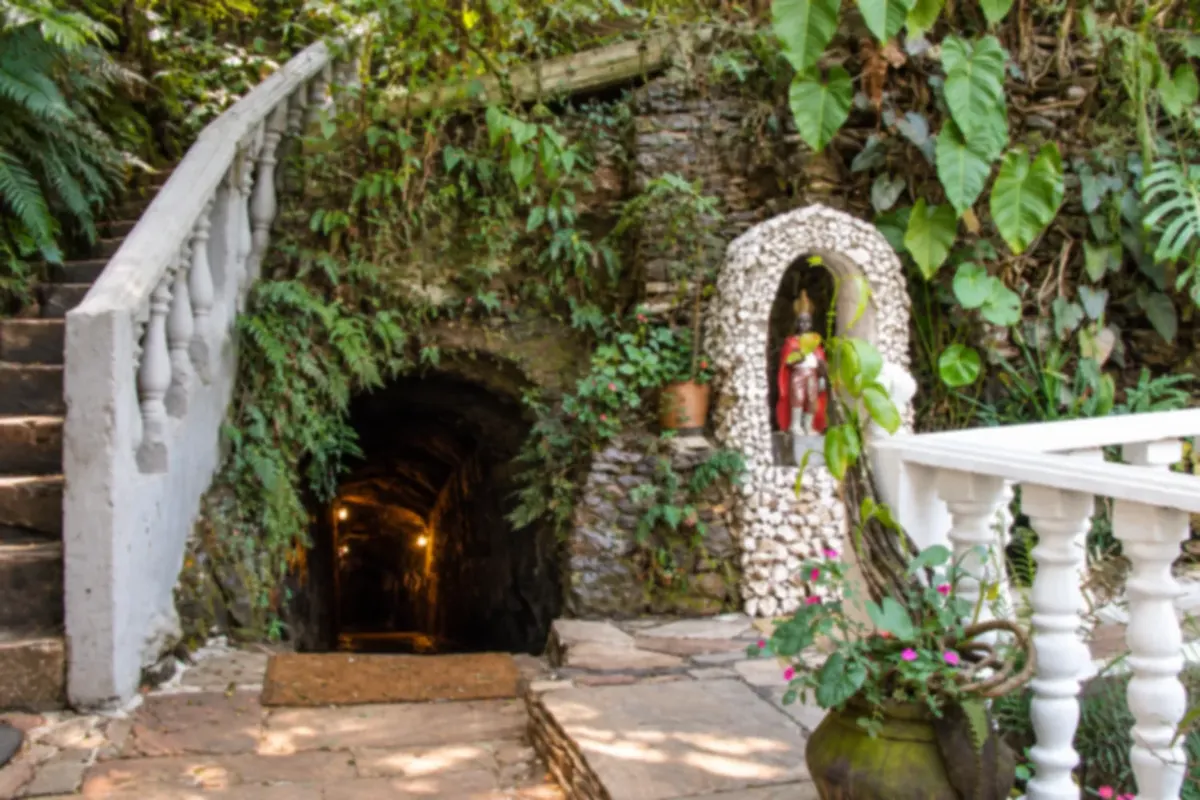
Chico Rei Mine is the best known. It is at the back of a house on Dom Silvério Street. Oral tradition says it belonged to Galanga, Chico Rei, an African who was enslaved and reportedly bought his freedom and the mine. There are 175 galleries on three levels, with 325 meters lit for the regular visit; there is also a long route, two to four hours, through galleries that are off the basic circuit.
On the same street, the Palácio Velho Mines have 108 meters underground and 80 meters of galleries. Bijoca Mine, also in Antônio Dias, was rediscovered in the backyard of a house bought in 1962 by a resident who gave the place its name. It has high corridors of about 2 meters, well lit, 200 meters of route on three levels and a collection of objects found in the galleries. It is an option for those who fear tight spaces.
The Grande Mina Central is 350 meters from Praça Tiradentes and is the most extensive in the city, with more than 600 meters of galleries open to visitors. Mineral outcrops of iron appear on the walls.
Mina Du Veloso is in another neighborhood, São Cristóvão, about 1.8 km from the square. There are over 400 meters of galleries that connect halls supported by rock pillars. It also functions as a cultural center, and the visit highlights the technical knowledge of African miners.
In all of them, the guide explains how the gold was followed inside the rock and shows the marks of the tools.
Stops: Chico Rei Mine, Palácio Velho Mines, Bijoca Mine, Grande Mina Central, Mina Du Veloso.
Includes: Guided visit. Each mine has its own admission fee, paid at the entrance; prices are provided by each site.
Tip: One or two mines are enough for most visitors. For a quick visit, the Grande Mina Central is near the square; for more historical context, Chico Rei or Du Veloso. Avoid guided-tour times in mid-morning, and bring a light jacket.
Best time: All year. Because they are covered, they are a perfect option for rainy afternoons.
Ouro Preto viewpoints: from Morro São Sebastião to Mercês de Cima
From Tiradentes Square on foot and by taxi or car to the higher points 2 to 3 hours late afternoon easy by car; strenuous on foot
Ouro Preto is best understood from above, when the church towers line up on the hills. There are viewpoints at several spots, almost all open and free of charge.
The closest is Mercês de Cima viewpoint, in front of the Church of Nossa Senhora das Mercês e Misericórdia, a few meters from Praça Tiradentes, on the route for those arriving by bus station. It often gathers people at late afternoon: the sun sets toward the side of the Church of São Francisco de Paula, which sits isolated on a hill. This church, the most recent religious construction in the city, has on its altar an image of the patron made by Aleijadinho and, outside, another open view of the center.
The most complete view is from the Morro São Sebastião Viewpoint, up on the ridge, above the School of Mines. From there you can identify Conceição, Mercês and Perdões, São Francisco de Assis, Carmo, the Museum of the Inconfidência and, in the distance, Pico do Itacolomi. Pedestrian access is via Henri Gorceix Street, a long slope; by car or taxi it takes a few minutes.
On the road to Mariana, along Conselheiro Quintiliano Street, the wall of Mirante das Lajes frames Antônio Dias and Praça Tiradentes between the hills. On the opposite side, the viewpoint at UFOP’s Morro do Cruzeiro campus provides a 180-degree view of the historic center, with Pilar seen from behind.
If you do not want to climb, there are viewpoints inside the center: the one on Getúlio Vargas Street, facing Pilar, and Mercês de Baixo viewpoint, facing Antônio Dias.
Stops: Mercês de Cima Viewpoint, Church of Nossa Senhora das Mercês e Misericórdia, Church of São Francisco de Paula, Morro São Sebastião Viewpoint, Mirante das Lajes, UFOP Viewpoint.
Includes: Self-guided visit; there is no fee to enter the viewpoints. Taxi, if used, is extra.
Tip: Combine Morro São Sebastião with Parque das Andorinhas, which is on the same route. The Church of São Francisco de Paula usually opens only in the morning. In winter, bring a jacket: it can be windy at the top and it cools quickly when the sun goes down.
Best time: From May to August, when the sky is usually clear. In summer, afternoon fog and rain can close the view.


 Antarctica
 Argentina
 Bolivia
 Chile
 Colombia
 Ecuador
 Guyana
 French Guiana
 Falkland Islands (Malvinas)
 Paraguay
 Peru
 Suriname
 Uruguay
 Venezuela
 Germany
 Austria
 Belgium
 Croatia
 Denmark
 Slovakia
 Slovenia
 Spain
 Finland
 France
 Greece
 the Netherlands
 Hungary
 Ireland
 Iceland
 Italy
 Luxembourg
 Norway
 Poland
 Portugal
 the United Kingdom
 the Czech Republic
 Sweden
 Switzerland
 Turkey
 Bermuda
 Canada
 the United States
 Greenland
 Mexico
 Saint Pierre and Miquelon
 the Dominican Republic
 Japan
 South Africa
 Egypt
 Australia
 Fiji
 New Zealand
 Papua New Guinea


 March/April