

 Antarctica
 Argentina
 Bolivia
 Chile
 Colombia
 Ecuador
 Guyana
 French Guiana
 Falkland Islands (Malvinas)
 Paraguay
 Peru
 Suriname
 Uruguay
 Venezuela
 Germany
 Austria
 Belgium
 Croatia
 Denmark
 Slovakia
 Slovenia
 Spain
 Finland
 France
 Greece
 the Netherlands
 Hungary
 Ireland
 Iceland
 Italy
 Luxembourg
 Norway
 Poland
 Portugal
 the United Kingdom
 the Czech Republic
 Sweden
 Switzerland
 Turkey
 Bermuda
 Canada
 the United States
 Greenland
 Mexico
 Saint Pierre and Miquelon
 the Dominican Republic
 Japan
 South Africa
 Egypt
 Australia
 Fiji
 New Zealand
 Papua New Guinea
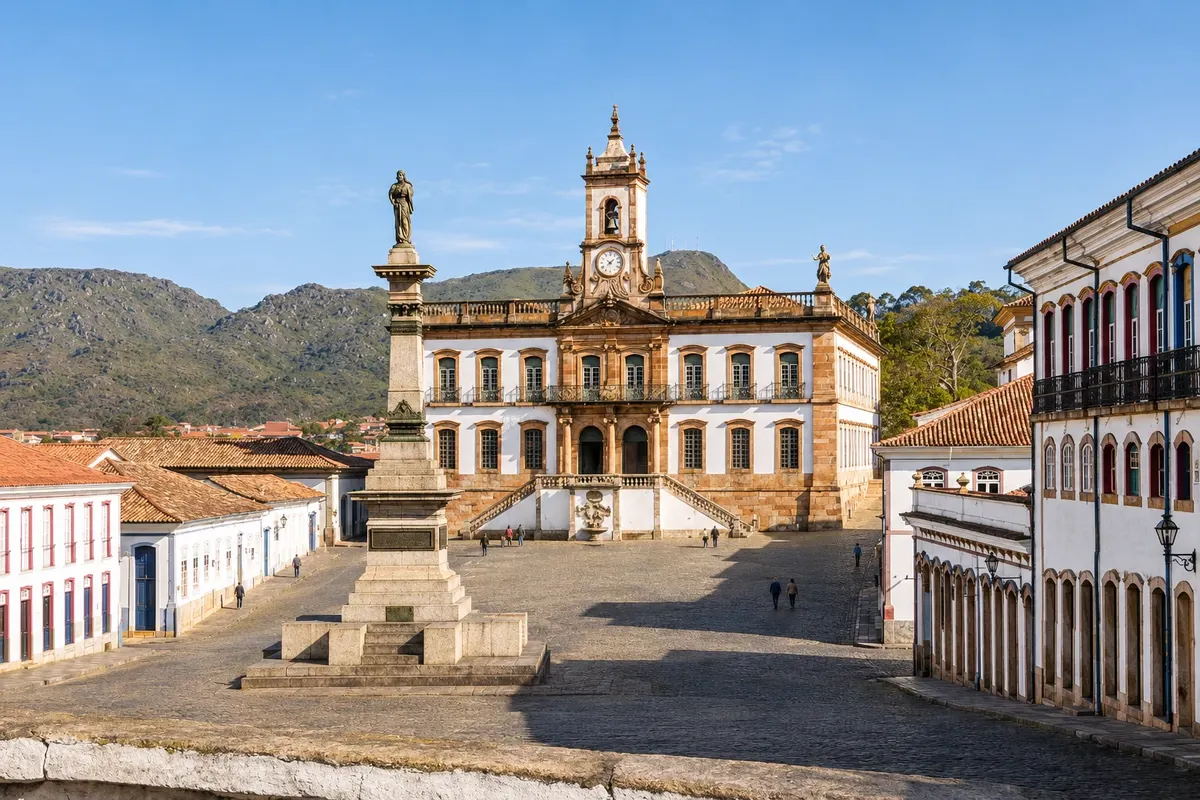
historic center · Ouro Preto, MG
Historic Center of Ouro Preto and Praça Tiradentes
Colonial ensemble of the former Vila Rica, the first Brazilian city inscribed on the UNESCO World Heritage List, in 1980. Hills, baroque churches, fountains and manor houses are arranged around Praça Tiradentes.
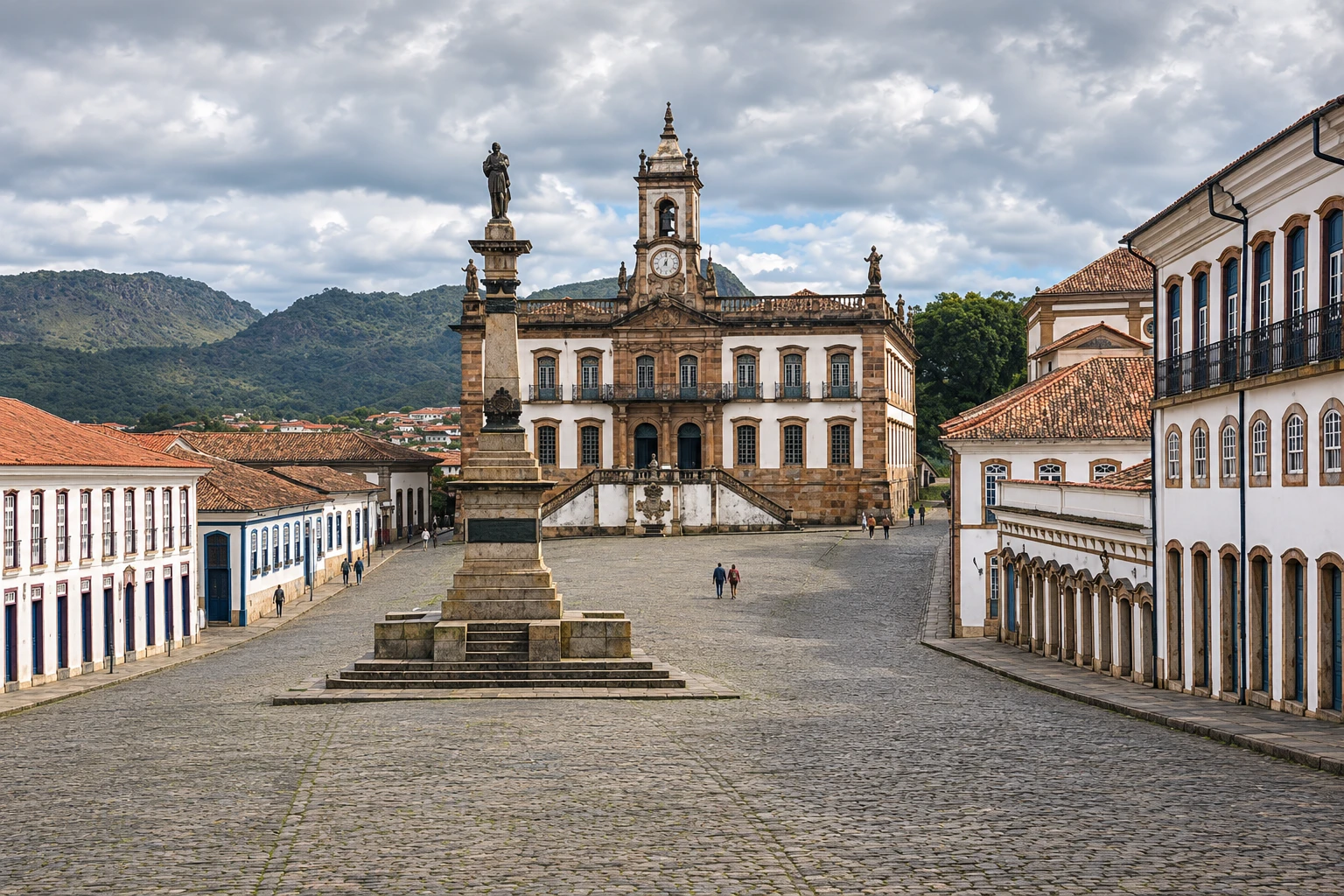
In the photo: Praça Tiradentes, with the monument and the Museum of the Inconfidência in the background.
Illustrative images. The pictures in this guide are illustrations based on the real place, not photographs, and may differ from it.


A look at the place
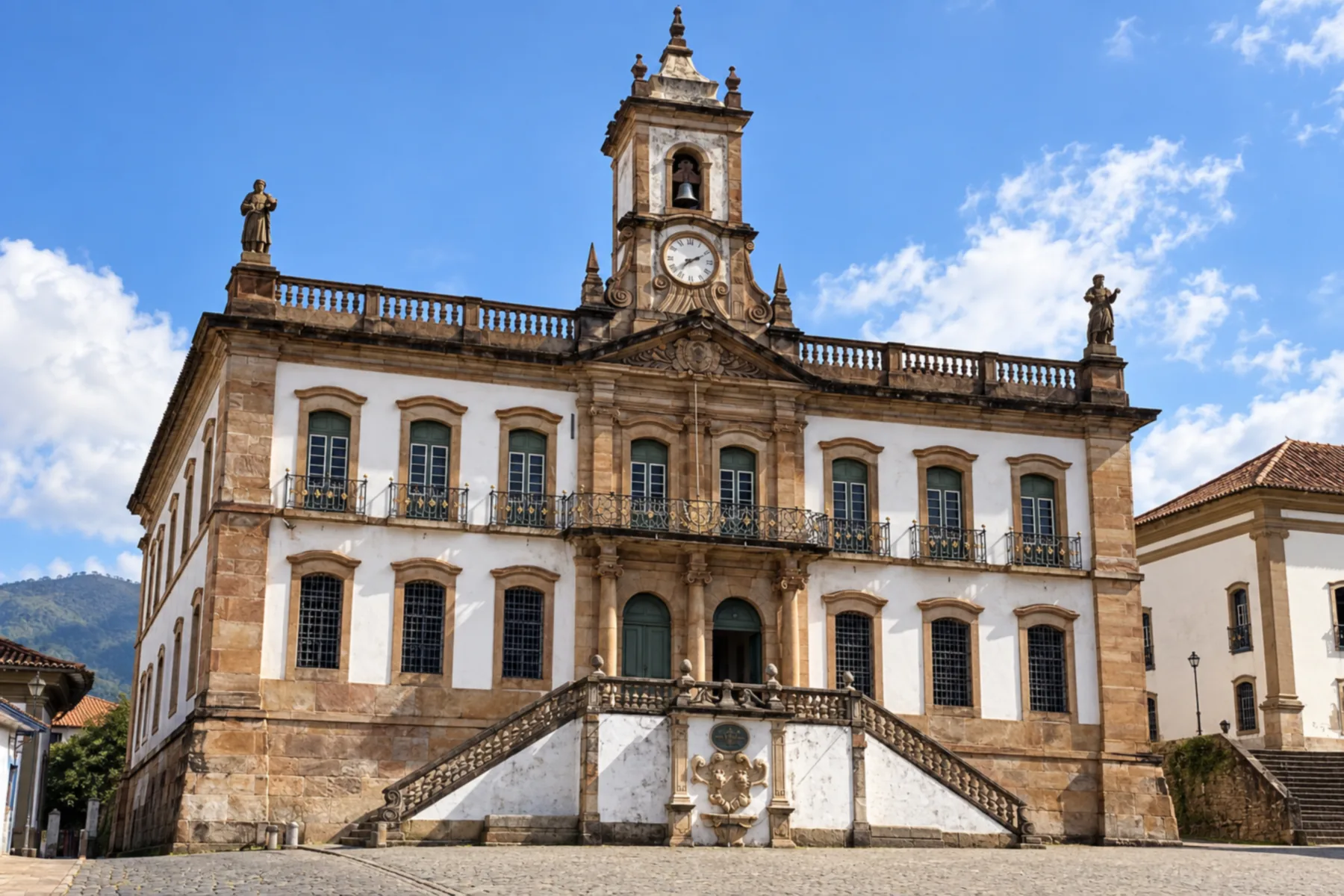
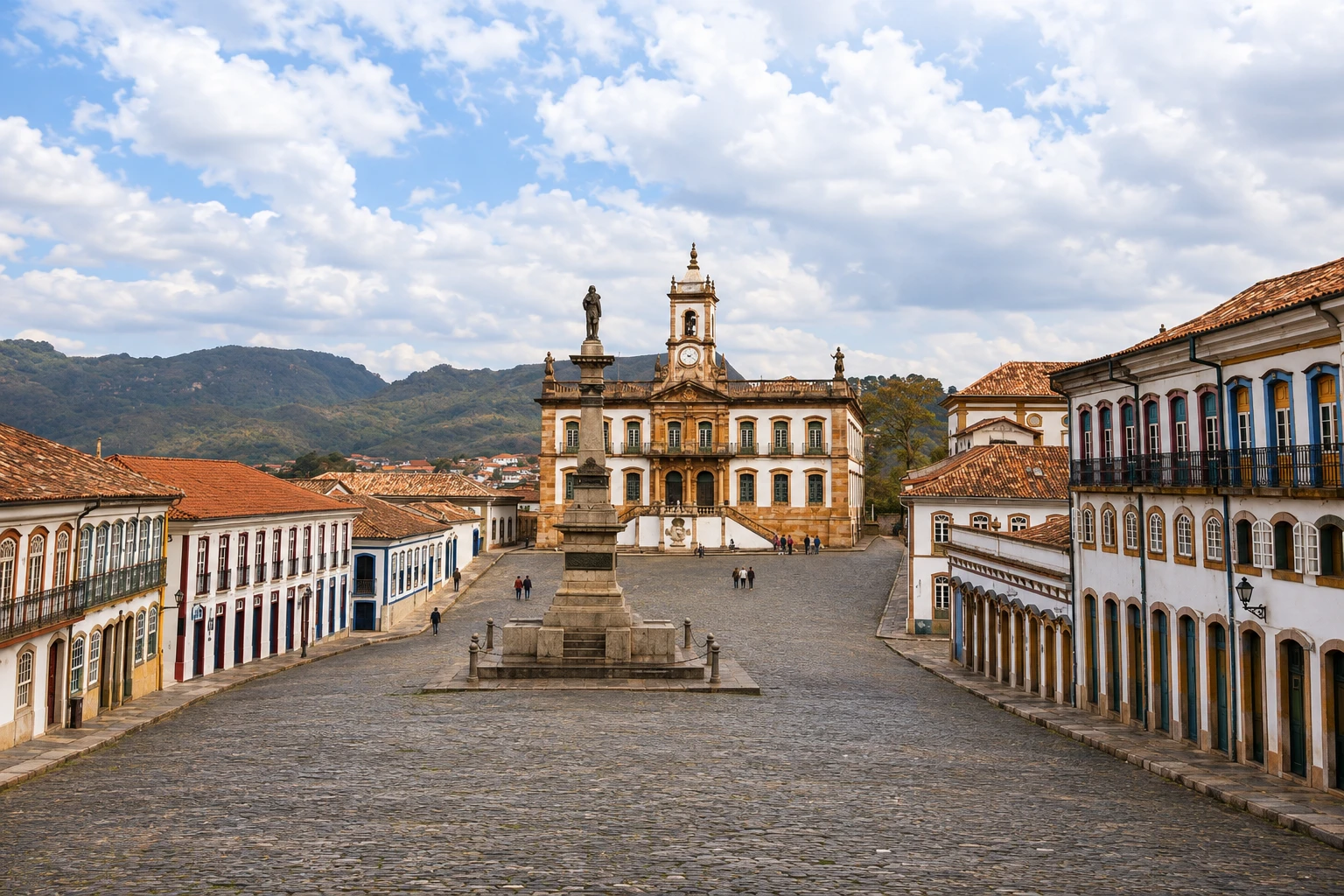
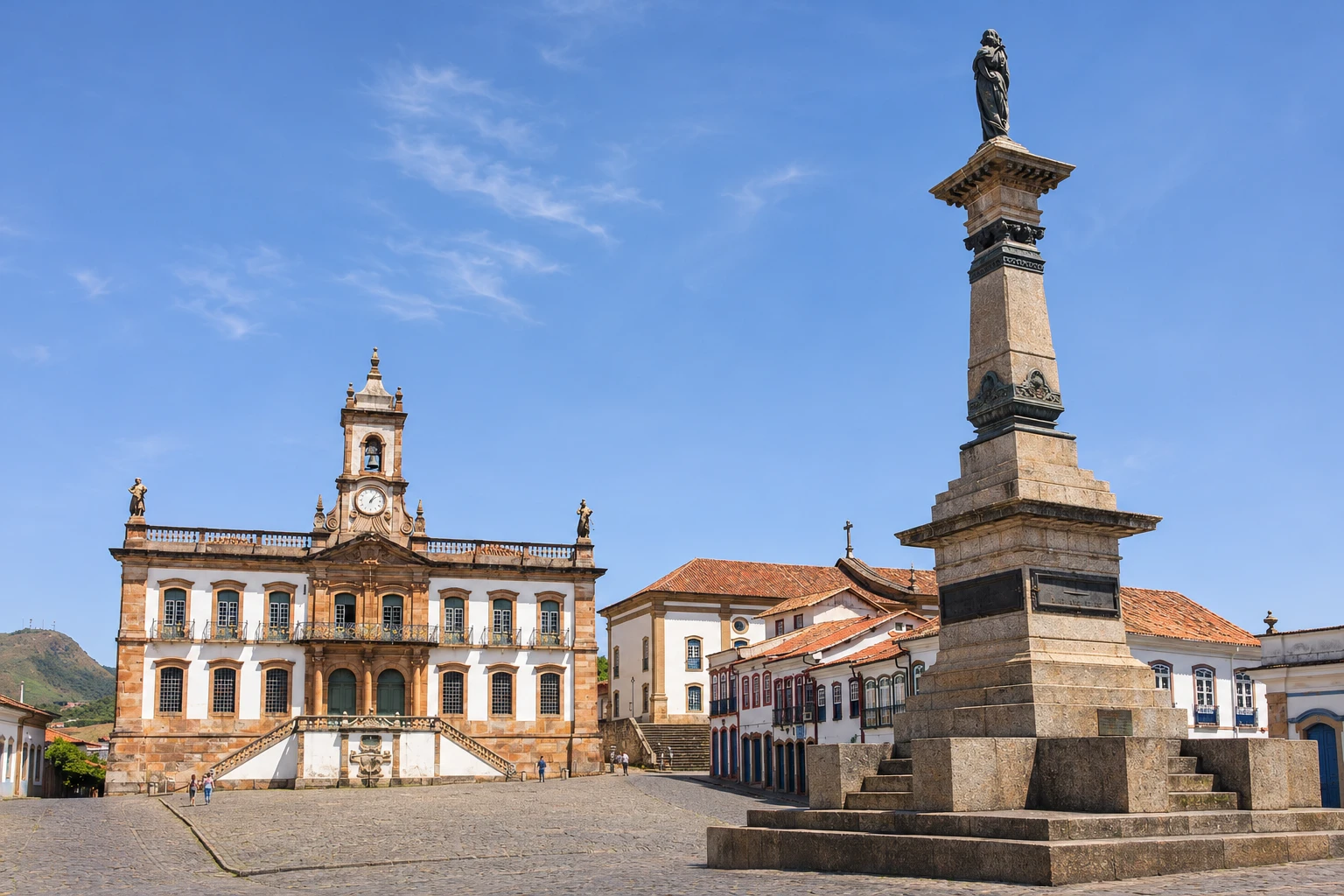
Historic Center of Ouro Preto and Praça Tiradentes in pictures
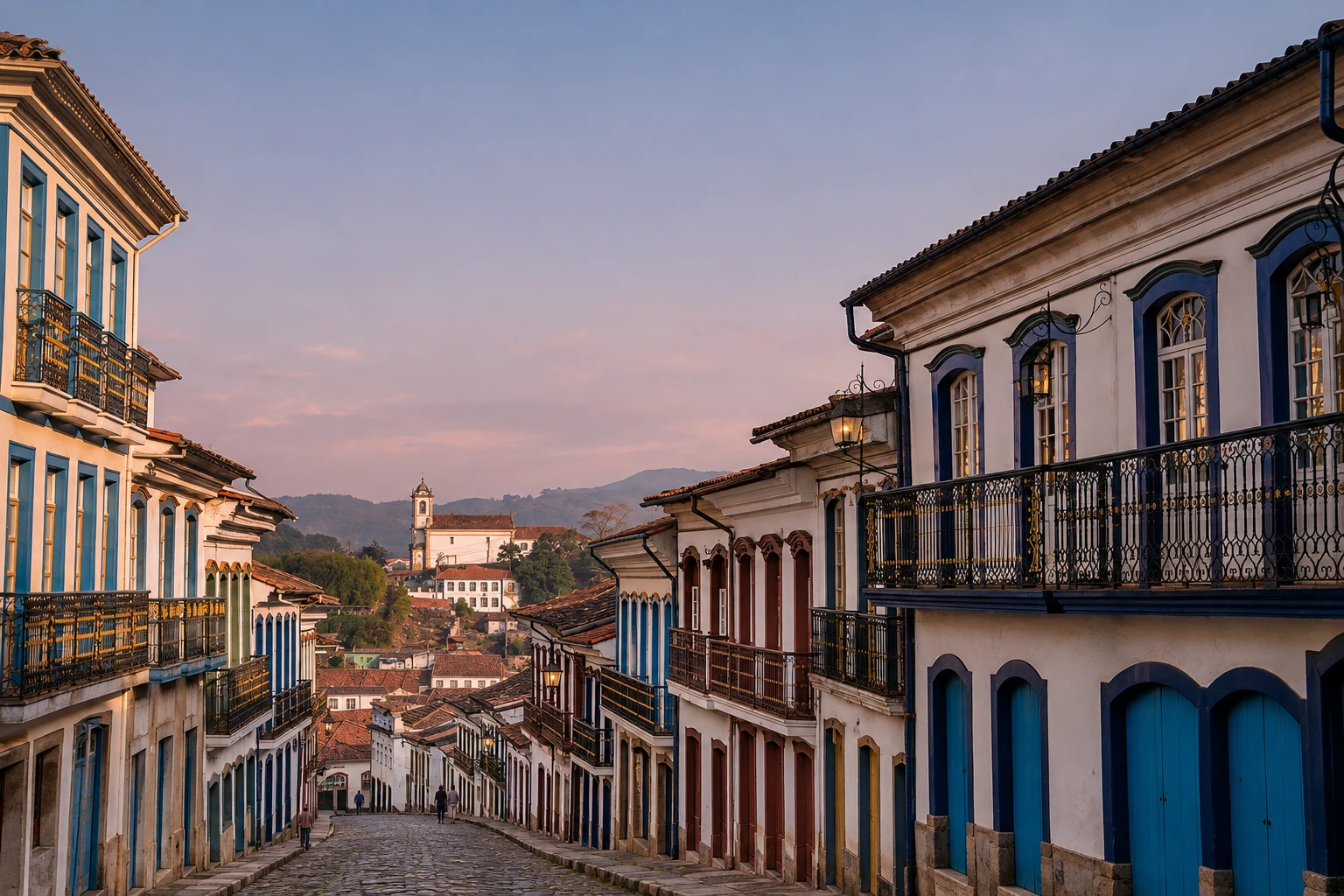
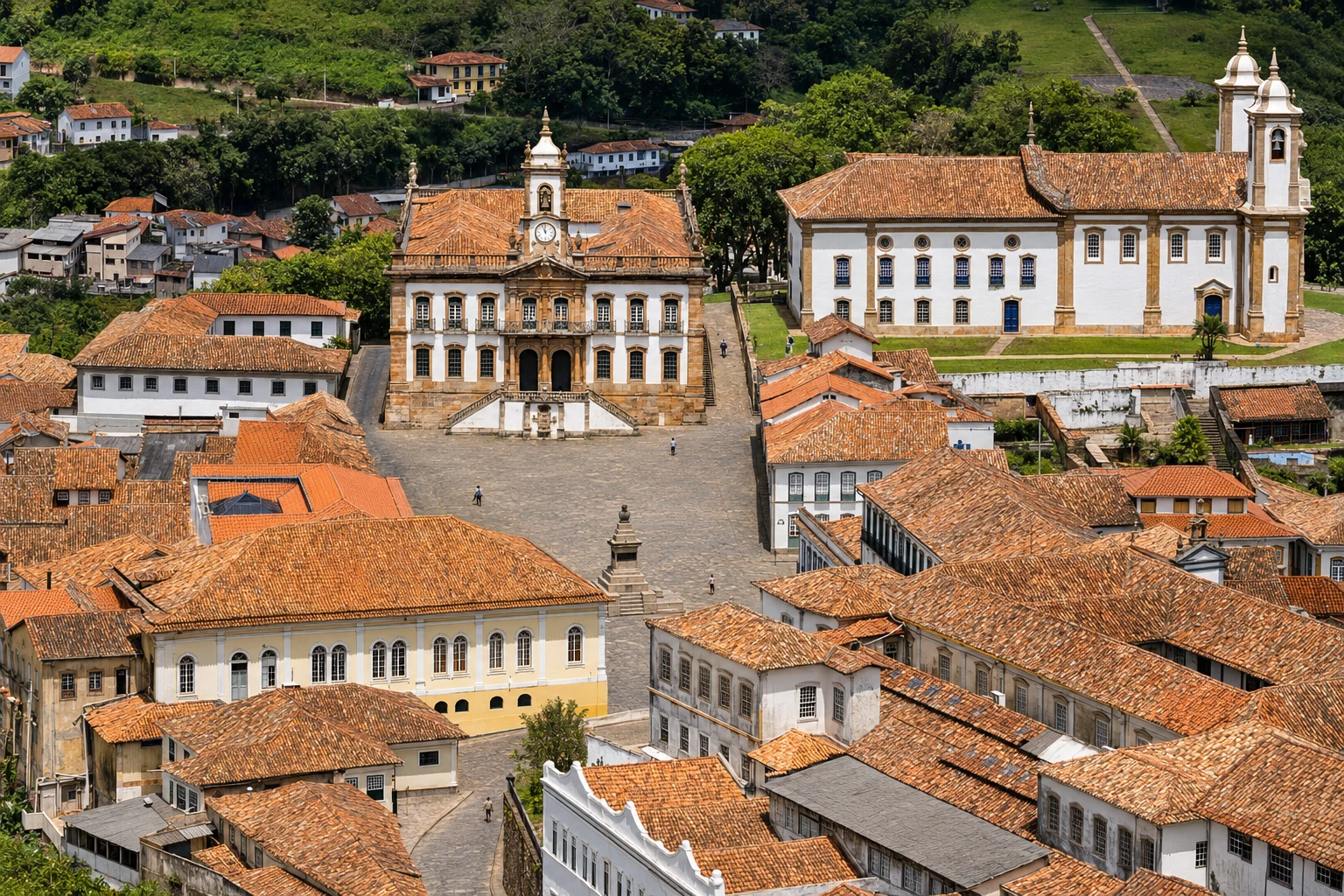
These pictures are illustrations based on the real place, not photographs. They may differ from the place.
Click the picture to enlarge it.
Discover
About Historic Center of Ouro Preto and Praça Tiradentes
The Historic Center of Ouro Preto is the colonial ensemble of the former Vila Rica, founded at the beginning of the 18th century during the gold rush. The town was the capital of Minas Gerais for almost two centuries, until the government seat moved to Belo Horizonte at the end of the 19th century. In 1980, Ouro Preto became the first Brazilian city inscribed by UNESCO on the World Heritage List.
Praça Tiradentes is the heart of the ensemble. On one side stands the old Town Hall and Jail, home to the Museum of the Inconfidência; on the other, the former Palace of the Governors, seat of the School of Mines and its science and technology museum. In the center, the monument to Tiradentes recalls the leader of the Inconfidência Mineira, whose head was displayed there after his execution in 1792.
Stone streets slope down from and up to the square, such as Rua Direita and Rua São José, lined with two-story houses with wooden balconies, fountains and 18th-century bridges. Baroque churches spread across the hills, including São Francisco de Assis, Carmo and the Basilica of Our Lady of Pilar, with works by Aleijadinho and Manuel da Costa Ataíde.
The visit is done on foot, walking up and down, with stops at churches, museums and plazas. The city is protected by IPHAN, and the view of roofs, towers and hills is the same seen in old prints and photographs.
The center gathers restaurants serving Minas cuisine, cafés, craft shops and the soapstone market at Largo de Coimbra. Mariana is about 12 km away, and the old mines that are open to visitors complete the trip.
Before you go
Practical information
Cidade Turismo reviews its information regularly, but something may have changed. Check with the place before planning your trip.
How much time to set aside
A full day for the walking tour and the main churches and museums; two or three days to explore the city at a relaxed pace.
Best time
From April to September, when it usually rains less and the stone slopes are safer; from June to August the nights are cold. Holy Week and Carnival fill the city. Start early at Praça Tiradentes, and check opening days for churches and museums in advance.
How to get there
Praça Tiradentes sits atop the center of Ouro Preto, a few minutes on foot from the bus station. The historic center is explored on foot; cars face narrow, steep streets, so it’s better to leave vehicles at the pousada’s parking or in paid lots.
Tip
Wear shoes with firm soles, because the paving stones are smooth, especially when wet. Plan your route by neighborhoods so you don’t climb and descend the same slope several times. From the churchyard of the hilltop churches you can see the roofs of the center.
Get your questions answered
Frequently asked questions about Historic Center of Ouro Preto and Praça Tiradentes
What to see in Ouro Preto’s Historic Center?
Praça Tiradentes, with the Museum of the Inconfidência and the former Palace of the Governors; the slopes of Rua Direita and Rua São José; the churches of São Francisco de Assis, Carmo and the Basilica of the Pilar; the fountains, bridges and the soapstone market at Largo de Coimbra.
Why is Ouro Preto a World Heritage site?
Because of the colonial urban and architectural ensemble of the former Vila Rica, the center of 18th-century gold mining, with baroque churches and works by Aleijadinho. It was the first Brazilian city inscribed by UNESCO, in 1980.
How many days to stay in Ouro Preto?
One day is enough for the center and the main churches; two or three days allow visits to museums, mines and Mariana, about 12 km away.
What is in Praça Tiradentes?
The Museum of the Inconfidência, housed in the old Town Hall and Jail; the former Palace of the Governors, seat of the School of Mines; and the monument to Tiradentes in the center of the square.
Can you visit Ouro Preto on foot?
Yes, and it’s the best way. The streets are cobbled and very steep, so wear sturdy shoes and plan your route by neighborhoods.
Beyond the guide


