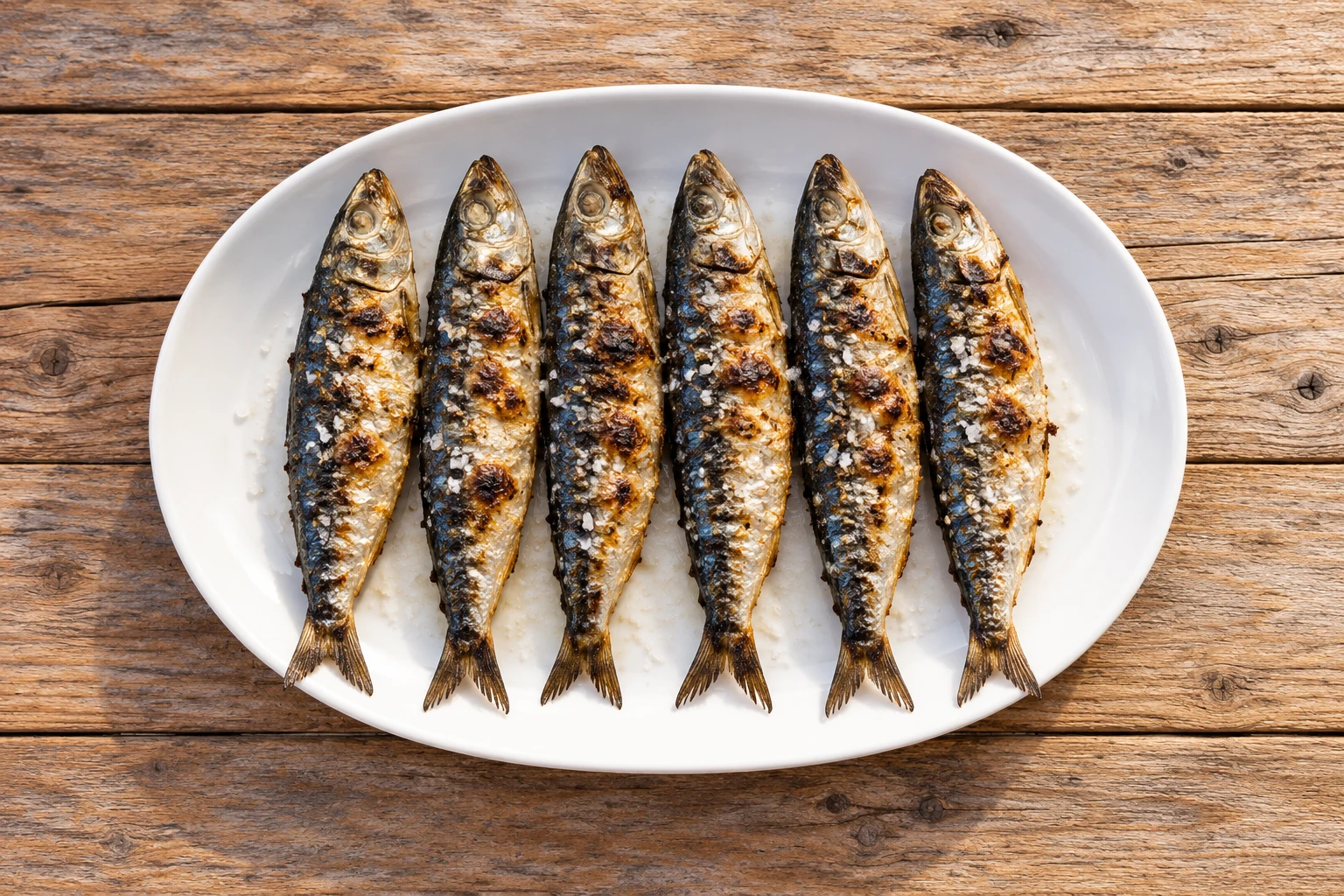
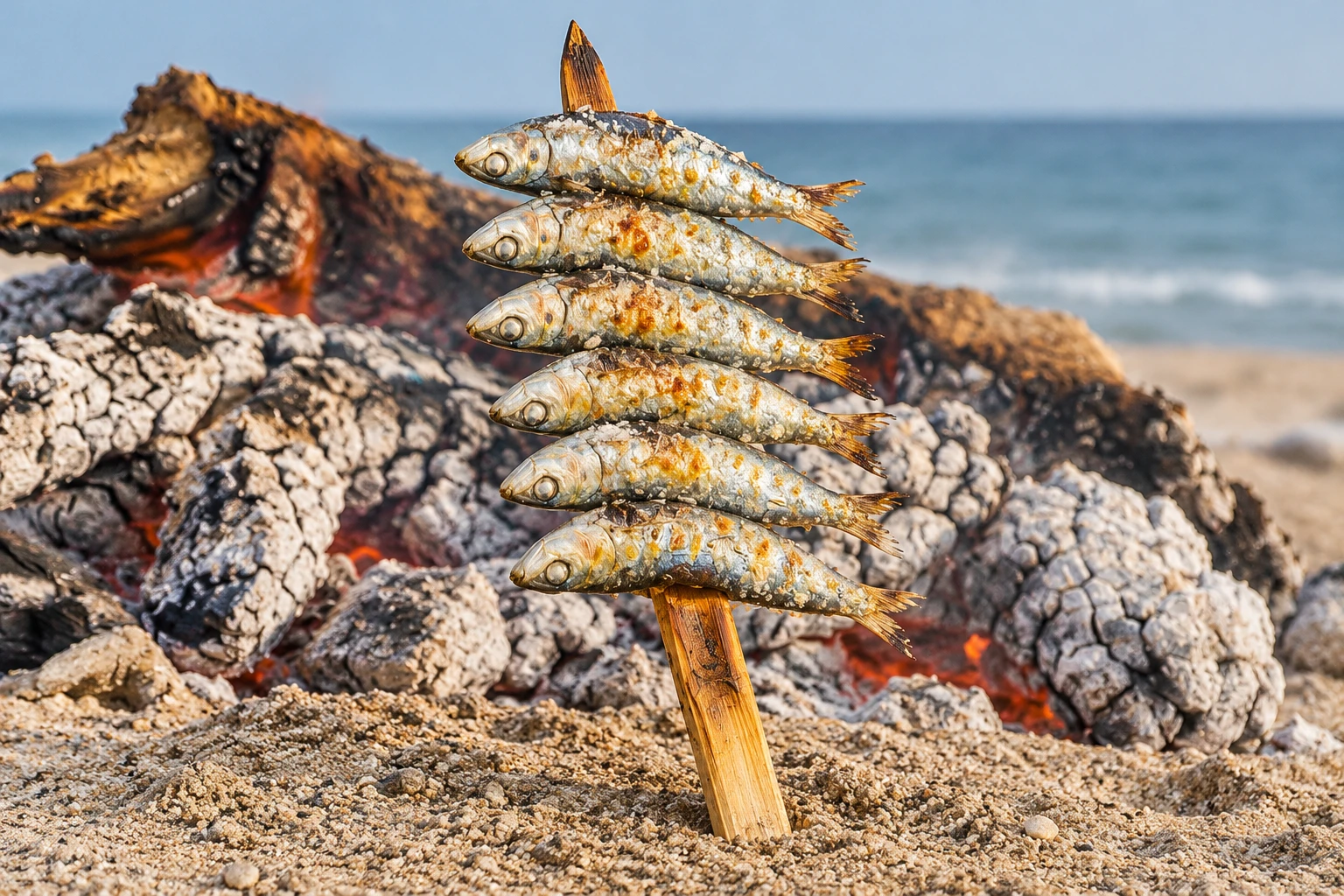
El espeto is Málaga’s way of grilling fish on the beach. Five or six sardines are threaded onto a thin reed, seasoned with coarse salt, and the reed is stuck into the sand, leaning beside a wood fire. The espetero turns the reeds at the right moment until the skin is charred and the flesh cooked through.
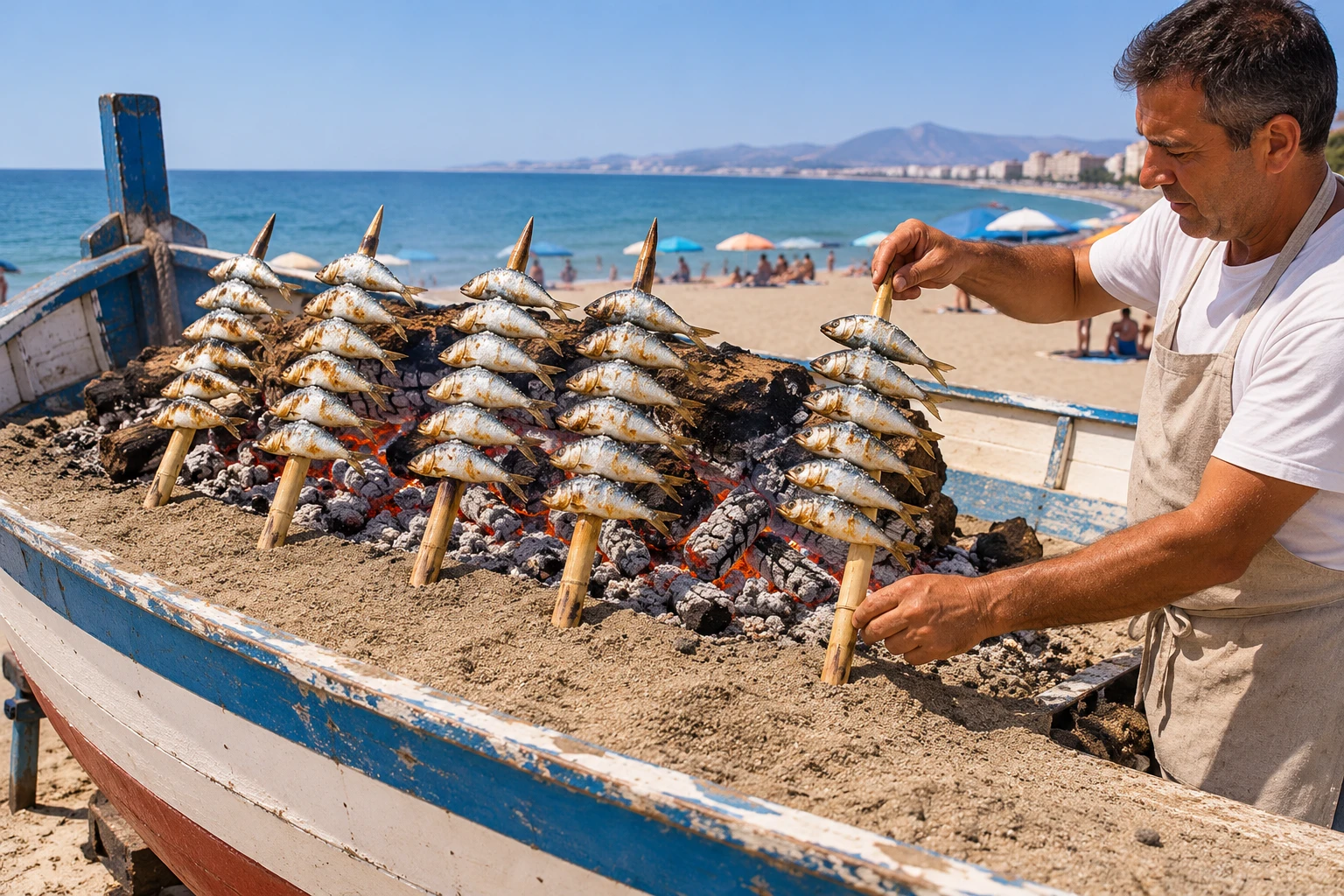
At the chiringuitos, it’s common to use a boat adapted and filled with sand as the base for the fire and to hold the reeds. Olive wood is the most commonly used fuel. The craft of skewering, passed down through generations, is recorded in the Atlas of Intangible Heritage of Andalusia, of the Andalusian Institute of Historical Heritage, as the knowledge of Málaga’s seaside communities.
The fishing neighborhoods on the city’s east side, El Palo and Pedregalejo, are the most associated with el espeto. The tradition of El Palo is linked to the old seaside eateries and to serving fish right by the sea. In 2006, Málaga unveiled a statue honoring the espetero on the city’s western promenade.
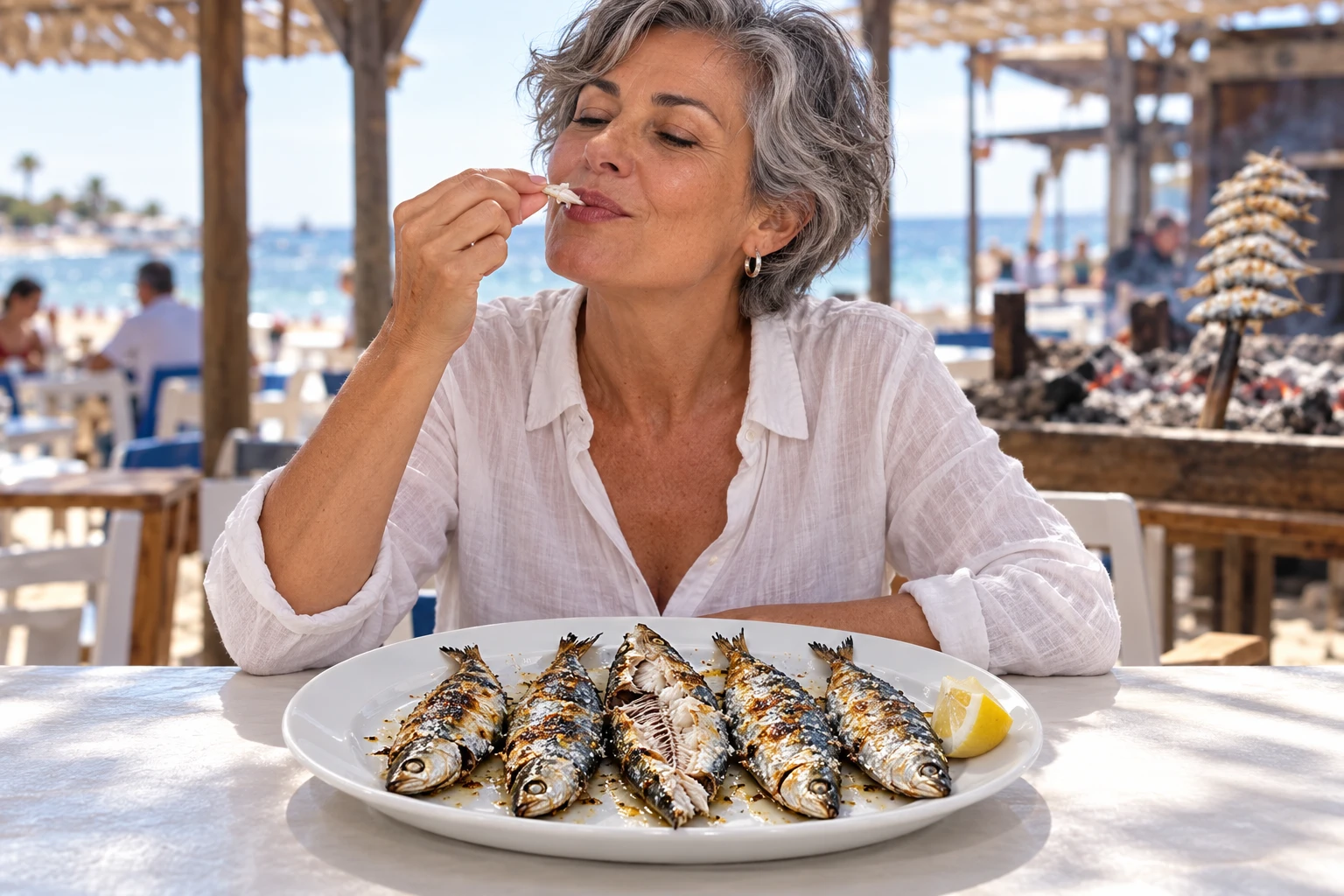
El espeto is eaten on the beach, with your hands, in the months when the sardines are fattest.


 Brazil
 Argentina
 Bolivia
 Chile
 Colombia
 Ecuador
 Guyana
 French Guiana
 Falkland Islands (Malvinas)
 Paraguay
 Peru
 Suriname
 Uruguay
 Venezuela
 Germany
 Austria
 Belgium
 Croatia
 Denmark
 Finland
 France
 Greece
 the Netherlands
 Hungary
 Ireland
 Iceland
 Italy
 Luxembourg
 Norway
 Poland
 Portugal
 the United Kingdom
 the Czech Republic
 Sweden
 Switzerland
 Turkey
 Canada
 the United States
 Mexico
 the Dominican Republic
 South Africa
 Australia
 Fiji
 New Zealand
 Papua New Guinea