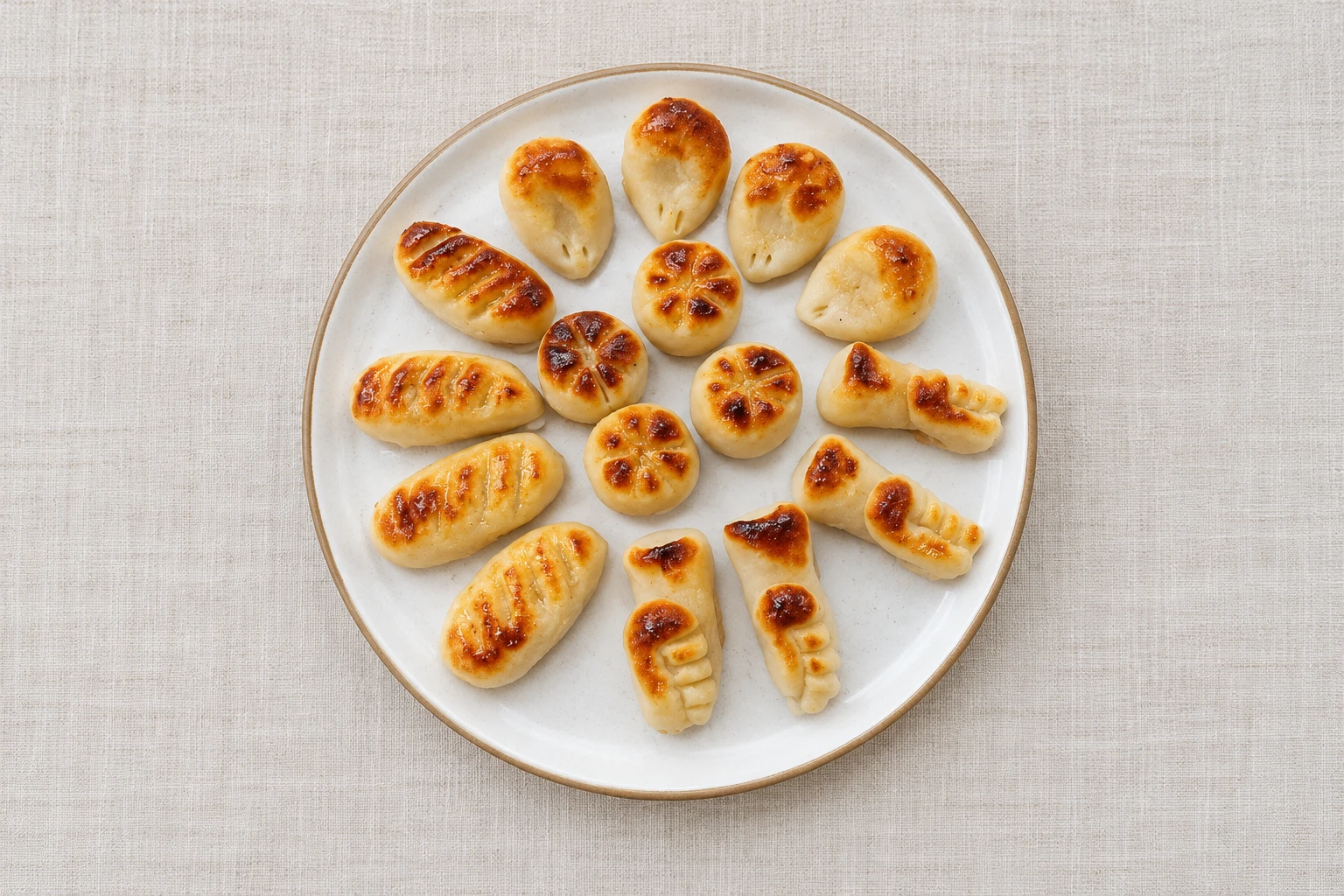
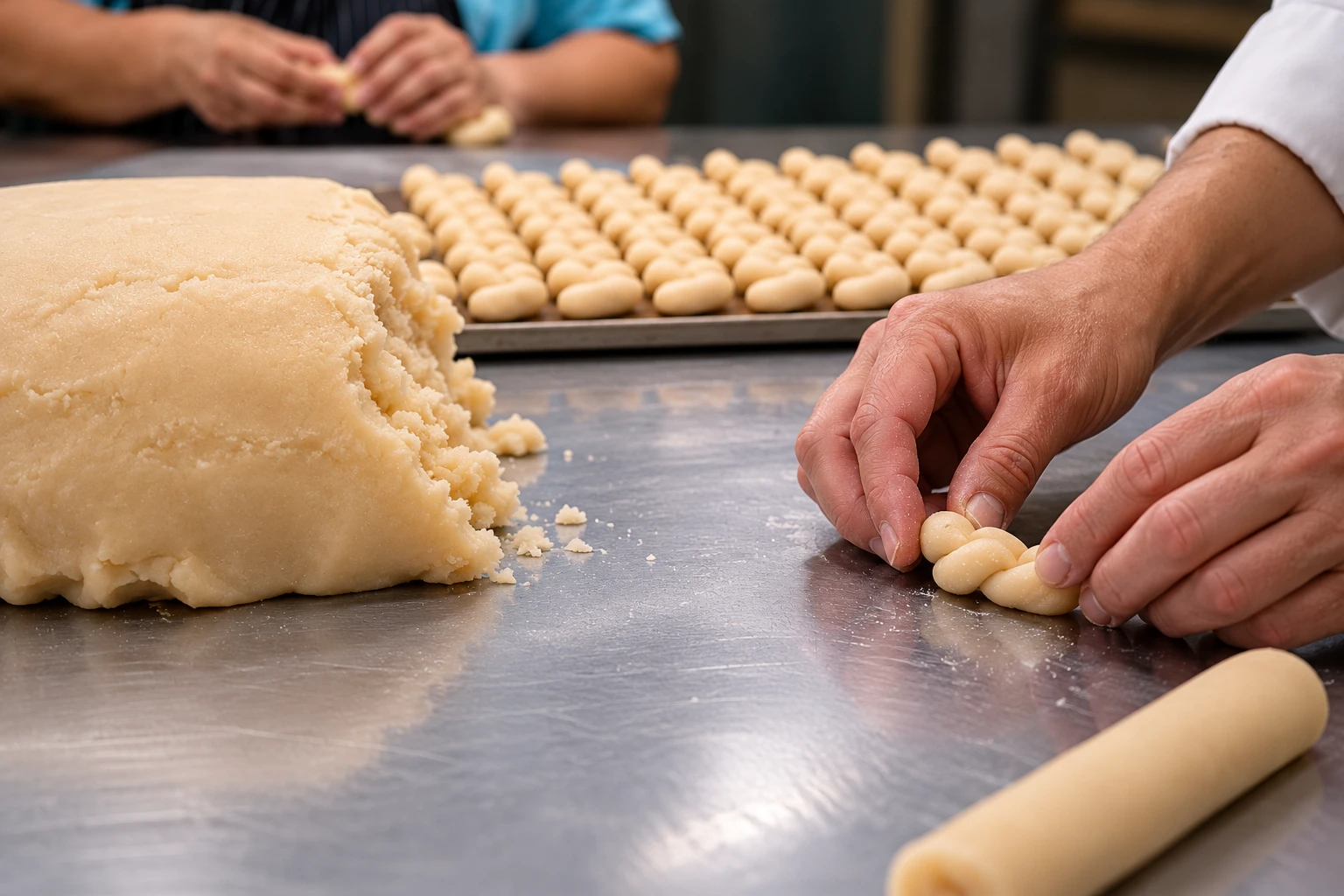
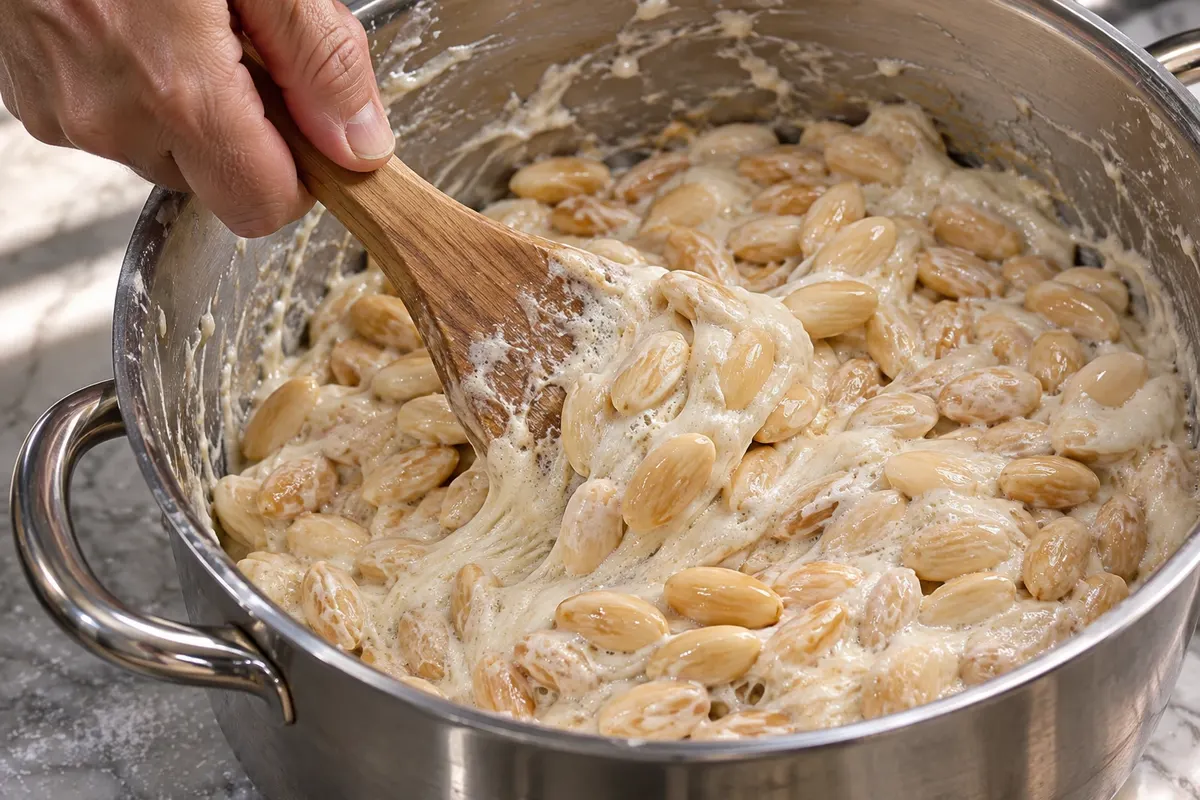
Mazapán is Toledo’s sweet. It is a paste of ground sweet almonds and sugar, worked by hand, shaped into small figures and baked until the surface browns. The Mazapán de Toledo Protected Geographical Indication requires that almonds make up at least half the weight of the paste and defines the province of Toledo as the production area.
The origin is told by tradition. The most repeated version says that, during a time of famine in the 13th century, the nuns of the convent of San Clemente in Toledo made bread with what they had in the storeroom: almond and sugar. Other theories link the sweet to the city’s Arab heritage or to recipes brought from other parts of the Mediterranean. In 1908, Juan Moraleda y Esteban published a monograph on the tradition of Toledo mazapán, now available in the municipal archive.
Shapes are part of the sweet. There are figuritas in different forms, delicias filled with sweet egg yolk, and anguilas — mazapán “eels” with fillings such as sweet egg yolk, sweet potato or pumpkin jam, decorated with sprinkles, traditional on the Christmas table.
Cloistered convents and pastry shops in Toledo still make the sweet, which is sold year‑round and reaches peak production before Christmas.


 Brazil
 Argentina
 Bolivia
 Chile
 Colombia
 Ecuador
 Guyana
 French Guiana
 Falkland Islands (Malvinas)
 Paraguay
 Peru
 Suriname
 Uruguay
 Venezuela
 Germany
 Austria
 Belgium
 Croatia
 Denmark
 Finland
 France
 Greece
 the Netherlands
 Hungary
 Ireland
 Iceland
 Italy
 Luxembourg
 Norway
 Poland
 Portugal
 the United Kingdom
 the Czech Republic
 Sweden
 Switzerland
 Turkey
 Canada
 the United States
 Mexico
 the Dominican Republic
 South Africa
 Australia
 Fiji
 New Zealand
 Papua New Guinea