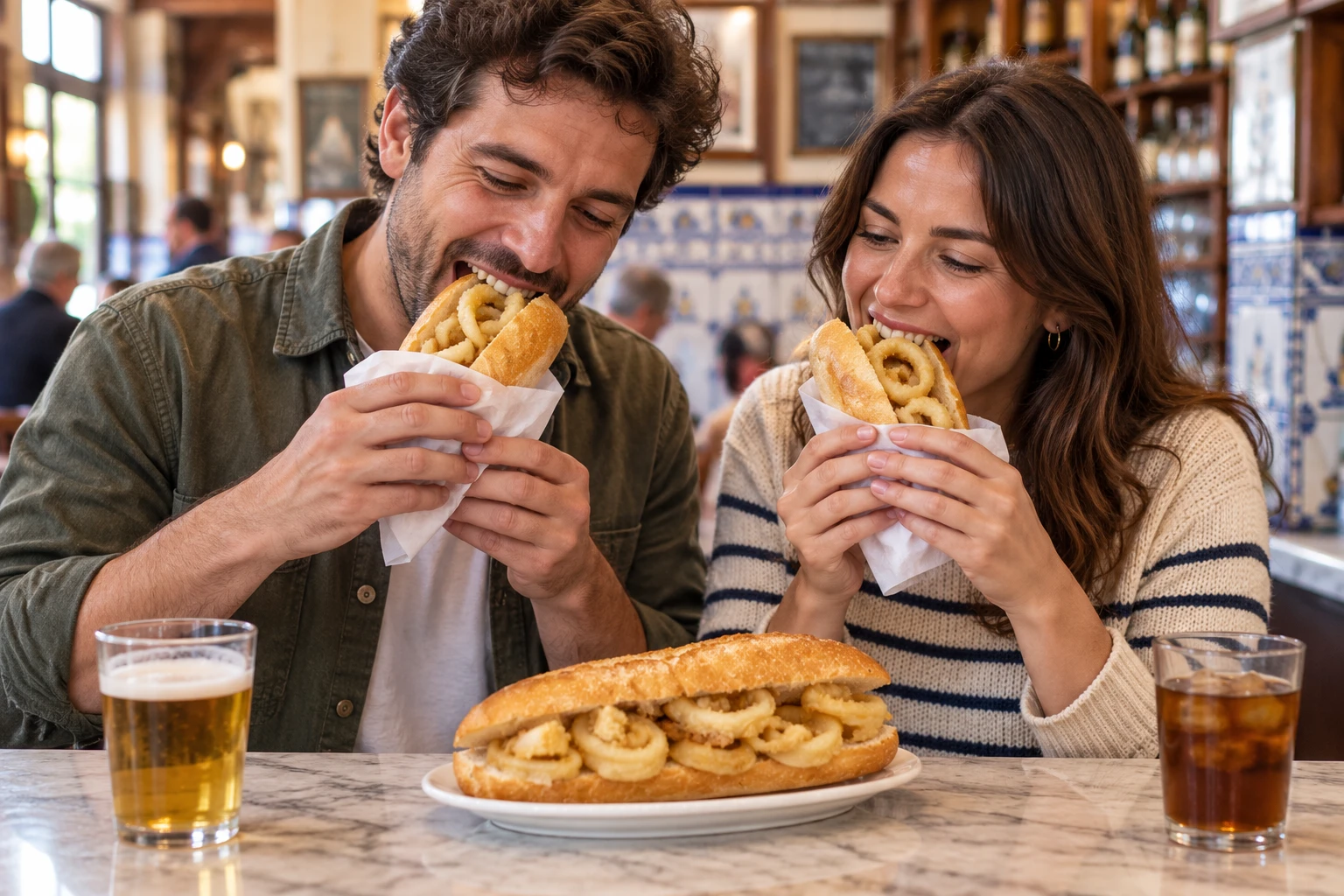
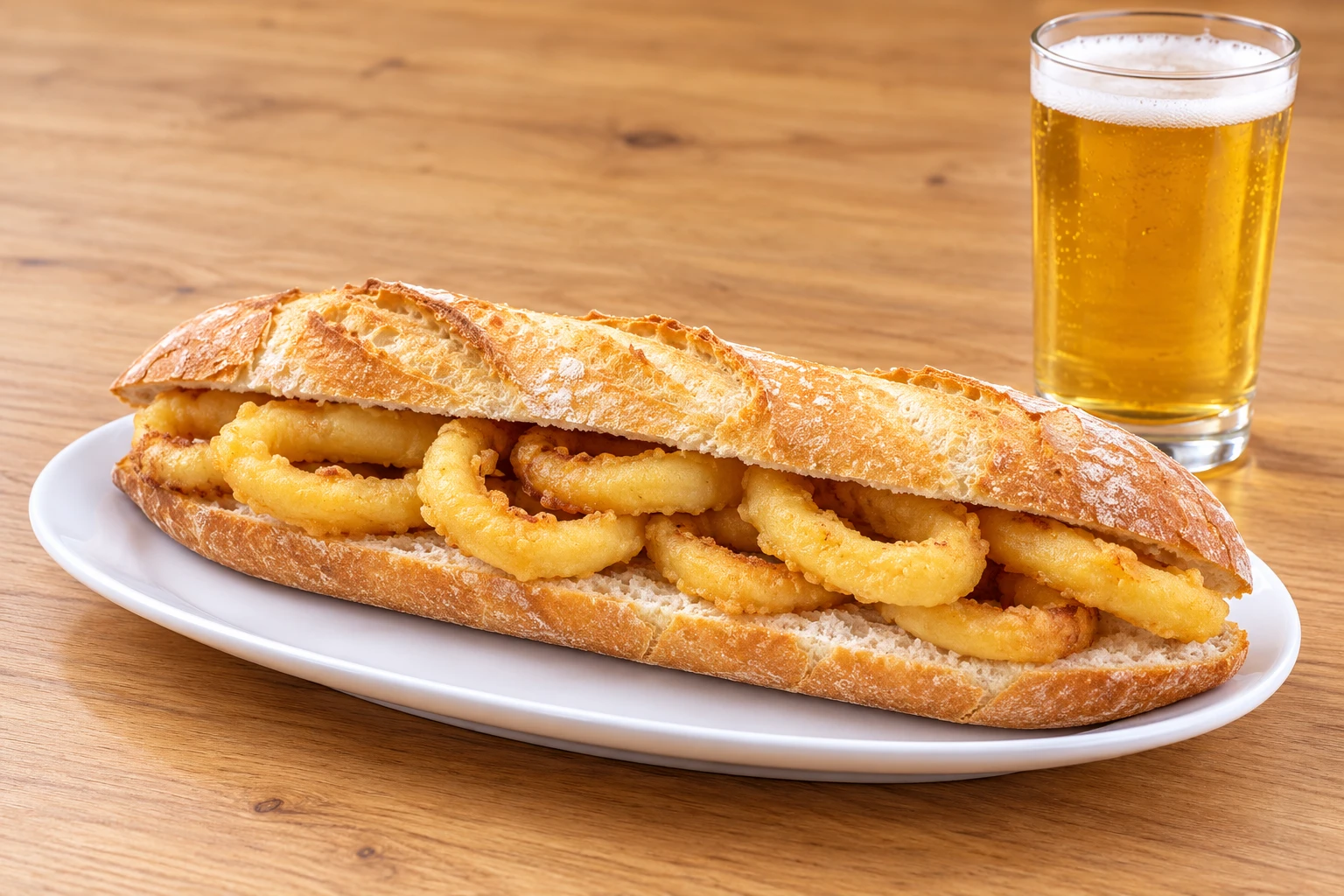
The bocadillo de calamares is the snack most associated with Madrid. The city tourism office, esMadrid, presents it as a gastronomic icon of the city, linked to the bars on the streets around the Plaza Mayor, where it is served at the bar, wrapped in paper.
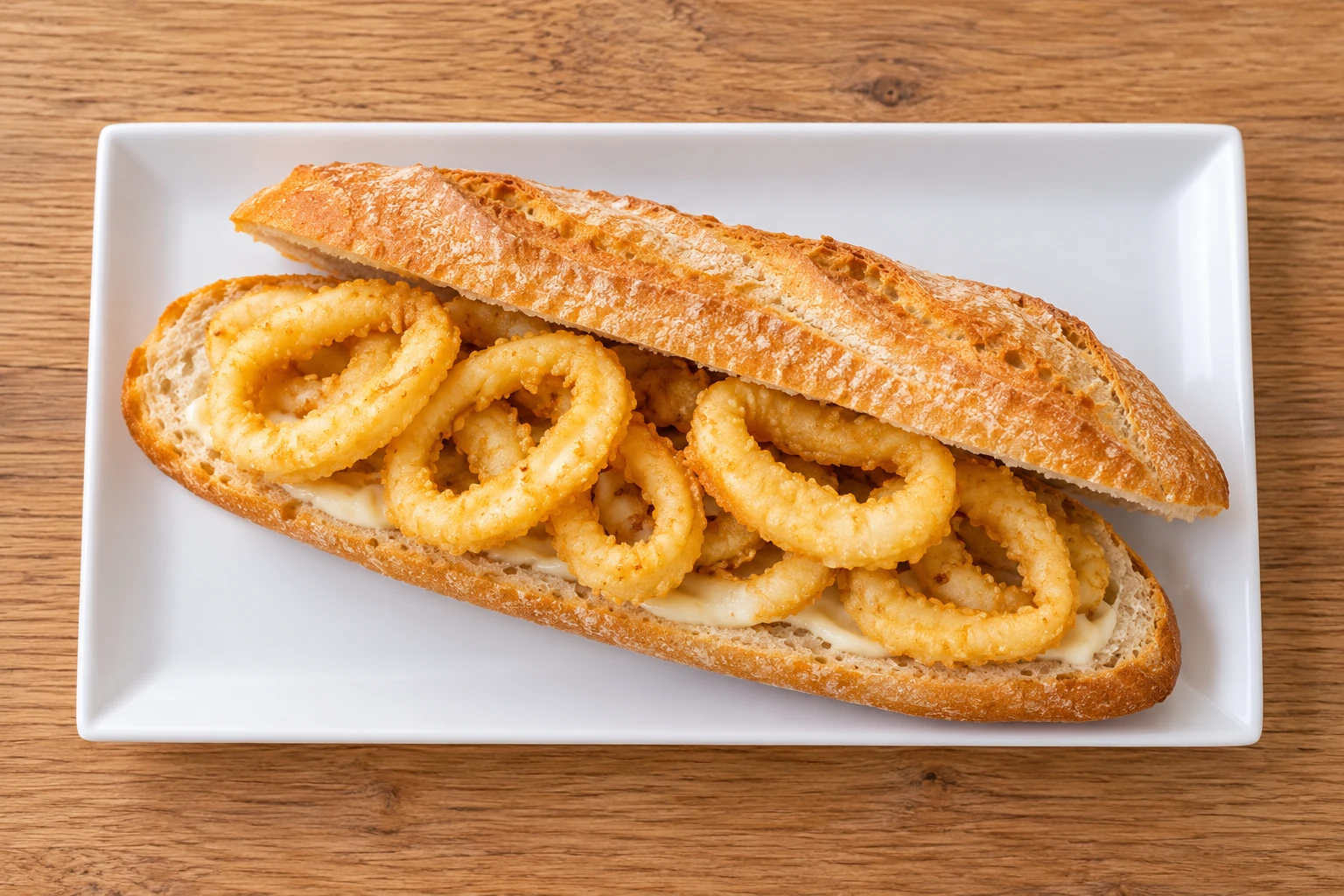
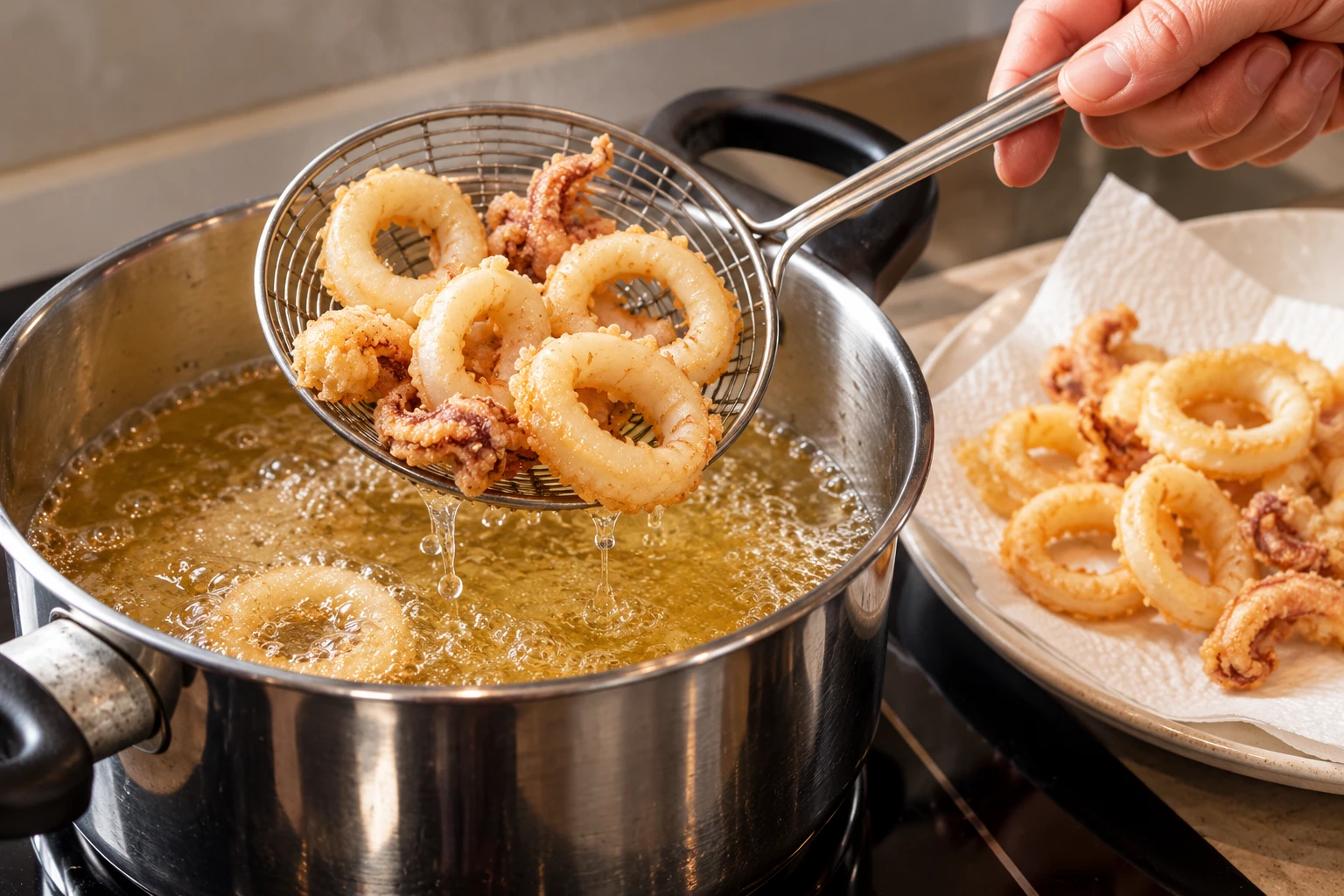
The recipe is short. The squid is cut into rings, tossed in flour, sometimes also in egg, and fried in very hot oil. The still-crispy rings go inside a baguette-style bread, split in half, with no other filling. Some people add mayonnaise or a squeeze of lemon, but the traditional version is dry.
The presence of a squid dish in a city far from the sea is usually explained by the old fish transport network to the capital and by meatless days, when fried fish was the inexpensive option. These are popular explanations, with no known date of origin.
It’s eaten standing up, with a beer or a soft drink, at any time of day. It’s food for people on the move, for those strolling through the historic center, and it also appears in neighborhood bars and at the train stations.


 Brazil
 Argentina
 Bolivia
 Chile
 Colombia
 Ecuador
 Guyana
 French Guiana
 Falkland Islands (Malvinas)
 Paraguay
 Peru
 Suriname
 Uruguay
 Venezuela
 Germany
 Austria
 Belgium
 Croatia
 Denmark
 Finland
 France
 Greece
 the Netherlands
 Hungary
 Ireland
 Iceland
 Italy
 Luxembourg
 Norway
 Poland
 Portugal
 the United Kingdom
 the Czech Republic
 Sweden
 Switzerland
 Turkey
 Canada
 the United States
 Mexico
 the Dominican Republic
 South Africa
 Australia
 Fiji
 New Zealand
 Papua New Guinea