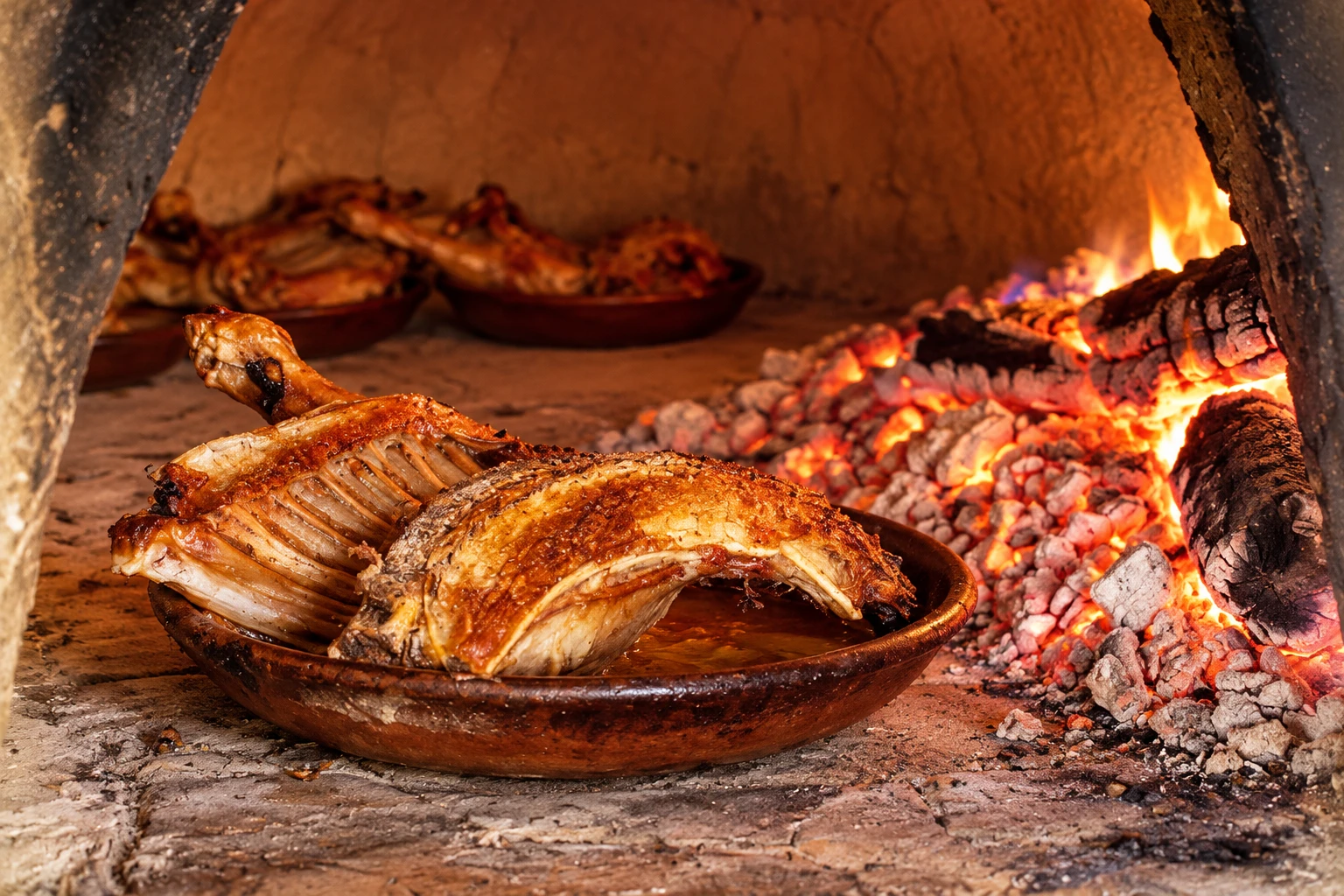
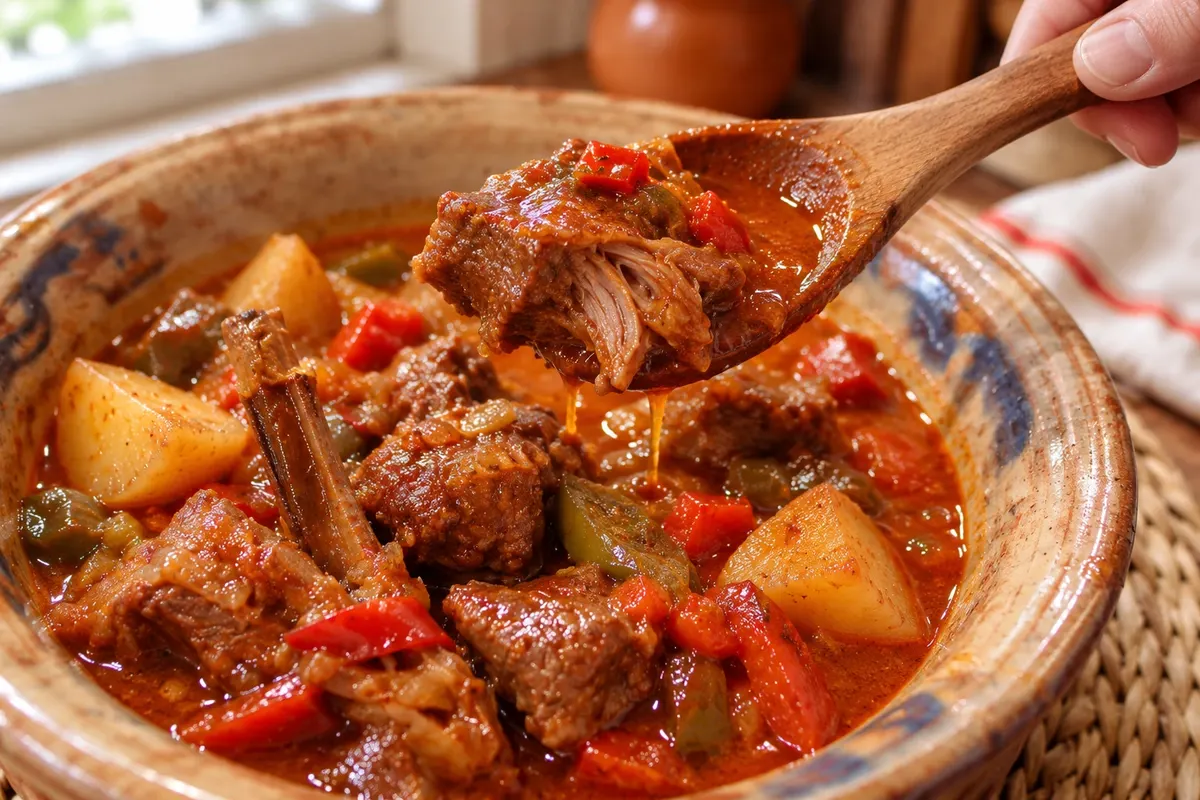
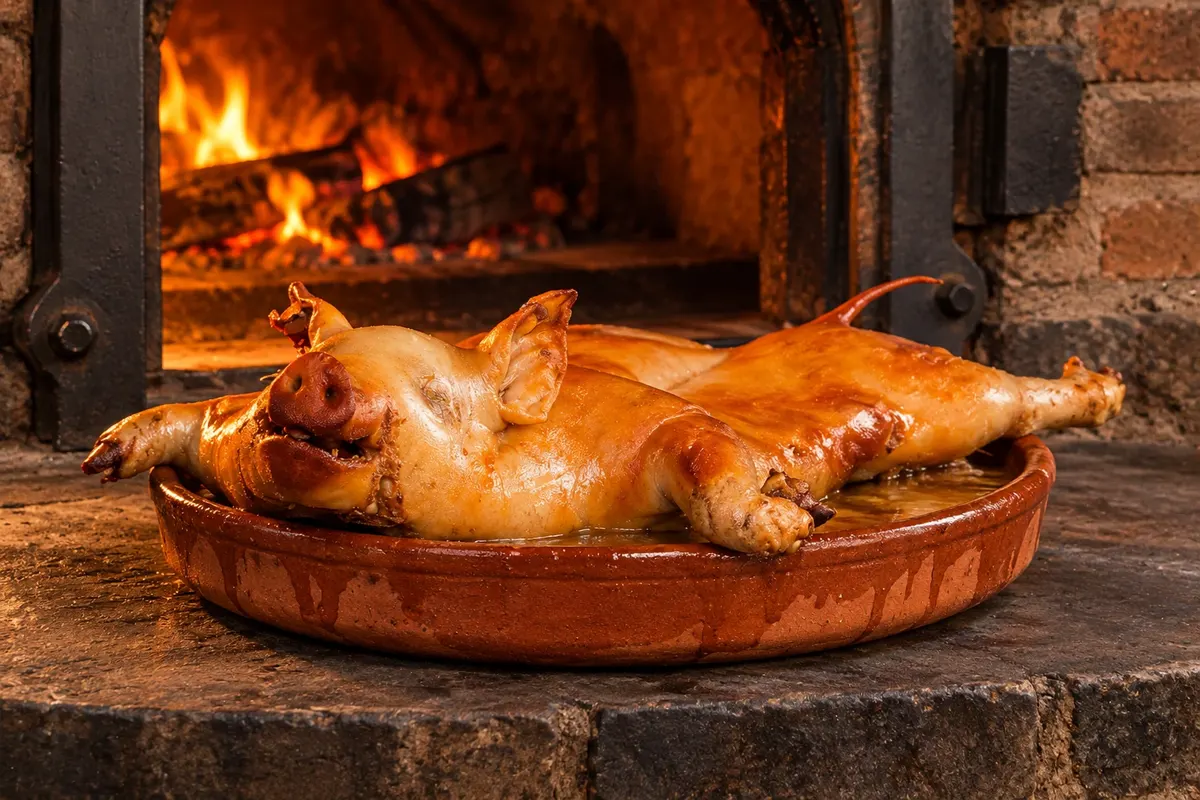
Lechazo asado is Castile and León’s dish in the postal stamps series with the Royal Academy of Gastronomy. Lechazo is the lamb that fed only on its mother’s milk and is slaughtered at just a few weeks old. The meat has a Protected Geographical Indication, the IGP Lechazo de Castilla y León, which specifies the breeds, the feeding and the animals’ age.
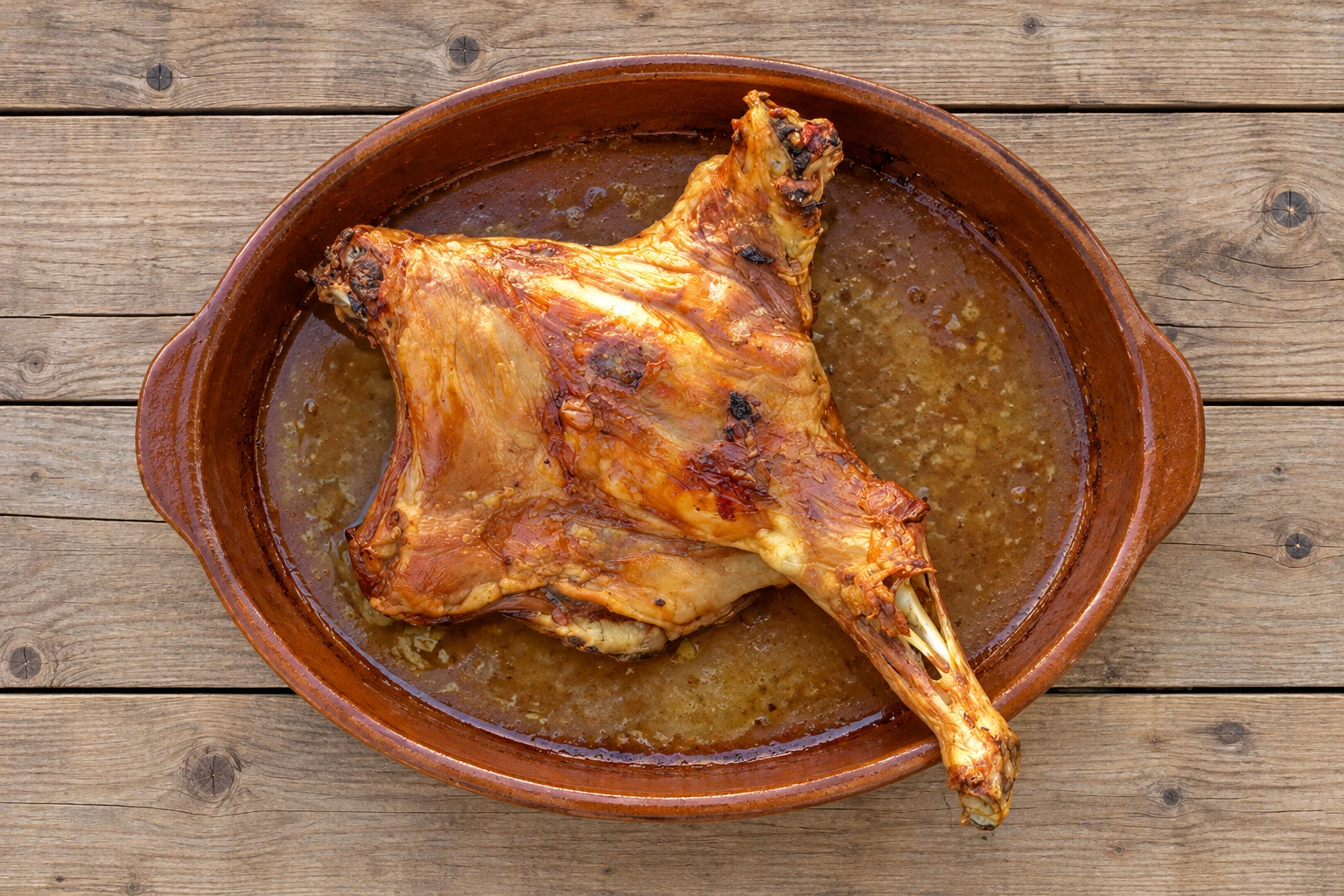
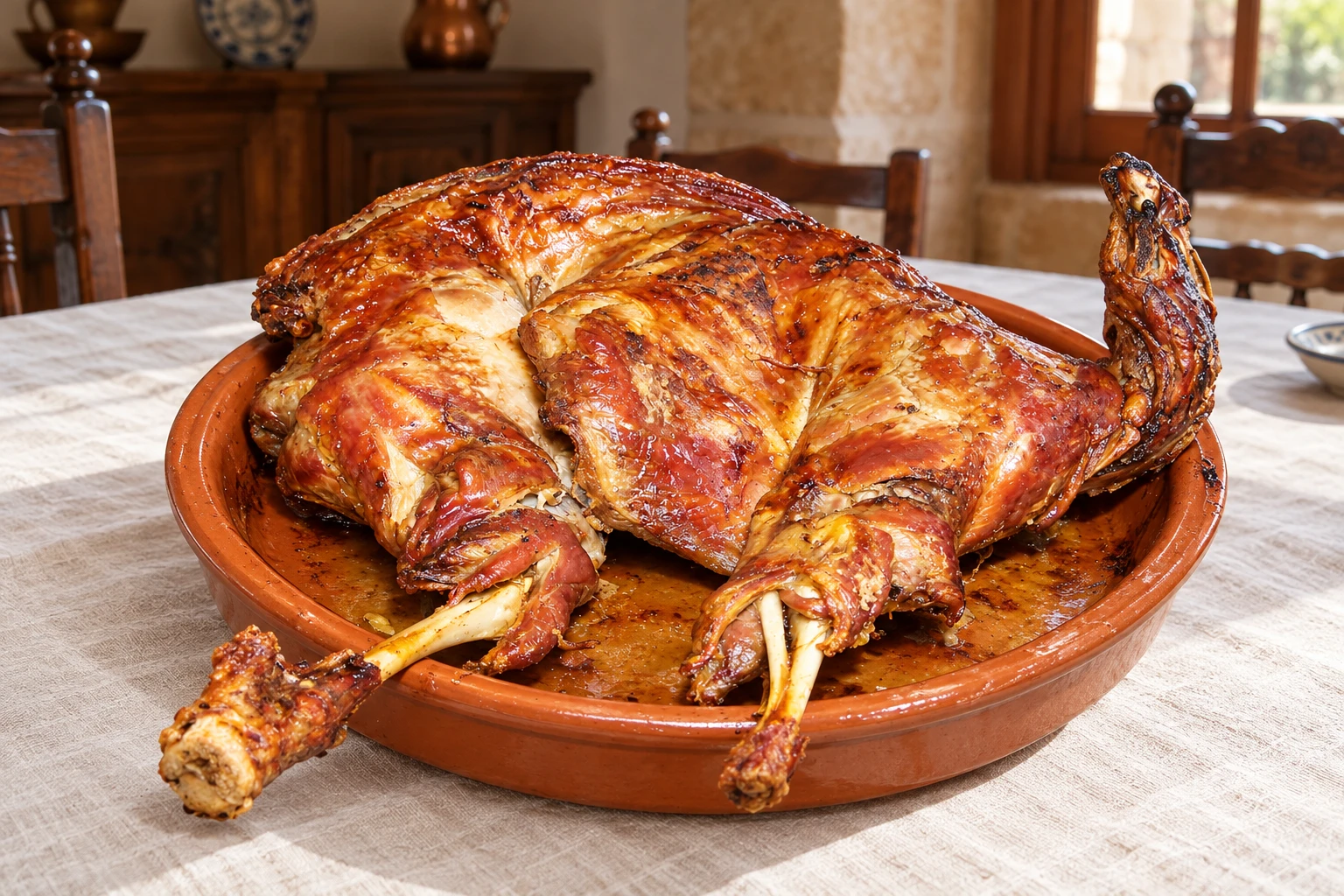
The recipe is one of the simplest in Spanish cuisine. The lamb quarter is placed in a clay baking dish with water and salt, then put into a wood-fired oven. The roast takes hours, with the meat turned halfway through, until the skin is golden and crispy and the interior is tender.
The dish belongs to the lands of the Duero River, where the asadores—specialized restaurants with wood-fired ovens—are part of the landscape of towns and villages such as Aranda de Duero, Sepúlveda and Valladolid. It does not have a single town of origin: it is a tradition across the whole community.
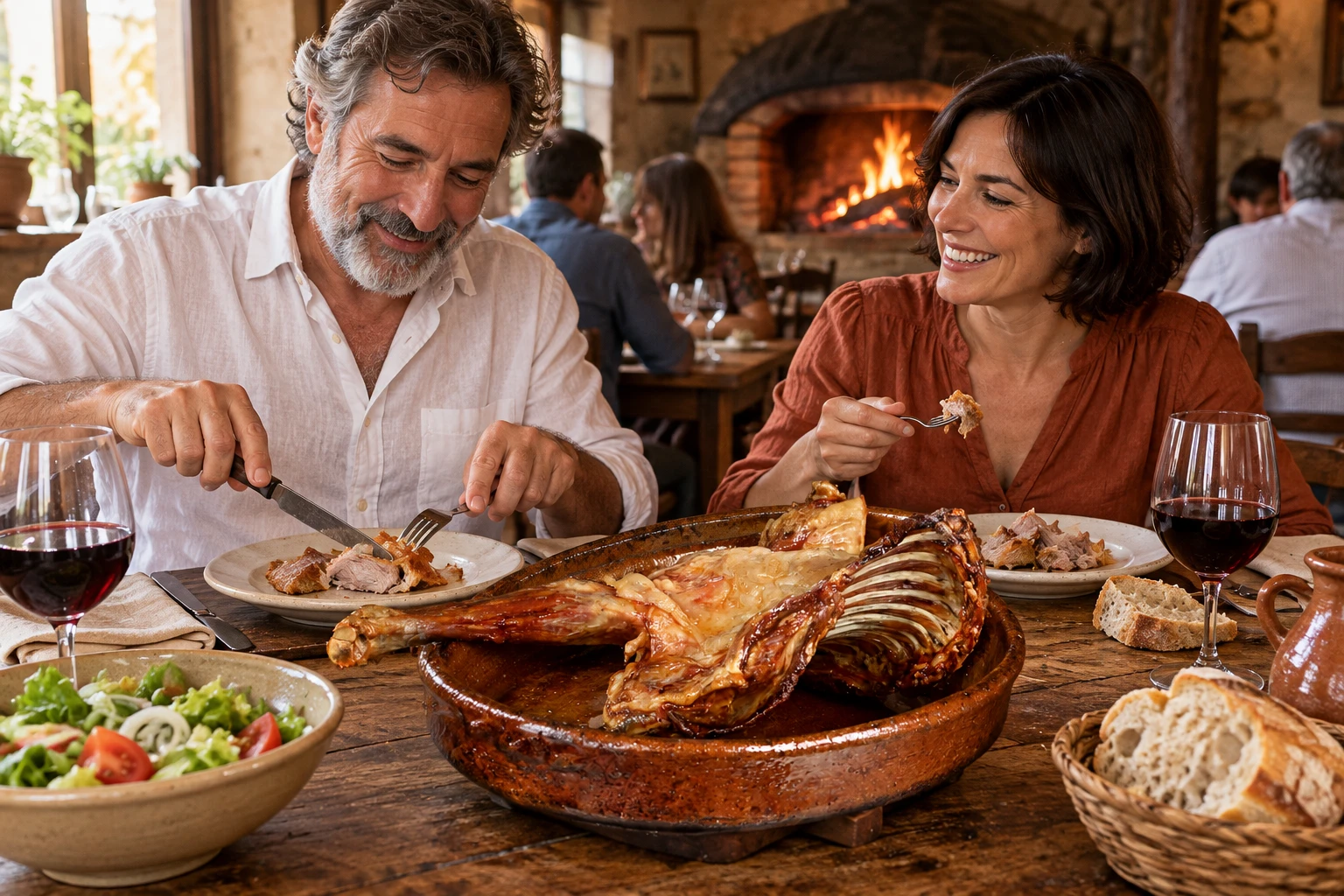
At the table, the lechazo is served whole in the baking dish and carved there. The traditional accompaniment is a salad of lettuce, tomato and onion and bread, and the region’s red wine completes the meal.


 Brazil
 Argentina
 Bolivia
 Chile
 Colombia
 Ecuador
 Guyana
 French Guiana
 Falkland Islands (Malvinas)
 Paraguay
 Peru
 Suriname
 Uruguay
 Venezuela
 Germany
 Austria
 Belgium
 Croatia
 Denmark
 Finland
 France
 Greece
 the Netherlands
 Hungary
 Ireland
 Iceland
 Italy
 Luxembourg
 Norway
 Poland
 Portugal
 the United Kingdom
 the Czech Republic
 Sweden
 Switzerland
 Turkey
 Canada
 the United States
 Mexico
 the Dominican Republic
 South Africa
 Australia
 Fiji
 New Zealand
 Papua New Guinea