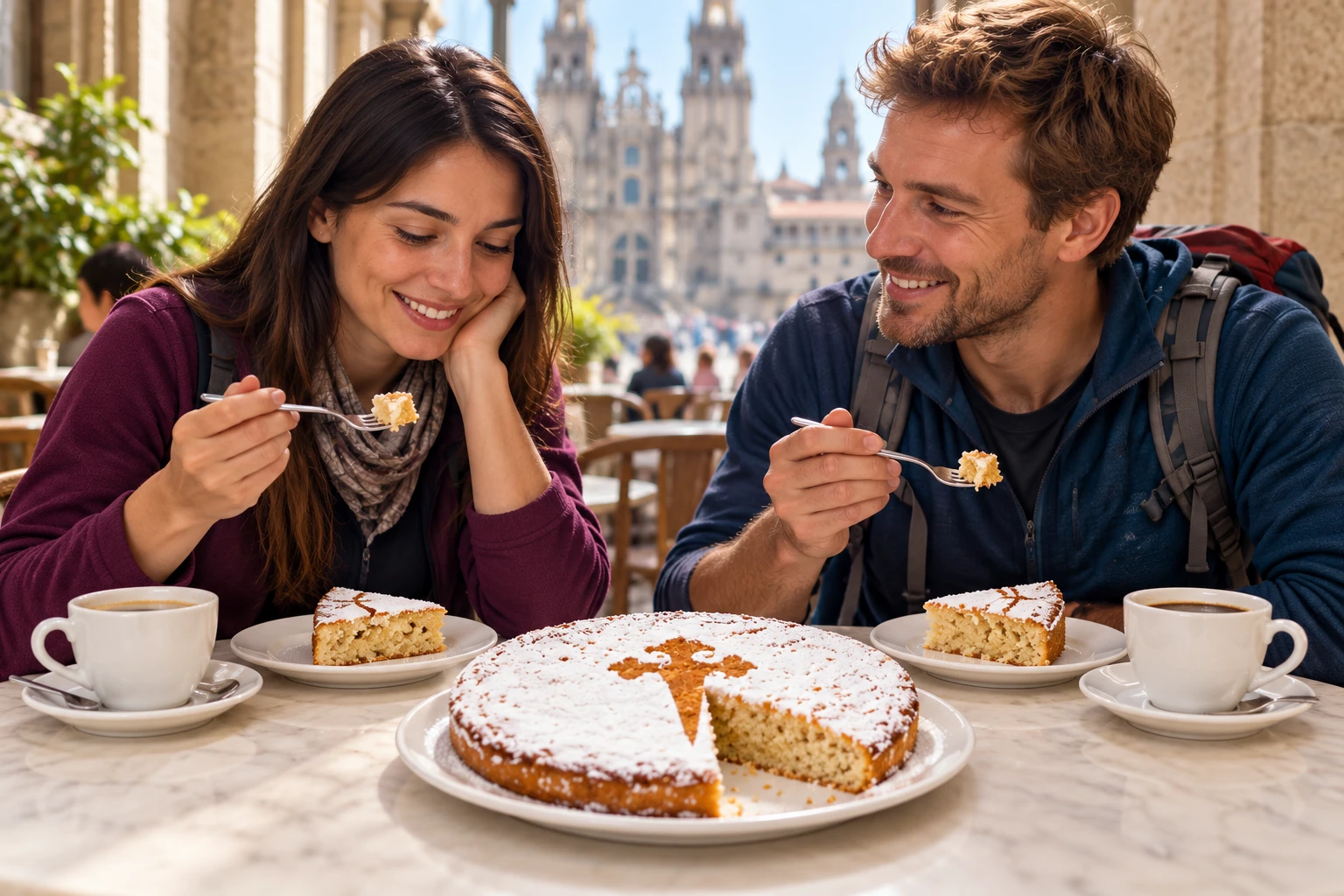
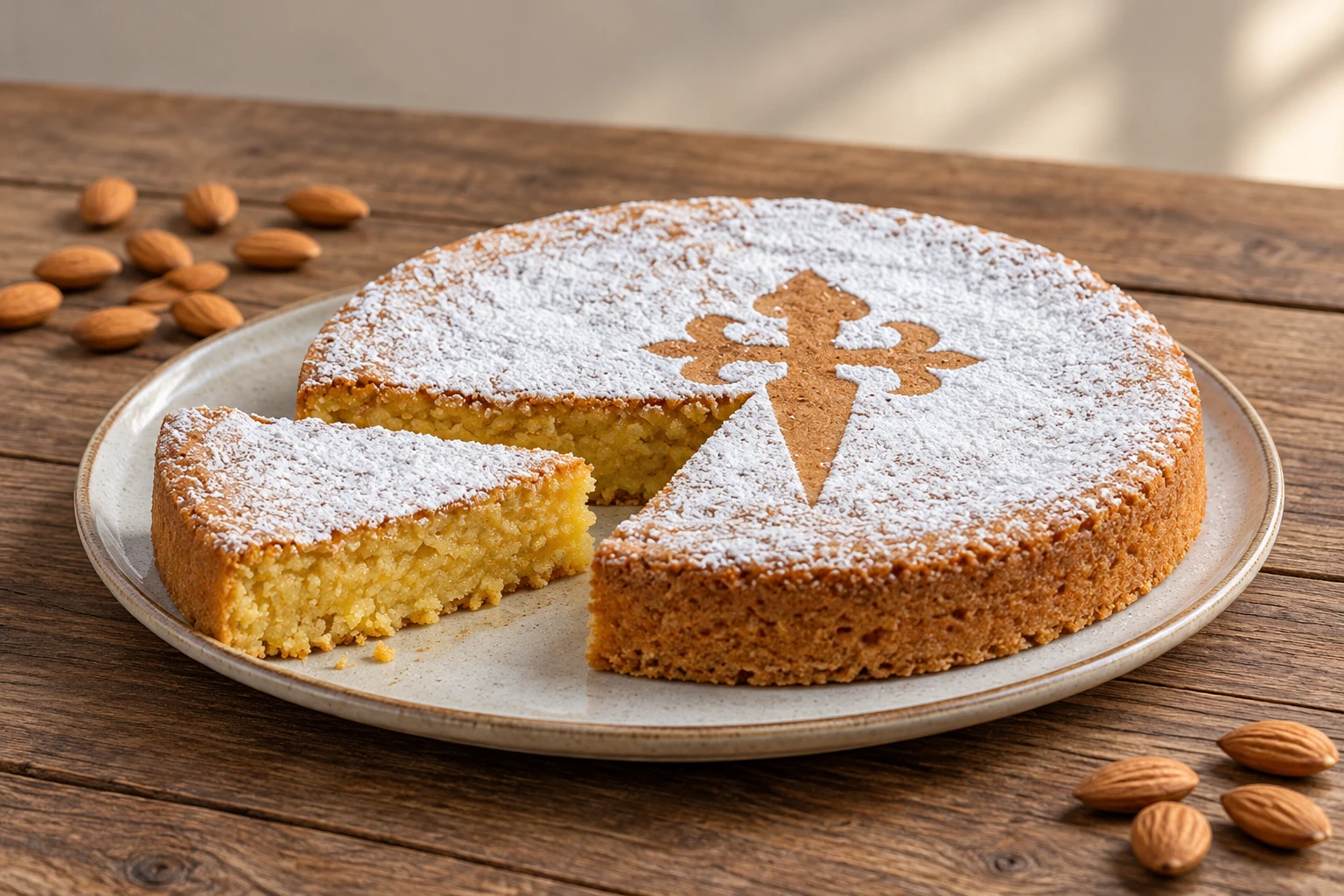
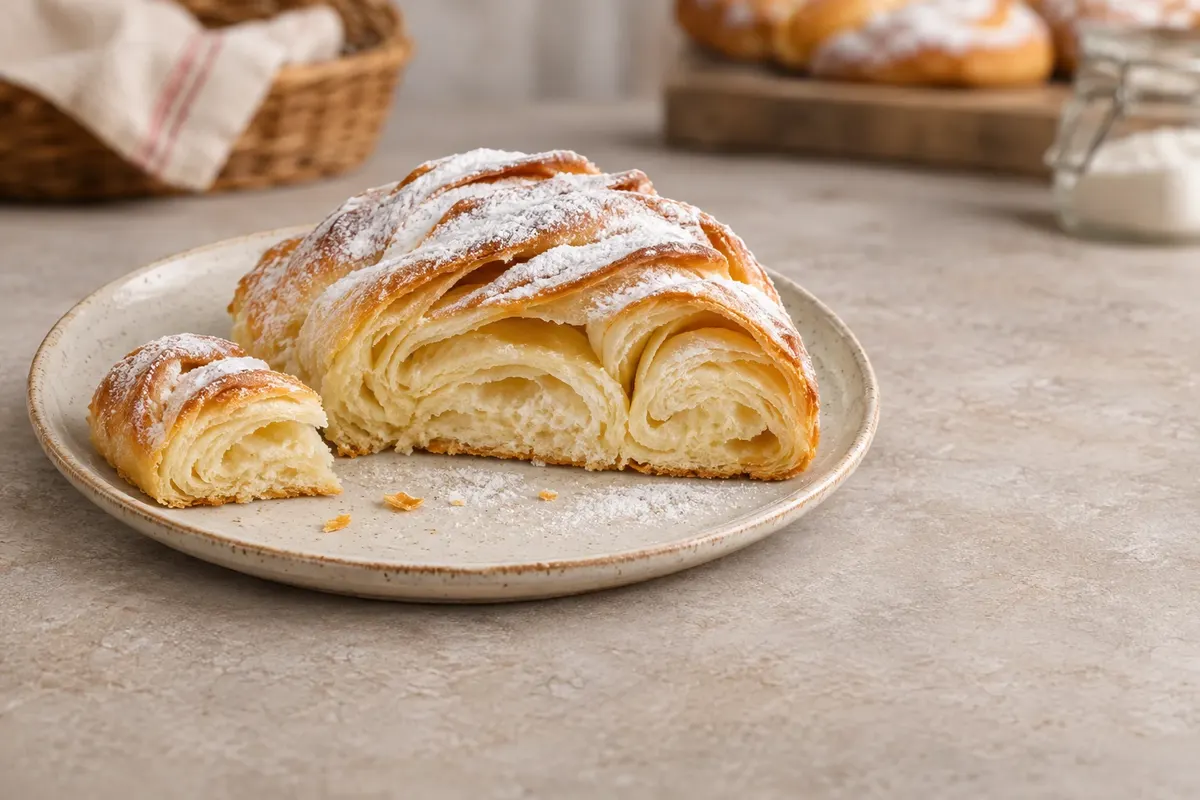
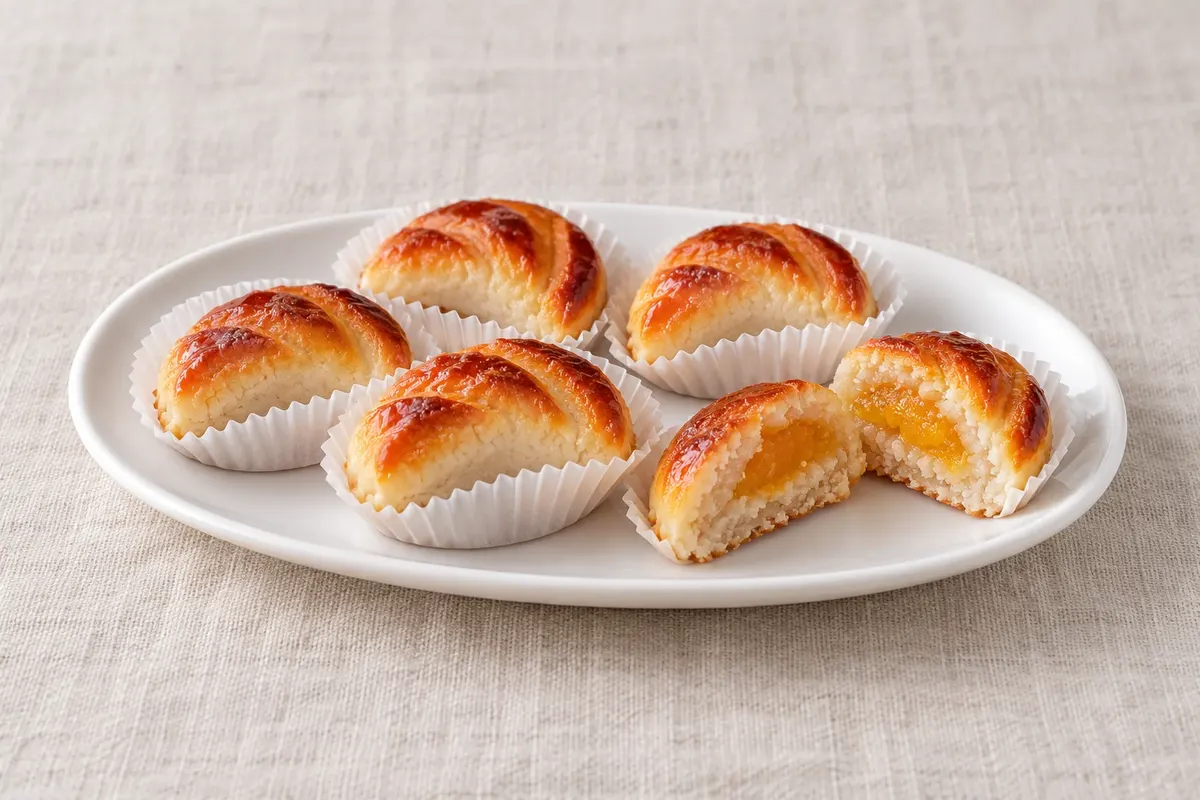
The Tarta de Santiago is the sweet of Santiago de Compostela, the city where the Camino ends. The Protected Geographical Indication file records the earliest mention: in 1577, during Pedro de Porto Carrero’s visit to the University of Santiago, a royal cake made of ground almond, sugar and eggs was served, baked and offered whole or in portions.
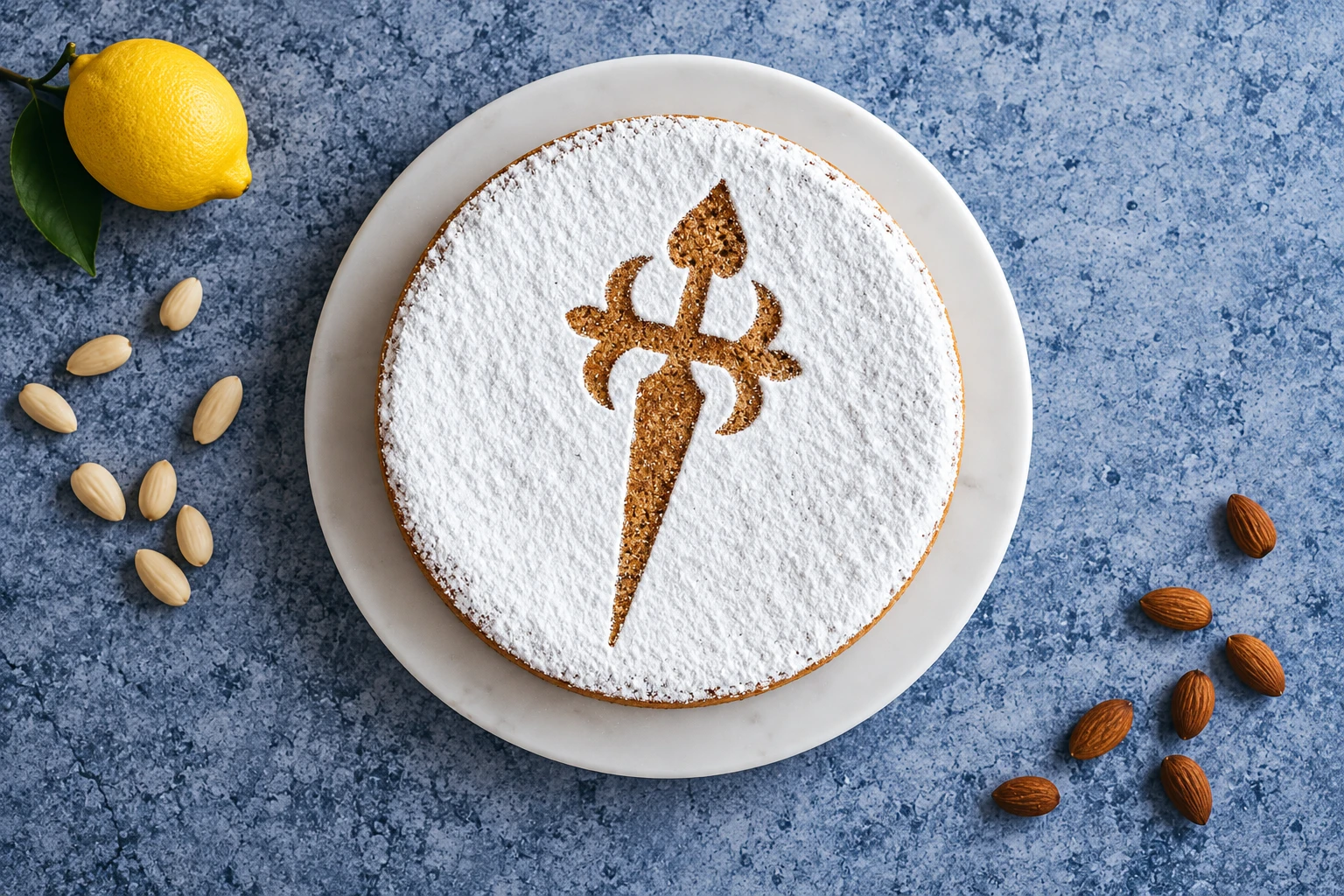
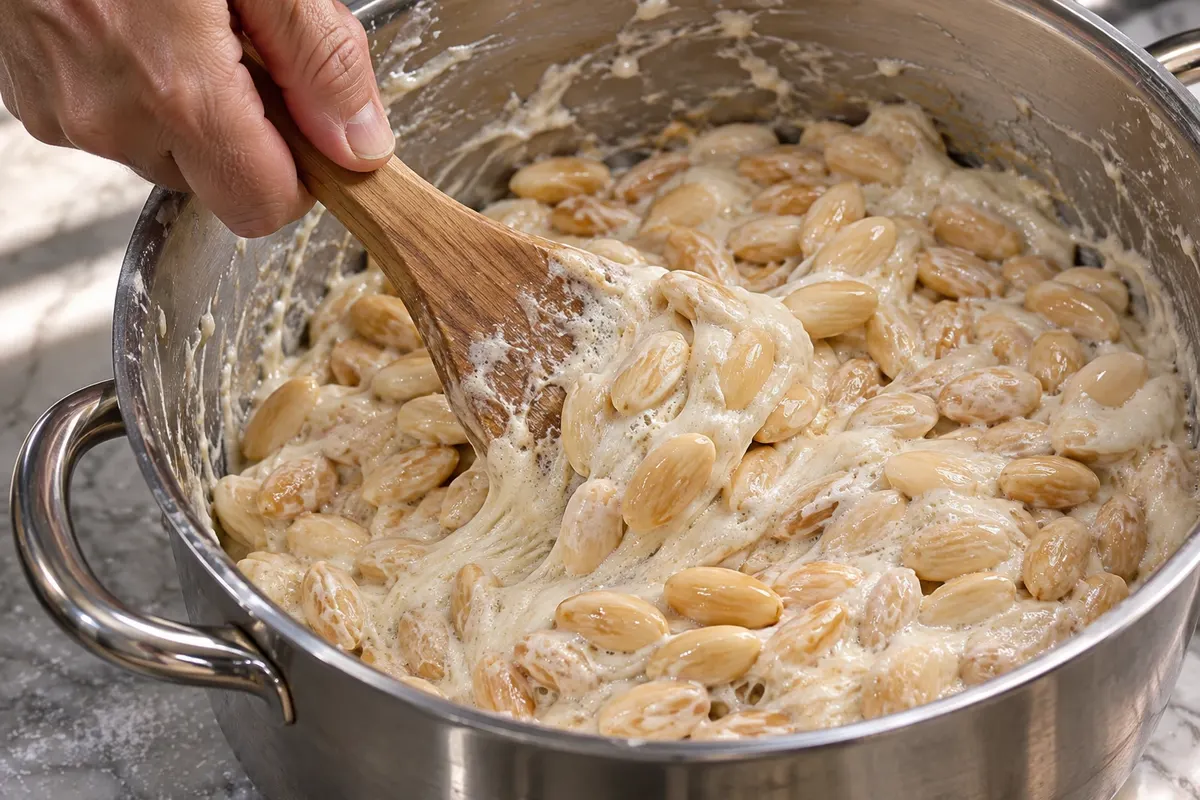
The batter contains no flour. Ground almond provides body and moisture, the eggs bind, and the sugar sweetens; some recipes add lemon zest or a touch of cinnamon or liqueur. The cake is low, with a thin crust and dense crumb, and it is baked on a thin base or directly in the pan.
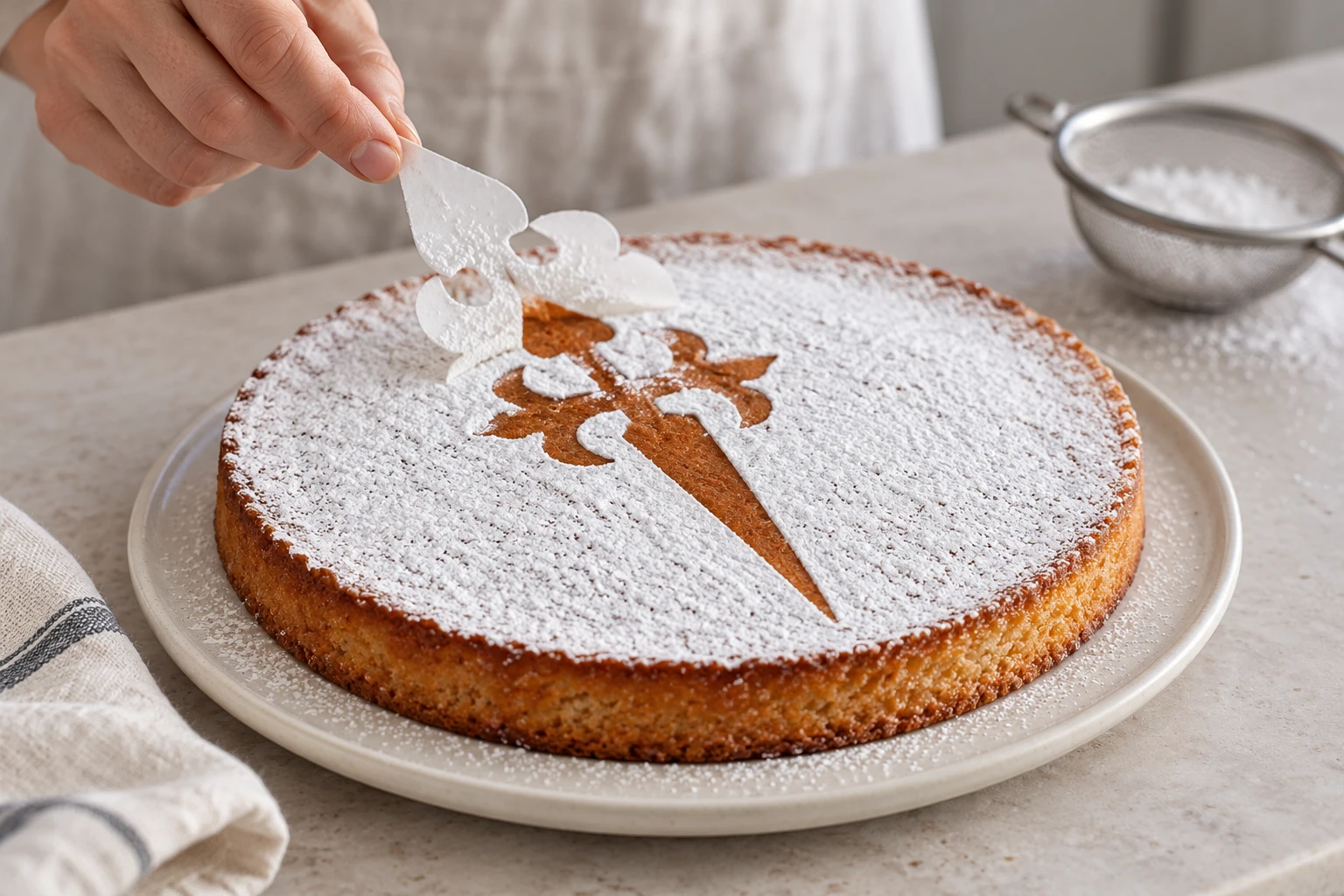
The identifying decoration came later. In 1924, the founder of a Santiago pastry shop began covering the cake with powdered sugar using a stencil with the silhouette of the Cross of the Order of Santiago, leaving the cross drawn by the cake’s color. The custom spread through Galician bakeries.
The Protected Geographical Indication Tarta de Santiago, registered in the European Union in 2010, defines the minimum proportion of almond and the permitted ingredients, and covers production throughout Galicia.


 Brazil
 Argentina
 Bolivia
 Chile
 Colombia
 Ecuador
 Guyana
 French Guiana
 Falkland Islands (Malvinas)
 Paraguay
 Peru
 Suriname
 Uruguay
 Venezuela
 Germany
 Austria
 Belgium
 Croatia
 Denmark
 Finland
 France
 Greece
 the Netherlands
 Hungary
 Ireland
 Iceland
 Italy
 Luxembourg
 Norway
 Poland
 Portugal
 the United Kingdom
 the Czech Republic
 Sweden
 Switzerland
 Turkey
 Canada
 the United States
 Mexico
 the Dominican Republic
 South Africa
 Australia
 Fiji
 New Zealand
 Papua New Guinea