The calçotada originated in Valls, the capital of the Alt Camp comarca in inland Tarragona. The calçot is a white, sweet onion sprout grown to elongate: the plant is covered with soil as it grows so the white part lengthens. The Calçot de Valls has Protected Geographical Indication.
Local history credits the origin to a Valls peasant in the late 19th century who roasted some onion sprouts over embers and discovered that, once the skin was burned away, the interior became soft and sweet. Since then, the meal spread across Catalonia and became one of the region’s most common winter gatherings.
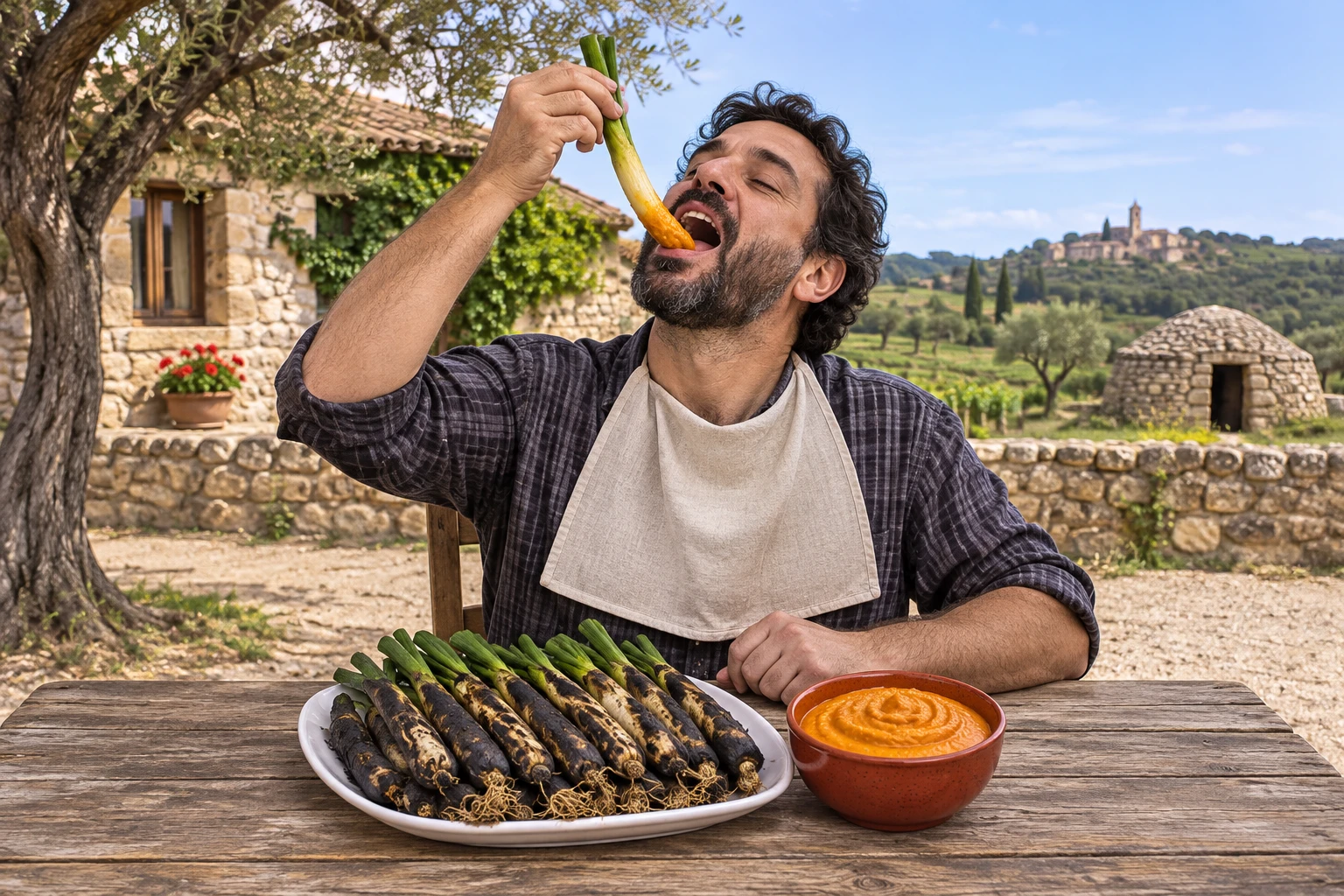
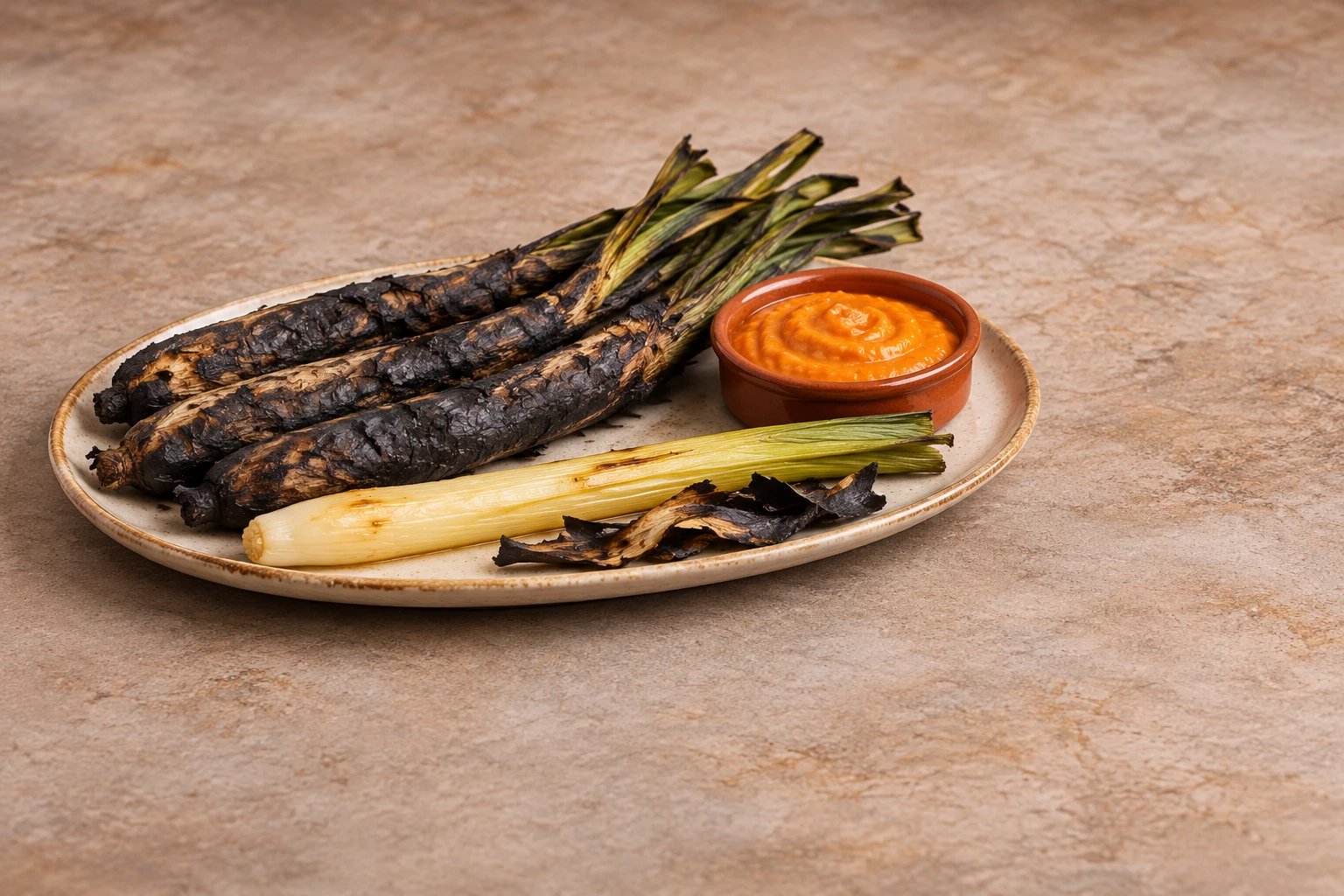
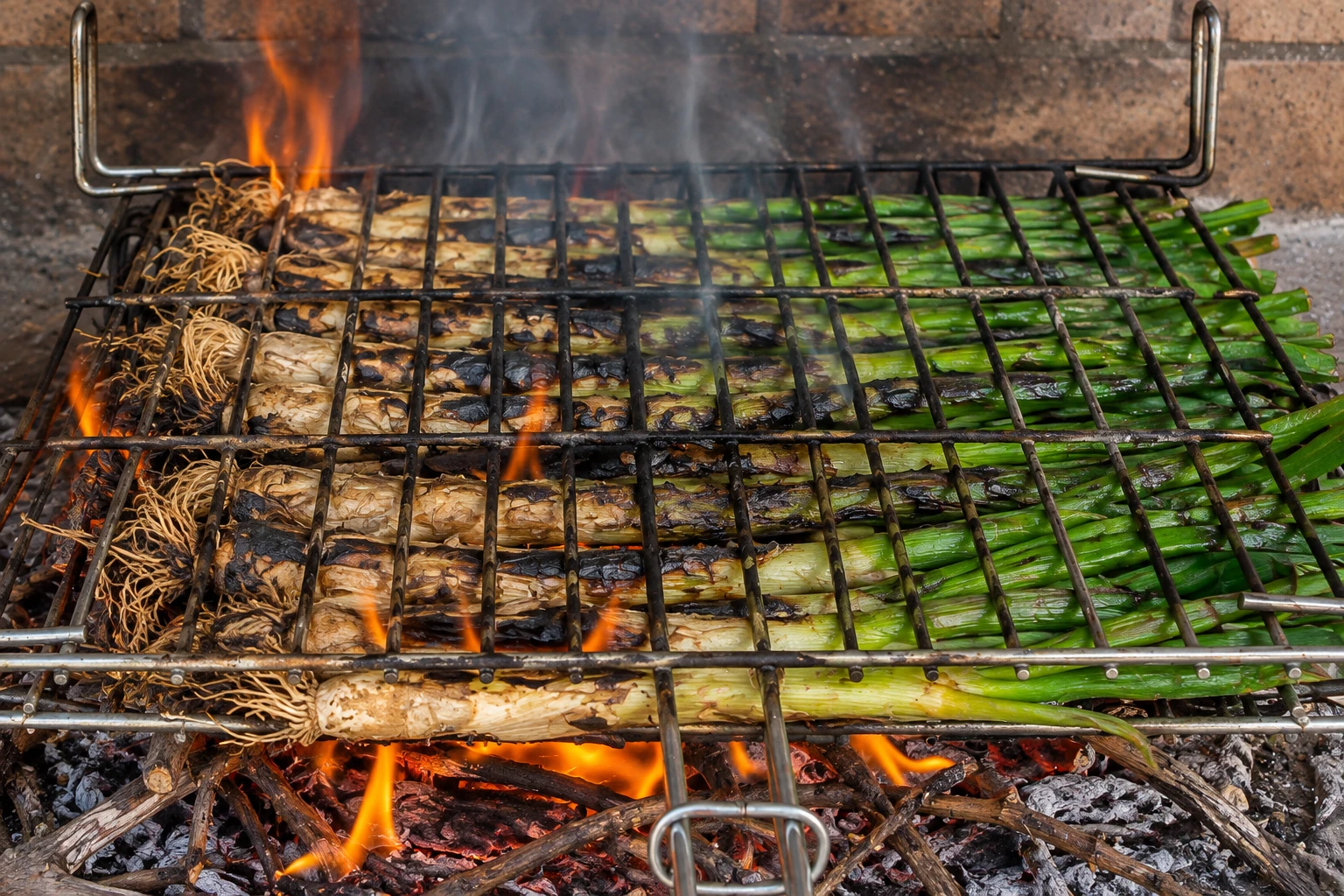
Calçots are roasted on large griddles over flames of vine prunings until the outer skin turns black. They are then wrapped in newspaper or placed on tiles to finish cooking in their own heat. At the table, each person holds the calçot by the green tip, pulls off the burned skin and dips the white part in the salsa de calçots, also called salvitxada — a sauce of toasted almonds and hazelnuts, roasted tomato and garlic, dried pepper, olive oil and vinegar.
The calçotada is a full meal: after the calçots come grilled meats and sausages, and dessert. In Valls, the calçotada festival takes place on the last Sunday of January, with parades, producer and eater contests and roasting demonstrations.


 Brazil
 Argentina
 Bolivia
 Chile
 Colombia
 Ecuador
 Guyana
 French Guiana
 Falkland Islands (Malvinas)
 Paraguay
 Peru
 Suriname
 Uruguay
 Venezuela
 Germany
 Austria
 Belgium
 Croatia
 Denmark
 Finland
 France
 Greece
 the Netherlands
 Hungary
 Ireland
 Iceland
 Italy
 Luxembourg
 Norway
 Poland
 Portugal
 the United Kingdom
 the Czech Republic
 Sweden
 Switzerland
 Turkey
 Canada
 the United States
 Mexico
 the Dominican Republic
 South Africa
 Australia
 Fiji
 New Zealand
 Papua New Guinea