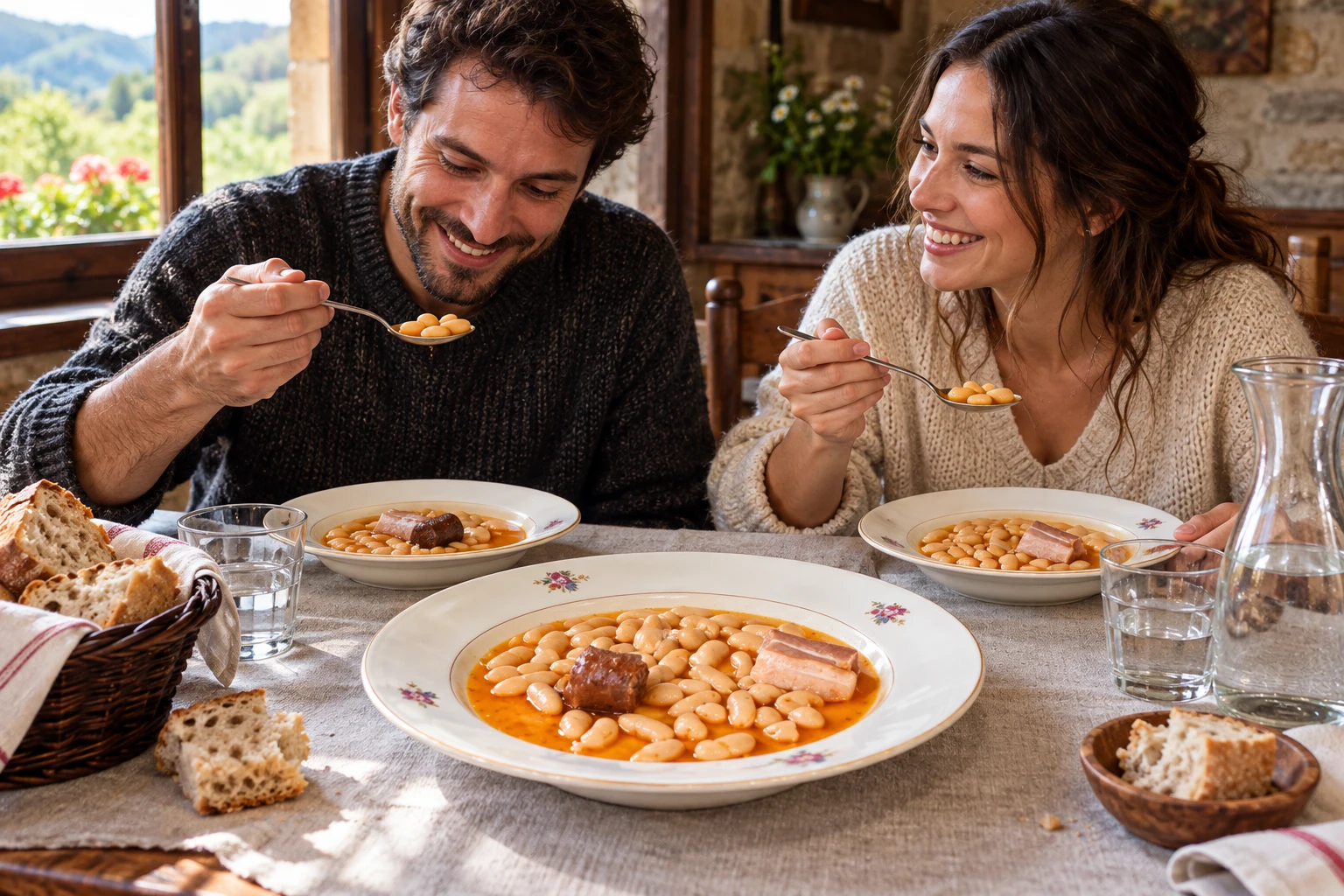
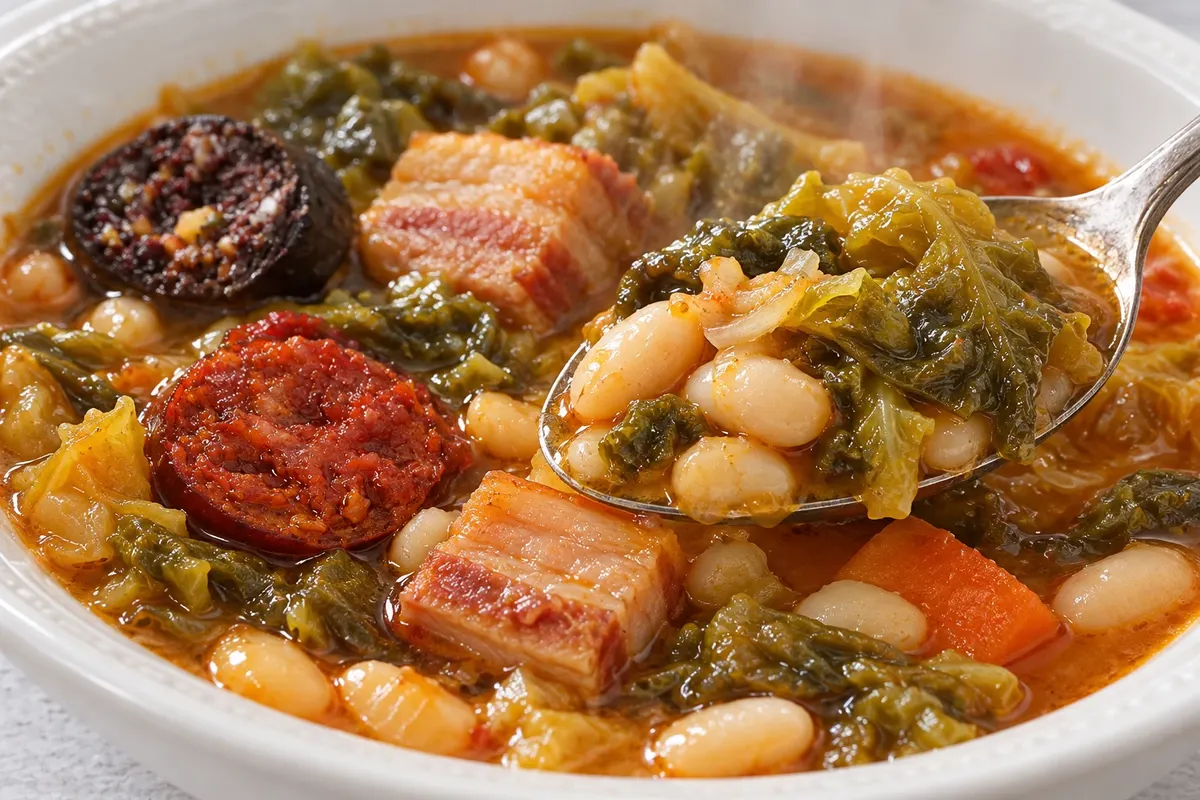
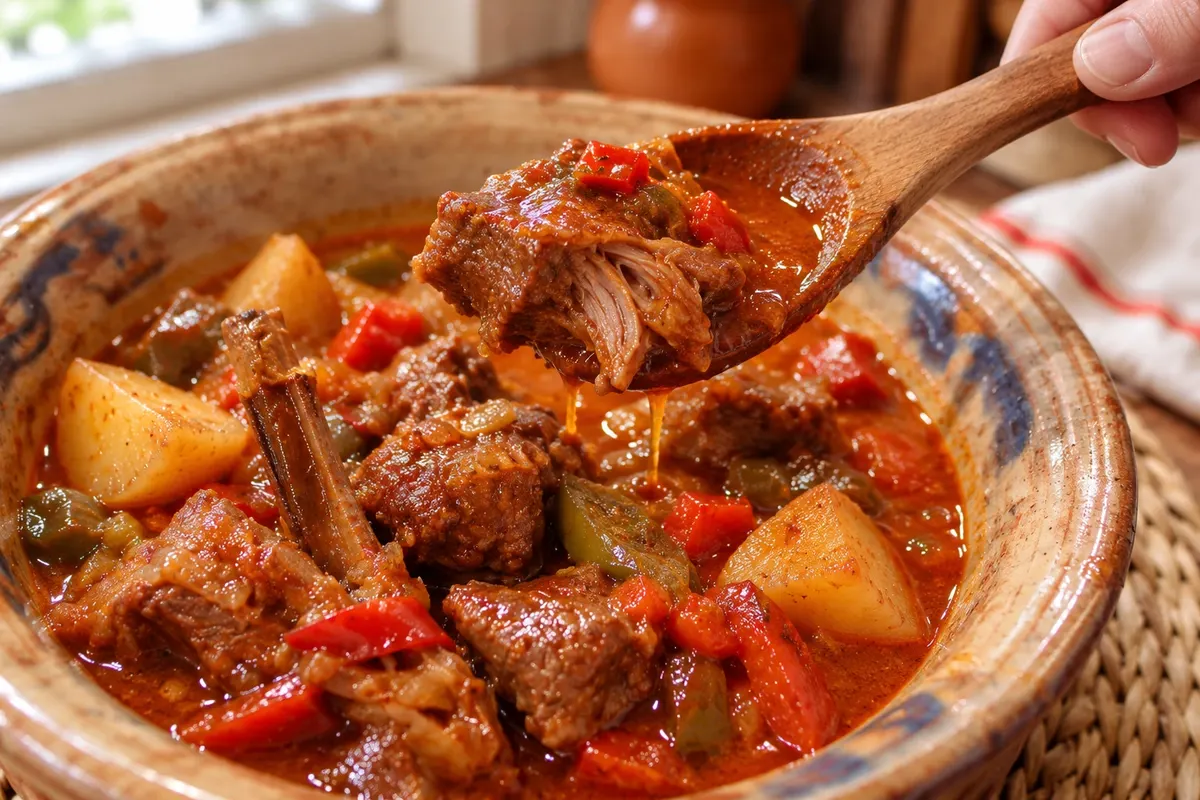
Fabada is the dish Asturias chose to represent itself. The region’s official tourism body calls it the signature dish of Asturian cuisine, and the regional gastronomic academy selected it for the postage-stamp series dedicated to each community’s dish. It has no single town of origin: it is a rural recipe from households across the area.
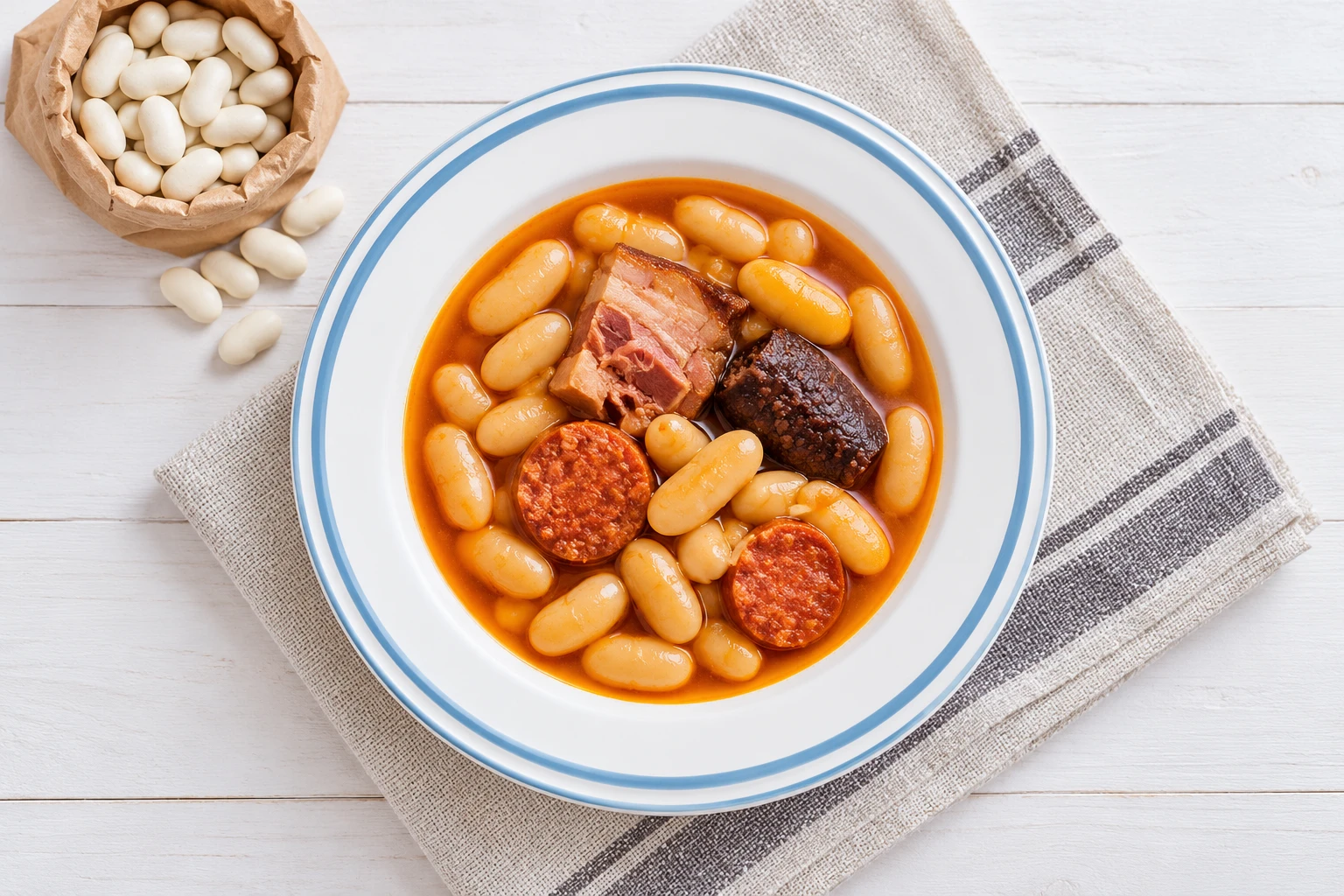
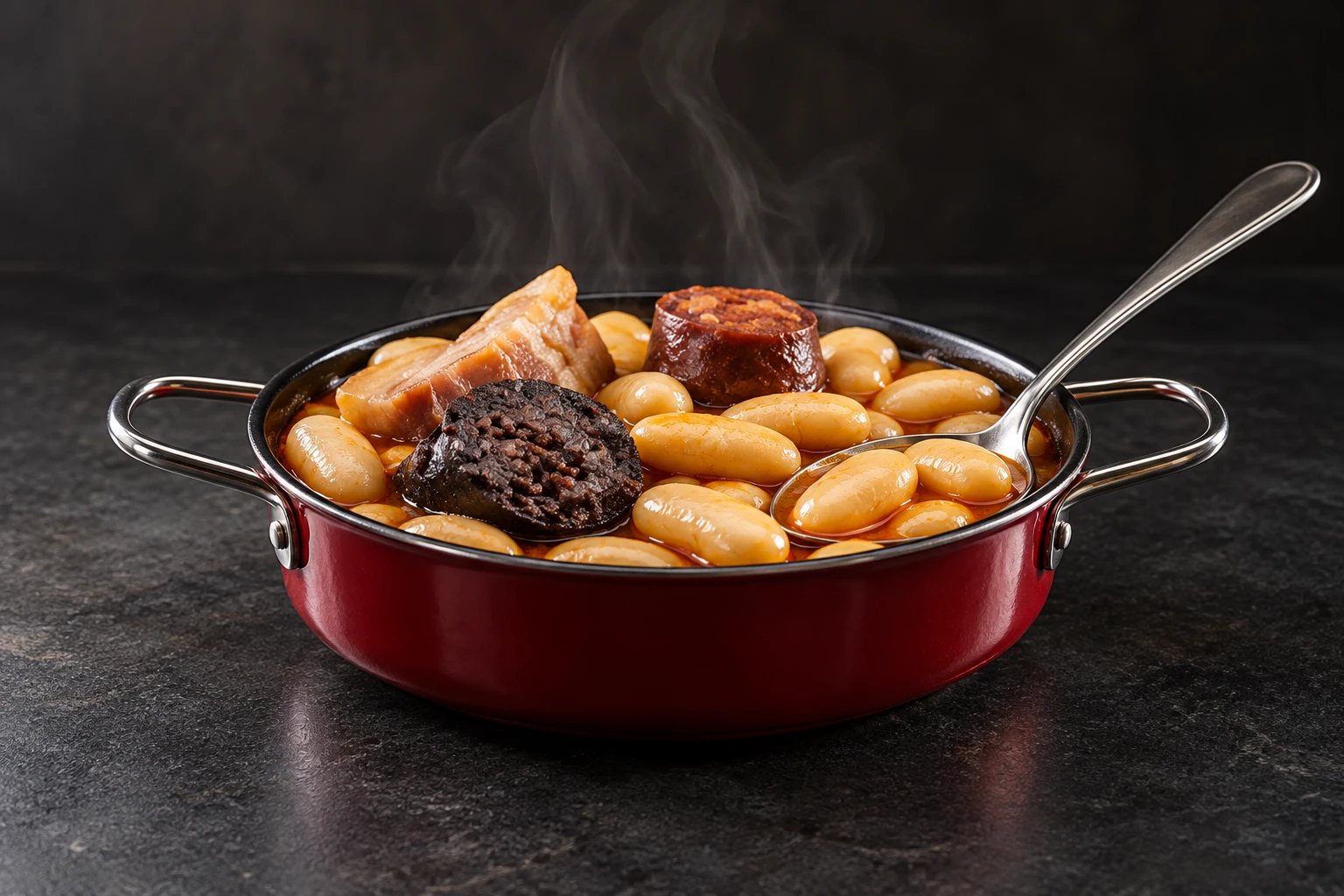
The base is the faba, a large white bean with a thin skin and creamy texture, protected by the Protected Geographical Indication Faba Asturiana. The dried beans are soaked the day before and simmered slowly in a wide pot, covered with water. During cooking, the pot is shaken occasionally.
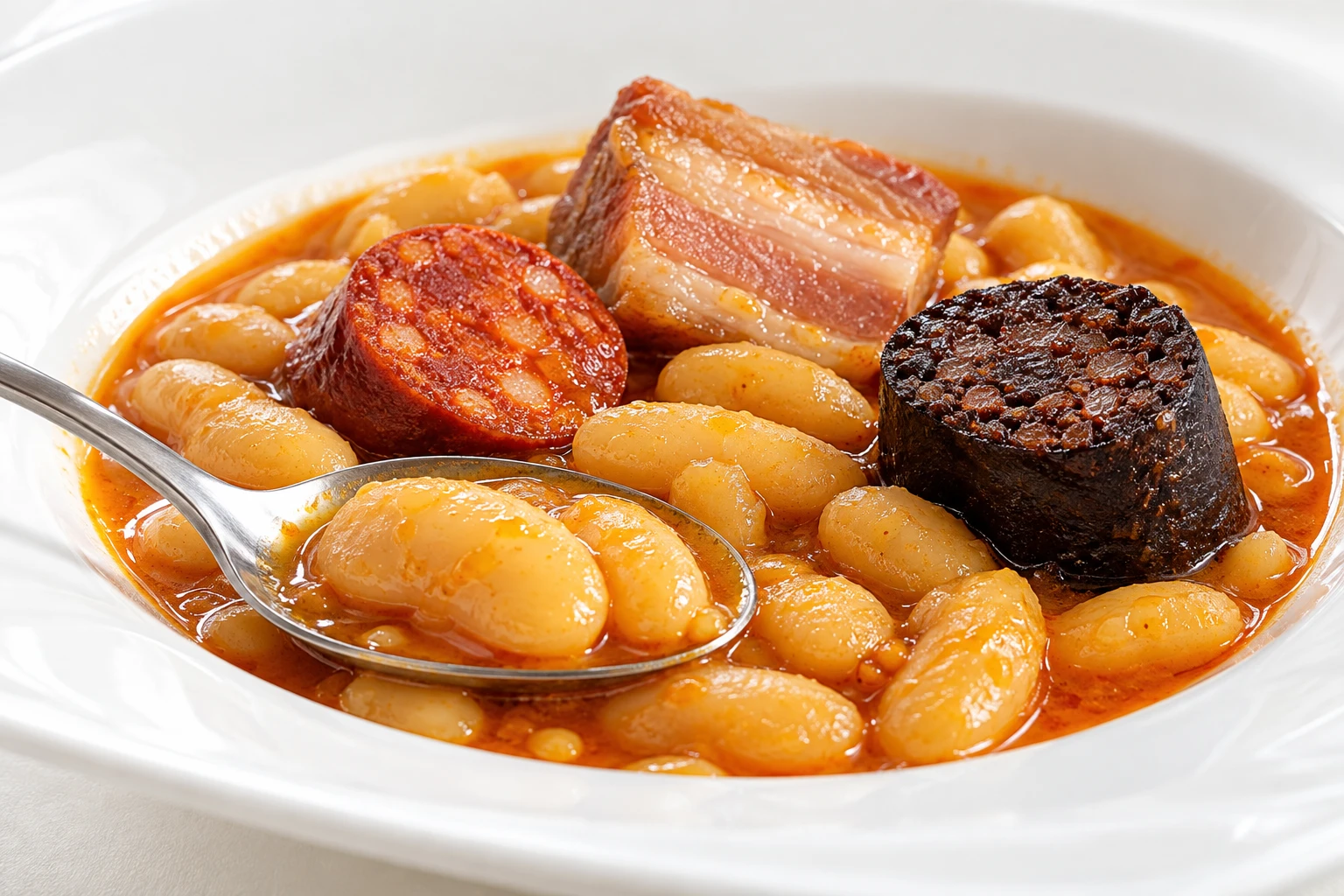
The meats that accompany the beans are called compango, or compangu in Asturian: smoked chorizo and morcilla, pork fat and lacón, the cured shoulder of the pig. They cook with the faba and give the broth its orange color and smoky flavor.
Fabada is served in deep bowls, with the meats served separately or sliced on top. It is usually the only course of the meal because of its quantity and richness. On the Asturian table, it pairs with natural cider, another regional specialty, and with bread.
Several towns in Asturias organize contests and festivals dedicated to fabada, such as the gastronomic festival Su Excelencia la Fabada, which is of tourist interest in the region.


 Brazil
 Argentina
 Bolivia
 Chile
 Colombia
 Ecuador
 Guyana
 French Guiana
 Falkland Islands (Malvinas)
 Paraguay
 Peru
 Suriname
 Uruguay
 Venezuela
 Germany
 Austria
 Belgium
 Croatia
 Denmark
 Finland
 France
 Greece
 the Netherlands
 Hungary
 Ireland
 Iceland
 Italy
 Luxembourg
 Norway
 Poland
 Portugal
 the United Kingdom
 the Czech Republic
 Sweden
 Switzerland
 Turkey
 Canada
 the United States
 Mexico
 the Dominican Republic
 South Africa
 Australia
 Fiji
 New Zealand
 Papua New Guinea