

 Brazil
 Argentina
 Chile
Chile Colombia
 Peru
Peru Uruguay
 Germany
 Belgium
 France
 Greece
 the Netherlands
 Ireland
 Italy
Italy Portugal
 the United Kingdom
 Switzerland
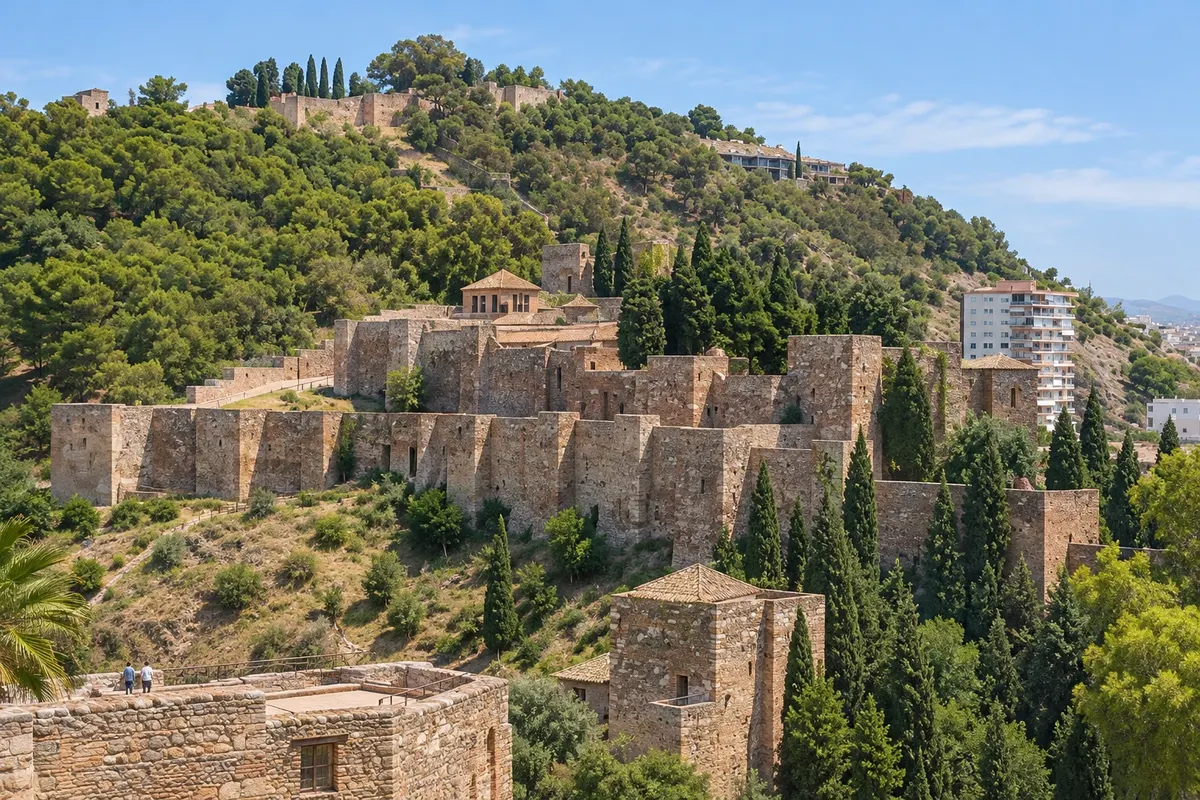
Fortress
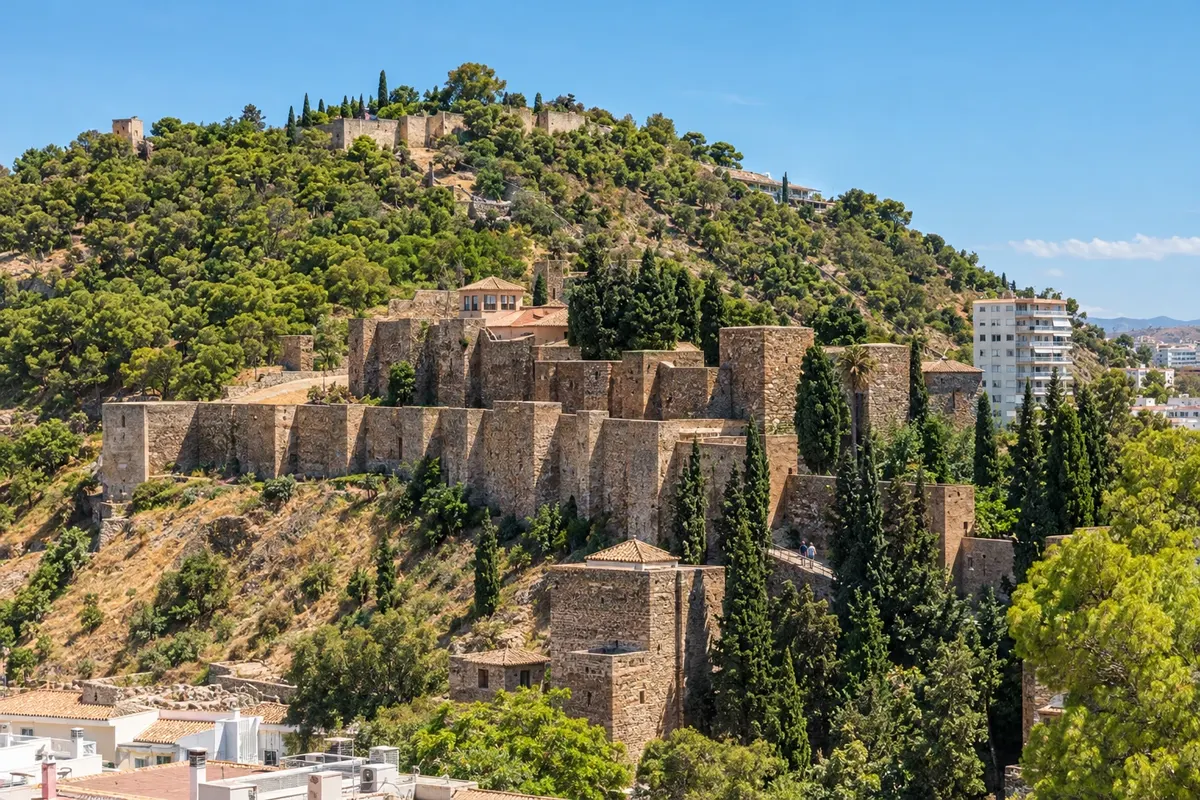
Alcazaba de Málaga
Islamic palace-fortress from the 11th century on the slope of Monte Gibralfaro, with double walls, courtyards, gardens and fountains, next to the Teatro Romano.
Andaluzia · Spain
In the destination Costa do Sol and Ronda.
In the photo: Alcazaba de Málaga
Illustrative images. The pictures in this guide are illustrations based on the real place, not photographs, and may differ from it.
The city
Málaga is the capital of the Costa do Sol, in Andalusia, and the city where Picasso was born. The historic center brings together the Alcazaba, the Castillo de Gibralfaro, the Roman Theatre and the Cathedral, as well as the Museo Picasso, the Centre Pompidou and the Museo Carmen Thyssen. The port has become a promenade with Muelle Uno, and La Malagueta beach is a 15-minute walk away. The language is Spanish.
There's no accommodation in the guide yet in Málaga.
There are no restaurants in the guide yet in Málaga.
Know a good one? Recommend it to ushow to get there · how many days · itinerary · questions
The local experience
Islamic palace-fortress from the 11th century on the slope of Monte Gibralfaro, with double walls, courtyards, gardens and fountains, next to the Teatro Romano.
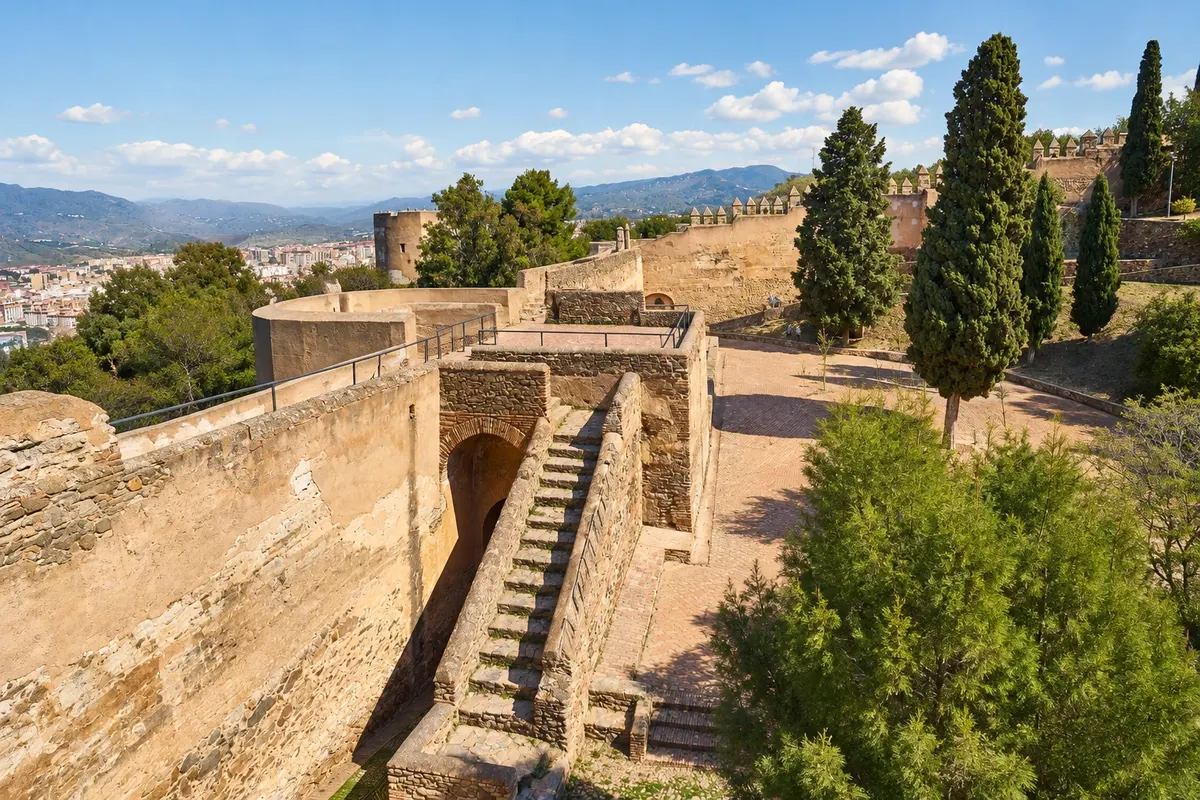
14th-century Nasrid castle atop Mount Gibralfaro, with walkable ramparts and views over the port, the Malagueta and, on clear days, the mountains of Africa.
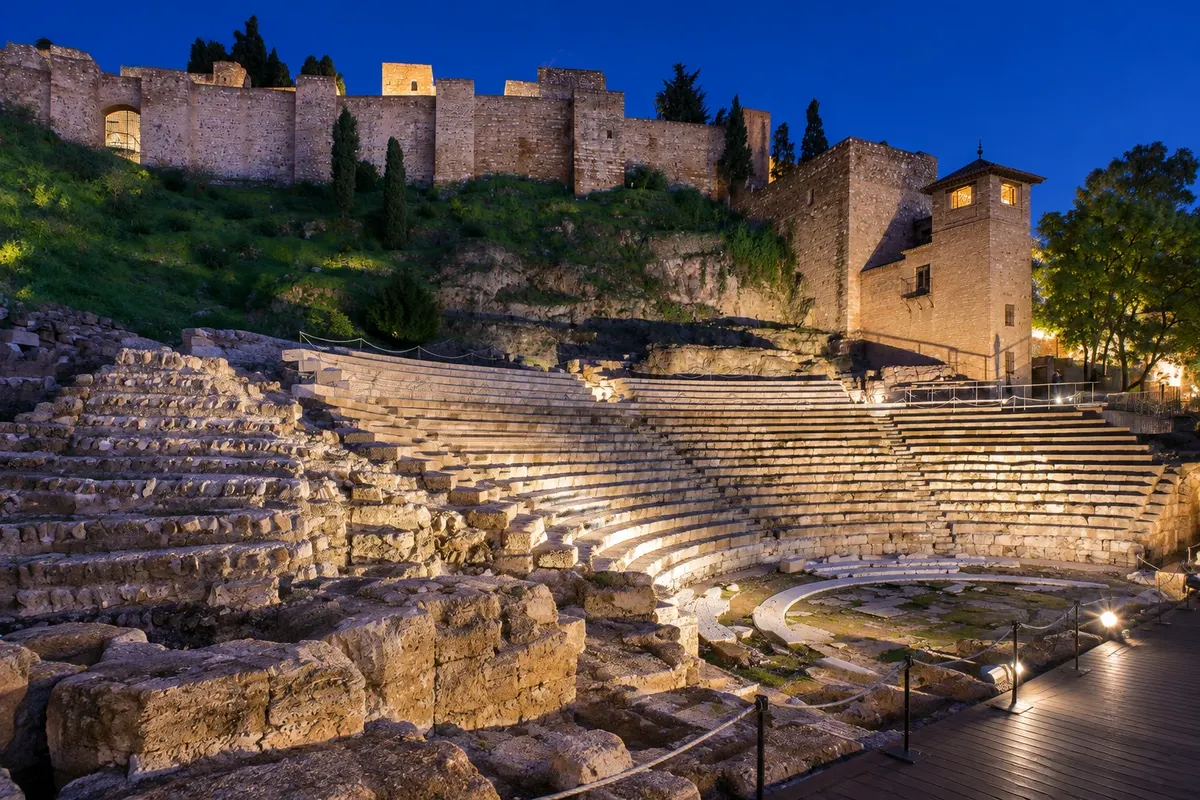
Ruins of the Roman Malaca theatre, from the early years of the Empire, at the foot of the Alcazaba, with seating, orchestra area and wooden walkways.
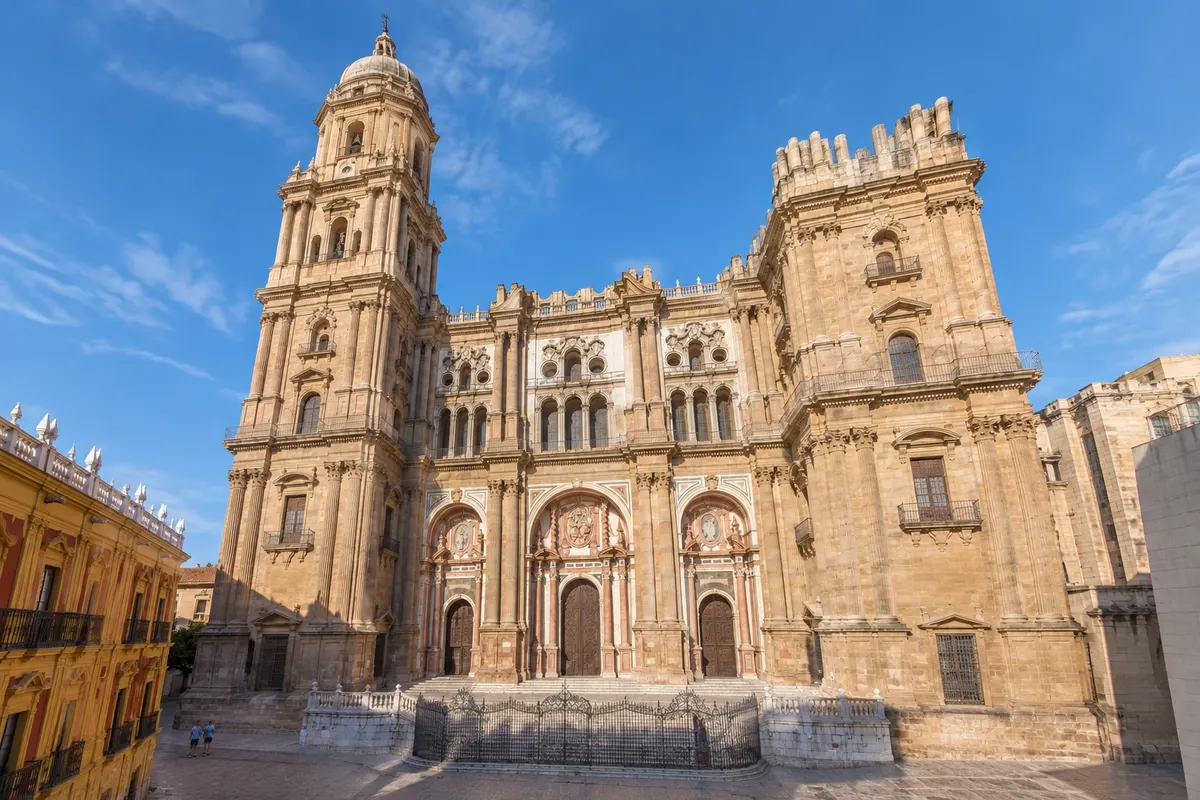
Renaissance cathedral, Catedral da Encarnação, built from 1528 to 1782 and never finished: it has only one tower, 84 meters high, and is therefore called La Manquita.
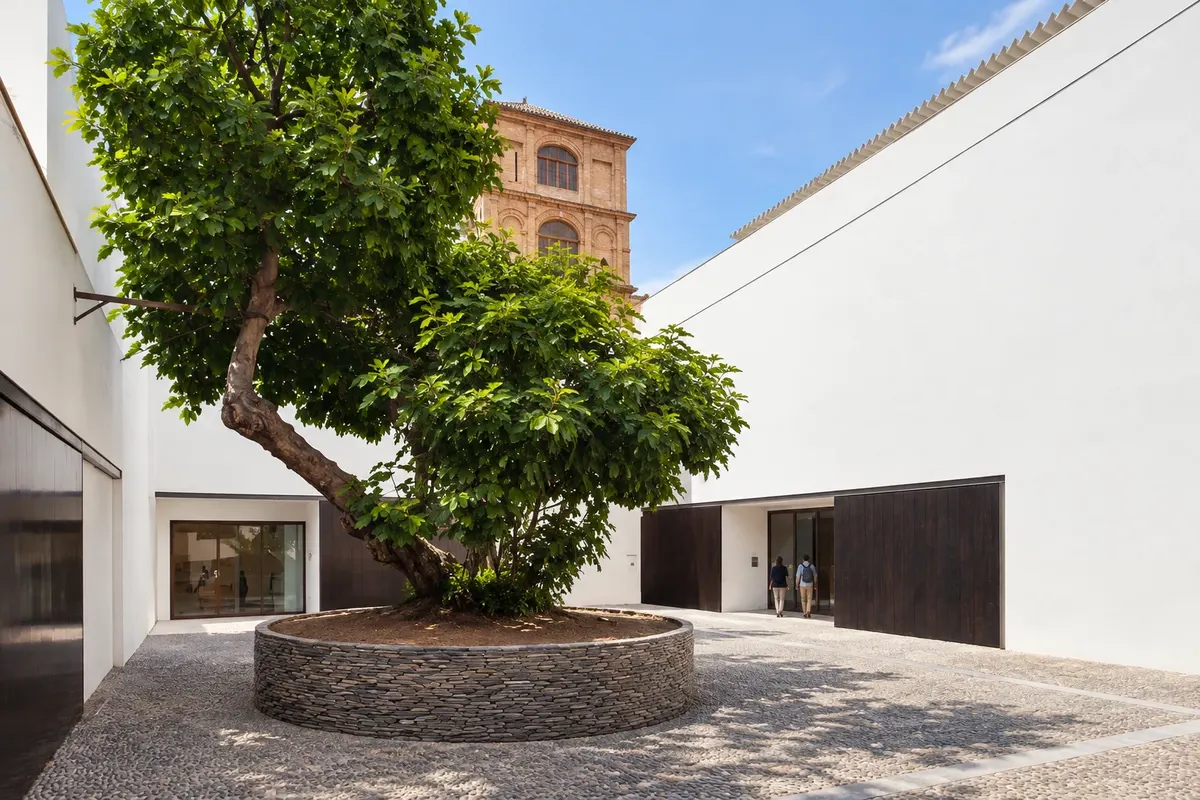
Museum dedicated to Picasso in the city where he was born, housed in the Palacio de Buenavista from the 16th century, with works from all phases of the painter donated by his family.
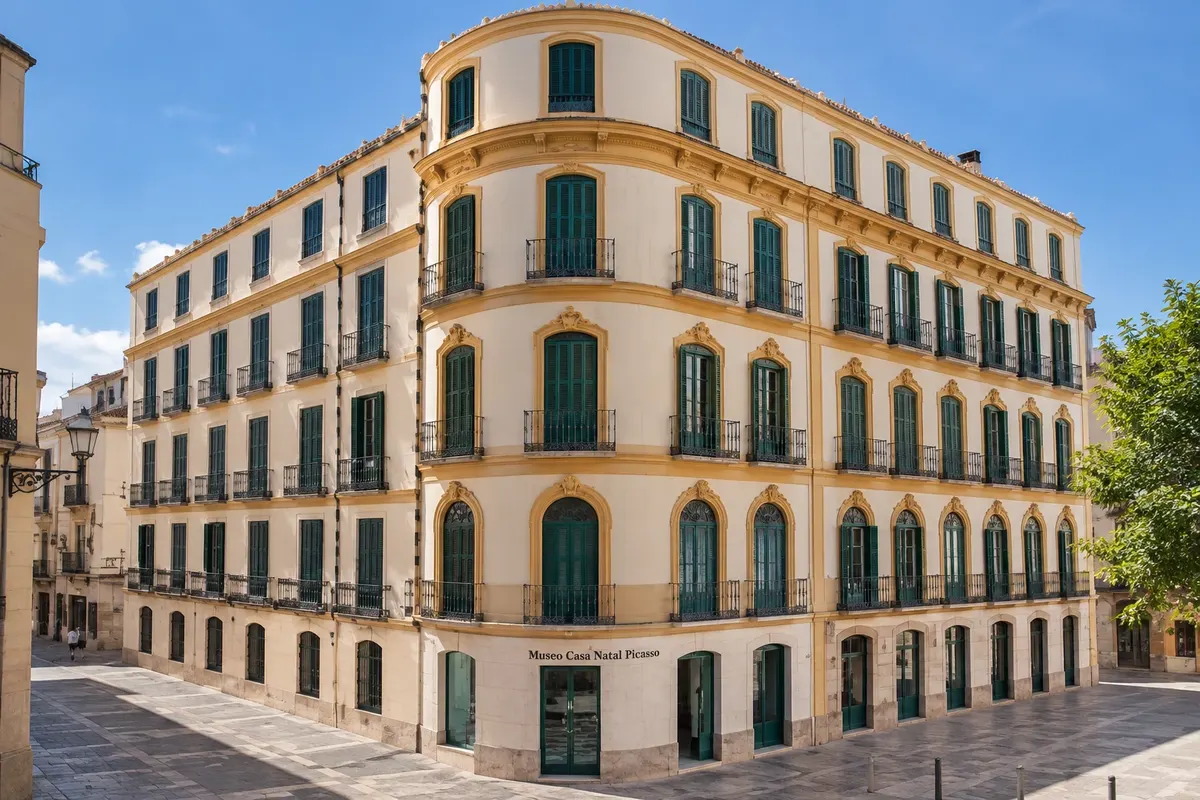
Building on Plaza de la Merced where Picasso was born in 1881, now a museum with family objects, prints, drawings and ceramics by the painter.
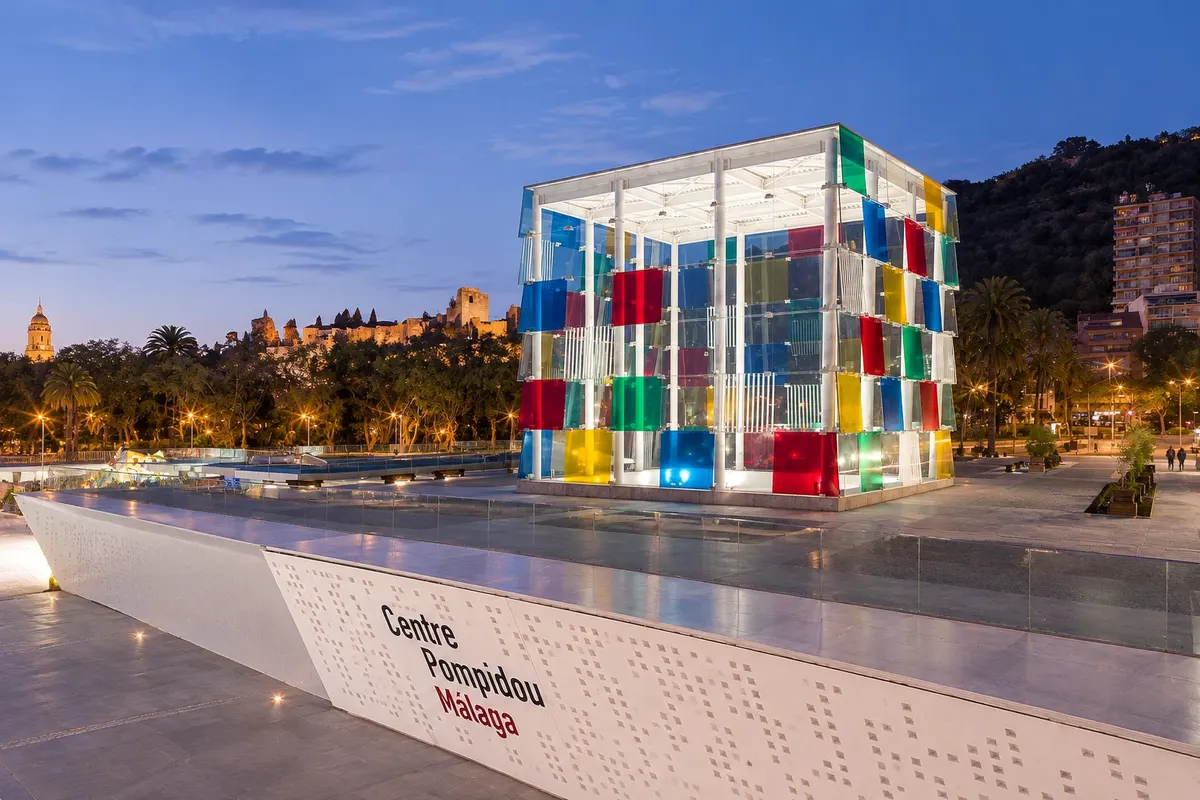
Branch of the Centre Pompidou of Paris at the port, housed in the building El Cubo, with art from the 20th and 21st centuries and Daniel Buren's colourful cube on the roof.
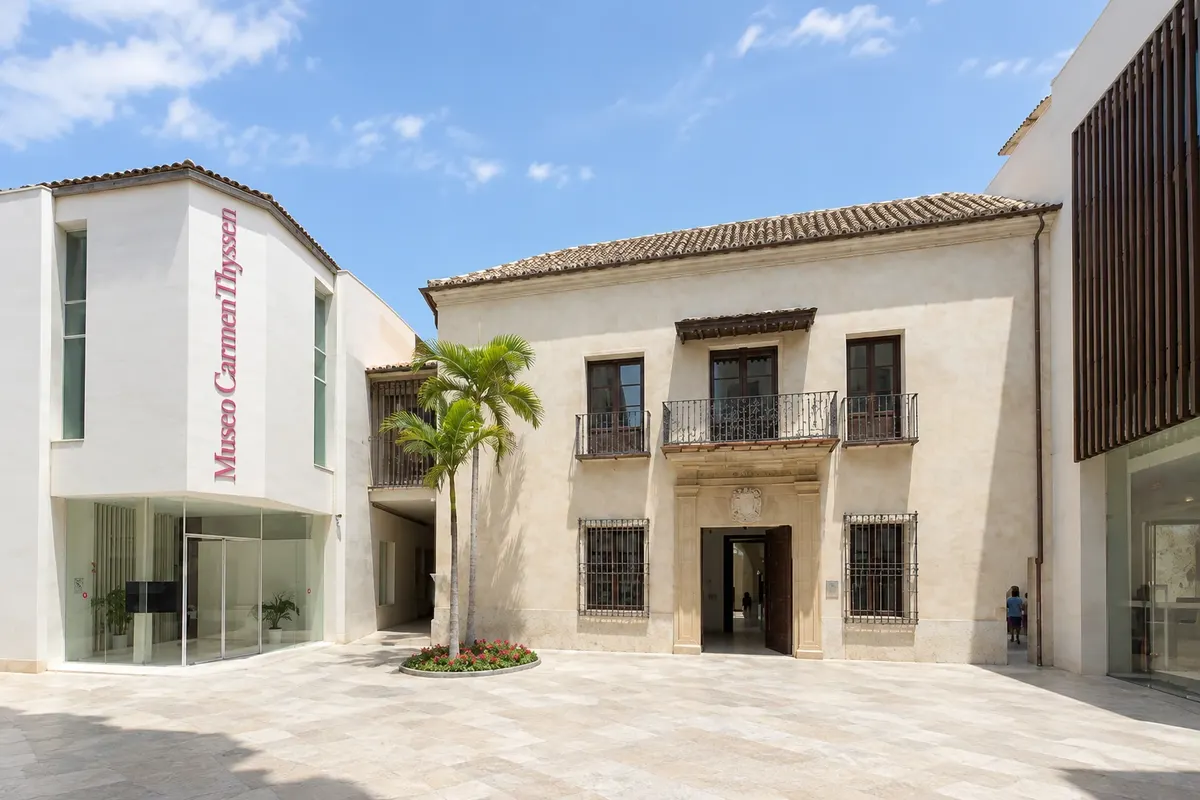
Museum of 19th and early 20th-century Spanish and Andalusian painting, in the 16th-century Palacio de Villalón, with works by Sorolla, Fortuny, Romero de Torres and Zurbarán.
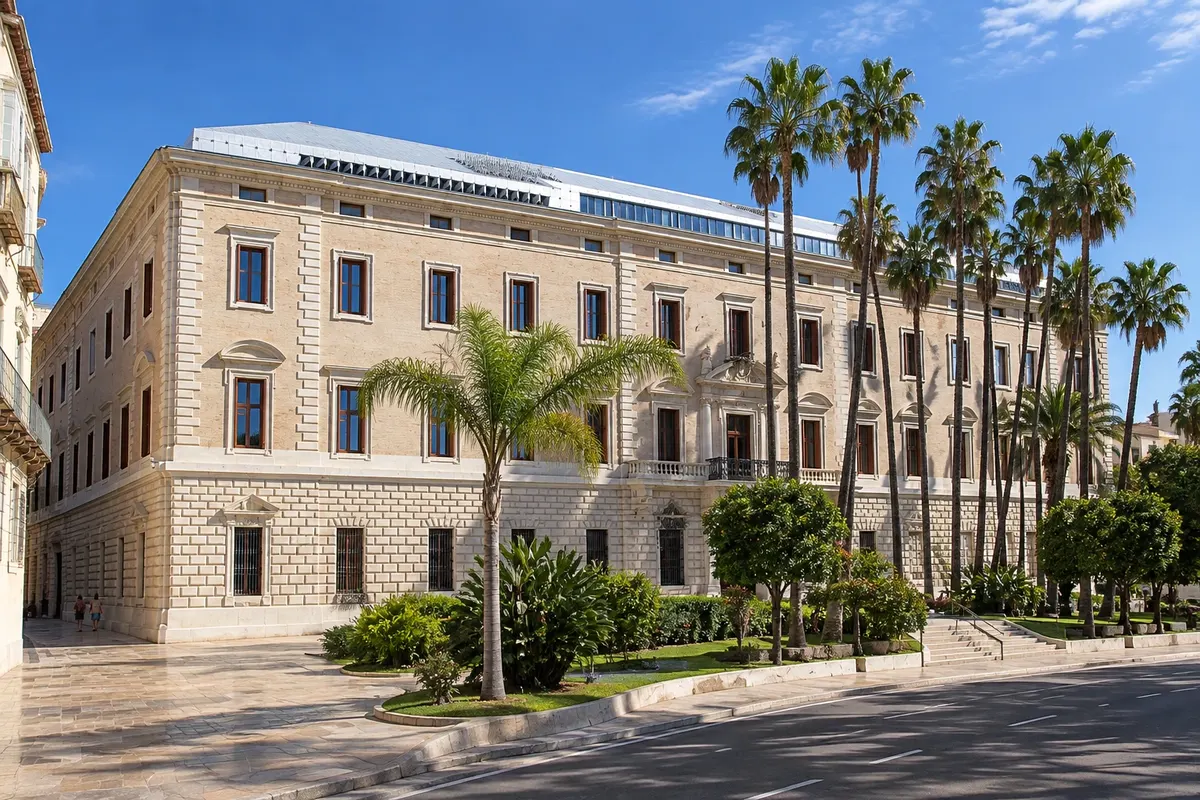
Large museum of fine arts and archaeology in the Palacio de la Aduana, a neoclassical building by the park, with pieces from prehistory to the Islamic period and 19th-century painting.
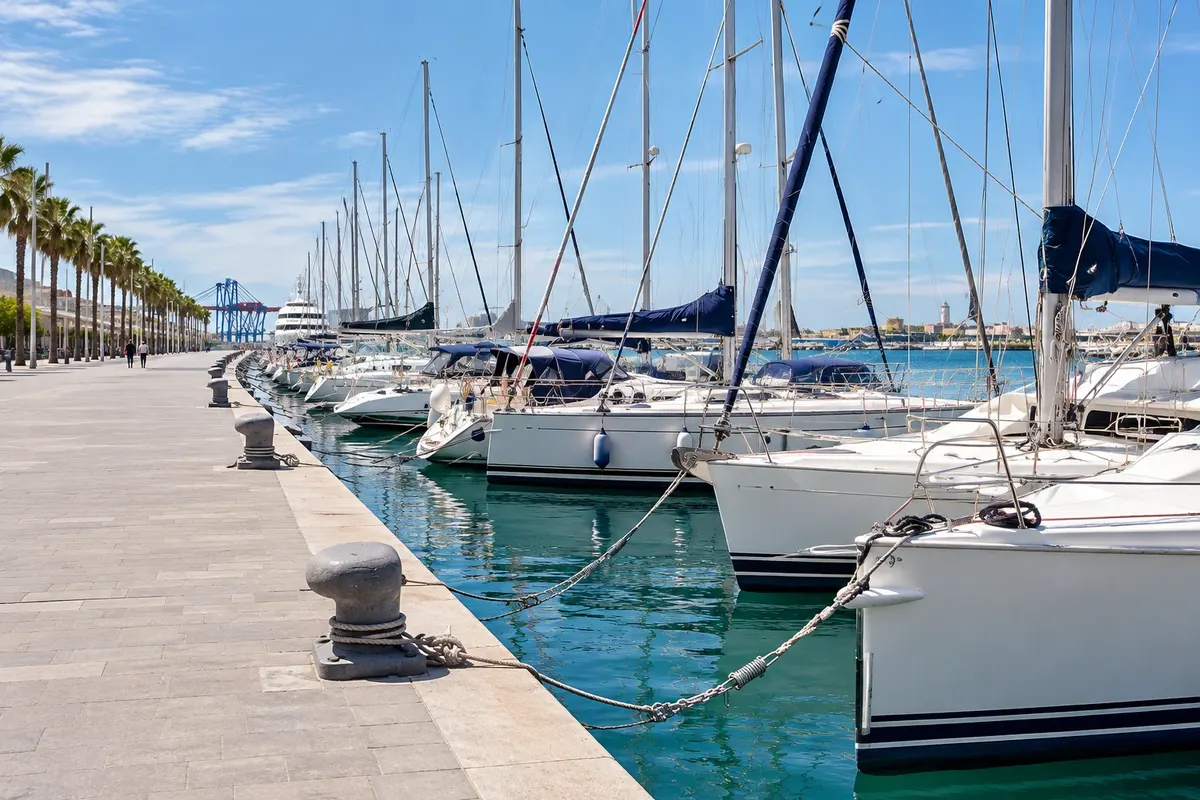
Open-air commercial promenade in the port of Málaga, with shops, restaurants, a yacht marina and the Centre Pompidou, between the centre and La Malagueta.
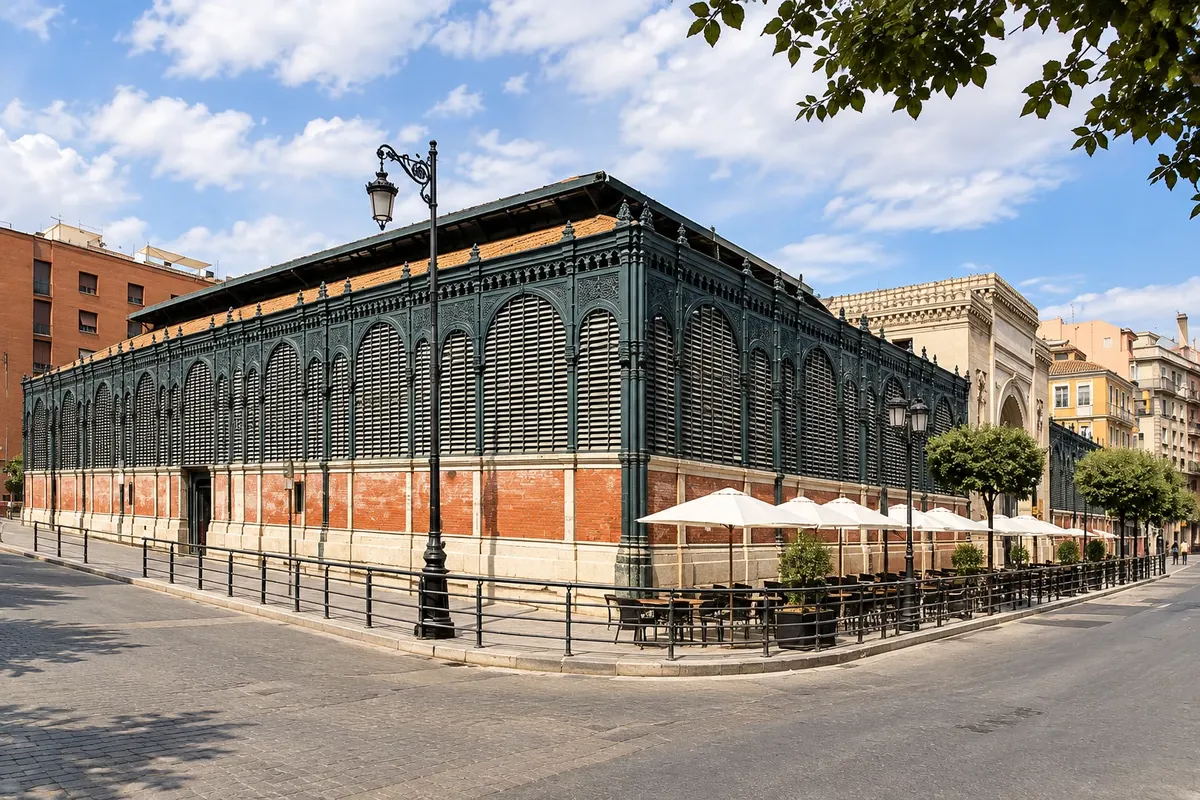
19th-century municipal market of iron and glass, with a 14th‑century nazari marble gate, a colorful stained‑glass window and stalls selling fish, fruit, cured meats and tapas.
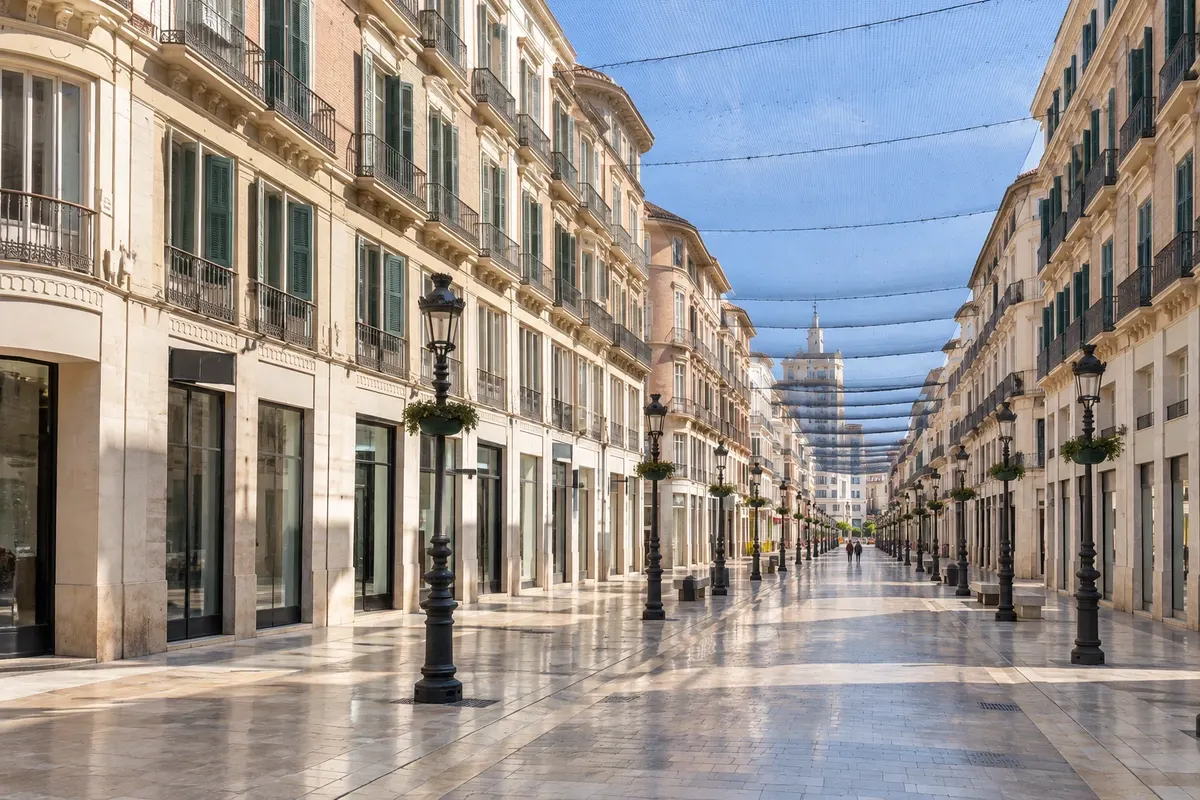
Málaga's main pedestrian street, with late‑19th‑century buildings, shops and cafés, linking the Alameda Principal to the Plaza de la Constitución.
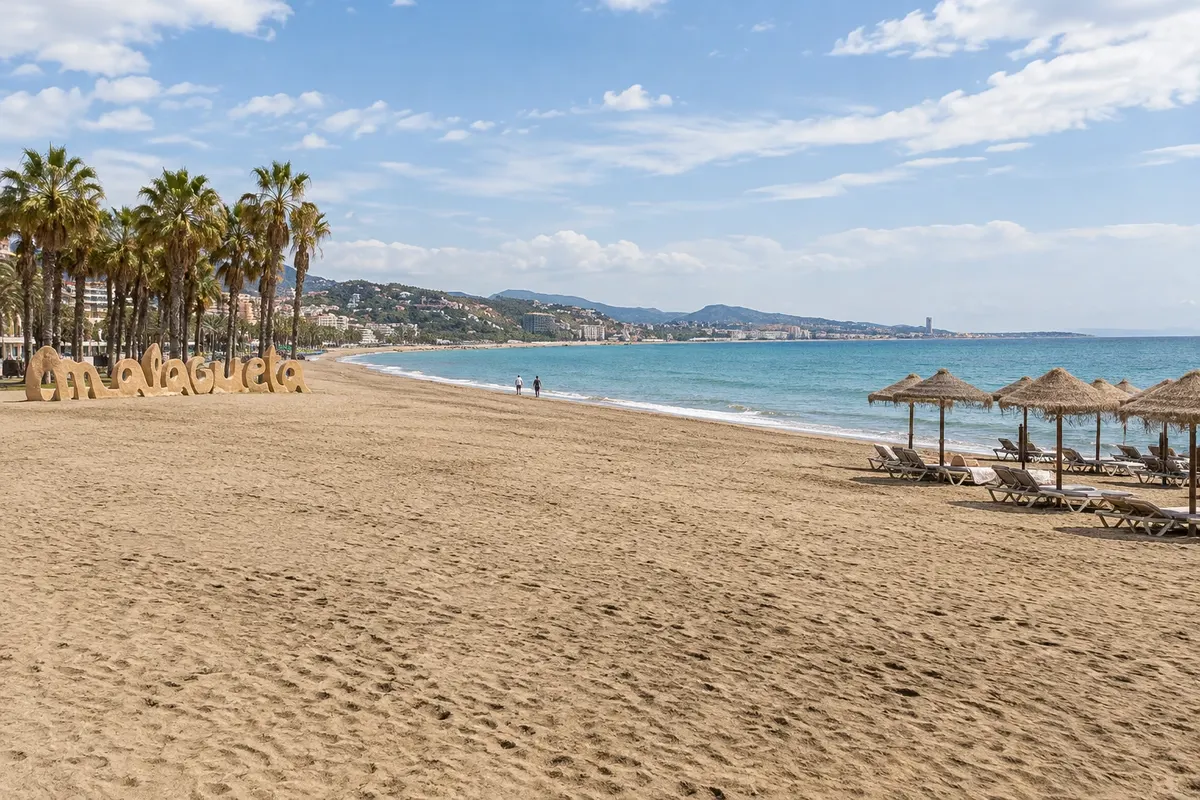
Urban beach of dark sand next to the port and the centre, about 1.2 km long, with fish kiosks, a promenade and the bullring just behind.
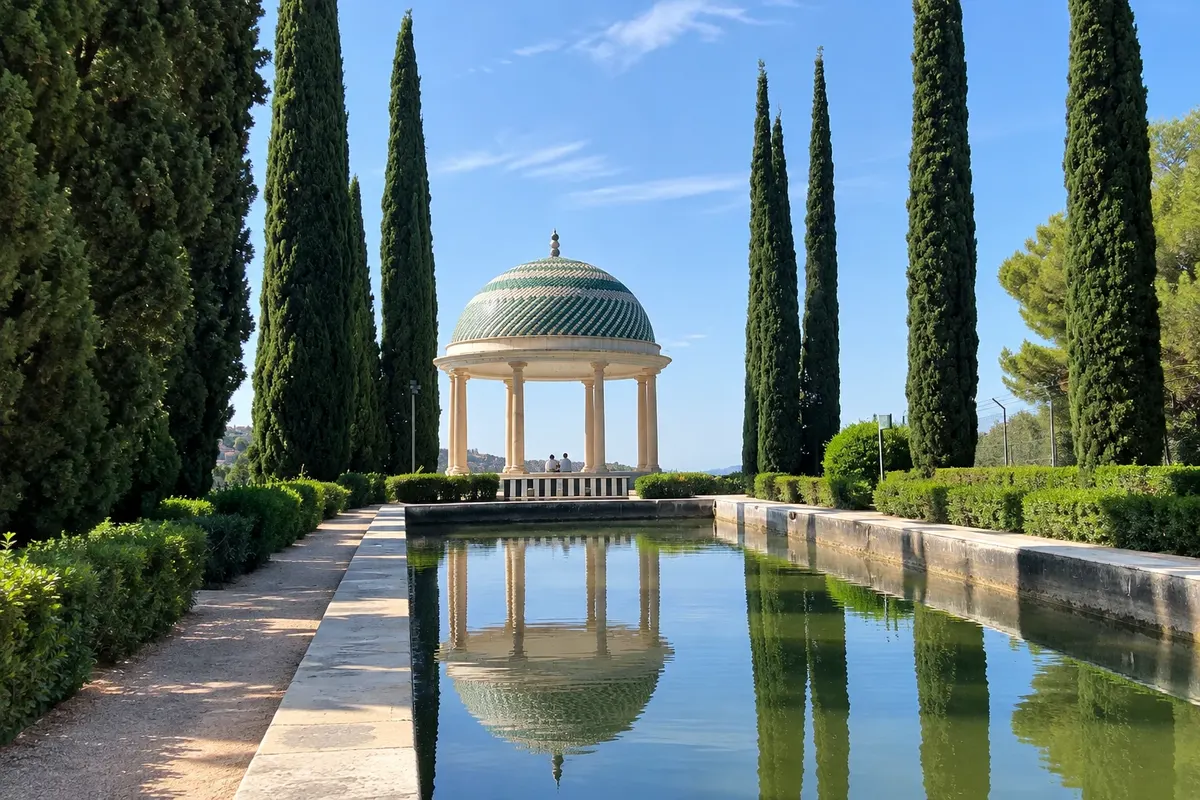
English‑style botanical garden created around 1855 in the north of Málaga, with more than 2,000 species, palm trees, lakes, waterfalls and a wisteria pergola.
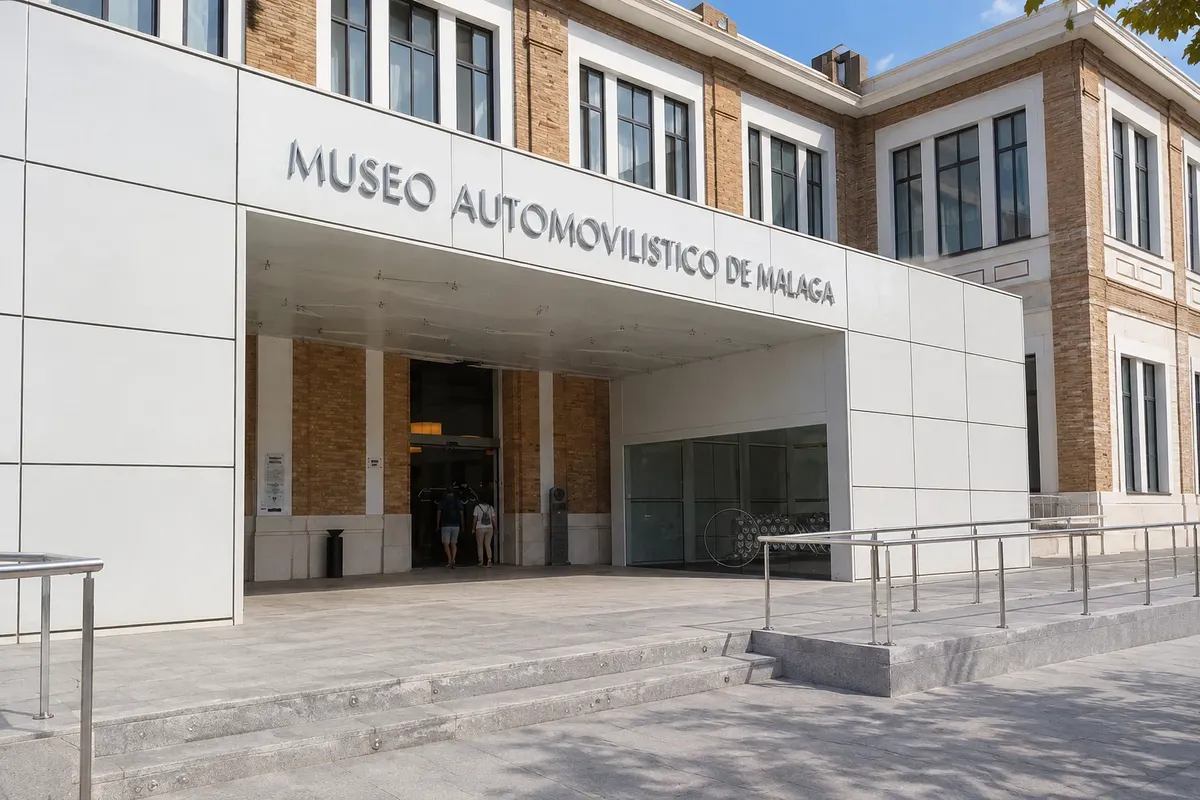
Museum with about 90 vintage and luxury cars on display and a fashion collection of haute-couture hats, housed in Málaga’s former tobacco factory.
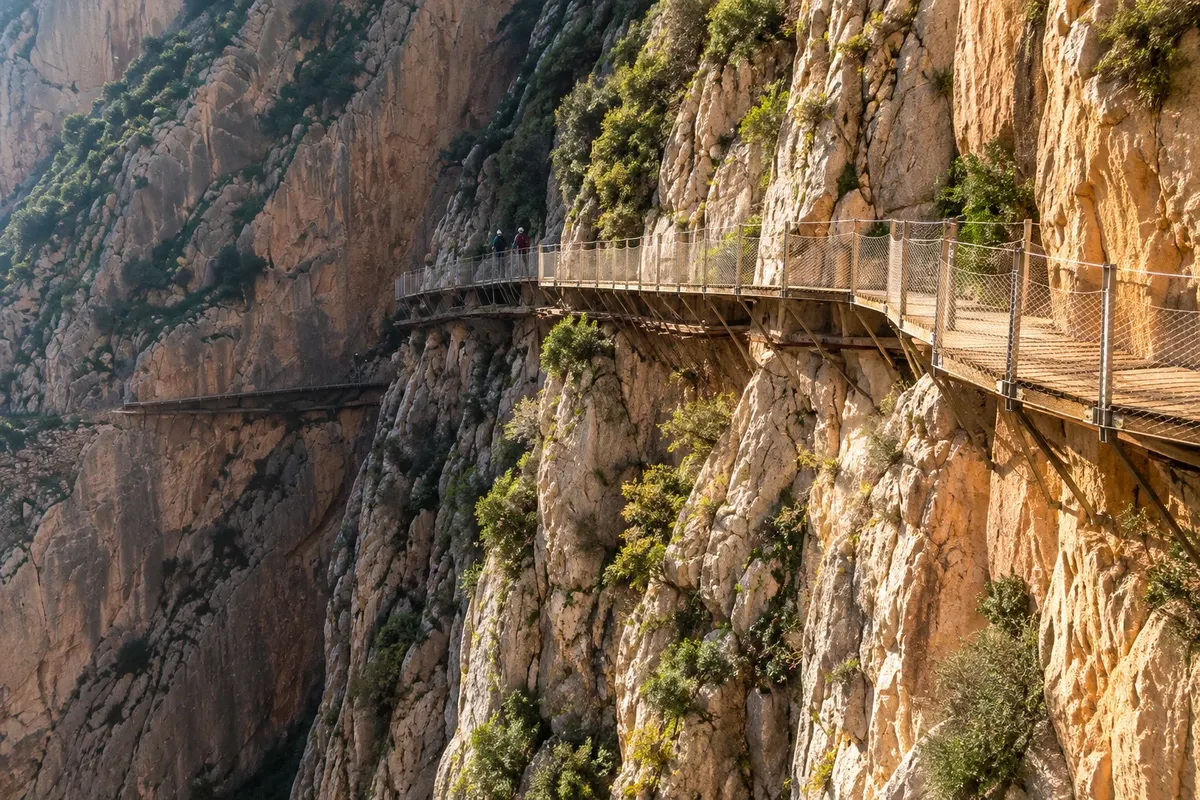
Walkway of more than 3 km fixed to the walls of the desfiladeiro de los Gaitanes, up to 105 metres above the river, about an hour from Málaga. Reservation required.
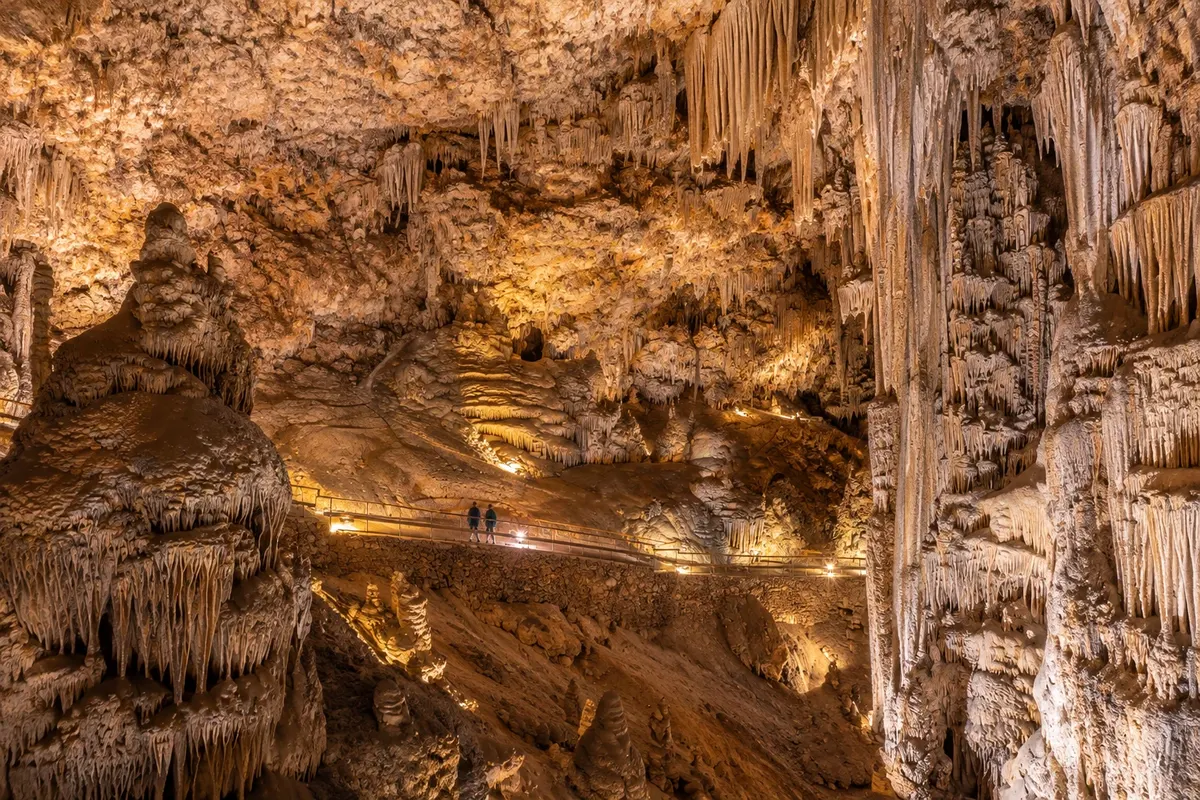
Cave discovered in 1959 in Maro, near Nerja, about 55 km from Málaga, with huge chambers of stalactites and stalagmites and prehistoric remains.
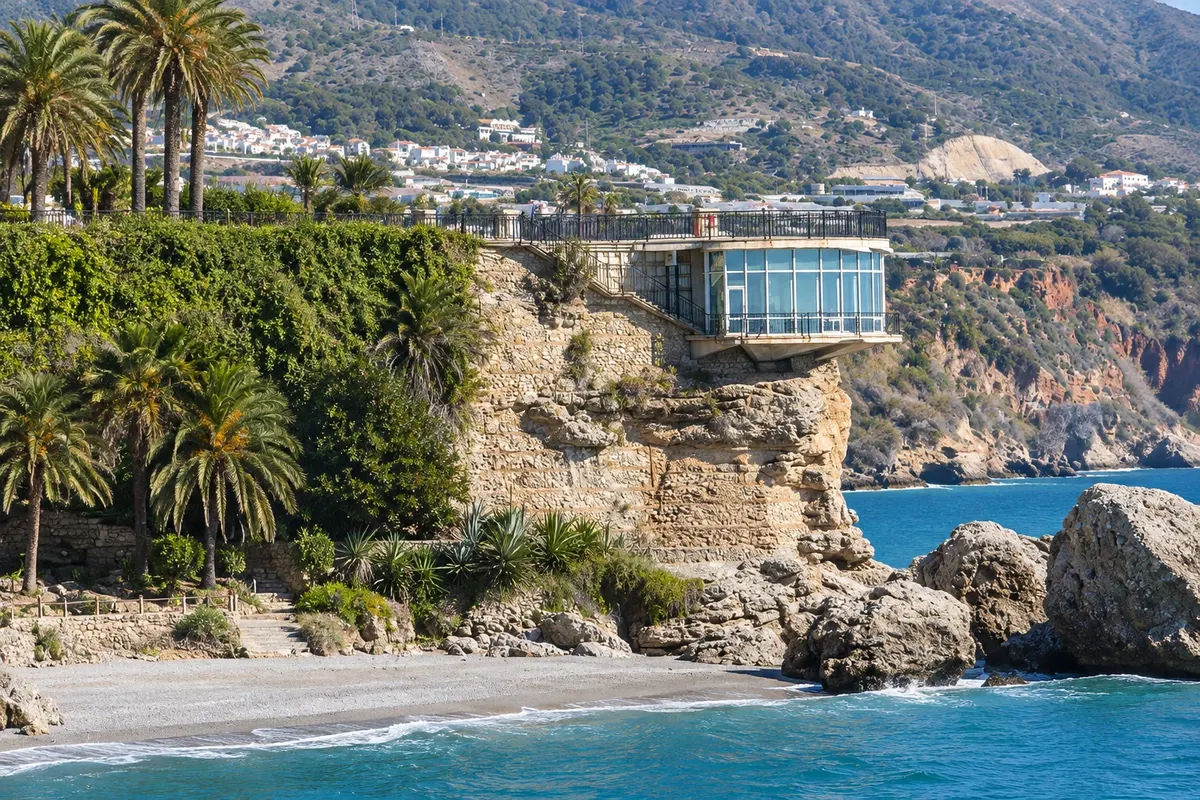
Seafront viewpoint in the center of Nerja, on the site of an old watchtower, with views over the coves, the cliffs and the Sierra de Almijara.