From the Cathedral to the Old Market: core of the historic center
From Metropolitan Cathedral, in the historic center on foot, on your own about 2 hours morning or afternoon easy, with short hills
This is the first walk in town, short and almost entirely downhill. Start at the Metropolitan Cathedral of Santo Antônio da Sé. The current church was built between 1932 and 1938 on the site of the old mother church of Santo Antônio do Tijuco, from around 1750, demolished in 1932. From the old church the side altars with baroque woodcarving survived. The interior is simple, and the cathedral is usually open during the day.
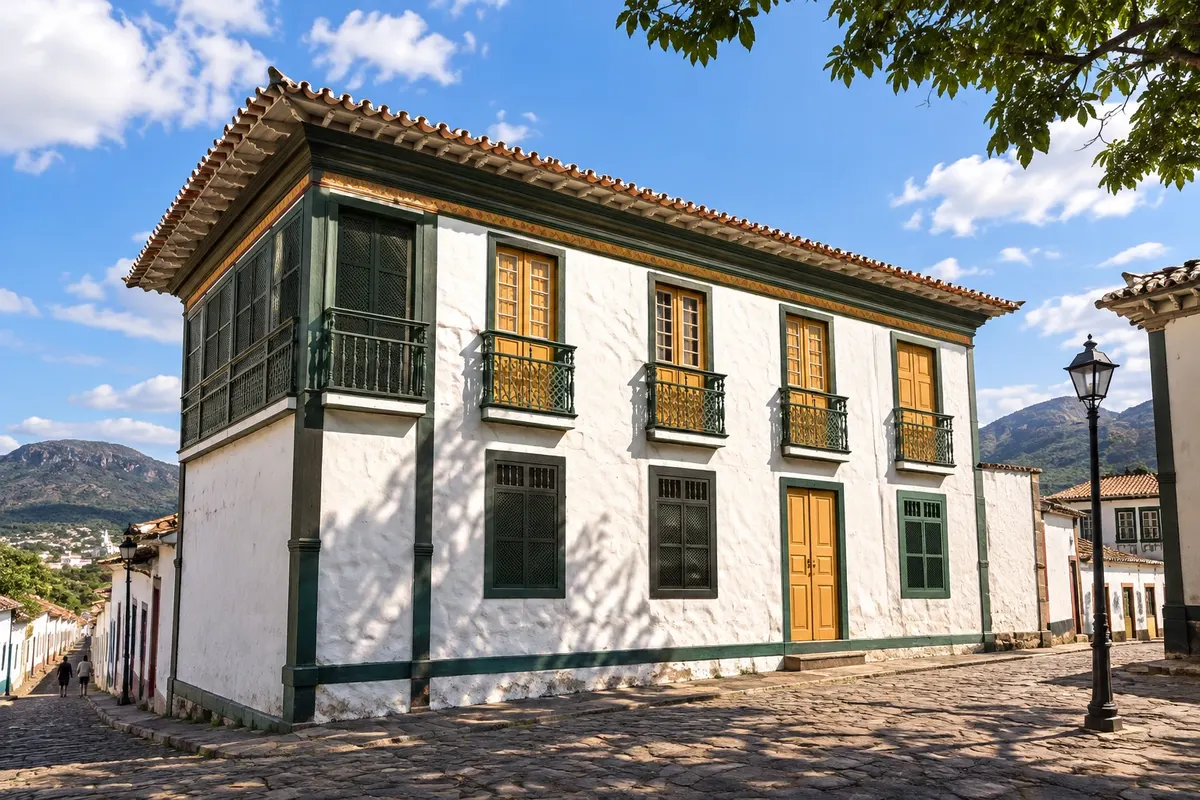
Nearby, at Praça Conselheiro Mata, stands the old Casa da Intendência, erected between 1733 and 1735 to house the Intendência dos Diamantes, the agency that supervised the extraction and trade of stones. The two‑storey house features a stone staircase at the entrance, ten windows on the upper floor and nine on the ground floor.
Next to the Cathedral begins Rua da Quitanda, a narrow street lined with two‑storey houses with balconies on both sides. It’s where the bars are and, on Vesperata nights, the stage for the musicians. From it runs Beco da Tecla, with bars and a café, which descends toward the market.
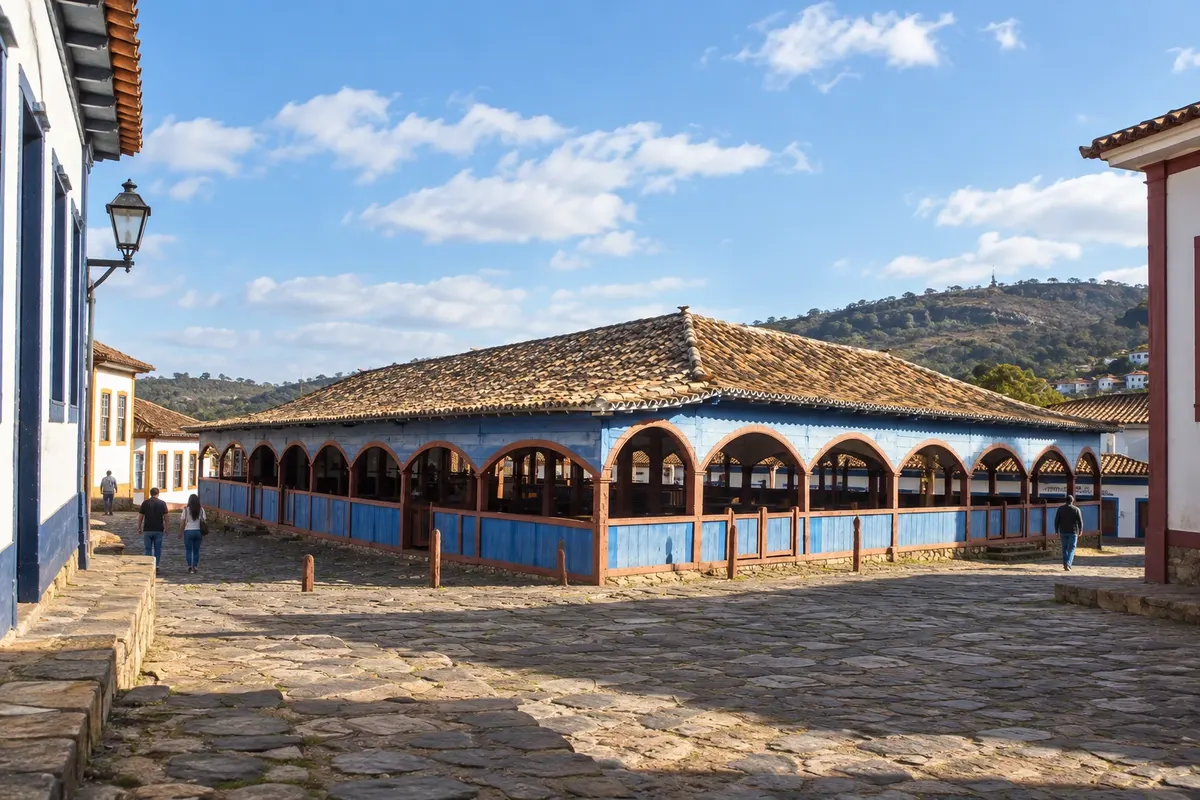
The Mercado Velho sits on Praça Barão de Guaicuí. In 1835 Lieutenant Joaquim Cassimiro Lages built his house there and, beside it, a hut for the muleteers’ trade; in 1889 the site became the municipal market. The structure is wooden, with a sequence of half‑moon arches. On Saturday mornings it hosts a fair with regional foods, crafts and tapestries; at night there are stalls with typical dishes and music.
To finish, look for the Antônio Torres Library, a two‑storey house from the second half of the 18th century. On one of the balconies is an original muxarabiê, a lattice of Moorish influence that covers the balcony and allowed seeing the street without being seen.
Stops: Metropolitan Cathedral of Santo Antônio da Sé, Old Casa da Intendência, Rua da Quitanda, Beco da Tecla, Mercado Velho, Antônio Torres Library (Casa do Muxarabiê).
Includes: Self-guided walk. No entry fee at the Cathedral and the Old Market.
Tip: If you can, do the route on a Saturday morning, market day. Wear sturdy-soled shoes: the paving is irregular stone and becomes slippery when it rains.
Best time: All year round. From May to September there is little rain and the streets stay dry.
Rosário, Amparo, Carmo and Casa de Chica da Silva
From Mercado Velho, via Rua do Rosário on foot 2 to 3 hours, including visits afternoon easy to moderate, with slopes
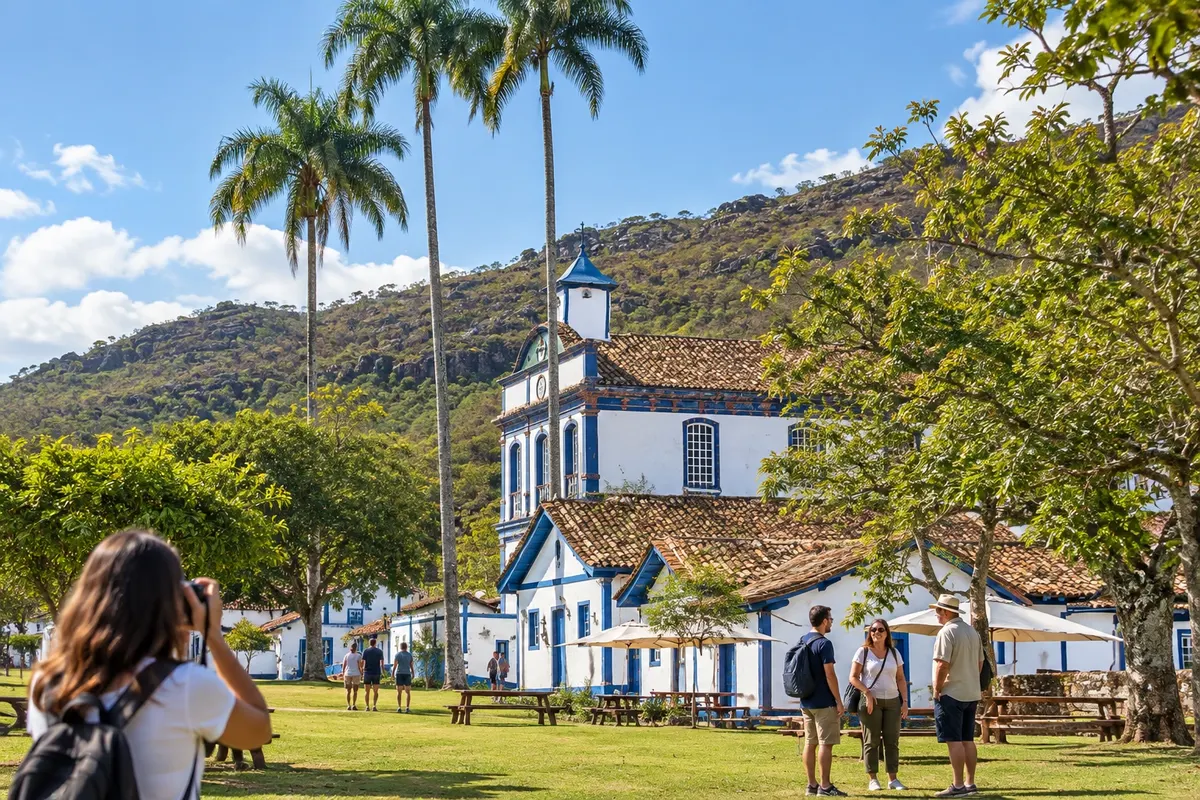
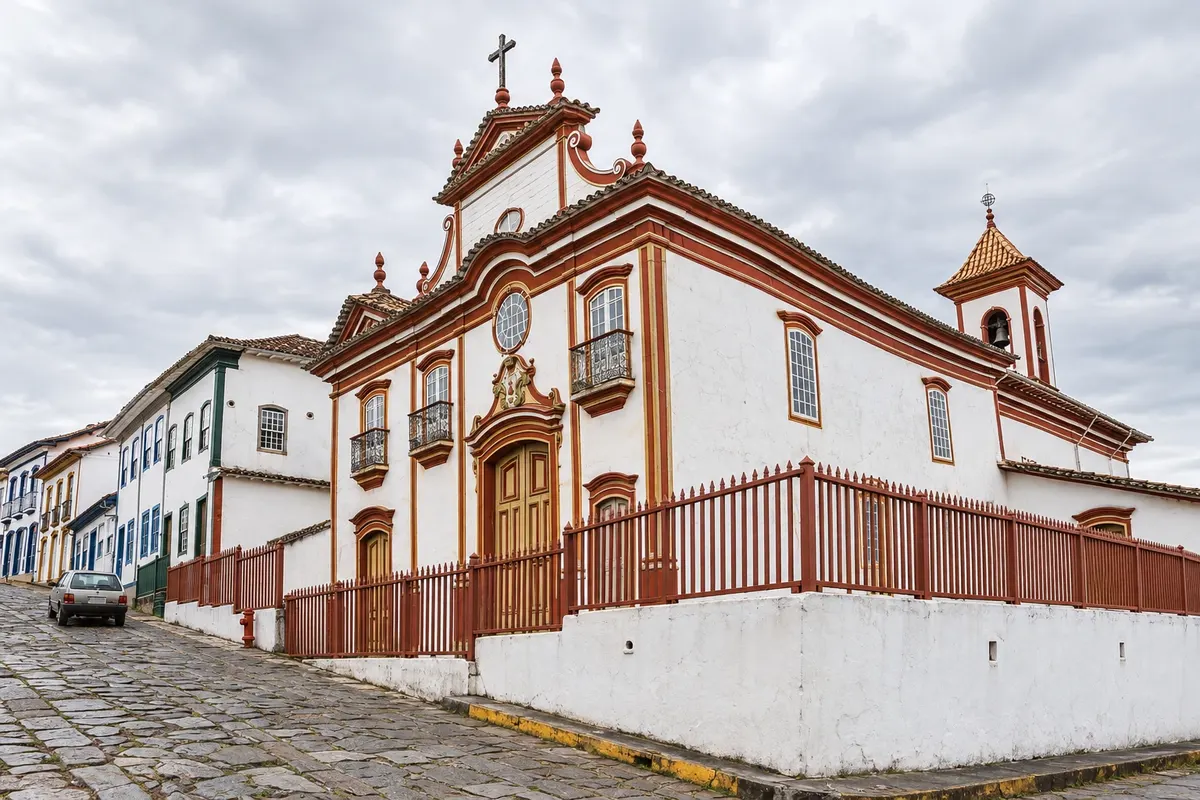
From Mercado Velho, Rua do Rosário leads to two churches linked to the brotherhoods of the old settlement. The first is the Imperial Chapel of Our Lady of Amparo, small, blue and white, with a single tower centered on the façade. It was built by the Brotherhood of Pardos and completed in 1776. The altars are in a baroque-rococo style, the pulpit is chalice-shaped, and the paintings are attributed to Silvestre de Almeida Lopes. It is the church of the Festa do Divino, one of the city’s most traditional celebrations.
Further on, in a tree-lined square with a fountain, stands the Church of Our Lady of the Rosary of the Black People, one of the oldest in Diamantina, erected by the brotherhood of black people. It has black saints on the altar and a panel by José Soares de Araújo.
Climb the hill to reach the Church of Our Lady of Mount Carmel, built between 1760 and 1784 with money from the diamond contractor João Fernandes de Oliveira. The tower is at the rear, which is uncommon. Inside, the altar is gilded, the ceiling is painted, and the organ, with 549 pipes, still plays in concerts.
Almost opposite, on Lobo de Mesquita Square, is the Casa de Chica da Silva. There, between 1763 and 1771, lived the woman born enslaved who joined the contractor and became the most well-known figure in local history. The two-story house has a side balcony enclosed by latticework. Inside are paintings that portray her, and the Diamond Museum exhibition has been displayed in the house, with limited opening days.
On the return, pass by the Church of Our Lord of Bonfim, built by military men in the second half of the 18th century on a stone platform, on a street of houses from the same period. The Santa Izabel Theater, next to Rosário, completes the route.
Stops: Imperial Chapel of Our Lady of Amparo, Church of Our Lady of the Rosary of the Black People, Church of Our Lady of Mount Carmel, Casa de Chica da Silva, Church of Our Lord of Bonfim, Santa Izabel Theater.
Includes: Self-guided walk. Some churches charge a visitation fee, paid at the door: check the current schedule of fees. There is no entrance fee at the Casa de Chica da Silva.
Tip: Churches have short opening hours and are not open every day; Amparo and Bonfim often alternate on Sundays. If you pass by an open church, go in. In general, photographing the interior is not allowed. Confirm the opening days of the Casa de Chica da Silva the day before.
Best time: All year round, preferably Thursday to Saturday, when more churches are open.
Praça JK, São Francisco de Assis, Casa de Juscelino and Casa da Glória
From Praça JK on foot 2 to 3 hours morning moderate, due to the hills
Praça JK has benches, trees and a statue of Juscelino Kubitschek, the president who built Brasília and who was born in Diamantina. On one side stands the Fórum building, raised in the first half of the 18th century as a residence.
At the top of the square is the Church of São Francisco de Assis, begun in the 1760s. It has a single side tower and an interior in the Rococo style, with carvings that combine wood and gold and paintings by José Soares de Araújo and Silvestre de Almeida Lopes. Chica da Silva was buried there. The bell tower is open to visitors.
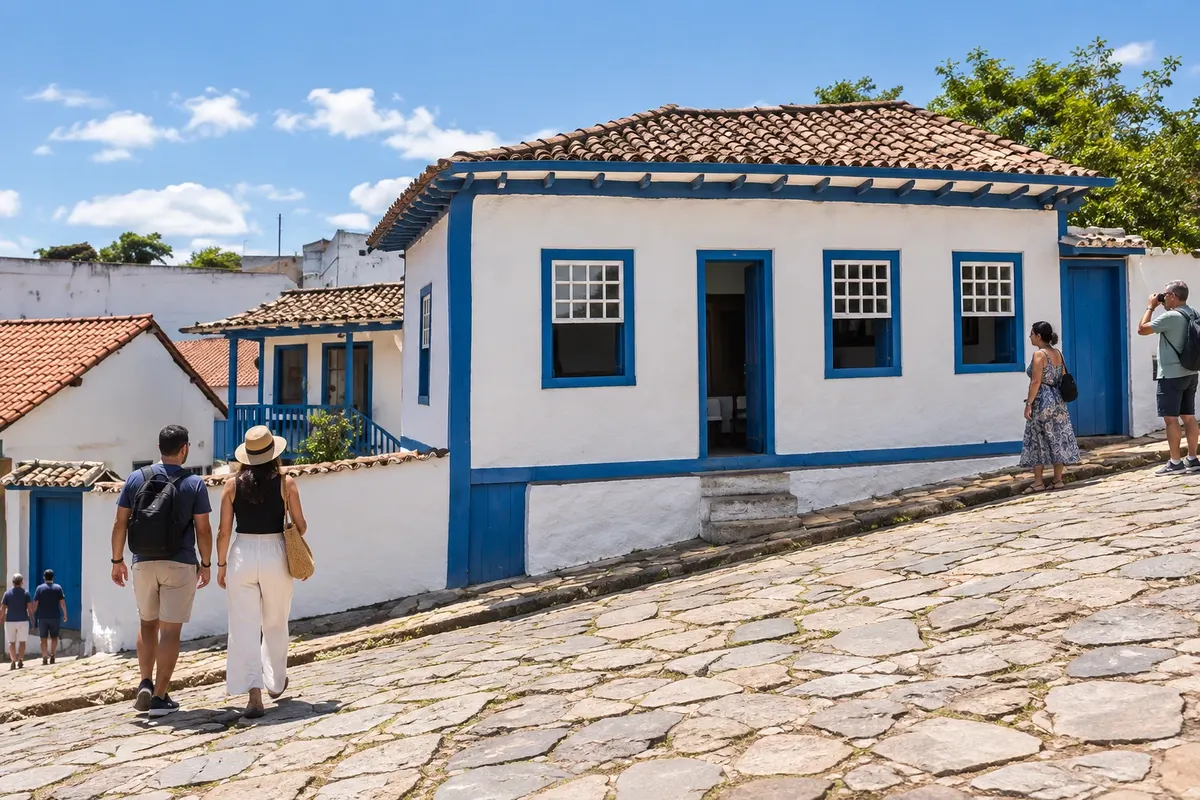
Walking up Rua São Francisco you reach the house where Juscelino spent his childhood and adolescence. It is a pau-a-pique structure, a common technique in the 18th century, now converted into a museum. The rooms display the library, photographs, personal objects and the guitars he took to serenades.
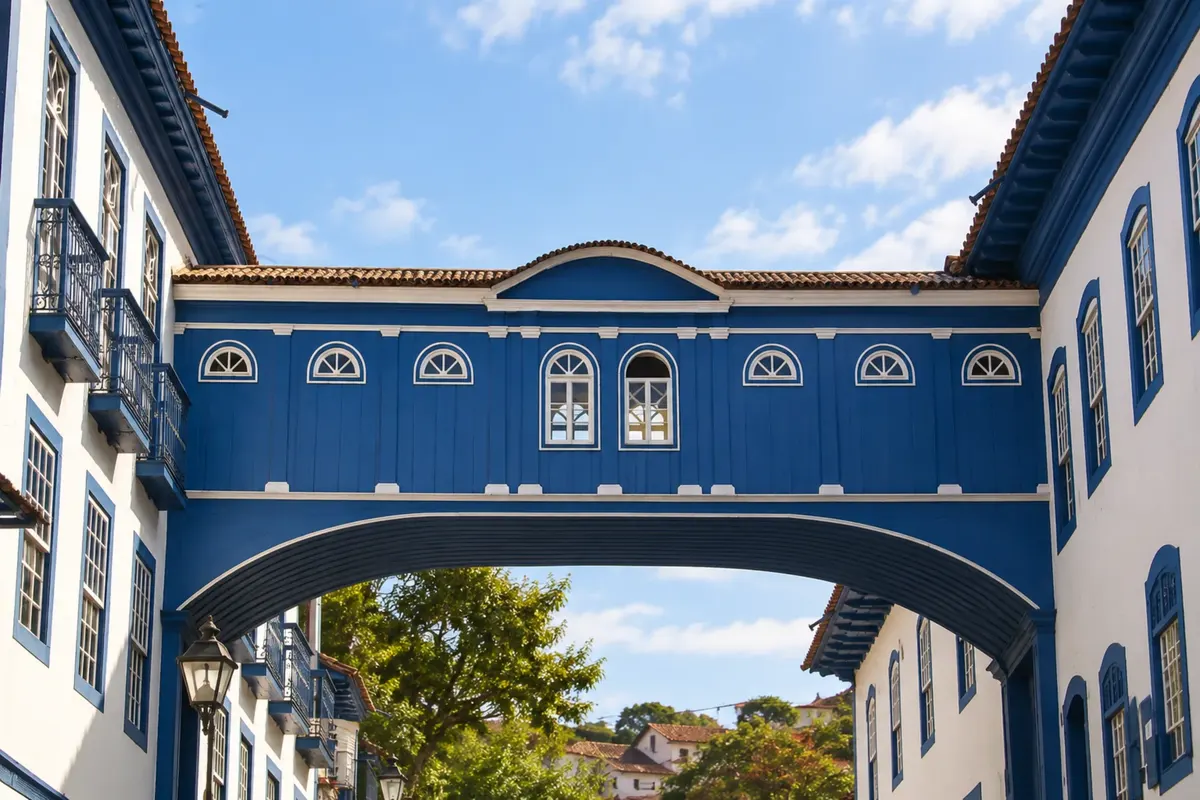
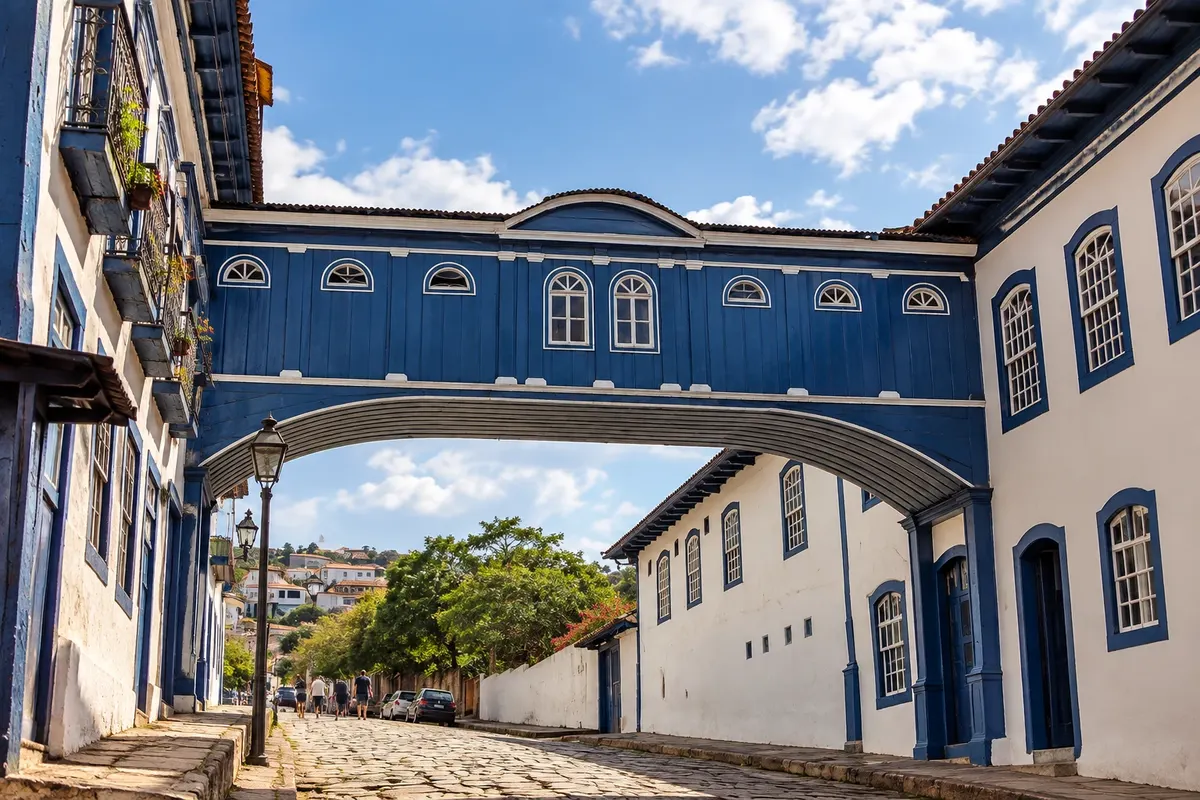
From there, a steep walk leads to Rua da Glória and the city’s most famous image: the covered wooden walkway, painted blue, that spans the street connecting two manor houses. The Casa da Glória combines an 18th-century building and a 19th-century one. It was a residence, later a school and an orphanage run by the Vincentian sisters, who had the passageway built to go from one building to the other without stepping onto the street. The complex belongs to the Federal University of Minas Gerais, houses a geosciences institute and receives visitors, who can cross the walkway from inside.
Those with stamina finish at the Basilica of the Sacred Heart of Jesus, built between 1885 and 1890 in exposed ashlar stone, in a neo-Gothic style very different from the colonial churches in the center.
Stops: Praça JK, Fórum Building, Church of São Francisco de Assis, Casa de Juscelino Kubitschek, Casa da Glória and Covered Walkway, Basilica of the Sacred Heart of Jesus.
Includes: Self-guided walk. The Church of São Francisco and the Casa de Juscelino charge admission: check the current rates. During Mass times there is no charge to enter the church.
Tip: The Casa de Juscelino is closed on Mondays and is open only in the mornings on Sundays and holidays. At the Casa da Glória, confirm visiting days in advance.
Best time: All year. In the dry season, from May to September, the hills are less slippery.
Vesperata: the night of musicians on the balconies
From Rua da Quitanda, in the historic center on foot; open-air concert 2 to 2h30 of concert night easy
The Vesperata is the event that draws the most people to Diamantina. It works like a serenade in reverse: the musicians stay up high, in the windows and balconies of the mansions on Rua da Quitanda, and the audience stays below, in the street. The conductor leads from amid the tables, turning one way and the other. Sound comes from all directions.
Its origin goes back to the 19th century, when bands played from balconies at dusk, at vespers time. The current format has existed since the early 1990s. Local bands perform, including the Military Police band and a band of young musicians. The repertoire mixes Brazilian music, arrangements of classics and film scores.
The concert takes place on Saturdays set each year, always in the dry season, between April and October. It is not every Saturday: in 2026, for example, there were eleven nights, from June to October. The city hall publishes the season calendar, and that calendar is used to choose the travel date.
There are two ways to watch. The tables set up in the street, served by bars and restaurants, are sold in advance. Those who don’t buy a table watch standing or sitting on the sidewalks and steps around, without paying.
On Friday nights before some concerts there are usually jazz performances, and the city maintains serenades and concerts year-round. On Vesperata weekends the city fills up, and many accommodations only accept reservations from Friday to Sunday.
Stops: Rua da Quitanda, Catedral Metropolitana, Beco da Tecla.
Includes: Watching from the street, outside the reserved tables, is free. The tables are paid, with drinks/food extra: check the current season price list.
Tip: Book accommodation as soon as the schedule is announced. Without tables, arrive early to find a spot on the steps and sidewalks. Bring warm clothing: nights are cold from June to August. Confirm the date before traveling, because the schedule changes every year.
Best time: Saturdays set each year, between April and October.
Cruzeiro da Serra and the Path of the Slaves
From Historic center; the trail begins near BR-367 car or taxi to the viewpoint; trail on foot 1 to 2 hours at the viewpoint and start of the route; a full day to Mendanha late afternoon (viewpoint) or morning (trail) easy at the viewpoint; difficult to Mendanha
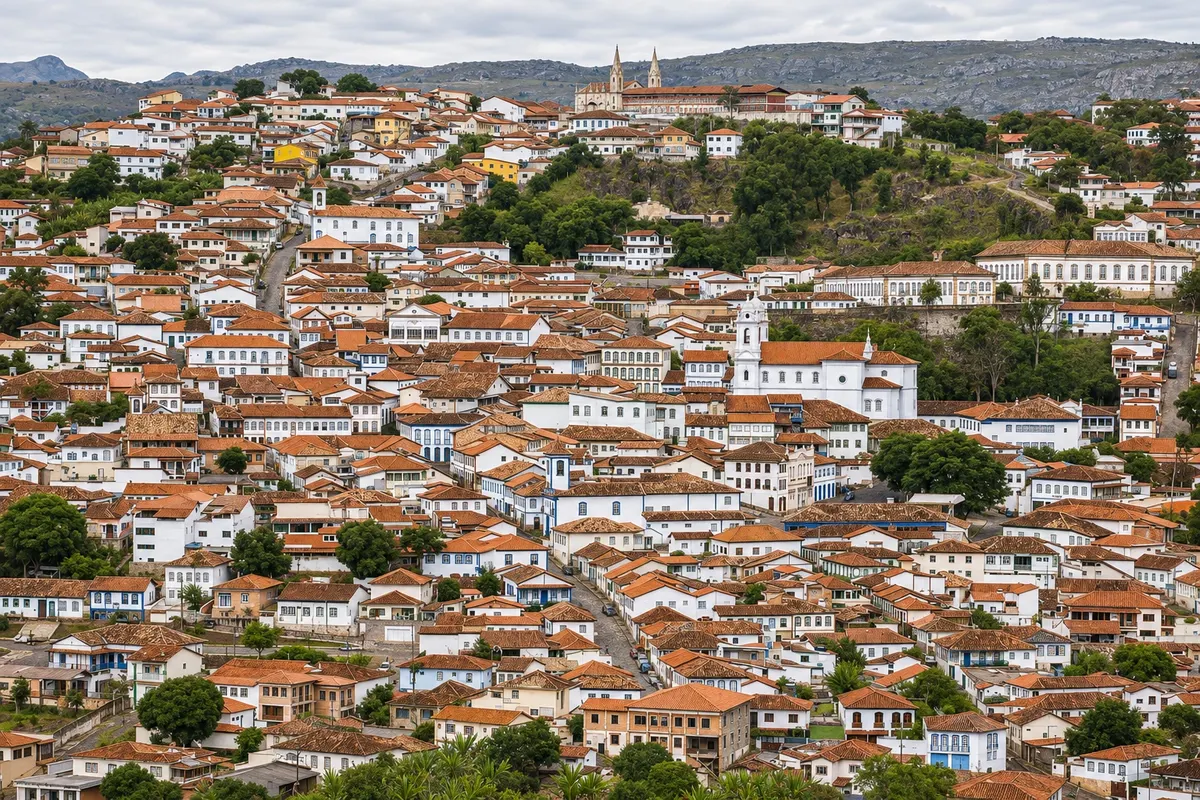
To see Diamantina as a whole you need to leave the city. A winding road climbs to the Cruzeiro da Serra, where a cross marks the viewpoint. From there you can see the slopes, church towers and townhouse roofs, with the Espinhaço Range around. Late afternoon is the most popular time, but the view is worthwhile at any time of day.
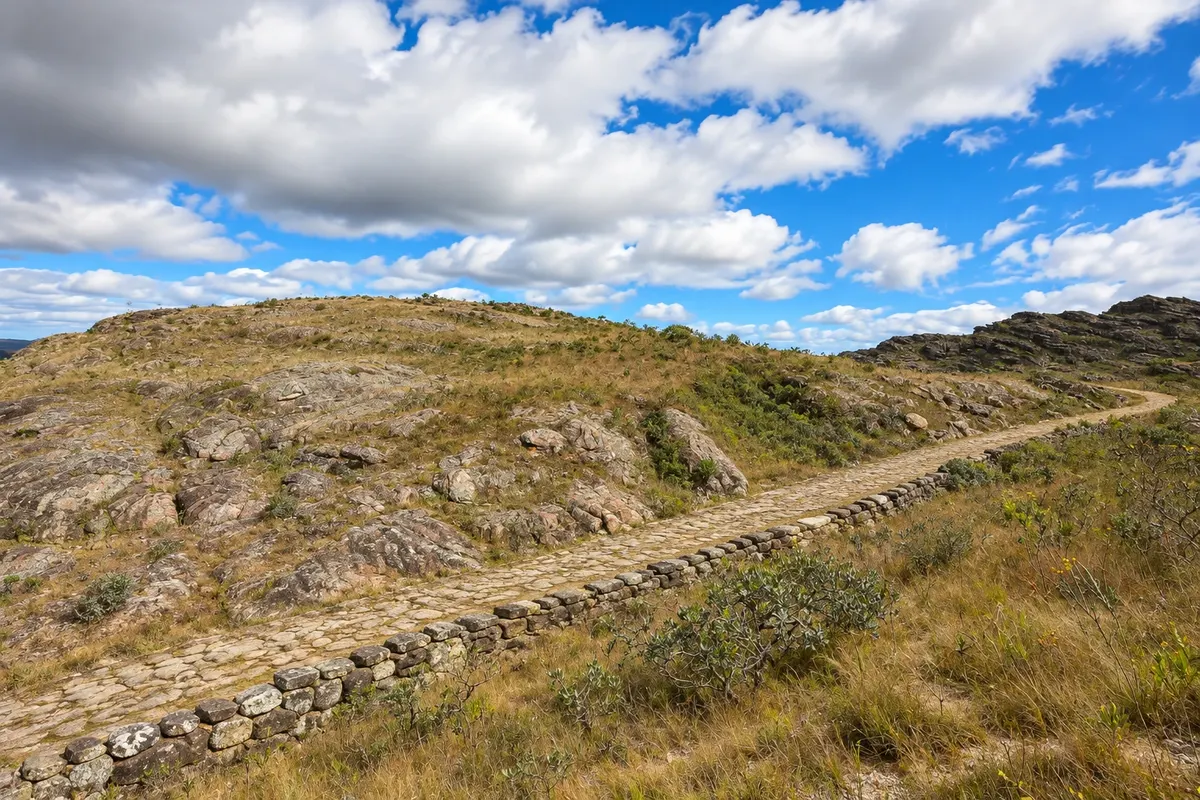
Continuing on, the road reaches BR-367. At the junction of the highway with Rua Salto da Divisa, a sign marks the start of the Path of the Slaves. It is a stone-paved road built by enslaved workers in the early 19th century, by order of the intendant Câmara, to link the old Arraial do Tijuco to Mendanha, on the banks of the Jequitinhonha River, from where diamonds came. Troops that supplied the region also used it.
The full route is about 20 km, of which 17 km lie inside the Biribiri State Park. There are long stretches of paving, rupestrian field with always-living flowers and canelas-de-ema, almost no shade and waterfalls along the way. Mendanha is a district of Diamantina.
There are two ways to experience it. The simplest is to walk only the initial section from the sign: in a few minutes you step onto the old paving, with the town in the background. The other is the crossing to Mendanha, which takes a full day and requires physical preparation, a guide and arranged transport for the return.
Stops: Cruzeiro da Serra viewpoint, Path of the Slaves, Biribiri State Park, Mendanha, Jequitinhonha River.
Includes: There is no fee to go up to the viewpoint or to walk the trail. Guide, transport to the trailhead and rescue from Mendanha are paid separately: check the guides’ current price list.
Tip: For the crossing, hire a guide from the city guides’ association, leave early and take plenty of water, snacks, a hat and sunscreen. Avoid rainy days: wet rock is slippery. At the viewpoint, bring a jacket for late afternoon in the cold months.
Best time: From May to September, in settled weather. At the start of the dry season the waterfalls along the route still have good flow.
Gruta do Salitre, near Curralinho
From Diamantina town center car or private guided tour; short walk on site about 3 hours, including travel time morning or afternoon easy to moderate
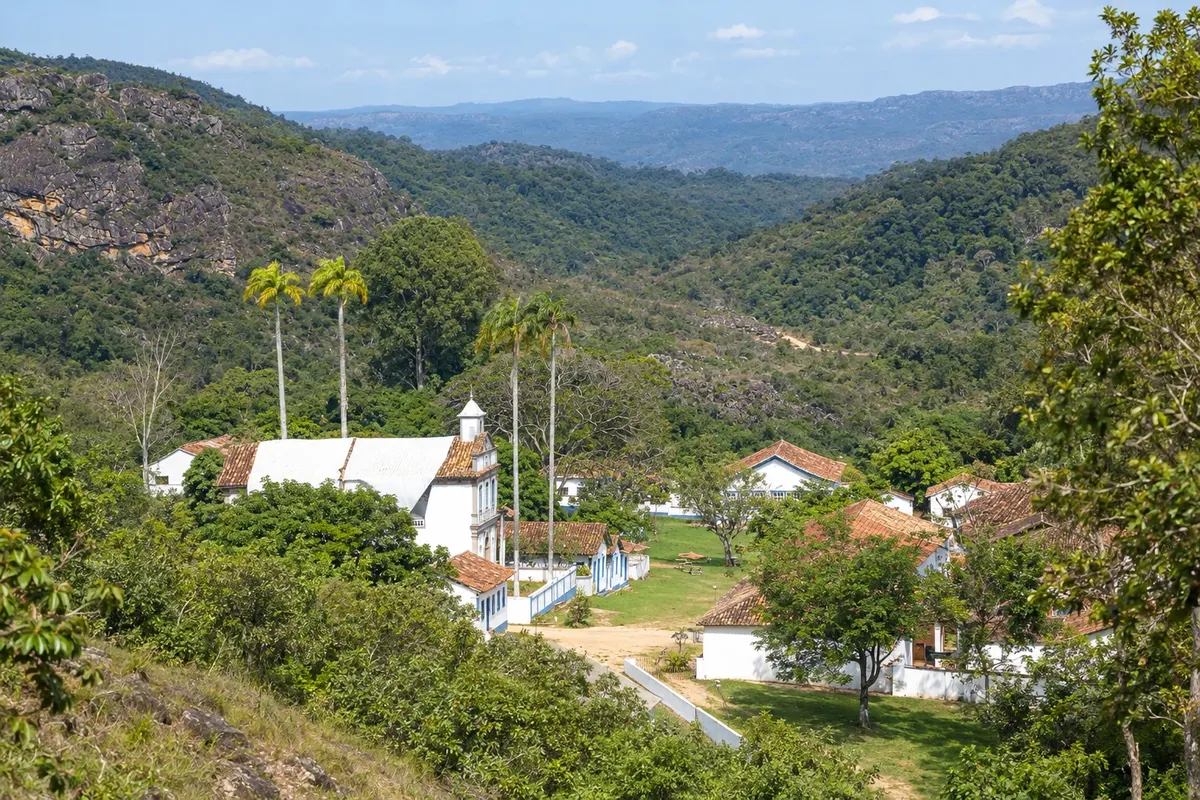
Gruta do Salitre is 9 km from Diamantina and 1 km from the district of Curralinho. Despite the name, it is not an enclosed cave: it is a set of quartzite rock formations shaped by time, with a canyon, crevices, ruins-like forms and cliffs up to 80 meters high. You walk among the rocks, in the open air.
The name comes from history. Saltpeter was once extracted there to make gunpowder, used to break rocks and divert rivers during mining. The site includes an archaeological area and lies within the Serra do Espinhaço Biosphere Reserve.
The landscape has been used as a setting for films, documentaries and TV miniseries. The cliffs have good acoustics, and for that reason the crag hosts concerts on some dates. It is also used for hiking, climbing, bouldering and rappelling.
Visits are not free: you must book through the institute that manages the site, headquartered in Diamantina’s center. On a guided visit, the guide talks about the geology, history, fauna and flora. You can combine the visit with a stop in Curralinho, the neighboring district.
Stops: Gruta do Salitre, Curralinho.
Includes: Scheduled visit with a guide. Transportation is the responsibility of the visitor or the agency. Check the current rates when booking.
Tip: Book a few days in advance, especially on holidays. Bring closed shoes, water and a hat. Ask whether a concert is scheduled for your travel dates.
Best time: From April to October, with less rain.


 Antarctica
 Argentina
 Bolivia
 Chile
 Colombia
 Ecuador
 Guyana
 French Guiana
 Falkland Islands (Malvinas)
 Paraguay
 Peru
 Suriname
 Uruguay
 Venezuela
 Germany
 Austria
 Belgium
 Croatia
 Denmark
 Slovakia
 Slovenia
 Spain
 Finland
 France
 Greece
 the Netherlands
 Hungary
 Ireland
 Iceland
 Italy
 Luxembourg
 Norway
 Poland
 Portugal
 the United Kingdom
 the Czech Republic
 Sweden
 Switzerland
 Turkey
 Bermuda
 Canada
 the United States
 Greenland
 Mexico
 Saint Pierre and Miquelon
 the Dominican Republic
 Japan
 South Africa
 Egypt
 Australia
 Fiji
 New Zealand
 Papua New Guinea