

 Antarctica
 Argentina
 Bolivia
 Chile
 Colombia
 Ecuador
 Guyana
 French Guiana
 Falkland Islands (Malvinas)
 Paraguay
 Peru
 Suriname
 Uruguay
 Venezuela
 Germany
 Austria
 Belgium
 Croatia
 Denmark
 Slovakia
 Slovenia
 Spain
 Finland
 France
 Greece
 the Netherlands
 Hungary
 Ireland
 Iceland
 Italy
 Luxembourg
 Norway
 Poland
 Portugal
 the United Kingdom
 the Czech Republic
 Sweden
 Switzerland
 Turkey
 Bermuda
 Canada
 the United States
 Greenland
 Mexico
 Saint Pierre and Miquelon
 the Dominican Republic
 Japan
 South Africa
 Egypt
 Australia
 Fiji
 New Zealand
 Papua New Guinea
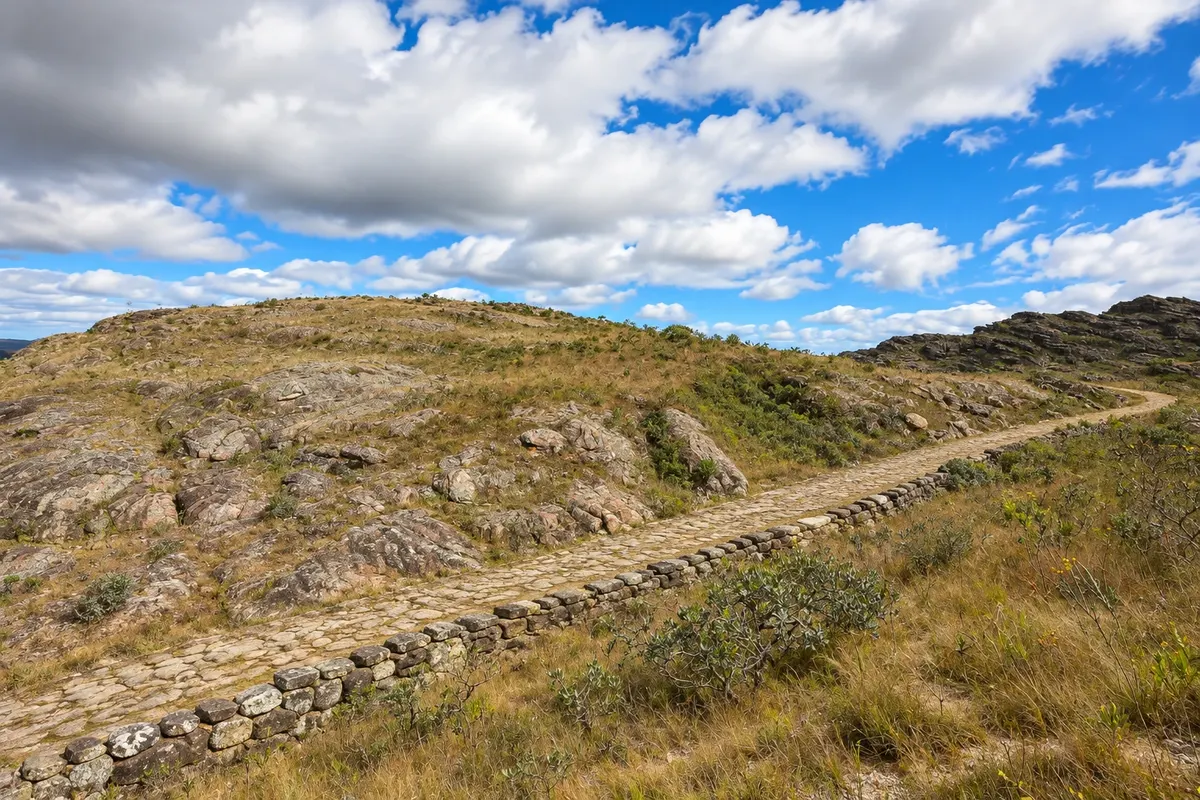
historic path · Diamantina, MG
Slave Road
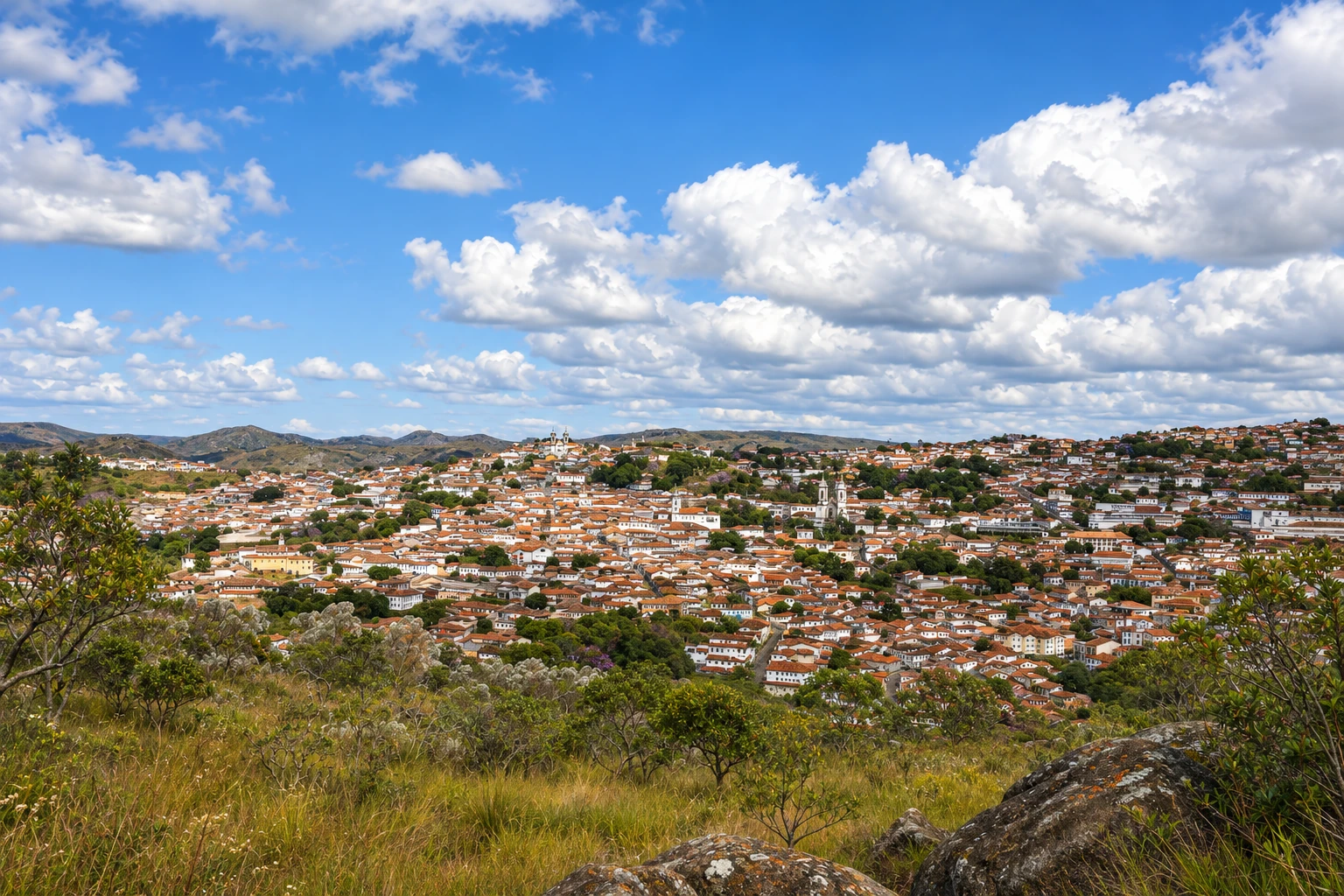
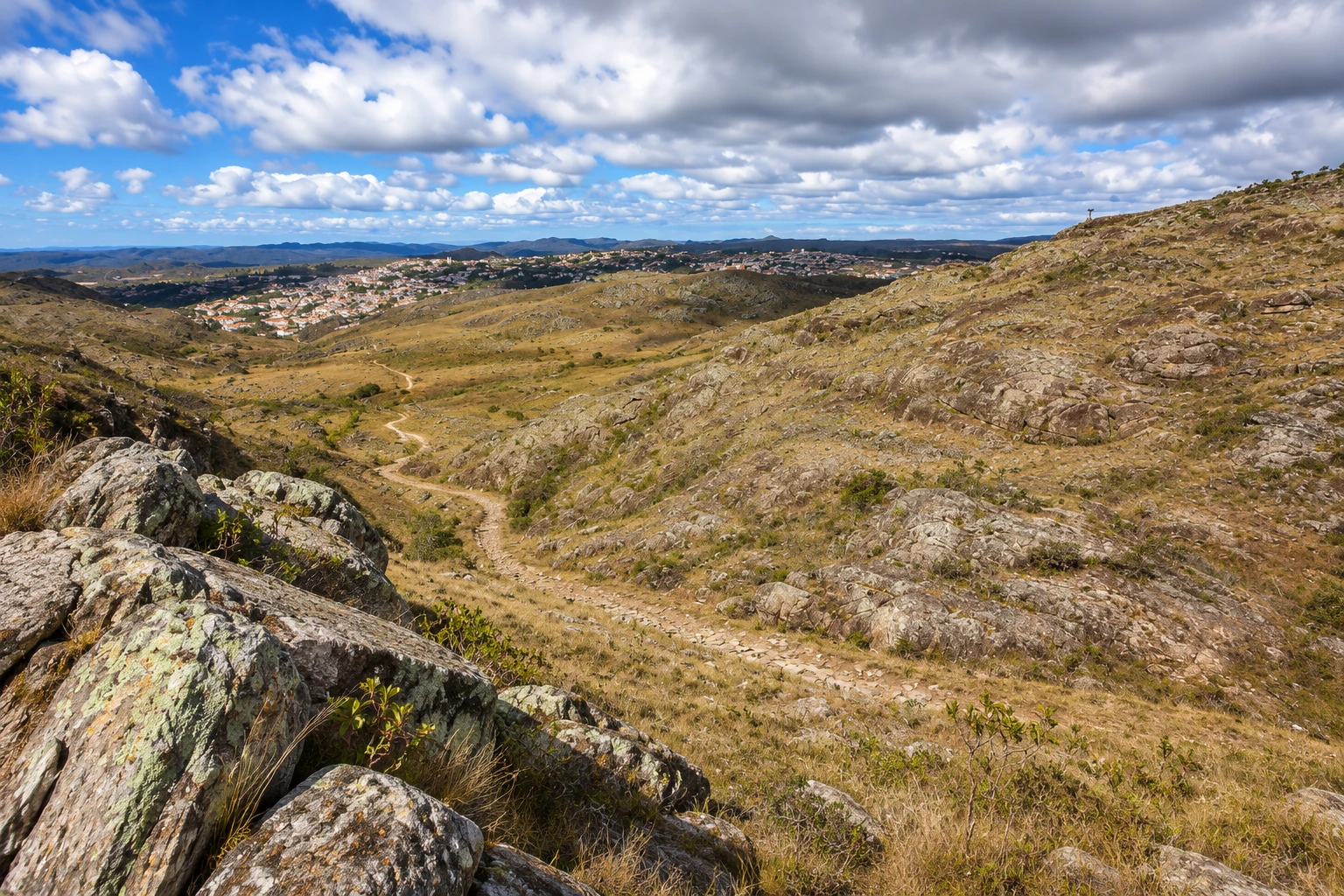
18th-century stone paving built by enslaved people that climbs the Serra dos Cristais on the north exit of Diamantina and continues for about 20 km to Mendanha. The first section, with retaining walls and a view of the town, is walked on foot.
In the photo: Paving and retaining wall of the Caminho dos Escravos on the Serra dos Cristais.
Illustrative images. The pictures in this guide are illustrations based on the real place, not photographs, and may differ from it.


A look at the place
Slave Road in pictures
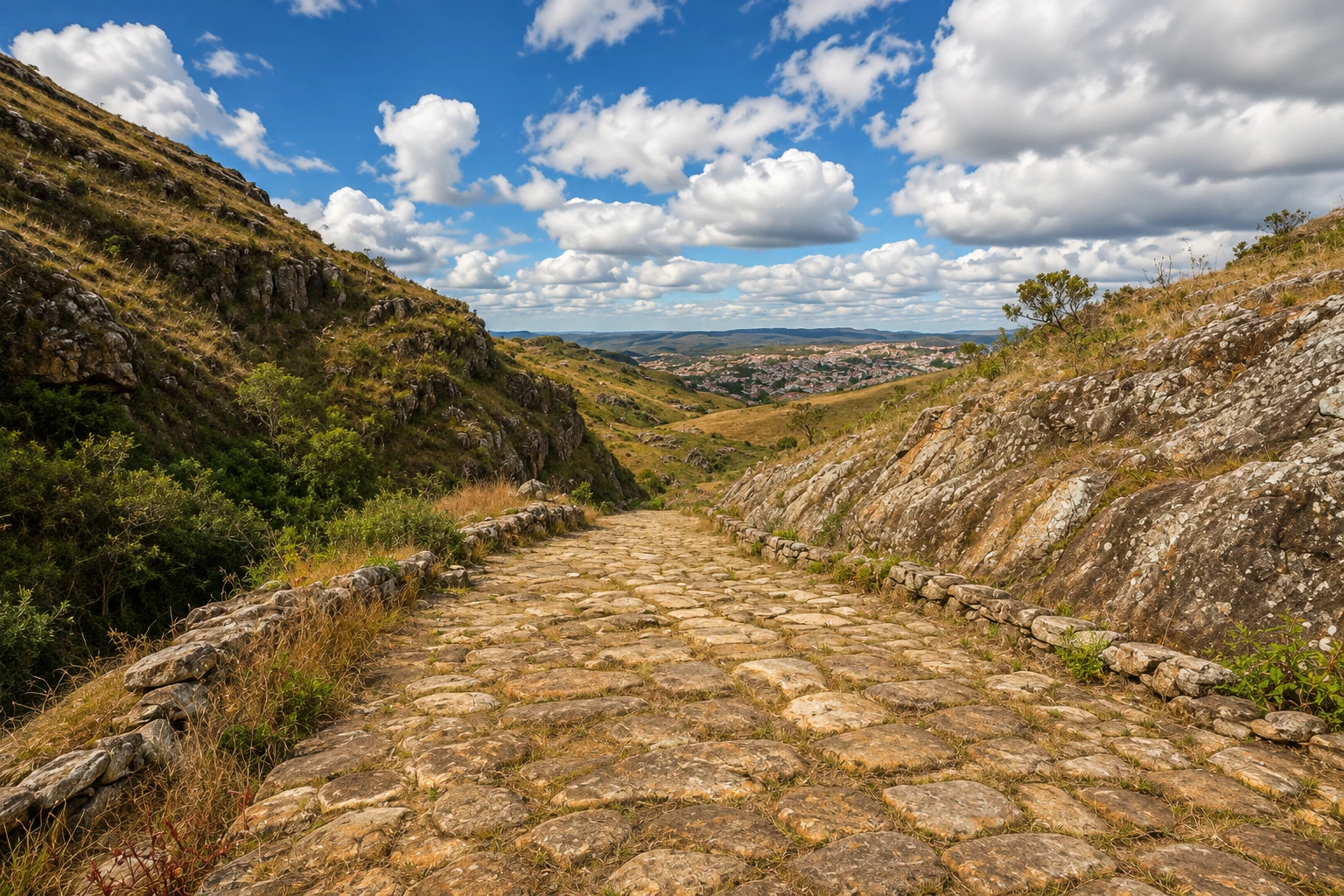
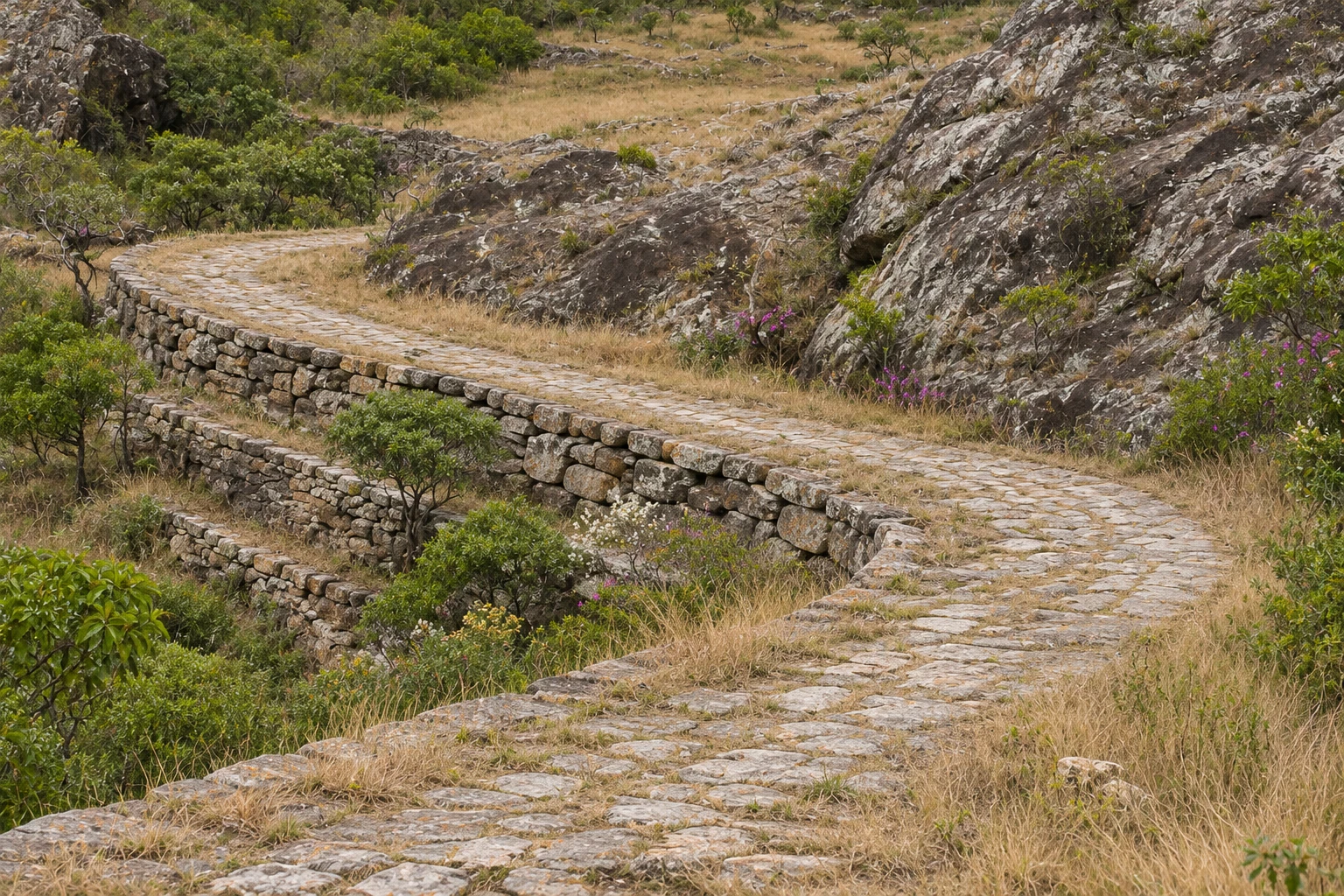
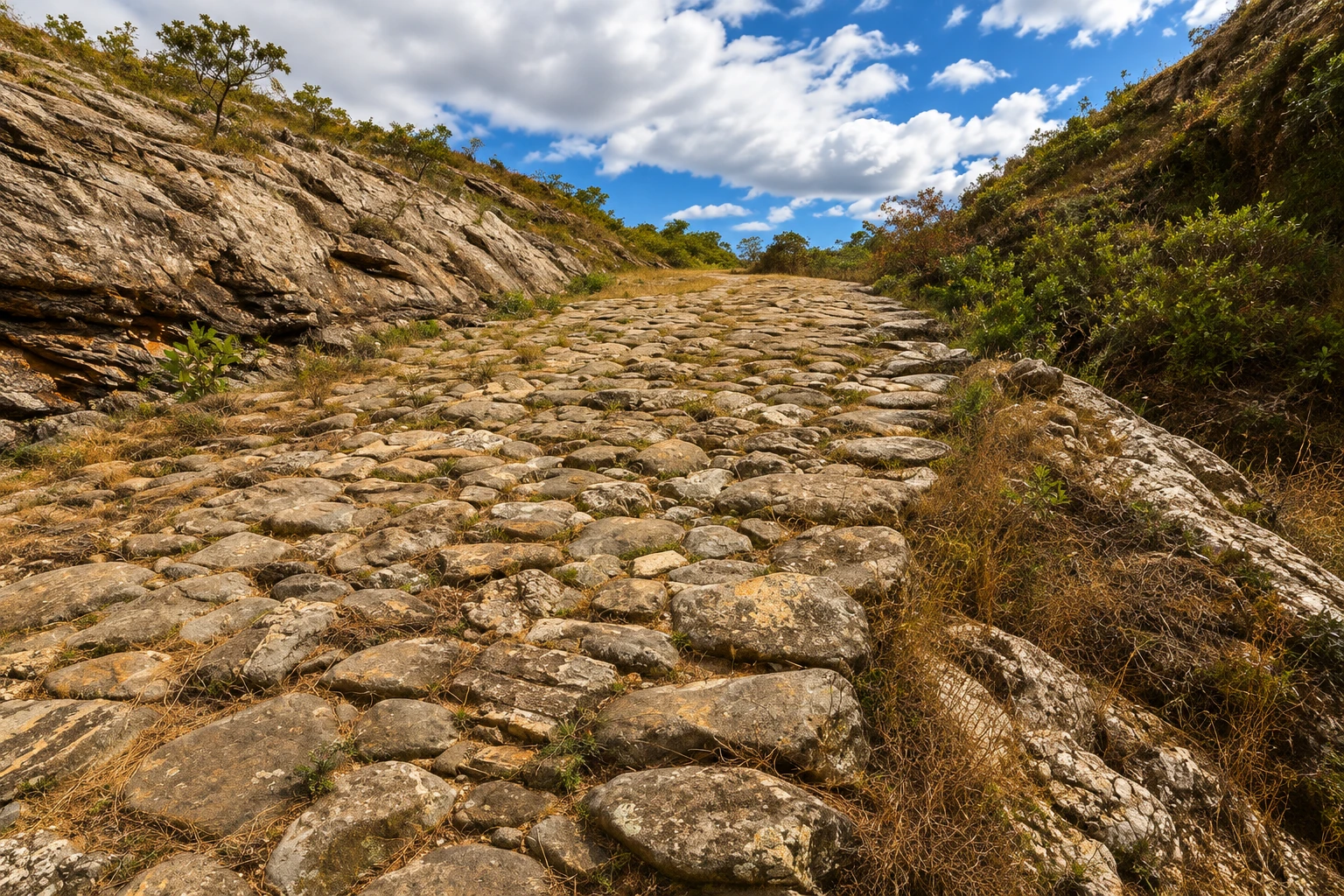
These pictures are illustrations based on the real place, not photographs. They may differ from the place.
Click the picture to enlarge it.

Discover
About Slave Road
The Caminho dos Escravos is a section of stone paving that leaves Diamantina and climbs the Serra dos Cristais toward the district of Mendanha, in the Jequitinhonha River valley. It was built in the 18th century with the labor of enslaved people, at a time when the region was the center of diamond extraction, and served the passage of drovers, merchants and the production from the mines.
The start of the path is on the upper part of town, near BR-367, where a sign marks the beginning. From there, the wide stone paving climbs the mountain supported by stepped retaining walls that hold the path on the slope. From the top, there is a view over Diamantina’s houses and the valley.
The full route to Mendanha is about 20 km and takes an average of 8 hours of walking. After the climb, the path crosses areas of the Biribiri State Park, alternating trail and dirt road, and the old paving reappears on the descent to Mendanha. Those who do the entire crossing usually arrange return transport before setting out.
For most visitors it is enough to walk the first uphill section to see the paving and the view and then return the same way. The area is campo rupestre (rocky highland), with little shade and strong sun during the day.
The path is part of the history of the Diamonds Route of the Estrada Real and complements a visit to the historic center. The hand-laid stones recall the forced labor that sustained the wealth of the diamonds.
Before you go
Practical information
Cidade Turismo reviews its information regularly, but something may have changed. Check with the place before planning your trip.
How much time to set aside
1 to 2 hours to climb the first paved section and return. A full day, about 8 hours, for the complete crossing to Mendanha.
Best time
From April to September, when it rains little and the stones are less slippery. Go early in the morning or late in the afternoon, because there is almost no shade. Avoid rainy days, when the paving becomes slick.
How to get there
The start is on the upper part of Diamantina, a few kilometers from the historic center, near BR-367: the reference point is the junction of the highway with Rua Salto da Divisa, where there is a sign. You can reach the beginning of the path by car or taxi. For the crossing to Mendanha, arrange return transport.
Tip
Bring water, a hat and sunscreen, and wear sneakers with good grip: the old stones are irregular. For the full crossing, go with a local guide or someone who knows the route.
Get your questions answered
Frequently asked questions about Slave Road
What is the Caminho dos Escravos in Diamantina?
An 18th-century section of stone paving, built by enslaved people, that links Diamantina to the district of Mendanha by climbing the Serra dos Cristais.
How long is the Caminho dos Escravos?
About 20 km between Diamantina and Mendanha, an average of 8 hours of walking. Most visitors only do the first uphill section and return.
Where does the Caminho dos Escravos start?
On the upper part of Diamantina, near BR-367, at the junction with Rua Salto da Divisa, where a sign indicates the start.
Do you need a guide to do the Caminho dos Escravos?
Not for the first section. For the full crossing to Mendanha, it is advisable to go with a local guide or someone who knows the path, and to arrange return transport.
What is the best time to visit the Caminho dos Escravos?
From April to September, when rainfall is low. Go early or late in the day because there is little shade, and avoid rainy days when the stones become slippery.
Beyond the guide


