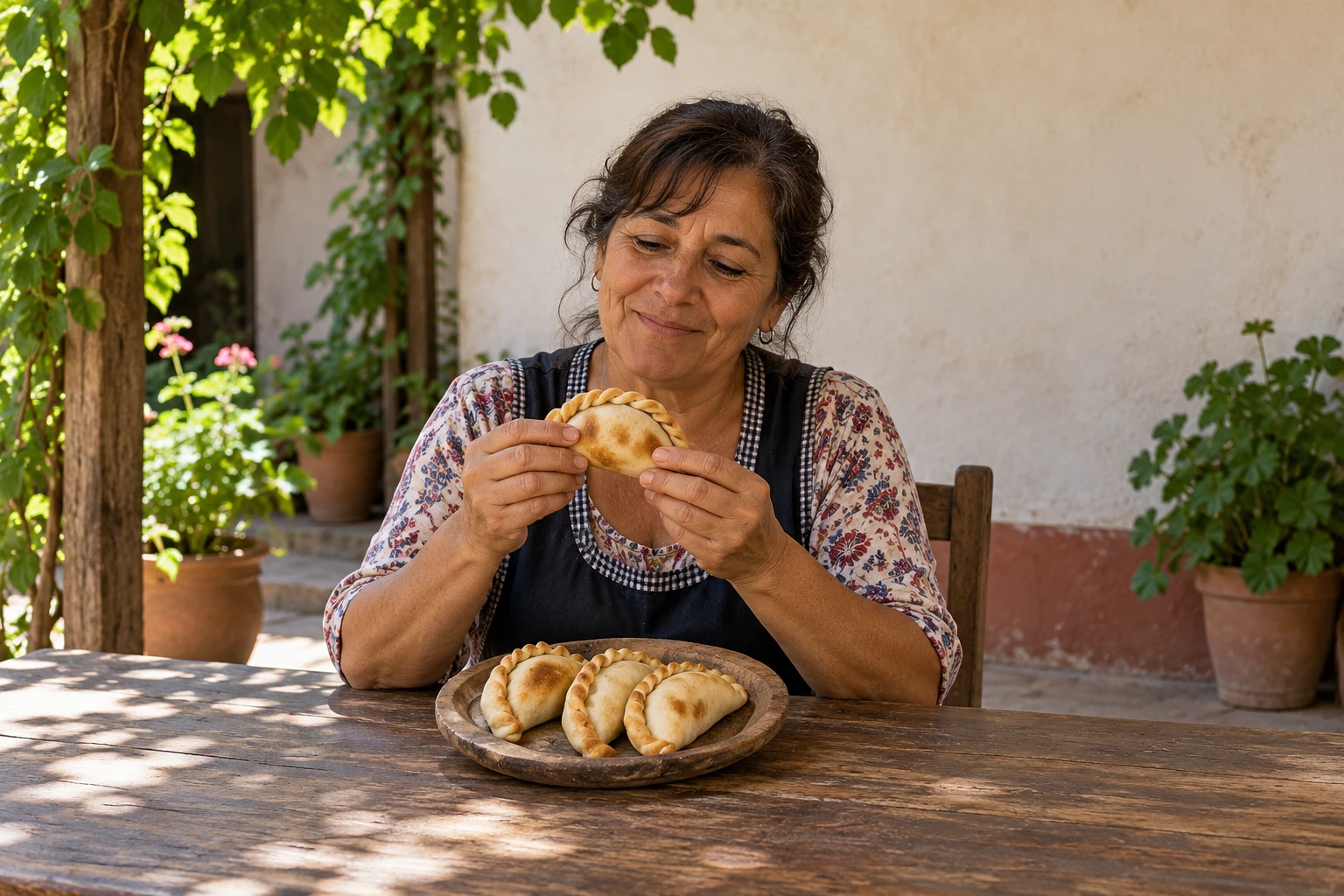
The tucumana empanada is the most famous specialty of the province of Tucumán, and Famaillá, a town about 35 km south of the provincial capital, is the place that represents it. Famaillá holds the title of National Capital of the Empanada and, since 1979, organizes the Fiesta Nacional de la Empanada, with a championship that chooses each year the best empanadera or empanadero.
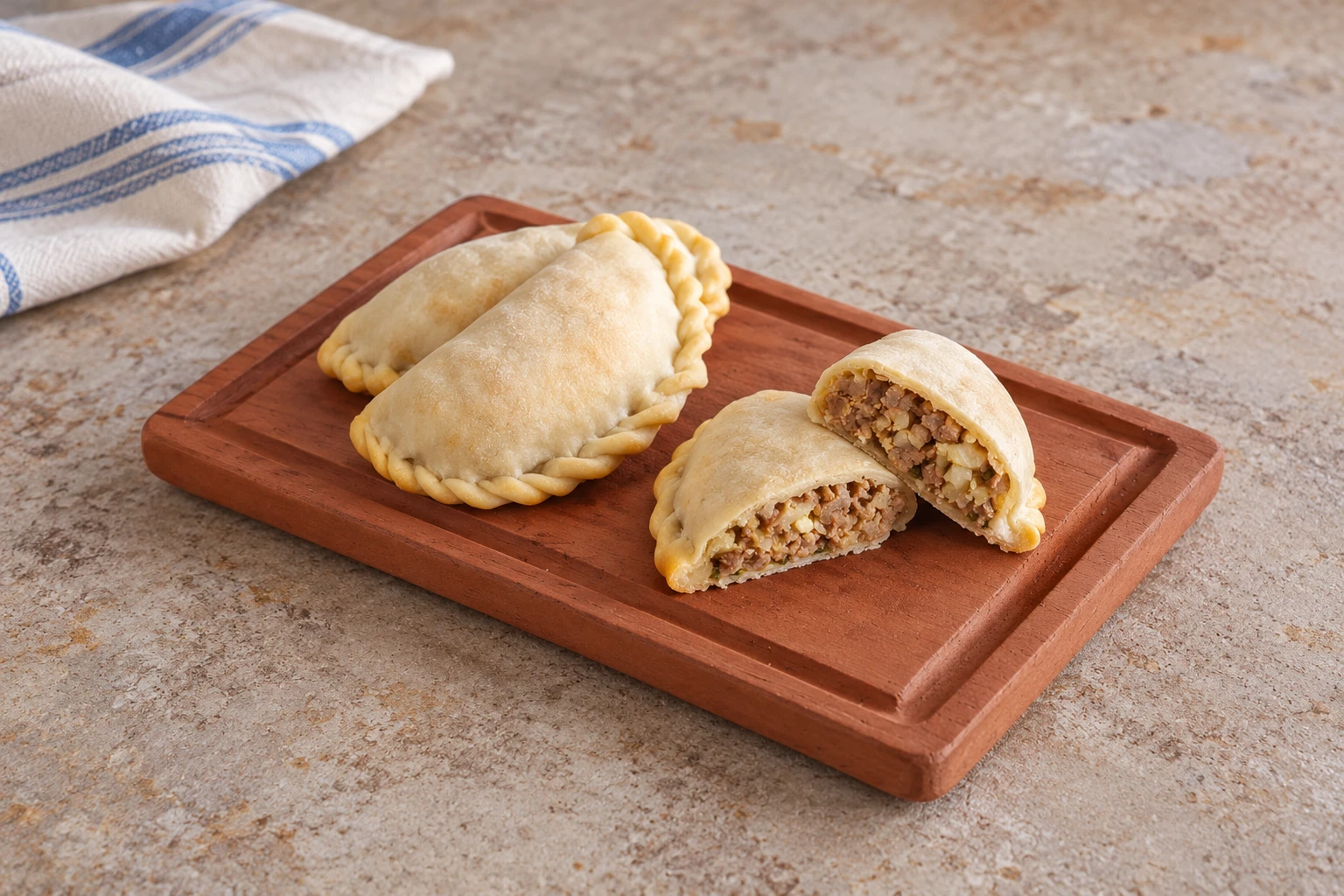
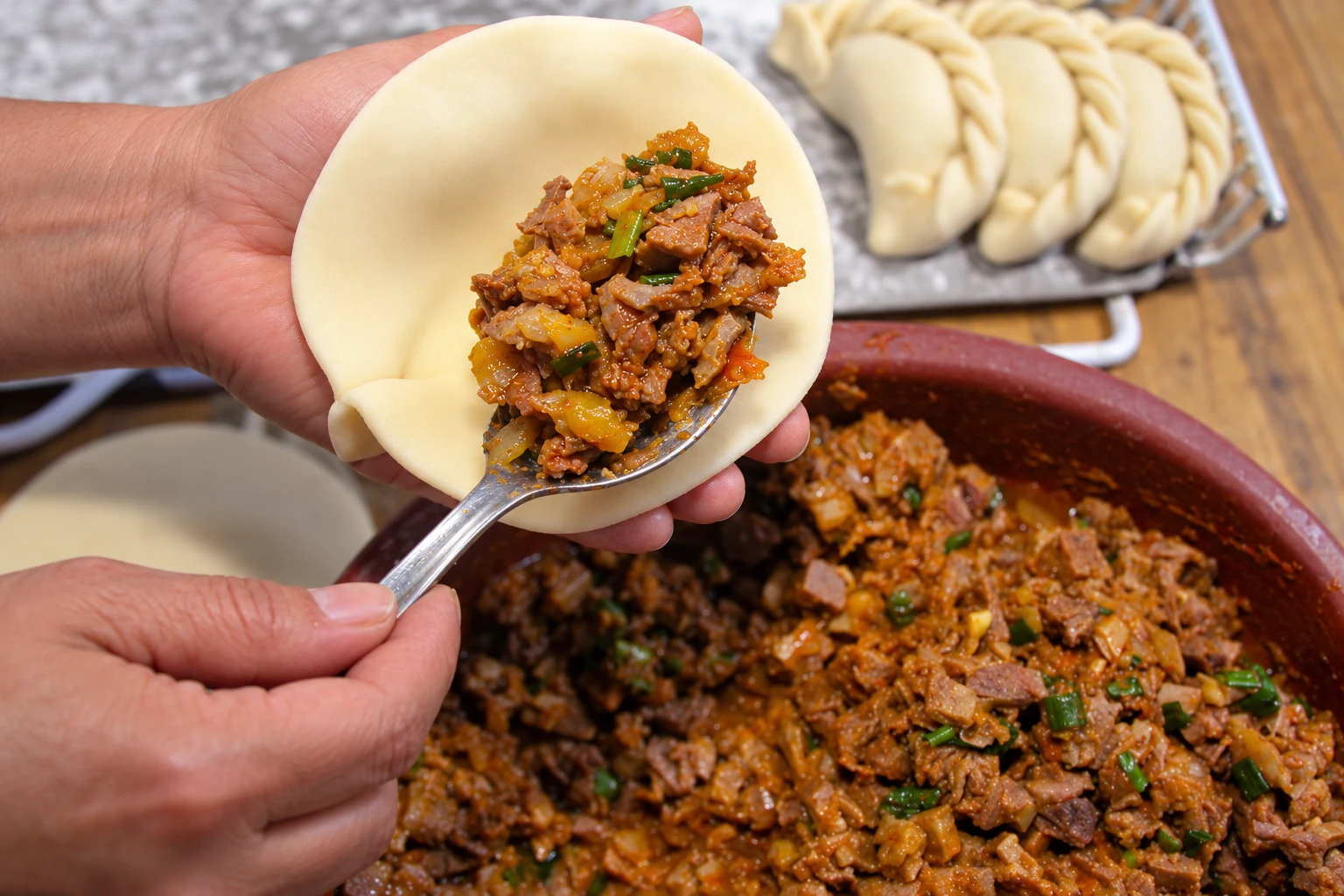
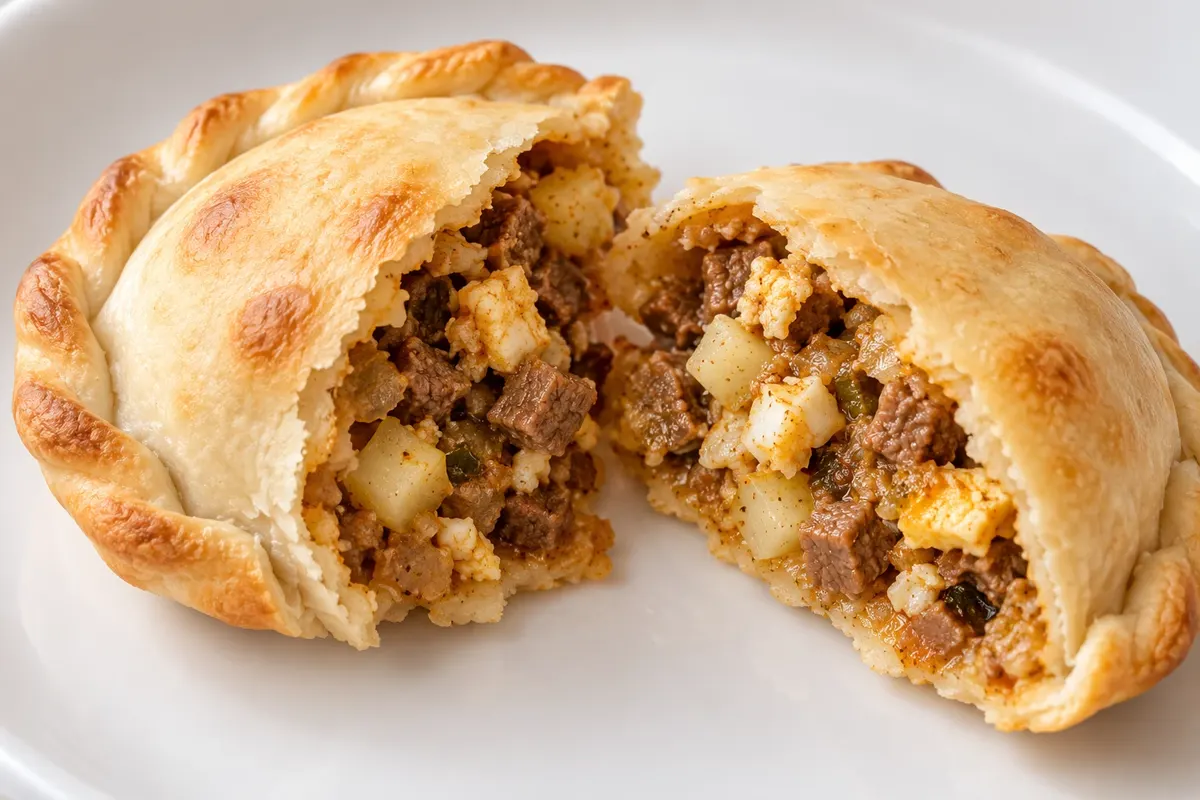
What distinguishes the tucumana is the meat. The cut used is matambre, the thin layer of meat between the hide and the ribs of the cow, cut by knife into small cubes, never ground. The meat is cooked in broth, which is then returned to the mixture and leaves the filling very moist. Also included are white onion, sautéed scallion, hard-boiled egg, cumin and paprika. Potato and olive are not part of the recipe.
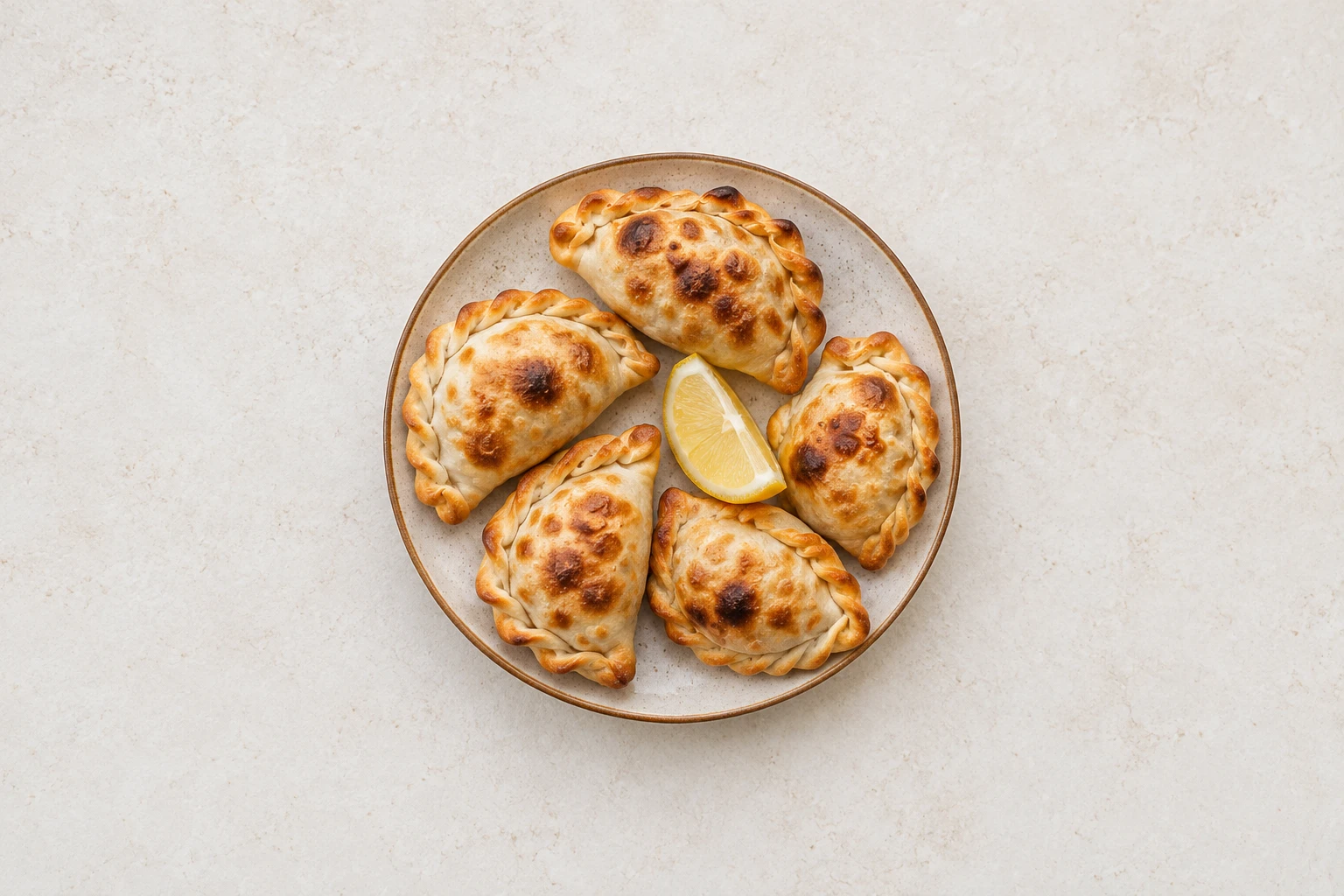
At Famaillá’s championship, the jury observes the cut of the matambre, which must be in cubes, the dough, the filling and the sealing. The recipe was fixed and registered in the 2008 edition of the festival, based on that year’s champion’s recipe. The empanada is closed with repulgue, the braided fold on the edge; the rules ask for 13 folds, which popular belief associates with Jesus and the twelve apostles.
Baking can be done in a clay oven, wood-fired, or the empanada can be fried in fat. Either way, the tucumana arrives at the table so juicy that it is recommended to eat it with legs apart, so as not to burn yourself or soil your clothes. In Famaillá, many people add a few drops of lemon to the meat empanada.
The fame of Famaillá’s empanadera goes beyond the festival: accounts mention the town’s empanadas since the arrival of the train in 1889. At the September festival, the cooks prepare the empanadas in full view of the public, in huts with clay ovens set up on the banks of the Famaillá River.


 Brazil
 Antarctica
 Bolivia
 Chile
 Colombia
 Ecuador
 Guyana
 French Guiana
 Falkland Islands (Malvinas)
 Paraguay
 Peru
 Suriname
 Uruguay
 Venezuela
 Germany
 Austria
 Belgium
 Croatia
 Denmark
 Slovakia
 Slovenia
 Spain
 Finland
 France
 Greece
 the Netherlands
 Hungary
 Ireland
 Iceland
 Italy
 Luxembourg
 Norway
 Poland
 Portugal
 the United Kingdom
 the Czech Republic
 Sweden
 Switzerland
 Turkey
 Bermuda
 Canada
 the United States
 Greenland
 Mexico
 Saint Pierre and Miquelon
 the Dominican Republic
 Japan
 South Africa
 Egypt
 Australia
 Fiji
 New Zealand
 Papua New Guinea