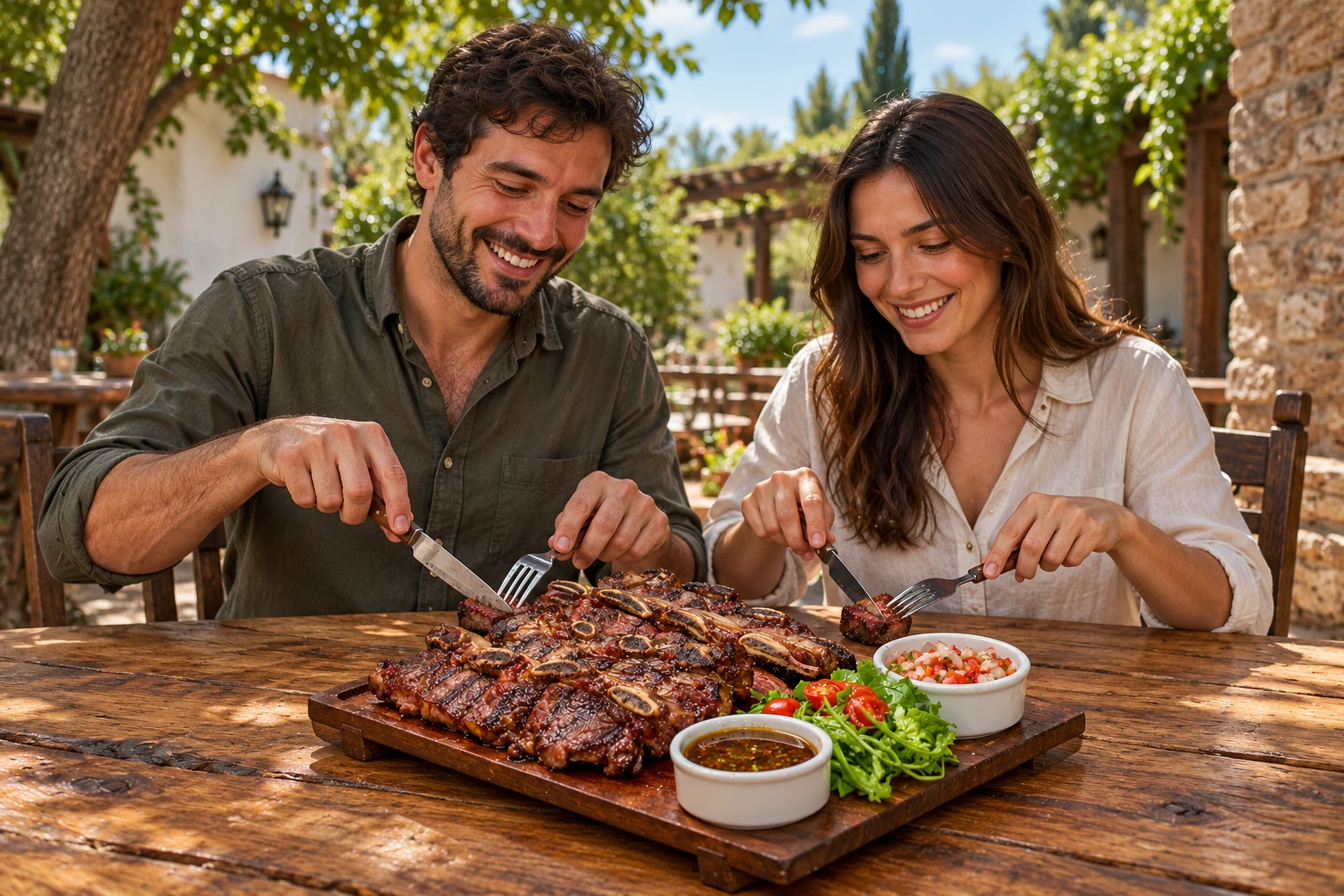
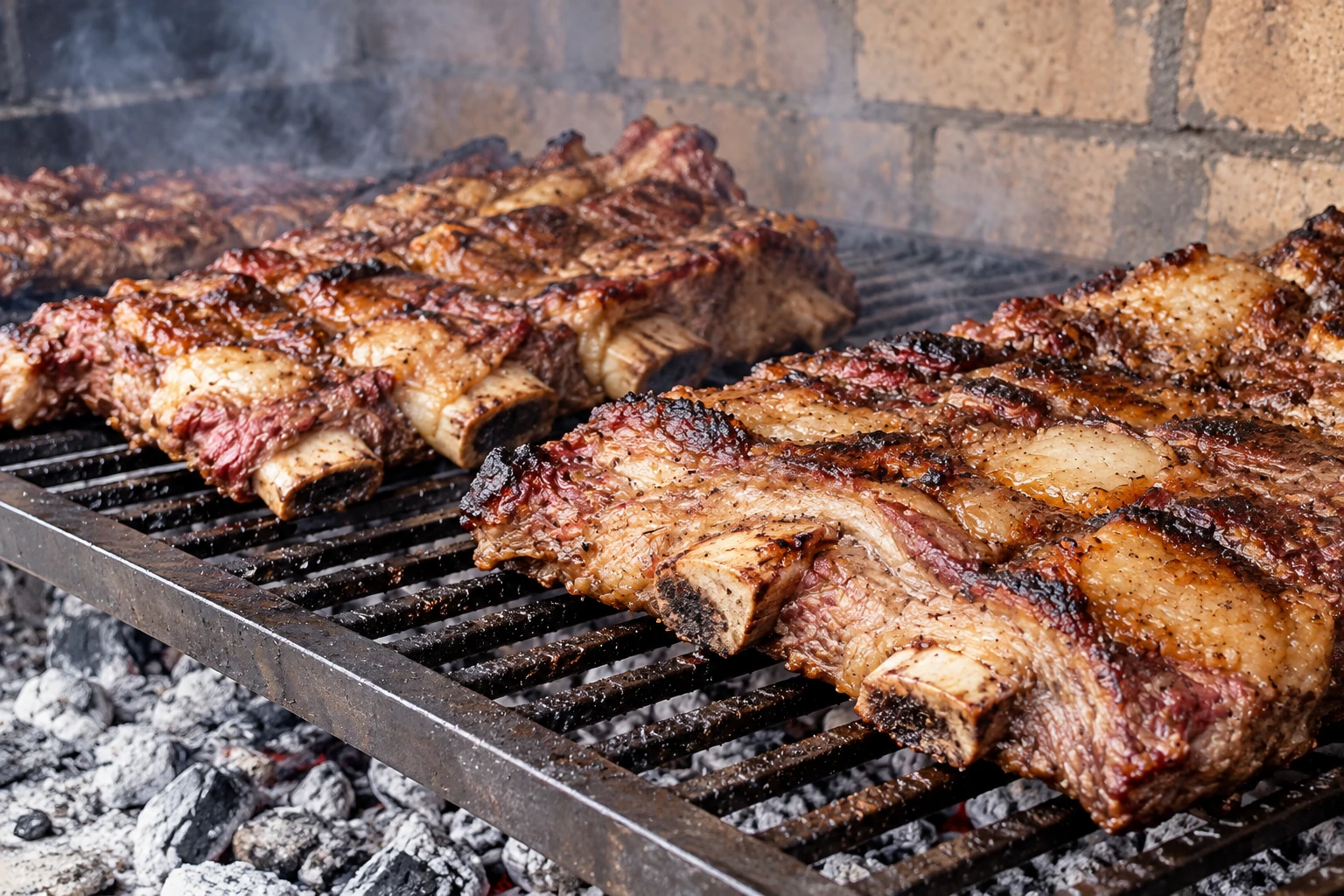
The asado starts with the fire. The asador, who oversees everything, lights wood or charcoal, waits for the flames to die down and spreads the embers under the parrilla, the iron grill, regulating the heat over hours. The meat goes on the grill with coarse salt and little else. In the countryside, especially in Patagonia, the whole animal or large pieces are secured to an iron cross planted in the ground beside the fire — asado a la cruz or al asador.
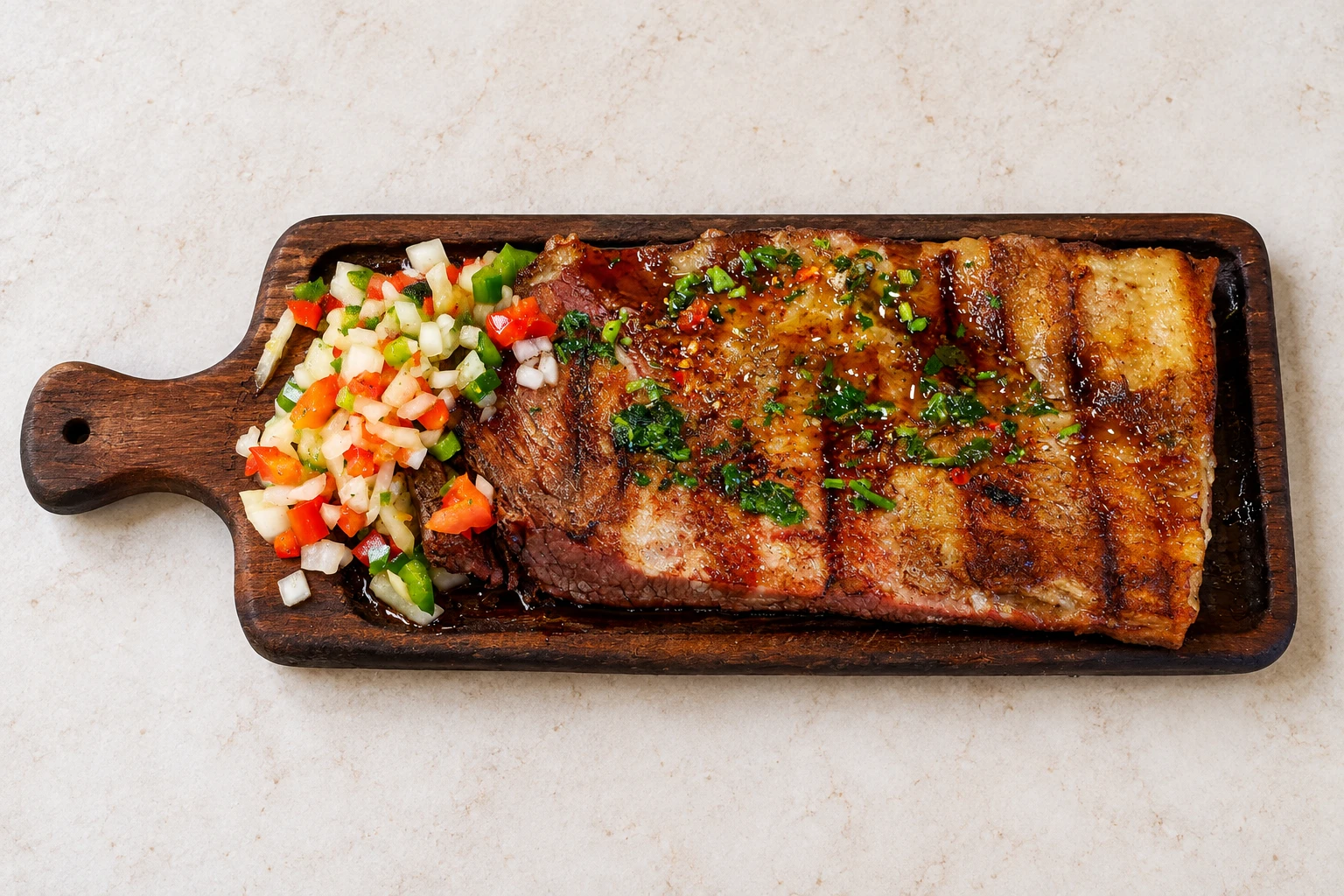
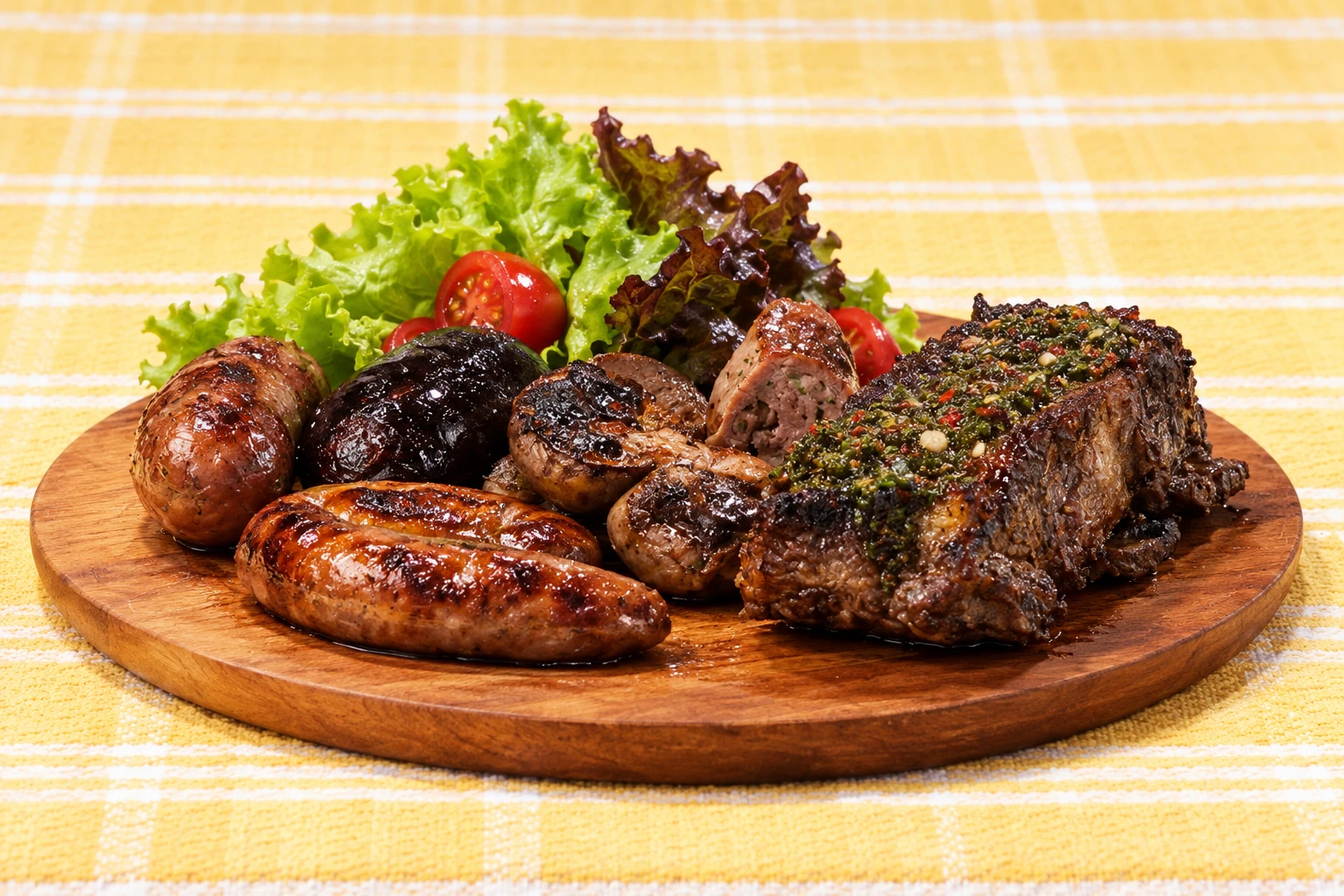
The rhythm follows an order. First come the sausages and offal, the achuras: chorizo, morcilla, chinchulines (intestines), mollejas and kidney, served with bread while the larger cuts finish. Then come the tira de asado (short ribs cut across the bones), vacío, matambre, entraña and other cuts depending on the place. To accompany: simple salads, bread, chimichurri (a sauce of parsley, garlic, oregano, pepper, oil and vinegar) and salsa criolla, made with onion, tomato and bell pepper. At the end, it is customary to applaud the asador.
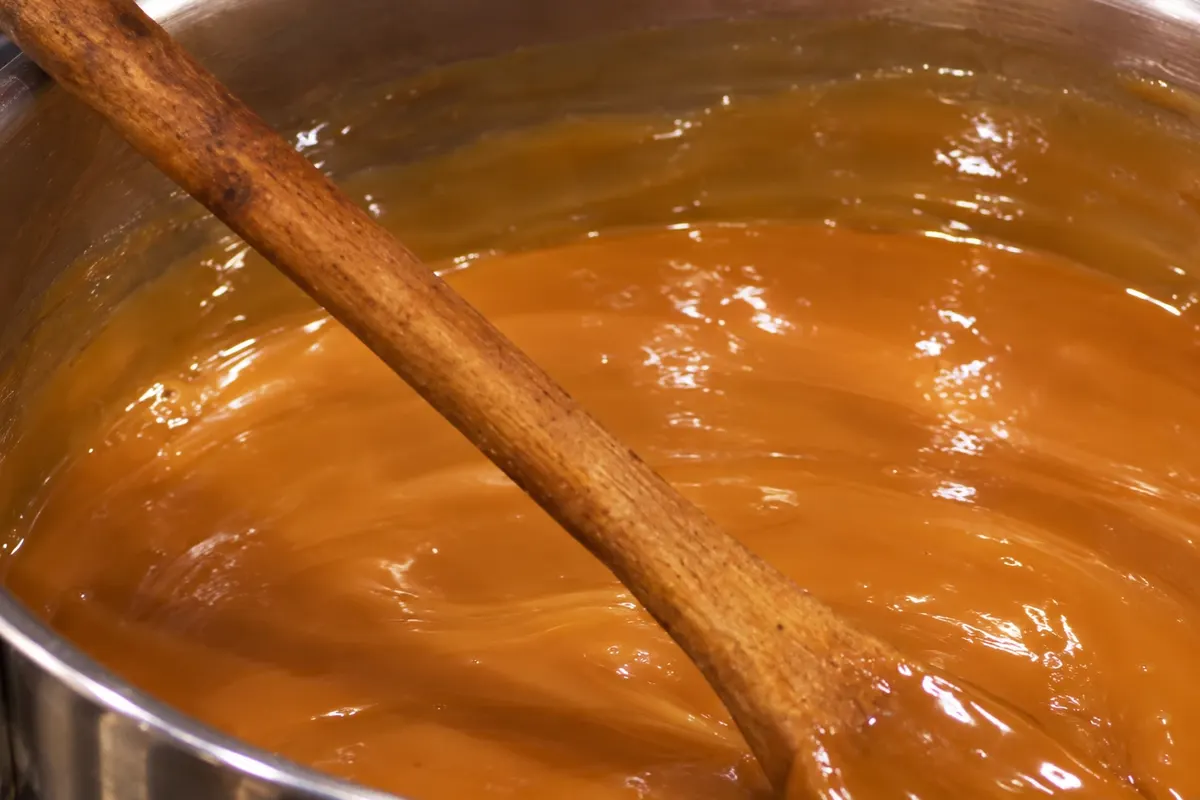
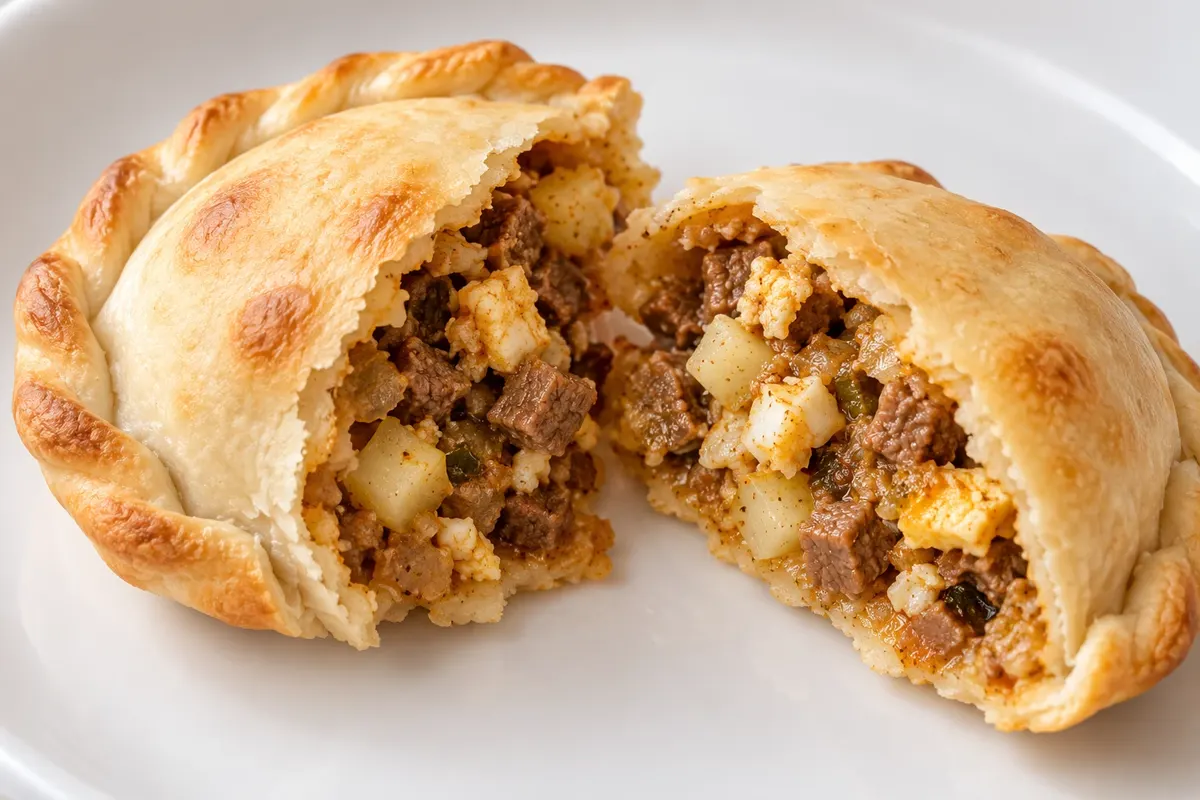
In Argentina, asado is the meal for Sundays and special dates, for family and friend gatherings, for the club and the worksite. The country created its food heritage program in 2002 with Resolution 1327 of the National Secretariat of Culture, and the Ministry of Culture’s page states that asado, empanada and dulce de leche carry the seal of Argentine Cultural, Food and Gastronomic Heritage because they are typical and widely consumed throughout the country. Each province has its cuts and its fires, but none owns the custom.
Ember-roasted meat is also a tradition of the neighbors. In 2003, when Argentina announced the designation of asado, empanada and dulce de leche as heritage, Uruguay protested and asked that they be treated as heritage of the Río de la Plata region; the issue was resolved by agreement between the two governments. Asado is equally central in Uruguayan cuisine, and in southern Brazil the churrasco has similar roots in the life of the gaúchos, the cowboys of the pampas.


 Brazil
 Bolivia
 Chile
 Colombia
 Ecuador
 Guyana
 French Guiana
 Falkland Islands (Malvinas)
 Paraguay
 Peru
 Suriname
 Uruguay
 Venezuela
 Germany
 Austria
 Belgium
 Croatia
 Denmark
 Spain
 Finland
 France
 Greece
 the Netherlands
 Hungary
 Ireland
 Iceland
 Italy
 Luxembourg
 Norway
 Poland
 Portugal
 the United Kingdom
 the Czech Republic
 Sweden
 Switzerland
 Turkey
 Canada
 the United States
 Mexico
 the Dominican Republic
 South Africa
 Australia
 Fiji
 New Zealand
 Papua New Guinea