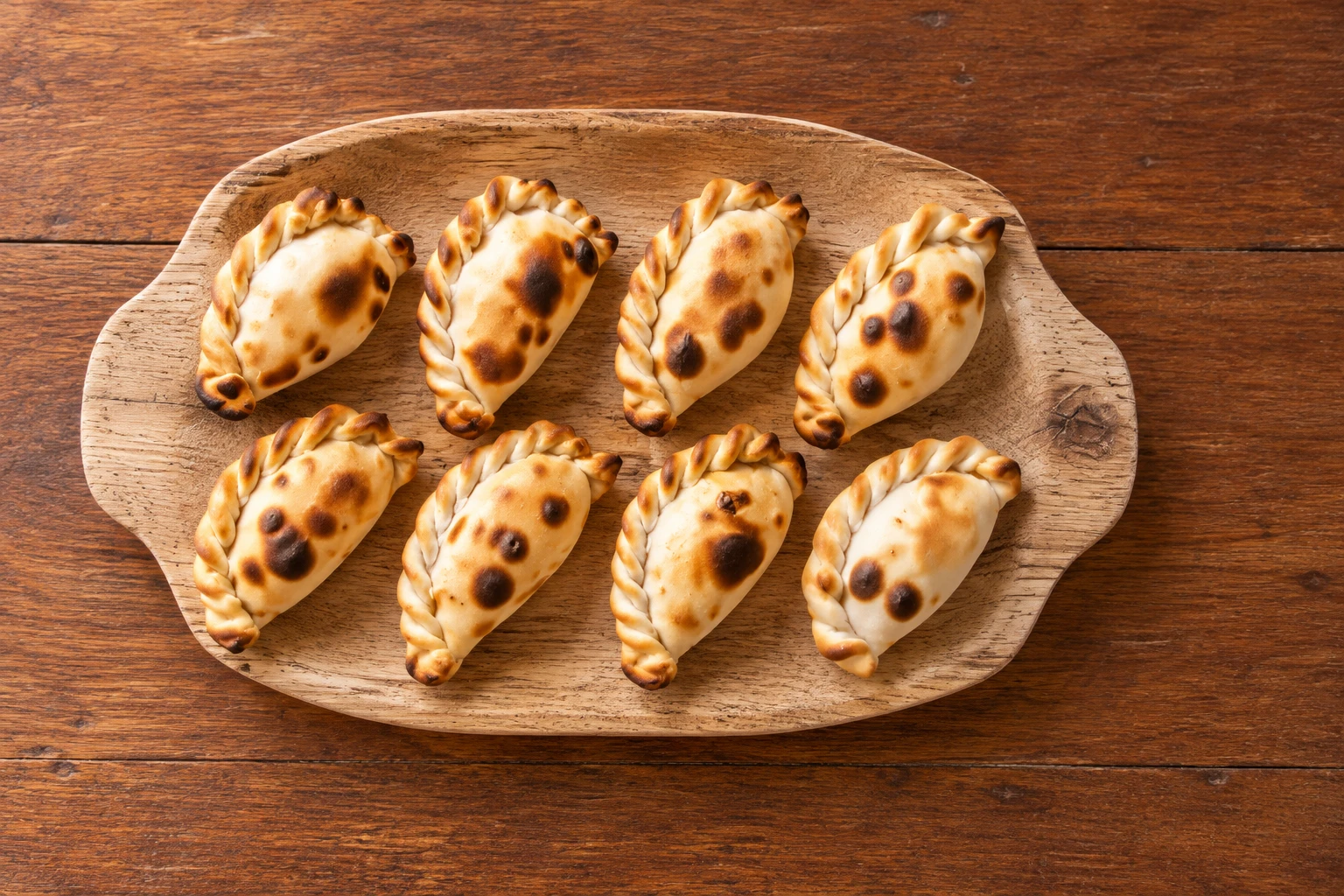
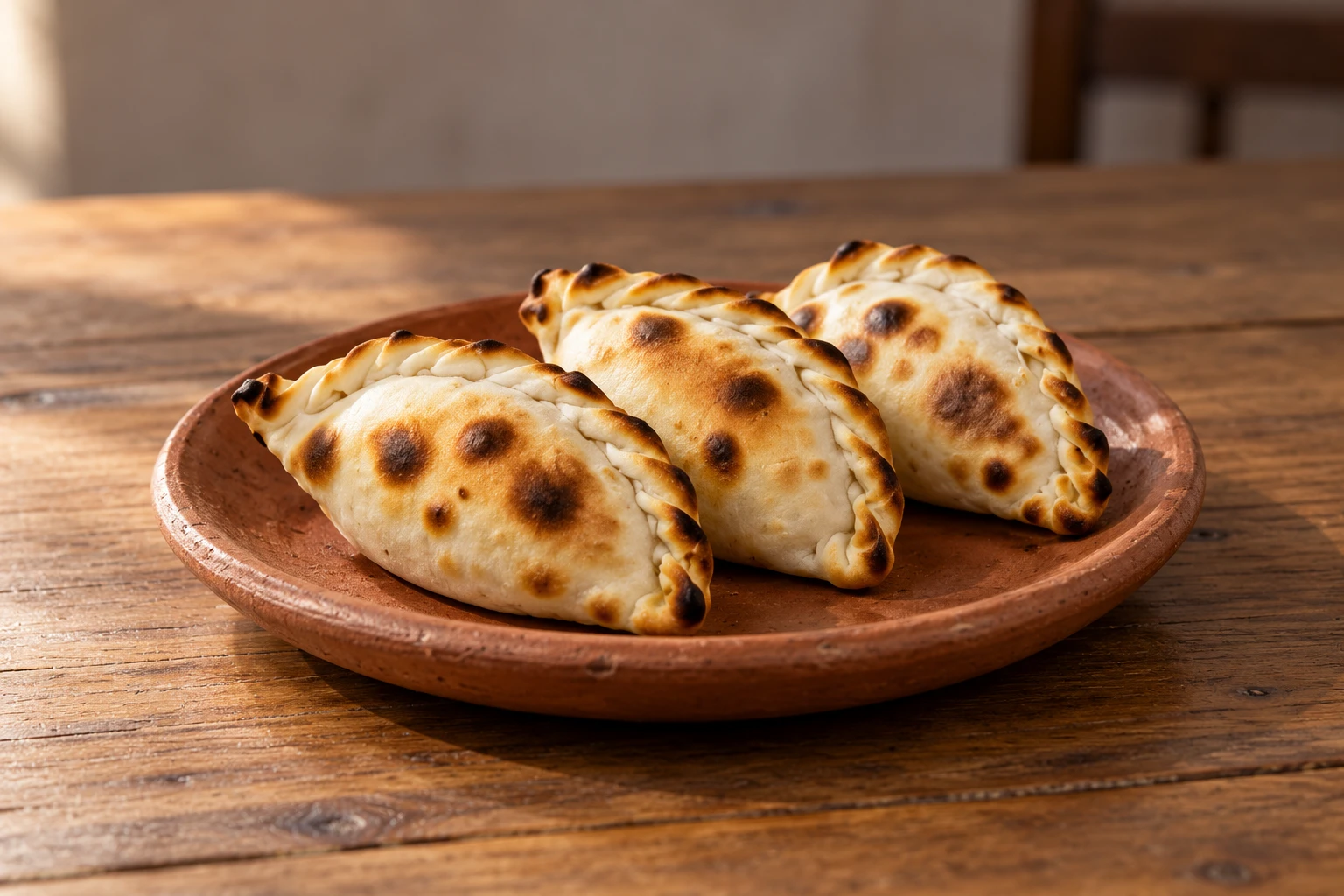
The salteña empanada is the best-known specialty of Salta province in northwest Argentina, and the capital, Salta, is where visitors encounter it most. It is a small empanada with a thin homemade dough and a moist filling of knife‑cut beef, potato cubes, scallion and spices. Argentina’s official tourism bodies treat it as a gastronomic icon of the North, with a special place in Salta.
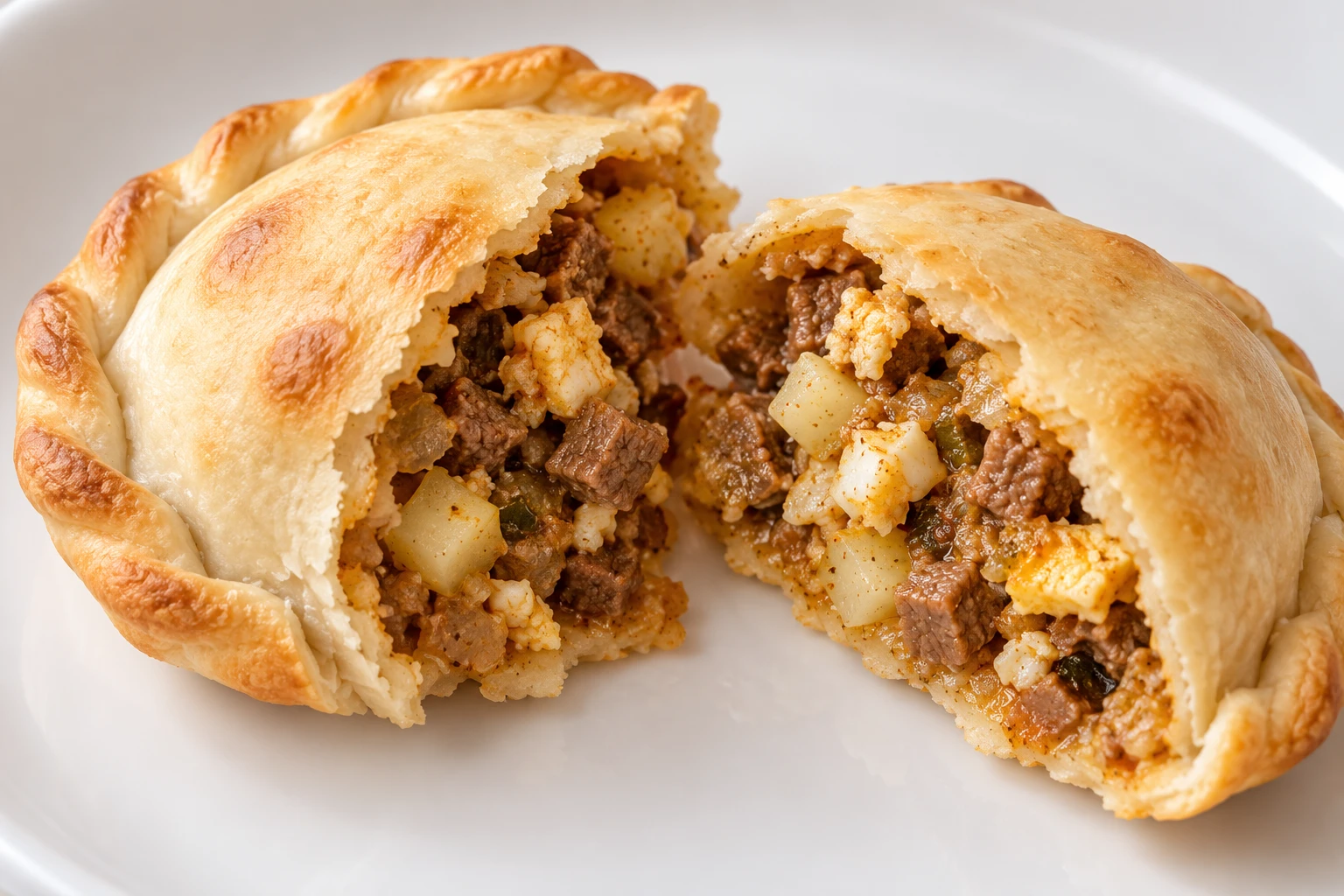
The filling, called recado, follows a careful preparation. The meat, usually a lean cut such as round (nalga), is cut with a knife into tiny cubes of a few millimeters, never ground. The onion is sautéed in grasa de pella (beef fat) and seasoned with paprika and ground pepper; then the meat is added, along with potato cooked in cubes of the same size, the hard‑boiled egg and the scallion. Many cooks let the filling rest before sealing the empanadas.
The potato is the feature that most distinguishes the salteña from empanadas of other provinces. The result is a soft, juicy filling that retains heat and releases broth at the first bite. That is why in Salta people say you must eat it with your legs apart, so you don’t stain your clothes. It is also called pata'bierta and two‑bite because of its small size.
The sealing is done with repulgue, the braided fold on the edge, and the traditional cooking method is in a high‑temperature wood‑fired clay oven. There are also fried versions and other fillings such as cheese, chicken or charque, but the most traditional is beef. Salteña cooks compete in provincial contests, and the empanada appears at festivals, fairs and peñas, the folk‑music gatherings.
The 19th‑century Salta writer Juana Manuela Gorriti is remembered in Salta as one who prepared this empanada with care. In Bolivia there is an empanada called salteña, with a broth and a different recipe; the origin of that name is debated among historians of both countries, and the salteña empanada of Salta has its own distinct recipe and identity.


 Brazil
 Bolivia
 Chile
 Colombia
 Ecuador
 Guyana
 French Guiana
 Falkland Islands (Malvinas)
 Paraguay
 Peru
 Suriname
 Uruguay
 Venezuela
 Germany
 Austria
 Belgium
 Croatia
 Denmark
 Spain
 Finland
 France
 Greece
 the Netherlands
 Hungary
 Ireland
 Iceland
 Italy
 Luxembourg
 Norway
 Poland
 Portugal
 the United Kingdom
 the Czech Republic
 Sweden
 Switzerland
 Turkey
 the United States
 Mexico
 the Dominican Republic
 South Africa
 Australia
 Fiji