

 Antarctica
 Argentina
 Bolivia
 Chile
 Colombia
 Ecuador
 Guyana
 French Guiana
 Falkland Islands (Malvinas)
 Paraguay
 Peru
 Suriname
 Uruguay
 Venezuela
 Germany
 Austria
 Belgium
 Croatia
 Denmark
 Slovakia
 Slovenia
 Spain
 Finland
 France
 Greece
 the Netherlands
 Hungary
 Ireland
 Iceland
 Italy
 Luxembourg
 Norway
 Poland
 Portugal
 the United Kingdom
 the Czech Republic
 Sweden
 Switzerland
 Turkey
 Bermuda
 Canada
 the United States
 Greenland
 Mexico
 Saint Pierre and Miquelon
 the Dominican Republic
 Japan
 South Africa
 Egypt
 Australia
 Fiji
 New Zealand
 Papua New Guinea
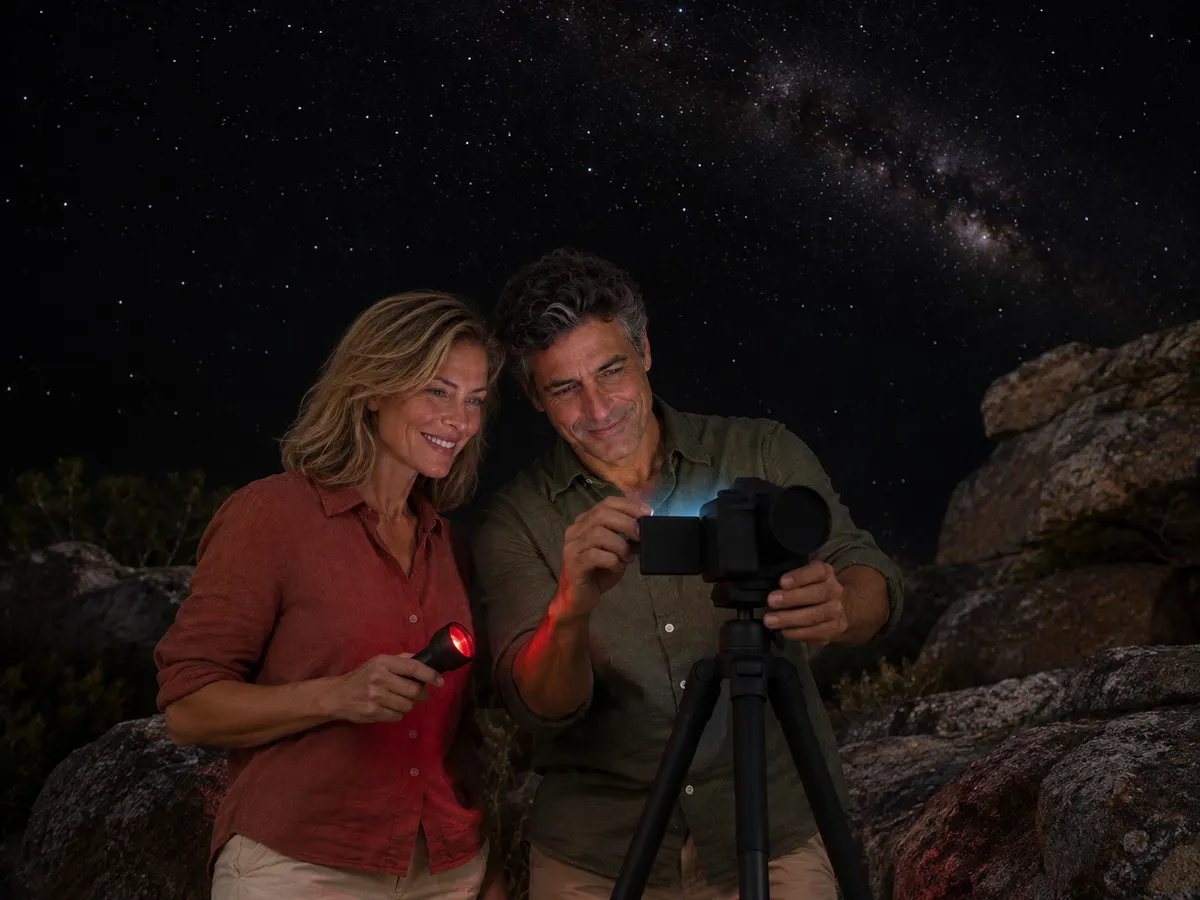
Illustrative images. The pictures in this guide are illustrations based on the real place, not photographs, and may differ from it.



Astrotourism
Meteor showers
On annually recurring dates, the program is to lie down in a dark place and wait.
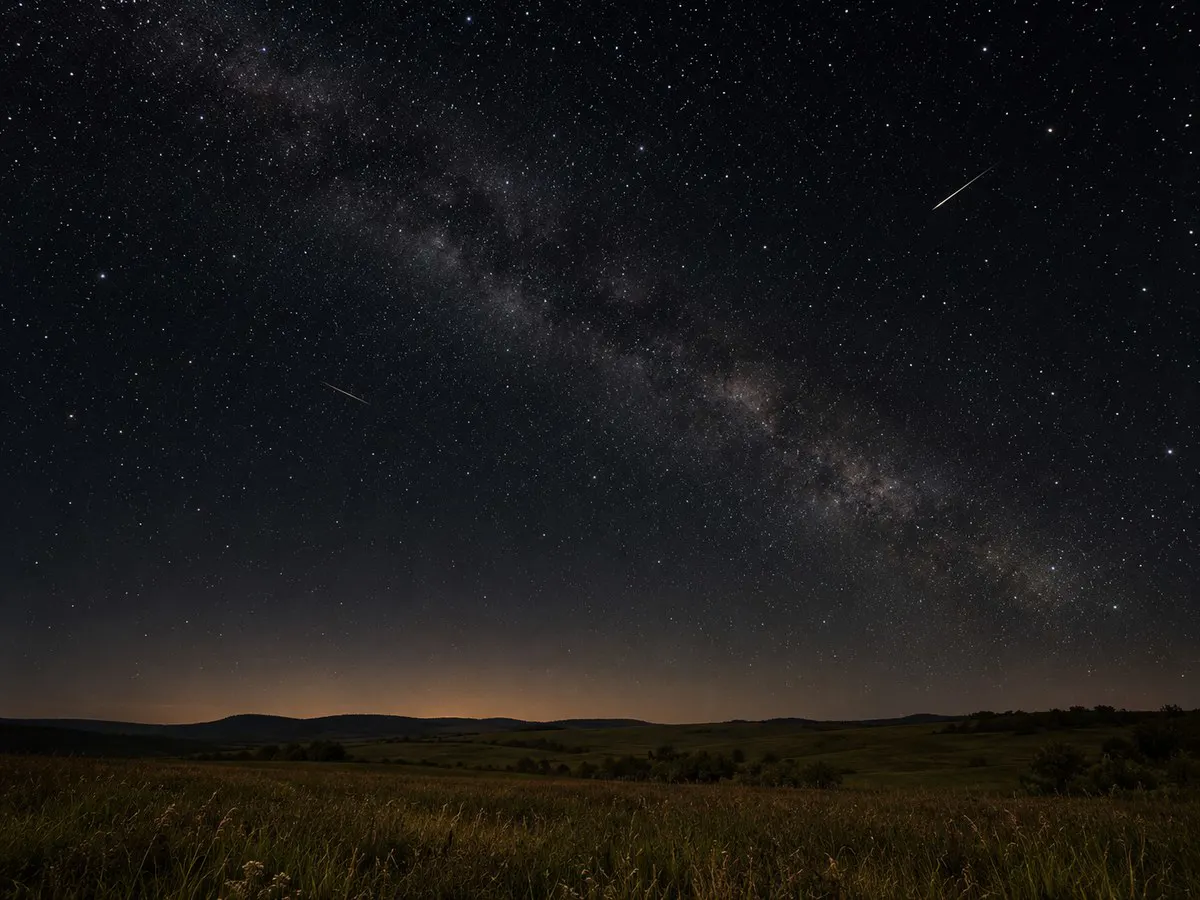
A meteor is the streak of light that appears when a grain of space dust enters the atmosphere at high speed and burns up. It’s commonly called a shooting star. On any dark night you can see a few. At certain times of year Earth crosses dust trails left by comets and the count rises: that’s a meteor shower.
Showers recur every year on roughly the same dates and are visible without equipment. For travelers, they’re a good reason to schedule a night in a dark-sky place.
Why they happen
A comet sheds dust and small fragments along its orbit. When Earth crosses that trail, the grains enter the atmosphere on parallel trajectories and, by perspective, appear to radiate from a single point in the sky, the radiant. The shower is named for the constellation containing that point: the Orionids seem to come from Orion; the Geminids, from Gemini.
Each shower is active for days or weeks and has a peak night, when Earth passes through the densest part of the trail. The rate of meteors per hour quoted for each shower assumes ideal conditions, with a very dark sky and the radiant high overhead. In practice you will see fewer meteors, and counts vary from year to year.
Main showers visible from Brazil
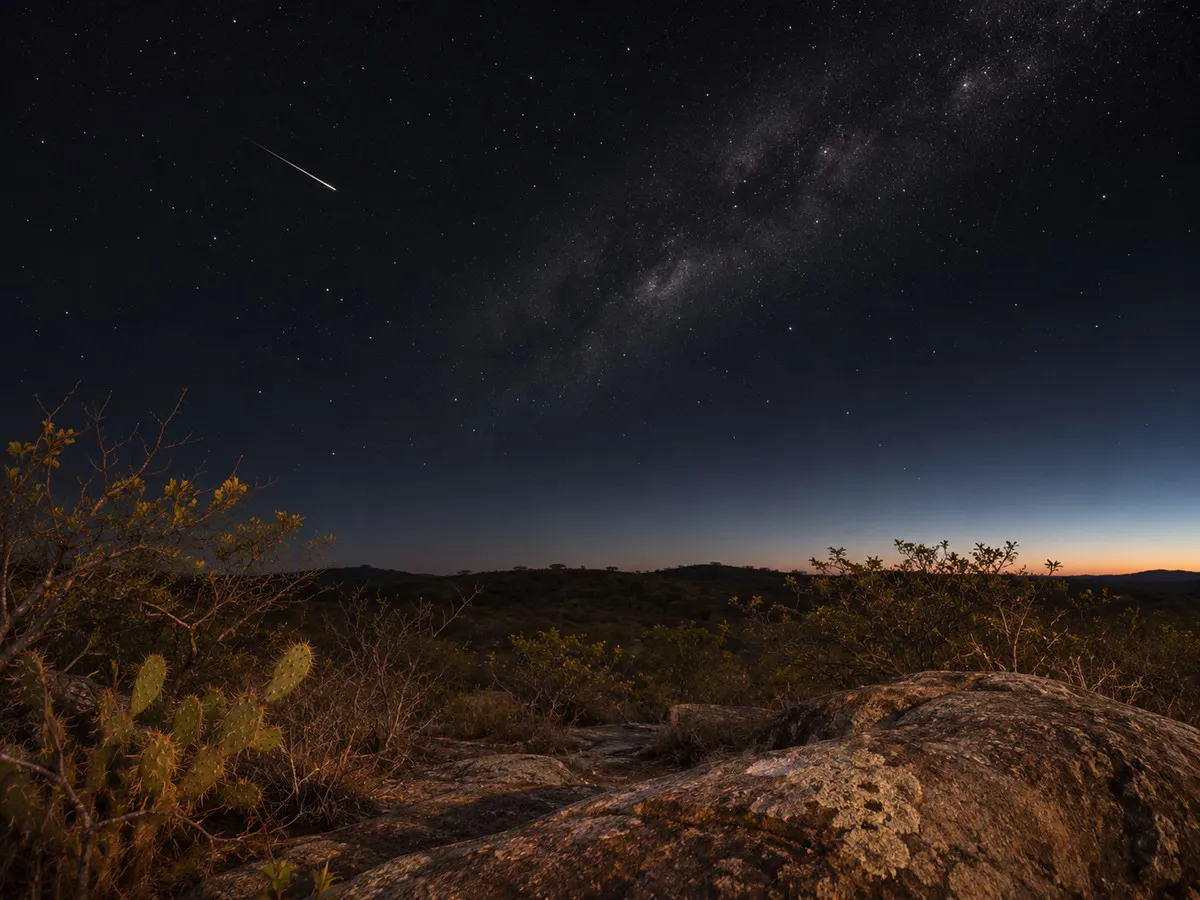
The Eta Aquariids, in early May, are made of dust from Halley’s Comet and favor the southern hemisphere. Meteors appear in the pre-dawn hours, before sunrise.
The Southern Delta Aquariids peak in late July. They are fainter meteors that require a dark sky and occur during the dry season across much of the country.
The Orionids, in the second half of October, also come from Halley. The Leonids peak in mid-November.
The Geminids, in mid-December, are often the most intense shower of the year. The radiant lies in the northern part of the sky, so Brazil’s North and Northeast regions have an advantage. The Perseids, in August and famous in the northern hemisphere, produce fewer meteors in Brazil.
The exact peak date can vary by a day or so: check an astronomical calendar.
How to observe
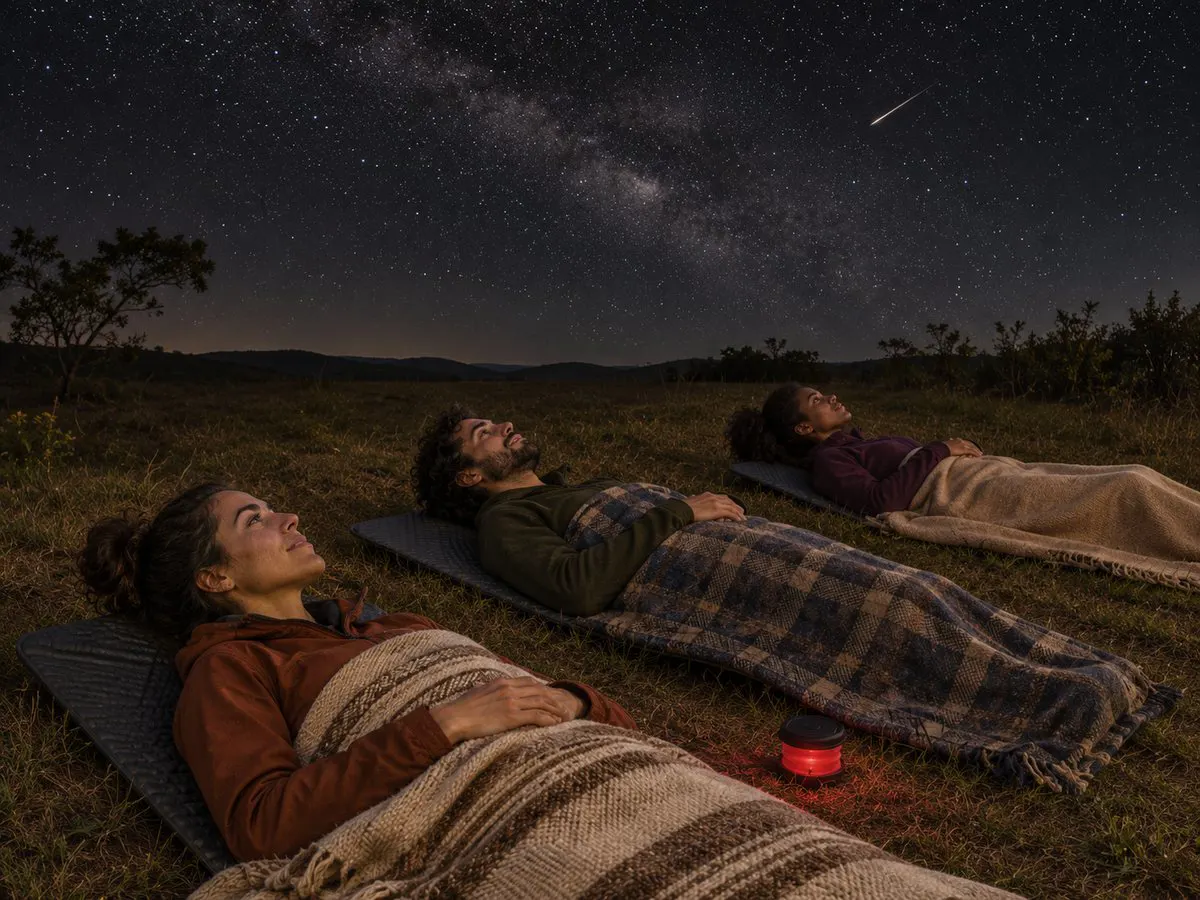
You don’t use a telescope or binoculars, which narrow your field of view. The instrument is your eye, and the position is lying down: a mat, foam pad or reclining chair, looking up, without fixing your gaze on a single point.
Meteors can appear in any part of the sky. Knowing where the radiant is helps to identify meteors that belong to the shower, but you don’t need to look directly at it. Rates increase after midnight and continue until dawn.
Set aside at least an hour. Meteors arrive in bursts, with several-minute gaps of nothing. Looking at your phone during the gaps ruins your eyes’ dark adaptation and makes you miss the fainter meteors.
The Moon, the place and the weather
The Moon decides the year. With a full Moon near the peak, only the brightest meteors are visible; with a new Moon, the same shower yields many more meteors. Before planning a trip, check the Moon phase on the peak date.
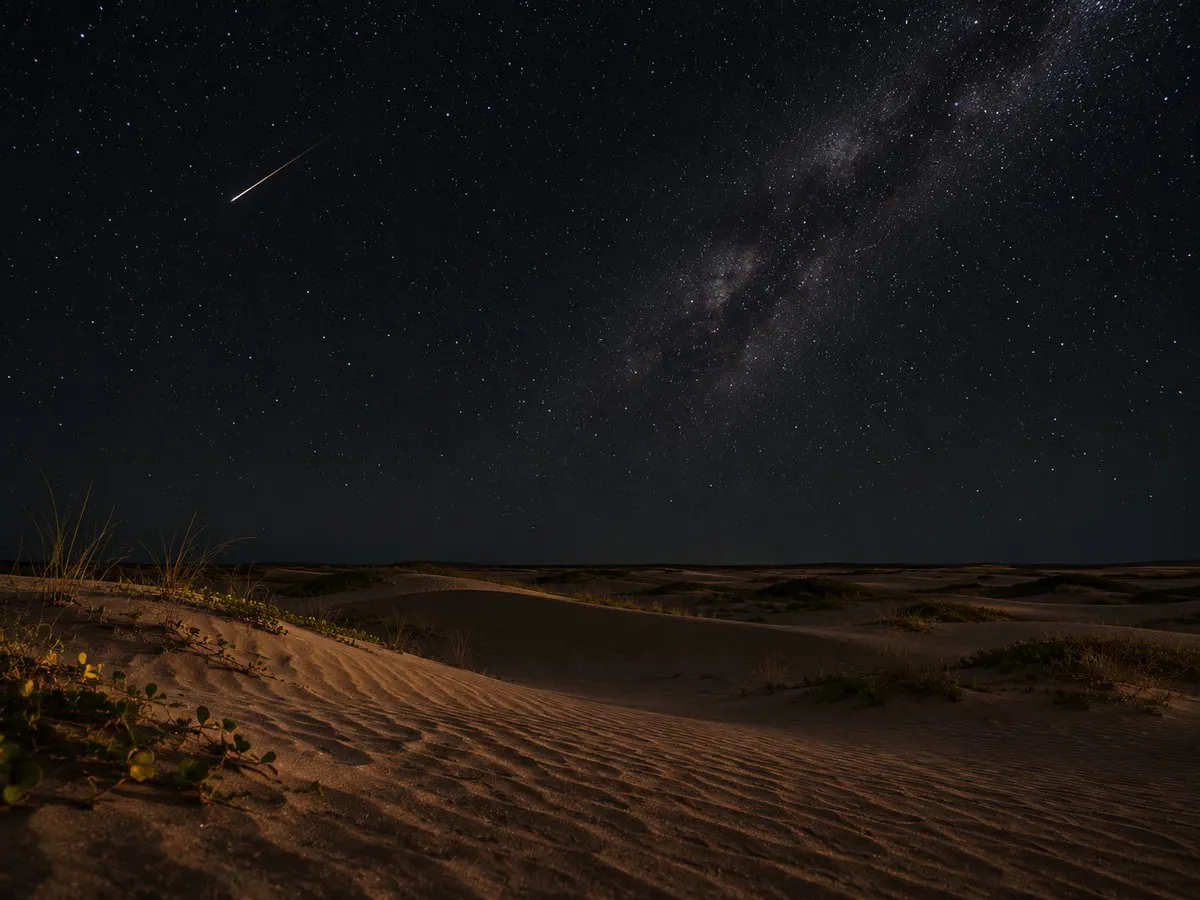
The location must be dark and have an open horizon. Any dark-sky destination works: mountains, plateaus, the sertão and dunes far from cities. In Barreirinhas, guided night tours in Lençóis Maranhenses include meteor shower observation on the relevant dates. Towns are shown on the map on this page.
Weather is the third condition. May and July fall in the dry season of central Brazil and the Southeast. October, November and December are rainy months in those regions and dry season in the semi-arid Northeast, where clear nights are more common at that time.
How to plan the night
Arrive one or two days before the peak and stay one day after: activity continues on neighboring nights, and an extra night protects you against clouds. Choose your observation spot and the route during daytime.
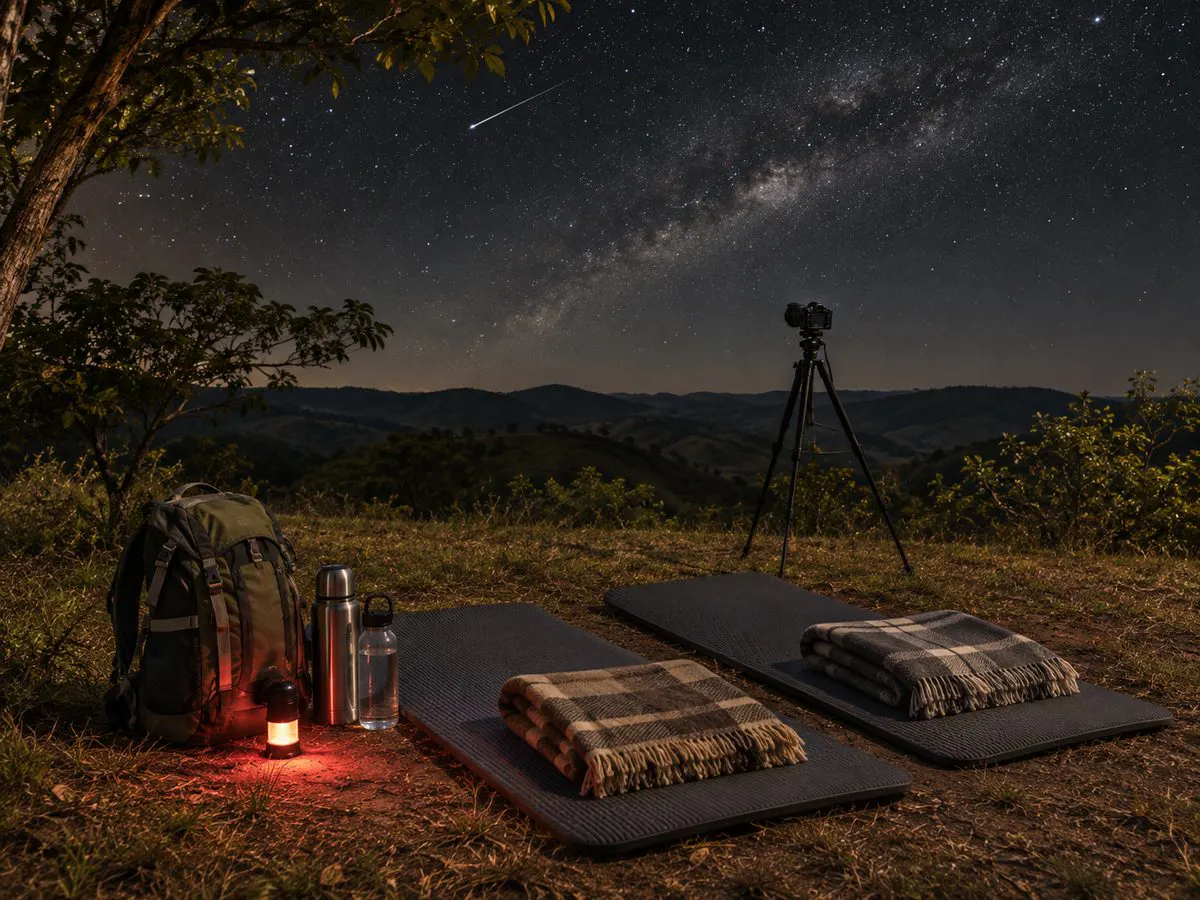
Bring warm clothing and a blanket, even in warm places, because staying still at night gets cold. Also bring insect repellent, water, a hot drink and a red-light flashlight. Don’t go alone, and tell your lodging where you plan to go.
To photograph, use a camera on a tripod, a wide aperture lens and repeated exposures of several seconds for hours, waiting for a meteor to cross the frame.
In dark-sky destinations, ask local guides and your lodging whether there is a night outing on the peak date. When booking, confirm the start time (which should run into the early morning), the meeting place and the cancellation policy for cloudy skies. Prices vary with duration, transport and group size: check the current rate table.
Frequently asked questions
What is a meteor shower?
It’s an increase in the number of meteors in the sky when Earth crosses the dust trail left by a comet. The grains burn up upon entering the atmosphere and create streaks of light, the shooting stars.
What’s the difference between meteoroid, meteorite and shooting star?
A meteor is the streak of light in the sky; shooting star is the common name for it. A meteorite is a fragment that survives passage through the atmosphere and reaches the ground, which is rare.
When do meteor showers occur?
They recur each year. For observers in Brazil, notable showers are the Eta Aquariids in early May; the Southern Delta Aquariids in late July; the Orionids in October; the Leonids in November; and the Geminids in mid-December.
What time should I watch a meteor shower?
Generally after midnight and up to dawn, when meteor rates are highest. The exact timing depends on the shower and the radiant’s position.
Do I need a telescope to see a meteor shower?
No. Telescopes and binoculars get in the way because they show only a small patch of sky. Observe with the naked eye, lying down, using the widest possible field of view.
Where should I look during a meteor shower?
Look up, without fixing on a single point. Meteors cross any part of the sky. Avoid the direction of city lights and the Moon, if it’s present.
Are meteor showers dangerous?
No. The grains are tiny and disintegrate in the atmosphere, high above the ground. What you see is only the luminous trail.
Where to go: Meteor showers
Pick a region or a state on the map, or type what you are looking for, to see the cities and who offers it in each.
-
Barreirinhas MA
O passeio noturno nos Lençóis inclui a observação de chuvas de meteoros nas datas em que ocorrem.
More activities in Astrotourism
Beyond the guide


