

 Antarctica
 Argentina
 Bolivia
 Chile
 Colombia
 Ecuador
 Guyana
 French Guiana
 Falkland Islands (Malvinas)
 Paraguay
 Peru
 Suriname
 Uruguay
 Venezuela
 Germany
 Austria
 Belgium
 Croatia
 Denmark
 Slovakia
 Slovenia
 Spain
 Finland
 France
 Greece
 the Netherlands
 Hungary
 Ireland
 Iceland
 Italy
 Luxembourg
 Norway
 Poland
 Portugal
 the United Kingdom
 the Czech Republic
 Sweden
 Switzerland
 Turkey
 Bermuda
 Canada
 the United States
 Greenland
 Mexico
 Saint Pierre and Miquelon
 the Dominican Republic
 Japan
 South Africa
 Egypt
 Australia
 Fiji
 New Zealand
 Papua New Guinea
Illustrative images. The pictures in this guide are illustrations based on the real place, not photographs, and may differ from it.


Astrotourism
Observatories
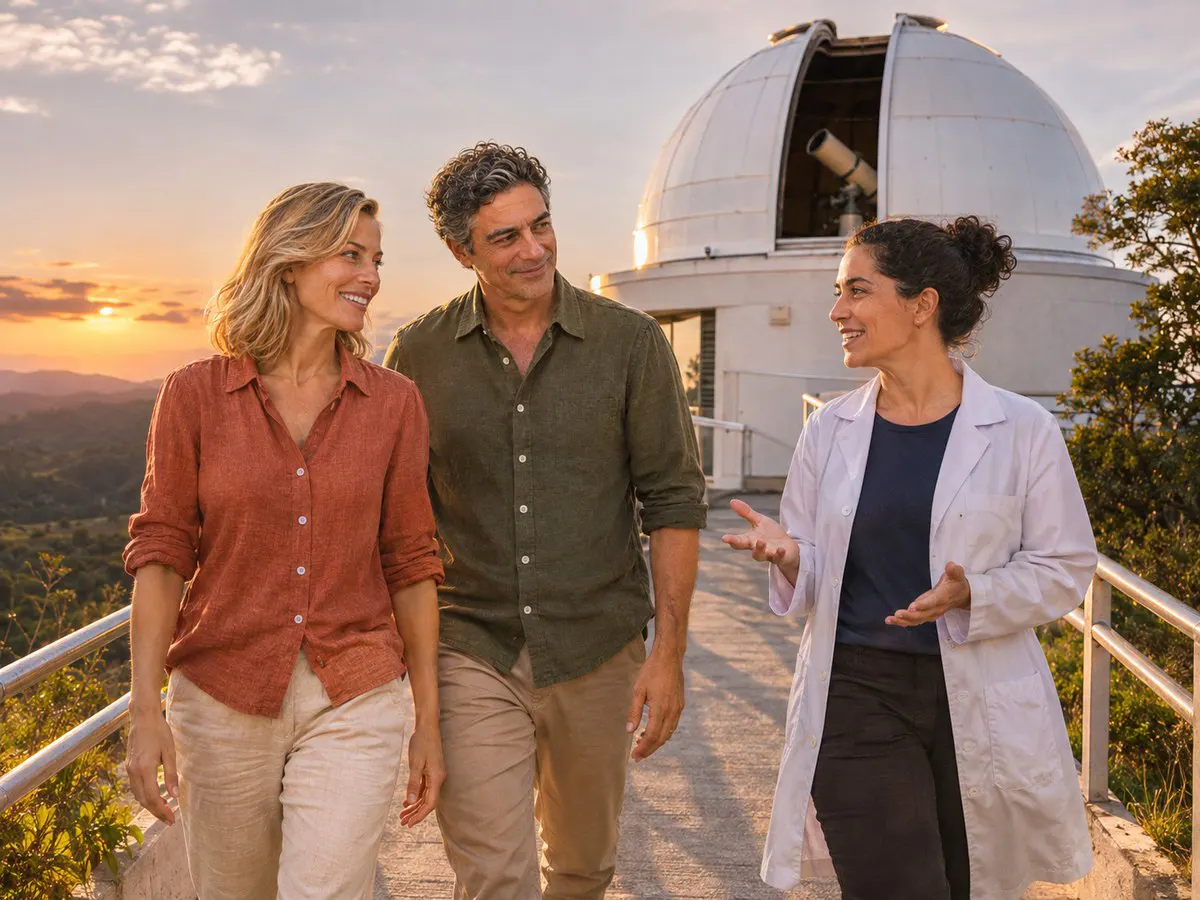
Some observatories open to the public on scheduled dates, with visits to the domes.
An observatory is the place built to look at the sky with fixed telescopes protected by domes that open at night. There are research observatories, where astronomers collect data, and educational ones made to receive schools and visitors. Parts of both types open to the public on specific days and under certain conditions.
For the traveler, a visit combines science and scenery: observatories are located on high, remote sites, and seeing one is a way to understand how people study what they observe without using instruments.
Research observatory, educational observatory and planetarium
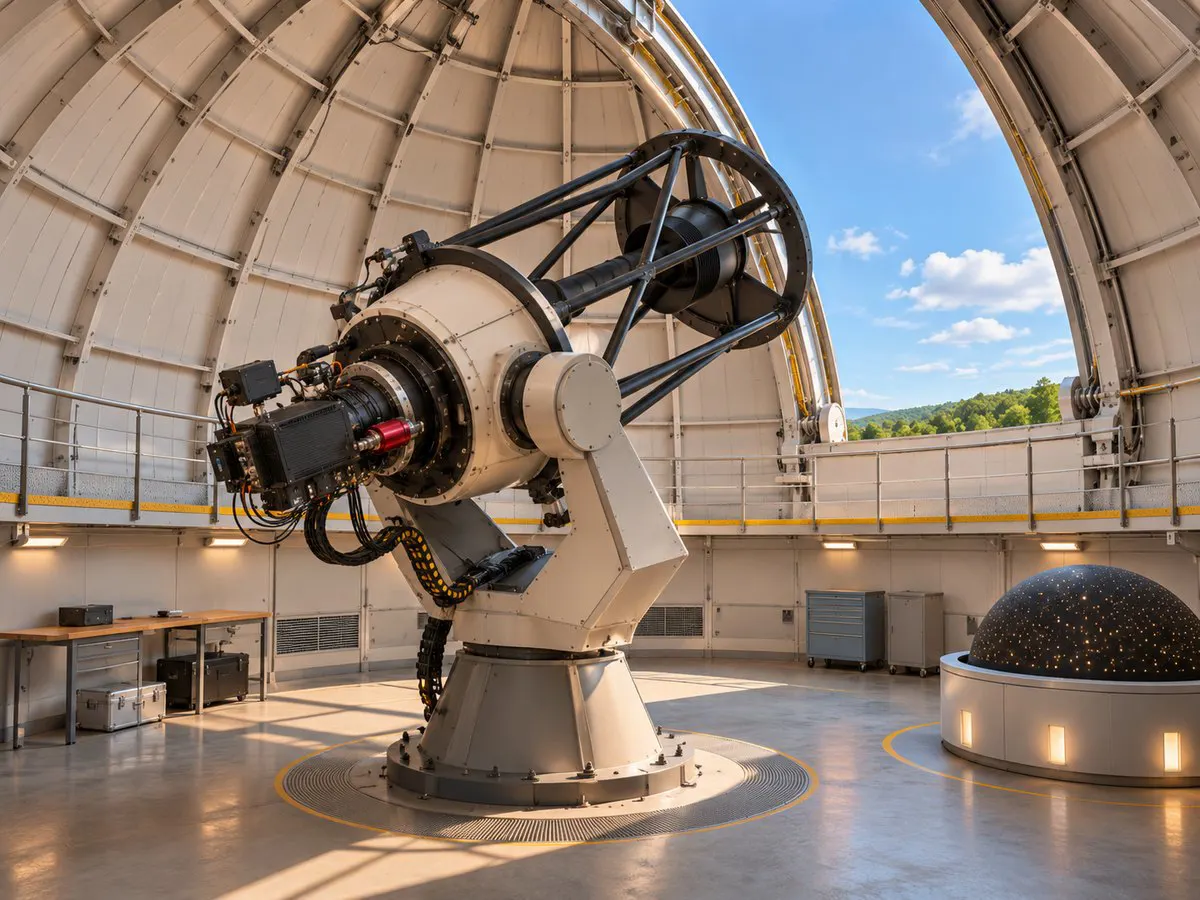
At a research observatory the telescopes are large and work with cameras and instruments, not eyepieces. Visits, when offered, are guided and show the domes, the telescopes and the astronomers’ work. Generally, they do not include sky viewing.
An educational or tourist observatory is the opposite: it exists for the public to look through. It has telescopes with eyepieces, guides who point and explain, and evening sessions. Many belong to universities, city halls or astronomy associations.
A planetarium is something else: a domed room where a projector reproduces the sky. It operates during the day in any weather and can show the sky of any time and place. It’s a good introduction before a night of observation, especially with children.
What a visit is like
A visit to a research observatory lasts one to two hours and is done in a group with a staff member of the institution. You see the dome from the inside, the main telescope and sometimes the control room. It’s common to have rules about vehicles, photos and minimum age, because the place is a workplace.
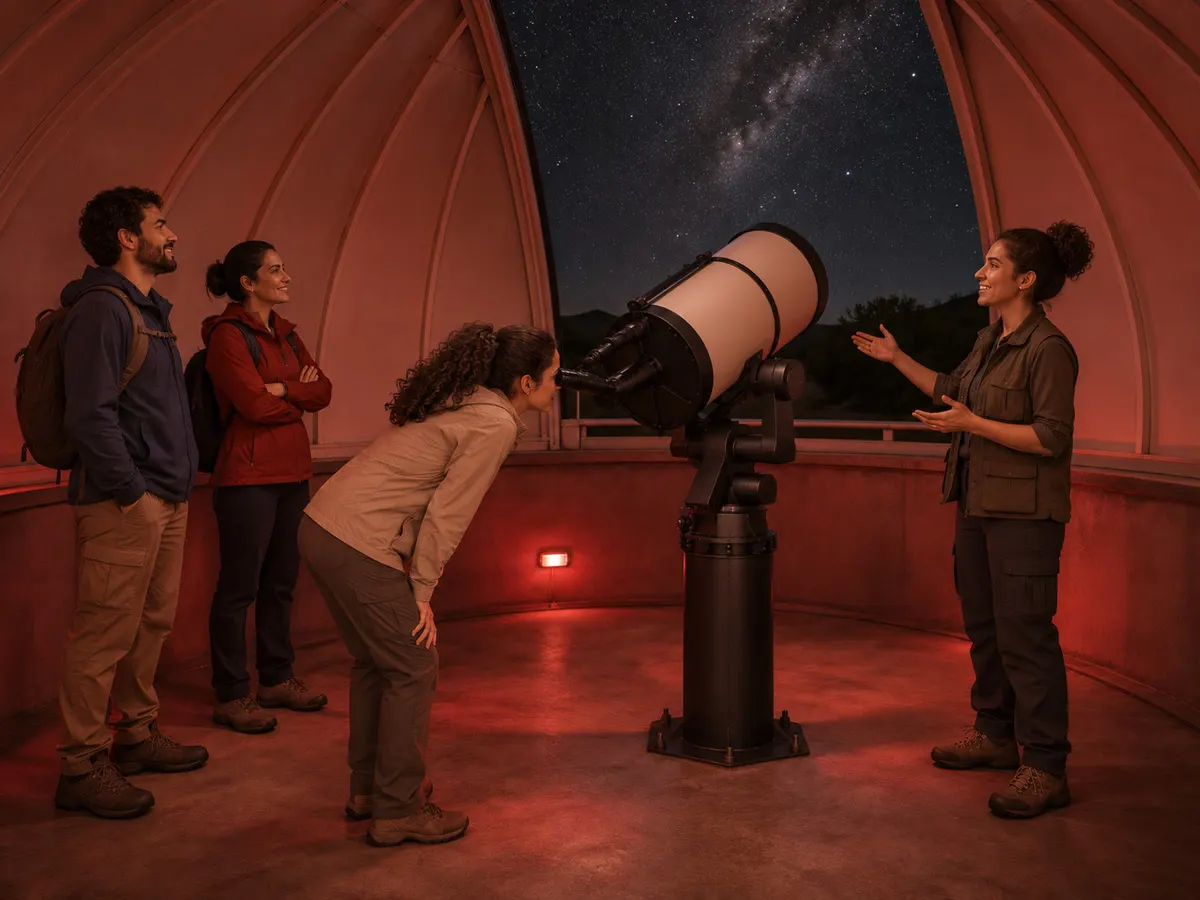
In the evening session at an educational observatory, visitors take turns at the eyepiece while guides point to the Moon, the planets and other targets of the season. If the sky is cloudy, the observation is replaced by a lecture or a planetarium show, when one is available.
Almost all require scheduling, and many only open on specific dates of the month. Arriving without a reservation usually means finding the gate closed.
Observatories and astronomy centers in Brazil
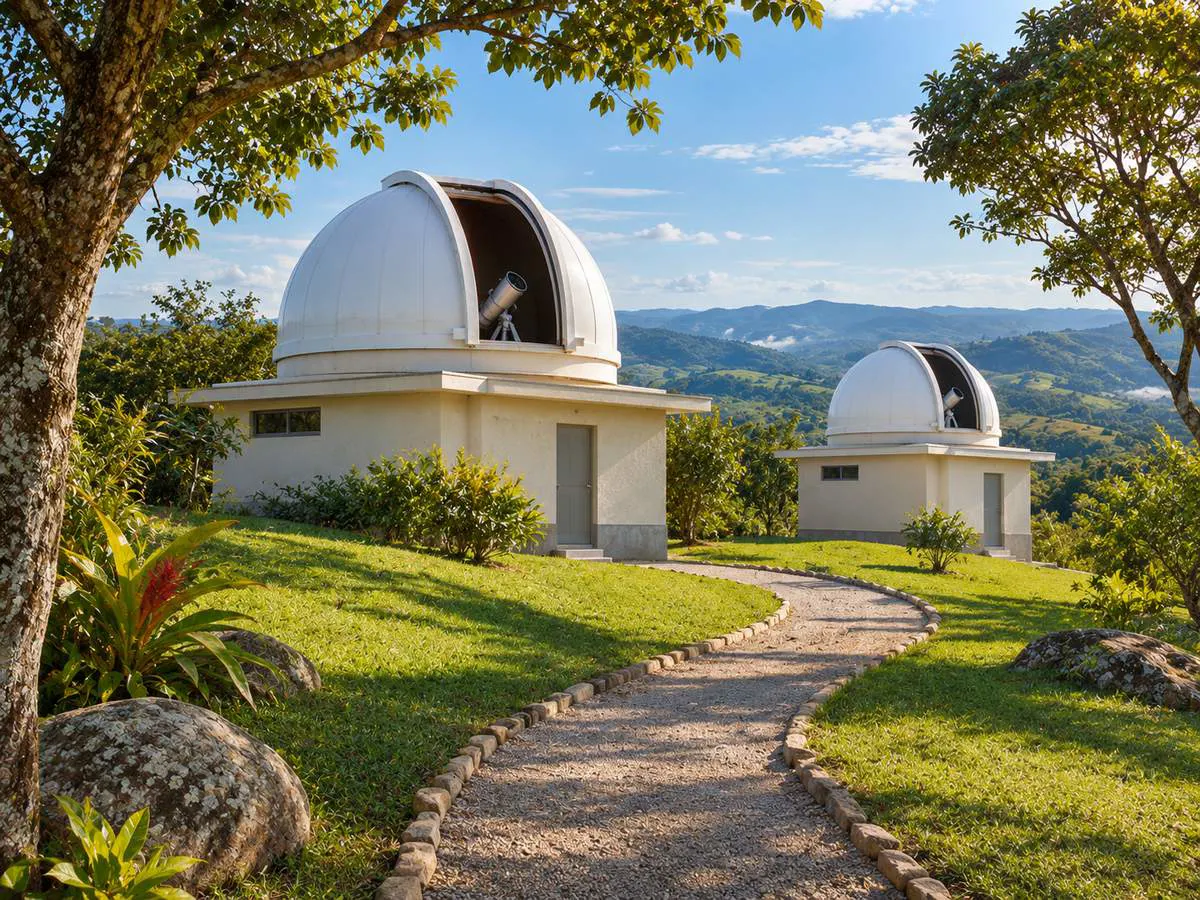
The Pico dos Dias Observatory, in Brazópolis in southern Minas Gerais, is operated by the National Laboratory for Astrophysics and houses the largest telescope on Brazilian soil, atop the Mantiqueira Range. Visits depend on the observatory’s schedule and can be suspended: confirm before you go.
In Brotas, in the interior of São Paulo state, an astronomy center has telescopes and a planetarium and welcomes the public in open sessions. In Amparo, also in São Paulo, an astronomical hub offers telescope viewing for visitors.
Several capitals and university cities have planetariums and observatories linked to universities and science museums, with public programs. The cities appear on the map on this page.
When to go
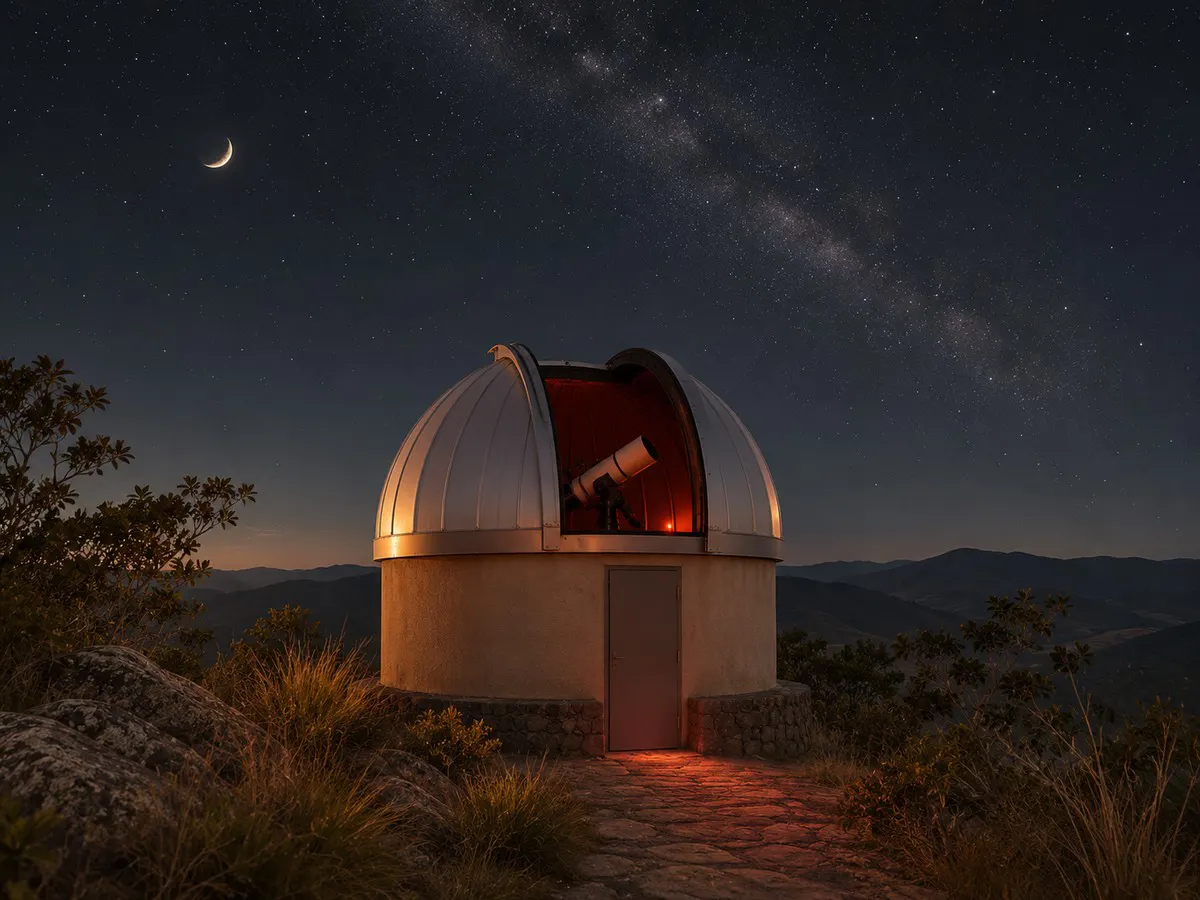
In the Southeast, the dry season runs from May to September and brings the clearest nights, but also the coldest: high on the mountains, temperature drops a lot after dark.
For sessions with observing, plan the date with the Moon. The waxing phase is good for seeing the Moon itself and the planets; the new Moon is better for clusters and nebulae. For tours of the facilities, any time is fine as long as there is an open date.
Some institutions open on special occasions, such as science weeks and open nights. Dates change: check the program.
How to prepare
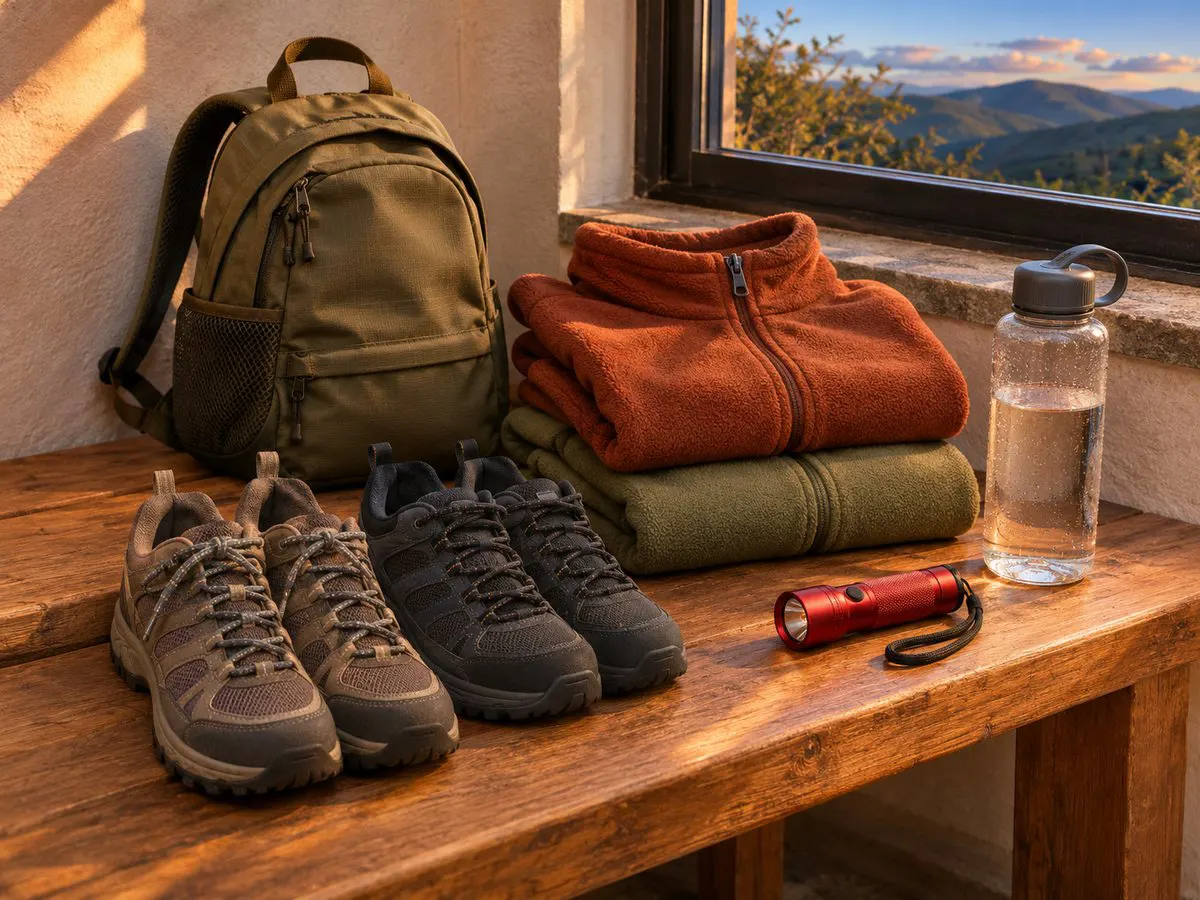
Book in advance and read the rules sent with the confirmation. Bring ID, a jacket and closed shoes. At mountain observatories, the final road is often narrow and winding; check access information and avoid driving up in fog.
At night, darkness is the rule: low beams on arrival, phone with minimum brightness, no flash. Inside the dome, do not touch anything without guidance.
With children, explain beforehand what they will see. The planetarium holds the attention of the youngest; the telescope suits those who can stay still at the eyepiece.
What to check before booking
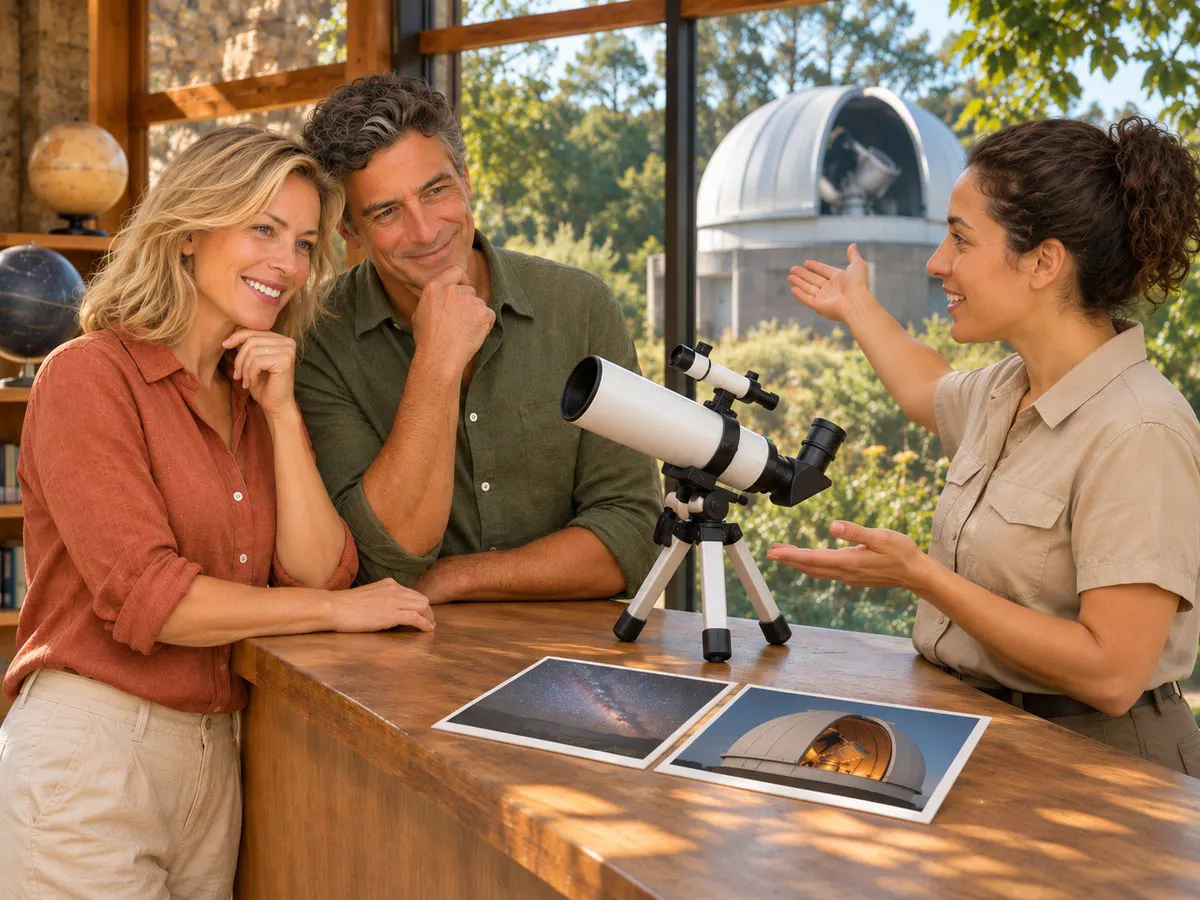
Check whether the visit includes telescope viewing or only a tour of the facilities; whether it’s daytime or nighttime; how long it lasts; the minimum age; and what happens in bad weather.
Some public observatories do not charge admission; private ones and tourist centers sell tickets. The price varies with the type of session, duration and group size: check the current fee table.
If you’re going without a car, ask locally about agencies and guides registered with Cadastur, the Ministry of Tourism registry, who can provide transport and combine the visit with other regional tours.
Frequently asked questions
What is an astronomical observatory?
It is an installation with fixed telescopes, usually under domes, used to observe and study the sky. Some are for scientific research; others are educational, intended to receive the public.
What is the difference between an observatory and a planetarium?
At an observatory you look at the real sky with telescopes, at night and in clear weather. At a planetarium, the sky is projected onto a dome inside a room, at any time and in any weather.
Is it possible to visit observatories in Brazil?
Yes. Educational observatories, astronomy centers and planetariums welcome the public by appointment. Research observatories open on scheduled dates that can be suspended: confirm before you go.
At an observatory visit, is it possible to look through a telescope?
At educational and tourist observatories, yes, during evening sessions. At research observatories, usually not: the telescopes work with cameras, and the visit shows the facilities.
Where is Brazil’s largest telescope located?
At the Pico dos Dias Observatory, in Brazópolis in southern Minas Gerais, operated by the National Laboratory for Astrophysics. Visits depend on the institution’s schedule.
Do you need to book to visit an observatory?
Almost always. Places are limited, and many only open on specific days. Check the schedule and reserve in advance.
Can children visit observatories?
Yes, respecting each institution’s minimum age. Planetarium shows and early-evening sessions with the Moon and planets are the most suitable programs for them.
Where to go: Observatories
Pick a region or a state on the map, or type what you are looking for, to see the cities and who offers it in each.
-
Sobral CE
Museu do Eclipse.
-
Brazópolis MG
Observatório do Pico dos Dias, do Laboratório Nacional de Astrofísica.
Operation suspended or changed: check before you go.
-
Juiz de Fora MG
Centro de Ciências da UFJF.
-
Brotas SP
Centro de Estudos do Universo, com telescópios e planetário.
More activities in Astrotourism
Beyond the guide


