

 Antarctica
 Argentina
 Bolivia
 Chile
 Colombia
 Ecuador
 Guyana
 French Guiana
 Falkland Islands (Malvinas)
 Paraguay
 Peru
 Suriname
 Uruguay
 Venezuela
 Germany
 Austria
 Belgium
 Croatia
 Denmark
 Slovakia
 Slovenia
 Spain
 Finland
 France
 Greece
 the Netherlands
 Hungary
 Ireland
 Iceland
 Italy
 Luxembourg
 Norway
 Poland
 Portugal
 the United Kingdom
 the Czech Republic
 Sweden
 Switzerland
 Turkey
 Bermuda
 Canada
 the United States
 Greenland
 Mexico
 Saint Pierre and Miquelon
 the Dominican Republic
 Japan
 South Africa
 Egypt
 Australia
 Fiji
 New Zealand
 Papua New Guinea
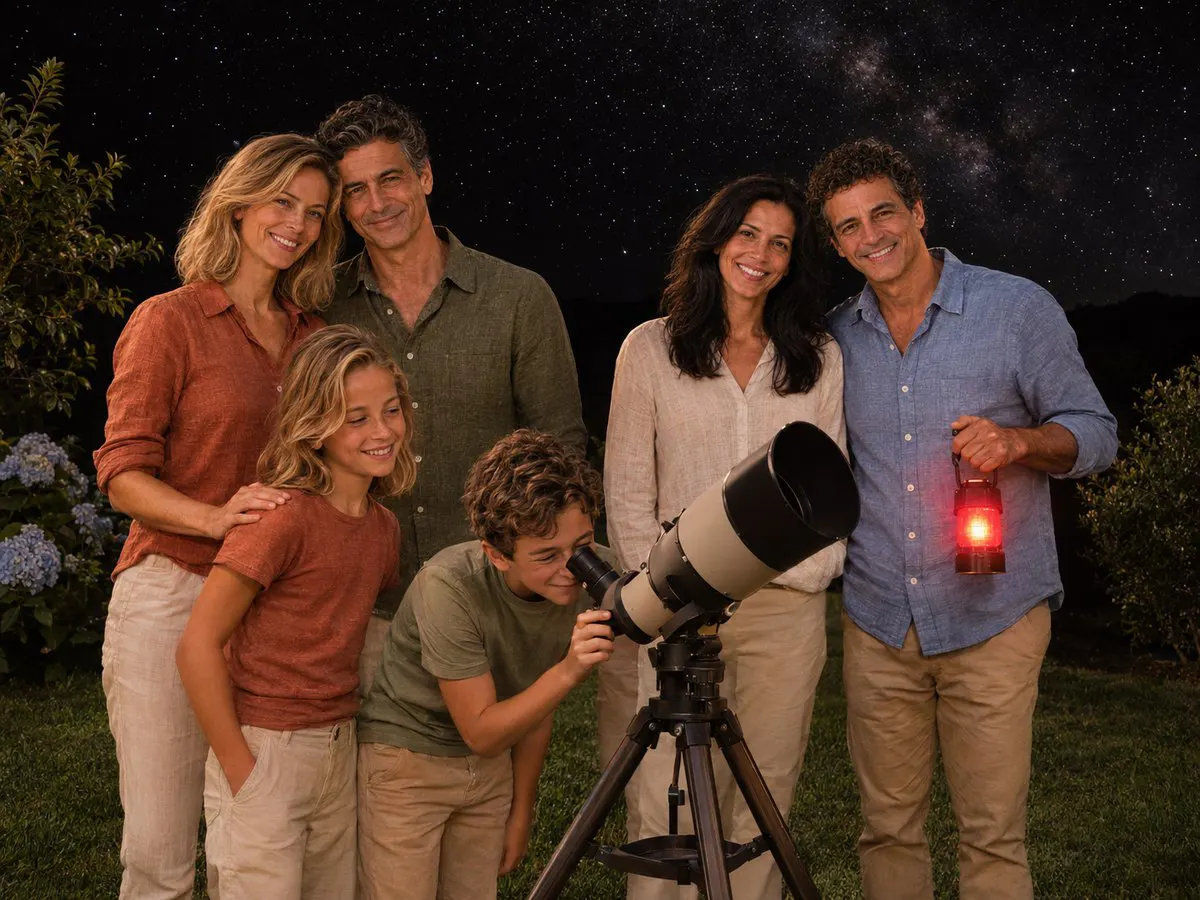
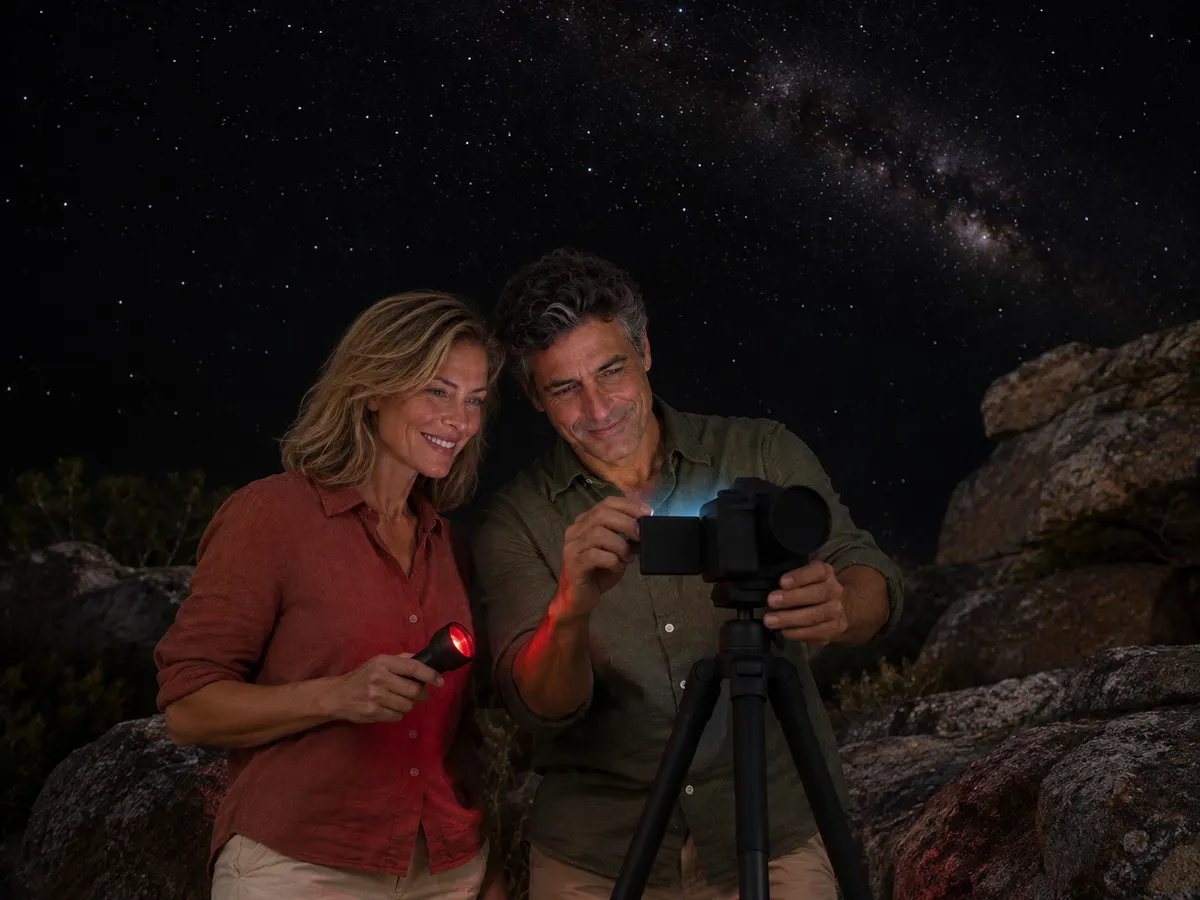
Illustrative images. The pictures in this guide are illustrations based on the real place, not photographs, and may differ from it.



Astrotourism
Milky Way with the naked eye
On moonless nights, far from cities, the galaxy’s band appears without any instruments.
The Milky Way is the galaxy we live in, a disk with hundreds of billions of stars. Because we are inside it, what we see is the disk edge-on: a whitish band that crosses the sky from one horizon to the other. The name comes from the milky appearance that this band has to the naked eye.
For millennia it was part of everyone’s night. Today, people who live in large cities can spend their lives without seeing it. One dark night changes that.
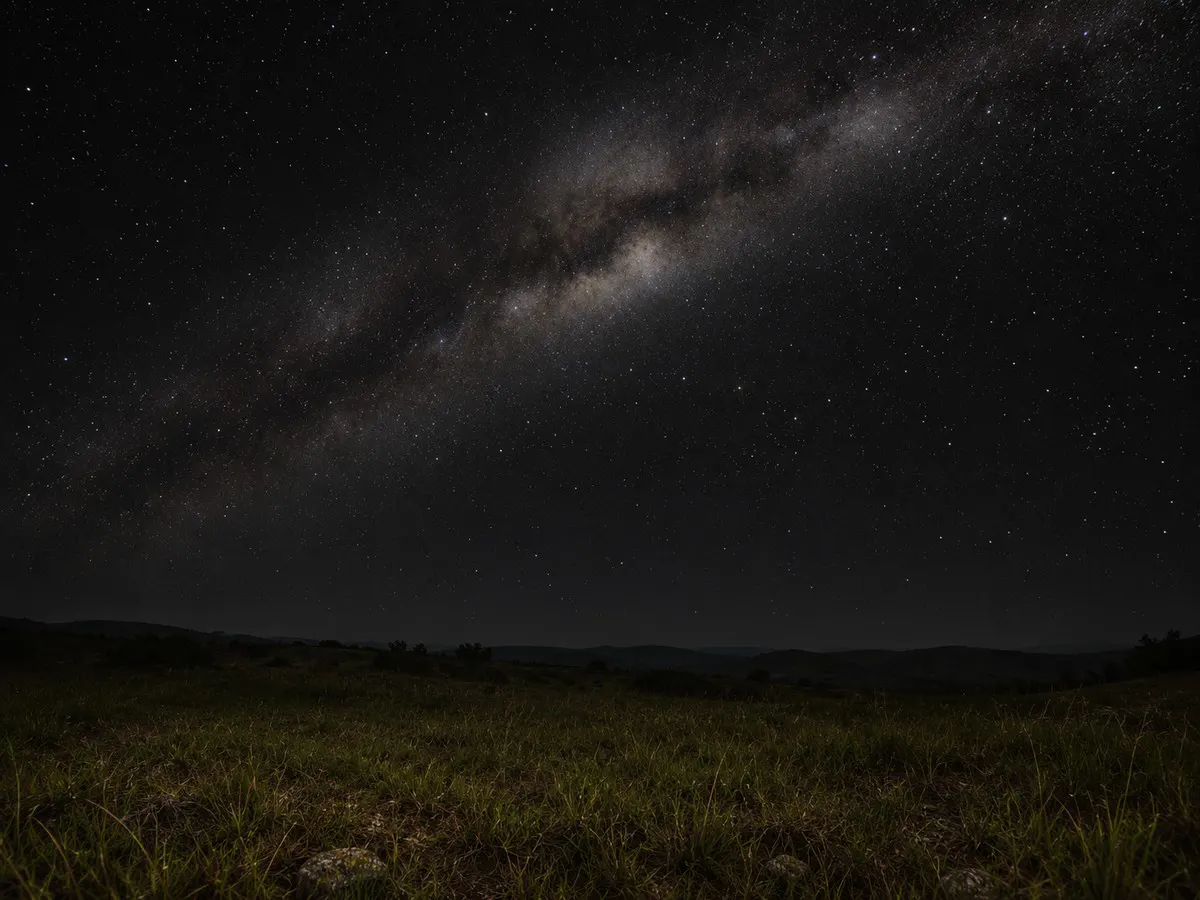
What you see with the naked eye
Under a dark sky, the band has width and texture. It is not uniform: there are brighter stretches, clouds of stars and dark streaks, which are dust clouds in front of the stars. The widest, brightest region, in the direction of the constellations Sagittarius and Scorpius, is the galaxy’s center.
Next to the Southern Cross, a very distinct dark patch draws attention: the Coal Sack. Indigenous peoples of South America read figures in those dark patches, such as the rhea, which stretches from the Cross toward Scorpius.
From the southern hemisphere you can also see the Magellanic Clouds, two neighboring galaxies that look like loose pieces of the band.
To the naked eye, the Milky Way is white and grayish. The strong colors in photographs come from long exposures, which the eye does not perform. In person it is subtler and larger: it crosses the entire sky.
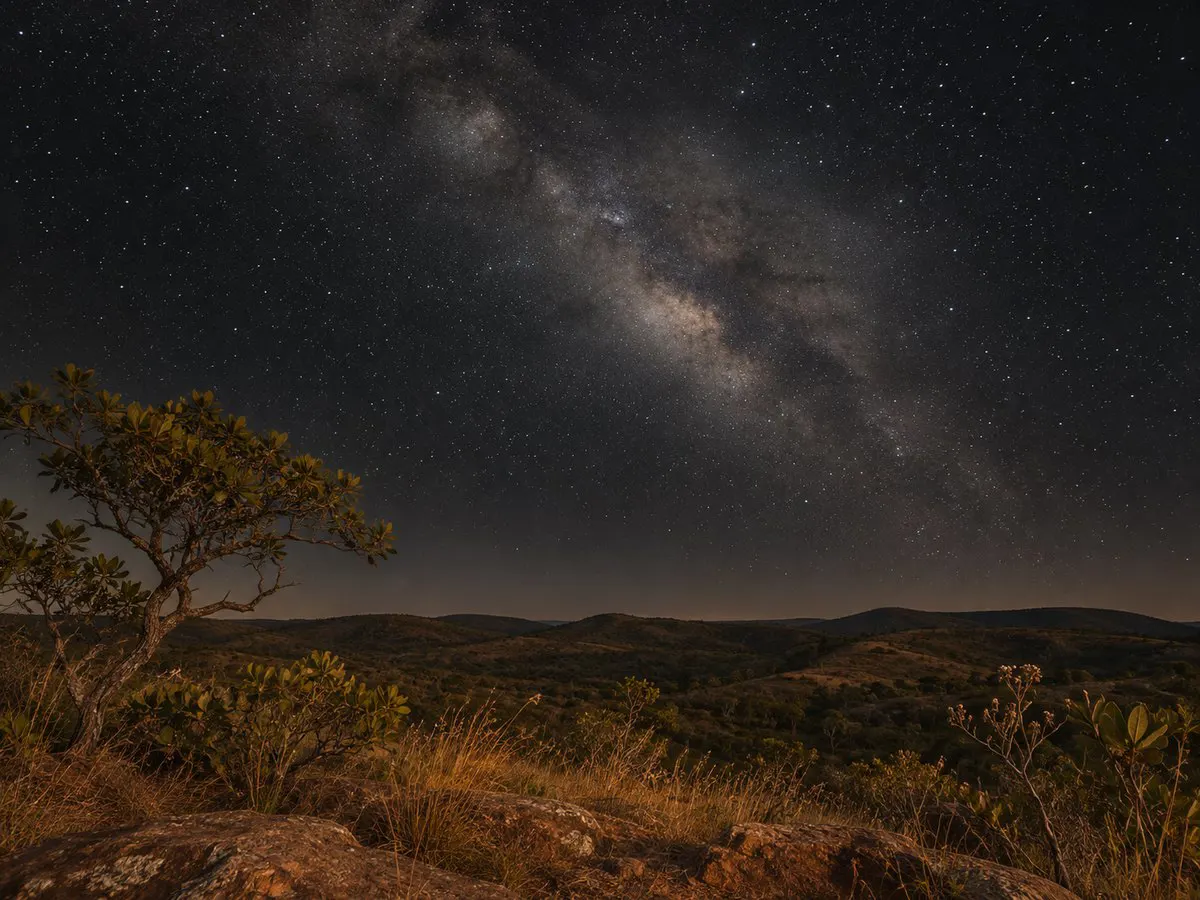
When to see the galaxy’s center
The band is in the sky all year, but the brightest part has a season. the center of the Milky Way is visible at night from February to October. At the start of the season it rises in the early morning; between June and August it is already high soon after nightfall; in September and October it appears in the early evening, descending to the west.
In summer, what is seen at night is the opposite side, facing outward from the galaxy, dimmer but accompanied by Orion and some of the brightest stars in the sky.
The months from June to August coincide with the dry season in central and southeastern Brazil, which adds clear skies and the galaxy’s center at a convenient hour.

The Moon, timing and eye adjustment
The Moon is the biggest hindrance. With a full Moon, the band almost disappears. Recommended nights run from about a week before new Moon until a few days after. Outside that window you can still use the hours when the Moon is not in the sky.
Wait for true darkness, more than an hour after sunset. Then give your eyes about twenty minutes away from any light. The band appears gradually, and the dark details come last. Looking slightly to the side of the point of interest, using your peripheral vision, helps to perceive the faint parts.
A sky map app in night mode shows where the center will be each hour. Ordinary binoculars pointed at the band reveal that the haze is made of stars.
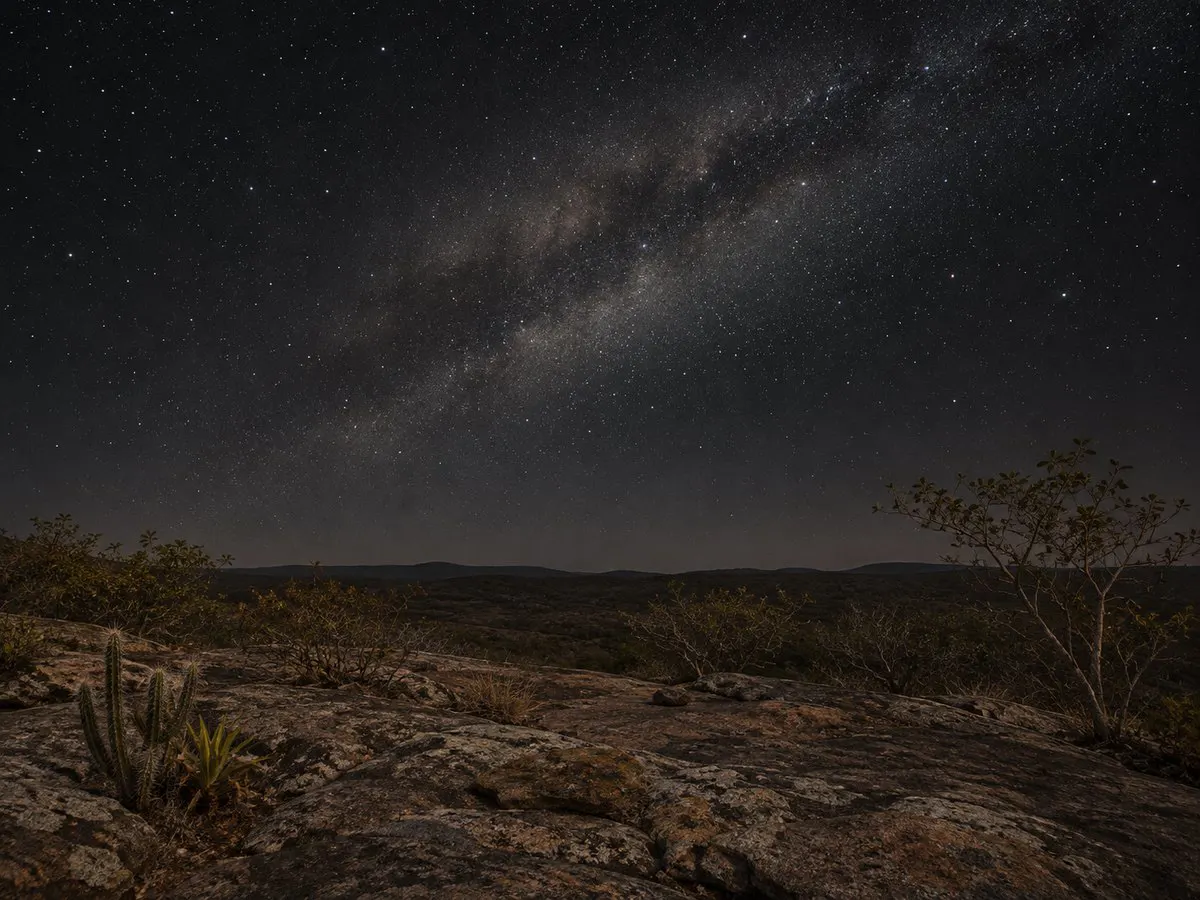
Where to see the Milky Way in Brazil
In Parque Estadual do Desengano, in Santa Maria Madalena, in the northern Fluminense highlands, the Milky Way often appears to the naked eye on moonless nights. In Lençóis Maranhenses, the night walk over the dunes from Barreirinhas shows the band and the Magellanic Clouds.
The rule applies to any region: the farther from cities, the more you see. The plateaus of central Brazil, the Jalapão, Chapada Diamantina, Cariri Paraibano and the mountain ranges of Minas Gerais and Santa Catarina are among the regions sought for this. The towns appear on the map on this page.
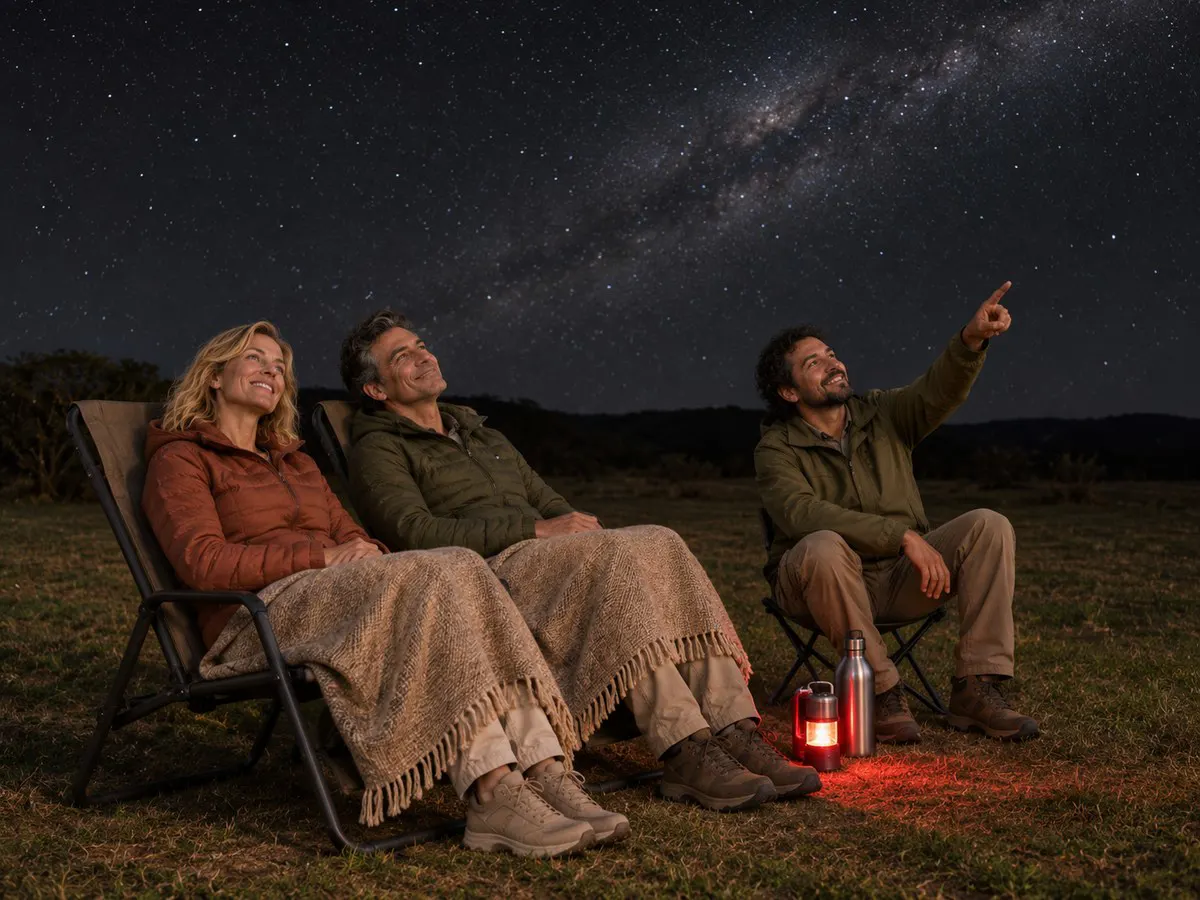
How to prepare for the night
Choose the date by the Moon and the season and book two or three nights, because the weather can close in. By day, find the spot: a lookout, a field or a dirt road without poles, with a free horizon to the east and south.
Bring a mat or reclining chair, warm clothing, repellent, water and a red-light flashlight. Go with someone and inform your lodging. Those who prefer not to go alone hire a local guide, with transport and explanation. Check whether the guide or agency is registered in Cadastur, the Ministry of Tourism’s registry.
When booking accommodation, ask if it lies outside the village’s lit area and whether external lights are turned off at night. The price of a guided outing varies with duration, transport and group size: check the current table.
Frequently asked questions
What is the Milky Way?
It is our galaxy, a disk of stars, gas and dust of which the Sun is part. Seen from inside, it appears as a bright band that crosses the night sky.
Is it possible to see the Milky Way with the naked eye?
Yes, in dark places far from cities, on nights without Moon and without clouds. No telescope or binoculars are required. In big cities, lighting hides it.
When is the season to see the Milky Way in Brazil?
The brightest part, the galaxy’s center, appears at night from February to October. Between June and August it stands high early in the evening, during the dry season in much of the country.
Why can’t I see the Milky Way from the city?
Because of light pollution. Light from streetlamps, facades and floodlights brightens the sky and drowns faint objects, including the galaxy’s band.
Is the Milky Way colorful like in photos?
No. To the naked eye it is whitish with dark patches. Photo colors appear because the camera accumulates light for several seconds, which the eye does not do.
What time does the Milky Way appear?
It depends on the month. From February to April the center rises in the early morning. From June to August it is high shortly after dark. In September and October it is seen in the early evening, to the west.
What are the Magellanic Clouds?
They are two small galaxies, neighbors of the Milky Way, visible to the naked eye from the southern hemisphere as two bright patches. They appear in a dark sky toward the south.
Where to go: Milky Way with the naked eye
Pick a region or a state on the map, or type what you are looking for, to see the cities and who offers it in each.
-
Barreirinhas MA
No passeio noturno pelas dunas, a Via Láctea e as Nuvens de Magalhães são vistas a olho nu.
More activities in Astrotourism



Beyond the guide


