

 Antarctica
 Argentina
 Bolivia
 Chile
 Colombia
 Ecuador
 Guyana
 French Guiana
 Falkland Islands (Malvinas)
 Paraguay
 Peru
 Suriname
 Uruguay
 Venezuela
 Germany
 Austria
 Belgium
 Croatia
 Denmark
 Slovakia
 Slovenia
 Spain
 Finland
 France
 Greece
 the Netherlands
 Hungary
 Ireland
 Iceland
 Italy
 Luxembourg
 Norway
 Poland
 Portugal
 the United Kingdom
 the Czech Republic
 Sweden
 Switzerland
 Turkey
 Bermuda
 Canada
 the United States
 Greenland
 Mexico
 Saint Pierre and Miquelon
 the Dominican Republic
 Japan
 South Africa
 Egypt
 Australia
 Fiji
 New Zealand
 Papua New Guinea
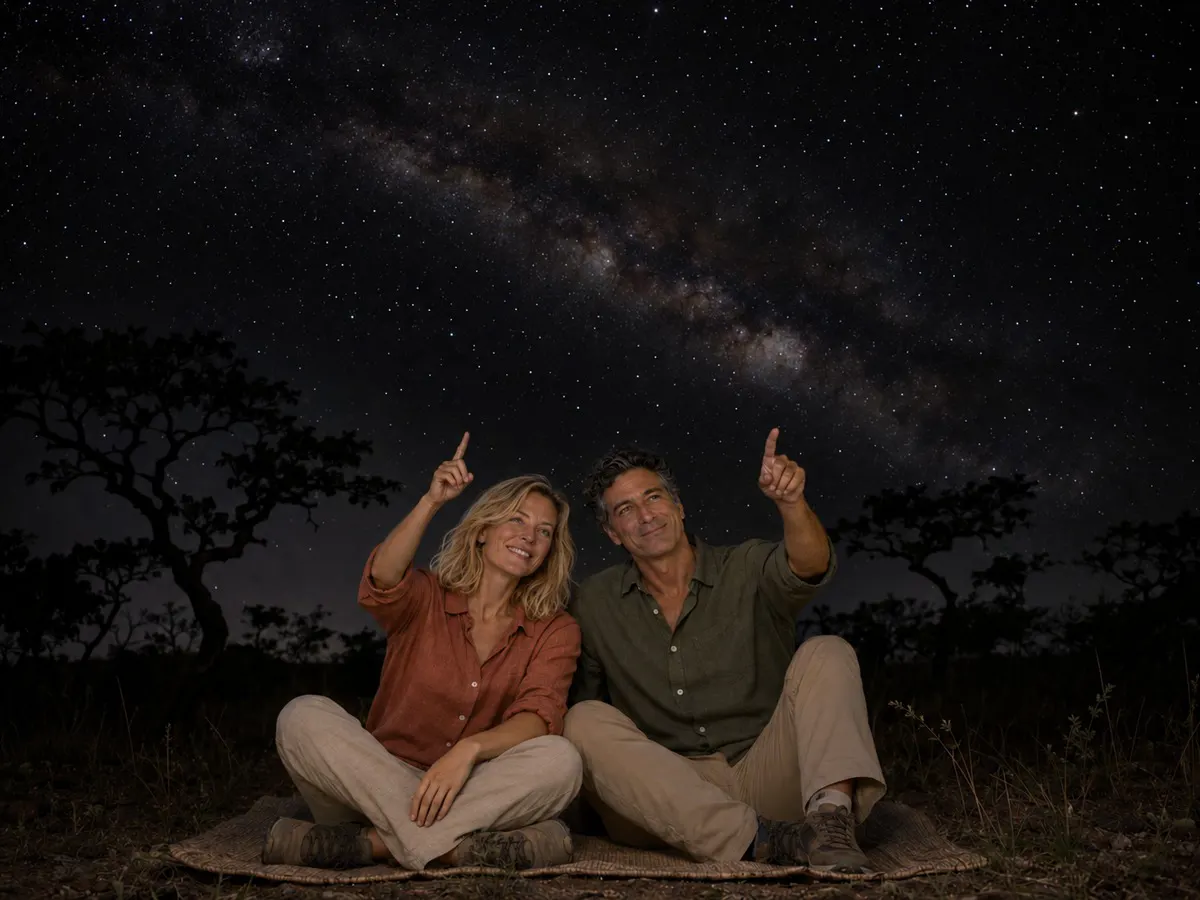
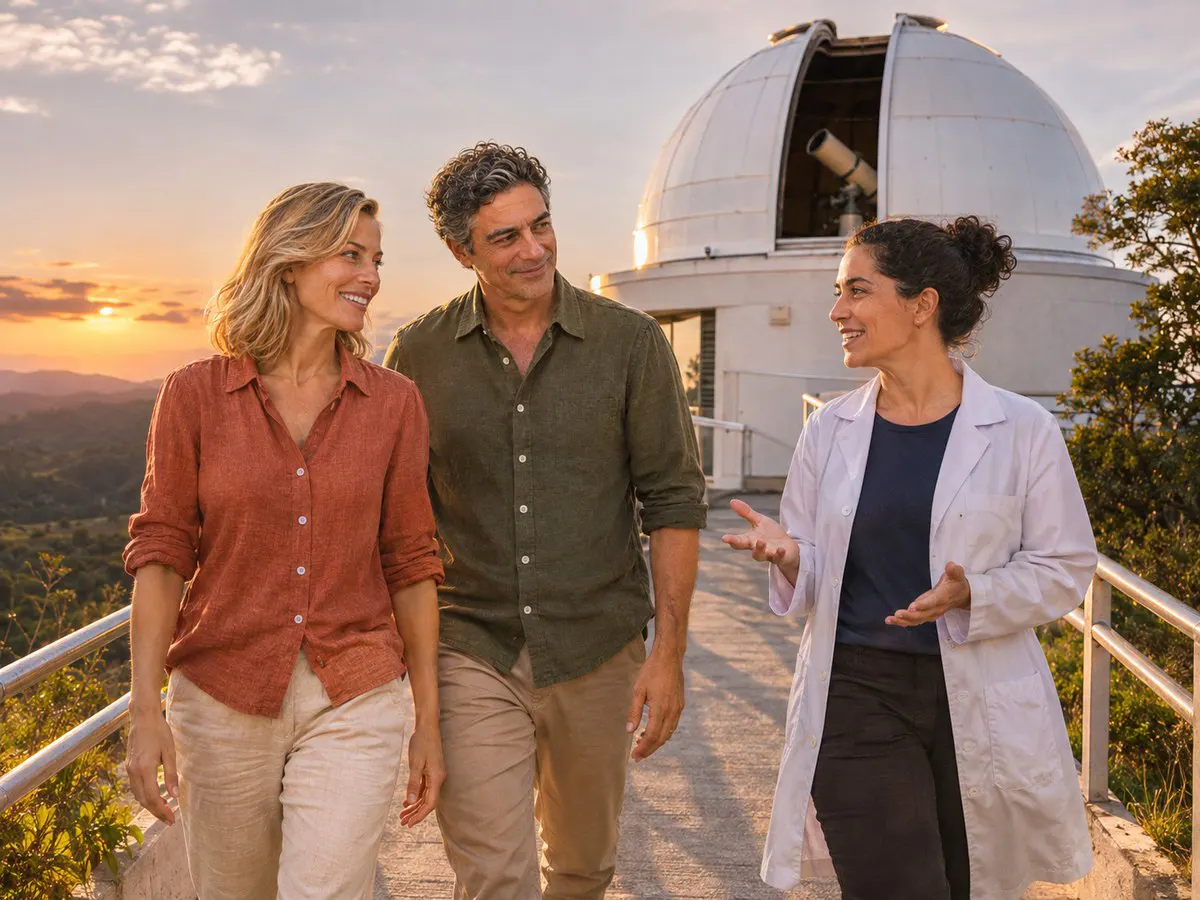
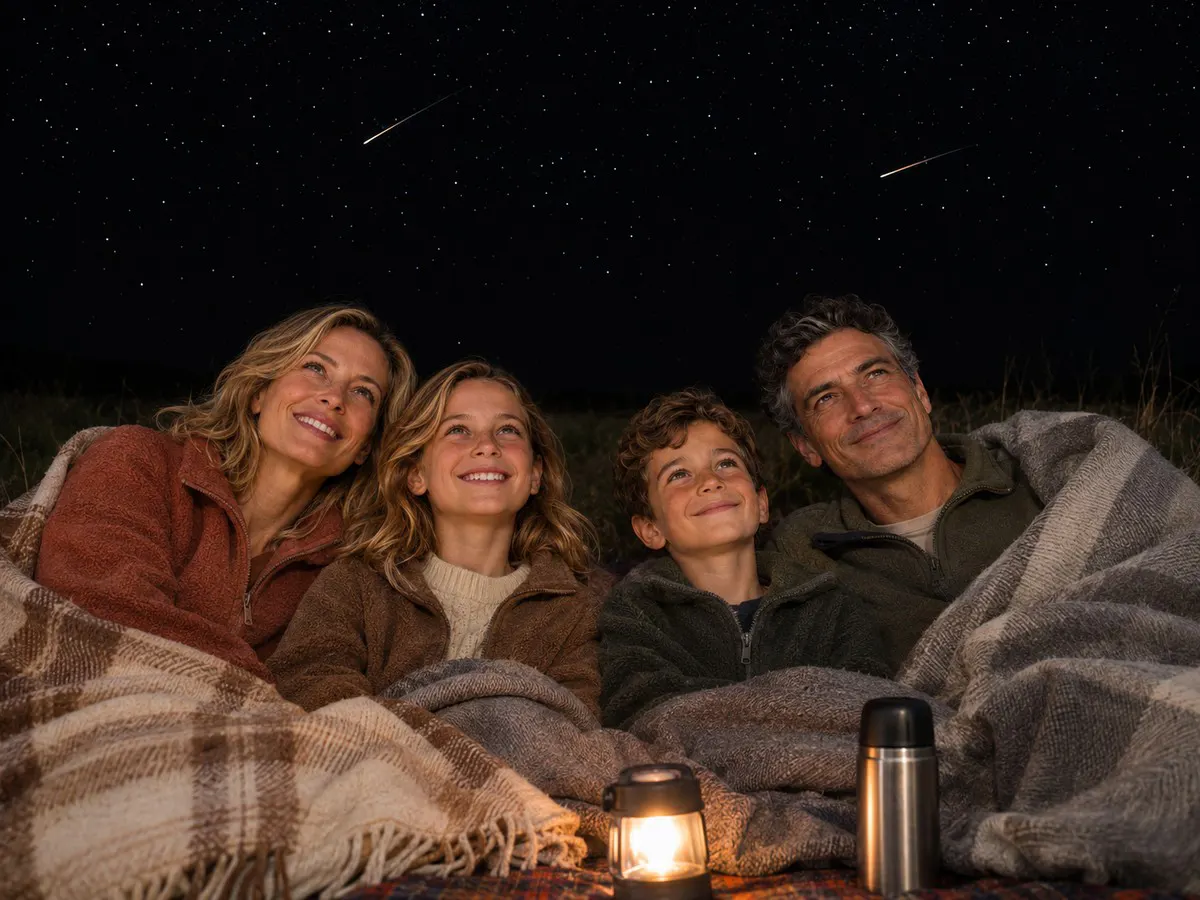
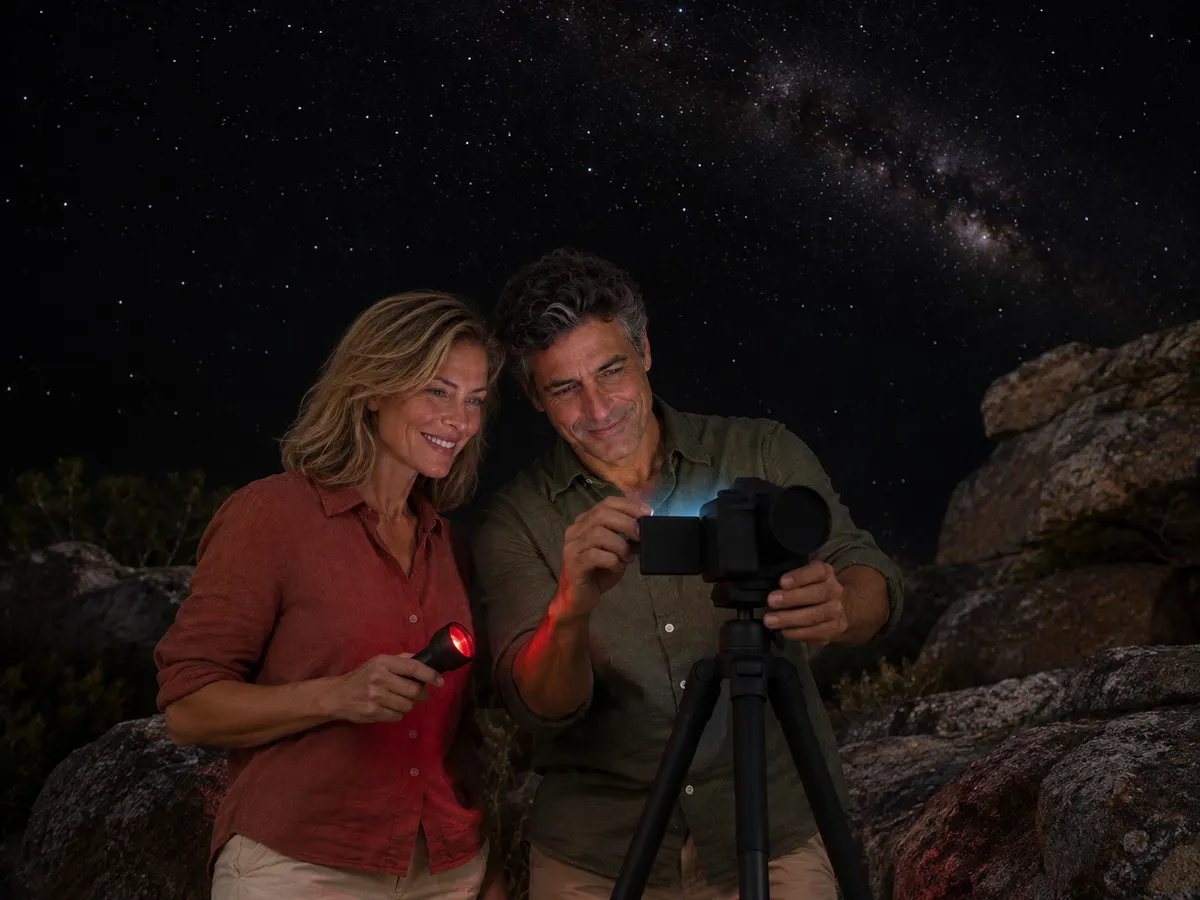
Illustrative images. The pictures in this guide are illustrations based on the real place, not photographs, and may differ from it.


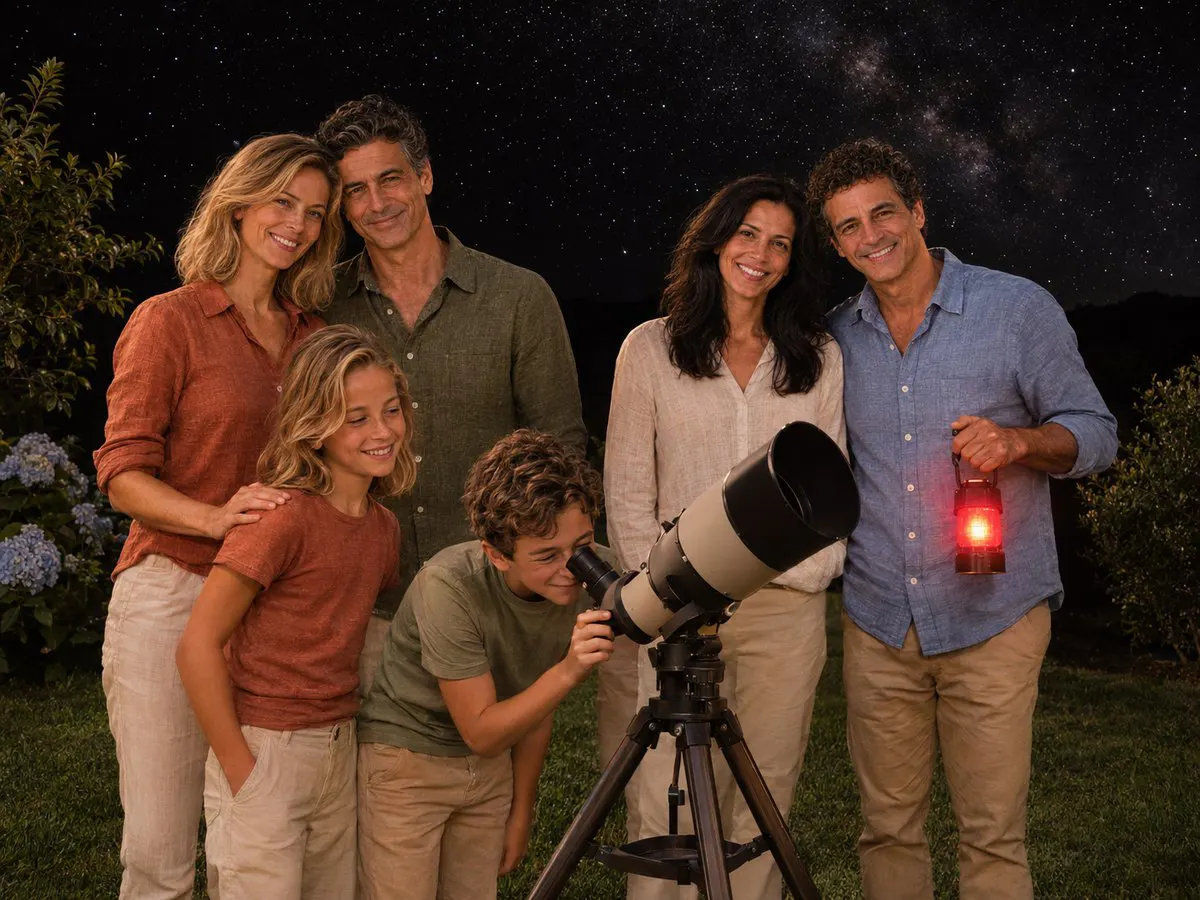
Astrotourism
Telescope sessions
Telescopes aimed at the Moon and planets, with constellation commentary.
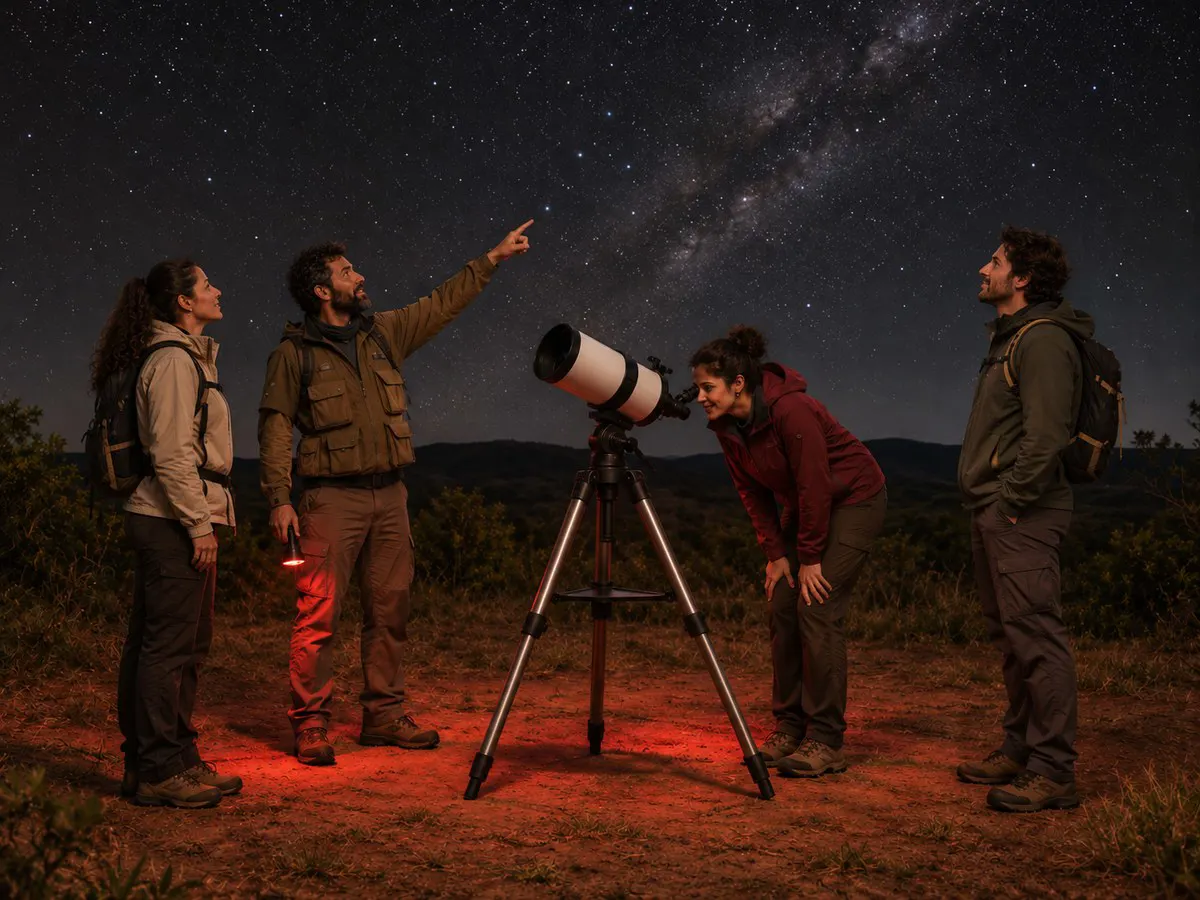
In a telescope session, a guide or astronomer sets up the instrument in a dark place, points at one object at a time and invites the group to look through the eyepiece. Between targets, they show constellations to the naked eye with a laser pointer and explain what you are seeing.
It's the easiest way to get started in astro-tourism: someone chooses the location, brings the equipment, and knows what will be visible that night.
How the session works
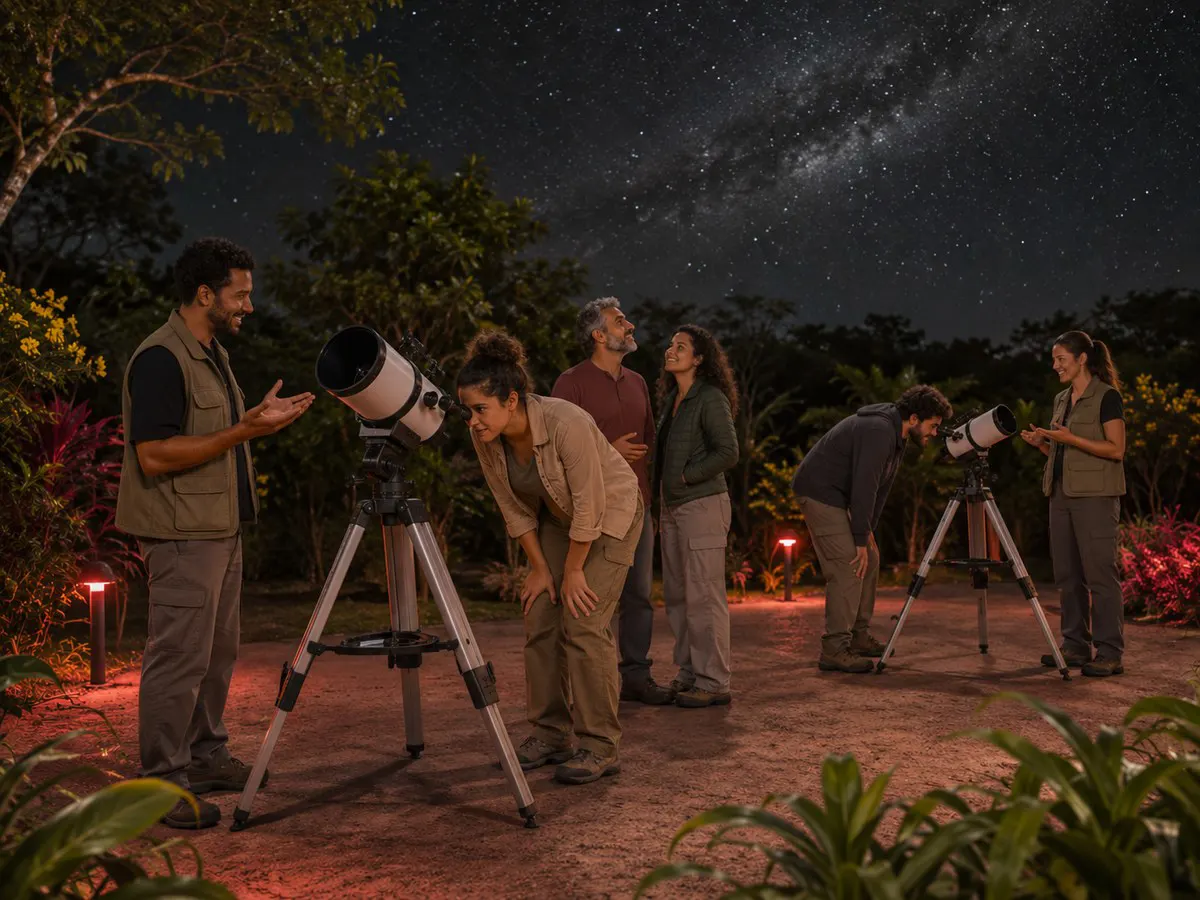
The session usually starts at early night and lasts one to two hours. It can take place in a pousada garden, on a viewpoint, at a farm or in an astronomy center with a dome. Groups are small, because only one person looks through the eyepiece at a time.
The guide begins with the whole sky: the cardinal points, the Southern Cross, the constellations of the season, the planets above the horizon. Then come the telescope targets, four, five or more, depending on the night. In many places, the explanation includes other peoples’ sky lore, such as indigenous constellations.
With cloudy skies there is no observation: the session is postponed or replaced by an indoor presentation, when the site has a planetarium or projection equipment.
What you see through a telescope
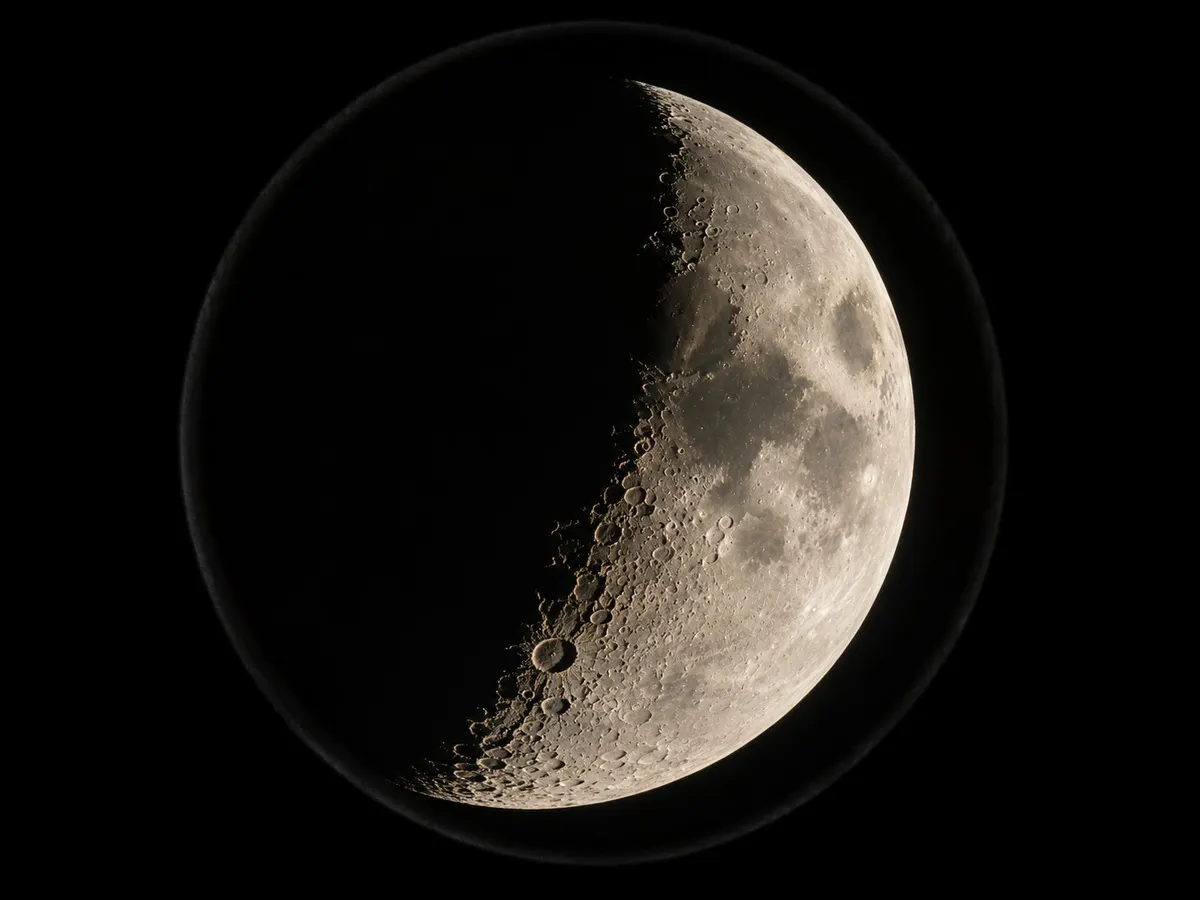
The Moon is the most impressive target the first time: craters, mountains and shadows stand out in relief, especially in the waxing and waning phases. At full Moon, front lighting flattens the relief.
Among the planets, Saturn shows its rings, and Jupiter shows cloud bands and four aligned moons, which change position from one night to the next. Venus appears in phases, like a small Moon. Mars is an orange disk. Each planet has its season of visibility, and there is not always one visible in the night sky.
Outside the Solar System, the telescope reveals star clusters, such as the Jewel Box near the Southern Cross and Omega Centauri; nebulae, like Orion’s Nebula in summer; double stars with different colors; and the Magellanic Clouds.
It is wise to set expectations. The colorful photos of nebulae and galaxies are made with long exposures. Live, these objects appear as delicate grayish smudges. What the eyepiece offers is to see with your own eyes, without a screen in between.
With Moon or without Moon
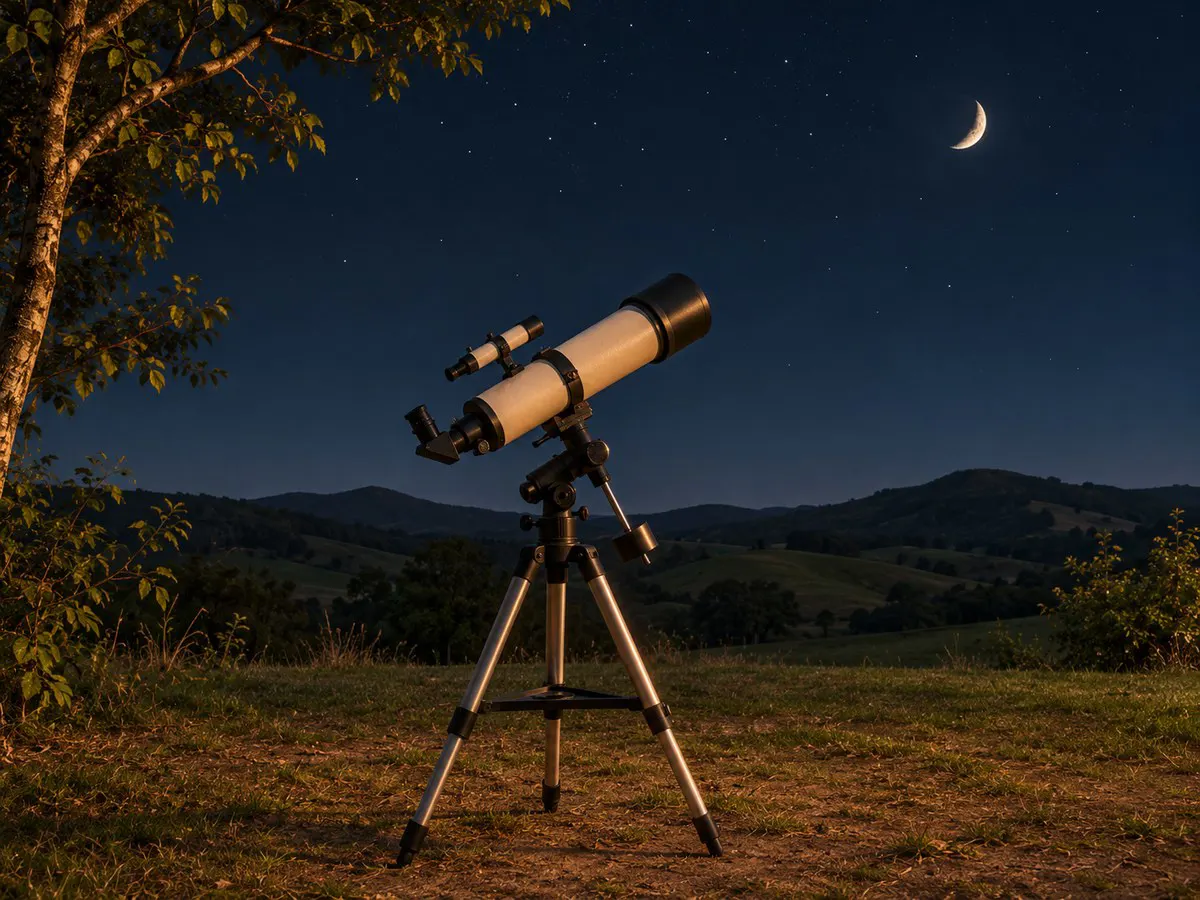
It depends on what you want to see. For the Moon and the planets, any clear night will do, and the week of the waxing Moon is preferred because it is high early in the night. For nebulae, clusters and galaxies, the night needs to be dark, around new Moon.
Many guides schedule sessions in both periods and change the list of targets. When you book, ask what will be visible on that date.
The dry season, from May to September in central and southeastern Brazil, concentrates clear nights. In summer, late-afternoon clouds cancel more sessions.
Who can participate
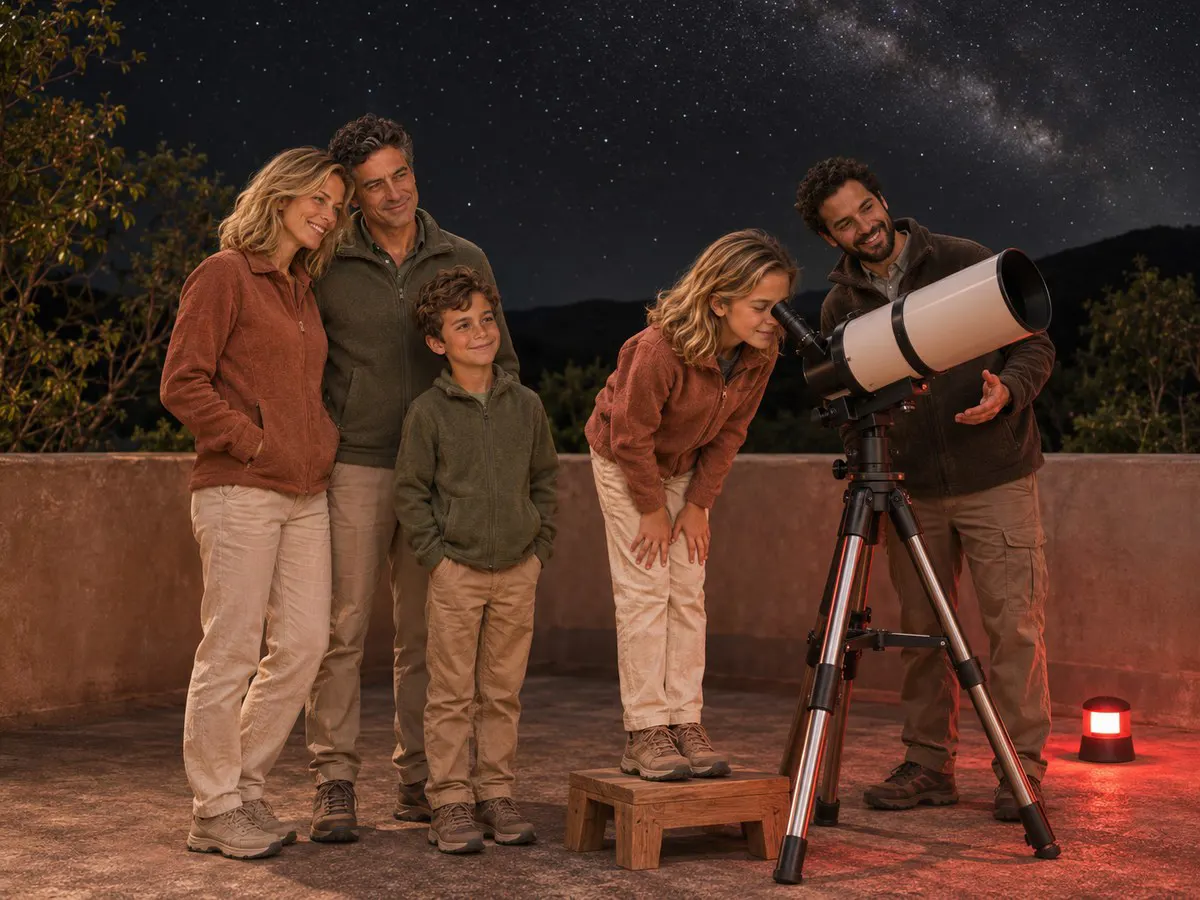
Anyone. There is no physical effort, and early-evening sessions work well for school-age children. For younger children, a small stool solves the eyepiece height. People who wear glasses can usually look without them, because the focus can be adjusted.
Bring warm clothing, even in a warm region, insect repellent and closed shoes. Avoid turning on your phone flashlight near the group. Do not touch or lean on the telescope: a bump will knock the object out of the field of view.
Where to join in Brazil
In Foz do Iguaçu, Iguaçu National Park offers a night session with astronomy explanations and the Moon in the telescope. In Brotas, inland São Paulo, an astronomy center hosts the public with telescopes and a digital planetarium. Amparo, also in São Paulo, has an astronomy hub with visitor observing.
In dark-sky destinations, such as Serra da Canastra, guided observation is offered by local guides and some lodgings. In several cities, planetariums and university observatories open telescopes to the public on scheduled nights. The cities are shown on this page’s map.
How to choose a session
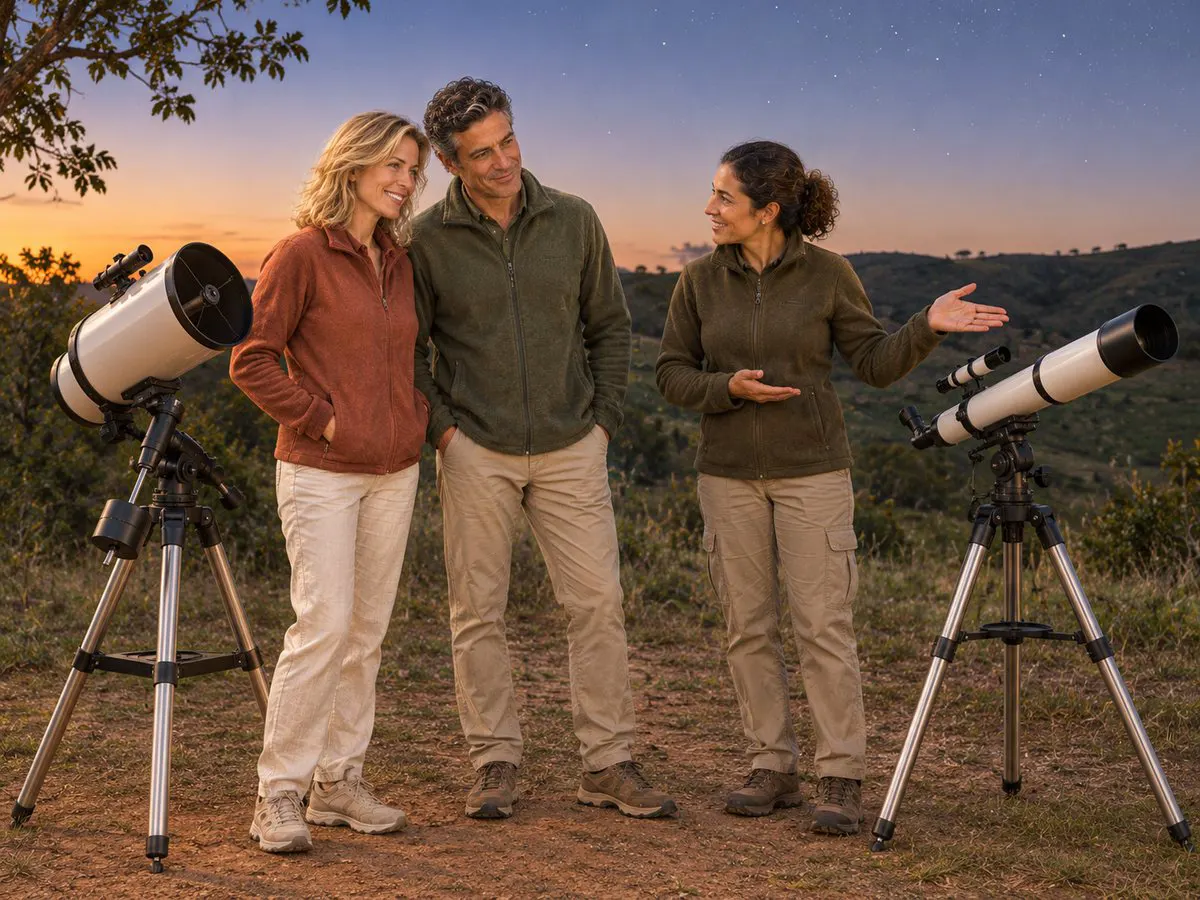
Ask who leads it and their experience in astronomy; how many people per telescope; how many telescopes; how long it lasts; and what happens if the sky clouds over. A large group with only one instrument spends most of the time waiting in line.
Also ask where it takes place: a session in the village center will show the Moon and the planets, but not the deep sky. Travel agencies and tour guides selling the session need registration in Cadastur, the Ministry of Tourism’s registry.
The price varies with duration, group size, transport to the site and the option of a private session: check the current table.
Frequently asked questions
What is a telescope observing session?
It is a night activity in which a guide or astronomer aims the telescope at the Moon, planets and other objects and the group takes turns at the eyepiece. It usually includes identifying constellations with the naked eye.
What can you see in a telescope?
Moon craters, Saturn’s rings, Jupiter’s moons and cloud bands, Venus phases, star clusters and nebulae. What is on the program depends on the date and the Moon phase.
Can you see Saturn’s rings?
Yes, in seasons when Saturn is in the night sky. Even small telescopes show the rings. Ask when booking whether the planet will be visible on that date.
What lunar phase is best for observing?
To see the Moon itself, the crescent (waxing or waning), when shadows highlight the craters. For nebulae, clusters and galaxies, nights around new Moon, which are darker.
Can children participate?
Yes. Early-evening sessions with the Moon and planets usually please school-age children. Bring warm clothing and arrange with the guide for a small stool to reach the eyepiece.
What happens if the sky is cloudy?
There is no observation. Depending on the venue, the session is rescheduled or replaced by a planetarium or indoor presentation. Agree this when booking.
Is it worth buying a telescope?
Before buying, it’s worth attending one or two sessions and trying a common binocular, which already shows Jupiter’s moons and details on the Moon. That helps you discover which kind of observing interests you.
Where to go: Telescope sessions
Pick a region or a state on the map, or type what you are looking for, to see the cities and who offers it in each.
-
Brotas SP
Sessões abertas ao público com telescópios e planetário digital.
-
Foz do Iguaçu PR
Sessão noturna no Parque Nacional do Iguaçu, com explicações de astronomia e a Lua no telescópio.
More activities in Astrotourism
Beyond the guide


