Mateiros
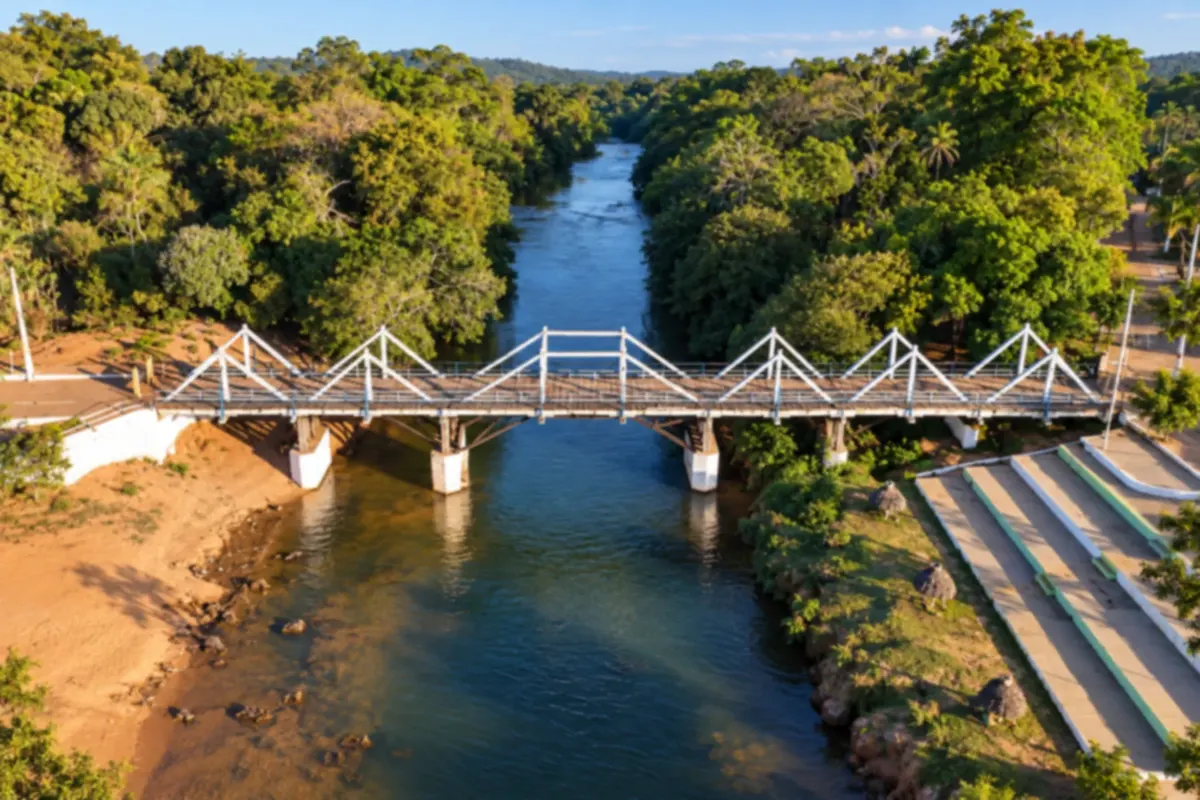
Mateiros brings together dunes, veredas (palm-lined wetlands) and springs in the heart of Jalapão. The Serra do Espírito Santo and the golden grass crafts of the local communities reveal the town's natural and cultural diversity.
Antarctica
TO · Brazil
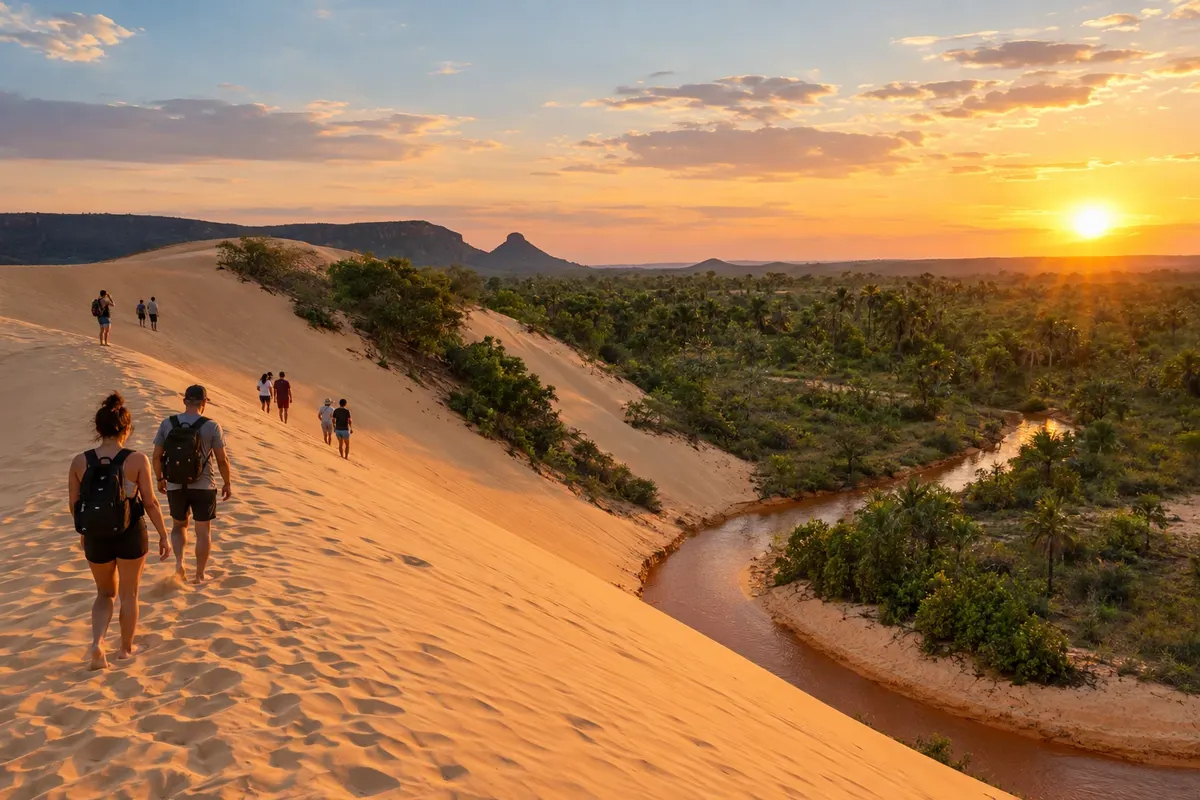
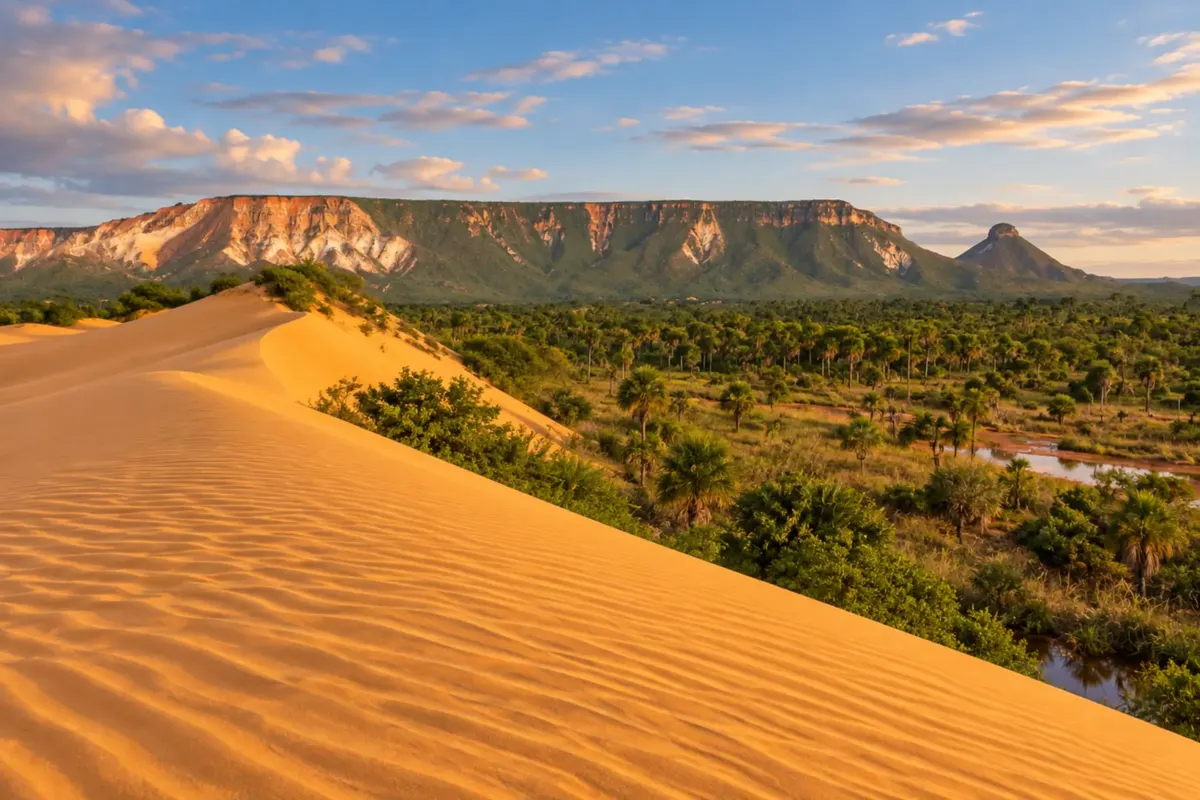
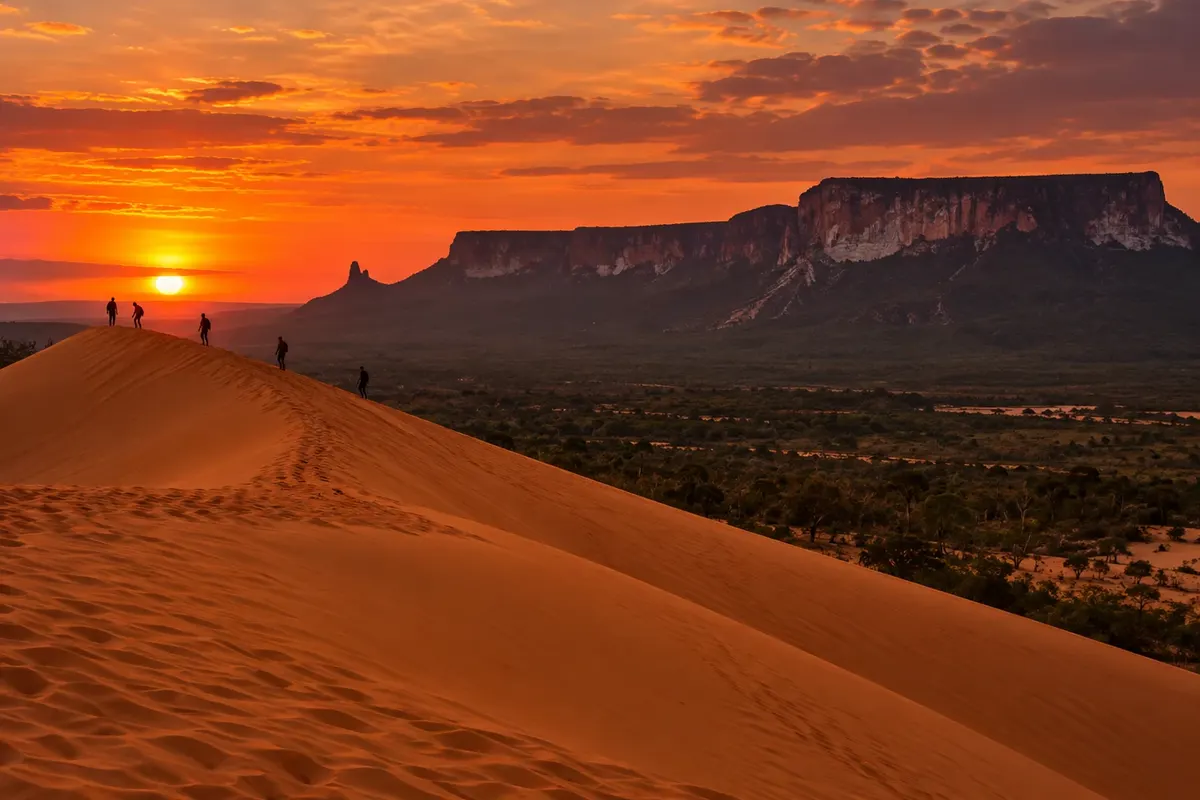
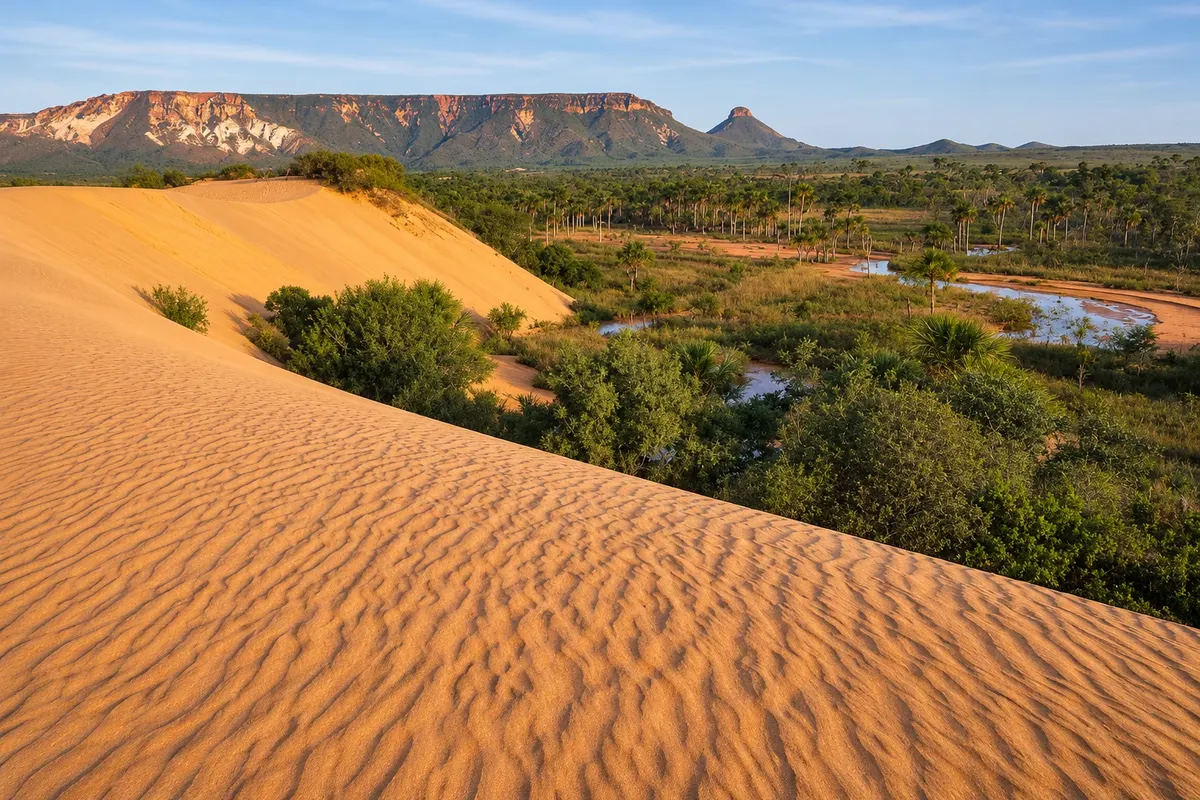
In the photo: Dunes of Jalapão
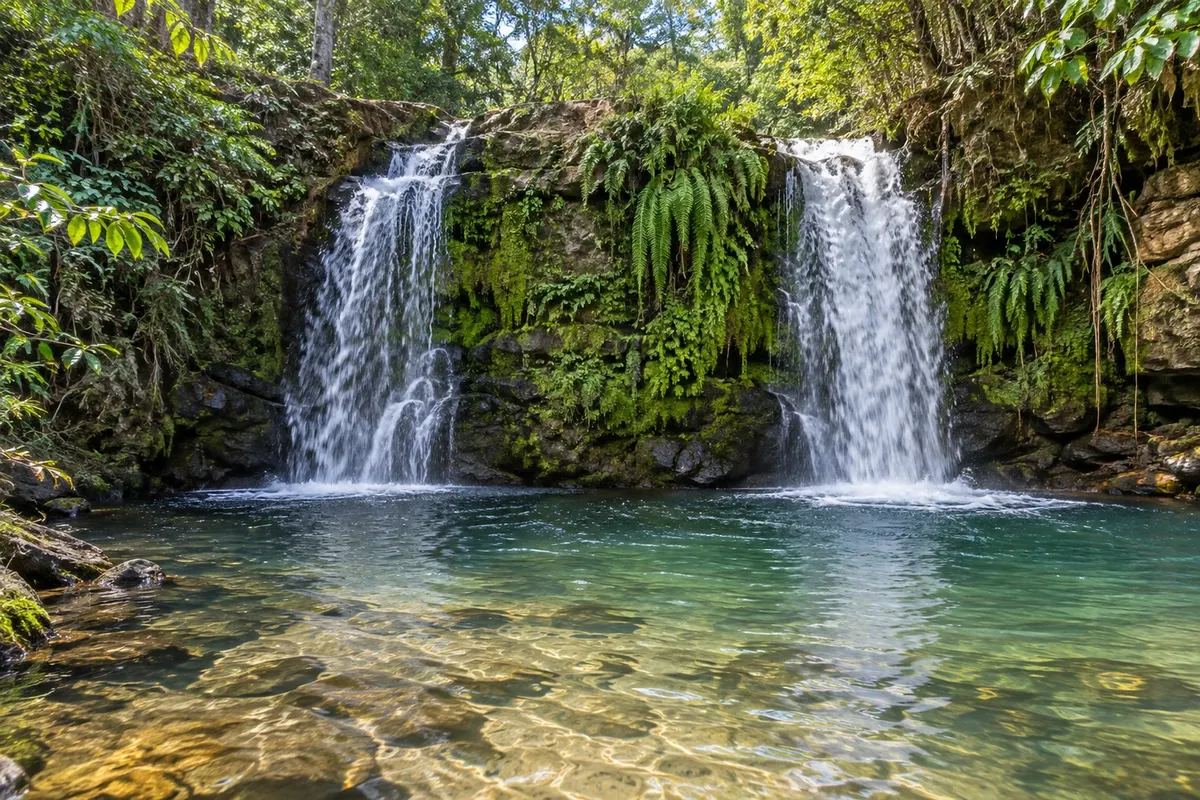
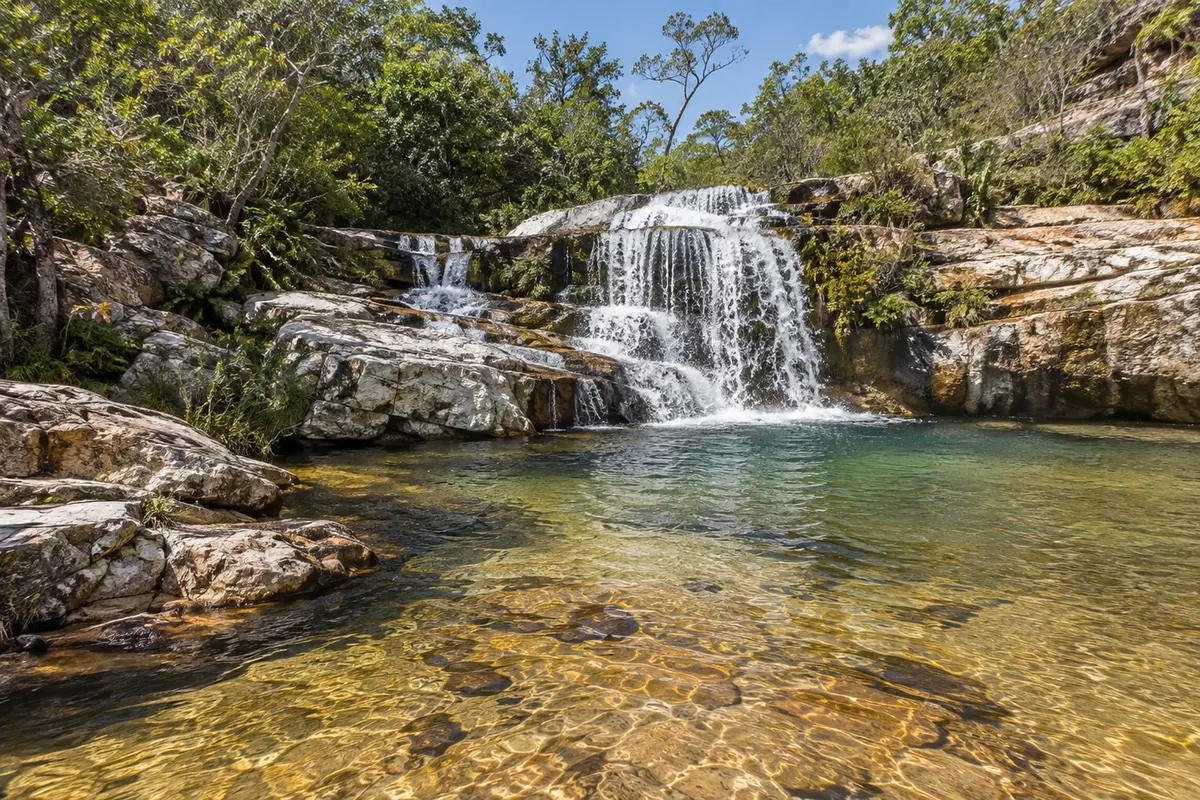
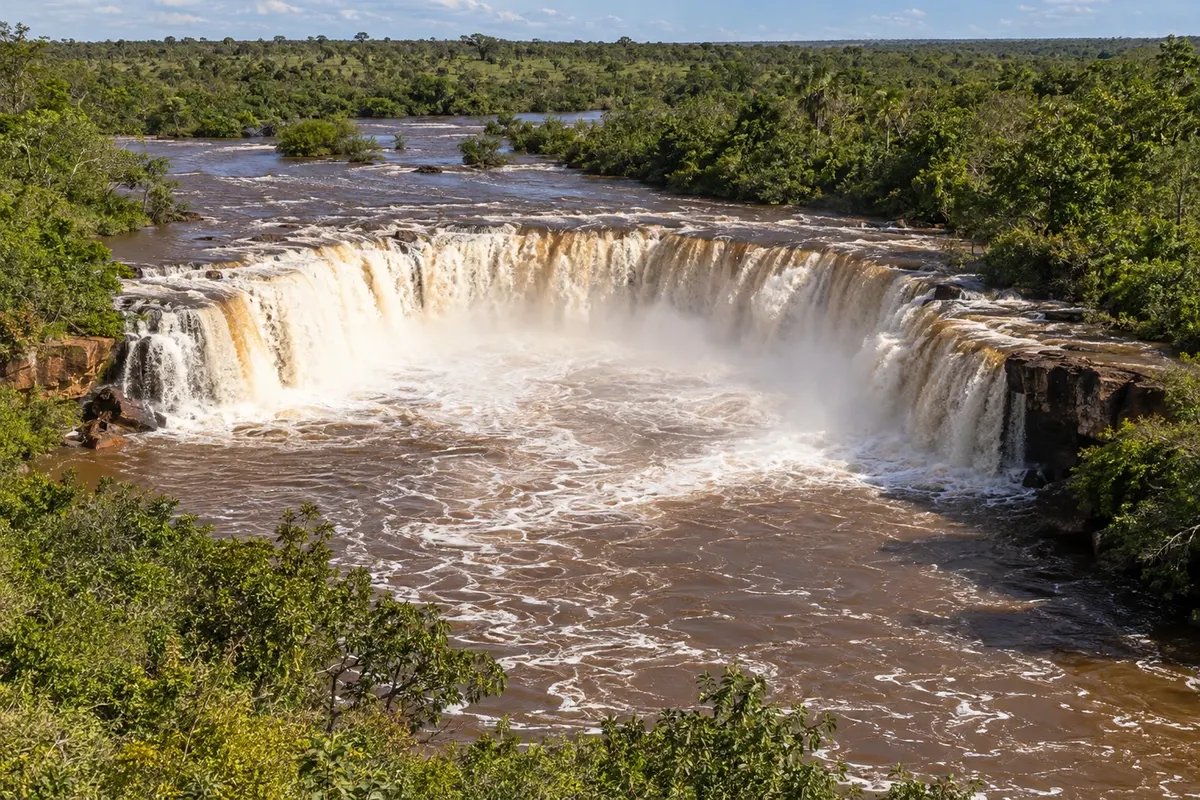
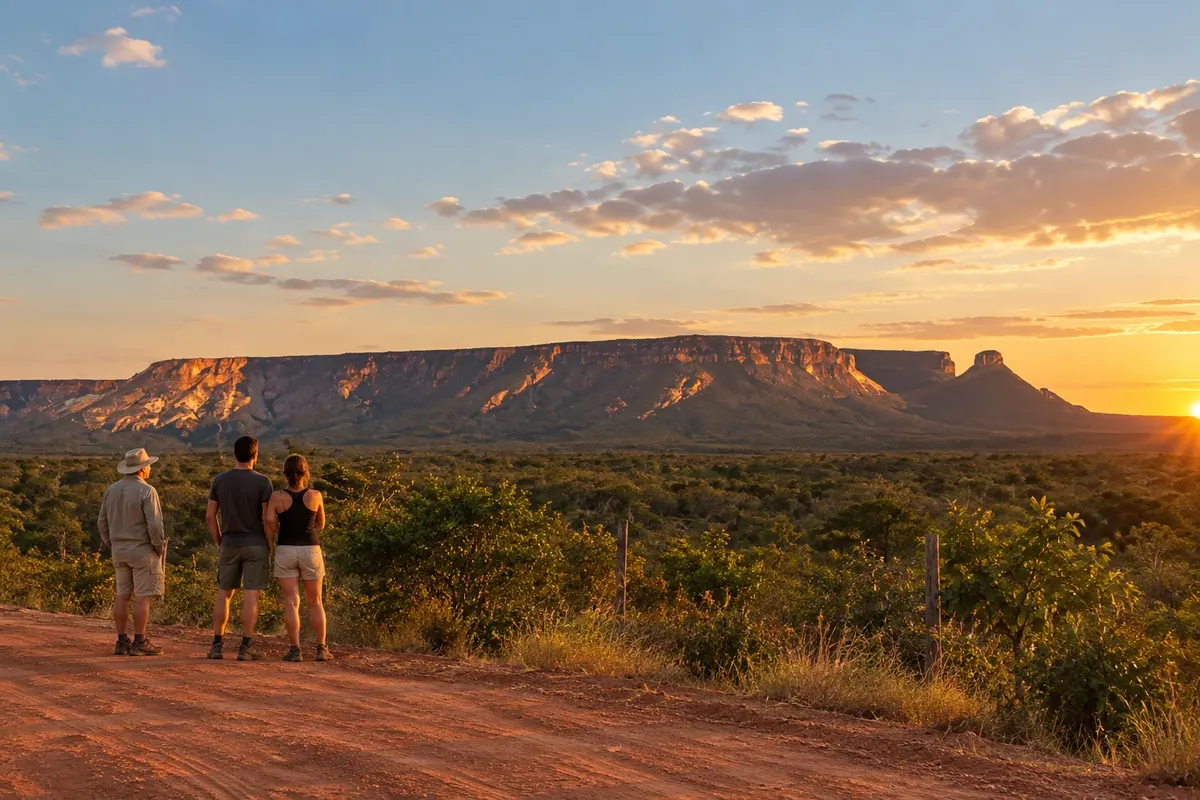
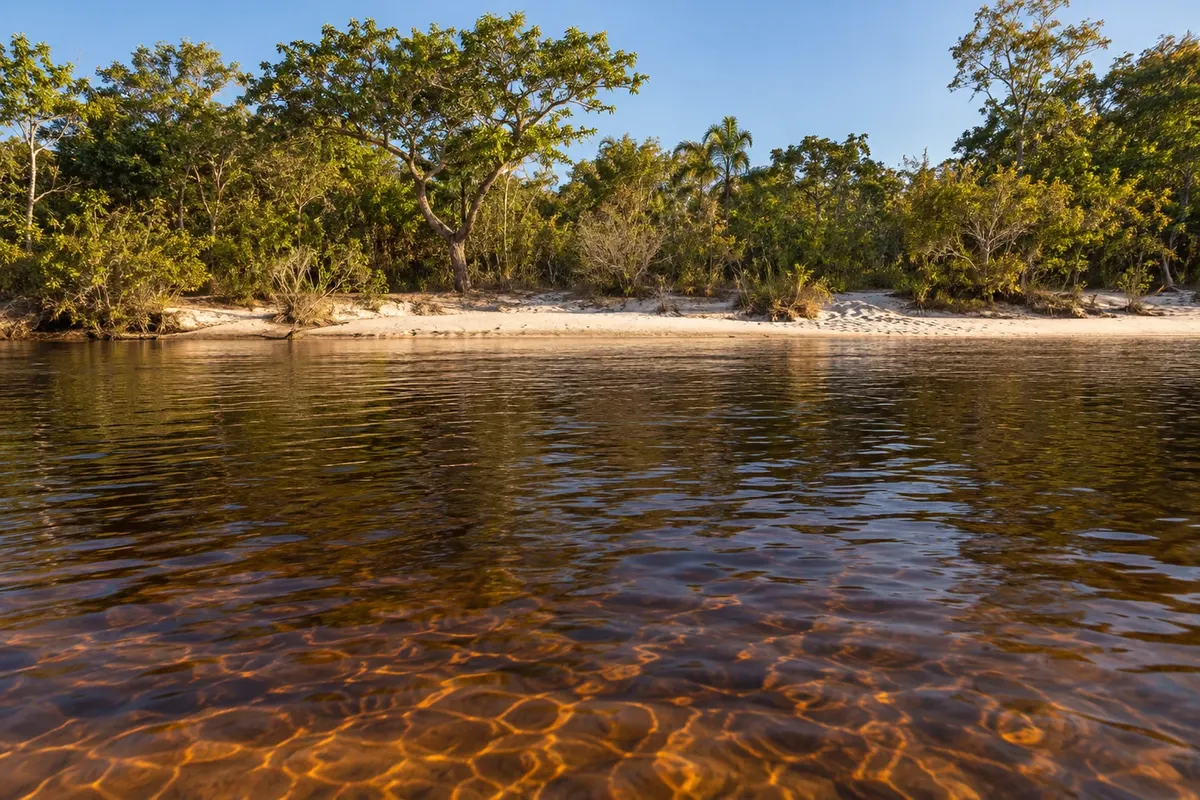
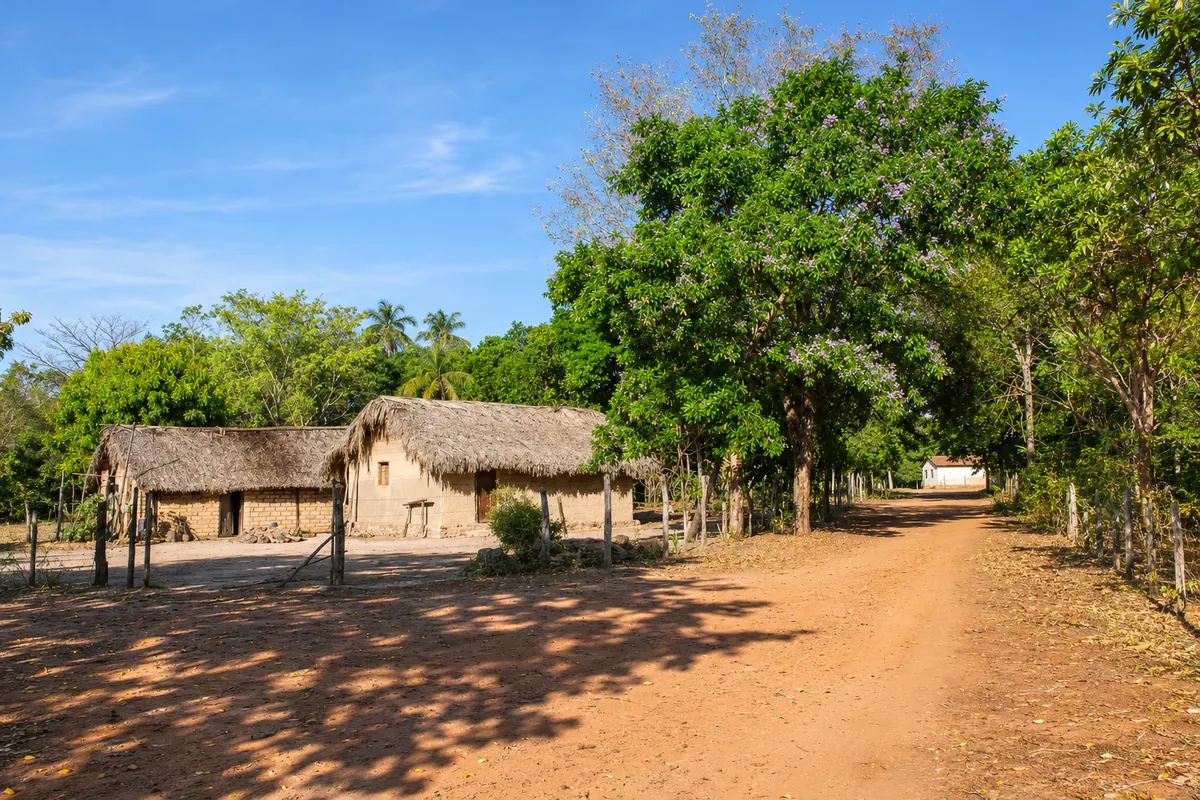
Illustrative images. The pictures in this guide are illustrations based on the real place, not photographs, and may differ from it.
Get to know the place
Jalapão is the Brazilian desert no one expects to find: orange dunes in the middle of the cerrado (Brazilian savanna), rivers of crystal-clear water and springs where it is impossible to sink. Here you travel by 4x4, on sand roads, with starry nights and a waterfall swim at the end of every afternoon. It is the most sought-after adventure destination in Tocantins, and each day brings a landscape different from the one before.
This destination brings together 4 cities: Mateiros, Ponte Alta do Tocantins, São Félix do Tocantins, Novo Acordo.
A look at the place
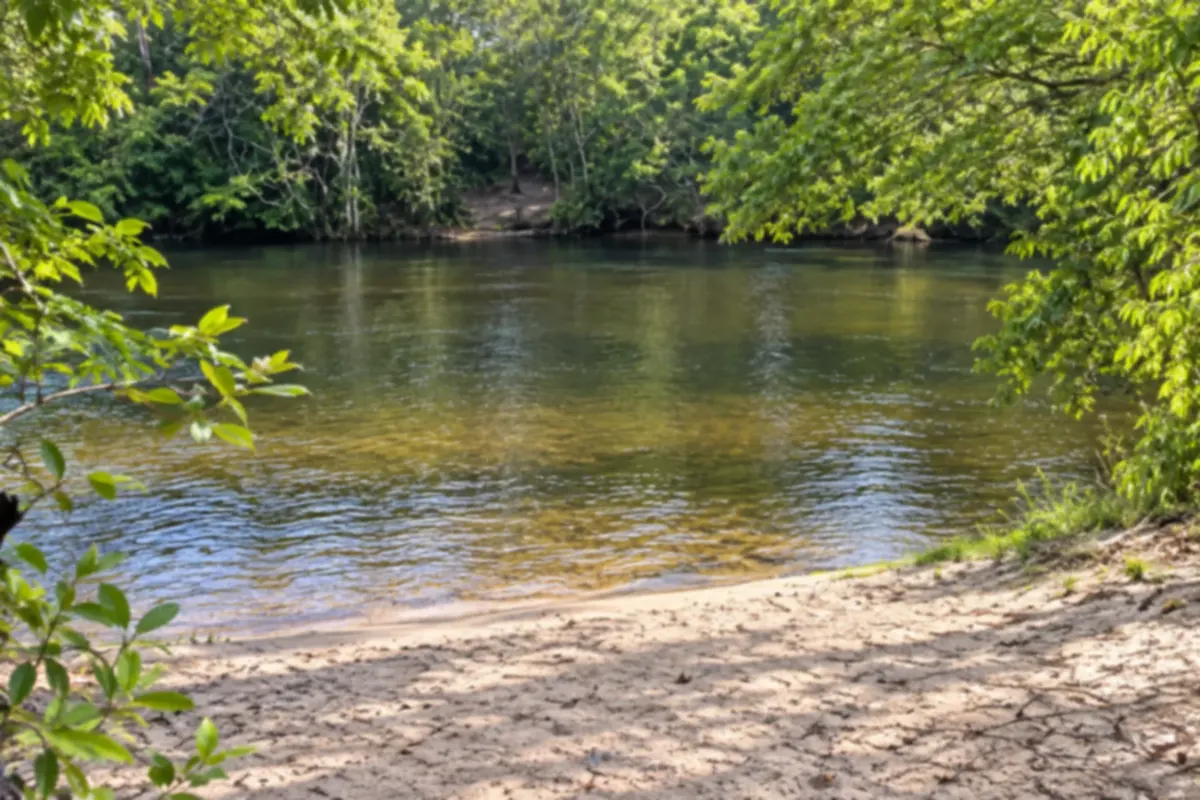
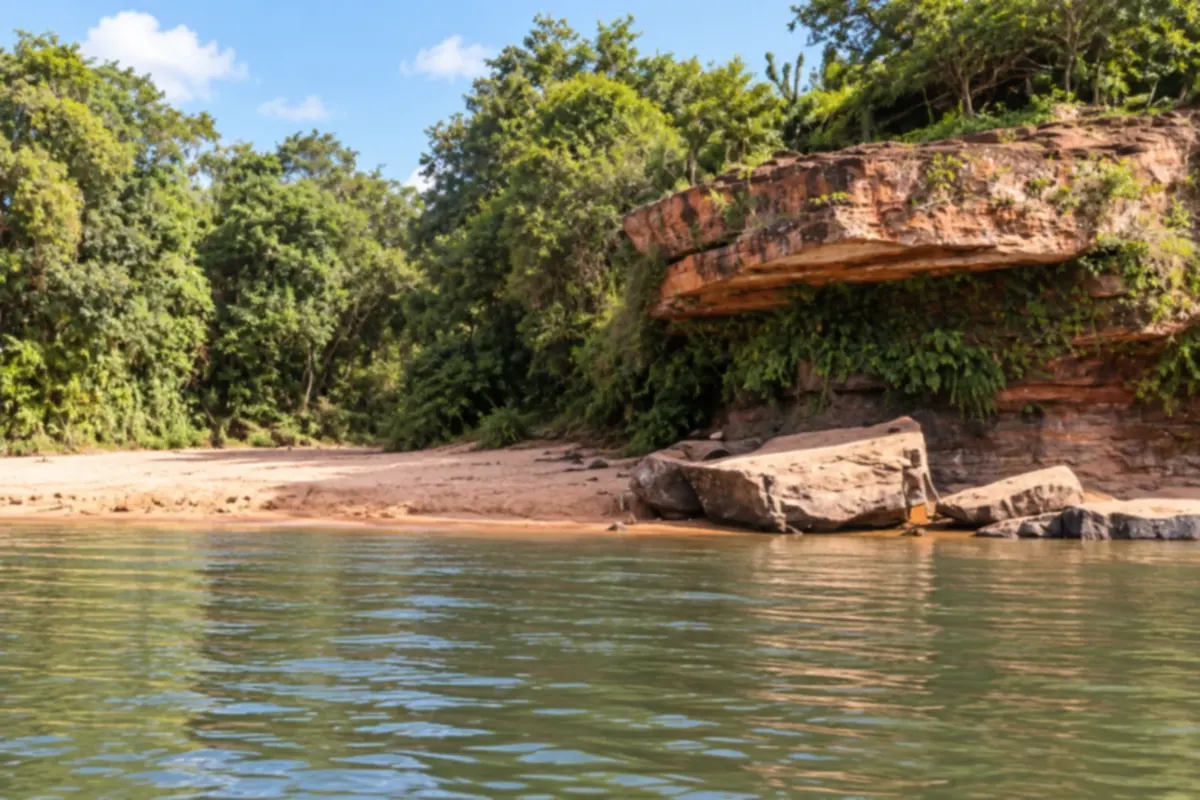
These pictures are illustrations based on the real place, not photographs. They may differ from the place.
Click the picture to enlarge it.
Travelers' photos
One destination, many paths
Start with one city or combine several in your itinerary.
Map: @svg-maps/brazil, CC BY 4.0
Fly to Palmas Airport (PMW), then drive about 6 to 8 hours by 4x4 on the TO-030 and TO-255 to Mateiros.
Mateiros brings together dunes, veredas (palm-lined wetlands) and springs in the heart of Jalapão. The Serra do Espírito Santo and the golden grass crafts of the local communities reveal the town's natural and cultural diversity.
Ponte Alta do Tocantins is one of the gateways to Jalapão, among rivers and cerrado landscapes. The riverfront of the river that gives the town its name and the surrounding rock formations are part of its identity.
São Félix do Tocantins brings together rivers, freshwater beaches and fervedouros (spring pools where you float) in the Jalapão region. The banks of the Rio Sono and the local communities bring visitors close to the landscapes and culture of the cerrado.
Novo Acordo lies on the routes into Jalapão and has freshwater beaches along the Rio Sono. Praia do Borges and the rock formations surrounded by cerrado show the variety of the local landscapes.
The local experience
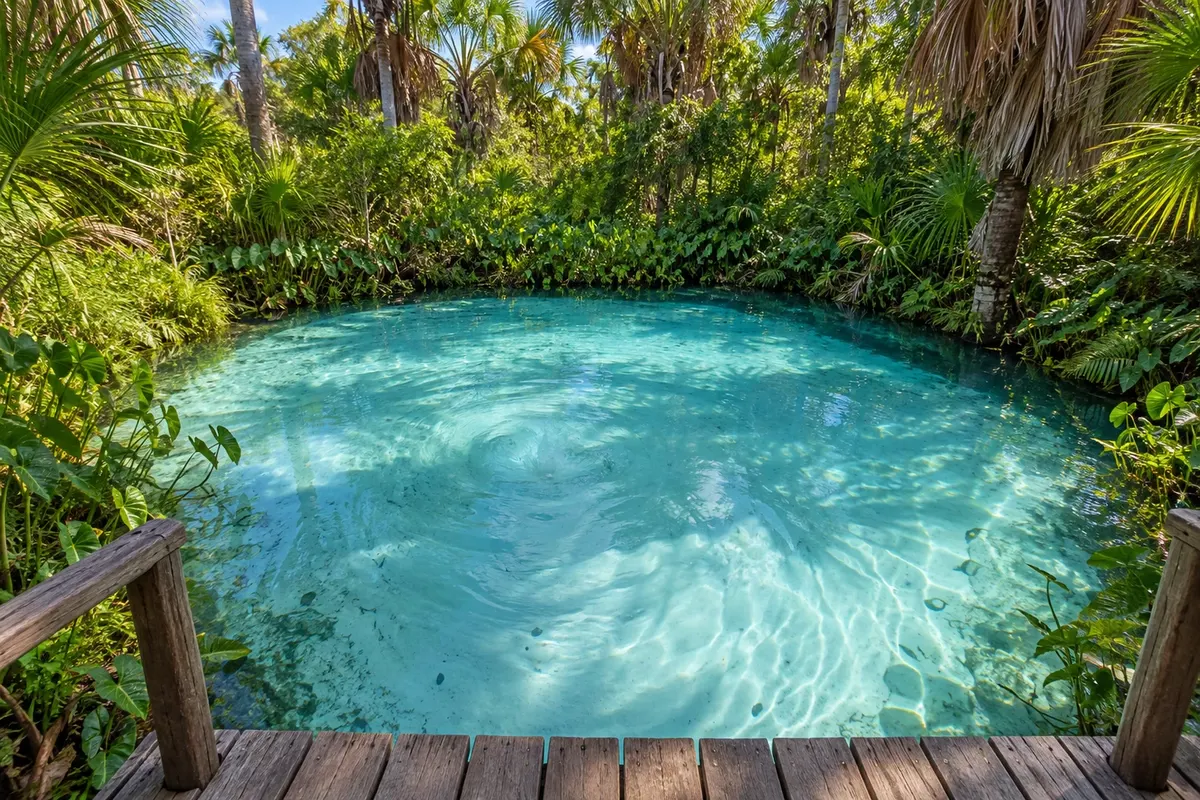
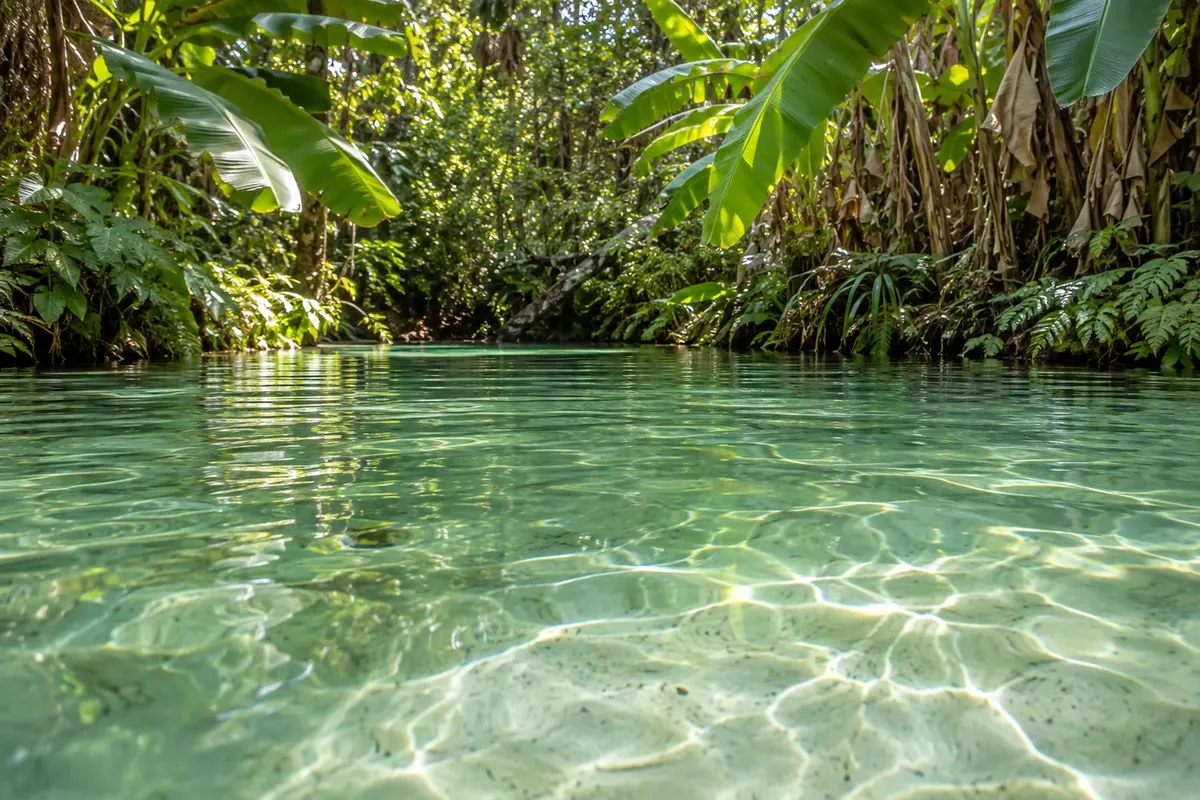
A spring of clear blue water where the pressure of the water rising from the bottom keeps swimmers from sinking, about 2 km from town. The pool is about 15 meters across, and an observation deck offers a 360-degree view.
Discover Fervedouro Bela Vista
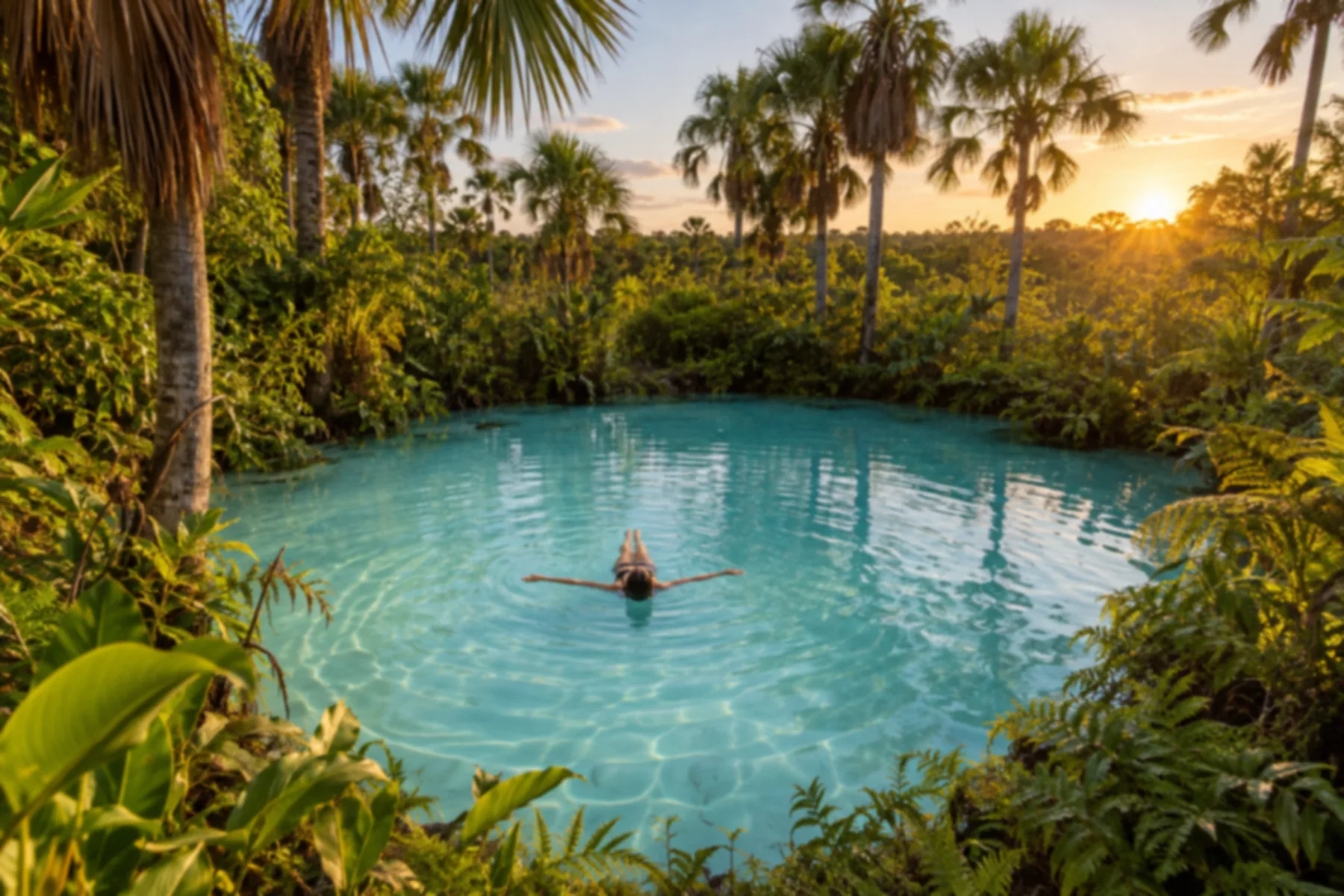
A sandy spring with a jet of water so strong that it pushes your body up and keeps you from sinking. Surrounded by buriti palms, it is the most fun postcard spot in Jalapão.
A river beach set up by the town each summer season, during the dry period, with visitor facilities, concerts and sports competitions. The opening of the season usually draws large crowds of locals and visitors.
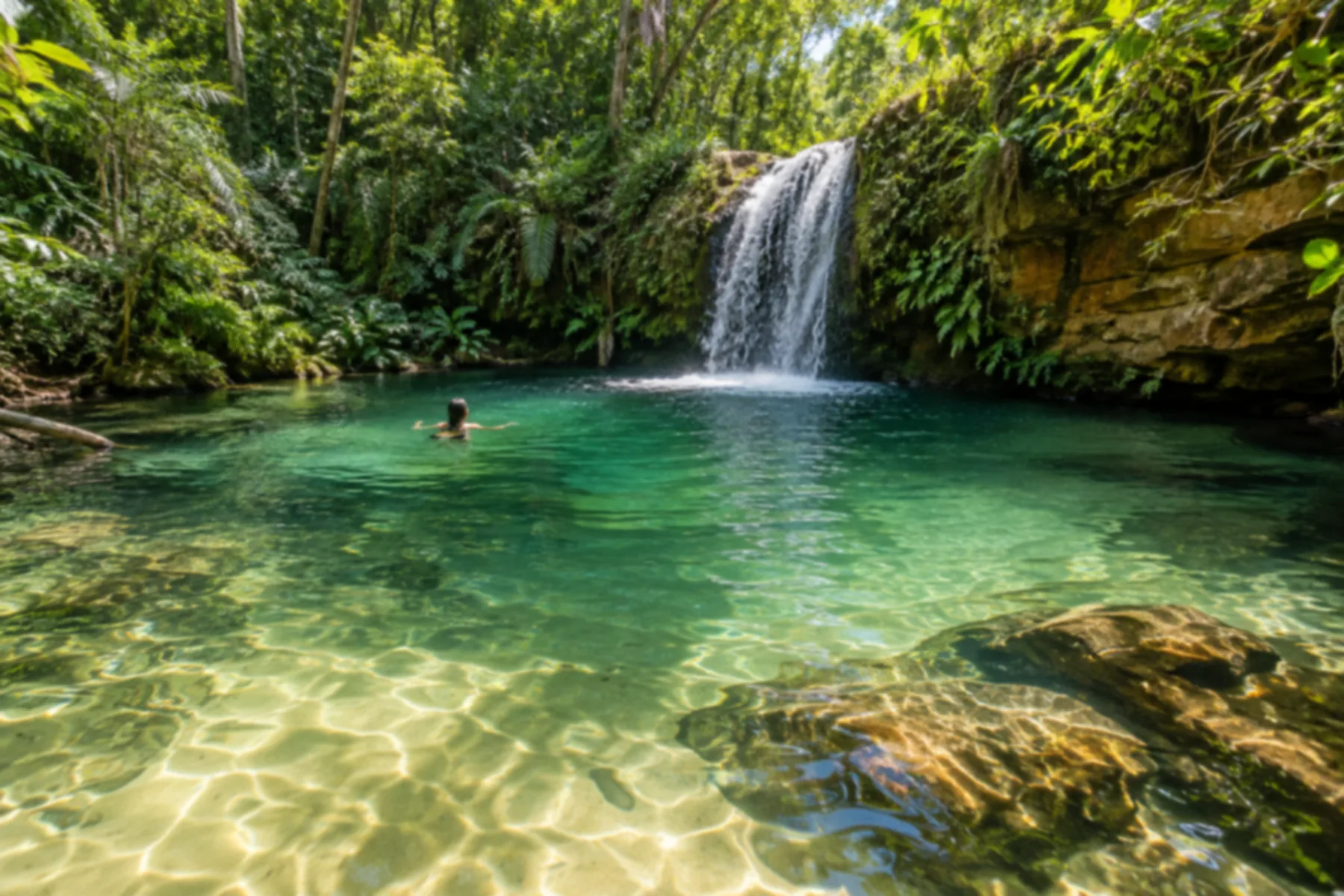
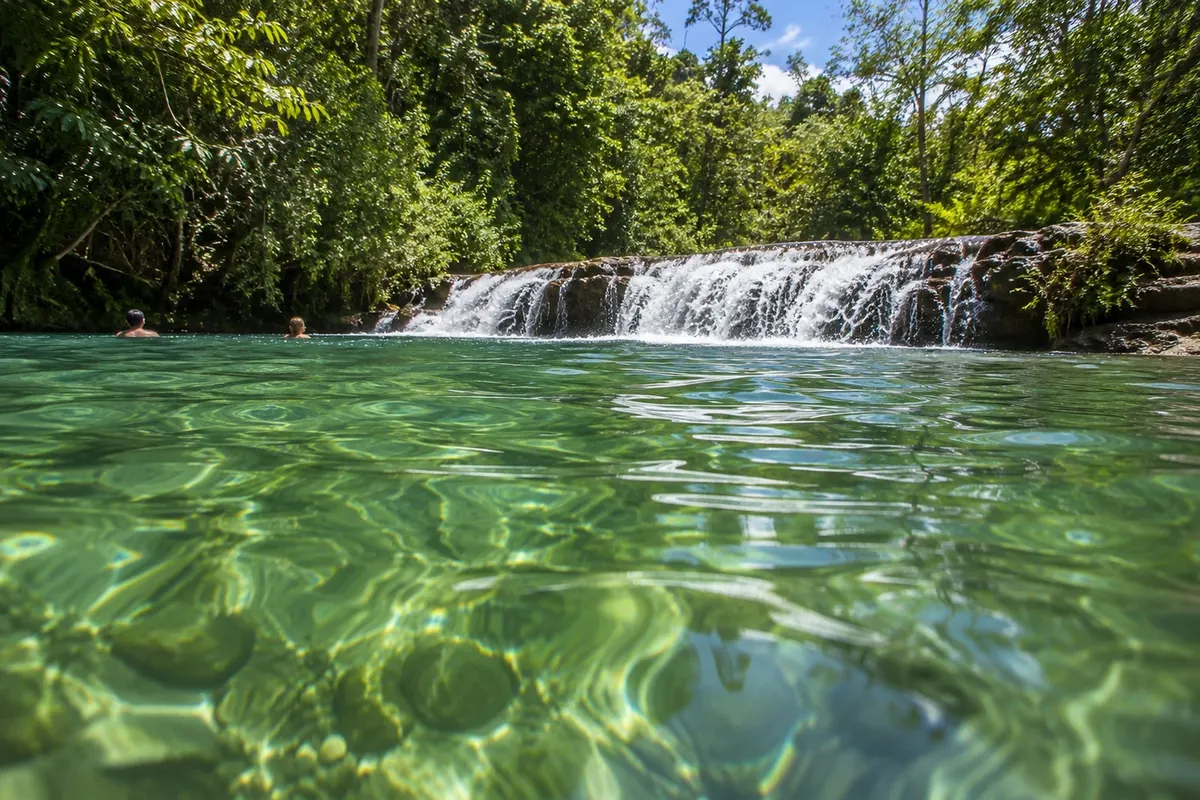
A low waterfall that empties into a natural pool of an almost unreal emerald green. It is one of the most popular attractions in Jalapão.
A sandstone formation about 180 meters tall, whose face looks like the front of a cathedral and can be seen from the TO-030 highway. The climb to the top, on a trail with stairs, is allowed only with a licensed guide.
A drop of about 5 meters where the stream splits before the edge and forms two cascades, about 22 km from town on the TO-030. The rock face is covered in ferns and moss, and the spot is also the end point for rafting on the Rio Sono.
Formed by the Rio Lajeado, it is about 36 km from town, in the area leading into Jalapão. The falls run down between rocks and form natural pools used for swimming, surrounded by cerrado vegetation.
A wind-formed mountain of orange sand up to 40 meters tall at the foot of the Serra do Espírito Santo. It is where everyone waits for the sunset in Jalapão.
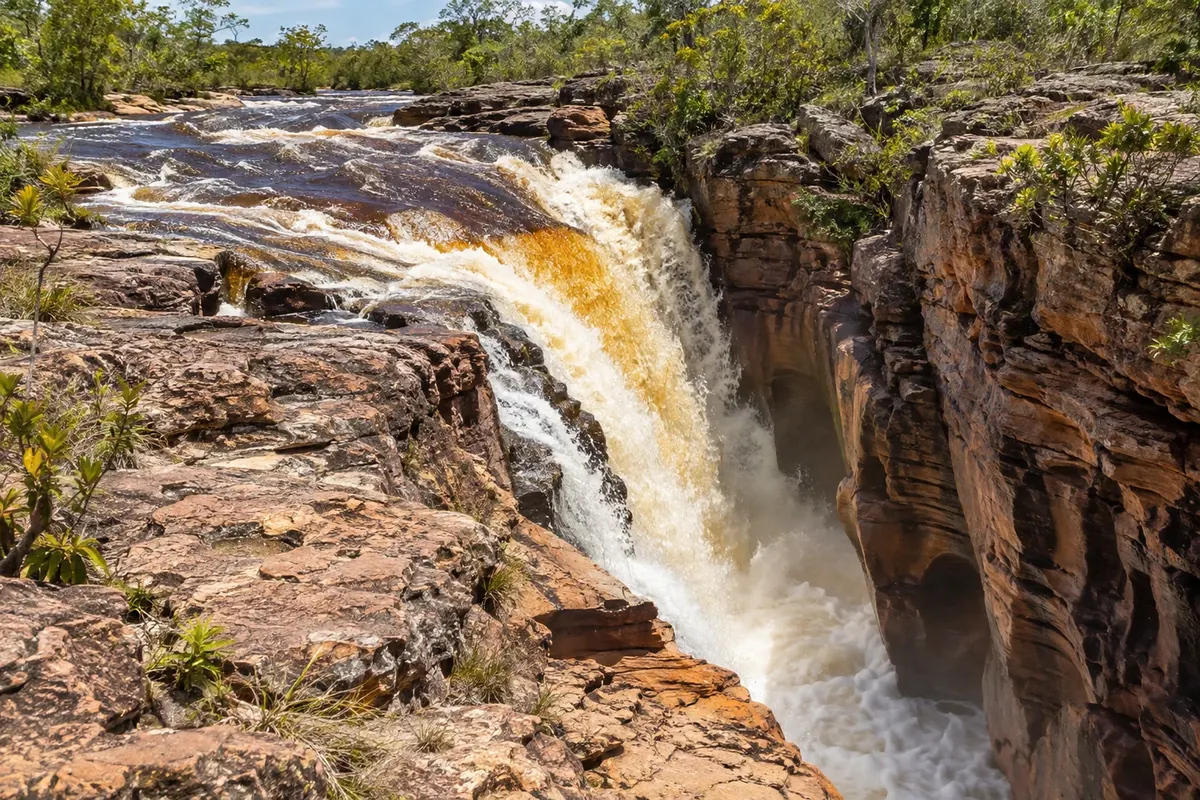
The largest waterfall in the region, about 100 meters wide and horseshoe-shaped, on the Rio Novo. You can hear the roar of the falls well before you reach the viewpoint.
On the Rio Soninho, it has a powerful main fall, whose water disappears into cracks carved in the rock, and a smaller fall upriver. On the upper part there is a shallow rock slab and natural whirlpools for swimming, with car access almost to the riverbank.
Discover Cachoeira do Rio Soninho
It is about 2 km from town and has greenish water, with a size and buoyancy similar to Bela Vista. As at the other fervedouros in Jalapão, the water rising from the bottom holds your body up and keeps you from sinking.
Discover Fervedouro do Alecrim
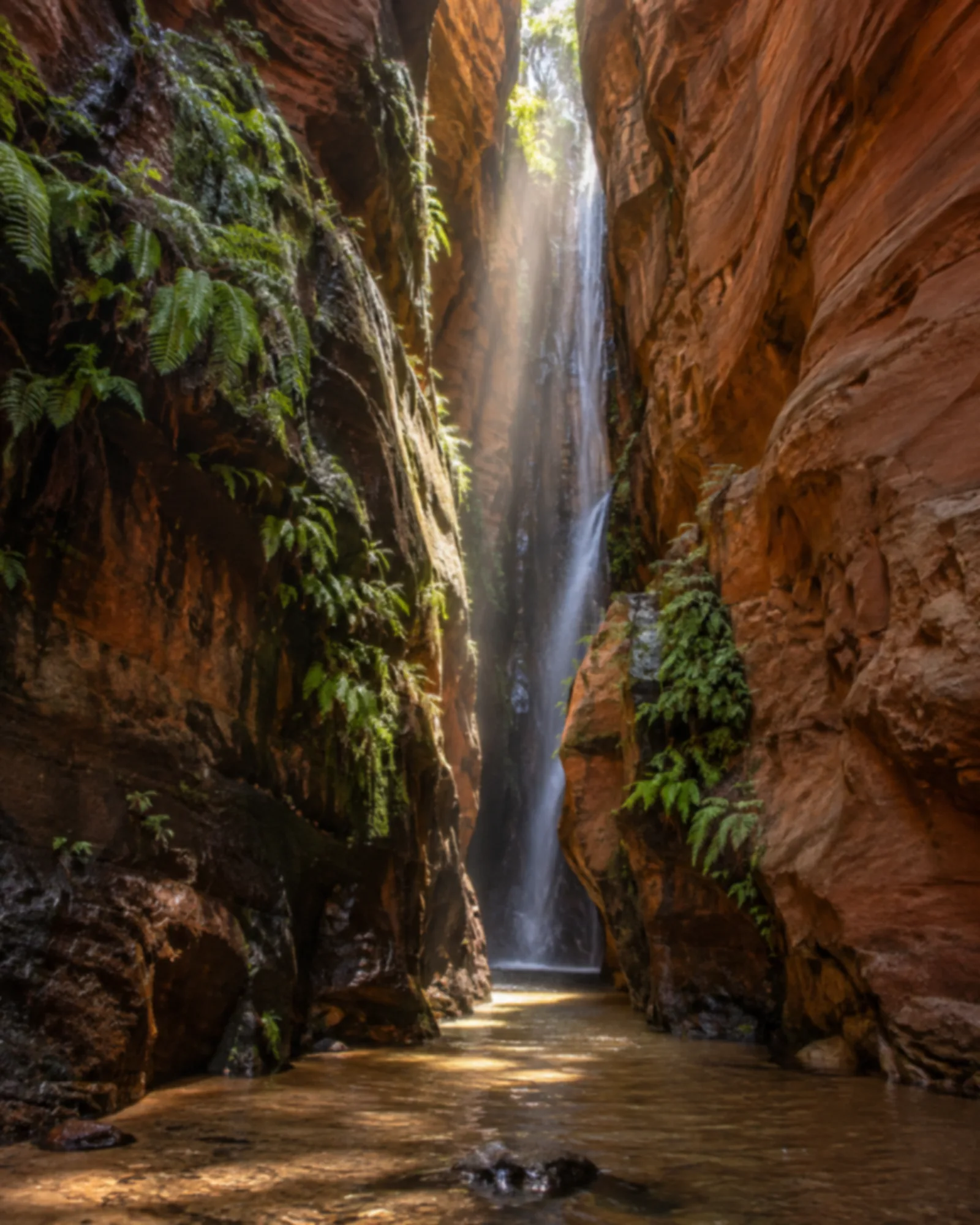
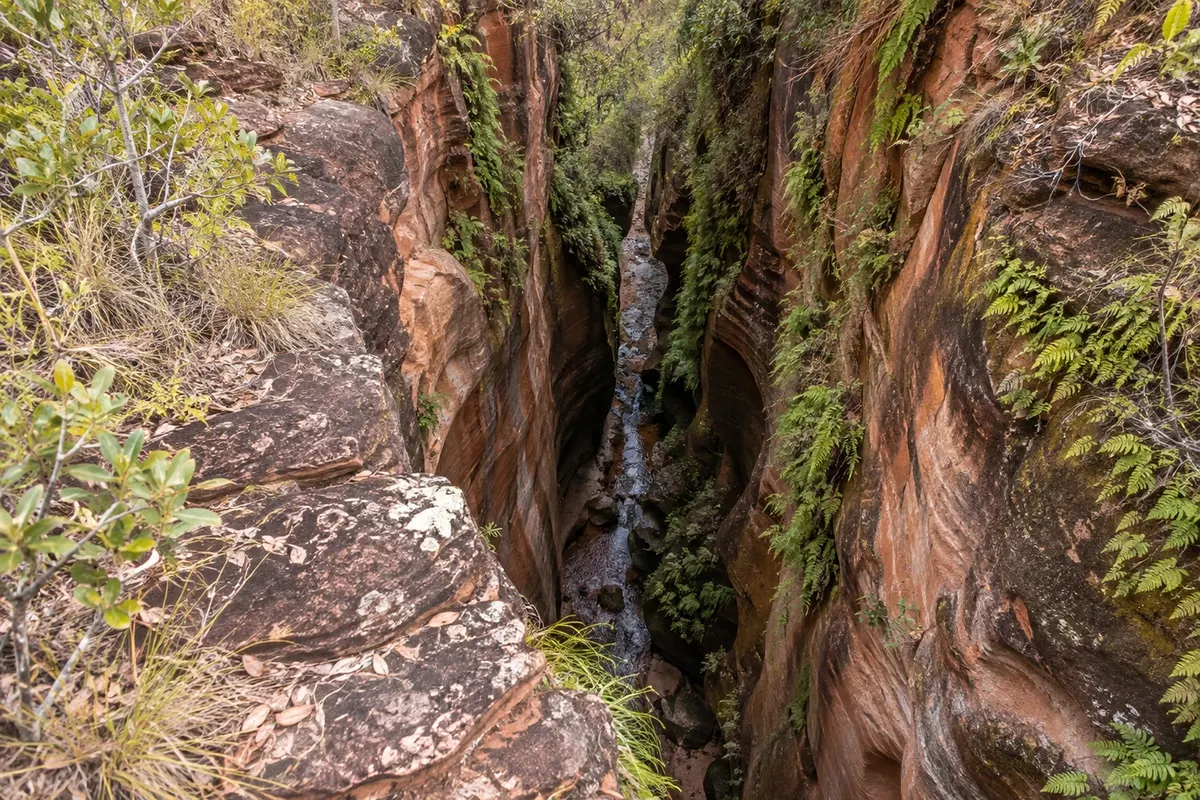
A narrow gap between sandstone walls where a trickle of water falls from above among ferns. The light coming through the opening creates a beam effect inside the rock corridor.
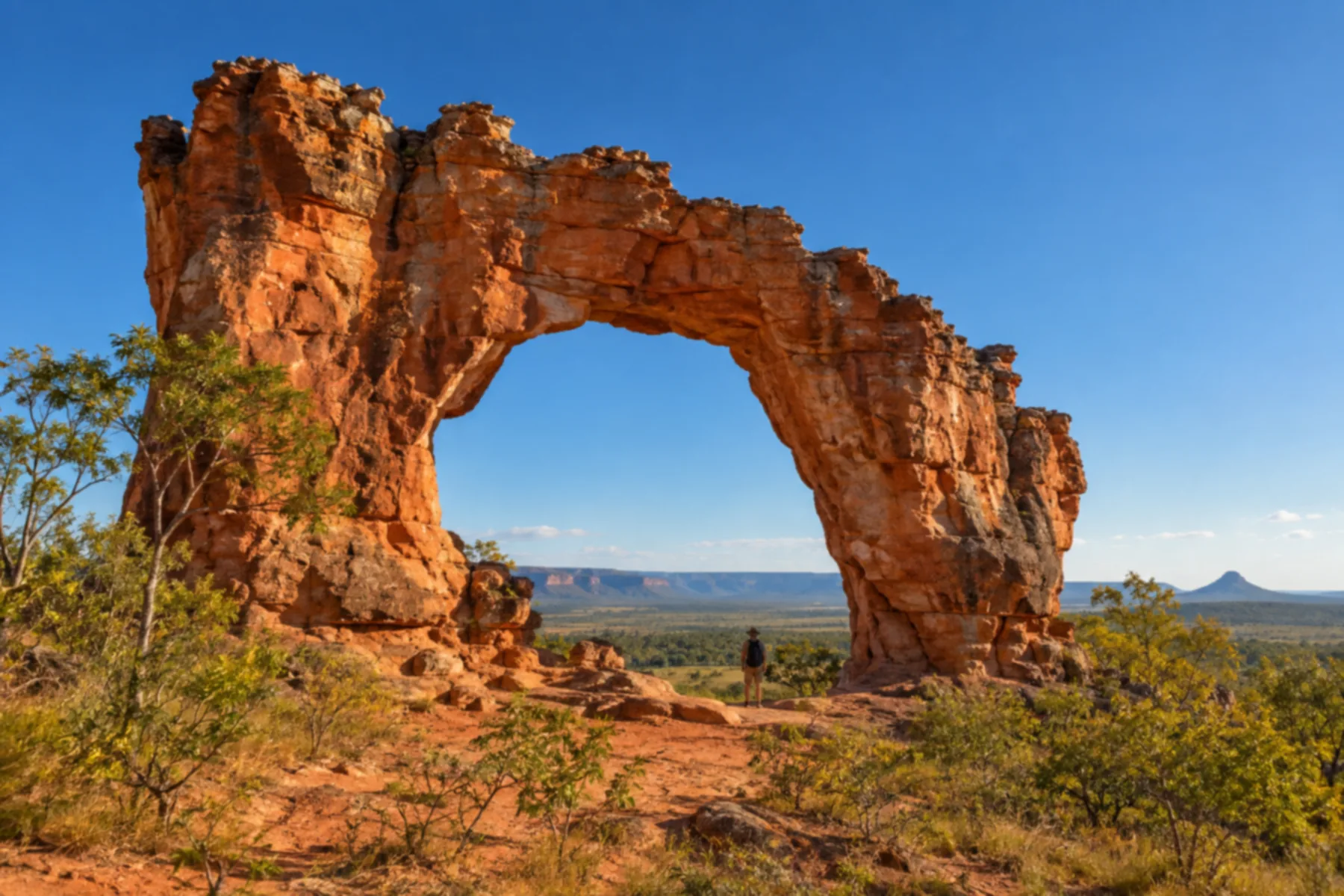
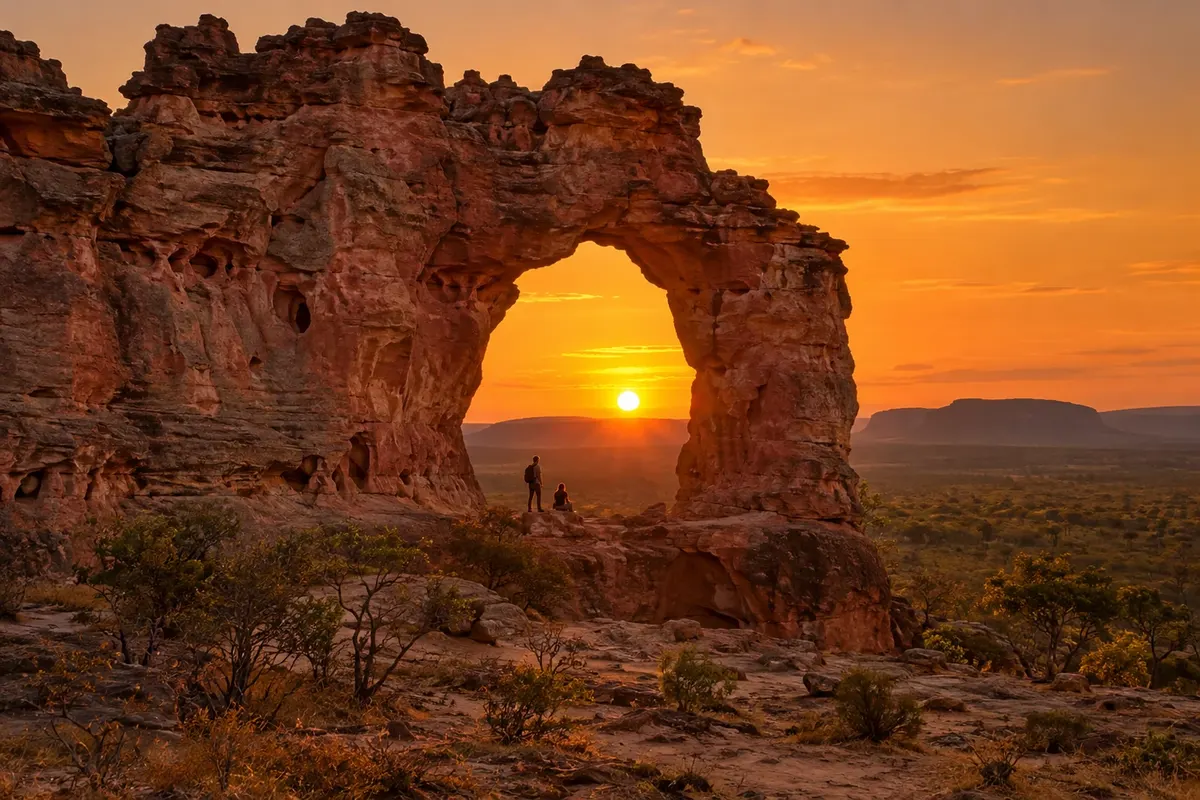
A natural sandstone arch carved by wind and rain in the middle of open cerrado. A classic stop on the way to or from Mateiros.
An uphill trail that ends at the top of the mountain, with an open view of the dunes and the cerrado all the way to the horizon. It is the best panoramic view in all of Jalapão.
Discover Serra do Espírito Santo
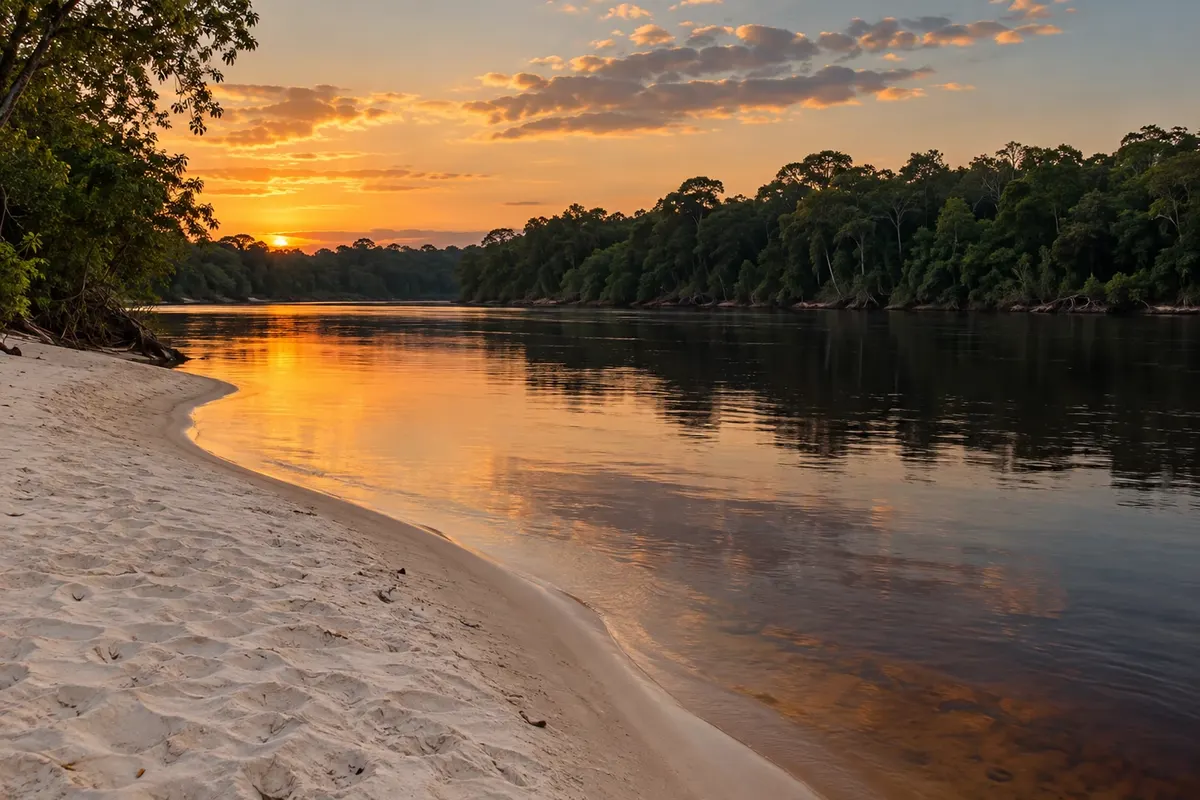
A stretch of white sand on the banks of the Rio Novo, with calm, shallow water perfect for swimming. It becomes a camping and resting spot between one attraction and the next.
Quilombola settlement of Mateiros, in Jalapão, where the capim-dourado handicraft was born, with the artisans’ association shop and the Capim Dourado Harvest Festival in September.
Discover Mumbuca Quilombola Community
The largest state park in Tocantins, created in 2001 in Mateiros, which protects the Jalapão cerrado and includes the dunes, the Serra do Espírito Santo, Cachoeira da Velha and the Prainha do Rio Novo.
To choose before you go
Where each tour starts, how long it takes, how it is done, what is included and the price range.
The tour departs from Mateiros in a 4x4 along the TO-255 to the reception area of the Dunas do Jalapão, inside the Parque Estadual do Jalapão. Entry is done with a certified guide or driver, in small groups. From the reception, a short walk leads to the top of the dunes, with fine orange sand up to 40 meters high. From the top you can see the river that cuts through the area, the surrounding cerrado and the Serra do Espírito Santo, whose erosion produced the sand. Most agencies visit in the late afternoon, when the sand changes color. The visit is also possible in the morning. Time on the dunes is usually one to two hours. Overnight stays at the site are not allowed. Near the reception there is a bar, used for a stop after sunset.
Stops: Dunas do Jalapão, Parque Estadual do Jalapão, Serra do Espírito Santo, Recanto das Dunas.
Includes: In agency packages, 4x4 transport and the guide are usually included. If going on your own, a certified guide or driver is mandatory and paid separately. Check Naturatins for the park's current visitation table. Snacks and drinks at the bar are paid separately.
Tip: The visit has a daily visitor limit and requires booking through a guide or agency, so reserve before arriving. Bring closed shoes or sturdy sandals, sunscreen, water, and clothing for the sand. Check whether the Mateiros municipal tourism fee is being charged.
Best time: From May to September, in the dry season; the sunset is worth it year-round.
Agencies that run it: 100 Limites Expedições.
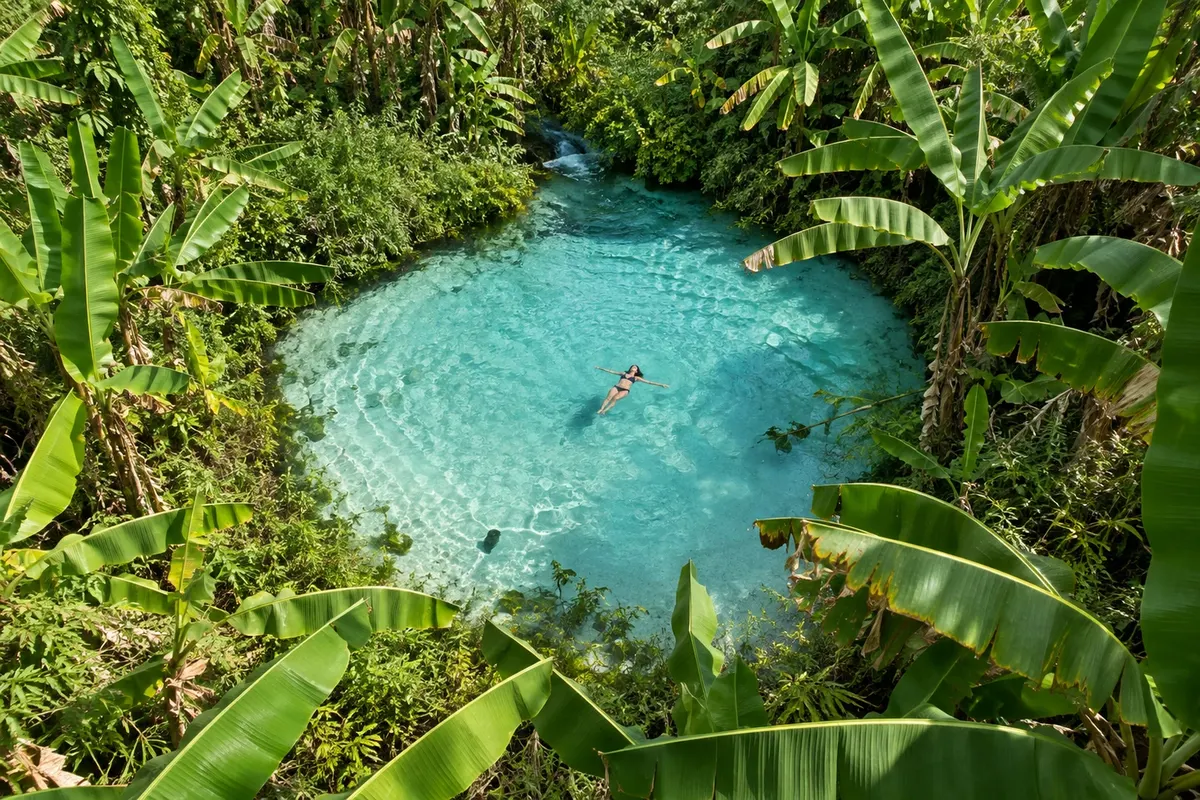
Fervedouros are springs where water rises from the bottom of the pool with enough pressure to support the body: those who enter float and do not sink. In the Mateiros region, agencies often combine several on the same day, departing the town in 4x4 vehicles. The Fervedouro do Ceiça has access without a trail, a round pool surrounded by banana trees and a capacity of ten people at a time; when there's a line, the allowed stay is about ten minutes. The Fervedouro dos Buritis is at the end of a trail of about 600 meters. The Macaúbas one has bluish-green water. There is also Buritizinho and Encontro das Águas. Almost all are on private properties, and each charges its own entrance fee, with rules on capacity and length of stay.
Stops: Fervedouro do Ceiça, Fervedouro dos Buritis, Fervedouro das Macaúbas, Fervedouro Buritizinho, Fervedouro Encontro das Águas, Povoado Mumbuca.
Includes: On an agency package, transport and the guide are usually included, and often the entrance fees too. Independently, each fervedouro charges an entrance per person, paid on site. Lunch at roadside restaurants is paid separately. Check the current rates for each property.
Tip: Bring cash, because Pix and card signals fail in several spots. Wear swimwear and leave valuables in the vehicle. Those with long hair should tie it back. Ask the guide about the day's capacity.
Best time: From May to September, in the dry season, with firmer roads and clearer water.
Agencies that run it: 100 Limites Expedições.
The two fervedouros are located in the São Félix do Tocantins region, on the route between Mateiros and São Félix, and are included in almost all circuits. Bela Vista has a pool about 15 meters in diameter, fed by several springs, blue water and good infrastructure: restaurant, camping and, for guests staying at the complex, night diving. It can be visited without a guide by paying the entrance at the gate. Alecrim has greenish water and a capacity of six people at a time. There is no restaurant or lodging on site. At both, a wooden boardwalk provides access to the pool. In some itineraries, the visit to Alecrim ends at the small beach of the Rio Soninho, with the option of boia-cross.
Stops: Fervedouro Bela Vista, Fervedouro do Alecrim, Rio Soninho.
Includes: Entry is paid per person at each fervedouro, at the entrance booth; in agency packages it is usually included. Lunch at the Bela Vista restaurant is paid separately. Check the current table.
Tip: Those visiting on their own should bring cash. Since Alecrim accepts few people at a time, go early or wait your turn patiently. Alecrim allows night visits on some itineraries; arrange this with the agency.
Best time: From May to September, during the dry season.
Agencies that run it: 100 Limites Expedições.
Cachoeira do Formiga is located near Mateiros, on private property inside the Parque Estadual do Jalapão. From the parking lot, a trail of less than ten minutes leads to the fall, with emerald-green water. The fall is small; the attraction is the natural pool where people swim. Beside it, the water flows into a second, calmer pool, good for children and for those who are not strong swimmers. At the top of the fall you can sit in the current of the Rio Formiga and use it as a hydromassage. The property has a camping area. The place tends to be crowded on holidays, and the trail has rocks and uneven sections.
Stops: Cachoeira do Formiga, Rio Formiga, Parque Estadual do Jalapão.
Includes: Entrance is paid per person and charged at the attraction; in agency packages it is usually included. Camping is paid separately. Check the current price table.
Tip: Bring cash, water and closed-toe shoes for the trail. Avoid public holidays if possible to find fewer people.
Best time: From May to September; in rain the bathing area can become muddy.
Agencies that run it: 100 Limites Expedições.
R$ 75 · per person · official priceThe visit requires a detour from the TO-255 and is usually done on the route between Ponte Alta do Tocantins and Mateiros. The car gets close to a wooden platform from which you can see the Cachoeira da Velha on the Rio Novo: about 100 meters wide and a 15-meter drop, in a horseshoe shape. Because of the force of the water, bathing at the base of the fall is not permitted. Nearby is the Prainha do Rio Novo, with white sand, calm water, shade and swimming allowed. Access is via a short trail. Visiting this park attraction is done with a licensed guide or driver and during daylight hours.
Stops: Cachoeira da Velha, Prainha do Rio Novo, Rio Novo.
Includes: On an agency package, transport and guide are usually included. If you go on your own, a certified guide is required and paid separately. Rafting on the Rio Novo is optional and paid separately. Check the current Naturatins table.
Tip: Bring swimwear, a towel and a snack for the small beach. The stretch of sandy road is long, so leave early. Follow the guide's instructions on the river.
Best time: From May to September, during the dry season.
Rafting starts on the bank of the Rio Novo, near the Cachoeira da Velha. Before boarding the raft, participants receive instructions on commands and safety, and are provided with a life jacket and helmet. It is not necessary to be experienced or to know how to swim. The descent goes through the rapids and reaches the base of the waterfall's veil, which cannot be seen from the platform. The trip ends at the Prainha do Rio Novo, where you can bathe in the river and rest. Time on the river varies depending on the section booked. The tour is scheduled directly with the local operator or through the circuit agency.
Stops: Cachoeira da Velha, Rio Novo, Prainha do Rio Novo.
Includes: The raft, paddles, life jacket, helmet and instructor are usually included. The trip is paid separately from the circuit package and requires advance reservation. Photos may be sold separately. Check the operator's current pricing.
Tip: Book in advance through the operator's contact or via the agency. Bring swimwear, sunscreen and footwear that can get wet.
Best time: From May to September, during the dry season.
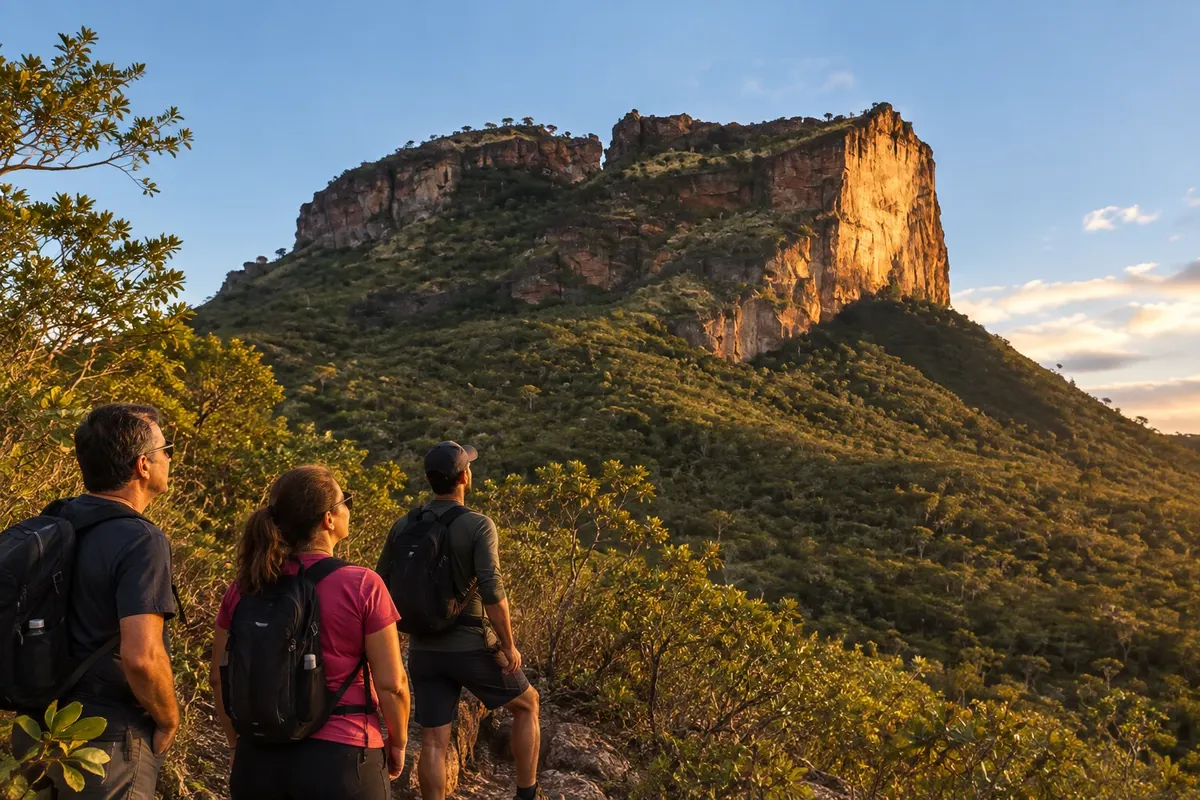
The group leaves Mateiros still in the pre-dawn hours, by 4x4, to the base of the Serra do Espírito Santo on TO-255. The climb to the first viewpoint is short and steep, among sandstone blocks, with sections of rope, posts and benches for rest. From the viewpoint you can see the sun rise over the veredas of the Jalapão. Those who wish to continue do another 3 km on flat terrain across the top of the plateau to the second viewpoint, from where you can see the Dunas do Jalapão and the erosion process that forms the sand. The total route, round trip, is about 7 km. The descent requires attention to loose rocks. Visits are made with an accredited guide or driver.
Stops: Serra do Espírito Santo, Mirante da Serra do Espírito Santo, Mirante das Dunas, Dunas do Jalapão.
Includes: On an agency package, transport and guide are usually included, sometimes as a paid optional extra. If going independently, an accredited guide is required and paid separately. Check the current Naturatins table.
Tip: Bring a headlamp, a hiking pole, water and a jacket for the wind at the top. Wear closed footwear with good grip. People with knee or heart problems should assess the effort beforehand.
Best time: From May to September, with clearer skies for sunrise.
Cânion Sussuapara is about 15 km from Ponte Alta do Tocantins, on the TO-255 toward Mateiros. The route is on an unpaved dirt road. From the parking area, a flat trail of a few hundred meters leads to a checkpoint and to a wooden staircase that descends into the canyon. Inside, water flows through a narrow fissure between damp cliffs about 12 meters high, covered in ferns and mosses. The visit is controlled, with a limit of 30 people at a time and a stay of about 30 minutes. It is the first stop on many circuits that depart from Palmas.
Stops: Cânion Sussuapara, Fazenda Sussuapara.
Includes: Entrance paid per person at the control point; in agency packages it is usually included. Parking on site. Check the attraction's current price table.
Tip: Wet leaves on the descent are slippery, so wear footwear with good grip. Bring cash. In high season there may be a wait at the support area.
Best time: From May to September, when access roads are firm.
Pedra Furada is about 35 km from Ponte Alta do Tocantins, on private property, with access via TO-130 and a final dirt section. It is a sandstone formation sculpted by wind and water, with openings in the rock. The stone can be seen from the parking area, and the walk to its base takes only a few minutes over sandy, uneven ground. At the entrance each visitor is given a helmet, which is mandatory throughout the visit because of falling rock fragments. Many groups include Pedra Furada on the first day of the circuit, together with Lagoa do Japonês, and stay to watch the sunset.
Stops: Pedra Furada, TO-130.
Includes: Helmet loaned at the entrance. The visit is on private property and the entrance fee is paid separately; in agency packages it is usually included. Check the current rates.
Tip: Wear closed-toe shoes and follow the property's staff instructions about where to climb. Combine with Lagoa do Japonês on the same day, leaving early from Ponte Alta.
Best time: From May to September; the sunset is good year‑round.
Lagoa do Japonês is located in the rural area of Pindorama do Tocantins, on Fazenda Sucuriú, and is not part of the traditional Jalapão circuit. The visit is a day trip that departs from Ponte Alta in the morning and returns late in the afternoon. The TO-130 is paved up to Pindorama; after that there are about 35 km of dirt roads, with 21 km on TO-130 itself and 14 km on the road to the lagoon. The water is greenish and shifts to blue tones near the flooded cave, which is reached by swimming. The fazenda offers accompaniment for exploring the cave and life jackets for those who need them. Lunch is served on site.
Stops: Lagoa do Japonês, Fazenda Sucuriú, Pindorama do Tocantins, Gruta da Lagoa do Japonês.
Includes: Entrance is paid per person and lunch is served on site, both paid separately from transport. Agencies usually include water, non-alcoholic drinks and a snack. Life jackets can be rented. Check the current rates.
Tip: Leave early from Ponte Alta and combine it with Pedra Furada, which is on the way. Bring swimwear and a towel. Those who are not strong swimmers should use a life jacket in the cave.
Best time: From May to September, during the dry season.
The Serra da Catedral is on TO-030, between São Félix do Tocantins and Novo Acordo, inside a RPPN. It is a sandstone formation more than 180 meters at its highest point, and one of its sides resembles the façade of a church. Access is by 4x4 to the base of the hill. The trail is about 2.8 km round trip, with loose rocks and a staircase of tires set in cement; at the end there is a section of stairs to reach the top. From the top, the view covers the cerrado of the Jalapão. Visits are made at sunrise or sunset. Those who only want to see the Serra da Catedral can do so from the road.
Stops: Serra da Catedral, Morro da Catedral, Jalapão Ecolodge (RPPN).
Includes: In agency packages, transport and guide are usually included. The trail is on RPPN property and may require its own transport/service and fee, paid separately. Check the current table.
Tip: Confirm the visit in advance. Bring a flashlight if you’ll go up at sunrise or descend after sunset, closed-toe shoes and water.
Best time: From May to September, during the dry season.
Rafting on the Rio Soninho covers about 10 km on rapids of classes II and III, and ends at the Cachoeira das Araras in the rural area of São Félix do Tocantins. The waterfall is about 22 km from the town center, toward Palmas along the TO-030: 18 km paved and 4 km unpaved. The property has a trail with stairs down to the fall, a natural pool, a restaurant and restrooms. Local operators from São Félix run the descent; the tour is paid separately and rafting is usually booked the day before. Those who don't do rafting can visit the waterfall and have lunch on site.
Stops: Rio Soninho, Cachoeira das Araras.
Includes: Raft, life jacket, helmet and guide are usually included. Rafting is optional in agency packages and paid separately. Entrance to the waterfall and lunch are also paid separately. Check the current table.
Tip: Reserve rafting one day in advance, through the agency or directly with the operator. Bring swimwear, sunscreen and footwear that can get wet.
Best time: From May to September, during the dry season.
Boia-cross is a descent of Rio Soninho while sitting on an inner tube, accompanied by a guide, in a stretch of calm current. In one section, on the grounds of an ecolodge, the route is about 3 km long, in reddish water surrounded by forest. In some itineraries the activity ends at Praia do Alecrim after visiting the fervedouros. There are no drops on the route, and the trip is calmer than rafting. It is sold as an optional activity within packages and also by operators in São Félix.
Stops: Rio Soninho, Praia do Alecrim.
Includes: Tube, life jacket and guide are usually included. The activity is paid separately from the package. Check the current rate table with the agency or operator.
Tip: Confirm availability with the agency before the trip, as the activity depends on the itinerary. Bring swimwear and shoes that can get wet.
Best time: From May to September, during the dry season.
Povoado Mumbuca is a quilombola community in the rural area of Mateiros, about 35 km from the town center, where the capim dourado craft began. The route is done in a 4x4. In the community, the visit includes the community shop, which sells necklaces, bracelets, bags and decorative pieces made with capim dourado and buriti straw. The community works with community-based tourism, and there are experiences such as craft workshops, trails and viola de vereda performances, which should be arranged in advance. Many circuits include a stop near the region's fervedouros.
Stops: Povoado Mumbuca, Casa da Cultura, Capim dourado handicraft shop.
Includes: The visit to the shop is free; items, meals and workshops are paid separately. On an agency package, transport and the guide are usually included. Check current prices with the community or the agency.
Tip: Notify in advance if you want a workshop or a meal. Bring cash for purchases. The Festa da Colheita do Capim Dourado usually takes place in September.
Best time: From May to September; the harvest festival usually takes place in September.
The most common way to experience Jalapão is on an agency circuit that departs from Palmas in a 4x4 with a guide. The route is circular, with overnight stays in Ponte Alta do Tocantins, Mateiros and São Félix do Tocantins, and lasts three to seven days. Generally, the first day includes Cânion Sussuapara or Pedra Furada; the second, Cachoeira da Velha, Prainha do Rio Novo and the dunes; the following days, Cachoeira do Formiga, fervedouros and Mumbuca; and the last, Cachoeira das Araras or Serra da Catedral. Attractions vary according to the agency and road conditions. Rafting, boia-cross and sunrise hikes are optional.
Stops: Ponte Alta do Tocantins, Mateiros, São Félix do Tocantins, Novo Acordo, Cânion Sussuapara, Dunas do Jalapão, Fervedouros, Cachoeira do Formiga.
Includes: 4x4 transport, guide, meals and entrance fees to attractions are usually included. Optional activities, such as rafting, and the Mateiros municipal tourism fee, if charged, may be excluded. Check what each package includes.
Tip: Hire a registered agency and book in advance, especially for the dry season. The rule is usually a backpack of up to 20 kg, without a hard-shell wheeled suitcase. Confirm whether the Mateiros municipal tourism fee is included.
Best time: From May to September, during the dry season.
Agencies that run it: 100 Limites Expedições, Jalapão Oficial, Deserto do Jalapão, Diego Tour, Tour Jalapão Expedição.

Day by day
Suggestions to plan the trip. Change the order of the days according to the weather and tour availability.
Leave Palmas early. The stretch to Ponte Alta do Tocantins is paved, about 2 hours. After lunch, continue by 4x4 to Lagoa do Japonês and Pedra Furada, about 35 km from Ponte Alta. Pedra Furada is on private property and entrance is paid separately. Stay for sunset and return to Ponte Alta for the night. Book transfers from Palmas before traveling.
A day on sandy roads, from Ponte Alta to Mateiros. Start at Cânion Sussuapara, about 13 km from Ponte Alta. Continue to Cachoeira da Velha and Prainha do Rio Novo, which offer river bathing and a stop for lunch. Finish at the Dunas do Jalapão late in the afternoon. The visit to the dunes and Cachoeira da Velha is done with a guide. Stay overnight in Mateiros.
In the morning, visit the fervedouros in the Mateiros region (Ceiça, Buritis and Macaúbas) with a certified guide. Next, swim at Cachoeira do Formiga, about 33 km from Mateiros. In the afternoon, begin the return trip: from Mateiros to Palmas it takes 7 to 8 hours by 4x4, part on dirt road and part on paved road. Arrange the departure time with the agency to arrive in Palmas before your flight, or leave the flight for the next day.
From Palmas to Ponte Alta do Tocantins it's about 150 km of paved road, nearly 2 hours. After lunch, go to Lagoa do Japonês and Pedra Furada, about 35 km from the town on a dirt road. Pedra Furada is private property and entrance is paid separately. Watch the sunset and return to Ponte Alta for the night. Book transfers from Palmas before traveling.
Leave early from Ponte Alta for Cânion Sussuapara. Then head to Cachoeira da Velha, where the Rio Novo forms a wide drop, and to Prainha do Rio Novo, good for swimming and lunch. In the afternoon continue to the Dunas do Jalapão for sunset. The visit to the dunes and Cachoeira da Velha requires a guide. Stay overnight in Mateiros.
At dawn, hike the Serra do Espírito Santo trail to watch the sunrise. Return for breakfast and head to Cachoeira do Formiga, about 33 km from Mateiros. In the afternoon, visit the fervedouros Ceiça, Buritis and Macaúbas in the Mateiros region with a certified guide. Then take the TO-110, which links Mateiros to São Félix do Tocantins, and sleep in São Félix.
A water day in the São Félix do Tocantins region. Visit the fervedouros Bela Vista and Alecrim in the morning and early afternoon, when lines are usually shorter. Each fervedouro admits few people at a time, so bring patience and a dry swimsuit to change into. Alecrim is close to the Rio Soninho, with a small beach for bathing. Stay overnight in São Félix do Tocantins.
In the morning, visit Serra da Catedral, a rock formation that resembles a cathedral, and hike to the top if the group wishes. Then begin the return to Palmas via Novo Acordo, one of the region's access points. Ask the agency for the departure time to arrive in Palmas before your flight, or schedule the flight for the next day.
From Palmas to Ponte Alta it's about 150 km of paved road. After lunch, visit Lagoa do Japonês and head to Pedra Furada, about 35 km from Ponte Alta, on private property. The entrance fee is paid separately. Stay for sunset and return to sleep in Ponte Alta. Book the transfer from Palmas before traveling.
Leave early for Cânion Sussuapara and head to Cachoeira da Velha in the Parque Estadual do Jalapão. Bathing in the fall is not possible due to the force of the water, but Prainha do Rio Novo is suitable for swimming and lunch. Those who want to raft on the Rio Novo at Cachoeira da Velha should arrange it in advance with the operator. In the afternoon go to Mateiros and sleep there.
At dawn, climb the Serra do Espírito Santo trail for the sunrise. After breakfast, visit the Comunidade Quilombola Mumbuca, where you can see work with capim dourado. Reserve the afternoon to rest. At the end of the day, go to the Dunas do Jalapão, about 35 km from Mateiros, with a guide, to see the sunset. Stay the second night in Mateiros.
Start with Cachoeira do Formiga, about 33 km from Mateiros, which has a clear water pool. Then visit the fervedouros Ceiça, Buritis and Macaúbas in the Mateiros region. All are visited with a certified guide and have separate entrance fees. In the afternoon, follow the TO-110 to São Félix do Tocantins and sleep there.
Day of fervedouros in the São Félix do Tocantins region. Visit Bela Vista and Alecrim, each with a limited number of people in the water at a time. Arrive early to face shorter lines. Between visits, enjoy the small beach of Rio Soninho. Return to sleep in São Félix do Tocantins.
In the morning, choose between rafting on Rio Soninho to Cachoeira das Araras and boia-cross on the same river. Ask the operator about the duration and what is included. In the afternoon, visit Serra da Catedral and hike to the top if the group wants. Return for the final night in São Félix do Tocantins.
Return day. Leave São Félix do Tocantins in the morning, passing through Novo Acordo, one of the region's entrances, to Palmas. The stretch includes dirt road and then paved road. Arrange with the agency the arrival time in Palmas and schedule your flight for late afternoon or evening, allowing extra time for possible road delays.
Best time to go
From May to September, in the dry season, when the sand roads are passable and the river water is at its clearest.
The seasons shown are the most usual ones; nature doesn't always follow the calendar.
Peak rainy season · Waterfalls full
January is the rainiest month: in Mateiros it reaches about 225 mm. The downpours are quick, usually at the end of the day. The cerrado turns green and the waterfalls gain volume, but the water becomes more turbid. Sand and dirt stretches require more travel time, and Cânion Sussuapara may become inaccessible. Visitor flow is usually lower than in the dry season, except during holidays and year-end.
Strong rains · Green cerrado
February is still in the peak rainy period, which runs from December to March. Showers tend to be short and the heat continues. Waterfalls and rivers are full and muddier, and fervedouros may have less clear water. Expect slower travel on sand and dirt roads. It's a low-tourist period, except during holidays like Carnival.
Rain still frequent · Wet trails
March remains rainy, with temperatures around 21 to 29°C. The cerrado stays vividly green and water outings, like fervedouros and waterfalls, continue to operate. Bring footwear that can handle wet trails and plan to start the day early, when rain is less likely. Visitor traffic is low, and the water may still be turbid after showers.
End of the rains · Waters clearing
April marks the end of the rainy season. Showers become more spaced out and the vegetation is still green. Waterfalls maintain good volume and the water begins to clear. Sand roads dry out gradually. It's a month of moderate activity, with tour and package prices generally below high season rates.
Start of the dry season · Cool nights
May begins the dry season, with little or no rain. The air still has some humidity and the vegetation retains part of its green. Days are hot and nights become cooler, with lows around 13 to 20 degrees from May to August. Fervedouros and rivers become clear. Visitor levels are moderate, before the July peak, which helps avoid queues.
Clear skies · Remaining green
June is in the middle of the dry season, with clear skies and practically no rain. The vegetation still has some residual green, the air is not as dry and nights are cool. Rivers, waterfalls and fervedouros are crystal clear. The sandy tracks are in good condition. Tourist flow is higher than at the start of the year, but still lower than in July.
High season · Ipês in bloom
July is the driest month: in Mateiros rainfall is nearly zero. In Palmas, the average high is around 34 degrees and the low about 18. It is ipê flowering season and school holidays, with the highest demand of the year. The best-known fervedouros may have waiting lines. Book agency, transfers and tours well in advance.
Very dry air · Golden dunes
August continues without rain, with blue skies and increasingly dry air. Days are warm and nights cool. Rivers and fervedouros remain clear, and the sunset at the Dunas do Jalapão and Pedra Furada has good visibility. Visitor levels are still high at the beginning of the month and decrease after the holidays. Drink plenty of water and use sunscreen.
High heat · Harvest of capim dourado
September marks the transition from the dry season to the rains. It is the driest month in terms of air humidity and brings strong daytime heat. There may be a brief week of rain, known as the "chuva do caju". This is when the harvest of capim dourado begins, a theme of visits to the Comunidade Quilombola Mumbuca. The waterfalls' flow is low, but the water remains clear. In mid-month fires may start in the cerrado.
First showers · Fewer people
October is a transitional month: the heat remains strong and the first showers begin, usually in the afternoon or evening. Often the fervedouros and rivers are still clear, and crowds are smaller than in July. Some trails can become slippery after rain. Check the forecast and allow buffer time in your itinerary, because wet sand can delay travel.
Rains return · Waterfalls filling
November marks the steady return of the rains, with about 180 mm in the month and temperatures between 22 and 31°C. The air becomes more humid and muggy. Waterfalls regain volume and the cerrado turns green again. Showers are more frequent than in October. There are few tourists, and tours continue to operate with schedules that depend on the weather. Leave early and avoid driving in the rain.
Heavy rains · Year-end
December is in the rainiest period, which runs through February. Days are hot and humid with short showers, and the water in rivers and fervedouros can become murky. Waterfalls are full. Sand and dirt stretches take more time, and tours may change schedule on rainy days. Year-end attracts many travelers, so book your agency and transfers in advance.
Plan the journey
There is no airport in the Jalapão region. The closest is Palmas (PMW), in Tocantins. GOL, Azul and LATAM operate from Palmas, with direct flights to São Paulo (Guarulhos), Brasília, Belo Horizonte (Confins), Campinas (Viracopos), Goiânia and Araguaína. From other cities you need at least one connection to reach Palmas. The flight network changes with the season, so check flights with the airline before booking your trip.
After landing, the stretch to Jalapão is by road. From Palmas, Novo Acordo is about 112 km away and Ponte Alta do Tocantins about 187 km. Mateiros, the main gateway town, is about 300 km from the capital. Ponte Alta do Tocantins, São Félix do Tocantins and Mateiros lie further on unpaved roads. Book transfers or a 4x4 before arriving in Palmas so you can leave the airport with transportation already arranged. If your flight arrives in the afternoon or evening, consider staying overnight in Palmas and continuing the next day.
Those who travel by bus usually take a line to a gateway town and, from there, hire private transport or an agency. Buses to Ponte Alta do Tocantins leave from Palmas bus station and take about 3 to 4 hours.
For the stretch to Mateiros and São Félix do Tocantins, Transmateiros operates buses, minibuses and vans departing from Palmas bus terminal on fixed days of the week, via Ponte Alta do Tocantins or via São Félix do Tocantins. There are departures in the opposite direction from Mateiros. Days and departures change, so confirm with the company before buying a ticket and check current fares.
Another option is private or shared transfer hired through agencies in Palmas. After arrival, movements between attractions are not served by a regular public transport network. Therefore, even those who go by bus need a guide or vehicle to visit the attractions.
From Palmas, the main access route is the TO-030 to Santa Tereza do Tocantins and then the TO-130 to Ponte Alta. That stretch is paved. Another route leaves Palmas on the TO-050 to Porto Nacional and continues on the TO-255 to Ponte Alta do Tocantins. For Novo Acordo, leave via the TO-020 heading north.
After Ponte Alta, the road becomes dirt and sand. Those going to Mateiros continue on the TO-255. From Ponte Alta to Mateiros is about 160 km of dirt road, roughly 4 hours. From Palmas to Mateiros the time is about 5h30, but duration varies with road conditions and stops.
By road, Brasília to Palmas is about 818 km. There is also a reported direct route from Brasília to Mateiros, about 870 km without passing through Palmas, which requires more preparation and planning. For most travelers, the most practical option is to arrive in Palmas and rent a vehicle there.
Prepare for the trip: fuel stations are in Ponte Alta, Mateiros and São Félix do Tocantins, and stretches between them are long. Cell signal is scarce, so download offline maps. Carry a good spare tire and extra fuel.
There is no regular public transport network that follows the tourist circuit. In practice, there are three ways to get around: with an agency, with a rented car, or with your own car.
Travel is done in four-wheel-drive vehicles because the roads are unpaved, with dirt and sandy stretches. Rental companies such as Localiza, Unidas and Alamo offer 4x4s, with greater availability in Palmas. Rental is charged per day, plus fuel, and rates change with the season. Check the current price with the rental company and book in advance for high season.
If you drive on your own, bring a shovel, tow rope, a properly inflated spare tire, jack, extra fuel canister and offline maps. Roads have little signage and low traffic, and cellphone signal disappears in several stretches. Those without experience driving on soft sand may prefer hiring a guide with a vehicle. It is recommended to hire a guide with transportation from Palmas. A group of 4 or 5 people usually shares the cost of a rented car better.
Most tourists travel to Jalapão with an agency rather than on their own.
Package with transfer: operators depart from Palmas and run the circuit through Ponte Alta, Mateiros and São Félix do Tocantins. Packages usually include lodging, transport in a 4x4 with air conditioning, entrance fees to attractions and a guide. Meals vary: some packages offer full board and others only breakfast and lunch. There are itineraries from 3 to 6 days. For at least one of them, the regular departure is only confirmed with a minimum of 3 travelers. Some operators sell packages with flights departing São Paulo and transfers between Palmas, tours and hotels. Optional excursions are usually paid separately, directly to the local guide. Ask whether Mateiros municipal fee is included.
On your own: you buy the flight to Palmas and arrange a rented 4x4, or bus and van to the gateway towns, with guides hired locally. This offers more freedom of itinerary but requires more route planning, fuel and reservations. In any case, finalize transport and bookings before arriving, and check current prices with each operator.
Mateiros has instituted the Sustainable Tourism Fee, charged to visitors to the municipality and the attractions of the Jalapão State Park. Decree No. 043/2026 sets a single amount per visitor, which covers a stay of up to eight consecutive days. Those who stay longer renew the fee at the same amount and for an equal period.
Who pays: tourists who visit Mateiros. Exemptions apply to residents of the municipality, children up to 10 years old, seniors over 65, people with disabilities and public servants on duty, upon proof.
How to pay: by Pix or at physical points authorized by the city hall. After payment, the visitor receives a receipt with a QR Code, which may be requested at attractions. The receipt must be presented to enforcement together with an official photo ID.
Attention: the charge was challenged in court, and a preliminary injunction suspended the fee. The city hall stated it continued charging until notified. We could not find the rate on the city’s website. Therefore, confirm whether the fee is in force and the current amount with Mateiros City Hall or with your agency before traveling.
Who takes you
Only agencies with an active registration in Cadastur, the official registry of Brazil's Ministry of Tourism, are listed. The order is not a ranking: compare the tours and book directly with the agency.
Cidade Turismo reviews its information regularly, but something may have changed. Check with the place before planning your trip.
Travel agency based in Palmas. Sells Jalapão itineraries in 4x4 vehicles, with visits to fervedouros, Cachoeira do Formiga and Dunas do Jalapão. Also offers itineraries to Chapada dos Veadeiros.
Tours: Dunas do Jalapão at sunset, Fervedouros in the Mateiros region: Ceiça, Buritis and Macaúbas, Fervedouros Bela Vista e Alecrim, Cachoeira do Formiga, Jalapão circuit by 4x4 with an agency (3 to 7 days).
Cadastur checked in 10/2026
Travel agency based in the district of Taquaruçu, in Palmas. Offers 3- to 6-day itineraries through the Jalapão, with rappelling and zip-lining as optional activities on the 5- and 6-day tours. The website states registration with Cadastur.
Tours: Jalapão circuit by 4x4 with an agency (3 to 7 days).
Cadastur checked in 10/2026
Agency that sells expeditions through the Jalapão, the Serras Gerais and the Chapada das Mesas, including the Jalapão Premium package of 7 days and 6 nights. The website reports registration with Cadastur and the Ministério do Turismo.
Tours: Jalapão circuit by 4x4 with an agency (3 to 7 days).
Cadastur checked in 10/2026
Agency based in Ponte Alta do Tocantins. Sells travel packages through the Jalapão including transport, guide and accommodation. The website provides a guide to the region's main attractions and they offer service via WhatsApp.
Tours: Jalapão circuit by 4x4 with an agency (3 to 7 days).
Cadastur checked in 10/2026
Inbound tourism agency from Ponte Alta do Tocantins, opened in 2010 by locals from the region. Sells 3-, 4- and 5-day Jalapão itineraries with lodging, transport and a guide, and also serves groups and tour operators.
Tours: Jalapão circuit by 4x4 with an agency (3 to 7 days).
Cadastur checked in 10/2026
Your base to explore
Before you go
A little planning leaves more time to enjoy the journey.
From May to September, in the dry season, when the sand roads are passable and the river water is at its clearest.
The seasons shown are the most usual ones; nature doesn't always follow the calendar.
Take your trash with you, follow the signs and support local businesses. In natural areas, follow the visiting guidelines.
Get your questions answered
Yes. Entry to the Dunas and the Serra do Espírito Santo is only allowed with a licensed tour guide or local accredited environmental conductor. Access requires prior booking and presentation of the voucher. Travelers on their own must hire a local conductor. The list of accredited conductors is available at the Centro de Atendimento ao Turista do Parque Estadual do Jalapão in Mateiros. Those who book through a tour operator usually have the booking handled by the operator. There is a daily visitor limit at both attractions and separate entry windows for morning and afternoon. During peak periods, book in advance.
Yes, but it requires preparation. Most roads are unpaved and covered in soft sand, and a 4x4 vehicle is recommended. During the rainy season some stretches can become impassable. At the state park attractions, such as the Dunas and the Serra do Espírito Santo, a local conductor is mandatory even for those driving their own vehicle. There are many forks and little cell signal, so download offline maps before you go, preferably in more than one app, and consider a dedicated GPS. If you prefer not to drive on sand, you can book a tour with an agency that provides vehicle and driver.
Gas stations are few and distances between towns are long. The towns travelers cite for refueling are Ponte Alta do Tocantins, Mateiros and São Félix do Tocantins. Refuel whenever you pass through one of them. In sand, a 4x4 consumes more fuel than on regular roads, and many travelers bring an extra jerry can. Cell signal is almost non-existent outside urban centers. Many tours and communities may not accept cards, and you can’t rely on ATMs along the way. Bring some cash and settle as much as you can before the trip.
Average itineraries range from 3 to 7 days. With 3 days you can see the essentials, in a rushed pace. A full 5-day itinerary is most commonly recommended by agencies and travel blogs; it covers the main attractions of Ponte Alta do Tocantins, Mateiros and São Félix do Tocantins. Those who want to include more fervedouros, hikes and rafting, or extend the trip to the Serras Gerais, typically allow 6 to 8 days. Keep in mind that the transfer from Palmas takes up a large part of a day, and distances between attractions are long. Also factor in time to and from the airport.
The dry season, from May to September, brings firmer roads, clear skies and clearer water in rivers and fervedouros. It’s the recommended time for the Dunas, Pedra Furada and the Serra do Espírito Santo, which rely on clear skies at sunrise and sunset. July is typically the busiest month. The rainy season runs from October to April, peaking between December and February. During that period waterfalls have higher flow. Fervedouros and rivers can become murkier, and some roads are difficult. Travelers in the rainy season often include Bela Vista, Alecrim and Pedra Furada in their routes. October and November, when rains are still lighter, are often cited as the best window within the rainy season.
Yes. Waterfalls, fervedouros, dunes and natural pools usually appeal to children. Operators in the region generally recommend children from around 5 years old, because transfers are long and tiring. If the child can swim, they’ll get more out of the water attractions. Long hikes, rafting and rappelling are not recommended for young children. Bring snacks, plenty of water, spare clothes and sunscreen. Many operators charge different rates by age group in their packages, so check the agency’s child policy before booking.
Bring an official photo ID, including for children, because agencies require proof of age. Minors under 18 only take tours when accompanied by a responsible adult. If traveling without one or both parents, operators typically require an authorization with a notarized signature from the absent parent(s). Rules vary by agency, so confirm with them before departure. Visitors from other South American countries should check with the agency and the consulate which travel document is accepted in their case. Keep copies of documents and tour vouchers outside your phone, as signal in the region is weak.
Time spent at each fervedouro is limited so more people can enter. It’s usually 15 to 20 minutes per group, and you should follow the local conductor’s instructions. Fervedouros are springs: water bubbles up through the sand from below under pressure in a phenomenon called resurgence, which pushes the body upward. That’s why people float and don’t sink, even if they try. In most of them you can’t touch bottom with your feet. The Fervedouro Bela Vista is accessed via a wooden walkway. Enter without sunscreen or insect repellent on your skin, and wear swimwear that can get wet.
The rules apply to the Dunas and the parking area. It is forbidden to make fires, camp, consume alcoholic beverages, smoke or eat. Playing sound equipment, bringing pets (except guide dogs), collecting fauna, flora or rocks, and climbing or descending the dunes via the cliff face are also prohibited. Drones only with authorization from the state environmental agency, and off-road vehicles only if registered. Entry is allowed in morning and afternoon slots, with a time limit. The local conductor guides the group, and each guide or conductor may take a maximum of ten people at a time at the park’s public attractions, according to current regulations.
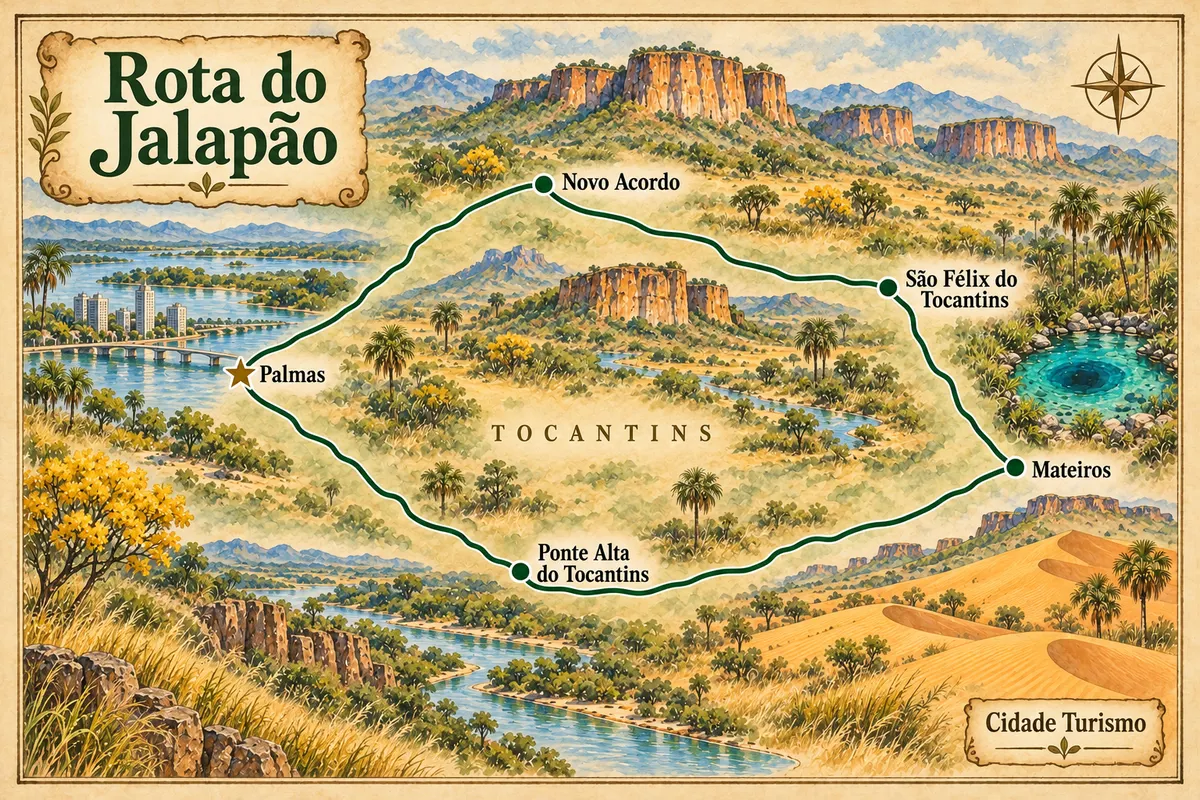
A circular route departing from and returning to Palmas goes through Ponte Alta do Tocantins, Mateiros, São Félix do Tocantins and Novo Acordo. This route typically lasts about five days. Ponte Alta do Tocantins is the gateway to Jalapão and sits at the start of the route. Mateiros concentrates the Parque Estadual do Jalapão attractions, such as the Dunas and the Serra do Espírito Santo, as well as fervedouros and the quilombola community Mumbuca. São Félix do Tocantins provides access to other fervedouros and the Rio Novo. The more towns the itinerary includes, the less time is lost on transfers and the more attractions can be visited.
Brazilian routes
A circuit starting from Palmas through dunes, fervedouros, rivers and Jalapão communities.
Beyond the guide