

 Antarctica
 Argentina
 Bolivia
 Chile
 Colombia
 Ecuador
 Guyana
 French Guiana
 Falkland Islands (Malvinas)
 Paraguay
 Peru
 Suriname
 Uruguay
 Venezuela
 Germany
 Austria
 Belgium
 Croatia
 Denmark
 Slovakia
 Slovenia
 Spain
 Finland
 France
 Greece
 the Netherlands
 Hungary
 Ireland
 Iceland
 Italy
 Luxembourg
 Norway
 Poland
 Portugal
 the United Kingdom
 the Czech Republic
 Sweden
 Switzerland
 Turkey
 Bermuda
 Canada
 the United States
 Greenland
 Mexico
 Saint Pierre and Miquelon
 the Dominican Republic
 Japan
 South Africa
 Egypt
 Australia
 Fiji
 New Zealand
 Papua New Guinea
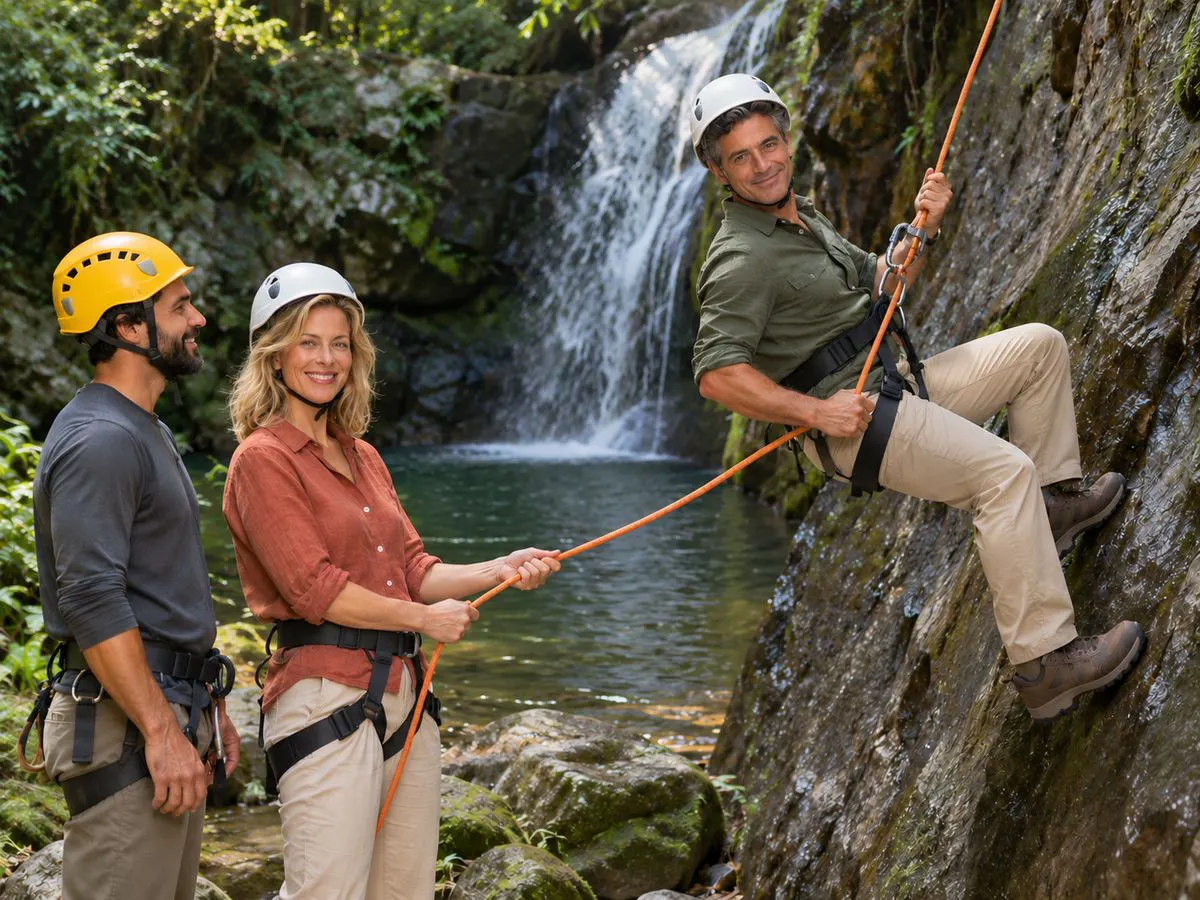
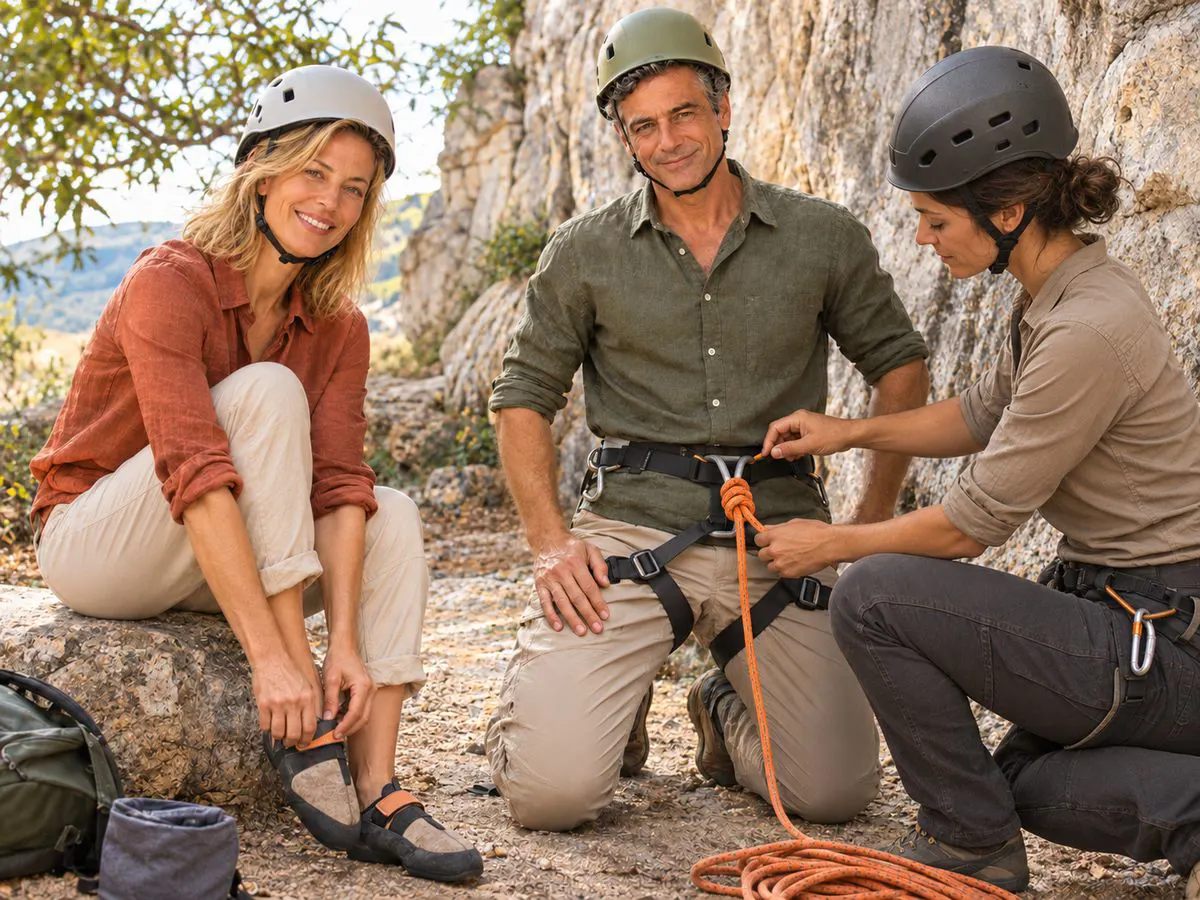
Illustrative images. The pictures in this guide are illustrations based on the real place, not photographs, and may differ from it.


Adventure travel
Rappelling and canyoneering
Descending a rock face on a rope or traveling along a riverbed between cliffs.
Rappelling is the technique of descending by a rope, controlling the speed with a friction device attached to the harness. It originated in mountaineering as a way to get down from a wall, and became an activity in itself: you descend a rock face, the side of a waterfall, or the mouth of a cave.
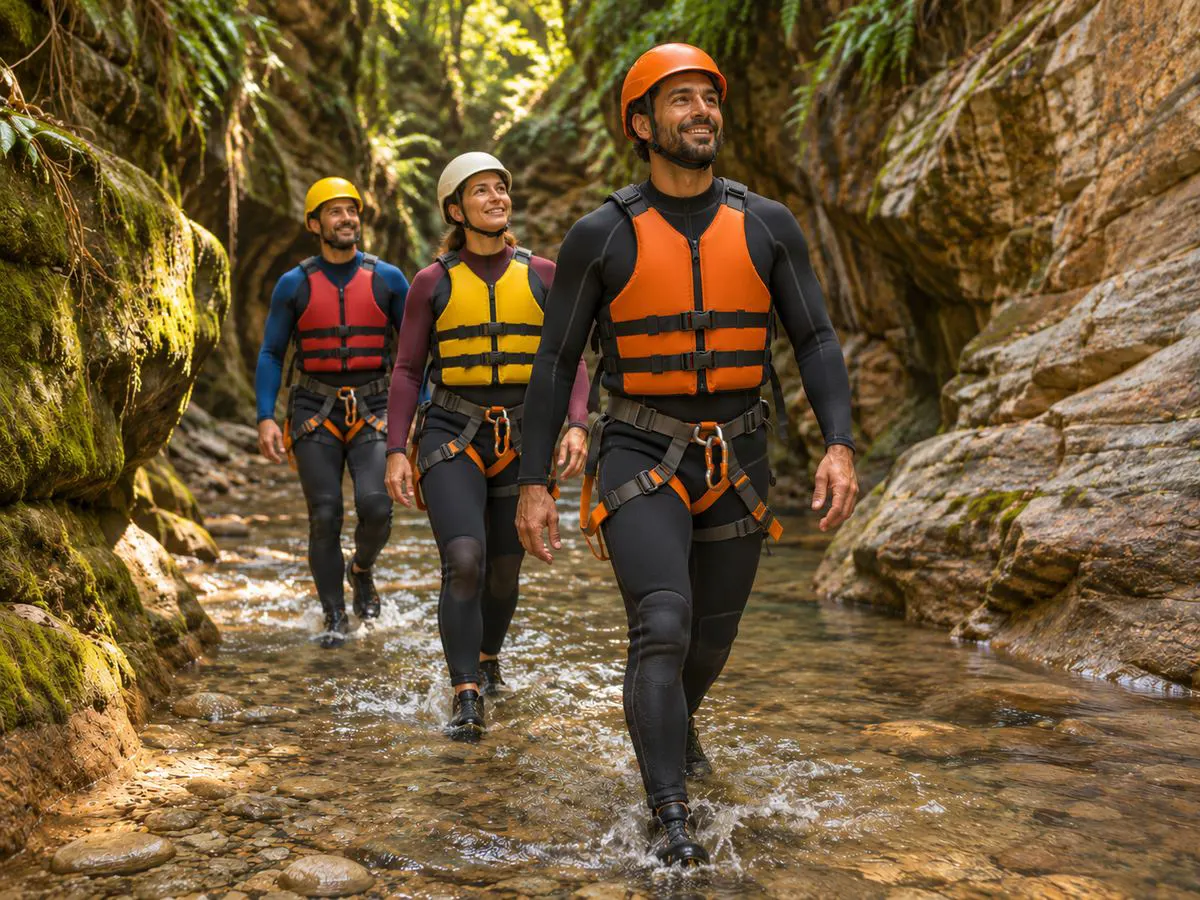
Canyoning uses rappelling as one of its tools. The group follows the bed of a river cut between cliffs and overcomes each obstacle as it appears: walking, entering the water, swimming a pool, descending a drop by rope. There are also canyons that are visited only by trail, along the rim, or from inside.
Wall rappelling, waterfall rappelling and negative rappel
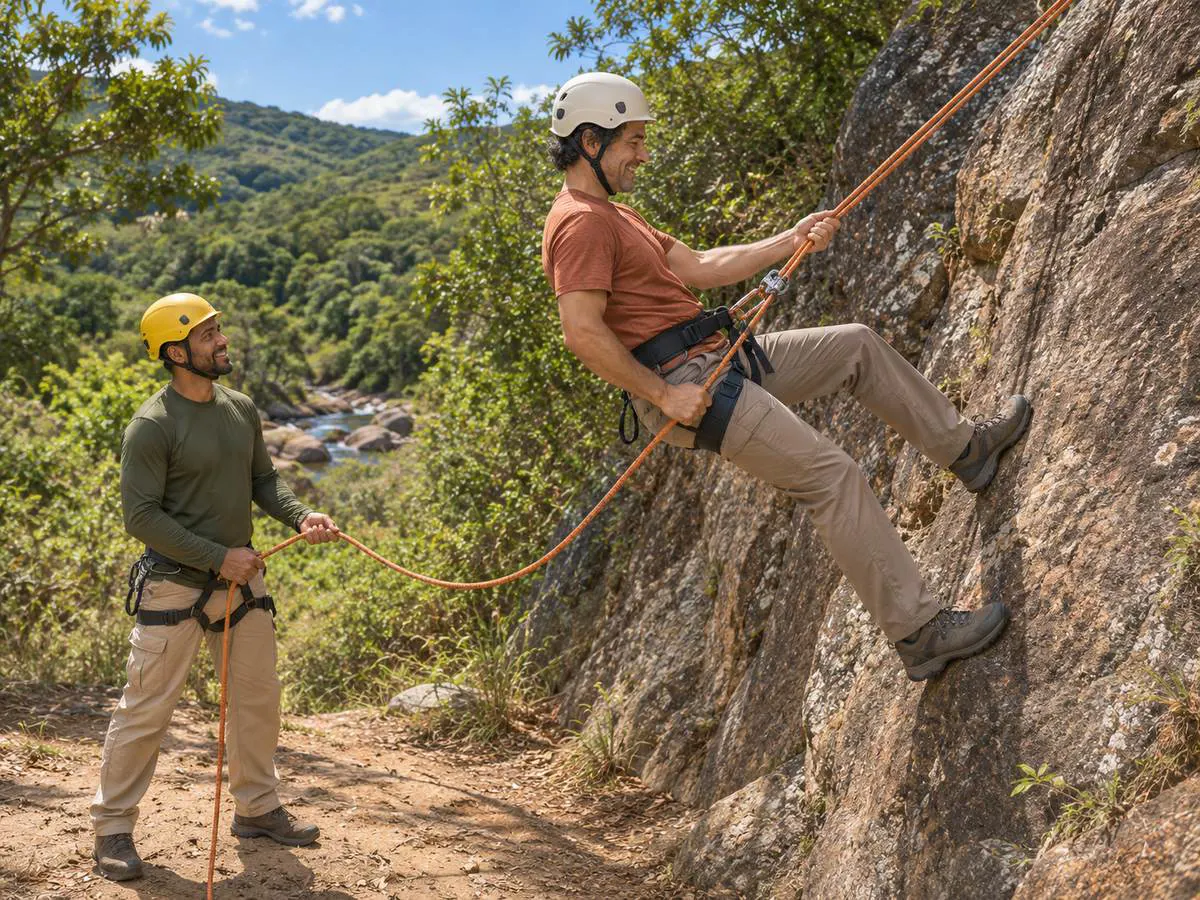
In wall rappelling, called positive rappel, your feet stay against the rock during the descent and you walk backward, seated in the harness. It’s the most recommended for a first time. In negative rappel, the wall recedes or is absent, as in an open span or under a bridge, and the descent is free, in the air.
Waterfall rappelling, or canyon waterfalling, adds water: the rock becomes slippery, and the falling water wets and makes noise, which requires more attention to foot placement. Usually the rope runs beside the main flow, not through it.
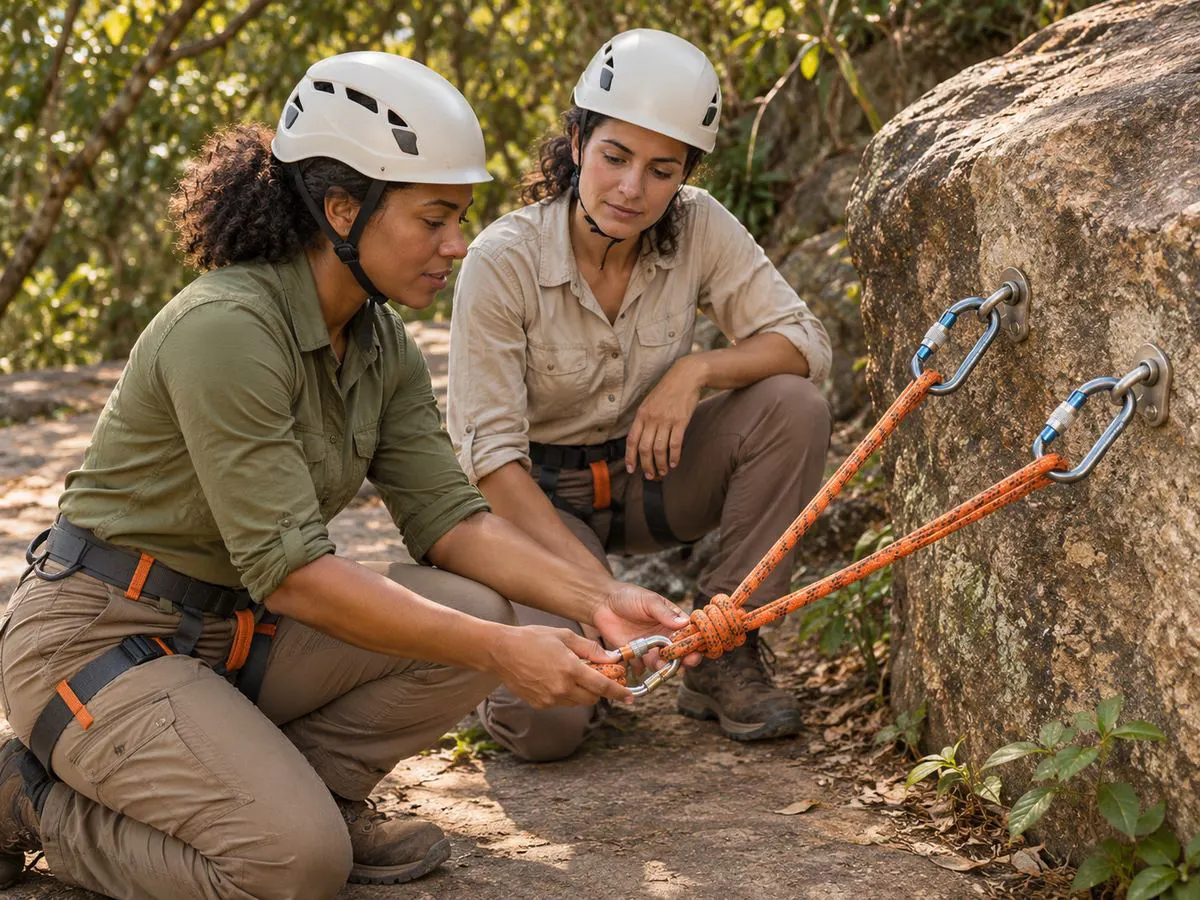
In all cases, beginners descend with two safety measures. You control your own brake with one hand and, below, an instructor holds the rope end: if they pull, the descent stops. Before the full descent, a practice is done on a low section.
What canyoneering is
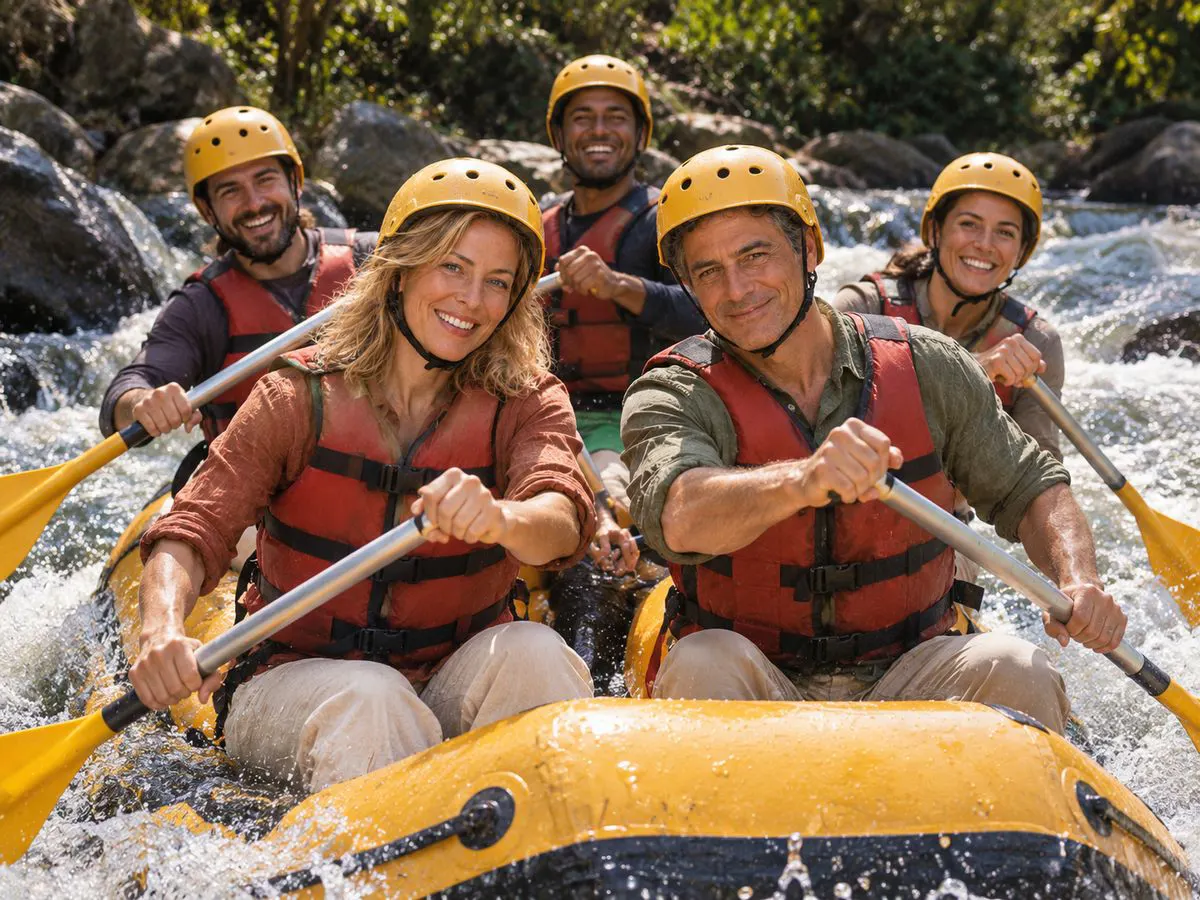
In canyoneering, the route is the river. The course may include walking on rocks, swimming across pools, natural slides, jumps and several successive rappels, some under running water. You use a wetsuit, helmet, harness with protection and a water-draining backpack.
It’s a longer, more demanding activity than an isolated rappel: it takes from a few hours to a full day and, once started, it doesn’t always have an exit midway. Routes are rated by difficulty; beginner routes have few, low rappels and little water.
Rain is the decisive factor. A narrow canyon fills quickly when it rains upstream, even if the sky is clear at the site. For that reason the guide monitors forecasts and cancels outings when there is a risk of rising water.
Who can do it and what to bring
Introductory rappelling does not require strength: your weight rests in the harness and the brake does the work. It requires calmness to listen to instructions and to take the first step backward at the edge, which is the most frightening part. Operators set minimum and maximum age and weight according to the descent height and equipment.
Canyoneering requires fitness for walking on uneven terrain and, on many routes, the ability to swim. Pregnant people and anyone with back, knee or heart problems should consult the operator beforehand.
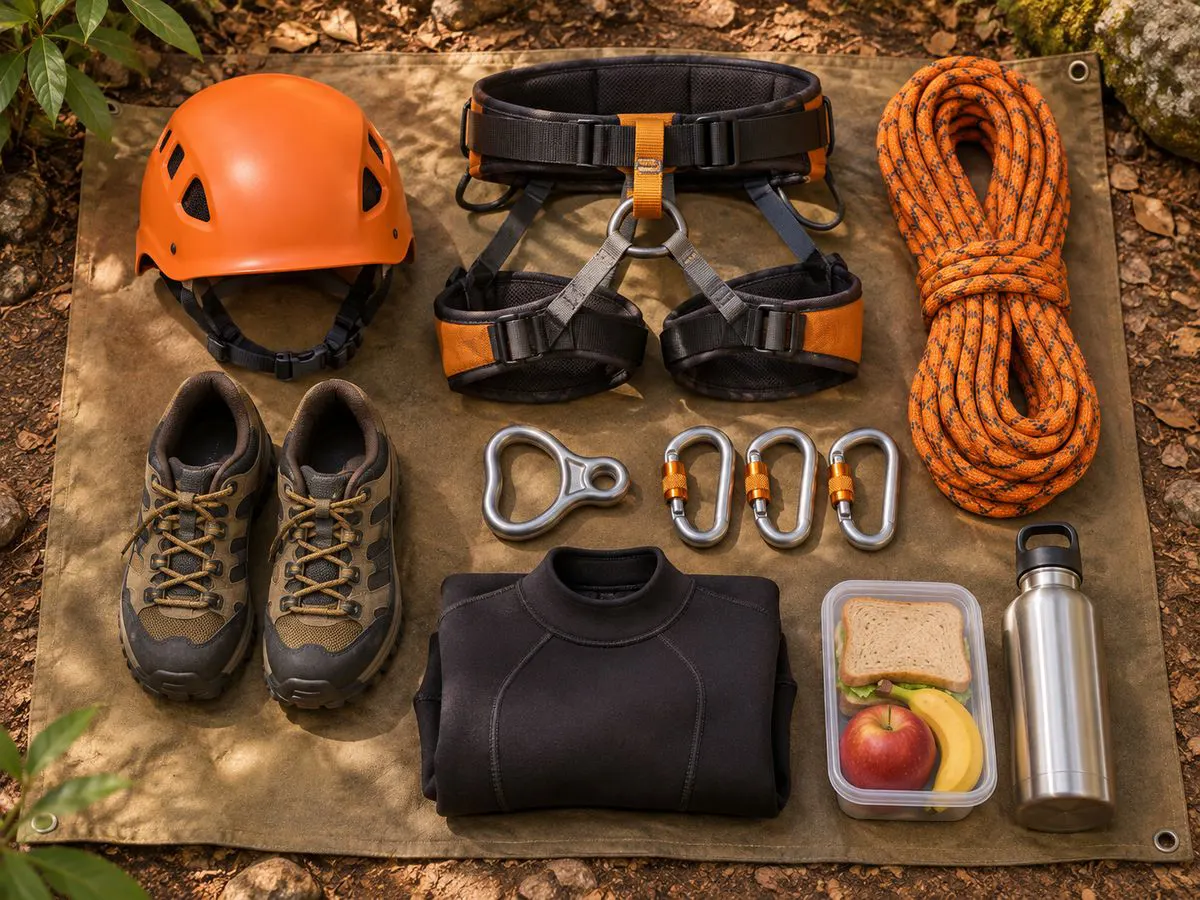
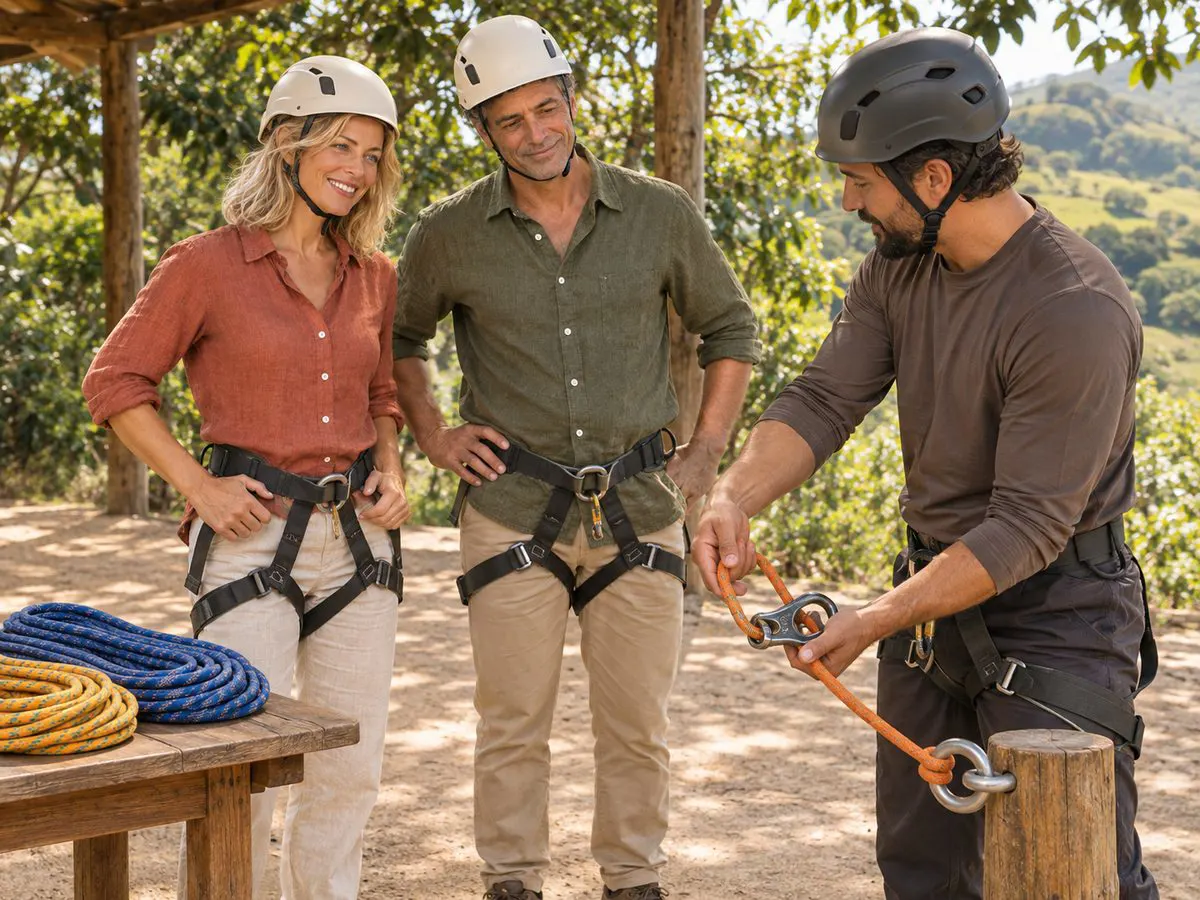
The operator supplies rope, harness, belay device, carabiners, helmet and, when the route requires, gloves and wetsuit. You should bring clothing that can get wet, closed shoes with grippy soles, a change of clothes, water and a snack. Long hair should be tied back so it doesn’t get into the braking device.
Safety: the guide’s role
Real hazards are slipping while approaching, falling loose rocks and mistakes in system rigging. The first two are reduced with a helmet, appropriate footwear and attention. The third is the guide’s responsibility: anchoring on solid, redundant points, rope without wear, checked knots and a second person on belay.
Rappelling is not improvised with ordinary rope and should not be learned alone. If you want to practice on your own, take a course in vertical techniques first. As a visitor, your role is to choose the company carefully and follow instructions, including when the guide decides not to descend.
Where to rappel and visit canyons in Brazil
In Brotas, in the interior of São Paulo, rappelling is done on regional waterfalls. Socorro, in the Circuito das Águas Paulista, has descents on cliffs and waterfalls. In Alto Paraíso de Goiás, rappelling is done on waterfalls in Chapada dos Veadeiros.
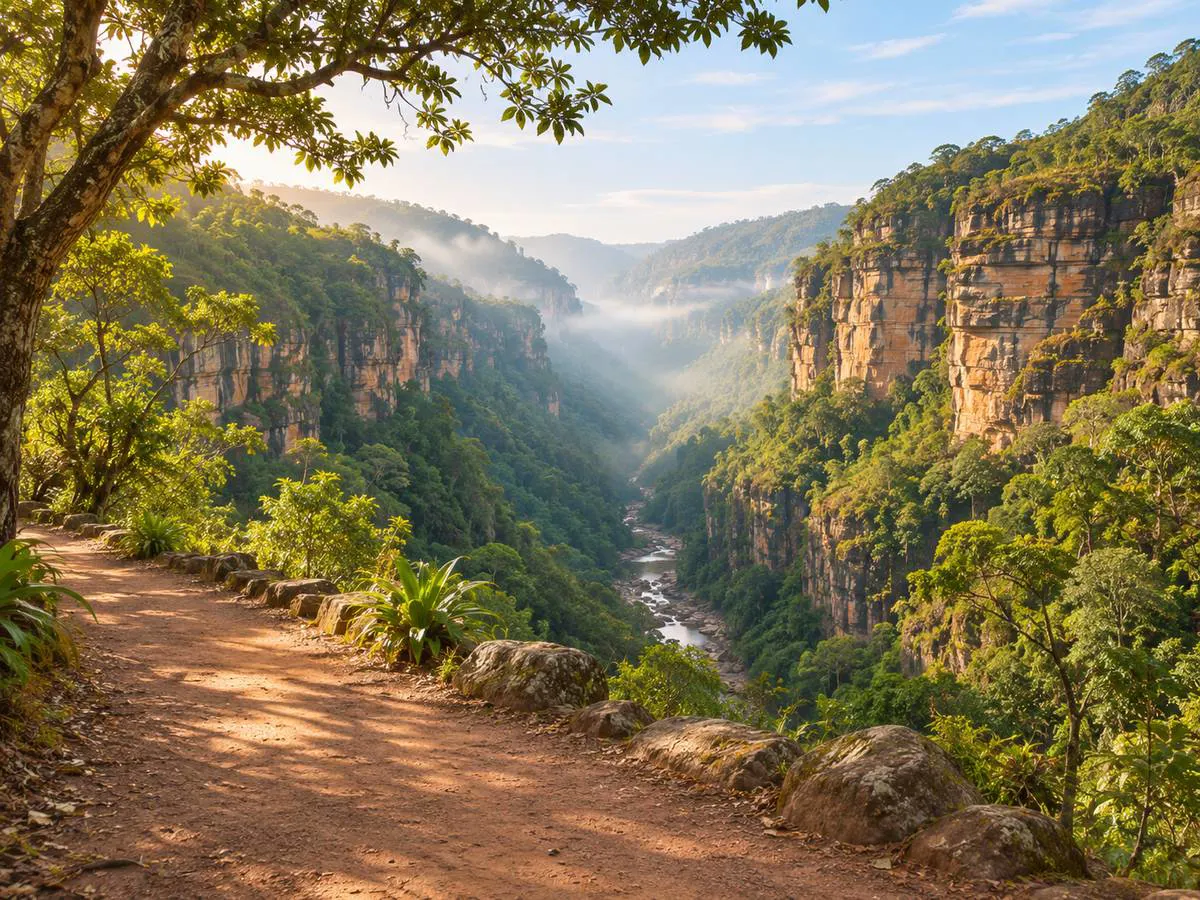
In the South, canyons are the main attraction. Praia Grande, in Santa Catarina, is part of the Geopark Caminhos dos Cânions do Sul, and canyons such as Malacara are traversed by trail with a guide. On the Rio Grande do Sul side, in Cambará do Sul, Itaimbezinho Canyon is in Aparados da Serra National Park. The towns appear on the map on this page.
In the southern canyons, winter usually has cleaner air, and mist is more common in summer. At waterfalls, water volume changes with the rains, and the operator adjusts or postpones the descent.
How to choose the company
Look for a company registered in Cadastur, the Ministry of Tourism registry, and ask about guides’ training in vertical techniques and first aid. Also ask how many instructors accompany the group, the descent height, whether there is a practice beforehand and whether insurance is included.
On site, check the condition of the ropes and harnesses and whether helmets are mandatory for everyone, including those who only watch near the wall. In national and state parks, trails and descents depend on each unit’s rules.
Price varies with the height and number of descents, the route duration, transport to the site and group size. Park or private property entrance fees may be paid separately: check the current schedule.
Frequently asked questions
What is rappelling?
It is the descent of a wall, waterfall or span on a rope, with a belay device attached to the harness that lets you control speed. As an tour activity, it is done with an instructor, equipment and a second person on belay.
Is rappelling dangerous?
It’s a height activity that depends on correct rigging and well-maintained equipment. Done with a qualified company, helmet, redundant anchoring and an instructor on belay, risk for beginners is low. On your own, without a course, it should not be done.
What’s the difference between rappelling and canyoneering?
Rappelling is the technique of descending by rope. Canyoneering is the passage along a riverbed between cliffs, combining walking, swimming, jumps and rappels. All canyoneering involves rappels; not all rappels are canyoneering.
Do you need experience to rappel?
No. Introductory descents are done by people who have never practiced, after a practice on a low section. Canyoneering routes with multiple rappels require physical fitness and sometimes previous experience.
Can people with a fear of heights do rappelling?
Many people can. The hardest moment is stepping off the edge; once seated in the harness facing the wall, fear often decreases. The instructor on belay can stop the descent at any moment.
What is negative rappel?
It’s the descent without foot support, when the wall moves away or doesn’t exist, as in a free span. The person descends suspended from the rope. It requires the same equipment and usually comes after a wall rappel.
What should you wear for waterfall rappelling?
Clothing that can get wet and dries quickly, and closed shoes with grippy soles. In cold water or on long routes, the operator provides a wetsuit. Bring a dry change of clothes.
Where to go: Rappelling and canyons
Pick a region or a state on the map, or type what you are looking for, to see the cities and who offers it in each.
-
Palmas TO
Cachoeira da Roncadeira.
-
Ponte Alta do Tocantins TO
Cânion do Sussuapara.
-
Delmiro Gouveia AL
Cânions: Cânions do Xingó.
-
Olho d'Água do Casado AL
Cânions: Cânions do Xingó.
-
Piranhas AL
Cânions: Cânions do Xingó.
-
Ibicoara BA
Cânions: Cânion da Cachoeira da Fumacinha.
-
Canindé de São Francisco SE
Cânions: Cânions do Xingó.
-
Alto Paraíso de Goiás GO
Rapel em cachoeiras da Chapada dos Veadeiros.
-
Formosa GO
Buraco das Araras (Dolina dos Maracanãs).
- Bodoquena MS
- Bonito MS
-
Afonso Cláudio ES
Pedra dos Três Pontões.
-
Castelo ES
Cachoeira do Pedregulho.
-
Domingos Martins ES
Cascata do Galo.
-
Capitólio MG
Cânions: Cânions do Lago de Furnas.
-
Santana do Riacho MG
Cânions: Cânion das Bandeirinhas.
- Rio de Janeiro RJ
- Teresópolis RJ
-
Brotas SP
Rapel em cachoeiras da região.
-
Socorro SP
Rapel em paredões e cachoeiras.
-
Castro PR
Cânions: Cânion Guartelá.
- Foz do Iguaçu PR
-
Jaguariaíva PR
Cânions: Cânion do Rio Jaguariaíva.
-
Sengés PR
Cânion do Jaguaricatu.
-
Tibagi PR
Parque Estadual do Guartelá.
-
Cambará do Sul RS
Cânion Itaimbezinho, no Parque Nacional de Aparados da Serra.
- Três Coroas RS
-
Bom Jardim da Serra SC
Cânion da Ronda, Cânion das Laranjeiras.
-
Bom Retiro SC
Cânion do Papuã.
-
Jacinto Machado SC
Trilha do Tigre Preto.
-
Painel SC
Garganta do Caveiras.
-
Praia Grande SC
Cânions do Geoparque Caminhos dos Cânions do Sul, como o Malacara, percorridos por trilha.
-
Urubici SC
Cânion Espraiado.
More activities in Adventure travel
Beyond the guide


