

 Antarctica
 Argentina
 Bolivia
 Chile
 Colombia
 Ecuador
 Guyana
 French Guiana
 Falkland Islands (Malvinas)
 Paraguay
 Peru
 Suriname
 Uruguay
 Venezuela
 Germany
 Austria
 Belgium
 Croatia
 Denmark
 Slovakia
 Slovenia
 Spain
 Finland
 France
 Greece
 the Netherlands
 Hungary
 Ireland
 Iceland
 Italy
 Luxembourg
 Norway
 Poland
 Portugal
 the United Kingdom
 the Czech Republic
 Sweden
 Switzerland
 Turkey
 Bermuda
 Canada
 the United States
 Greenland
 Mexico
 Saint Pierre and Miquelon
 the Dominican Republic
 Japan
 South Africa
 Egypt
 Australia
 Fiji
 New Zealand
 Papua New Guinea
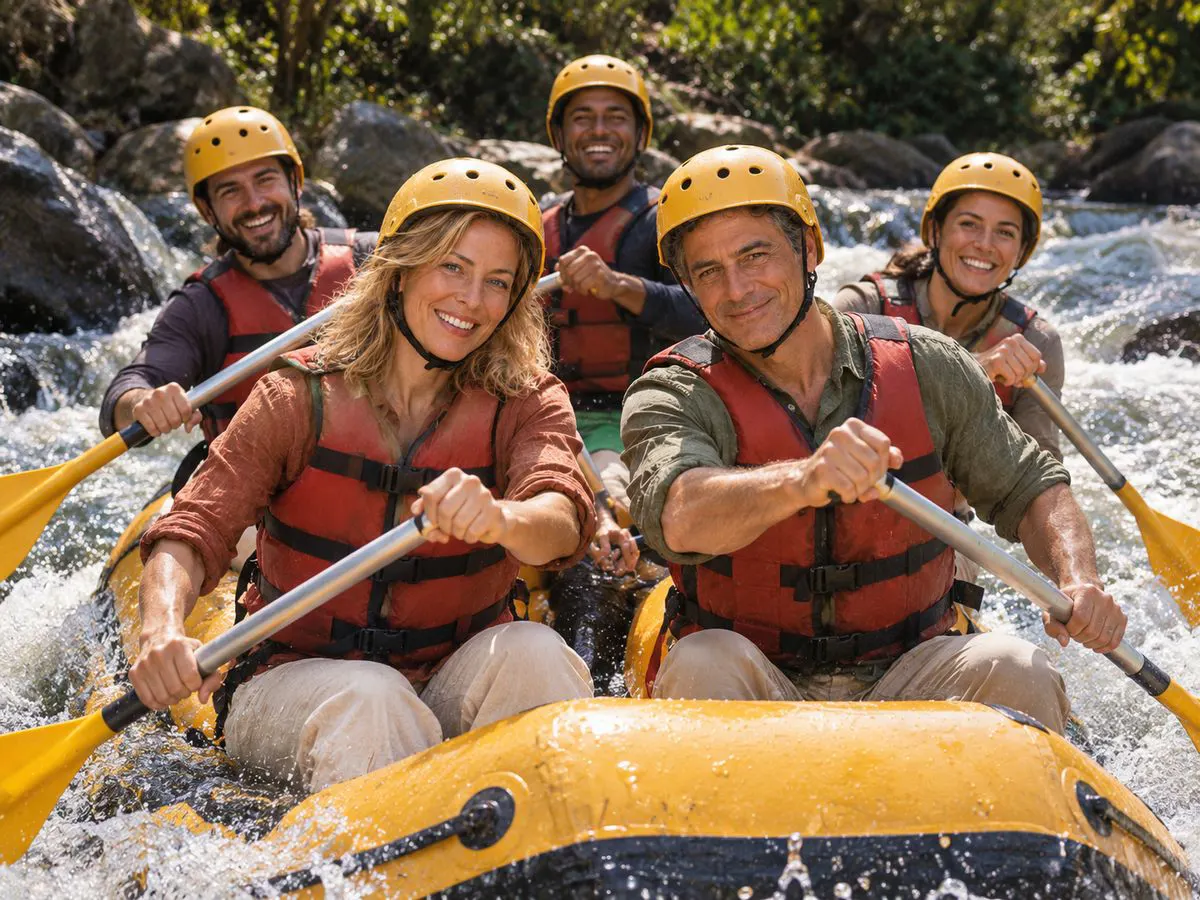
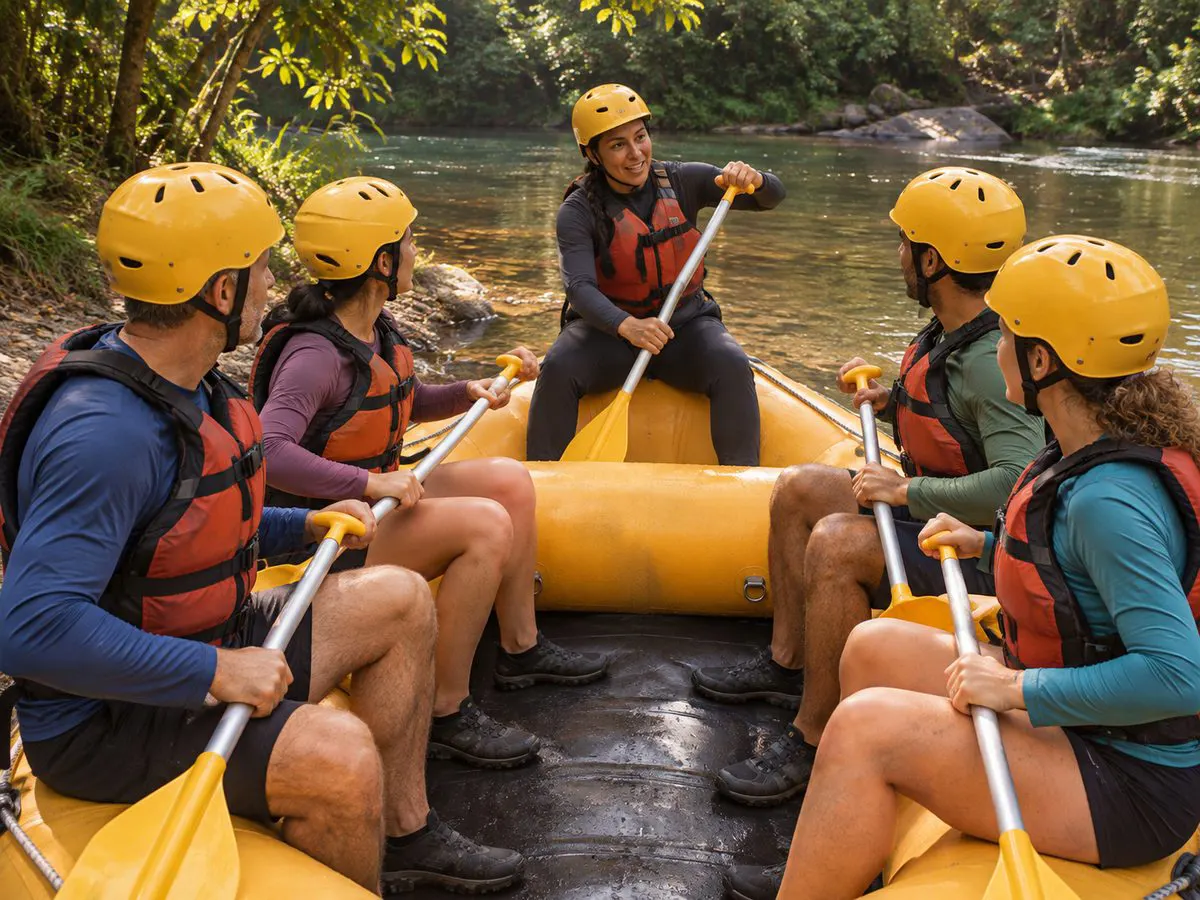
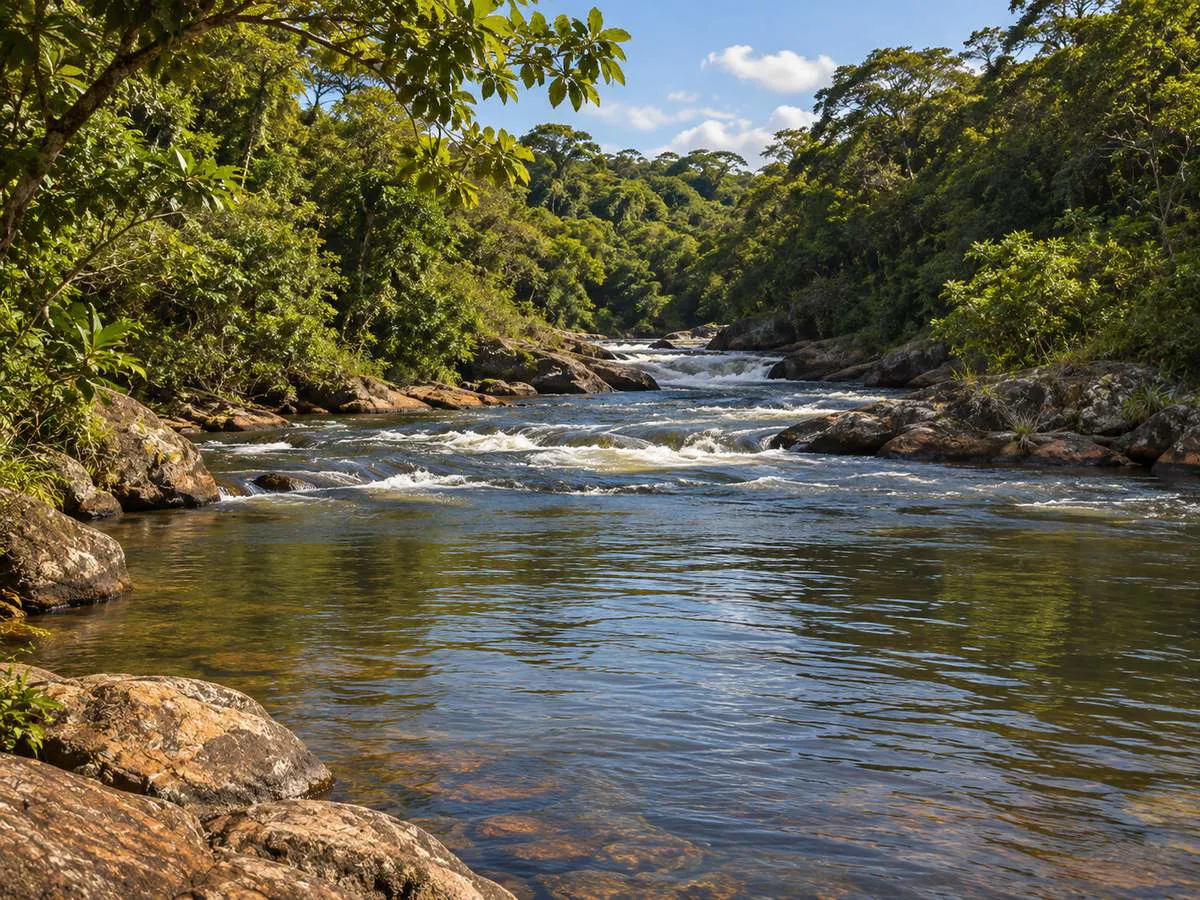
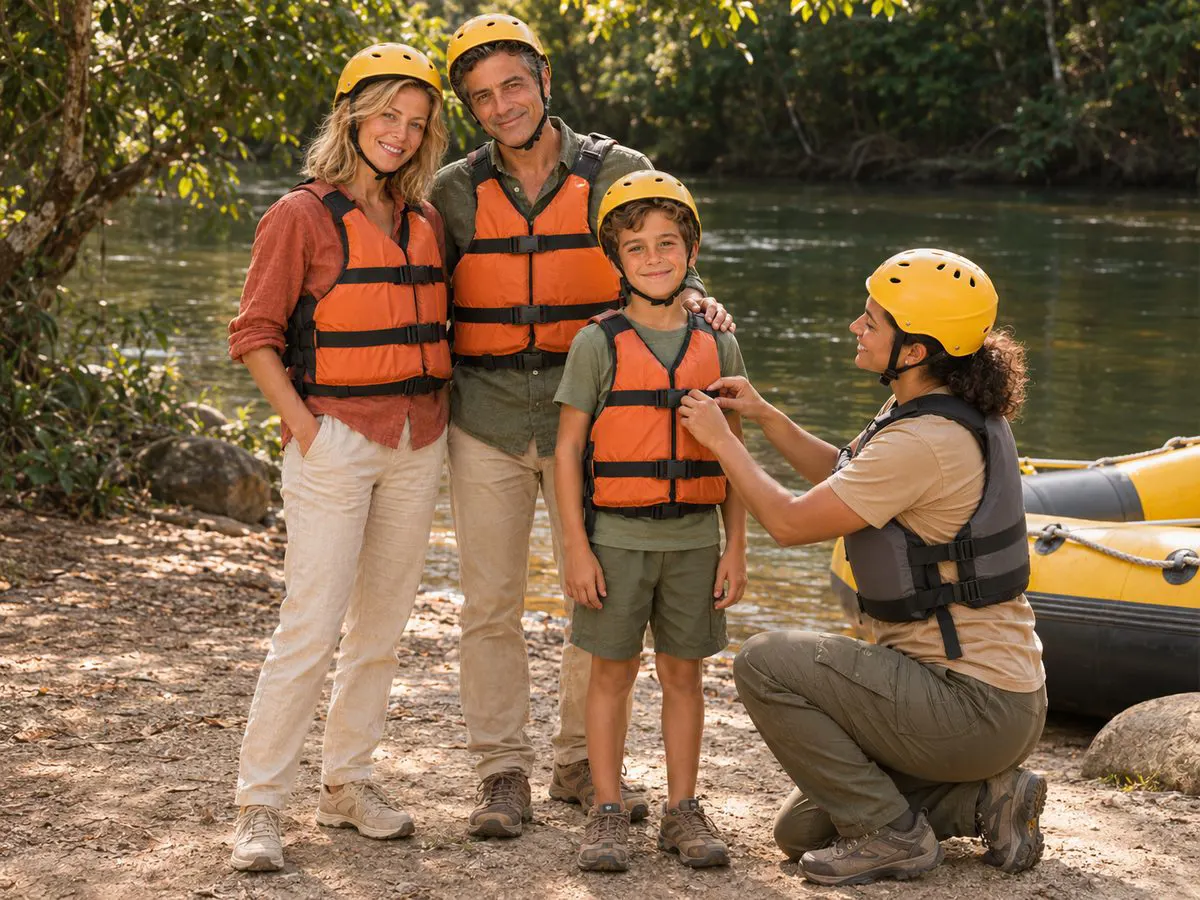
Illustrative images. The pictures in this guide are illustrations based on the real place, not photographs, and may differ from it.


Adventure travel
Rafting
Descending a whitewater river in an inflatable boat, with paddles, life jacket, helmet, and a guide.
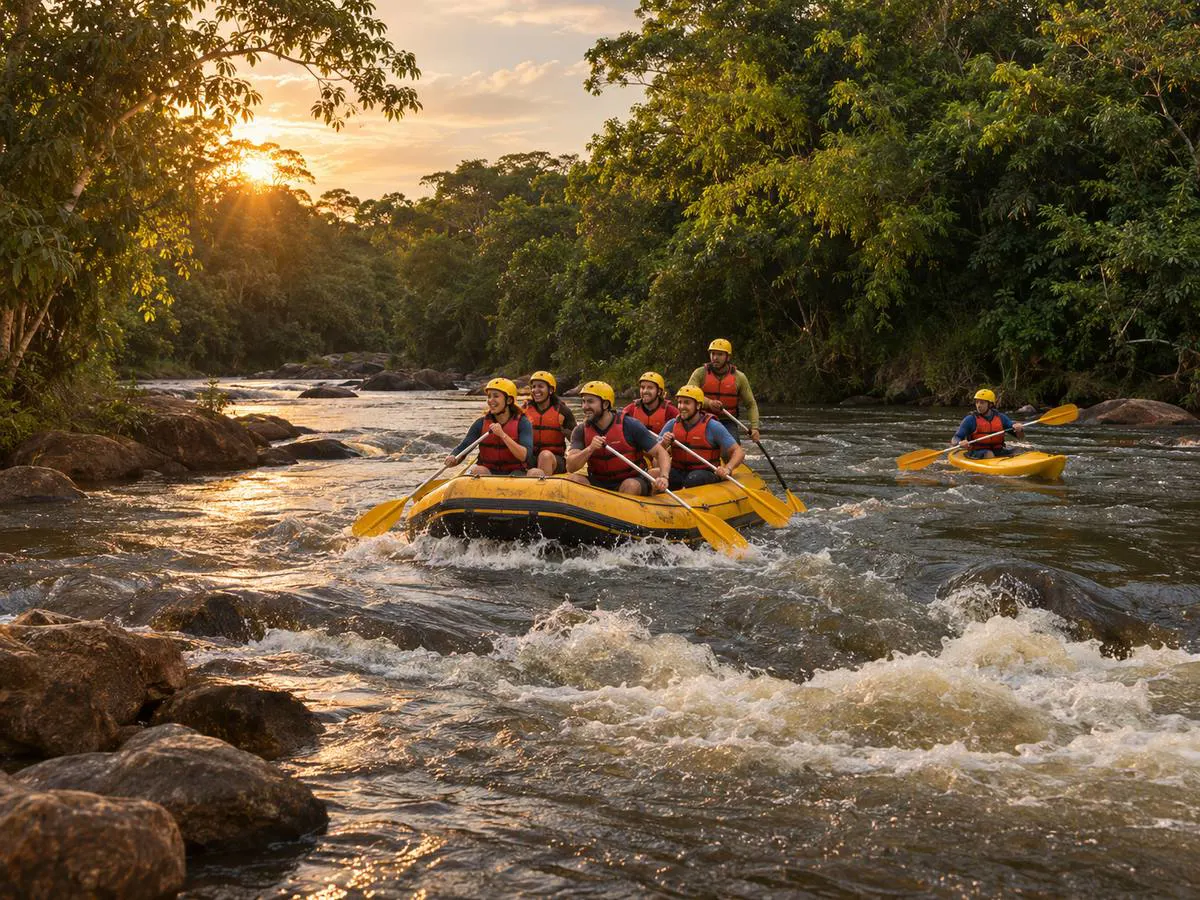
Rafting is descending a river with rapids in an inflatable boat. Each boat carries a group of paddlers and a guide who sits at the back, reads the river and directs the paddling. No prior paddling experience is needed: the technique is taught onshore in a few minutes, and the rest happens on the water.
The activity originated from mountain-river expeditions and became a half-day tour offered by outfitters in many regions of Brazil. The same river can have a calm section for families and a stronger section for those seeking more thrill.
How a descent works
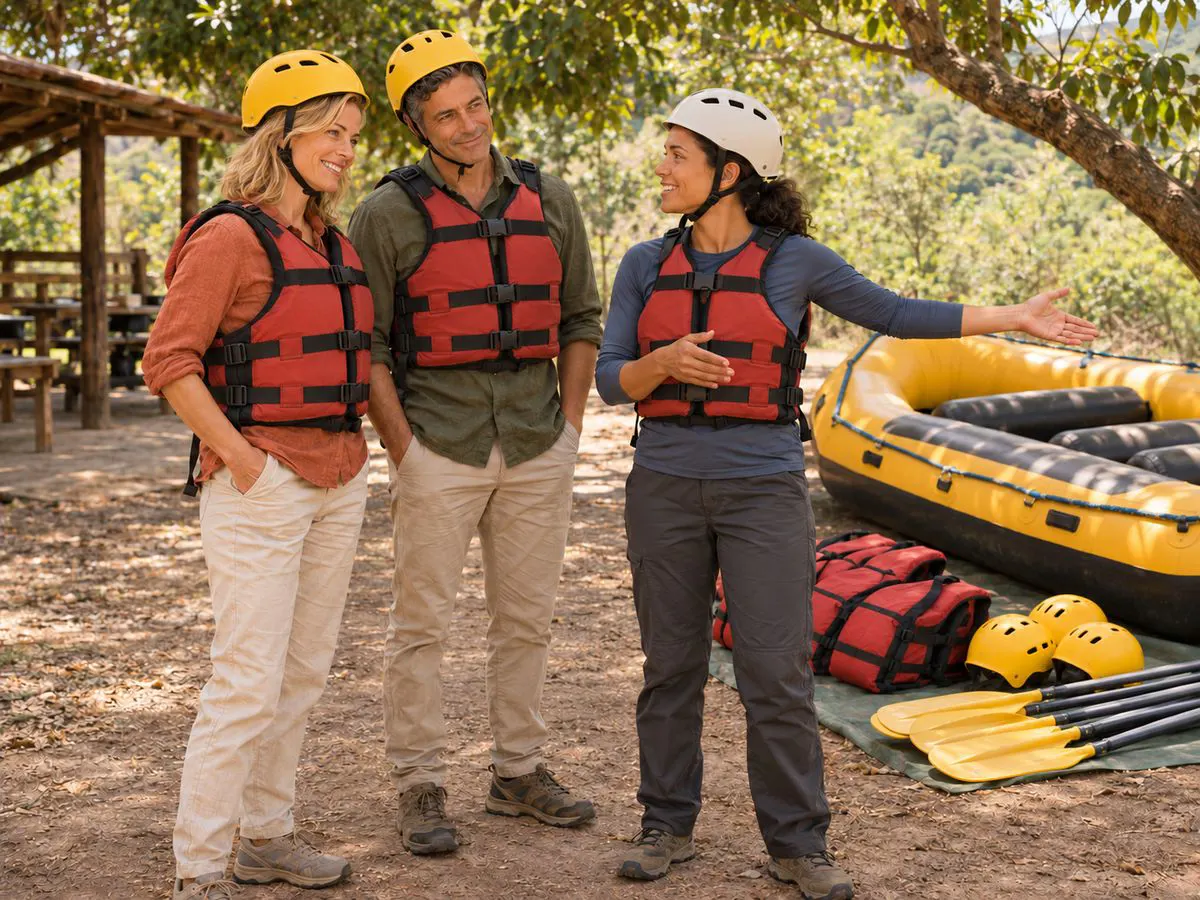
The trip starts on land. The crew issues a life jacket, helmet and paddle, fits each person’s gear and gives instructions: how to sit on the raft’s side, how to paddle forward and back, what to do when each command is called and how to act if you fall into the water.
After that, the group follows by vehicle to the put-in point upstream. The descent alternates rapids and calm stretches, where you rest, look at the forest and, on many rivers, enter the water for a swim. Usually a kayak or a second support raft accompanies the group.
Time on the water varies with the section and the river level, from about an hour to a full morning or afternoon. At the end, transport returns everyone to the base, where changing rooms and dry clothes are available.
Difficulty levels: the classes of rapids
Rapids are classified on an international scale of six classes, written in Roman numerals. Class I is moving water with almost no obstacles. Class II has small waves and wide passages. In class III the waves are larger and maneuvers require firm paddling from the group. Class IV has drops and narrow passages, for those who are fit and, preferably, have some experience. Class V is for trained teams, and class VI is outside commercial trips.
Sections sold to beginners are usually between classes II and III. The class is not fixed: the same section rises or falls in level depending on the water volume. That is why the operator reports the classification for the day and may change the route after heavy rain.
Who can do it
Each operator sets the minimum age or height for each section, because the life jacket and helmet must fit. Calm sections usually accept school-age children accompanied by parents, and some rivers have short descents set up for younger kids. Strong sections are for teens and adults.
Knowing how to swim helps, but for introductory sections it is often not required: the life jacket keeps you afloat and the guide teaches the safety position. When the river is high, the operator may restrict the descent to people who can swim. Pregnant people and those with back or heart problems or recent surgery should inform the operator before booking.
Clothing, equipment and safety
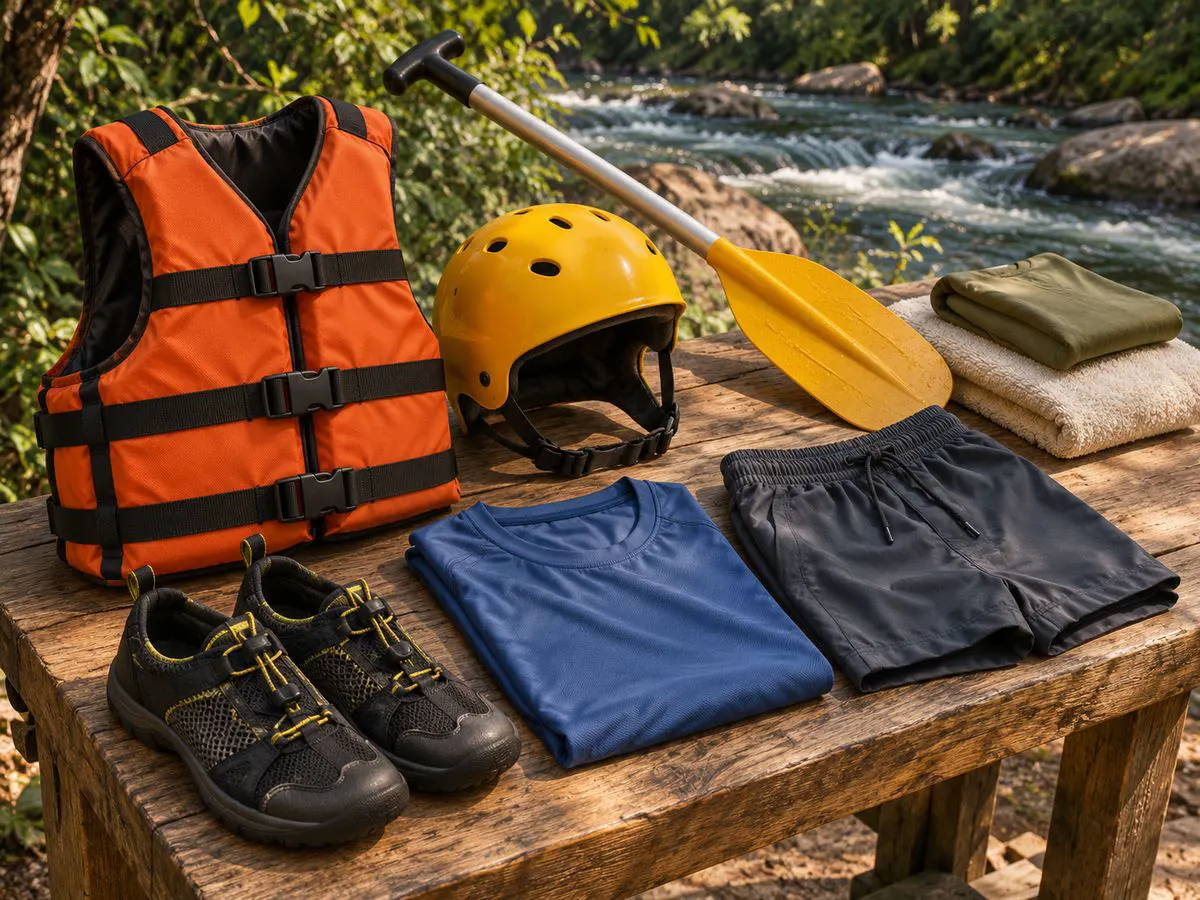
The operator provides the raft, paddles, life jackets and helmets. On cold rivers or in winter, some lend or rent neoprene suits. Expect to wear swimwear underneath, shorts and a lightweight, quick‑dry shirt, and closed shoes that fasten to the foot and can get wet. Flip‑flops are not suitable. Towels and a change of clothes are kept at the base.
Sunscreen and insect repellent are applied before boarding. Glasses need a retainer; phone and keys stay on land or in a waterproof bag.
The real risks of rafting are falling into the water and the raft flipping in a rapid. The initial briefing exists for this: anyone who falls floats on their back, feet pointed downstream and at the surface, until pulled back in. A closed life jacket, a fastened helmet and attention to commands resolve most situations.
Where to do rafting in Brazil
Brotas, inland São Paulo, is one of the country’s references: the descent is on the Jacaré-Pepira River, with several operators in town. In Socorro, in the São Paulo Water Circuit, the Rio do Peixe has two routes. Also in São Paulo, Juquitiba on the Juquiá River and São Luiz do Paraitinga on the Paraibuna River offer descents through the Atlantic Forest.
In Rio Grande do Sul, the Paranhana River in Três Coroas is near Gramado, and Canela runs trips on the Caí and Paranhana rivers. In Paraná, Foz do Iguaçu has rafting on the Iguaçu River below the Falls. Paraty, in Rio de Janeiro, offers mountain‑river descents.
In Bahia, Itacaré rafting takes place on the Rio de Contas in the Taboquinhas district. In Bonito, Mato Grosso do Sul, the raft descends the Formoso River. In Jalapão, Tocantins, the Rio Novo is run in the dry season. The towns are shown on the map on this page.
When to go and how to choose the operator
In the Southeast and the South, rivers usually have more water in the rainy summer from December to March, when rapids are stronger. In winter, with lower rivers, the descent is more technical and the water colder. In Jalapão, the season is the dry period, from May to September.
Before booking, check whether the company is registered with Cadastur, the Ministry of Tourism registry, and ask: what class the section is today, how many guides and support rafts accompany the group, what training the guides have, whether insurance is included and what the minimum age is. There are Brazilian technical standards for rafting and for raft leaders, and the operator should be able to say which they follow.
The price varies with the section length, duration, season and group size. Transport, photos and neoprene suits may be charged extra: check the current price list with the operator.
Frequently asked questions
What is rafting?
It is the descent of a river’s rapids in an inflatable raft, in a group, with paddles and a guide who commands the maneuvers. It is sold as a tour by operators, with equipment and instruction included.
Is rafting dangerous?
There are risks, as with any river activity: falling into the water or the raft flipping. With a life jacket, helmet, instruction and a trained guide, on a section appropriate for the group, these risks are controlled. Beginners should choose low‑class sections.
Can someone who can’t swim do rafting?
On introductory sections, generally yes: the life jacket keeps the person afloat and the guide teaches what to do in the water. With a high river or on strong sections, the operator may require participants to know how to swim.
What is the minimum age for rafting?
There is no single age. Each operator defines the minimum age or height for a section, according to the rapids’ class and the river level that day. Calm sections usually accept school‑age children.
What to wear for rafting?
Wear your swimsuit underneath, shorts and a lightweight t-shirt, and closed shoes that can get wet and won’t come off your feet. Bring a towel and a dry change of clothes for afterwards.
How long does a rafting run last?
About one hour in the water up to a half-day, depending on the stretch and the river’s level. Adding instruction, transport and changing, the trip usually takes a morning or an afternoon.
How much does rafting cost?
The price depends on the length and class of the stretch, the duration, the season and the group size. Photos, transport and a wetsuit may be charged separately. Ask the operator for prices for your date.
When is the best time to go rafting?
In the Southeast and the South, summer (December–March) usually has fuller rivers and stronger rapids; winter brings lower, colder water. In Jalapão, rafting is done in the dry season.
Where to go: Rafting
Pick a region or a state on the map, or type what you are looking for, to see the cities and who offers it in each.
-
Mateiros TO
Rafting no rio Novo, no Jalapão, na estação seca.
-
Itacaré BA
Rafting no rio de Contas, no distrito de Taboquinhas.
- Alto Paraíso de Goiás GO
-
Bonito MS
Descida de bote pelo rio Formoso.
-
Paraty RJ
Rafting em rio de serra, citado entre os principais do país.
-
Brotas SP
Descida do rio Jacaré-Pepira em bote, com várias operadoras na cidade.
-
Socorro SP
Rafting no rio do Peixe, com dois percursos.
-
Foz do Iguaçu PR
Rafting no rio Iguaçu, abaixo das Cataratas.
-
Canela RS
Rafting nos rios Caí e Paranhana.
-
Três Coroas RS
Rafting no rio Paranhana, em percursos de 5 a 10 km.
- Apiúna SC
More activities in Adventure travel

Beyond the guide


