

 Antarctica
 Argentina
 Bolivia
 Chile
 Colombia
 Ecuador
 Guyana
 French Guiana
 Falkland Islands (Malvinas)
 Paraguay
 Peru
 Suriname
 Uruguay
 Venezuela
 Germany
 Austria
 Belgium
 Croatia
 Denmark
 Slovakia
 Slovenia
 Spain
 Finland
 France
 Greece
 the Netherlands
 Hungary
 Ireland
 Iceland
 Italy
 Luxembourg
 Norway
 Poland
 Portugal
 the United Kingdom
 the Czech Republic
 Sweden
 Switzerland
 Turkey
 Bermuda
 Canada
 the United States
 Greenland
 Mexico
 Saint Pierre and Miquelon
 the Dominican Republic
 Japan
 South Africa
 Egypt
 Australia
 Fiji
 New Zealand
 Papua New Guinea
Illustrative images. The pictures in this guide are illustrations based on the real place, not photographs, and may differ from it.


Adventure travel
Climbing
With rope, harness, and guide; there are short introductory routes for those who have never climbed.
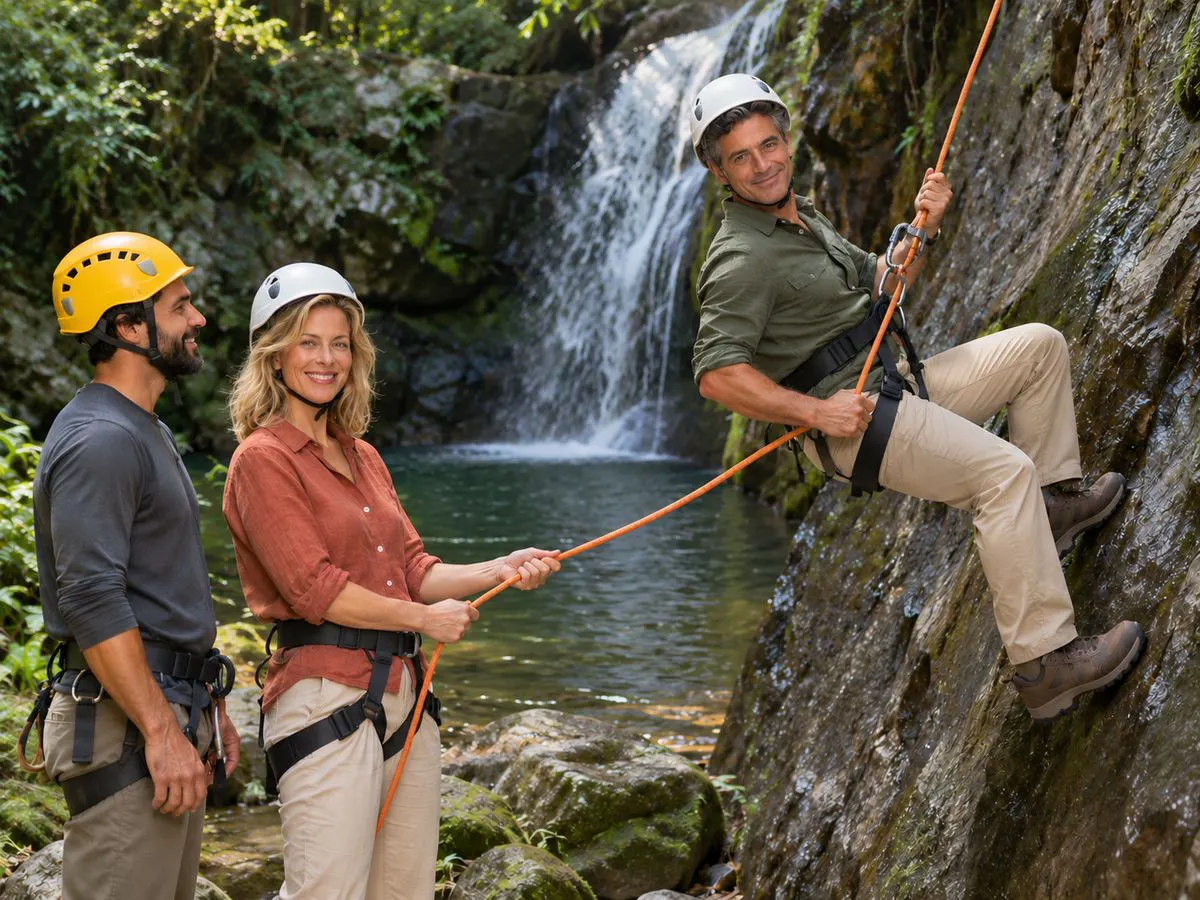
Climbing is going up a rock wall using your hands and feet on the rock’s holds. The rope doesn’t help you ascend: it’s there to catch you in case of a fall. Someone who has never climbed starts on short routes, with a guide who sets up the system and manages the rope from below.
Climbing has a sport side—focused on difficulty and technique—and a mountain side—focused on reaching a summit. For a traveler, the two entry points are an introductory rock lesson and a guided ascent of a classic mountain.
Types of climbing
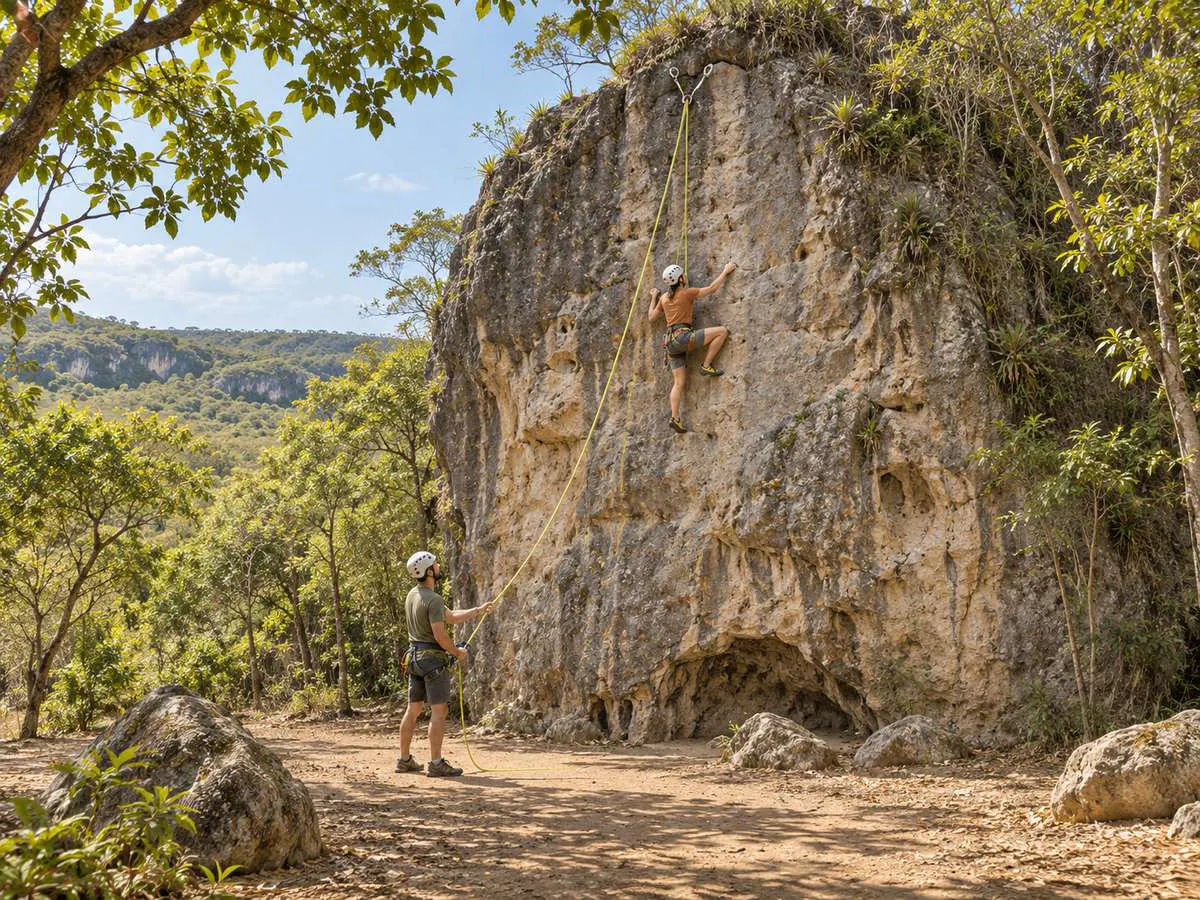
In top rope, the rope already runs through an anchor at the top of the route before the climber leaves the ground. If they let go, they hang in the same place. This is how introductory lessons are usually done.
In sport climbing, the route has fixed protection on the rock, and the lead climber clips the rope into them as they go. In trad climbing, routes are longer, with several rope pitches, and lead to the summit. Bouldering is climbing on low boulders without a rope, using crash pads on the ground.
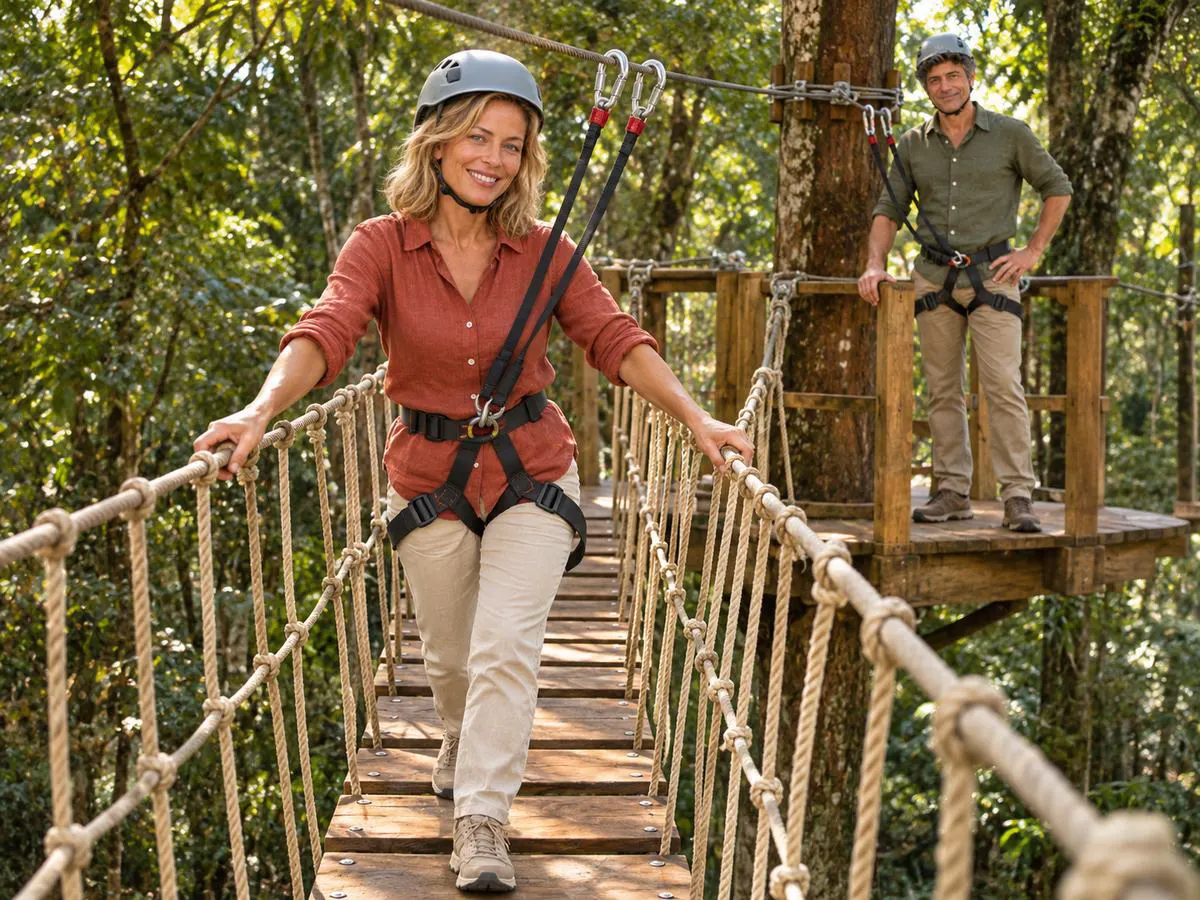
Via ferrata is different: a path equipped with iron rungs and a steel cable along the wall. The climber ascends like a ladder, clipped to the cable with two lanyards and carabiners, which lets people who don’t climb reach high places. In towns, climbing gyms with artificial walls serve as the first contact.
What the first climb is like
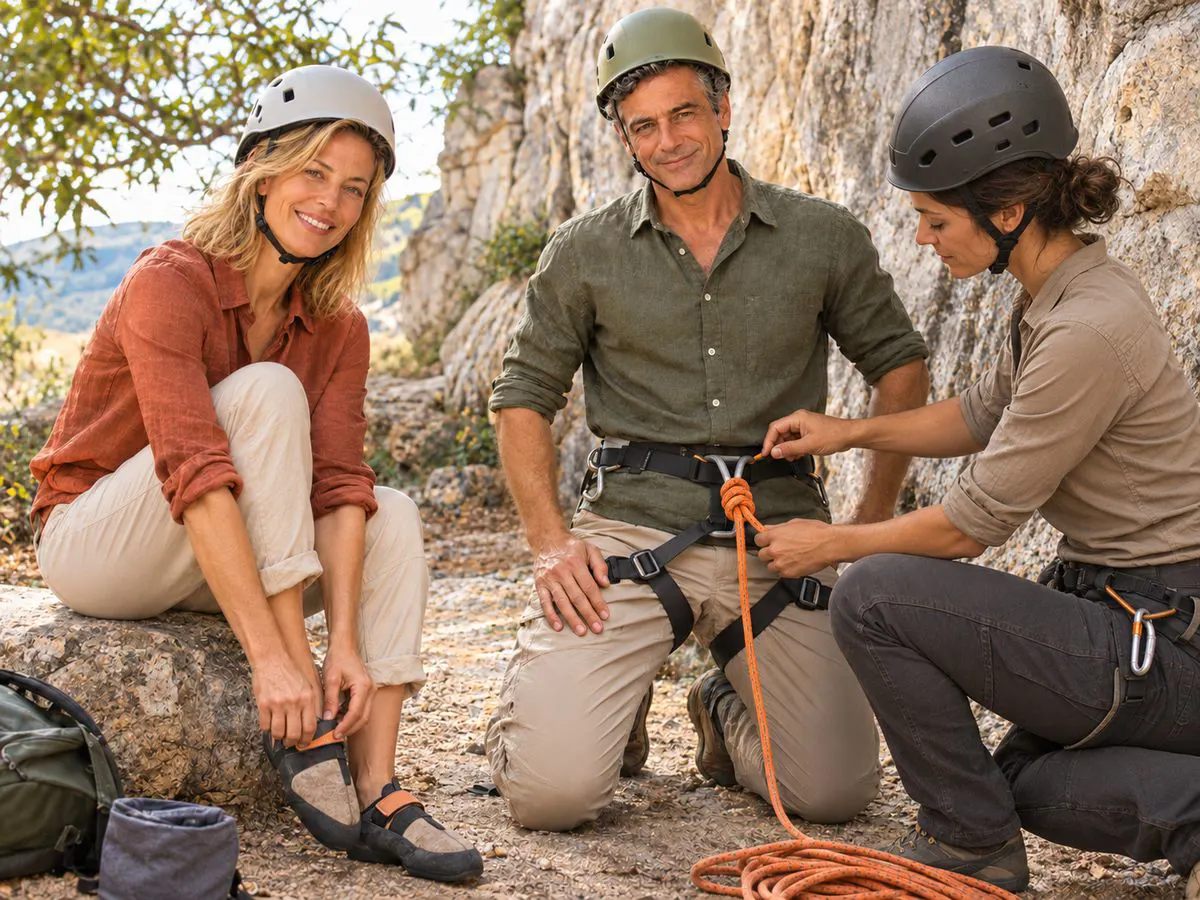
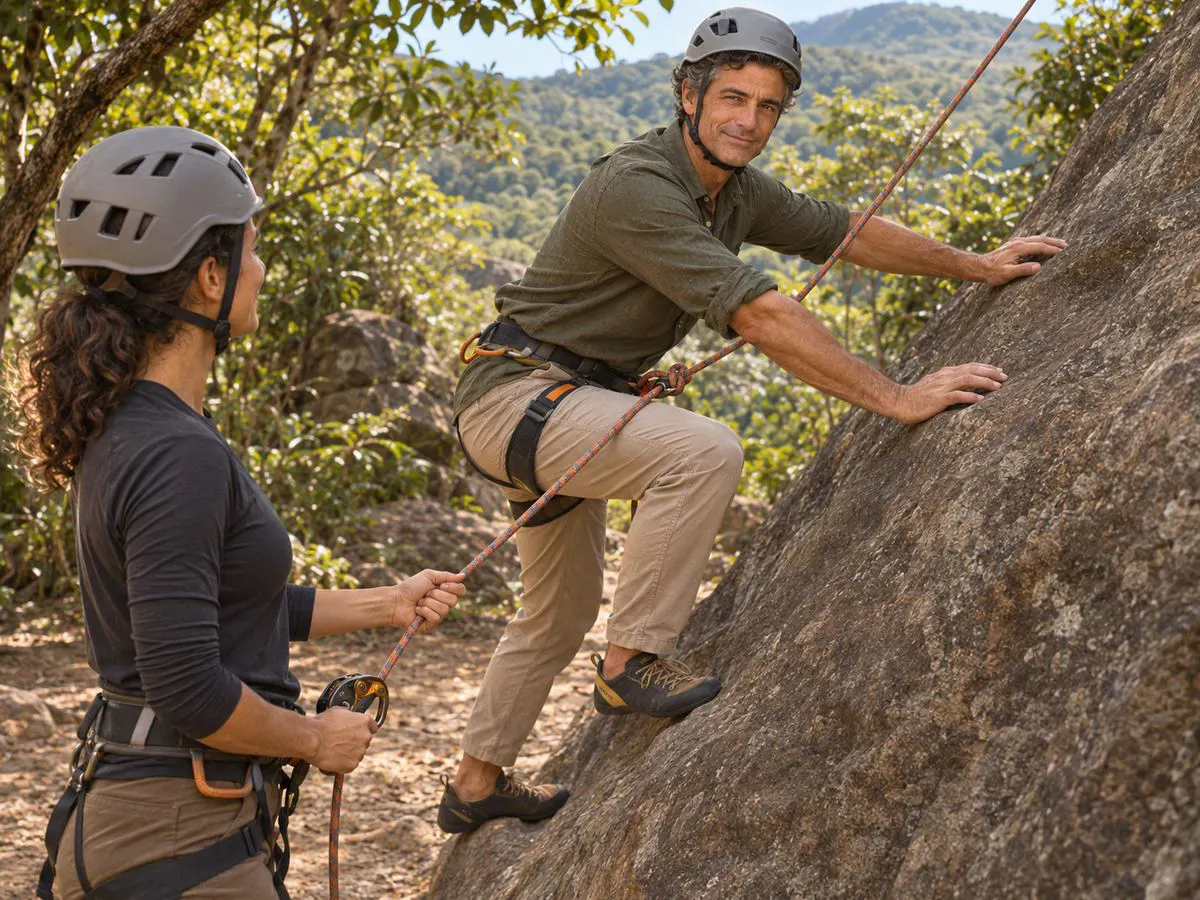
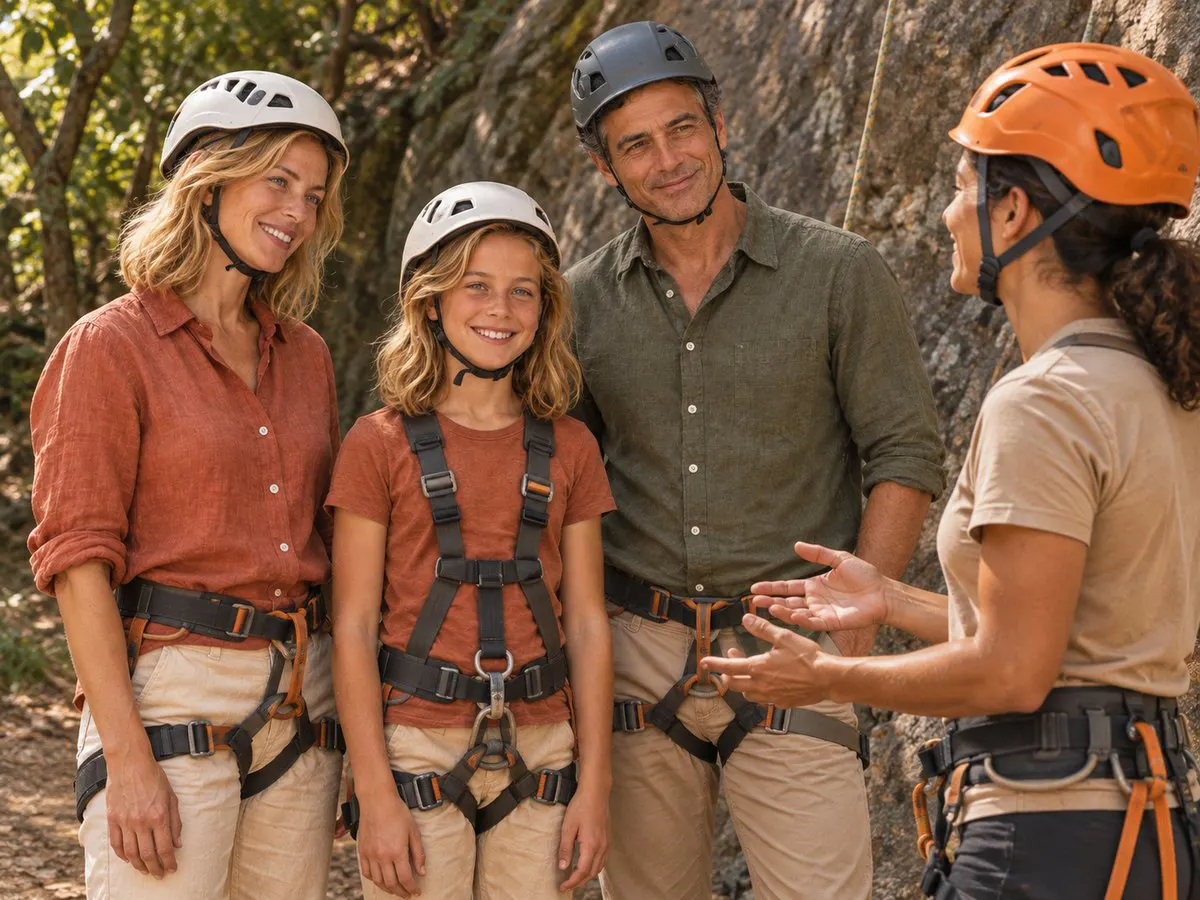
The lesson starts on the ground: how to put on the harness, how to tie and check the knot, and how to communicate with the belayer. Then each person climbs a short route while the guide manages the rope. The descent is seated in the harness, lowered slowly.
Climbing relies more on the legs and balance than on the arms. Someone who tries to pull up with arm strength tires in minutes; someone who learns to use their feet and keep their arms straight goes farther. Routes have difficulty grades, and the guide picks ones at the start of the scale.
An introductory outing takes a morning or an afternoon. Guided mountain climbs take the whole day, with approach hikes, and some require prior experience.
Equipment and safety
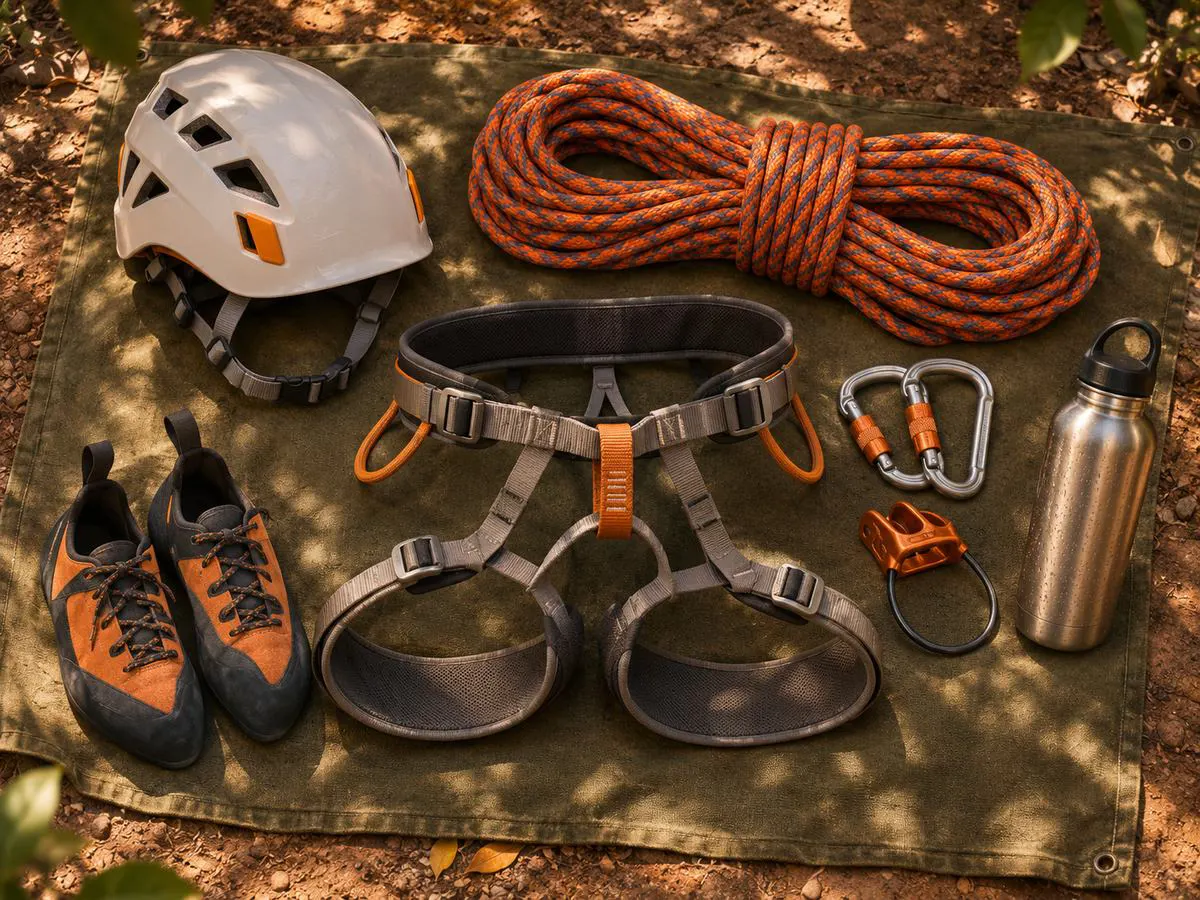
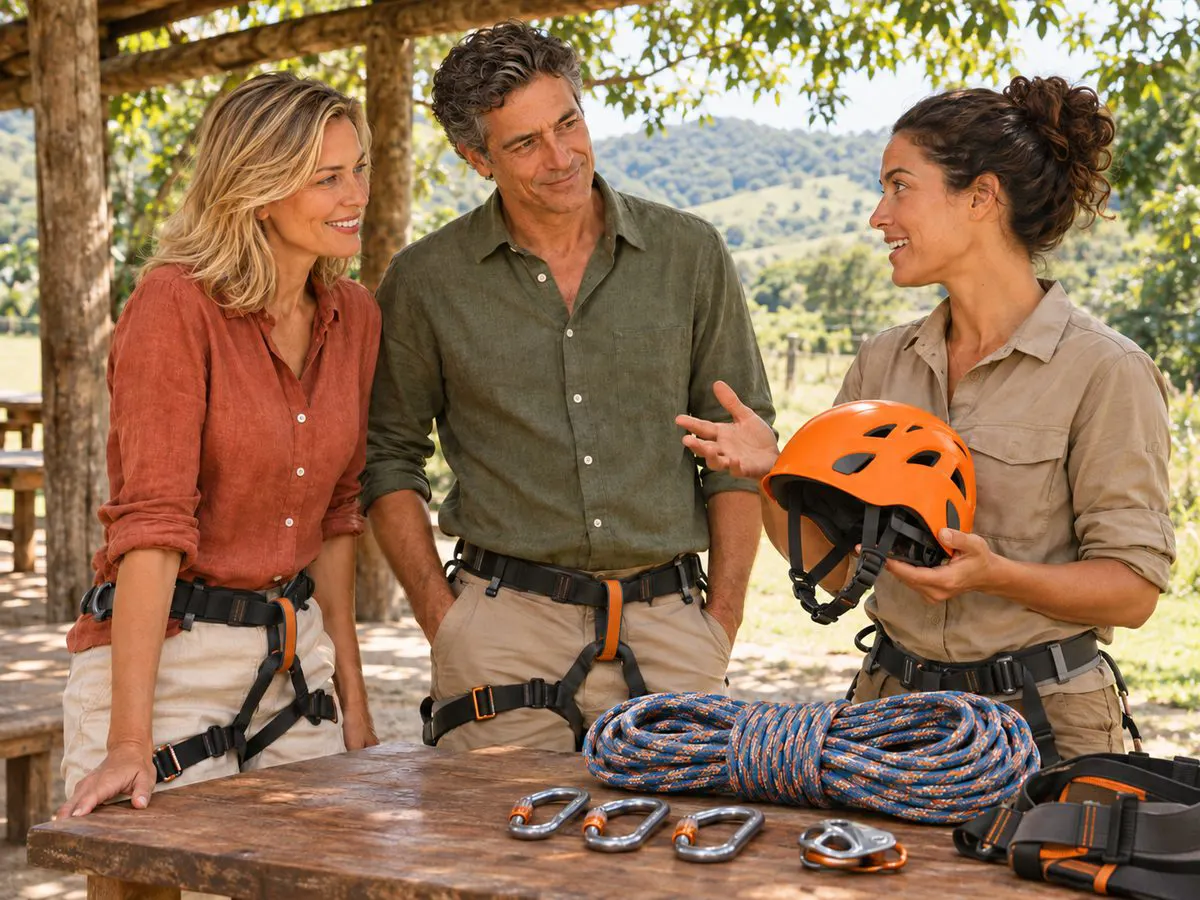
The guide provides rope, harness, helmet, carabiners, belay device and, in many cases, climbing shoes with a smooth rubber sole and a snug fit. The traveler should bring clothing that allows wide leg movement, trail shoes, water, a snack, sunscreen and a warm layer.
Real risks are falling rocks, mistakes with the knot or belay, and changing mountain weather. Therefore the helmet is for everyone, including people waiting at the base; the knot and harness are checked by two people before each climb; and you do not climb in rain or with lightning nearby.
Wet rock is slippery. The recommended season is the dry one, from May to September in the Southeast and central Brazil, with stable days and cool mornings.
Who can climb
Children climb well, and many guides accept them from the age the harness fits. There is no maximum age: there are routes for every fitness level. People with a fear of heights can climb only as far as they want, and top rope gives confidence because it holds instantly.
People with injuries to shoulder, wrist or knee should inform the guide, who will choose a route accordingly. Short nails and hands without rings help.
Where to climb in Brazil
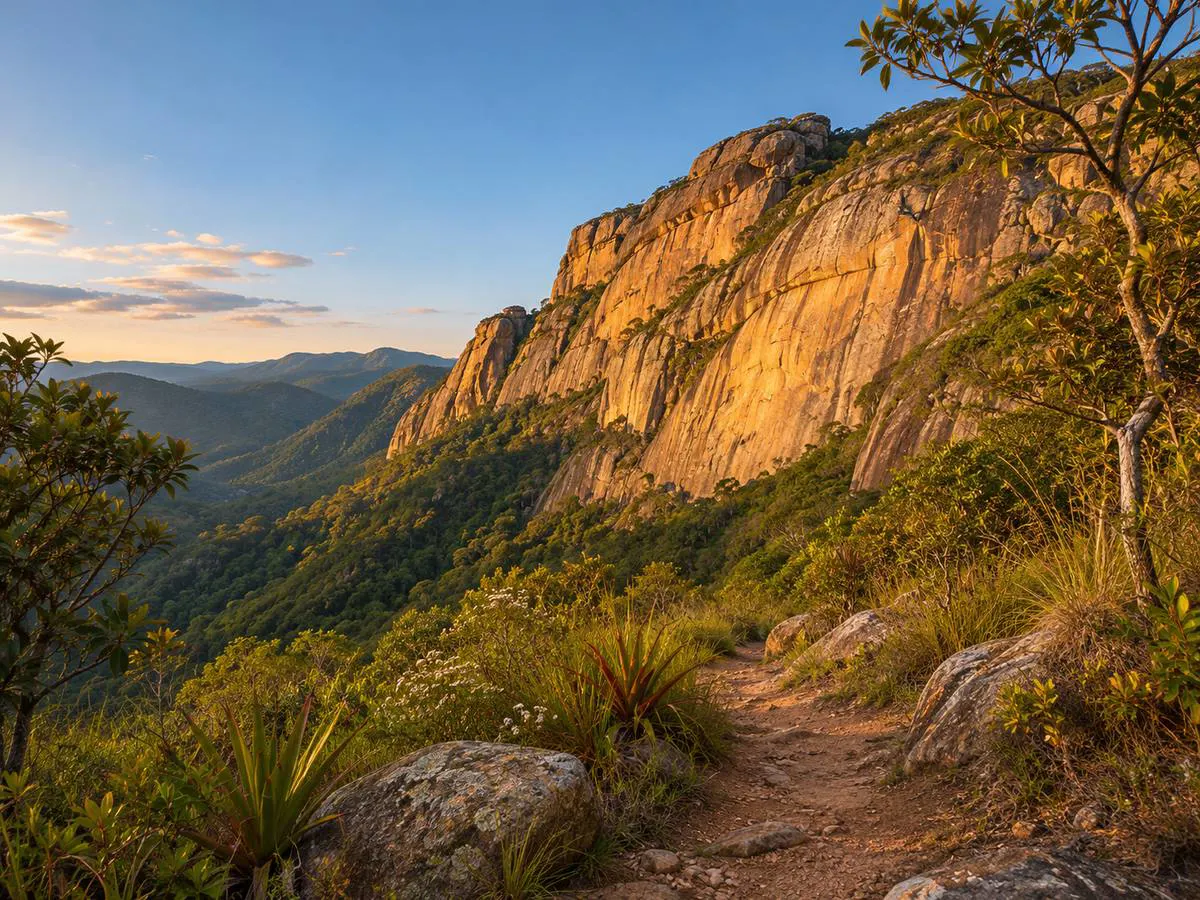
In Rio de Janeiro, you can climb inside the city: Sugarloaf Mountain has climbing routes with views of Guanabara Bay. In the mountain range of the state, Teresópolis is the entrance to Serra dos Órgãos National Park, where Dedo de Deus — a peak that marks the start of climbing in the country — is located.
In Itatiaia, in Itatiaia National Park, Pico das Agulhas Negras is sought by mountaineers. In São Bento do Sapucaí, in the Mantiqueira Range, Pedra do Baú combines climbing and routes with iron rungs.
In Minas Gerais, Serra do Cipó, in Santana do Riacho, has climbing routes. In Paraíba, Pedra da Boca, in Araruna, does too. The towns appear on the map on this page.
In national parks, ascent of some peaks follows specific rules, such as visitor limits or requirement of a guide: confirm before you go.
How to choose a guide
Look for a guide or company registered in Cadastur, the Ministry of Tourism registry, and ask about their training: there are Brazilian technical standards for mountaineering and climbing guides. Ask how many people each guide takes, whether equipment is included and what the plan is if the weather turns.
For mountains, ask about the real difficulty, walking hours and the experience required. A good guide asks you questions about your preparation in return.
The price varies with duration, the number of people per guide, route difficulty and transport. Park entrance fees are paid separately: check the current schedule.
Frequently asked questions
What is climbing?
It is the ascent of a rock face, or of an artificial wall, using hands and feet on holds, with a rope and a harness to protect against falls. As an activity, it is done with a guide, on short introductory routes or on mountains.
Is climbing dangerous?
There are risks, like falling rocks and safety errors, which are managed with a helmet, knot checks and a qualified guide. In introductory lessons, with the rope anchored at the top, a fall usually only results in hanging.
Do I need arm strength to climb?
Less than it seems. The ascent relies on the legs and balance, and introductory routes are chosen for that. Strength and technique come with practice.
What is the difference between climbing and via ferrata?
In climbing, the person ascends by natural holds on the rock. In via ferrata, iron rungs and a steel cable are fixed to the wall, and you climb clipped to the cable, like a long ladder. Via ferrata does not require climbing technique.
What is top rope?
It is climbing with the rope anchored at the top of the route. The climber is protected from above at all times, and a fall is only a few centimeters. It is the format used with beginners.
Can children climb?
Yes, provided the harness and helmet fit. Many guides and gyms accept children, on low routes and with the rope anchored at the top. Confirm the minimum age when booking.
What clothes should I wear to climb?
Pants or shorts that allow wide movements, a T-shirt and a warm layer. Climbing shoes are usually provided by the guide. Bring trail shoes for the approach, water and sunscreen.
Where to go: Climbing
Pick a region or a state on the map, or type what you are looking for, to see the cities and who offers it in each.
- Palmas TO
-
Afonso Cláudio ES
Pedra da Lajinha, Pedra dos Três Pontões.
- Domingos Martins ES
-
Camanducaia MG
Chapéu do Bispo.
- Poços de Caldas MG
-
Santana do Riacho MG
Vias de escalada na Serra do Cipó.
-
Itatiaia RJ
Pico das Agulhas Negras, procurado por montanhistas, no Parque Nacional do Itatiaia.
-
Nova Friburgo RJ
Três Picos de Salinas.
-
Rio de Janeiro RJ
Vias de escalada no Pão de Açúcar.
-
Teresópolis RJ
Parque Nacional da Serra dos Órgãos, onde o Dedo de Deus marca o início da escalada no país.
-
São Bento do Sapucaí SP
Pedra do Baú.
-
Morretes PR
Parque Estadual Pico do Marumbi.
-
Quatro Barras PR
Morro do Anhangava.
- Bento Gonçalves RS
More activities in Adventure travel
Beyond the guide


